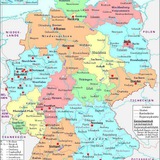
شما می توانید دانشگاه های رشته خودتون را از سایت های زیر جست و جو کنید.
Www.study-in.de
Www.studienwahl.de
Www.study-in.de
Www.studienwahl.de
www.daad.de
Deutscher Akademischer Austauschdienst
Der DAAD ist die weltweit größte Förderorganisation für den internationalen Austausch von Studierenden und Wissenschaftlern. Erfahren Sie, wofür wir stehen.
Tips and notes
DATIVE PREPOSITIONS
Dative prepositions always trigger the dative case.
Here they are: aus, außer, bei, gegenüber, mit, nach, seit, von, zu
ACCUSATIVE PREPOSITIONS
Accusative prepositions always trigger the accusative case.
Here they are: bis, durch, für, gegen, ohne, um
TWO-WAY PREPOSITIONS
Two-way prepositions take the dative case or the accusative case depending on the context.
If there's movement from one place to another, use the accusative case.
If there's no movement or if there's movement within a certain place, use the dative case.
Here they are: an, auf, entlang, hinter, in, neben, über, unter, vor, zwischen
No movement -> dative:
Ich bin in einem Haus (I am in a house)
Movement within a certain place -> dative:
Ich laufe in einem Wald (I am running in [within] a forest)
Movement from one place to another -> accusative:
Ich gehe in ein Haus (I am walking into a house)
CONTRACTIONS
Some prepositions and articles can be contracted.
an + das ans
an + dem am
auf + das aufs
bei + dem beim
in + das ins
in + dem im
hinter + das hinters
über + das übers
unter + das unters
von + dem vom
vor + das vors
zu + dem zum
zu + der zur
ZU HAUSE AND NACH HAUSE
zu Hause means at home, and nach Hause means home (homewards, not at home). The -e at the end of zu Hause and nach Hause is an archaic dative ending, which is no longer used in modern German, but survived in certain fixed expressions.
Ich bin zu Hause (I am at home)
Ich gehe nach Hause (I am walking home)
Forwarded from Deutsch0bis100 Videos