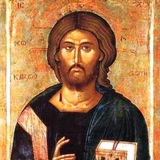
There are five marks of the Church: one, holy, Catholic, apostolic — and persecuted.
Pray for the canonical church in Ukraine, for her peace and protection during this Holy Week.
In recent months, an escalation of persecution by the anti-Christian, anti-Orthodox government of Ukraine has resulted in the arrests, imprisonment, and house arrest of hundreds of metropolitans, bishops and priests. Their “crime” is their refusal to obey the political institution called "Orthodox Church of Ukraine.”
The persecution — beatings, killings, temple takeovers and sometimes their outright destruction — is reminiscent of the brutality of Soviet times. And again, most of the world turns a blind eye to the plight of the faithful.
Pray for Metropolitans Onufry, Pavel, Longin, Jonathan, Bishop Agathangelo, and all priests, monks, nuns, and faithful Orthodox lay people, many of whose beloved temples and monasteries have been illegally confiscated with the encouragement of local authorities and the Kyiv regime.
Lord, have mercy! Grant protection and give courage to the persecuted faithful of Ukraine!
Hieromartyr St Simeon, the Kinsman of the Lord (April/ 27/ May 10), one of the Apostles of the 70 and second Bishop of Jerusalem, is hymned as one who guided his flock "to the heavenly sheepfold" and for the sake of Christ, "crucified, imitating His passion."
The Apostle and Hieromartyr Simeon (Symeon) was a first cousin of our Lord Jesus Christ. He was the son of Clopas (or Cleopas, also called Alphaeus), the brother of Joseph the Betrothed. At 100 years of age, he was seized by pagans and, after prolonged torture, crucified.
The Apostle and Hieromartyr Simeon (Symeon) was a first cousin of our Lord Jesus Christ. He was the son of Clopas (or Cleopas, also called Alphaeus), the brother of Joseph the Betrothed. At 100 years of age, he was seized by pagans and, after prolonged torture, crucified.
Passion Week: Holy and Great Monday. The cursing of the fig tree. “Let no fruit grow on you ever again.” Immediately the fig tree withered away. Matthew 21:19b
The Lord rebukes, the Lord encourages.
The "parable of the Fig tree which had leaves but was barren of any fruit. With this image, the Lord is rebuking those around Him who adorned themselves with the greenery of external piety but were devoid of inner virtue, as well as those who throughout history, had become slaves to the law and had not borne the fruit of the spirit....
By cursing the barren fig tree, the Lord is not simply revealing his Divine power, but encouraging us to persevere in faithful prayer, for He says, Whatsoever ye shall ask in prayer, believing, ye shall receive. And so we must, first of all, enter into this coming week with a prayerful heart and a pure mind. If we can do this, even in a small measure, we shall receive the grace of God in abundance."
Homily delivered at the Bridegroom Matins Service at the Chapel of Saint Sergius of Radonezh, April 13, 2014
https://oca.org/holy-synod/statements/his-beatitude-metropolitan-tikhon/the-barren-fig-tree
https://oca.org/holy-synod/statements/his-beatitude-metropolitan-tikhon/the-barren-fig-tree
Beginning on the evening of Palm Sunday and continuing through the evening of Holy Tuesday, the Orthodox Church observes a special service known as the Service of the Bridegroom. Each evening service is the Matins or Orthros service of the following day (e.g. the service held on Sunday evening is the Orthros service for Holy Monday).
Traditionally, the icon of Christ the Bridegroom (Gr: O Nymphios/Ο Νυμφίος) is brought to the front of the church on Palm Sunday evening, where it remains until Holy Thursday. In the icon, Christ's wedding garment is the robe the soldiers gave Him. His wedding crown is the crown of thorns. His head is bowed low and his arms are crossed in humility, laying down His life for His Bride. The wedding will be His Crucifixion on the Cross just behind Him. We are invited guests to the wedding. This is a week for us to prepare.
Traditionally, the icon of Christ the Bridegroom (Gr: O Nymphios/Ο Νυμφίος) is brought to the front of the church on Palm Sunday evening, where it remains until Holy Thursday. In the icon, Christ's wedding garment is the robe the soldiers gave Him. His wedding crown is the crown of thorns. His head is bowed low and his arms are crossed in humility, laying down His life for His Bride. The wedding will be His Crucifixion on the Cross just behind Him. We are invited guests to the wedding. This is a week for us to prepare.
"Behold, the Bridegroom comes in the middle of the night,
And blessed is the servant He shall find vigilant;
But unworthy is he whom he shall find neglectful.
Beware therefore, O my soul, lest you be weighed down by sleep,
Lest you be given over to death and be closed out from the kingdom;
But rise up crying out: 'Holy! Holy! Holy are You our God;
Through the intercessions of the Theotokos, have mercy on us.'”
(Troparion of the Bridegroom Service)
On Great and Holy Monday, we remember Christ's divine power and God's judgment symbolized in Christ’s cursing of the fig tree. The tree portrayed the Jewish synagogue, which had not produced the fruit of faithful obedience to God and so was stripped of all spiritual grace. (Matthew 21: 18-20).
Also, on Great and Holy Monday the we commemorate Joseph the Patriarch, the beloved son of Jacob, betrayed by his brothers and sold to foreigners for thirty pieces of silver. In the Old Testament story (Genesis 37, 39, 41), Joseph typifies in himself the betrayal, Passion, death and glorification of out Lord Jesus Christ.
Also, on Great and Holy Monday the we commemorate Joseph the Patriarch, the beloved son of Jacob, betrayed by his brothers and sold to foreigners for thirty pieces of silver. In the Old Testament story (Genesis 37, 39, 41), Joseph typifies in himself the betrayal, Passion, death and glorification of out Lord Jesus Christ.
"Armed with the power of the Spirit" the Holy Apostle James (April 30/May 13) brother of St John the Theologian, "preached Christ to all" (from the Troparion). James, the brother St John the Theologian, was the first of the Apostles to receive the crown of martyrdom. His beheading at Jerusalem in the year 44 was based on the false witness of his accusers.
With the Apostle Peter and John, his brother, the Apostle James witnessed the Raising of the Daughter of Jairus, the Lord’s Transfiguration on Mount Tabor, and His agony in the Garden of Gethsemane.
Most praised James, ask remission of sins and great mercy for those who sing hymns to you.
With the Apostle Peter and John, his brother, the Apostle James witnessed the Raising of the Daughter of Jairus, the Lord’s Transfiguration on Mount Tabor, and His agony in the Garden of Gethsemane.
Most praised James, ask remission of sins and great mercy for those who sing hymns to you.
He is sold, and very cheap, for it is only for thirty pieces of silver; but He redeems the world, and that at a great price, for the price was His own blood. As a sheep He is led to the slaughter, but He is the shepherd of Israel, and now of the whole world also. As a lamb He is silent, yet He is the is bruised and wounded, but He heals every discase and every infirmity. He is lifted up and nailed to the tree, but by the tree of ife He restores us; indeed, He saves even the robber crucified with Him, indeed He wrapped the visible world in darkness. He is given vinegar to drink mingled with gall. Who? He who turned water into wine, who is the destroyer of the bitter Word, and is proclaimed by the voice of one crying in the wilderness. He is bruised and wounded, but He heals every disease and every infirmity.
He is lifted up and nailed to the tree, but by the tree of life He restores us; indeed, He saves even the robber crucified with Him, indeed He wrapped the visible world in darkness. He is given vinegar to drink mingled with gall. Who? He who turned water into wine, who is the destroyer of the bitter taste, Who is sweetness and altogether desired. He lays down His life, but He has power to take it again ...He dies, but He gives life, and by His death destroys death. He is buried but He rises again; He goes down into hell, but He brings up the souls.
☦️ St. Gregory of Nazianzus. Third Theological Oration, 20. B#7.
☦️ St. Gregory of Nazianzus. Third Theological Oration, 20. B#7.
Why are you lazy, my pitiful soul? Why are you thinking about unprofitable cares at such a time? Why are you busy with things that pass away? The final hour is at hand and we shall soon be parted from all that is here. While you still have time, get sober and cry, “I have sinned against You, my Saviour. Do not cut me down like that unfruitful fig tree; but, since You are compassionate, O Christ, take pity on me as I cry out with fear: Let us not be left out of the wedding hall of Christ.” —Oikos from the Bridegroom Service
Image by Vladimir Zanoga. Skvoz veka, 1992
Image by Vladimir Zanoga. Skvoz veka, 1992
More than the harlot have I transgressed, and yet no torrents of tears have I offered You, O Good One. But praying in silence, I fall before You, and with longing I kiss Your immaculate feet, so that You, as Master, will grant forgiveness of trespasses to me who cry out to You, O Savior: From the mire of my sinful burdens deliver me. ~~Kontakion, Bridegroom Service
Saint Ephrem the Syrian casts a net into his soul. Can we dredge up anything less foul in our own?
“After having gained knowledge of the truth, I have become a brawler and an offender. I argue over trifles; I have become envious of and callous toward my neighbor, merciless toward beggars, wrathful, argumentative, obstinate, slothful, irritable. I harbor vile thoughts, I love fancy clothing. And to this day I have many corrupt thoughts and fits of selfishness, gluttony, sensuality, vainglory, arrogance, lust, gossiping, breaking of fasts, despondency, rivalry, and indignation.
I am worthless, but think much of myself. I lie constantly, but get angry with liars. I defile the temple of my body with wanton thoughts, but sternly judge the wanton. I condemn those who fall, but myself fall constantly. I condemn slanderers and thieves, but am myself both a thief and a slanderer. I walk with a bright countenance, although I am altogether impure.
In churches and at banquets I always want to take the place of honor. I see hermits and act dignified; I see monks and I become pompous. I strive to appear pleasing to women, dignified to strangers, intelligent and reasonable to my neighbors, superior to intellectuals. With the righteous I act as if I possess vast wisdom; the unintelligent I disdain as illiterates.
If I am offended, I take revenge. If I am honored, I shun those who honor me. If someone demands of me what is rightfully his, I start a suit. And those who tell me the truth I consider enemies. When my error is exposed, I get angry, but I am not so dissatisfied when people flatter me.
I do not want to honour those who are worthy but I myself, who am unworthy, demand honour. I do not want to tire myself with work, but if someone fails to serve me I get angry with him. I do not want to walk among laborers, but if someone fails to help me in my work I slander him.
I arrogantly deny my brother when he is in need, but when I have need of something, I turn to him. I hate those who are ill, but when I myself am ill I wish that everyone would love me. I do not want to know those who are higher than I, and I scorn those who are lower.
If I abstain from indulging my foolish desires, I praise myself vaingloriously. If I succeed in vigilance, I fall into the snares of conceit and contradiction. If I refrain from eating, I drown in pride and arrogance. If I am wakeful in prayer, I am vanquished by irritability and wrath. If I see virtue in someone, I studiously ignore him.
I have scorned worldly pleasures, but do not abandon my vain desire for them. If I see a woman, I go into raptures. To all appearances I am wise in humility, but in my soul I am haughty. I seem not to be acquisitive, but in reality I suffer from a mania for possessions. And what good is it to dwell on such things? I appear to have forsaken the world, but in fact I still think about worldly things all the time.
During services I always occupy myself with conversations, wandering thoughts, and vain recollections. During meals I indulge in idle chatter. I yearn for gifts. I participate in the sinful falls of others and engage in ruinous rivalry.
Such is my life! With what vileness do I obstruct my own salvation! And my arrogance, my vainglory does not permit me to think about my sores that I might cure myself. Behold my virtuous feats! See how vast are the regiments of sins which the enemy sends to campaign against me! Yet in the face of all this, I who am wretched endeavor to boast of sanctity. I live in sin, but want others to honor me as a righteous man.
In all this I have but one thing to say in my defense: the devil has ensnared me. But this did not suffice to absolve Adam of his sin. Cain was of course also prompted by the devil, but he did not escape condemnation either. What shall I do if the Lord comes to me? I have no means to justify my negligence.
I fear that I shall be numbered among those whom Paul called vessels of wrath, who will share the devil's fate and whom God, because of their contempt for Him, has committed to the passions of degradation. Thus there is the danger that I will be sentenced to the same fate.
If You would save me, who am unworthy, O Merciful Lord, vouchsafe me, a sinner, repentance; enliven my soul deadened by sins, O Giver of Life. Drive out the stony hardness that is in my miserable heart and grant me a fountain of contrition, O You who poured forth life to us from Your life-creating rib.”
☦️ St Ephrem the Syrian
“Do this in remembrance of me.” On Holy Thursday, the Church celebrates the “birthday” of the the Mystical Supper— the beginning of the New Covenant.
On the night Jesus was betrayed, He celebrates the Passover meal, a perpetual reminder of the Angel of Death “passing over” the Israelite homes marked with the blood of Lambs, sparing them for the journey through the Red Sea towards the promised land.
In the Upper Room in Jerusalem with his disciples, Christ turns bread and wine into His body and blood. The Passover meal is now the Holy Eucharist.
☦️ Saint Melito of Sardis declares that Jesus “is the Passover (πάσχειν) that is our salvation.”
“Difficult times are our lot, but we Christians must choose the Cross. Christ has placed us on His sleigh, and he will take us where He will.”
+St Matrona, the Righteous Wonderworker of Moscow
St Matrona led an ascetic life on her bed of pain. She fasted constantly, slept little, her head resting on her chest. Her forehead was dented from making innumerable signs of the Cross that she made. People from afar, of all ages and conditions, thronged around her to seek her wisdom and her prayers.
St Matrona fell asleep in the Lord in 1952 (April 19/May 2). Miracles continue at her tomb at the women’s monastery of the Protecting Veil of the Mother of God