
🥰🎉 Expressing Emotions and Feelings
Wow, how beautiful! – Oh, wie schön!
That's really awesome! – Das ist einfach toll!
How lovely that is! – Das ist aber schön!
I'm very glad that... – Ich bin sehr froh, dass...
I'm delighted that... – Ich freue mich, dass...
This surprises/astonishes me. – Das wundert/überrascht mich.
Alright, enough already... – Ist schon gut…
No big deal. – Das macht nichts.
It's not so bad. – Nicht so schlimm.
That's not what I meant. – Ich habe das nicht so gemeint.
Weird! – Komisch!
For example: "Ich freue mich, dass du heute hier bist!" (I'm delighted that you're here today!)
I'm worried. – Ich mache mir Sorgen.
I'm scared. – Ich habe Angst.
This scares me. – Das macht mir Angst.
This worries me. – Das macht mir Sorgen.
I fear that... – Ich fürchte, dass...
I'm very sad. – Ich bin sehr traurig.
I'm disappointed. – Ich bin enttäuscht.
I'm sorry. – Es tut mir Leid.
That's such a pity! – Das ist aber schade!
It was a misunderstanding. – Das war ein Missverständnis.
If only I had known! – Wenn ich das gewusst hätte!
It could happen to anyone. – Das kann jedem passieren.
For example: "Es tut mir Leid, ich habe das nicht so gemeint." (I'm sorry, that's not what I meant.)
🎯 Bookmark this and use these phrases often!
Are you keen to practice this topic further? Then our Telegram bot @germanwithleobot is your perfect companion. And guess what, there's a special discount of 38% off for 3 months! Just use the code
It's time to immerse yourself in the German language like never before! 🤖🚀
Wow, how beautiful! – Oh, wie schön!
That's really awesome! – Das ist einfach toll!
How lovely that is! – Das ist aber schön!
I'm very glad that... – Ich bin sehr froh, dass...
I'm delighted that... – Ich freue mich, dass...
This surprises/astonishes me. – Das wundert/überrascht mich.
Alright, enough already... – Ist schon gut…
No big deal. – Das macht nichts.
It's not so bad. – Nicht so schlimm.
That's not what I meant. – Ich habe das nicht so gemeint.
Weird! – Komisch!
For example: "Ich freue mich, dass du heute hier bist!" (I'm delighted that you're here today!)
I'm worried. – Ich mache mir Sorgen.
I'm scared. – Ich habe Angst.
This scares me. – Das macht mir Angst.
This worries me. – Das macht mir Sorgen.
I fear that... – Ich fürchte, dass...
I'm very sad. – Ich bin sehr traurig.
I'm disappointed. – Ich bin enttäuscht.
I'm sorry. – Es tut mir Leid.
That's such a pity! – Das ist aber schade!
It was a misunderstanding. – Das war ein Missverständnis.
If only I had known! – Wenn ich das gewusst hätte!
It could happen to anyone. – Das kann jedem passieren.
For example: "Es tut mir Leid, ich habe das nicht so gemeint." (I'm sorry, that's not what I meant.)
🎯 Bookmark this and use these phrases often!
Are you keen to practice this topic further? Then our Telegram bot @germanwithleobot is your perfect companion. And guess what, there's a special discount of 38% off for 3 months! Just use the code
LEO38OFF.It's time to immerse yourself in the German language like never before! 🤖🚀
👍24❤15🥰3👏3💯2
👀 I suggest you check how well you remember the articles!
📙 ___ Buch
📙 ___ Buch
Anonymous Quiz
16%
der
7%
die
77%
das
😱5
🚀 Hey there German learners!
Just aced the "Der, Die, Das" quiz, or need a little boost to master the tricky German articles? I've got you covered! 👊
📚 I'm thrilled to introduce you to the German Articles ebook. This guide is packed full with explanations, examples, and exercises specifically designed to make "der, die, das" as clear as crystal. 💎
Trust me, once you've gone through this ebook, those pesky articles will be no match for you. 💪
Ready to tackle German articles head-on? Just follow this link: https://boost.deutsch.wtf/articles/s/german-articles/ and get your copy of the German Articles ebook now. 🎉
Bis bald und viel Glück! 🇩🇪
👍10
💫🎓 Mastering German Adjective Comparatives and Superlatives
🔷 Basic Rule: The comparative form of adjectives is formed by adding -er to the base word, while the superlative form uses -st or -est. Here's how it works:
Klein (small) -> kleiner (smaller) -> am kleinsten (smallest)
Wichtig (important) -> wichtiger (more important) -> am wichtigsten (most important)
🔶 Umlaut Magic: Certain short adjectives get an umlaut in the comparative and superlative forms:
Kalt (cold) -> kälter (colder) -> am kältesten (coldest)
Groß (big) -> größer (bigger) -> am größten (biggest)
Jung (young) -> jünger (younger) -> am jüngsten (youngest)
Alt (old) -> älter (older) -> am ältesten (oldest)
🔷 Here's the Deal with "Als": In German, comparisons often involve the word als (than), like so:
Mein Vater ist älter als meine Mutter. (My father is older than my mother.)
🔶 The Definite Article and Superlatives: When it comes to superlatives, you'll usually need the definite article because what you're describing is one-of-a-kind:
Der Gepard ist das schnellste Tier. (The cheetah is the fastest animal.)
🔷 But Wait, There's More! These adjectives and adverbs have special comparative and superlative forms that you'll want to memorize:
Gut (good) -> besser (better) -> am besten (best)
Viel (much) -> mehr (more) -> am meisten (most)
Wenig (little) -> minder (less) -> am mindesten (least)
Gern (gladly) -> lieber (prefer) -> am liebsten (prefer most)
Bald (soon) -> eher (sooner) -> am ehesten (soonest)
🎯Want to practice this topic more? Your practice partner @germanwithleobot on Telegram is waiting! Enjoy our special 38% discount for 3 months with the code
LEO38OFF. Boost your German skills today!👍23❤17🔥2🤔1
🌞🌦 Talking About Summer Weather in German
The beautiful season of summer is a great time to expand your vocabulary with words and phrases related to weather! Here are some useful words and phrases you might use during a balmy German summer:
▪️sonnig — sunny
▫️warm — warm
▪️trocken — dry
▫️bewölkt — cloudy
▪️wechselnd — changeable
▫️klar — clear
▪️schwül — humid
▫️kühl — cool
▪️der Regen — the rain
▫️der Wolkenbruch — downpour
▪️die Dürre — drought
For example, you might say:
Heute ist es sonnig und warm, ein perfekter Tag für ein Picknick. (Today it is sunny and warm, a perfect day for a picnic.)
Phrases:
🌤 Überwiegend Sonnenschein — Mostly sunny
🌬 Ein schärferer Wind weht — A sharp wind is blowing
🌧 Es regnet zum Teil kräftig — It's partly raining heavily
☀️ Es gibt viel Sonnenschein — There's a lot of sunshine
🌡 Die Temperatur bleibt bei-... Grad — The temperature stays at ... degrees
🌥 Die Wolken auflockern gebietsweise — The clouds are breaking up in places
For example, you might hear:
Es regnet zum Teil kräftig, deshalb vergessen Sie nicht, einen Regenschirm mitzunehmen. (It's partly raining heavily, so don't forget to take an umbrella.)
Whether you're planning a trip to the beach or simply want to describe the weather, these words and phrases are sure to come in handy during the summer season!
👍40❤13😢3👏2
🇩🇪 Saying "How are you?" in German
📍Just like elsewhere, conversations often start with "how are you?". In German, that's "Wie geht’s?". But this phrase can seem cliche.
For a bit of variety, you can use these more casual questions:
📍Wie läuft es? Wie läuft's? - How's it going?
Was geht ab? - What's happening?
And if someone asks you, there are numerous possible responses 🎙️
👌Danke! Mir geht es gut! - Thanks! I'm doing well!
Sehr gut! - Very well!
Ausgezeichnet! - Excellent!
Gut! - Good!
👍Wie immer. - As always.
Unverändert. - Unchanged.
Ziemlich gut! - Pretty good!
Ganz gut! Ganz ok! - Quite good!
👋Nicht schlecht. - Not bad.
Es geht. - It's okay.
So lala. - So-so.
Nicht besonders. - Not great.
😒Nicht so gut! - Not so good!
Schlecht. - Bad.
You can also get creative and use idioms 🤓:
Alles ist in Butter! - literally "everything is in butter", i.e. everything is fine, everything is great.
Nicht so, ich bin in der Klemme. - Not so good, I'm in a tight spot.
Ich kenne weder Rast noch Ruh. - I know neither rest nor peace (Eng. I'm always on the go)
☝️In response, don't forget to ask:
Und wie geht es dir? - And how are you?
Und dir? - And you?
Und selbst? - And yourself?
👩💼 Es geht mir ziemlich gut, obwohl ich heute viel zu tun habe. Und wie geht es dir?
I'm quite good, even though I have a lot to do today. How about you?
Don't forget to keep your conversation natural and engaging by adding variety to your phrases. It not only makes you sound more fluent, but it's also more fun!
❤36👍9
👥 Introducing Myself in German
🔮 Where to start?
▪️ Was könnte ich über mich erzählen? – What could I tell about myself?
▫️ Lassen Sie mich vorstellen. – Let me introduce myself.
▪️ Mein Name ist Maxim Schmidt. – My name is Maxim Schmidt.
▫️ Ich bin fünfundzwanzig Jahre alt. – I am twenty-five years old.
▪️ Weder zu alt noch zu jung, perfekt – Neither too old nor too young, just perfect.
🌏 Where are you from?
▪️ Ich komme aus... – I am from...
▫️ Ich komme aus Hamburg, dort regnet es oft, aber die Stadt ist wunderschön! - I'm from Hamburg, it often rains there, but the city is beautiful!
👨🏻💼 What do you do?
▪️ Ich arbeite als Ingenieur in einem Technologieunternehmen in Berlin – I work as an engineer at a technology company in Berlin.
▫️ Ich bin ein unabhängiger Unternehmer. – I am an independent entrepreneur.
▪️ Ich bin Student. – I am a student.
💓 Publicly about personal
▫️ Ich bin eher introvertiert. – I am rather introverted.
▪️ Ich liebe es, Neues zu entdecken! – I love to discover new things!
▫️ Übrigens, ich bin ledig/single. – By the way, I am single.
▪️ Ich bin verheiratet . – I am married.
🎨 Hobbies and skills
▫️ Ich spreche Deutsch / Englisch – I speak German / English
▪️ Ich mag schwimmen. – I like to swim.
▫️ Ich lese gern. – I like to read.
For instance:
Mein Name ist Maxim Schmidt. Ich bin fünfundzwanzig Jahre alt und komme aus Hamburg. Ich arbeite als Ingenieur in einem Technologieunternehmen in Berlin. Ich liebe es, Neues zu entdecken und ich spreche fließend Deutsch und Englisch. In meiner Freizeit schwimme ich gerne und lese auch gerne Bücher.
(My name is Maxim Schmidt. I am twenty-five years old and come from Hamburg. I work as an engineer at a technology company in Berlin. I love to discover new things, and I speak fluent German and English. In my free time, I like to swim and also enjoy reading books.)
👍37❤29🥰10🙏2
❤️ Expressing "Like" in German
How do we express that we like something or someone in German?
📌 The verb 'gefallen' is extensively used to express liking in German.
Firstly, 'gefallen' can be used for almost anything (but not actions): "Mir gefällt das Buch" means "I like this book," and "Du gefällst mir" means "I like you."
Secondly, the person who likes something will be in the dative case: Who? – me, you, him, her, us, them, etc.
Example:
Mir gefällt dein Kleid. (I like your dress.)
📌 You can also use the verb 'mögen' to express liking.
Ich mag Musik - I like music
Ich mag es nicht, dass sie ein Piercing hat - I don't like that she has a piercing
Example:
Ich mag es, wenn es regnet. (I like it when it rains.)
🔹We can also use 'mögen' when talking about someone, and that someone will be in the accusative case.
Ich mag dich – I like you
Sie mag ihn – She likes him
📌 Transitioning smoothly to the verb 'lieben' – to love. If we very much like something, then we love it.
For example,
▪️For objects (construction: lieben + Acc)
Ich liebe mein Haus – I love my house
Er liebt diese Stadt – He loves this city
▪️For people and animals (construction: lieben + Acc)
Sie liebt ihre Mutter – She loves her mother
Wir lieben unsere Katze – We love our cat
Example:
Ich liebe es, im Meer zu schwimmen. (I love swimming in the sea.)
📌 Lastly, there's 'haben + gern' (gernhaben) – to like, to be fond of.
gernhaben = mögen in all its manifestations. This verb has a separable prefix. Here, 'haben' is conjugated, and the prefix 'gern' takes its place at the end of the sentence.
Example:
Ich habe Pizza gern = Ich mag Pizza. (I like pizza.)
Remember, gernhaben is not used frequently, but it's worth knowing. It doesn't have any hidden implications. This set of phrases and examples should help you articulate your preferences in German more precisely!
👍27❤11💯3🥰2👏1💩1
How would you say "I like your dress" in German?
Anonymous Quiz
46%
Ich mag dein Kleid.
48%
Mir gefällt dein Kleid.
6%
Ich habe dein Kleid gern.
👍22❤8💩6👏1
What is the correct phrase to express "I love my house" in German?
Anonymous Quiz
22%
Ich mag mein Haus.
6%
Ich habe mein Haus gern.
72%
Ich liebe mein Haus.
❤32🔥1💩1
🔎 Mastering German Prepositions with "Wann?" (When?) 🔎
✅ Use 'um' when pinpointing a specific time:
Wann treffen wir uns? - Um 15 Uhr.
(When are we meeting? - At 15 o'clock.)
✅ Choose 'am' (an+dem) when referring to a part of the day, days of the week, or a specific date:
Wann fängt das Konzert an? - Am Abend. / Am Montag. / Am 22. April.
(When does the concert start? - In the evening. / On Monday. / On 22nd April.)
✅ Use 'im' (in+dem) to refer to seasons, months, or years.
Wann fahren Sie in den Urlaub? - Im Sommer. / Im Mai. / Im Jahr 2023.
(When are you going on vacation? - In the summer. / In May. / In the year 2023.)
🔍 BUT remember, there are certain exceptions:
in der Nacht (the night)
in der Früh (the early morning)
in der Woche (the week)
am Wochenende (the weekend)
🤔 Is this concept still confusing to you? No worries! Learning a language can be a winding path, but each step gets you closer to your goal. Practice using these prepositions in your daily life, and soon they'll become second nature!
❤38👍17
⏰ Time to master German adverbs of place!
● hier — here
● da — there
● dort — over there
● draußen — outside
● drinnen — inside
● rechts — right
● links — left
● oben — above
● unten — below
● überall — everywhere
For example:
Das Buch liegt dort, links von der Lampe. 📖🔦
Ich wohne nirgendwo fest, ich reise ständig. 🌍🛄
🚀Boost your German with EasyDeutsch's exclusive bundle!
What's included:
EASYDEUTSCH - GERMAN GRAMMAR SIMPLIFIED 📒
DAF GRAMMAR TRAINER - 300+ EXERCISES 💪
40+ Grammar Lists 📋
Nominative, accusative, dative or genitive? 🤔
Intensive Trainer - German Cases 🏋️♀️
137 German Prepositions 📍
Intensive Trainer - German Prepositions 🏋️♂️
Grammar Exercises Level A1 + A2 📚
Grammar Exercises Level B1 + B2 📘
German Connectors 🧩
🎁 PLUS: 100+ Grammar Units – perfect for self-learners and homework assignments!
🎉 All for just 85€ (originally 219€)!
EasyDeutsch is rated 4.5 stars from over 450 reviews on amazon.de 🌟
Risk-free with a 14-day money-back guarantee! If you're not satisfied for any reason, you'll get a full refund. 💸
Ready to level up your German?
Get the '5 + 5 + X - Grammar Superstar' Pack today! 🌟🚀
EasyDeutsch
EN - 5 + 5 + X - German Grammar Superstar - EasyDeutsch
10 Ebooks + More than 100 German Grammar UnitsEasyDeutsch - German Grammar Explained Easily
DaF Grammar Trainer - 300+ Exercises A1-B2
40+ German Grammar Lists
Nominative, Accusative, Dative or Genitive?
Intensive Trainer: German Cases
137 German Prepositions…
DaF Grammar Trainer - 300+ Exercises A1-B2
40+ German Grammar Lists
Nominative, Accusative, Dative or Genitive?
Intensive Trainer: German Cases
137 German Prepositions…
👍20❤6
‼️ Common Mistakes in German
Kennen – wissen 🧐
Both verbs translate into English as "to know", which can be confusing.
⚡️The verb KENNEN means "to be familiar with something or someone personally, from one's own experience", and is most often used with a direct object KENNEN + OBJEKT.
Ich kenne diesen Mann — I know this man
Ich kenne den Weg, ich war schon dort — I know the way, I've been there before.
⚡️The verb WISSEN is used when you know a fact or unverified information. It is often used in subordinate clauses "Ich weiss, dass…"
Ich weiß, dass ich nichts weiß — I know that I know nothing
Können – dürfen 💪
Both verbs translate into English as "can".
⚡️KÖNNEN covers:
— Physical and mental abilities of a person.
Ich kann schwimmen — I can swim
— The likelihood, possibility, or impossibility of events:
Das kann jedem passieren — this can happen to anyone
⚡️DÜRFEN is needed to allow, forbid, and ask for permission.
Man darf hier nicht rauchen — smoking is not allowed here
Müssen – sollen ✅
⚡️You can use MÜSSEN if you:
— Are a boss dealing with subordinates or a parent raising rebellious kids:
Du musst ja diese Aufgabe sofort machen! — You must do this task right away!
— Are trying to awaken your conscience (internal necessity):
Ich muss mehr lesen um neue Kenntnisse zu erwerben. — I need to read more to acquire new knowledge.
— Strongly and emotionally recommend something to a friend:
Der neue Film ist einfach toll! Du musst diesen Film angucken! — This new film is simply great! You must watch it!
⚡️SOLLEN is suitable for you in the following cases:
— Irreplaceable in communication with colleagues, as it helps to express in a soft and understandable form what you want from them:
Du sollst diesen Brief jetzt schreiben. — You should write this letter.
— If circumstances (work, study, etc.) are stronger than you, and you have to do it one way or another:
Ich soll morgens früh aufstehen, weil mein Studium um 8 beginnt. — I have to get up early because my studies begin at 8 o'clock.
— Help people with advice and recommendations:
Du sollst mehr lesen. — You should read more.
Möchten – wollen 😊
Any self-respecting German, if they want something to eat or drink, will most likely tell you:
Ich möchte eine Tasse Tee/ein Glas Bier. — I would like (to drink) a cup of tea/a glass of beer
A German will also use the verb MÖCHTEN to hint at you that they want to do something:
Ich möchte heute ins Theater gehen. — I would like to go to the theater today
⚡️The verb WOLLEN has a stronger emotional connotation, so the sentence:
"Ich will eine Tasse Tee" will cast your thought in an imperative tone.
If you're very thirsty for something, feel free to arm yourself with the verb WOLLEN:
Ich will eine neue Wohnung kaufen. — I want to buy a new apartment.
The verb WOLLEN will also suit you if you decide to talk about your future plans, for example:
Ich will meinen Urlaub in Afrika verbringen. — I want to spend my next vacation in Africa.
Stehen – stellen, legen – liegen, sich setzen – sitzen, hängen – hängen ✅
Remember:
Stehen (wo?) + Dat (stand, gestanden) – to stand
Stellen (wohin?) + Akk (stellte, gestellt) – to put
Liegen (wo?) + Dat (lag, gelegen) – to lie
Legen (wohin?) + Akk (legte, gelegt) – to lay
Sitzen (wo?) + Dat (sass, gesessen) – to sit
Sich setzen (wohin?) + Akk (setzte, gesetzt) – to sit down
Hängen (wo?) + Dat (hing, gehangen) – to hang
Hängen (wohin?) + Akk (hängte, gehängt) - to hang
❤29👍19👏3🥰1😢1💯1
🤔 Which verb would you use if you want to express the ability to swim? 🏊
Anonymous Quiz
16%
dürfen
79%
können
6%
sollen
🔥15😢8
🌍 Adventure Time!
Let's dive into some common phrases using preposition + location.
🛫 When we're discussing WHERE we're heading:
nach Australia — to Australia
in die USA — to the USA
nach London — to London
in den Forest — to the forest
auf die Island — to the island
ans Sea — to the sea
ins Mountains — to the mountains
ins Overseas — overseas
For example, "Next week, I'm heading nach Australia for an epic adventure!"
🏞 When we're discussing WHERE we are/were:
in Australia — in Australia
in den USA — in the USA
in London — in London
im Forest — in the forest
auf der Island — on the island
am Sea — at the sea
im Mountains — in the mountains
im Overseas — overseas
For instance, "I'm currently in London visiting some old friends."
🎁 Useful phrases to learn:
der Vacation — vacation
Vacation machen — take a vacation
verbringen — spend
faulenzen — laze around
Sehenswürdigkeiten besichtigen — sightseeing
mit der Train/dem Car — by train/car
unterwegs — on the way
sich ausrühen — rest
For example, "I'm planning to verbringen a lot of time sightseeing when I'm in Australia, but I'll also make sure to sich ausrühen and relax."
Get out there and explore! 🌎🚀
👍27❤5
If you're heading to Japan, how would you express this in our "preposition + location" construction?
Anonymous Quiz
14%
in Japan
76%
nach Japan
10%
auf Japan
❤4👍4😢3
How would you say "I'm spending my vacation in the USA"?
Anonymous Quiz
34%
Ich mache Urlaub in die USA.
54%
Ich mache Urlaub in den USA.
12%
Ich mache Urlaub auf der USA.
👍13
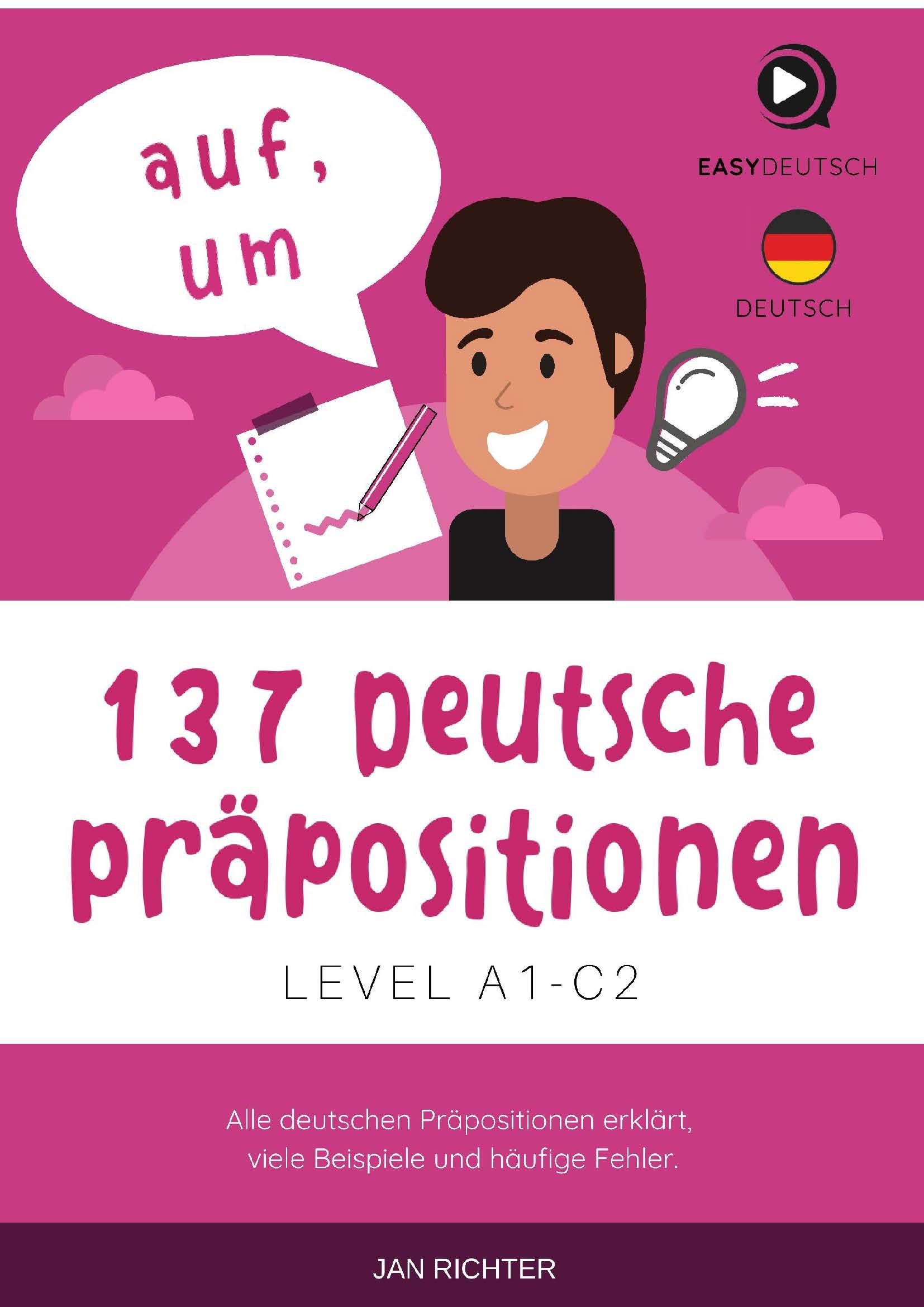
🚀 Take your German to the Next Level!
Are you struggling with German prepositions? Can't seem to grasp their correct usage? We have just the solution for you!
Introducing our eBook - '137 German Prepositions'. This comprehensive guide equips you with all the necessary information about prepositions in the German language. Not only does it provide detailed explanations, but it also includes plenty of examples to aid your understanding.
Here's a sneak peek of what our eBook offers:
📖 General introductions to prepositions
📖 Comprehensive list of German prepositions from levels A1 to C2
📖 Quick reference guide for prepositions, verbs, and adjectives
📖 Detailed examples for each meaning of a preposition
Dive into the world of German prepositions and start eliminating common mistakes from your writing and conversations!
Grab your digital copy now for just 17€ and take your German language skills to the next level!
❗ And since you're a dedicated German learner, the eBook is only 15.30€
Remember, knowledge is power, and with the right resources, you can conquer German prepositions!
👍13❤5