
🎣 Tired of struggling with complex German grammar?
This and many more intricate topics are effortlessly explained in our book!
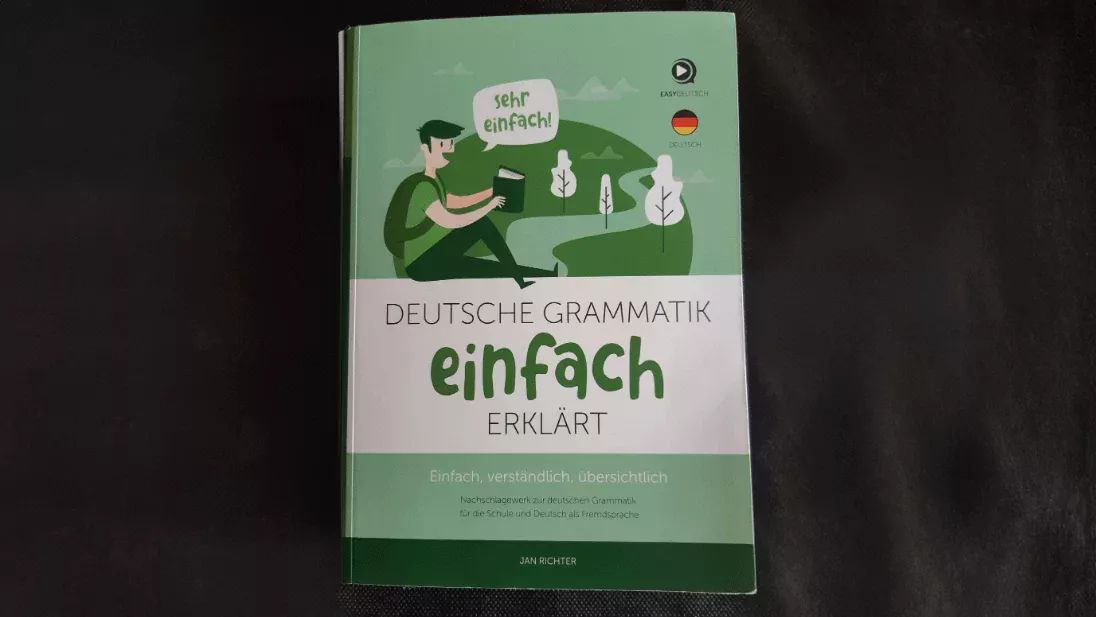
🚀 "German Grammar Easily Explained" breaks down intricate grammar rules into simple, understandable lessons. With over 120 lessons and our unique 95% method, you'll effortlessly grasp the essentials of German grammar.
🌟 Don't just take our word for it – with an average rating of 4.5 stars from over 450 reviews on Amazon, learners are raving about this book!
🛒 Ready to conquer German grammar? Grab your copy now and embark on a journey to language mastery!
🔗 Learn More
✅ Worried about your investment?
Don't be! We offer a 14-day money-back guarantee. If you're not satisfied, we'll refund your money in full. Your success is our priority.
👍15❤7😱2
😱 Neunhundertneunundneunzigtausendneunhundertneunundneunzig
... Or 999,999 😉
And that's just one feature of cardinal numbers in the German language. Let's talk about others! 💪
🔺 As you've probably figured out, when you want to write a cardinal number, you'll have to deal with lengthy and sometimes unreadable words (like in the title of this post).
🔹 Remember the rule: start with the largest category. Thousands - hundreds - ones and tens. If you have multiple tens or hundreds of thousands, follow the usual pattern: first hundreds, then ones and tens.
🔸 For example:
Zweihundert|vierundahtzig|tausend|fünfhundert|einundzwanzig = 284,521
What else should you know about cardinal numbers? 🤔
🔺 The number eins (one) takes on the ending of a definite article when used independently, for example:
Nur einer von ihnen hat die Prüfung bestanden - Only one of them passed the exam.
🔺 The cardinal numbers zwei (two) and drei (three) decline in the Genitive and Dative cases:
Das Treffen zweier/dreier Freunde - The meeting of two/three friends.
🔺 Do you know why we chose such a huge number in the title? It's because other cardinal numbers (except for 1, 2, and 3, as we mentioned) do not decline by cases up to 999,999!
❓What happens after this number? Nouns appear:
Eine Million, -en - million
Eine Milliarde, -en - billion
Eine Billion, -en - trillion
🔹 Numbers starting with these nouns look approximately like this:
Eine Million und...
First, state the number of millions/billions, etc. (remember to capitalize them), and then state the rest of the numbers following the known rules. 🤓
❤26👍8🥰1
💥 Geben and it's prefixes
📌 Did you know that the verb "geben" means "to give, hand over, or grant," among other things? But what happens when you add prefixes to this verb? Let's delve into that today.
🔺 "angeben" - to indicate, name, or inform. This can relate to providing an address or specifying a meeting time:
"Geben Sie bitte Ihre Adresse an" - Please provide your address, please.
🔺 "aufgeben" - to surrender (luggage), give up, or submit. You can also use this verb in the sense of "placing an order," for example:
"Ich möchte eine Anzeige in der Zeitung aufgeben" - I want to place an advertisement in the newspaper.
🔺 "ausgeben" - to issue, dispense, or give (orders). Additionally, this verb can mean "to spend (money)" and "to treat":
"Da muss ich dir ein Bier ausgeben" - I owe you a beer.
🔺 "(sich) begeben" - to go or travel somewhere:
"Schließlich, hatte er sich in die nahe gelegene Stadt begeben" - Finally, he went to the nearby city.
🔺 "ergeben" - to reveal, show, or yield. This verb is used to demonstrate the results of an action, for example:
"Vor kurzem hat eine Umfrage ergeben..." - Recently, a survey showed...
🔺 "(sich) ergeben" - to turn out or surrender:
"Sonst hätte ich mich Ihnen kaum ergeben" - Otherwise, I wouldn't have surrendered to you.
🔺 "nachgeben" - to give in, yield, or concede:
"Er gibt nie nach" - He never gives in.
🔺 "vorgeben" - to pretend or falsely claim:
"Ich werde einfach vorgeben, dass mir jemand geschrieben hat" - I'll just pretend that someone messaged me.
🔺 "vergeben" - to forgive or grant (e.g., forgiveness):
"Zunächst einmal musst du mir vergeben" - First of all, you must forgive me.
🔺 "zugeben" - to add, admit (guilt), or confess:
"Ich muss zugeben, ich bin ein wenig eifersüchtig" - I have to admit, I'm a bit jealous.
❤22👏6👍4🥰1
🇩🇪 Ready to Master German? 🚀
I've found the ultimate way to learn German: Deutsch mit Leo AI Tutor! 📚
🔥 Why did I choose it?
👉 More than 170,862 AI-powered messages sent
👉 Boosted my Confidence in speaking German
👉 An Affordable Alternative to traditional classes
👉 I can Learn German Directly from my phone 📱
👉 It Saves my Time with personalized lessons
👉 No Restrictions, I learn at my own pace
👉 7-Day Trial, then only 14.99 euros/month
🌍 Join me and thousands of language enthusiasts who have discovered the easiest and most affordable way to master German! 🇩🇪
📢 Act now! Embrace the language of possibilities. 📚
🎯 Perfect for beginners and advanced learners alike! 🎯
👨👩👧👦 Join our community of German learners today. Don't miss out!
📍 For language lovers worldwide 🌎
🤩 Discover the joy of learning with Leo AI Tutor! 🤓
👇 Click "Get started" to start your 7-day trial today! 👇
❤15👍5🥰2
🇩🇪 Useful phrases for everyday communication!
📌 Read, memorize, practice in speech!
Ich habe kein(en) Bock darauf! = I don't feel like it! / I'm not in the mood for it!
Das ist echt Spitze! = It's great!
Gott sei Dank! = Thank God!
Es ist mir Wurst/egal. = I don't care.
Wann treffen wir uns? = When will we meet?
Was sagen Sie dazu? = What do you say to that?
Das macht aber nichts! = But it's all right!
Es tut mir Leid. = I am very sorry.
Wie schade! = What a pity!
Leider nicht. = No, unfortunately.
Alles Gute! = All the best!
Schämen Sie sich! = Be ashamed!
Was ist los? = What happened?
Lassen Sie mich in Ruhe. = Leave me alone.
Kennen wir uns nicht? = Do we seem to know each other?
Einen Augenblick bitte. = Just a moment, please.
Meine besten Glückwünsche. = My best wishes.
Fahren Sie so schnell Sie können. = Come as quickly as possible.
Kein Problem. = No problem.
Was du nicht sagst! = Come on!
Das ist ja eine Überraschung! = What a surprise!
Kommt nicht in Frage! = It is out of the question!
Hast du etwas dagegen? = Do you have something against it?
Ich habe nichts dagegen. = I have nothing against it.
Ich drück dir die Daumen! = I'll keep my fingers crossed for you!
Viel Spaß! = Have a good time!
Gute Reise! = Bon voyage!
Gute Besserung! = Get well soon!
Lass dir schmecken! = Help yourself!
Gut geschlafen? = How did you sleep?
Mach's gut! = Good luck!
Alles Gute! = Have a nice day!
Gleichfalls! = Likewise!
All these phrases are easy to remember and easy to understand, try to use some of them in your speech more often and you will reach the level of confident spoken German faster 💪
👍42❤17😱2🥰1💩1
🇩🇪👍🏻 Important phrases to express consent!
📌 In a conversation, we often have to express our attitude to what the interlocutor said. We don’t want to just nod and say "Ja-ja!" - it's time to learn something more interesting:
Ich bin einverstanden - I agree
Du hast Recht - you're right
Genau! - exactly!
Ich habe nichts dagegen - I have nothing against
Das stimmt - right
Ich glaube dir - I believe you
Ich bin deiner (Ihrer) Meinung - I am of the same opinion as you
Super! - super!
Ich stimme dir zu - I agree with you
Natürlich! - of course!
Selbstverständlich! - obviously!
Abgemacht - agreed
Da hast du (haben Sie) völlig Recht - here you are absolutely right
Ja, das sehe ich auch so - yes, I have the same opinion
Das klingt überzeugend - it sounds convincing
Ich teile deine (Ihre) Ansicht - I share your (your) point of view
👏20❤15👍15💯2😱1
☝🏼Words that are always used in the singular!
In the dictionary next to such words, there is a note "kein Plural."
- das Fleisch — meat
- das Leder — leather
- das Eisen — iron
- das Kupfer — copper
- das Gold — gold
- der Schnee — snow
- die Nähe — proximity
- die Kindheit — childhood
- die Jugend — youth
- der Hass — hatred
- der Neid — envy
- die Furcht — fear
- der Fleiß — diligence
- die Kälte — cold
- die Wärme — warmth
- die Ruhe — tranquility
- die Treue — loyalty
- das Vertrauen — trust
- das Bewusstsein — consciousness
- das Glück — happiness
- die Erziehung — upbringing
- die Jurisprudenz — jurisprudence
- das Geflüster — whisper
- die Begeisterung — enthusiasm
🎁 Offers
👍43❤14🔥5👏2💯1
📌 Possessive Pronouns
Possessive pronouns (Possessivpronomen) express ownership or belonging, replacing a previously mentioned noun. In English, we say: "She went to the movies with her friends" or "Take your things." German possessive pronouns include:
🔸 ich (I) - mein (my),
🔸 du (you, informal singular) - dein (your),
🔸 er/es (he/it) - sein (his/its),
🔸 sie (she) - ihr (her),
🔸 wir (we) - unser (our),
🔸 ihr (you, informal plural) - euer (your),
🔸 Sie/sie (you/they) - Ihr/ihr (your/their).
Nouns can be replaced by possessive pronouns for variety and to avoid redundancy.
Wem gehören diese Taschen? - Das sind meine. ("Whose bags are these?" - "These are mine.")
Geben Sie mir bitte Ihre Telefonnummer - Meine? ("Please give me your phone number" - "Mine?")
In responses, pronouns replace nouns, with their endings coinciding with definite article endings.
🔓 Unlock the full potential of your German language journey with the '5 + 5 + X - Grammar Superstar' Pack.
Act now to enjoy 10 ebooks, including intensive trainers and exercises, and elevate your German grammar skills.
👉🏼 Learn more
👍15❤10👏2
🇩🇪 German Particles Simplified
Today, we've compiled the most frequently used particles in the German language for you. Save this post for easy reference! 😉
1️⃣ Intensifying Particles 💪🏻
- doch – yet / still,
- sogar – even,
- so – so / thus,
- zu – too / overly,
- selbst – even (emphasis);
2️⃣ Highlighting Particles ❗️
- gerade / eben / ausgerechnet – exactly / just / precisely;
3️⃣ Limiting Particles 🚫
- nur / bloß / erst / allein – only / just / merely,
- noch – still / yet;
4️⃣ Negative Particles ⛔️
- nicht – not,
- nicht einmal – not even;
5️⃣ Emotional-Modal Particles 😃
- denn / etwa – perhaps / maybe,
- mal – (informal particle for softening),
- ja – indeed / certainly,
- nun – well / now.
Examples:
- Dazu ist es schon zu spät – Besides, it's already too late (particle "zu").
- So früh habe ich dich nicht erwartet – I did not expect you this early (particle "so").
- Selbst das Einfachste wußte sie nicht – She didn't even know the simplest things (particle "selbst").
- Es war doch herrlich hier, in der kleinen Siedlung am Waldrand – Indeed, it was wonderful here, in the small settlement at the edge of the forest (particle "doch").
✅ Note that in appearance, particles can resemble:
- adjectives / adverbs – bloß, eben, gerade, mal, nun, so, schon;
- pronouns – allein, es, etwa, selbst;
- conjunctions – denn, doch.
🌟 Want to Master German Grammar? 🌟
If you're intrigued by the depth of the German language and wish to delve deeper, our 5+5 Grammar Superstar course is the perfect next step. It's not just about learning; it's about mastering complex grammatical structures and gaining the confidence to use them effectively.
🚀 Join a community of dedicated learners and elevate your German skills to new heights. Click here to start your journey to becoming a Grammar Superstar: 5+5 Grammar Superstar
❤24👍10😱3🤔1💯1
👍🏼 Exploring the Versatility of "Tragen" in German and Its Various Prefixes
The verb 'tragen' in German typically means "to carry" or "to wear," but its meaning can shift dramatically with different prefixes. Let's examine 'tragen' with original examples:
✨ abtragen: To demolish or wear out.
- "Wir müssen das alte Gebäude bald abtragen." (We have to demolish the old building soon.)
☀️ auftragen: To apply something, like a cream.
- "Ich trage die Farbe gleichmäßig auf die Wand auf." (I am applying the paint evenly on the wall.)
📦 austragen: To carry out or deliver.
- "Der Postbote trägt die Pakete aus." (The postman delivers the packages.)
🤝 beitragen: To contribute or aid.
- "Jeder kann zum Erfolg des Projekts beitragen." (Everyone can contribute to the success of the project.)
💰 betragen: To amount to something.
- "Die Kosten betragen 100 Euro." (The cost amounts to 100 Euros.)
📝 eintragen: To enter or register something.
- "Bitte tragen Sie Ihre Daten in das Formular ein." (Please enter your data into the form.)
🛡️ ertragen: To endure or bear.
- "Sie kann die Kälte kaum ertragen." (She can hardly endure the cold.)
📺 übertragen: To transfer or broadcast.
- "Das Konzert wird live übertragen." (The concert is being broadcast live.)
🤗 vertragen: To tolerate or get along with.
- "Ich vertrage Laktose nicht gut." (I don't tolerate lactose well.)
🎤 vortragen: To present or perform.
- "Er wird seine Forschungsergebnisse vortragen." (He will present his research findings.)
Embark on a journey to master these nuances in the German language with our "German Grammar Superstar" course, perfect for English-speaking learners looking to deepen their German skills.
👉🏼 Explore German Grammar Superstar
👍26❤12🔥2💯2
👍🏼 Discovering the Many Faces of 'Nehmen' in German with Prefixes
The verb 'nehmen' in German generally means "to take," "to grab," or "to seize," among its most common uses. Let's explore how adding prefixes changes its meaning, making it a versatile verb in the German language. This is just a glimpse of what you can learn in our "German Grammar Superstar" course.
🌟 annehmen: To accept, take on, or adopt.
- "Du kannst von niemandem Hilfe annehmen." (You can't accept help from anyone.)
🤔 sich benehmen: To behave.
- "Du hast keine Ahnung, wie seltsam sie sich benehmen." (You have no idea how strangely they behave.)
📍 einnehmen: To take, receive, or occupy (a place; also used in the sense of "to capture").
- "Ich will meinen Platz neben dir einnehmen." (I want to take my place next to you.)
🚨 festnehmen: To detain or arrest.
- "Ich könnte Sie festnehmen wegen Vorenthalten von Beweismitteln." (I should detain you for withholding evidence.)
🛠️ vornehmen: To undertake, embark on, or make adjustments.
- "Okay, ich muss ein paar Anpassungen daran vornehmen." (Okay, I need to make a few adjustments to it.)
Get the "German Grammar Superstar" ebook series to dive deeper into the fascinating world of German verbs and their prefixes, tailored for English-speaking learners who want to enhance their command of the German language.
Explore German Grammar Superstar
❤15👍13👏1
📚 German Vocabulary: Easy to Confuse Words 🧐
Today, we've gathered a selection of German words that are easily confused. Save this post to avoid making mistakes!
📍das Blei - der Brei
(lead - porridge)
📍bieten - bitten
(to offer - to ask)
📍verschwinden - verschwenden
(to disappear - to waste)
📍schwitzen - schwätzen
(to sweat - to chat)
📍fruchtbar - furchtbar
(fertile - terrible)
📍das Meer - mehr
(sea - more)
📍schon - schön
(already - beautiful)
📍die Tante - die Taste
(aunt - key/button)
📍die Besetzung - die Übersetzung
(occupation - translation)
📍der Tag - die Tagung
(day - conference/meeting)
📍die Seide - die Seife
(silk - soap)
📍fühlen - füllen
(to feel - to fill)
📍bedenken - bedanken
(to consider - to thank)
📍quälen - qualmen
(to torment - to smoke)
📍prallen - prahlen
(to bounce - to boast)
📍der Topf - der Tropf
(pot - drip)
👉🏼 Remember, understanding these subtle differences can greatly improve your German skills.
😍 For more insights and learning resources, check out the German Grammar Superstar ebook series.
✌🏼 Keep learning and enjoy your journey with the German language!
👍26❤15👏5
📖 Unpacking the Verb “anstehen” in German
Today's spotlight is on the verb "anstehen" 😉
Let's dive into the meanings of "anstehen":
Three basic forms: anstehen, stand an, hat / ist angestanden.
📍(Akk.) anstehen - to await completion (about work)
Examples:
🔗 "Diese Arbeit steht schon lange an." - "This work has been pending for a long time."
📍 anstehen - to be scheduled (about a date or deadline)
Examples:
🔗 "Die Schließung des Instituts steht in diesem Jahr an." - "The closure of the institute is scheduled for this year."
📍nach (Dat.) / um (Akk.) anstehen - to stand in line for something
Examples:
🔗 "Die Menschen stehen an der Kasse lange an." - "People stand in line at the cashier for a long time."
📍nicht anstehen etwas zu tun - to do something without much thought
Examples:
🔗 "Ich stehe nicht an, dies zu entscheiden." - "I will not do this without making a decision."
📍auf (Akk.) anstehen (mit sein) (Austrian) - to depend on someone/something
Examples:
🔗 "Auf sein Geld stehe ich nicht an." - "I am not dependent on his money."
Elevate Your German to the Next Level!
🤔 Struggling with complex German verbs and grammar?
The 5+5 Grammar Superstar ebook bundle is just what you need! This advanced bundle focuses on in-depth German grammar, perfect for those who want a comprehensive understanding of the German language's intricate structures. Don't let verb conjugations or sentence structures hold you back. Enroll now and master German grammar like a pro! Check it out here: 5+5 Grammar Superstar. 🌟📚
Join us and become a German Grammar Superstar today! 🌟🇩🇪📚
👍28❤6
✨ Explore the Intriguing World of German Opposites!
Embark on a linguistic journey through German, where understanding opposites is not just a part of language learning but a doorway to fascinating expressions. Let's look at some common opposites with their full verb forms:
Jemand hat — Someone has
Niemand hat — No one has
Etwas machen — To do something
Nichts machen — To do nothing
Jemals tun — To ever do
Nie tun — To never do
Oft besuchen — To visit often
Niemals besuchen — To never ever visit
Immer lernen — To always learn
Manchmal lernen — To sometimes learn
Irgendwo gehen — To go somewhere
Nirgendwo gehen — To go nowhere
Überall suchen — To search everywhere
Nirgends finden — To find nowhere
Irgendwohin reisen — To travel to somewhere
Nirgendwohin reisen — To travel to nowhere
Mastering these contrasting pairs not only enriches your German skills but also gives you a glimpse into the beautiful complexity of the language.
🌟 Elevate Your German Skills with the 5+5 Grammar Superstar ebook! 🌟
Ready to take your German grammar to the next level? Our 5+5 Grammar Superstar ebook pack is tailored for those who aspire to master the intricacies of German grammar. Dive deep into the language with comprehensive lessons and expert guidance. Enroll now at 5+5 Grammar Superstar and transform your German learning experience!
👍30❤11
📽️ Modern Family 👨👩👧👦
Today we offer you a selection of useful phrases and expressions from the TV series "American Family":
📍hinführen (führte hin, hat hingeführt) - lead to something, lead somewhere
📍bissig- caustic, pungent
📍die Hochzeit- wedding
📍es reicht - enough is enough
📍der Wahnsinn - madness, insanity
📍lustig - funny
📍zweifeln (zweifelte, hat gezweifelt) an (Dat.) - to doubt something
📍ehrlich gesagt - frankly speaking
📍zurechtkommen (kam zurecht, ist zurechtgekommen) - to cope with
📍Spaß haben - to have fun
📍abhalten (hielt ab, hat abgehalten) - to hold, keep something at a distance
👉🏼 German Grammar Superstar
YouTube
Zickenkrieg | Modern Family | Comedy Central Deutschland
Phil wehrt sich gegen Jay's Sprüche und die beiden beginnen einen Zickenkrieg im Bissige Mädchen Format.
Mehr von der zehnten Staffel Modern Family auf deutsch gibts auf unserem Kanal!
#ComedyCentralDeutschland #ModernFamily #Zickenkrieg
Modern Family…
Mehr von der zehnten Staffel Modern Family auf deutsch gibts auf unserem Kanal!
#ComedyCentralDeutschland #ModernFamily #Zickenkrieg
Modern Family…
👍17❤11💯5
⏰ Temporal Prepositions / Zeitliche Präpositionen
📍 When speaking German, we encounter various scenarios of prepositional use. Today, let's discuss how to properly use temporal prepositions.
📍 Key temporal prepositions in German:
- um, am, im, von…bis…, nach, vor, seit. Let's look at each one:
🔺Um
Er kommt um 18 Uhr. (indicating exact time) He's coming at 6 PM.
Wir haben einander um 2015 kennengelernt. (indicating approximate year) We met around 2015.
🔺Am
Wir treffen uns am Nachmittag. (time of day, except 'in der Nacht') We'll meet in the afternoon.
Am Dienstag habe ich einen Termin. (days of the week) I have an appointment on Tuesday.
Er wurde am 10. Juli geboren. (exact dates) He was born on July 10th.
🔺Im
Im Winter ist es oft kalt. (seasons) It's often cold in winter.
Im April regnet es viel. (months) It rains a lot in April.
Ich komme in 10 Minuten. (period of time in the future) I'll be there in 10 minutes.
Weißt du, wie man im 18. Jahrhundert lebte? (century) Do you know how people lived in the 18th century?
🔺Von…bis
Von 9 bis 11 Uhr habe ich ein Meeting. (time period) I have a meeting from 9 to 11 AM.
🔺Nach
Nach dem Studium zog sie nach München. (an action after something in chronological order) After her studies, she moved to Munich.
🔺Vor
Vor dem Urlaub kaufe ich neue Kleidung. (an action that happened once in the past + time indicator) Before the vacation, I buy new clothes.
Vor dem Abendessen spielen wir Tennis. (an action preceding something in chronological order) Before dinner, we play tennis.
🔺Seit
Seit einem Monat lerne ich Spanisch. (a point in time in the past from which the action started and continues to this day) I've been learning Spanish for a month.
📖 Enhance your German skills with the 5+5 Grammar Superstar eBook pack! Dive deep into complex grammatical structures and master the German language with ease. Perfect for dedicated learners!
🔗 Learn more and grab your copy: 5+5 Grammar Superstar
👍25❤16💯3👏2
🎊 "After the Party" Vocabulary
Welcome to 2024! Let's kick off the year by learning some essential German phrases for the day after a party. Whether you're sharing fond memories or just trying to get through the day, these expressions will be super helpful:
📍 "Die Party war toll!" - The party was awesome!
📍 "Wir haben toll abgehottet!" - We partied hard!
📍 "Das war die Mühe wert!" - It was worth the effort!
📍 "Gute Erinnerungen haben" - To have good memories
📍 "Durst haben" - To be thirsty
📍 "Den Kater haben" - To have a hangover
📍 "Hunger haben" - To be hungry
📍 "Ich habe Kopfschmerzen" - I have a headache
📍 "Ich habe nicht ausgeschlafen" - I didn't get enough sleep
📍 "Ich bin müde" - I am tired
Let's make 2024 a year full of new experiences and language learning adventures! Frohes neues Jahr! 🎉🇩🇪🥳
👍32❤6💯1
☃️ Exploring 'Tragen' and its Prefixes
Dive into the versatile world of the German verb 'tragen' and its varying meanings with different prefixes:
🤸♂ abtragen - to demolish, wear out
🤸♂ auftragen - to apply, use, entrust
🤸♂ austragen - to carry out, distribute
🤸♂ beitragen - to contribute, assist
🤸♂ betragen - to amount to
🤸♂ eintragen - to register, record
🤸♂ ertragen - to endure, bear
🤸♂ übertragen - to transfer, broadcast
🤸♂ vertragen - to tolerate
🤸♂ vortragen - to recite, present
Elevate your German skills with our "German Grammar Superstar" pack.
It's specifically designed to sharpen your grammar proficiency, making complex structures clearer and your German more fluent.
Don't miss this chance to enhance your language mastery! 🌟🇩🇪
👍19❤13🔥2💯1