S Korean Market Regulator Wants to Label Upbit, Bithumb ‘Large Conglomerates
South Korea’s biggest crypto exchanges are set to be regulated by the nation’s conglomerates regulator – a sign they have grown from relative obscurity into mega-companies in the space of just a few years. But the regulatory move would also ramp up scrutiny on what is already a heavily policed industry.
The Kookmin Ilbo reported that the Fair Trade Commission (FTC) is looking to classify Bithumb and Dunamu – the operator of the market-leading Upbit exchange – as “large conglomerate” firms, due to the fact that they represent a massive combined 90% of the national crypto market.
The FTC is set to officially announce its new classifications on May 1.
Classification as a “large business group” or “conglomerate” requires firms to abide by stricter regulatory compliance, and would entail closer scrutiny. South Korea’s business landscape is dominated by family-run business groups – the likes of Samsung, LG, CJ, Hyundai, and SK. Known as chaebol in South Korea, these business groups have been accused of wielding disproportionate amounts of power – and several governments have attempted to tackle this by breaking companies up and imposing strict regulations on the companies.
The FTC, thus, has been doing the kind of work done by a monopolies commission in other nations.
Company directors and their family members are also obliged to abide by strict expropriation rules and the company must observe. Certain blocks are also placed on investment and cross-holding – whereby publicly-traded companies hold significant quantities of shares in other stock exchange-listed firms.
A wrinkle has presented itself, however. In order to prove that a company should be classified as a “large business group,” the FTC must prove that its total assets are worth some USD 4bn. However, the report pointed out that the FTC had counted client assets as well as exchange funds in its calculations.
Unnamed crypto industry officials were quoted as warning that further regulatory pressure would likely stifle growth.
And the results of the recent Presidential election could provide a further roadblock. President-Elect Yoon Suk-yeol has spoken in positive terms about the domestic crypto industry, and is minded to promote growth in the sector. Yoon will be sworn in on May 10 – just nine days after the FTC announces its decision.
But the prospect of running into bother with a new President may be off-putting for the FTC, particularly as Yoon (who met with Bithumb and Upbit officials prior to the election) wants “to increase the crypto market’s size by applying market-friendly policies” and taking a softer regulatory touch “on the crypto market,” Kookmin Ilbo noted.

Sphere Finance aims to do governance acquisitions using a treasury amassed by investors, for investors. The profits from the investments are then sent to investors as dividends in the form of the $SPHERE token every 30 minutes, 48 times a day. The treasury is amassed through taxes that users agree to pay for buying, selling & transferring their tokens, including the "Dynamic" tax, an additional tax for every % of the LP that you hold and sell on a transactional basis. Later, the project will take the form of an index fund, like an S&P 500 of crypto, airdropping tokens as dividends to holders. Join the movement.
Telegram: https://t.me/SphereDeFi
Discord: https://discord.gg/spheredefi
Twitter: https://twitter.com/SphereDeFi
Telegram: https://t.me/SphereDeFi
Discord: https://discord.gg/spheredefi
Twitter: https://twitter.com/SphereDeFi
Could Bitcoin shatter the $50,000 resistance soon? Metrics are flashing…
For weeks, bored and frustrated bulls watched Bitcoin bounce between $39,000 and $42,000 while hoping that it would shatter the resistance level soon. Their wish came true on 24 March as the king coin finally crossed $44,000. But is this another false alarm? Or a sign that Bitcoin is now on its way to bigger things?
Here’s what the metrics had to say.
Between a rock and a hard place
At press time, Bitcoin was trading at $43,940 after rising by 1.97% in the past 24 hours, while increasing by 8.28% in the last week.
A look at the MVRV ratio 30 days revealed that the metric was in the positive zone, indicating that the king coin was perhaps slightly overpriced at the moment. Even so, those who bought the dip below $35,000 saw profits. However, the MVRV Ratio 365 days put the king coin deep in negative territory.
So, what should a Bitcoin investor do from here on? What can they expect? Well, the Adjusted Price DAA Divergence was still flashing a buy signal, and the levels have not dropped significantly since late 2021. While the window to buy the dip was in the past, it’s not the ideal time to sell either.
Time to level up
If you’re wondering what the new support and resistance levels are, Glassnode has an answer. The crypto analytics platform advised traders to track the $42,000 to $45,000 range. While still a long way from $50,000, the decreasing Bitcoin risk signal should be a reason for bulls to celebrate.
That being said, Santiment wanted to keep the parties low key, noting,
“The trading crowd plays a major role in what happens after BTC and other assets finally make it past a key resistance level, so we want euphoria staying low.”
Dealing with the W-word
Here, you might be wondering whether the ongoing pandemic and international conflict might affect Bitcoin’s tender recovery. For its part, Santiment reported that since the Russia-Ukraine war was officialized, Bitcoin whales with 1,000 to 10,000 BTC spiked by more than 8%.
You might not be a whale yourself, but following these movements is key as this group of investors has been ahead of the curve when it comes to anticipating Bitcoin rallies.
Coinbase Reportedly Nears Mercado Bitcoin Purchase as Binance Readies Rio Expansion
Crypto exchange giants Coinbase and Binance could be set to go head-to-head with their expansion plans in Brazil. The former is reportedly eyeing a major M&A deal to buy one of the biggest crypto exchange platforms in the Latin America region, while Binance has confirmed it will open its own Brazilian operations.
Per a tweet from Estadão’s Broadcast service, Coinbase is “expected to announce the purchase of 2TM,” the operator of Mercado Bitcoin “at the end of April,” and the two parties are ready to “complete a deal.”
The media outlet also claimed that Coinbase had been talking to another major local crypto exchange, the Mexican platform Bitso, but had failed to reach a deal.
The media outlet claimed that talks between Coinbase and 2TM began last year.
No evidence was given to back up the claims, and multiple media outlets say Coinbase has not yet responded to the reports. Cryptonews.com has also contacted Coinbase with a request for comment.
Mercado Bitcoin is currently working with the Brazilian Central Bank on the latter’s digital currency plans, and only recently – speaking to the same media outlet – spoke about its plans to expand overseas following an investment injection from Japan’s SoftBank. Other investors in the platform include the likes of the e-commerce heavyweight Mercado Libre, which bought shares in 2TM back in January this year.
Binance, meanwhile, has followed up its purchase earlier this month of the Brazilian securities brokerage Sim;paul Investimentos, a company that operates under the purview of the Central Bank and the regulatory Securities and Exchange Commission. Now Binance says it will “open an office” in Rio De Janeiro.
Last week, Rio’s crypto-keen major Eduardo da Costa Paes announced plans to allow residents of the city to pay their local taxes in crypto.
In a Twitter post, the Binance Founder and CEO Changpeng “CZ” Zhao, who included a picture of himself with the mayor, stated that Paes had “done his part” in a “handshake deal,” by ensuring Rio residents could use “crypto for tax payments,” and that Binance was now “working on” its part of the deal – opening a Brazilian branch in the city.

Crypto Industry Rallies Ahead of Vote on Controversial EU Crypto Regulation
As the European Union institutions are advancing their discussions on the controversial Transfer of Funds Regulation (TFR), crypto industry representatives are looking to hamper the proposal’s potentially harmful impact on the sector’s future development.
Among others, the regulation could pave the way for a crackdown on so-called "unhosted wallets," or just regular crypto wallets. Art. 5 of the draft requires exchanges to report to the authorities every transfer from a non-customer’s wallet of at least EUR 1,000 (USD 1,1115).
Lavan Thasarathakumar, Director of Government and Regulatory Affairs at Global Digital Finance (GDF), said in a letter to members of the European Parliament that the industry body wants to draw decision-makers’ attention to the need to: adopt a proportionate approach to "unhosted wallets," reinstate the EUR 1,000 threshold and remove blanket reporting to competent authorities, and extend the phase-in period.
“GDF proposes that a period of 12 months for phase-in requirements and 24 months for implementation are put in place. This will give exchanges enough time to put in place the measures to deal with this,” he said.
Thasarathakumar added that, while the GDF welcomes the anti-money laundering package, there is a concern within the crypto industry “the requirements highlighted above may lead to exchanges deeming it commercially unviable to engage with unhosted wallets; creating a de facto ban.”
Meanwhile, Patrick Hansen, Head of Strategy and Business Development at Unstoppable Finance, tweeted that, with the European Parliament’s Committee for Economic and Monetary Affairs (ECON) scheduled to vote on the draft regulation this Thursday, Brussels leaves him and other industry players “no choice” but to “ring the alarm bell again”.
“The ECON committee and each political group (party) are still in final discussions on the compromise draft. Due to the tight timeframe, it is unlikely that there will be substantial changes to the compromise draft prior to Thursday,” Hansen said.

Terra’s USD 10B Bitcoin Bet May be Both a Curse and a Blessing
Terra (LUNA) founder Do Kwon’s plan to partly back the stablecoin UST with bitcoin (BTC) is causing both excitement and concern in the community, with some fearing what could happen to the bitcoin market if Terra faces problems with trust or liquidity.
The plan to back UST with BTC has been spearheaded by Terra’s Do Kwon, who on Twitter claimed that the stablecoin protocol could eventually have a bitcoin stack worth as much as USD 10bn or more.
The intention to buy USD 10bn worth of BTC was reiterated in a recent video interview, where Do Kwon said that the amount would make Terra “the largest single holder of bitcoin in the world,” besides Bitcoin's creator Satoshi Nakamoto.
“In that case, within the crypto industry, the failure of UST is equivalent to the failure of crypto itself,” Do Kwon said in the interview.
Coinbase, FTX to Ramp Up Investment in India, But Experts Warn the Country's Crypto Space May Face Chaos
Major crypto exchange aims to further expand its crypto hub in India by hiring more talent, as crypto derivatives exchange FTX considers investment in India’s Mobile Premier League (MPL), the country's largest eSports and mobile gaming platform. However, Indian crypto veterans warn that the announced levy in the country's crypto tax bill could suck liquidity out of the market, leading India's crypto industry to chaos.
Coinbase CEO Brian Armstrong, who has spent the last week touring India, has said that the crypto exchange aims to capitalize on India's "world class software talent" and hire a number of people in 2022 in a bid to expand its crypto hub in India.
"We have ambitious plans for India and seek to hire over 1,000 people in our India hub this year alone," he said in a recent blog post.
Armstrong also revealed that Coinbase will be hosting a crypto community event in Bangalore on April 7. He added that Coinbase Ventures, the investment arm of Coinbase, will host a startup pitch event on April 8 in partnership with the Indian incubator Builders Tribe.
Coinbase launched its tech hub in India last year and has over 300 full time employees, according to Armstrong, who also said the exchange's venture arm has invested USD 150m in Indian technology companies working in the crypto and Web 3 space.
"India is a magical place, and I believe crypto has a big future here," he said.
Likewise, Bahamas-based FTX intends to double down on its investment in India by pouring money into India's MPL, TechCrunch reported, citing three sources familiar with the matter.
While the plans are yet to be finalized, this would mark FTX's first direct investment in an Indian startup. Prior to this, FTX had inked a number of partnership and sponsorship deals in India, including its partnership with the India arm of Yield Guild Games (YGG), IndiGG.
However, despite the bumped interest in investing in India's crypto and Web 3 sector, experts warn the country's upcoming levy of 1% tax deducted at source (TDS), which will go into effect starting July 1, could have catastrophic effects on India's crypto sector.
Back in February, when India’s government unveiled its crypto tax plans, all eyes were fixed on the proposal to tax gains from crypto transfers at a 30% rate. However, the 1% tax deduction at source (TDS) on all crypto transaction redemptions is reportedly what could destabilize the country's crypto sector.

Ukraine Will Auction Off Received NFT Donations
Ukraine is preparing the launch of a web page where it would auction off around 300 non-fungible tokens (NFTs) the country has received in donations.
Among the donated NFTs, there is a CryptoPunk, which was sent to the country's official Ethereum (ETH) address in early March, according to Etherescan transactions. Alex Bornyakov, deputy minister of Digital Transformation of Ukraine, said he expects the CryptoPunk to fetch about USD 200,000, according to Bloomberg.
Bornyakov noted that the majority of other donated NFTs are not valuable. More specifically, he said between 5% and 10% of the donated NFTs could be valuable.
The Web page could go live as soon as this week, and would also feature 10 NFT collections created by independent firms that have pledged all the proceeds to Ukrainian causes. The sales are slated to take place on major NFT marketplace OpenSea.
“We just want to show how many people are doing this and how they are inspired by those events, and how they want to help Ukraine,” Bornyakov was quotes as saying.
The Ukraine government started accepting crypto donations within the early hours of the Russian invasion, starting with bitcoin (BTC), ethereum, and tether (USDT). However, the country has since extended the list to include a total of 14 cryptoassets.
As reported, in mid-March, Ukraine's Ministry of Digital Transformation, in cooperation with crypto derivatives exchange FTX and staking platform Everstake, launched the country’s crypto fundraising site called Aid For Ukraine.
Per the website, the community has raised more than USD 60m, which includes BTC 432, ETH 9,068, DOT 433,967, SOL 7,626, and USDT 9.2m, among others.
In late March, the Ukraine government launched the “Meta History: Museum of War,” a collection of war-themed NFTs meant to help the country raise additional funds to support its army and civilians. Notably, the country sold 1,282 of these NFTs on the first day, raising ETH 190 (USD 640,705).
According to Bornyakov, raising funds with NFTs is "even more impactful" than just asking for crypto donations. “Then you can store a piece and it’s going to be with you until you decide to sell it. It’s still out there, it still reminds people about what happened,” he said.
Meanwhile, the Stellar Development Foundation, a non-profit organization founded to support the development and growth of the open-source Stellar (XLM) network, has pledged to donate crypto to help Ukrainian refugees.
Reportedly, the foundation has raised USD 20m and will give USD 300 worth of crypto to 66,000 Ukrainians. According to Bornyakov, people with children and low-income residents will get priority and residents would be able to cash out in MoneyGram locations.

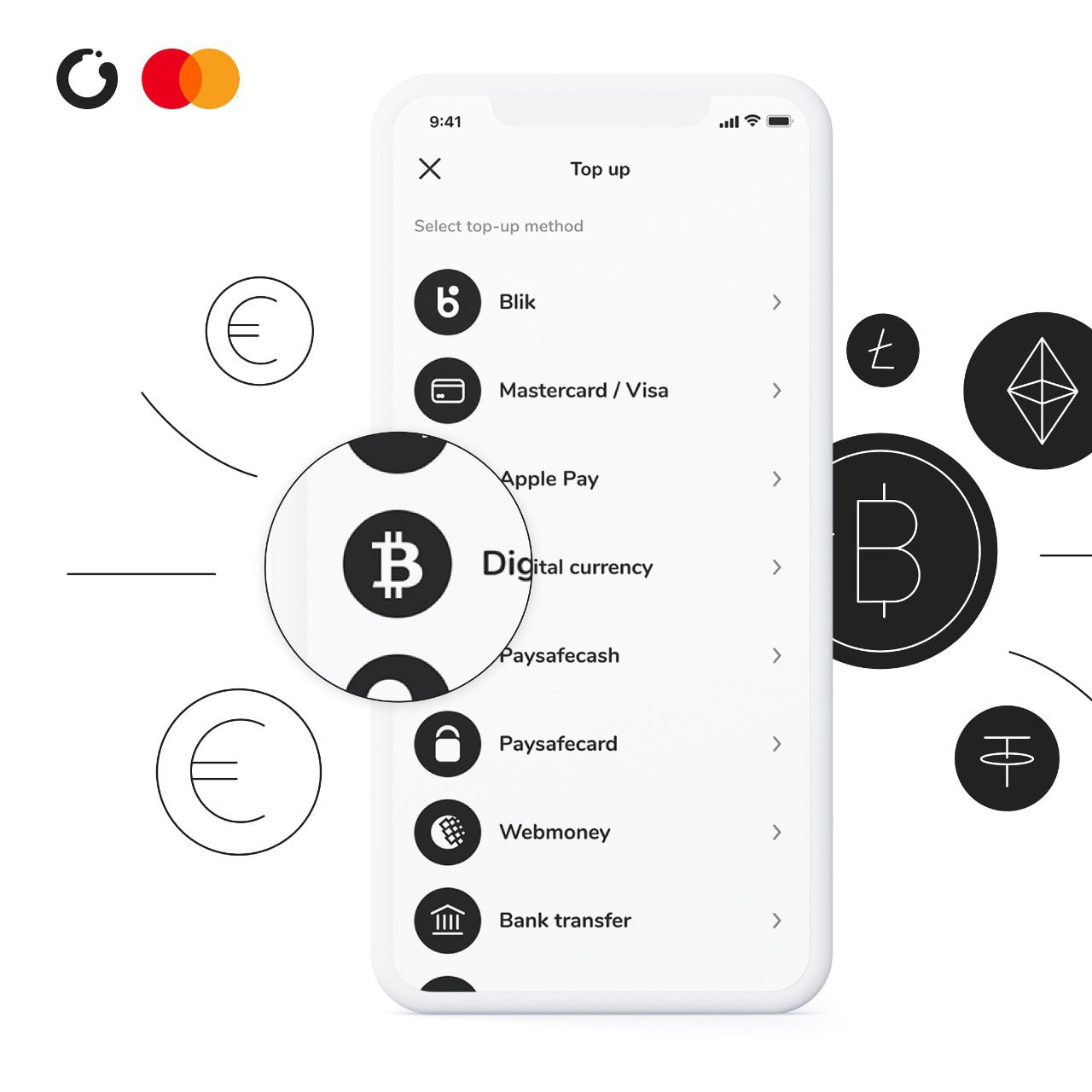
Let's meet the international #fintech ZEN.com! It will accept and convert digital assets to fiat upon receipt.
Currently, the service supports Bitcoin (including instant transfers and top-ups), Ethereum, and USD-T, as well as Litecoin (only transfers from fiat account to an exchange or a wallet).
Convert also digital assets to EUR or other currencies and spend funds conveniently with your Mastercard. One of the attractive features of the service is its competitive pricing.
Top-ups, meaning sending the assets from an exchange or a digital wallet to an EUR currency account at ZEN.COM incurs a fee of 0.5% (Platinum plan) or 0.9% (Gold plan). This is a no-brainer. ccess to Gold plan costs EUR 0,99 monthly, while Platinum is just EUR 4,99 monthly.
Use the code GETCOINIT in their app and get 120 days free subscription: https://www.zen.com/personal?utm_medium=GETCOINIT&utm_source=Influencer&utm_campaign=PERFORMANCE_X
WeChat Pay to Offer Digital Yuan Payment Options as China’s CBDC Pilot Expands
The Chinese e-pay platform WeChat Pay has unveiled a digital yuan interoperability solution that will allow users of the service to make payments in the central bank-issued token.
As reported, the central People’s Bank of China (PBoC) has recently expanded the number of cities included in its pilot for the digital CNY to include the financial and industrial hub of Guangzhou and other major urban centers.
WorkerCN reported that WeChat Pay has fully launched full “support for digital CNY” in all of the existing and new pilot areas. The solution will allow users to create digital yuan wallets in their names via the WeChat Pay-run WeBank service – allowing them to make and receive payments in the digital fiat using either the PBoC’s own app or WeChat Pay.
The move is a major boost for the token. WeChat is operated by the tech giant Tencent, and WeChat Pay, together with its rival Alipay (run by Alibaba), are estimated to account for 15% of China’s entire payments market.
Moreover, WeChat is more than a mere chat app with an e-pay platform attached – in China it is more akin to a digital ecosystem, comprising a vast array of online and digital services. WeChat Pay is the payment platform used in this ecosystem, and tapping into this represents a potentially major milestone for the digital yuan.
Many observers claim that Beijing is keen to break WeChat Pay and Alipay’s growing dominance of the payments market, particularly among younger people, but the PBoC has previously denied that this is the case.
Mu Changchun, the head of the PBoC’s Digital Currency Research Institute, said last year that WeChat Pay and PBoC were fundamentally different, explaining:
“WeChat Pay and other financial infrastructure systems are ‘wallets,’ while the digital yuan is a payment tool – in essence, the contents of a ‘wallet.’”
Having piloted the token at the Winter Olympics in February, Beijing is now keen to give the digital CNY another international test – albeit on Chinese soil.
The six cities in Zhejiang Province, including Hangzhou, that will host the Asian Games in September this year are set to be added to the pilot, with a view to allowing international athletes – and possibly spectators – to use the token.
The cities of Tianjin, Chongqing, Guangdong, Fuzhou, and Xiamen have also been added, while Beijing is continuing to use the digital token following the Winter Olympics.

This media is not supported in your browser
VIEW IN TELEGRAM
KunciCoin keeps on pushing their way to succeed in DeFi and we are proud to see that they are listed in @BitrueOfficial
Since we posted for the first time, over 14 top exchanges were listed, over $5M to $7M of daily trading volume and a game studio with 20 million downloads , They are coming up with their own NFT MARKETPLACE
With World famous Music Artists promoting their music on NFT through KUNCI on APRIL 14TH
Congratulations to the team for the achievements, join @KunciGlobalOfficial to know further.
South Korean Bank Shinhan Launches Nation’s First Corporate Crypto-Fiat Account
The South Korean commercial banking giant Shinhan has become the first bank in the nation to offer crypto account services to a corporate client.
ZDNet Korea reported that on April 7, the bank created a corporate fiat KRW account exclusively for cryptoasset transactions to the crypto exchange Korbit.
Shinhan’s Korbit connections are continuing to deepen. The bank is reportedly on the verge of finalizing a deal to buy some 20% of the crypto trading platform, South Korea’s first and one of its biggest. The bank also provides customer fiat on/off ramps for Korbit in the form of real-name banking services.
Under South Korean law, corporations were previously not allowed to make direct cryptoasset investments via banks, and were forced to buy and sell assets using overseas subsidiaries. However, a legal change late last year allowed banks to begin offering such services.
The Shinhan move will essentially allow Korbit to make crypto purchases in KRW using its account without the need to deal with cross-border workarounds.
But the move will likely have more significance for companies outside the crypto sphere. Like Tesla in the United States, South Korean firms are thought to be keen to add cryptoassets to their balance sheets. But without specialized banking services that facilitate KRW-crypto purchases, experts told the media outlet, they have been very reluctant to do so.
An unnamed industry insider said the move would likely “result in an increase in liquidity.”

Five-year Jail Term: Has Virgil Griffith Become Ethereum’s Ross Ulbricht?
Locking up crypto developers who stray into murky legal waters may become a more everyday occurrence in the years to come.
Back in 2015, Ross Ulbricht – the creator and main operator of the darknet marketplace Silk Road – was handed a double life sentence with no chance of parole, plus an additional 40-year term and a USD 183,961,921 fine. Silk Road’s currency of choice was bitcoin (BTC), and while there’s no doubt that the darknet more than lived up to its name, one can only speculate that the American legal system relished the chance to ramp up the spectacular in the sentencing process to effectively lock Ulbricht up and throw away the key.
Bitcoin crime has its poster boy in Ulbricht, who will almost certainly spend the rest of his days in the United States prison system. Rightly so, some might say. But when you look at the charges he was actually convicted of – money laundering, conspiracy to commit computer hacking, and conspiracy to traffic narcotics – some might argue that such crimes, generally speaking, do not get punished with double (or triple) life sentences in the USA.
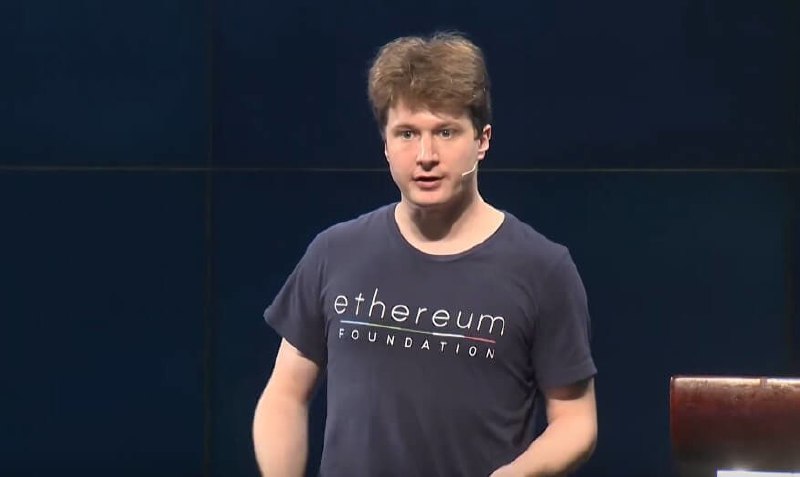
So much for Ulbricht. The ethereum (ETH) community has now seen one of its own, Virgil Griffith – a former developer and a personal friend of the co-founder Vitalik Buterin – locked up for five-plus years for giving a talk at a crypto conference in 2019.
Of course, this wasn’t just any old conference. It was held in North Korea. And it wasn’t just any old talk. It covered matters including how to use blockchain technology to evade economic sanctions. The USA and the UN believe Pyongyang views crypto (and crypto hacking) as a means of raising money to pay for its nuclear and ballistic missile program.
And Griffith didn’t just give a one-off talk. He spoke to North Korea in detail about the idea of setting up a blockchain node and tried to convince the Ethereum Foundation that this was a good idea. But Griffith has already spent some two years in custody (although over half of this time was spent on bail). He now has to spend a further 63 to 78 months behind bars and cough up a USD 100,000 fine.
Media outlets like the Washington Post have rushed to label Griffith a wayward “tech guru.” But is a five to 6.5 year-jail term really necessary here?
Elon Musk Offers to Buy 100% of Twitter, Calls it ‘Best and Final Offer
Tesla CEO Elon Musk has reportedly offered to buy 100% of Twitter at a price of USD 54.20 per share, after taking a stake of 9.2% earlier this month.
Musk’s offer would value Twitter at close to USD 43.4bn, up from a current market capitalization of USD 36.7bn. It would also mean that the company would no longer be a publicly listed company, and instead become one of America’s most valuable privately-owned companies.
Musk reportedly called the offer his “best and final offer,” the Wall Street Journal reported, quoting the largest shareholder of Twitter as saying that “If it is not accepted, I would need to reconsider my position as a shareholder
Meanwhile, Twitter is also the main social media platform used by the crypto community to share ideas and discuss developments in the space.
The outspoken CEO has also used the social media platform extensively to tweet about crypto, including his views on bitcoin (BTC) and – arguably his favorite coin – dogecoin (DOGE).
DOGE immediately jumped on the news today, rising by more than 6% before giving back some of its gains. As of 11:20 UTC, the ‘meme coin’ traded for USD 0.1438, up 3.8% for the past 24 hours.
Recently, Musk bought a 9.2% stake in Twitter, becoming the company’s largest shareholder. Following the investment, Musk was offered a seat on the company’s board by Twitter CEO Parag Agrawal, but declined the offer.
Following the Msk’s rejection of Agrawal’s offer for a seat on the board, the CEO shared a note that he sent to Twitter employees, saying “There will be distractions ahead ….” The note was interpreted by some to mean that Twitter’s top management could already sense that Musk was planning a takeover of the company.
Twitter’s stock closed at USD 45.85 on Wednesday. Musk’s offer would indicate a rise of approximately 18% for the stock from current levels.

This media is not supported in your browser
VIEW IN TELEGRAM
KunciCoin keeps on pushing their way to succeed in DeFi and we are proud to see that they are listed in big exchanges @BitrueOfficial and @Bitmartexchange
They have listed in 18 exchanges in last one month and with lot of Utilities
Now they will keep listing until they reach 100 exchange , next listing is Hotcoin Global.
Since we posted for the first time, over 14 top exchanges were listed, over 8M$ to $11M of daily trading volume and a game studio with downloads,They Launched their own NFT MARKETPLACE
With World Famous MUSIC ARTISTS
On the Occasion of their NFT platform they 2nd time burned 10% of their supply
They are Coming with their OWN BLOCKCHAIN ECOSYSTEM AND 3 BIG EXCHANGES
U need to check this Wonderful coin from Indonesia
It had best utilities more than any token in the world
This is something that we've been waiting for.
Wait for more announcement coming in, should be epic in upcoming months
JOIN
@KunciGlobalOfficial
Contract address
0x6cf271270662be1c4fc1b7bb7d7d7fc60cc19125
#DYOR
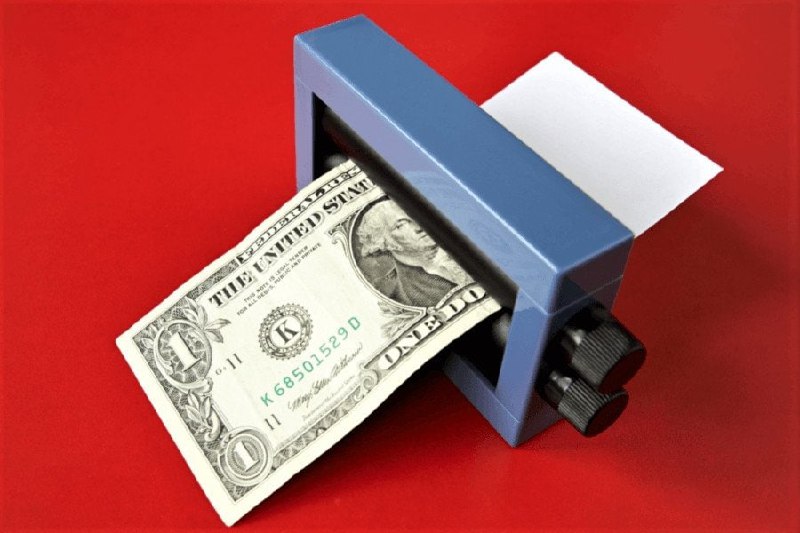
Why We Can’t Just ‘Stop Printing Money’ to Get Inflation Down
With the Bank of Canada announcing an oversized interest rate hike this week, it might seem like central banks are coming to rescue us from inflation once again. Yet while they did play an important role in mitigating a COVID-induced recession, central banks don’t have the power to solve our inflation problem.
There’s no question that the inflation outlook today is worrying. With inflation hitting 5.7% in March in Canada, we are facing a perfect storm of inflationary pressures from a combination of supply chain bottlenecks, pent-up demand and massive increases in energy prices from Russian sanctions.
As politicians start to make noise about inflation, we need to be careful not to accept the outdated assumption that central banks can control inflation by limiting the money supply.
Conservative Party leadership hopeful Pierre Poilievre recently asserted that the solution to inflation is to “stop the central bank from printing money to pay for government spending.” This is not only factually incorrect (the Bank of Canada stopped purchasing large amounts of government bonds back in October of last year), but also outdated.
SEC Faces Storm of Criticism from Crypto Sector, Lawmakers over ‘Exchange’ Re-definition Plans
The United States Securities Exchange Commission (SEC) and its Chairman Gary Gensler have received a slew of letters from pressure groups and parliamentarians voicing their concerns about proposed amendments to the Exchange Act, established in the 1930s. The agency plans to expand the legal definition of what an exchange is.
Patrick McHenry, the ranking member of the House Financial Services Committee, and Bill Huizeng, the ranking member of the subcommittee on Investor Protection, Entrepreneurship and Capital Markets, sent Gensler an open letter complaining that the amendments could stifle innovation in the crypto sector.
Broadening the definition of an exchange would force other players to register with the SEC and other regulators, and could increase the amount of red tape crypto players outside the centralized exchange sphere need to contend with.
McHenry and Huizeng wrote:
“The SEC fails to identify the problem that the rulemakings are intended to solve, particularly as it relates to requiring certain market participants facilitating digital asset transactions to register with the SEC.”
The Washington DC-based crypto think tank Coin Center has previously weighed in on the matter, claiming that the proposed amendments could run counter to the American constitution. The body also warned of the dangers of “an inappropriately broad standard for registration” implicit in the SEC’s proposals.
But the politicians were not alone – over 120 others, ranging from private citizens to major crypto players like ConsenSys, have also written to the SEC about the matter – chiefly to express their displeasure.
Gabriel Shapiro, the General Counsel at the crypto research firm Delphi Digital, claimed that the SEC’s regulations “seek to re-define all ‘communications protocols’ as potential securities exchanges” – and might impact Automated Market Makers (AMMs), liquidity providers for the decentralized finance (DeFi) sector.

🚨🚨🚨BREAKING NEWS (For #AQRU)🚨🚨🚨
🤩🤩🤩The critically acclaimed (By the economic times and many more) AQRU is launching an AMA coming this Friday!
Founder Phil Blows will be taking all your questions and answering them.
This will be your chance to ask any #AQRU questions, that will hopefully get answered!
In addition to speaking to a crypto project founder🚀🔥
Follow our accounts for more details.
Telegram: https://t.me/AQRU_Official
Twitter: https://bit.ly/AMAAQRU

Banking Giants Goldman Sachs and Commerzbank Take New Steps Towards Crypto
The American investment bank Goldman Sachs is taking another step toward the crypto industry with a private meeting between its CEO and crypto exchange FTX’s founder & CEO Sam Bankman-Fried. Meanwhile, German bank Commerzbank also appears to be strengthening its crypto offering after it applied for a crypto license earlier this year.
The meeting between Sam Bankman-Fried and Goldman Sachs’ CEO David Solomon reportedly focused on whether Goldman could advise on future funding rounds for FTX, and on a potential public listing of the exchange.
Notably, the Goldman Sachs CEO also offered to advise FTX in discussions with US regulators, including the Commodity Futures Trading Commission (CFTC), which oversees the derivatives market. The offer comes after FTX, in March, filed a proposal to the CFTC that would allow it to sell and settle crypto derivatives directly, without traditional intermediaries like Goldman Sachs.
The news of the meeting between Goldman Sachs’ CEO David Solomon was first reported by the Financial Times on Thursday, citing “people familiar with the matter.”
According to the people, the meeting was held “in the Caribbean.” FTX last year moved its global headquarters from Hong Kong to the Caribbean nation of Bahamas, with Bankman-Fried praising the island nation for its “progressive, forward-looking” crypto regulations.
Ethereum's Merge Could Lower Demand for Bitcoin but Regulatory & Technical Challenges Persist
Ethereum’s (ETH) transition to proof-of-stake (PoS), known as The Merge, will likely lead some current bitcoin (BTC) holders to move part of their capital to ETH, one industry insider argues. Others, meanwhile, say that despite a yield on ETH being attractive, regulatory scrutiny means more uncertainty lies ahead for ethereum investors.
Once The Merge has been completed, “users will be able to stake and there won't be any upfront cost,” Kosala Hemachandra, founder and CEO of the popular ETH wallet MyEtherWallet, stressed as the main benefit for ETH investors in a comment to Cryptonews.com.
Hemachandra said that he believes “a lot of bitcoin holders” will move to ethereum in order to be able to stake their tokens and earn a yield on their investment.
The transition of the Ethereum network to the proof-of-stake consensus mechanism comes at a time when more and more institutional investors are getting involved in the crypto landscape, with most so far getting exposure only to BTC.
However, with increasing pressure from groups claiming that Bitcoin’s proof-of-work (PoW) consensus mechanism uses too much energy and is therefore not environmentally friendly, virtue-signaling financial institutions may be getting more interested in Ethereum.
It’s worth noting that no firm timeline for Ethereum’s transition to PoS is known to the public. The best estimates for when The Merge will happen are therefore based on comments from leading developers on the project, pointing to completion in the second half of 2022 or early 2023.
Estimates for when the highly anticipated Ethereum Merge will happen have been pushed back a number of times in the past, and the event was until recently expected to occur sometime between May and June this year.
Despite the unclear timeline, MyEtherWallet’s Hemachandra said he is certain that ETH will become more popular among investors seeking a yield.