Bitcoin Better at Tackling Rate Hikes than Ethereum, Stocks - Report
Bitcoin (BTC) is the best asset to “moderate the economic impact” of major interest rate announcements, according to a new report from Babel Finance, a crypto-financial services provider.
The report, written by Babel Finance analysts Robbie Liu and Yuanming Qiu, arrived at its conclusions by looking at the market reaction in regards to various assets during three interest rate announcements in the US this year: on May 4, March 16, and January 26.
The moderating effect bitcoin had was better than that of other digital assets such as Ethereum’s native ETH token, and the effect was clear despite BTC being closely correlated with traditional assets such as the US S&P 500 stock index, the report said.
Overall, Bitcoin’s performance on the above-stated dates demonstrates the asset’s ability to “better moderate the economic impact of monetary events in comparison with the U.S. stock market and ETH,” the researchers wrote.
As a possible explanation for this, the report pointed to the fact that “a significant proportion” of bitcoin holders have always had confidence in the asset’s “store-of-value properties and inflation-hedging narrative.”
As a result, a larger proportion of Bitcoin holders are choosing to hold on to the asset, even as other risk assets crash, the report said.
Notably, the moderate reaction in the Bitcoin market came despite the fact that the digital asset has mirrored the US stock market “to an unprecedented degree” since May 2020.
According to the report, 30-day correlations reached almost 0.8 on May 6 of 2022 – the highest correlation since July 2017.
Are you ready to trade your way to the top? 🚀⬆️
Surely you are. Challenge your trading skills at the tournament by Sunflower Corporation — a new deep liquidity ecosystem focused on crypto derivatives. Make a deposit of $100 and trade for two weeks. Who makes the most profit (PnL, %) will win.
Don’t miss:
— Prize pool of up to $10,000
— 30 winners
— 2 weeks: 4.07-17.07
Trade futures on trending and exotic cryptocurrencies with leverage up to х20.
⚡️ Join now: click here.

As Nobel Prize Winner Scores USD 100M for Ukraine, CryptoPunk Just Did Its Part Too
Ukraine has raised an additional USD 103,000 through the sale of a CryptoPunk non-fungible token (NFT), while a Nobel prize winner donated over USD 103m for Ukrainian child refugees.
The donated Punk was CryptoPunk #5364, and it sold for ETH 90 (USD 103,190), according to Alex Bornyakov, deputy minister of Digital Transformation of Ukraine.
The Punk was sent to the country's official Ethereum (ETH) address in early March. In April, Bornyakov said that he expects the CryptoPunk to fetch about USD 200,000. The price of ETH did drop significantly since then: in early April, it traded at around USD 3,500, whereas now (at 7:30 UTC) it stands at USD 1,150.
Meanwhile, Russian journalist Dmitry Muratov, who was awarded the Nobel Peace Prize in October 2021, auctioned off the gold medal and pledged to donate proceeds to help Ukrainian child refugees.
According to the Associated Press, the Nobel Peace Prize sold Monday night for USD 103.5m, shattering the old record for a Nobel.
“I was hoping that there was going to be an enormous amount of solidarity, but I was not expecting this to be such a huge amount,” Muratov reportedly said in an interview after the bidding ended.
Muratov has pledged to send the proceeds to UNICEF (United Nations Children's Fund) in order to help the charity organization in its efforts to raise funds for children displaced by the war in Ukraine. Just minutes after bidding ended, UNICEF reportedly confirmed it had received the funds.
Online bids started on June 1 to coincide with the International Children’s Day, and it continued for nearly three weeks to end on World Refugee Day.
Muratov was the editor-in-chief of the independent Russian newspaper Novaya Gazeta, which was shut down in March amid the Kremlin’s clampdown on journalists in the wake of Russia’s invasion of Ukraine.
According to a June 11 tweet by Bornyakov, Ukraine has "raised over USD 135 million in crypto in response to the Russian invasion." However, he noted that "the first wave of crypto donations has subsided," calling for more help.
Ukraine began accepting crypto donations in late February shortly after Russian troops invaded the country. Ever since, the country has been doubling down on crypto fundraising attempts.
Back in May, Ukraine's President Volodymyr Zelenskyy launched a new fundraising platform, dubbed United24, which accepts donations in more than 100 different cryptoassets.

What separates a successful project from an ordinary one? The scale of its actions and of course ambitions. At APIZ, we can confidently call ourselves the first global project that set itself the goal of doing something that no one has done before us. We are tokenizing a living organism, namely one bee!
Why a bee? The APIZ company has been engaged in beekeeping for several years and our industrial apiaries exist in 5 countries of the world: Moldova, Kyrgyzstan, Ukraine, Spain, and Andorra. We have achieved high efficiency in our apiaries, where one bee brings a profit of $0.025 dollars during the year. Compared to the average market situation, the income per bee is about $0.017 during the year.
In ten years we will create a system of 1 million hives, each hosting an average of 50,000 bees. The cost of one bee is 0,01 dollars, so according to simple math, we will release around 50 billion APIZ tokens.
Based on the solid and efficient offline business, which is also supported by the governments of the countries in which it is located, our company can guarantee the reliability and stable growth of our crypto coin. By investing in APIZ coins, you invest in the development of lands for real apiaries, food supply for bees, hives, bee families, beekeepers, equipment and even more.
Get more info about us:
https://www.apiz.digital/
https://ganeapi.com/en
https://t.me/ApizDigital
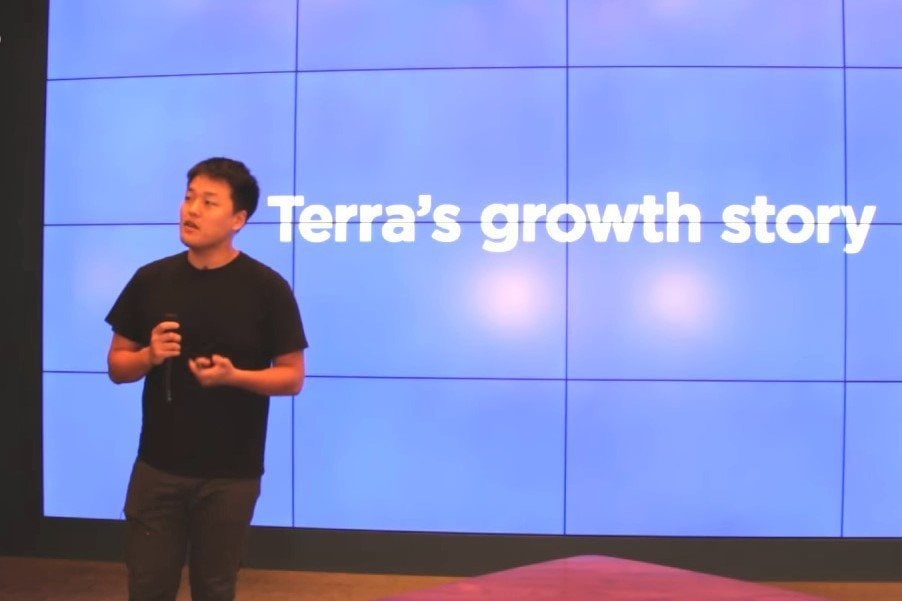
Do Kwon Says He’s No Fraudster and Has ‘Great Confidence’ in Terra 2.0
Do Kwon, the co-founder of Terraform Labs has spoken out about the Terra 2.0 network, which was launched in the wake of last month’s devastating luna classic (LUNAC) and terraUSD (UST) crash.
Speaking to the Wall Street Journal, Kown said he had “great confidence” in his team’s “ability to build back even stronger than we once were.” He said that “many builders” were currently “in the process of relaunching their apps on the new chain.”
Kwon told the media outlet that he had personally lost money in the crash, but refuted claims that Terra was a “fraud.” He was quoted as explaining:
“I made confident bets and made confident statements on behalf of UST because I believed in its resilience and its value proposition. I’ve since lost these bets, but my actions 100% match my words. There is a difference between failing and running a fraud.”
Kwon added that he had “never really counted” his LUNAC fortune, even when the coin was at its peak value of around USD 116. He explained that he lost “nearly all” his “net worth” in the crash. But, he said, the losses “don’t bother” him as he leads “a fairly frugal life.”
Regardless, he stated:
“I’ve been devastated by recent events and hope that all the families who’ve been impacted are taking care of themselves and those that they love.”
Many of these “families” will not be contented with apologies. A number of civil court cases have been lodged against Terraform, Kwon, and his business partners in South Korea.
And the Wall Street Journal pointed out that a legal firm representing a Chicago-based Terra 1.0 investor had “filed a suit seeking class-action status against Kwon, Terraform Labs and several other firms, accusing them of fraud and the sale of unregistered securities.”
Terraform Labs was quoted as stating that it would not comment on active investigations, but called the lawsuit “meritless.” The firm added that it “intended to defend itself.”
Kwon also expressed regret about his previous social media behavior. When the “crypto skeptic” Frances Coppola challenged him, Kwon replied:
“I don’t debate the poor on Twitter, and sorry I don’t have any change on me for her at the moment.”
Mastercard: 51% of Surveyed Consumers in Latin America & the Caribbean Have ‘Experienced’ Crypto
Interest in crypto is piquing in Latin America and the Caribbean (LAC), where the payments giant Mastercard says over half of “consumers” have already had at least one encounter with crypto.
The firm said that it had spoken to “more than 35,000 people around the world” as part of its New Payments Index survey, with 51% of LAC respondents saying that they had completed “at least one crypto-related activity in the past 12 months.”
It added that “more than a third” of Latin American/Caribbean respondents have used a stablecoin to “make a payment for an everyday purchase.”
The survey, conducted between March and April this year, further found that 54% of Latino and Caribbean consumers are “optimistic” about the performance of digital assets as an investment.
Some 66% of Latin Americans and Caribbeans replied that they wanted “greater flexibility to use crypto and traditional payment methods interchangeably” in their daily financial operations.
A whopping 82% also replied that they wanted their current banks to provide them with a range of “directly available” “cryptocurrency-related” functions.
And 77% of those questioned said they would be happy to use crypto more if they understood more about it.
The survey further indicated that if cryptoassets “were issued or backed by a trusted organization,” such as a bank, 69% of the respondents would feel more confident investing.
And 67% said they would be happy to make or receive payments in cryptoassets if tokens had tradfi (traditional finance) backers.
The survey appears to show that the area is an outlier, however. Globally, just over a third of respondents said they were “somewhat or very likely to try paying with crypto” in the next year, with fewer than 6 in 10 stating that they “would feel more confident about crypto if they knew it was issued or backed by a reputable organization.”
Mastercard's survey also found that digital payments are on the rise in Latin America, with 95% of respondents stating that they intended to use digital payment methods in the next year. Almost a third of respondents stated that they had used less cash over the past 12 months.
The survey’s findings come hot on the heels of a flurry of activity in the region from Mastercard's rival Visa. The latter rolled out a number of crypto cards in Brazil and Argentina this month – in partnership with major local blockchain industry players.
Walter Pimenta, Mastercard’s Executive Vice President of Products and Engineering in the Latin America/Caribbean region, was quoted as stating that “more and more Latin Americans are showing interest in cryptocurrencies and want solutions that facilitate access to the crypto world.”
He added that Mastercard was now working on “solutions to expand digital inclusion and strengthening alliances that guarantee operability and support.”

Anonymous Pledges to Reveal 'Do Kwon’s Entire History' Since He Entered Crypto
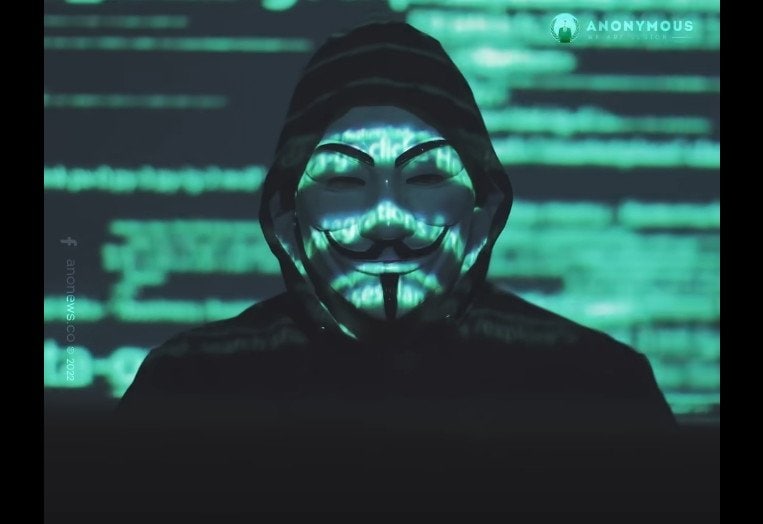
Hacktivist group Anonymous has vowed to look into the actions of Terra (LUNA) co-founder Do Kwon since he entered the crypto space in a bid to expose his alleged crimes.
A video purportedly coming from the hacker group said that,
“Anonymous is looking into Do Kwon’s entire history since he entered the crypto space to see what we can learn and bring to light. There is no doubt that there are many more crimes to be discovered in your trail of destruction.”
The group also pledged to “make sure” Do Kwon is “brought to justice as soon as possible” in regard to the collapse of the Terra ecosystem back in May, which erased more than USD 40bn in value from the crypto market.
The downfall of Terra, which sent shock waves across the entire industry and exacerbated the crypto crash, delivered huge losses to investors, some of which reportedly put all their life savings into what was touted as the currency of decentralized finance (DeFi).
In the video, Anonymous outlined a list of Kwon’s alleged crimes, including claims that he was cashing out USD 80m each month from LUNA and terraUSD’s (UST) prior to its collapse, as well as that he had a role in yet another algorithmic stablecoin called Basis Cash, which also collapsed.
The video stated,
“Do Kwon, if you are listening, sadly, there is nothing that can be done to reverse the damage that you have done. At this point, the only thing that we can do is hold you accountable and make sure that you are brought to justice as soon as possible.”
The hacktivist group also criticized Kwon for his “arrogant tactics'' in trolling competitors and critics and “acting like he would never fail.” It added that sometimes people just make mistakes and sometimes businesses fail, but "there is significant evidence that Do Kwon had bad intentions from the start."
Anonymous is a decentralized international activist collective that began its activities in 2003 on the anonymous social community website 4chan. The group has earned itself a reputation for organizing cyber attacks against government institutions, agencies, private corporations, and even the Church of Scientology.
Despite its many achievements in the past, some users argue that the group has not accomplished much recently.
🚀 #Staking Revolution is Here. Are You Ready? 🚀
$JMPT - Utility Token, $500B Gig Economy Challenger 🔥
⏰ Join NOW to enjoy the highest #staking rewards 🚀
Still a #nocoiner? Explore $JMPT here 👉 https://jmpt.io/Get_Coinit
$JMPT - Utility Token, $500B Gig Economy Challenger 🔥
⏰ Join NOW to enjoy the highest #staking rewards 🚀
Still a #nocoiner? Explore $JMPT here 👉 https://jmpt.io/Get_Coinit
Major Bitcoin ETF Legal Battle Begins as Grayscale Sues SEC
One of the biggest bitcoin (BTC) and crypto investment companies, US-based Grayscale Investments, sued US Securities and Exchange Commission (SEC) after it rejected its application to convert the Grayscale Bitcoin Trust (GBTC), the world's largest BTC fund, to a spot exchange-trading fund (ETF).
"It is the SEC’s arbitrary and capricious actions and discriminatory treatment of issuers that necessitates elevating this matter to the courts in the best interest of GBTC and our investors," the company said.
According to them, the market watchdog is failing to apply consistent treatment to BTC investment vehicles as evidenced by its denial of GBTC’s application for conversion to a spot ETF, but approval of several BTC futures ETFs.
"If regulators are comfortable with ETFs that hold derivatives of a given asset, they should logically be comfortable with ETFs that hold that same asset," they added.
Meanwhile, the SEC still claims that the GBTC conversion would not prevent fraudulent and manipulative acts and practices and would not protect investors and the public interest.
The GBTC now holds USD 12.9bn worth of BTC. Per Grayscale, as of June 29, GBTC shares traded at an approximately 30% discount to net asset value, representing around USD 8bn of unrealized shareholder value.
"We hold firm in our belief that converting GBTC to a spot Bitcoin ETF remains the best option for investors: it would effectively eliminate the discount and cause the shares to track the price of bitcoin," the firm said.
"Having read the 80 pages of the SEC’s previous rejection, I can’t imagine that they will think that during a smoldering crash of this magnitude it is a good time to very publicly change their mind," crypto hedge fund Pantera Capital’s CEO Dan Morehead wrote in his monthly letter yesterday before the SEC rejected the application.
According to him, after the rejection "we will see the widest discount possible."
"Seems like in the next month or two the washout will be the most extreme GBTC will ever see," the CEO added.

Japanese Trust Banks Likely to Gain Permission to Handle Crypto from Autumn
Japan is set to allow trust banks to manage cryptoassets – after a top financial regulator announced plans to roll out legislation that could become legally binding later this year.
The newspaper Nikkei reported that the Financial Services Agency (FSA), the body that polices both the banking sector and the domestic crypto industry wants to “deregulate” trust banks, a measure that will allow these financial institutions to handle coin deposits.
The FSA said that the move would let the institutions treat crypto as “trust assets.” The agency added that cryptoassets were “volatile” and that trading in them “involves high levels of risk.”
The agency said that it was aiming to strengthen investor protection and promote “appropriate” market development by “allowing trust banks” to carry out crypto-related “asset management operations.”
The FSA intends to amend financial sector-related legislation in order to carry out the change, and will hold a one-month consultation on its proposals before enshrining its decision into law.
Nikkei reported that the measure could become effective “as early as autumn” this year.
The news will come as a welcome boon to the domestic banking sector. Last month, key revisions to the Funds Settlement Law were made, allowing conventional banks, asset transfer providers, and trust banks to issue stablecoins that are pegged to the Japanese yen.
The FSA is widely expected to issue further guidance pertaining to both security tokens linked to bonds and tokenized real estate. A number of Japanese firms have expressed their desire to launch security token-related offerings, as well as crypto-powered property projects.
The FSA has been allowed to police the sector with a carte blanche ever since it was given powers over exchanges and wallet providers in September 2017. However, in recent months, the Tokyo-based government and its pro-IT business Prime Minister Fumio Kishida have indicated that they may be prepared to reform laws to ease the tax burden on crypto firms and user in a new phase of Web3-related growth.

Coinbase-Backed Crypto Exchange Vauld is Latest to Pause Withdrawals, Deposits, and Trading
Singapore-based crypto exchange Vauld is the latest crypto platform to suspend all withdrawals, deposits, and trading citing "financial challenges" amid lingering sour market conditions.
In a blog post today, CEO Darshan Bathija said that the crypto platform is "facing financial challenges" due to a mix of factors including the financial difficulties of their business partners and the current market uncertainty that has led to a significant amount of customer withdrawals -- exceeding USD 197.7m since June 12.
"As such, we have considered that it would be in the best interests of stakeholders to take immediate action in the circumstances," Bathija said, adding that they will be working with financial and legal advisors in order to explore all possible options, including restructuring, that can help the company address these financial difficulties.
He also said that Vauld intends to apply to the Singapore courts for a moratorium, an official period of delay in the performance of a legal obligation or the payment of a debt, which would give the company "breathing space" to carry out the proposed restructuring exercise.
"In the meantime, we have made the difficult decision to suspend all withdrawals, trading and deposits on the Vauld platform with immediate effect," Bathija added. "We believe that this will help to facilitate our exploration of the suitability of potential restructuring options, together with our financial and legal advisors."
Founded in 2018, Vauld enables customers to buy, lend, borrow and trade crypto assets from a unified platform. The crypto exchange is headquartered in Singapore with most of its workforce based in India.
On June 21, Vauld announced that it has laid off 30% of its workforce amid the recent crypto meltdown that has adversely affected the performance of all crypto platforms.
The exchange is also backed by some of the more notable names in the crypto industry, including the venture arm of major crypto exchange Coinbase, Pantera Capital, Valar Ventures, CMT Digital, Gumi Cryptos, Compound Labs founder Robert Leshner, and Cadenza Capital.

Voyager Digital Files for Chapter 11, Seeks to 'Maximize Value for All Stakeholders
US-based crypto platform Voyager Digital said it filed voluntary petitions for relief under Chapter 11 of the United States Bankruptcy Code as it seeks to implement its reorganization plan and "maximize value for all stakeholders."
Chapter 11 generally provides for reorganization, usually involving a corporation or partnership. A chapter 11 debtor usually proposes a plan of reorganization to keep its business alive and pay creditors over time.
Under Voyager's reorganization plan, customers with crypto in their account(s) will receive in exchange a combination of the crypto in their account(s), proceeds from the Three Arrows Capital (3AC) recovery, common shares in the newly reorganized company, and Voyager tokens. Meanwhile, customers with USD deposits in their account(s) will receive access to those funds after a reconciliation and fraud prevention process is completed with Metropolitan Commercial Bank, they added.
The company claims it has over USD 110m of cash and crypto on hand, in addition to more than USD 350m of cash held in the For Benefit of Customers account at Metropolitan Commercial Bank. Voyager also said it has approximately USD 1.3bn of cryptoassets on its platform, plus claims against 3AC of more than USD 650m. As reported, Voyager issued a notice of default to 3AC for failure to make the required payments on its previously disclosed loan of BTC 15,250 and USDC 350m.
"While I strongly believe in this future, the prolonged volatility and contagion in the crypto markets over the past few months, and the default of 3AC on a loan from the Company's subsidiary, Voyager Digital, LLC, require us to take deliberate and decisive action now. The chapter 11 process provides an efficient and equitable mechanism to maximize recovery," Stephen Ehrlich, CEO of Voyager, was quoted as saying in the announcement.
As reported, last week, Voyager Digital, said it is "temporarily" suspending trading, deposits, withdrawals, and loyalty rewards.
"This decision gives us additional time to continue exploring strategic alternatives with various interested parties while preserving the value of the Voyager platform we have built together. We will provide additional information at the appropriate time," Ehrlich was quoted as saying back then.
Also as reported, the company's exposure to troubled crypto fund Three Arrows Capital consists of BTC 15,250 (USD 307) and USDC 350m, while they also entered into a multi-million credit line agreement with Alameda Ventures, a quantitative trading firm and the parent company of the FTX exchange.

With Pledged Capital, you can do crowdfunding with Blockchain technology, and interact with smart contracts easily.
Startups can make road maps and timelines based on their actual capacity and performance targets, determining measurable criteria for paying on only fulfillable promises.
Pledged Capital manages ICO funding post-raise with micropayments and unparalleled investor oversight.
We are a Behavioral Oracle fueled crowdfunding platform, that provides real and fair allocation for a milestones fund release system, connected to DAO that controls payout.
We are making use of smart NFT as proof of participation, tiered chat access, and control flow of vested tokens.
🔥Join the ongoing Pledged Capital IEO on P2PB2B right away: p2pb2b.com/token-sale/GAIN-420/
🌐More info: pledged-capital.app/
🌐 Telegram t.me/officialpledgedcapital
Mt. Gox Trustee Moves Closer to Pay-Out, Asks Creditors for Payment Details
The trustee holding what is left after the infamous collapse of the early crypto exchange Mt. Gox is moving closer to a pay-out, asking creditors how they would like to get paid, according to a new letter.
In the letter, dated July 6, Mt. Gox’s Japanese trustee, Nobuaki Kobayashi, has asked creditors to register via an online system a bank account to which they would like to receive the cash payment.
In addition, the letter also asked creditors to indicate in the system whether they would like to receive “a portion of the rehabilitation claims involving cryptocurrency” in the form of bitcoin (BTC) and/or bitcoin cash (BCH), or not in the form of crypto.
Creditors who opt to receive a portion of their claims in crypto are also asked to register the necessary information for the transfer to be made, including wallet addresses to custodians or exchanges.
The letter did not contain information as to when the payments might be made.
Julian Liniger, co-founder & CEO of the Switzerland-based bitcoin broker Relai, previously told Cryptonews.com that the distribution of coins from Mt. Gox is unlikely to affect prices in a significant way.
“I don‘t expect a majority of these coins to be sold, as many of the beneficiaries were into bitcoin very early on already – at least since 2014 – and therefore can be considered long-term believers and hodlers,” said Liniger late last year, after creditors had approved a plan for the distribution of funds from Mt. Gox.
Twitter Says It Won't Let Elon Musk Go as 'Dogecoin CEO' Terminates Deal
A major legal battle, involving the crypto community's preferred social media platform Twitter, and Dogecoin (DOGE) advocate, Tesla's Elon Musk, is in the works.
After the serial entrepreneur said he's terminating his agreement to buy Twitter in a USD 44bn deal, the company vowed to fight back.
"The Twitter Board is committed to closing the transaction on the price and terms agreed upon with Mr. Musk and plans to pursue legal action to enforce the merger agreement. We are confident we will prevail in the Delaware Court of Chancery," Bret Taylor, Chairman of Twitter, said, without elaborating any further.
Musk accused the social media giant of breaching their agreement and making false statements
In a filing, Musk said he has sought the data and information necessary to "make an independent assessment of the prevalence of fake or spam accounts on Twitter’s platform."
However, per the star entrepreneur, "Twitter has failed or refused to provide this information."
"Sometimes Twitter has ignored Mr. Musk’s requests, sometimes it has rejected them for reasons that appear to be unjustified, and sometimes it has claimed to comply while giving Mr. Musk incomplete or unusable information," according to the filing.
Meanwhile, per Reuters, Twitter has a strong legal case against Musk.
Delaware courts have set a high bar for acquirers being allowed to abandon their deals, but target companies often choose the certainty of a renegotiated deal at a lower price or financial compensation rather than a messy court battle that can last for many months, Reuters reported, citing three corporate law professors.
"If it goes to court, Musk has the burden to prove more likely than not, that the spam account numbers not only were false, but they were so false that it will have significant effect on Twitter's earnings going forward," Ann Lipton, associate dean for faculty research at Tulane Law School, was quoted as saying.
Hey! Want access to the hottest and most exclusive content that an NFT project has ever had to offer!? Click the link below to get more info about this sexy NFT project, in-person events, and magazine!!!! MetaQueens also is hosting 1 giveaway now with a handful to come.
👉 https://discord.com/invite/HhPYuSaq
👉 https://discord.com/invite/HhPYuSaq
Discord
Discord - A New Way to Chat with Friends & Communities
Discord is the easiest way to communicate over voice, video, and text. Chat, hang out, and stay close with your friends and communities.
Axie Infinity Shows New Signs of Life, Despite Still-Falling NFT Sales
The crypto-powered play-to-earn (P2E) game Axie Infinity (AXS) is again showing signs of life, after being hit hard by a price collapse in the NFT and P2E sectors in crypto. However, sales of NFTs for the game have still fallen significantly in May and June.
One sign that the worst might be over for the game is the price of the game’s AXS token, which recovered about 10% from its low of USD 11.80 on June 18. Since then, the token reached as high as USD 18.50 on June 25, before once again sliding in recent weeks.
AXSUSDT Chart by TradingView
The stabilization of the AXS token price came as Axie Infinity embarks on a journey to transition its model to what it calls play-and-earn, rather than the traditional play-to-earn.
As it turned out, play-to-earn was extremely popular among users as long as prices of the tokens used rose in value. This was especially true in developing countries, where earnings from these games were often higher than average salaries.
When token prices started falling, however, the weaknesses of the model became more obvious, and players were left with only minuscule earnings.
The new play-and-earn model is what Axie Infinity’s new Origin version is based on, Philip La, Game Product Lead at Sky Mavis, the developer of the game, wrote in a blog post from Sunday, where he addressed what he called “misleading narratives” around the game.
“Sky Mavis is aware of economic imbalances. That is a major area Origin was built to bring balance to with the introduction of more ways for players to spend on things they value. It will evolve the Axie Infinity model so it is not player growth-dependent,” La wrote.
He added that he understands “some players will leave” as Axie Infinity transitions to “the more sustainable play-and-earn model,” but said that “core believers will stay.”
“… we have many ways to grow in the future off the strong core base,” Sky Mavis’ Game Product Lead added.
Meanwhile, positive sentiment was also shared by Jeff Zirlin, co-founder of Sky Mavis, who last week said that sales of Axies – virtual creatures collected as NFTs by players in the game – had picked up.
“22,000 sold in the last 24 hours,” Zirlin declared, while comparing it to a sales figure of just 7,000 “a few weeks ago.”
He added that the Ronin Bridge used to move assets from the Ethereum (ETH) blockchain to Axie Infinity’s own chain Ronin (RON) is now “back up,” and said virtual land in the game, 90% of which is staked, is generating AXS tokens.
The Ronin Bridge was closed for an extended period after a major hacking incident in March this year, but re-opened on June 28.

Have you heard yet about the most promising project of 2022 - Ampere?
TG Group: https://t.me/+O4X_L0_roKY0OGJk
TG News: @amprnetwork
Ampere is a neobank for businesses that unites fiat accounts and crypto wallets in one unique ecosystem. The goal of Ampere is to introduce crypto to the masses, so that even traditional businesses like restaurants or shops can run all their financial operations in Ampere and benefit from crypto.
Ampere allows businesses to:
▪️Accept payments by cards and bank transfers in fiat or crypto
▪️Make payments with fiat via SWIFT or SEPA as well as make payments by card or in crypto
▪️Stake on business crypto assets and uncover up to 20% interest on a business working capital
▪️Generate and send invoices to customers
▪️Use mobile phone as a terminal
▪️Get instant low interest loans
Join now or regret later 💸⏳
TG Group: https://t.me/+O4X_L0_roKY0OGJk
TG News: @amprnetwork
TG Group: https://t.me/+O4X_L0_roKY0OGJk
TG News: @amprnetwork
Ampere is a neobank for businesses that unites fiat accounts and crypto wallets in one unique ecosystem. The goal of Ampere is to introduce crypto to the masses, so that even traditional businesses like restaurants or shops can run all their financial operations in Ampere and benefit from crypto.
Ampere allows businesses to:
▪️Accept payments by cards and bank transfers in fiat or crypto
▪️Make payments with fiat via SWIFT or SEPA as well as make payments by card or in crypto
▪️Stake on business crypto assets and uncover up to 20% interest on a business working capital
▪️Generate and send invoices to customers
▪️Use mobile phone as a terminal
▪️Get instant low interest loans
Join now or regret later 💸⏳
TG Group: https://t.me/+O4X_L0_roKY0OGJk
TG News: @amprnetwork
Meet the ecosystem that connects the traditional finance world with decentralized blockchain technologies- 🔥Bind🔥!
Bind is a next-generation seamless fiat to crypto, crypto to fiat commercial open finance platform with licensed traditional payments infrastructure and instant payment processing worldwide.
Bind Ecosystem components
🔸BIND PAY for merchants
🔸The NFT Platform
🔸The Mobile App
🔸The Card (Private/ VIP/ Premier Membership) and instant Card Issuance
🔸The Exchange (for Traders & for Beginners)
The foundation of the Bind Ecosystem - the Bind Token!
👉🏻Its value will grow as the value of the Bind platform and ecosystem grows
👉🏻Ownership of the token will be used to reduce fees and create an extra source of revenue for token holders
Sign up & join the community to buy the Bind token at private sale price & win $25k USDT!
https://bit.ly/3Pmh8NC
No, Ukrainian Prosecutors Didn’t Just Seize 830kg of Silver from an OTC Crypto Gang – Here’s What Happened
Reports that prosecutors in the Darnytskyi District of Kyiv, Ukraine, have recently busted a gang of over-the-counter (OTC) crypto brokers – who allowed individuals in Russia and areas under Russian control to swap silver, cash, and land for cryptoassets – appear to be somewhat wide of the mark.
Earlier this week, Ukrainian prosecutors published an official release explaining that a gang had attempted to “allow users from the Russian Federation, as well as residents of the so-called Donetsk and Luhansk people’s republics, to convert cash and non-cash funds into cryptocurrency without paying taxes.”
The prosecutors explained that they had seized some USD 1.7m worth of cash – a roughly equal mix of hryvnia, USD, and euros. They also confiscated 830kg of silver bars, multiple mobile phones, and several USB flash drives.
In addition, the prosecutors said they had seized six plots of land with a “total area of over six hectares,” as well as three apartments “with a total area of 380sqm.” These properties “belong to the participants in the criminal proceedings, the prosecutors stated.
All of the above appears to be true. The only problem is, it actually seems to have happened well over a year ago. In April 2021, the Security Service of Ukraine (SSU) released an almost identical report, which also featured a YouTube video showing officers processing the haul.
The SSU report also featured the exact same images that were included in the prosecution’s report – proof that the incident in question indeed took place over a year ago.
The prosecution service said unnamed individuals involved had been charged with tax evasion, the attempted laundering of property obtained through crime, and fraud, and that all the deals involved cryptoassets.
The assets, officers said, were worth a combined total of around USD 3.4m and were found during searches conducted in Kyiv and Kharkiv. The latter city is currently one of the epicenters of the current military conflict and is reportedly under heavy attack from Russian forces.
One media outlet claimed that the prosecution’s “announcement” had “received little notice in the West.” As the story is clearly over a year old, perhaps it is not hard to understand why.