KunciCoin (BSC) || 🟨⬜️
Thrilled to announce our staking feature for KunciCoin will open soon You can get up to 15% APY, by staking you $KUNCI on doyanrebahan.com
KunciCoin keeps on pushing their way to succeed in DeFi and we are proud to see that they are going to be listed on
3 Big Exchanges
SOON THEY ARE RELEASING THEIR 2ND BATCH OF NFT ARTISTS AND MUSIC ALBUMS FROM BAND IFAN SEVENTEEN AS THEIR FIRST NFT RELEASE SOLD IN 7 MINUTES On
http://kuncinft.com
They have listed in 18 exchanges in last one month and with lot of Utilities
Now they will keep listing until they reach 100 exchanges
Since we posted for the first time, over 14 top exchanges were listed, over 8M$ to $11M of daily trading volume and a game studio with downloads
They are Coming with their OWN BLOCKCHAIN ECOSYSTEM AND 3 BIG EXCHANGES
U need to check this Wonderful coin from Indonesia
JOIN TG
@KunciGlobalOfficial
Announcement channel
@kunciglobalchannel
CA
0x6cf271270662be1c4fc1b7bb7d7d7fc60cc19125
American Bitcoin Miner Aims to Sell USD 30M Equipment in Russia to Avoid Sanctions
US-based Bitcoin (BTC) & crypto mining company Compass Mining aims to sell USD 30m worth of mining gear currently stuck in Siberia to buyers in Russia in a bid to avoid possible sanctions by the US and the EU.
Whit Gibbs, CEO of the Texas-based company, has told Bloomberg that the mining servers have a capacity of 12 megawatts and can't be moved out of the country, adding that the proceeds from the sale will be used to pay off roughly 2,000 customers who own the equipment.
“I understand the sanctions; in this case the punishment is outsized for American miners,” Gibbs reportedly said, noting that while recovering funds is crucial, his clients will have to give up on BTC mining.
Founded in 2020, Compass Mining also operates data centers that host servers owned by their customers. The company benefited significantly from China's Bitcoin miner exodus seen last year, and aims to further expand its business by adding 3,500 to 5,000 megawatts of capacity within two years, Gibbs said.
The move follows a recent decision by the US Treasury to sanction Russian crypto mining firm BitRiver. In a statement, the Treasury justified its decision by saying that it is targeting Russia’s virtual currency mining industry to ensure "that no asset, no matter how complex, becomes a mechanism for the Vladimir Putin regime to offset the impact of sanctions."
However, BitRiver founder and CEO Igor Runets said that the sanctions are an interference by the US in the crypto mining industry in a bid to "change the global balance of power in favor of American companies."
Runets added that the company “has never provided services to Russian government institutions and has not worked with customers already targeted by Washington’s sanctions.”
Panamanian MP: Our Draft Crypto Law Is Different from El Salvador’s Bitcoin Law
The MP architect of a draft Panamanian private member’s bill that proposes allowing the use of crypto as a form of payment has claimed that there are key differences between his proposed law and the Bitcoin Law adopted in El Salvador last year.
The Salvadoran law gave bitcoin (BTC) legal tender status alongside the fiat USD, but stipulates that merchants may not reject a BTC payment if a customer requests to pay in the cryptoasset. It also promoted the use of its own state-run BTC wallet and app.
Per Radio Panama, Gabriel Silva, the 32-year-old independent Panamanian congressman who created the bill, the above would not apply if his bill became law, and the door would be open for other tokens, not only BTC.
The bill, named “Crypto Law: Making Panama compatible with the digital economy, blockchain, cryptoassets, and the internet,” will be debated again in parliament in the coming weeks following a successful first reading, and Silva has stated that the bill, if adopted, would bring to Panama “legal, regulatory, and fiscal certainty to the use, holding and issuance of digital value and cryptoassets.”
As reported, private-sector and banking industry support has been on the rise for the measure this year.
Silva added that crypto usage would “be optional” under the terms of his bill, with merchants free to reject payments in crypto.
He was quoted as stating:
“Here in Panama, we are making this optional. That means that if I have cryptocurrency in Panama and I want to pay with it and a vendor does not want to accept it, the vendor is not obliged to accept it. In addition, the El Salvador law speaks only of bitcoin. However, the plan approved in the first debate establishes the possibility of using any cryptocurrency. We cannot and do not want to close the door to the use of more than one type of cryptocurrency.”
Silva added that this was harmonious with the spirit of Panamanian constitutional law.
“The constitution prohibits the compulsory use of only one currency. In Panama, you can use different currencies. Establishing rules that restricted citizens to a single currency would be unconstitutional. We were not only talking about bitcoin, we were talking about a number of cryptocurrencies,” he said.

Goldman Sachs Confirms It Granted a Lender a Bitcoin-backed Loan
The American investment banking heavyweight Goldman Sachs has granted a customer a cash loan backed by bitcoin (BTC).
Bloomberg reported that Goldman Sachs had confirmed that it had lent cash in a deal that was “collateralized by bitcoin owned by the borrower,” per “a spokeswoman for the bank.”
The spokeswoman stated that the deal “was interesting to” the bank “because of its structure and 24-hour risk management,” while the media outlet called the loan “a significant step for a major United States bank that accelerates Wall Street’s embrace of cryptocurrencies.”
Further details of the loan – such as the borrower’s identity and the amount involved – were not made public.
However, in recent months, Goldman Sachs has stepped up its crypto adoption plans. Last month, reports claimed the firm was “close to announcing” that it had become the first major bank in the USA to offer over-the-counter (OTC) crypto transaction-related services.
Then, earlier in April, the firm expanded its OTC crypto options trading offerings to options contracts based on ethereum (ETH).
Last week, Cryptonews.com reported that the bank may even be eyeing a partnership deal that may involve one of the United States’ largest crypto exchanges. A private meeting reportedly took place involving its leadership and the FTX Founder and CEO Sam Bankman-Fried.
The meeting, which was reportedly attended by Goldman Sachs’ CEO David Solomon, allegedly focused on the issue of whether Goldman could advise on future funding rounds for FTX, as well as a potential public listing for the exchange.
The bank appears to have pivoted toward large-cap cryptoassets and business involving these, a departure from its previous stance on digital coins. Most notably, the company had previously talked up the issuance of its own stablecoin. But in January this year, the company suggested that it now had no immediate intention of launching a Goldman Sachs coin.
KunciCoin(BSC)🟨⬜️
KunciCoin keeps on pushing their way to succeed And getting listed in HOTCOIN GLOBAL and 3 big Exchanges
World class musicians and artists like Band Ifan Seventeen releasing their Music and arts regularly on
https://www.kuncinft.com
They are verified on
Kuncicoinglobal Twitter✅
Kunci-Indo Twitter ✅
CoinMarketCap ✅
With a market cap of 7 million
They have listed in 18 exchanges
Now they will keep pushing listing until they reach 100 exchanges
Since we posted, over 18 top exchanges were listed, over 5M$ to $11M of daily trading volume and a game studio with downloads.
They are Coming with their OWN BLOCKCHAIN ECOSYSTEM
U need to check this Wonderful coin from Indonesia
It had best utilities more than any token in the world
They are conducting events all across Indonesia
Full Doxxed Team
JOIN TG
@KunciGlobalOfficial
Announcement channel
@kunciglobalchannel
Twitter
https://twitter.com/Kuncicoinglobal?t=ukp3EkVapq19IsXICqHomw&s=09
CA
0x6cf271270662be1c4fc1b7bb7d7d7fc60cc19125
KunciCoin keeps on pushing their way to succeed And getting listed in HOTCOIN GLOBAL and 3 big Exchanges
World class musicians and artists like Band Ifan Seventeen releasing their Music and arts regularly on
https://www.kuncinft.com
They are verified on
Kuncicoinglobal Twitter✅
Kunci-Indo Twitter ✅
CoinMarketCap ✅
With a market cap of 7 million
They have listed in 18 exchanges
Now they will keep pushing listing until they reach 100 exchanges
Since we posted, over 18 top exchanges were listed, over 5M$ to $11M of daily trading volume and a game studio with downloads.
They are Coming with their OWN BLOCKCHAIN ECOSYSTEM
U need to check this Wonderful coin from Indonesia
It had best utilities more than any token in the world
They are conducting events all across Indonesia
Full Doxxed Team
JOIN TG
@KunciGlobalOfficial
Announcement channel
@kunciglobalchannel
https://twitter.com/Kuncicoinglobal?t=ukp3EkVapq19IsXICqHomw&s=09
CA
0x6cf271270662be1c4fc1b7bb7d7d7fc60cc19125
The ‘Digital Town Square’: What Might Musk’s Twitter Deal Mean?
The world’s richest man, Elon Musk, seems set to purchase the social media platform Twitter for around USD 44bn. He says he’s not doing it to make money (which is good, because Twitter has rarely turned a profit), but rather because, among other things, he believes in free speech.
Twitter might seem an odd place to make a stand for free speech. The service has around 217 million daily users, only a fraction of the 2.8 billion who log in each day to one of the Meta family (Facebook, Instagram, and WhatsApp).
But the platform plays a disproportionately large role in society. It is essential infrastructure for journalists and academics. It has been used to coordinate emergency information, to build up communities of solidarity and protest, and to share global events and media rituals – from presidential elections to mourning celebrity deaths (and unpredictable moments at the Oscars).
Twitter’s unique role is a result of the way it combines personal media use with public debate and discussion. But this is a fragile and volatile mix - and one that has become increasingly difficult for the platform to manage.
According to Musk, “Twitter is the digital town square, where matters vital to the future of humanity are debated”. Twitter co-founder Jack Dorsey, in approving Musk’s takeover, went further, claiming “Twitter is the closest thing we have to a global consciousness”.
Are they right? Does it make sense to think of Twitter as a town square? And if so, do we want the town square to be controlled by libertarian billionaires?

Crypto Sports Sponsorship Moves into Fast Lane with OKX F1 Deal
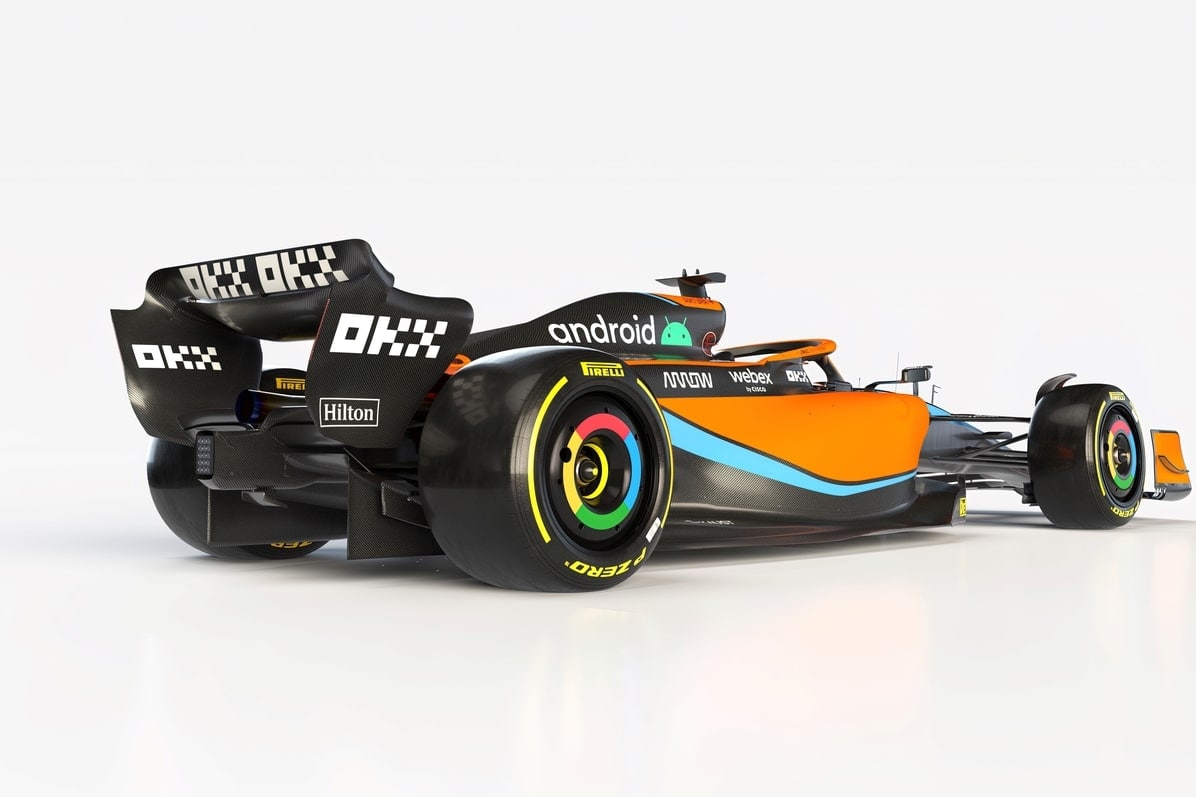
The crypto industry has stepped up another gear in its race to win the hearts, minds, and some money of sporting fans the world over. Following the news that will be one of the main sponsors of the World Cup in Qatar later this year, the crypto exchange has announced that it has become the “largest primary partner of the McLaren Formula 1 team.
The deal takes immediate effect, per materials shared with Cryptonews.com, and is “the first of its kind.” The firm claimed that “no other crypto company besides OKX can claim to be the largest partner to a Formula One team.”
McLaren currently sits fourth in the constructors’ championship, and its drivers Lando Norris and Daniel Ricciardo are currently ranked sixth and 11th respectively. Norris managed a podium finish in the Italian Grand Prix, and the team is racing in a new MCL36 car this season.
OKX branding will be used on the car and drivers’ attire at the Miami Grand Prix this week. The first round of qualifying begins on Friday.
OKX added that the deal also includes sponsorship rights for the McLaren Shadow eSports team and noted that “McLaren and OKX are working on much more than brand exposure” with the new arrangement.
Last June, McLaren Racing announced a long-term sponsorship deal with the Turkish crypto exchange Bitci.com, which also included the release of NFTs and a fan token. However, the sponsorship agreement was terminated with no reasons given for the termination and no mention of the future of the fan token.
Other crypto firms are also active in the F1 area, including the OKX rival , which has partnered with the BWT Alpine team. And there will be another cryptoasset-related sponsor making its debut in Miami: In February, Crypto.com was unveiled as the race’s official sponsor. Also in February, , one of the top 10 crypto exchanges by spot volume, entered into a major sponsorship agreement with the Formula One team Oracle Red Bull Racing.
Based in Woking in the UK, McLaren is one of the biggest names in F1 and the likes of Niki Lauda, Alain Prost, Ayrton Senna, and Lewis Hamilton have won driver’s titles in its cars. The Brazilian driver Emerson Fittipaldi won the team’s first driver’s prize in 1974 – although the team is not quite the dominant it once was: McLaren’s last constructors’ title came back in 1998.
In the 1980s, however, the team was the dominant force in F1, bagging back-to-back trophies in both categories.
Last month, the team sealed a secondary sponsorship deal with the internet giant Google.
Ethereum Needs to Pass These Three Tests Before Migrating to PoS
The path to fully transitioning from the current Ethereum (ETH) Mainnet to the beacon chain proof-of-stake (PoS) system, a process also referred to as The Merge, is now clearly in sight, according to Ethereum core developer Tim Beiko.
In a recent blog post, Beiko detailed the steps that need to happen before the world's second-largest project migrates to PoS.
In the first place, Ethereum needs to have a "few mainnet Shadow Forks without issues." As reported, Ethereum developers implemented the first-ever shadow fork in early April, which was designed to stress-test developers' assumptions on existing testnets and the mainnet.
Ethereum developer Marius van der Wijden, who initially came up with the shadow fork idea, called the first shadow fork "a huge success." However, he also noted that there were some severe problems.
For instance, Nethermind, an Ethereum-based software systems provider, and Hyperledger Besu, a Java-based open-source Ethereum client, stopped at the transition. There was also an issue with the default gas limit.
While there were certain issues with the first shadow fork, "the second mainnet shadow fork (MSF2) went almost perfectly," Beiko said, adding that.
If MSF3, another upcoming shadow fork, "happens without issues and remains stable afterwards, we could move towards upgrading existing testnets."
Once the network passes a few shadow forks without issues, it would be time for Ethereum clients -- softwares needed to allow Ethereum nodes to read blocks on the Ethereum blockchain and Ethereum-based smart contracts -- to pass the various merge test suites.
The first test suite is called Hive, which could help test the new Engine Application Programming Interfaces (APIs) that different clients use to communicate. In addition to improving Hive, the devs will work with Kurtosis, a platform for the end-to-end testing of mission-critical blockchain infrastructure, to "find implementation issues across clients and monitor various network health metrics."
Besides these two, there is also a long list of testing tools built by the client, research, and testing teams to help developers catch potential issues. These include fuzzers, bad block generators, debugging APIs, and more.
The third and final stage would be to deploy The Merge across the existing public testnets, namely Ropsten, Goerli, and Sepolia. Since public testnets require broader coordination within the Ethereum ecosystem, they would be a final requirement before setting a merge date for the mainnet.
"And that's it! Once these things happen, and we've observed them be stable for a few weeks, we'll be ready to move to mainnet!" Beiko said.
It is worth noting that there is no specific date for The Merge yet. However, Beiko said in mid-April that the major network upgrade would be completed a few months after June.
“It won't be June, but likely in a few months after. No firm date yet, but we're definitely in the final chapter of proof-of-work – PoW on Ethereum,” Beiko wrote on Twitter at the time.

Bitcoin Extends Sell-Off Despite Luna Buying, Strong On-Chain Data
Bitcoin (BTC) and other major cryptoassets fell sharply over the past day, as stock markets around the world reversed earlier gains to losses after the US Federal Reserve (Fed) raised rates by 50 basis points. The sharp fall came despite massive bitcoin buying by Luna Foundation Guard (LFG).
At 11:23 UTC, BTC stood at USD 35,917, down 9% for the past 24 hours and almost 10% for the past 7 days. At the same time, ethereum (ETH) traded at USD 2,685, down over 8% both on a daily and weekly basis
The selling pressure in bitcoin over the past day did not ease even as news emerged that Terra (LUNA) founder Do Kwon’s Luna Foundation Guard had purchased USD 1.5bn worth of BTC on the market. The latest purchase happened with the help of crypto hedge fund Three Arrows Capital, Do Kwon confirmed on Twitter.
The foundation’s buying is part of an effort to partially back Terra’s stablecoin UST with BTC. Do Kwon has previously stated that he wants to buy as much as USD 10bn worth of bitcoin for the task.
“For the first time, you’re starting to see a pegged currency that is attempting to observe the Bitcoin standard. It’s making a strong directional bet that keeping a lot of those foreign reserves in the form of a digital native currency is going to be a winning recipe,” Do Kwon was quoted by CNBC as saying on Thursday.
DeFi Lending Protocol Fortress Loses All Funds in Oracle Price Manipulation Attack
"Fortress has been hit with what we believe is an oracle manipulation attack draining all funds," the project said on Twitter. "We are investigating to determine the exact method of attack."
Blockchain security firm PeckShield also tweeted about the attack, saying that ETH 1,048 (USD 2.58m) and DAI 400,000, cumulatively worth around USD 2.98m, were stolen from the project. Fortress provided the same numbers.
Fortress is an algorithmic money market and synthetic stablecoin protocol designed to bring credit and lending to users on Binance Smart Chain (BSC).
After exploiting the protocol, the attacker bridged all stolen funds to Ethereum (ETH) before depositing them into the popular crypto mixer Tornado Cash, Etherescan transactions show.
Blockchain security firm Blocksec detailed that the Chain oracle used by Fortress lacked power verification, which enabled anyone to hijack it.
"The
Moreover, the attacker used USD 8,000 and purchased FTS 296,193 to "vote for a proposal that added the FTS token as collateral." Subsequently, the attacker was able to use FTS 100 as collateral to borrow all other assets in the protocol.
FTS has also been hit hard as a consequence of the attack. At 7:26 UTC on Monday morning, the coin is trading at USD 0.030, down by 31.3% over the past 24 hours. The coin is also down more than 43% in a week and 99.8% from its all-time high of USD 14.12 recorded in mid-May last year, according to CoinGecko.
"Fortress has been hit with what we believe is an oracle manipulation attack draining all funds," the project said on Twitter. "We are investigating to determine the exact method of attack."
Blockchain security firm PeckShield also tweeted about the attack, saying that ETH 1,048 (USD 2.58m) and DAI 400,000, cumulatively worth around USD 2.98m, were stolen from the project. Fortress provided the same numbers.
Fortress is an algorithmic money market and synthetic stablecoin protocol designed to bring credit and lending to users on Binance Smart Chain (BSC).
After exploiting the protocol, the attacker bridged all stolen funds to Ethereum (ETH) before depositing them into the popular crypto mixer Tornado Cash, Etherescan transactions show.
Blockchain security firm Blocksec detailed that the Chain oracle used by Fortress lacked power verification, which enabled anyone to hijack it.
"The
submit function of the Chain oracle can be called by anyone and doesn’t have a power verification," BlockSec said on Twitter, adding that the attacker called this function and changed the price of the project's native token FTS directly.Moreover, the attacker used USD 8,000 and purchased FTS 296,193 to "vote for a proposal that added the FTS token as collateral." Subsequently, the attacker was able to use FTS 100 as collateral to borrow all other assets in the protocol.
FTS has also been hit hard as a consequence of the attack. At 7:26 UTC on Monday morning, the coin is trading at USD 0.030, down by 31.3% over the past 24 hours. The coin is also down more than 43% in a week and 99.8% from its all-time high of USD 14.12 recorded in mid-May last year, according to CoinGecko.
Bitcoin Miners Hit With Record Difficulty as Profitability Drops
Work just became harder for Bitcoin (BTC) miners, as mining difficulty hit another all-time high (ATH), once again cutting into the already decreasing profit margins of miners.
The Bitcoin mining difficulty, or the measure of how hard it is to compete for mining rewards, jumped 4.89%, reaching 31.25 T
This rise follows a nearly 5.6% increase seen two weeks ago when the difficulty reached the 29 T range for the first time in the network's history.
Meanwhile, Bitcoin hashrate, or the computational power of the network, has remained almost unchanged.
In the same time period, however, Bitcoin mining profitability saw a much larger drop, falling nearly 13%. Over the past 14 days, the price of BTC went down 23%. The price went from about USD 39,390 seen on April 27 to the current (15:39 UTC) USD 31,315.
The mining difficulty of Bitcoin is adjusted around every two weeks (or more precisely, every 2016 blocks) to maintain the normal 10-minute block time. The 7-day moving average block time on May 9 was 9.63 minutes.
According to data provided by ByteTree, over the past weeks, miners have spent significantly more of their newly generated BTC than they held.
Elon Musk Puts Twitter Deal on Hold
Tesla chief Elon Musk’s deal with social media giant Twitter to take over the company has been put on hold.
“Twitter deal temporarily on hold pending details supporting calculation that spam/fake accounts do indeed represent less than 5% of users,” Musk wrote on the social media platform around 09:45 UTC on Friday.
The tweet linked to a Reuters article that referred to a filing from Twitter on Monday where the company estimated that less than 5% of its “monetizable daily active users” are false or spam accounts.
Elon Musk has previously said that one of his main priorities with Twitter would be to remove "spam bots" from the platform.
The price of Elon Musk’s favorite crypto dogecoin (DOGE) has so far fallen by 5% in the 15 minutes since the news broke.
At the same time, shares of Twitter were down by 8.67% to USD 41.17 in pre-market trading.

Securities Giant SBI Snaps up Controlling Stake in One of its Crypto Rivals, BITPoint
The Japanese securities and banking giant SBI Holdings has made another key M&A move – and will snap up a controlling interest in BITPoint, one of the domestic rivals to its SBI VC Trade crypto trading platform.
Per Nikkei, BITPoint’s operator, the loyalty point provider Remixpoint, has stated that it will “form a capital and business alliance” with SBI in an attempt to “expand” its business through crypto “collaboration.”
This deal will involve SBI buying a 5% stake in Remixpoint and a controlling 51% stake of 65,484 shares for a sum of USD 98.6m. This will grant SBI “more than half of the total voting rights” at BITPoint. The report stated that BITPoint’s market value was estimated at over USD 193m. It noted that the deal also involves an earnout clause – a provision that would entitle Remixpoint to receive future compensation if BITPoint meets a number of financial goals.
SBI is one of four big-business players (the other three being the chat app operator Line, the e-commerce heavyweight Rakuten, and the Monex Group – another securities giant) in a business sector traditionally dominated by smaller startups.
However, stricter regulation has put many of the companies out of business, while others have been swallowed up by their rivals. Others still suffered security breaches that allowed larger companies to bail them out – on the provision that the operators sold controlling stakes to them.
SBI is yet to indicate whether it will later seek to merge BITPoint’s platform with its own SBI VC Trade operations. However, initially, it seems that in the short term at least, SBI will seek to operate the two platforms as separate entities – and says that it will seek to boost BITPoint’s liquidity via its own liquidity-providing subsidiary, B2C2. SBI snapped up the latter – a British firm – in a 2020 deal.
This is not SBI’s first major move in the M&A market – it has previously bought (and subsequently integrated) the TaoTao crypto trading platform from Yahoo Japan.
Remixpoint is also involved in the electrical power business and the two firms said they would also seek to jointly develop renewable energy power sources. SBI is not currently active in the energy sector, but does operate a crypto mining subsidiary.

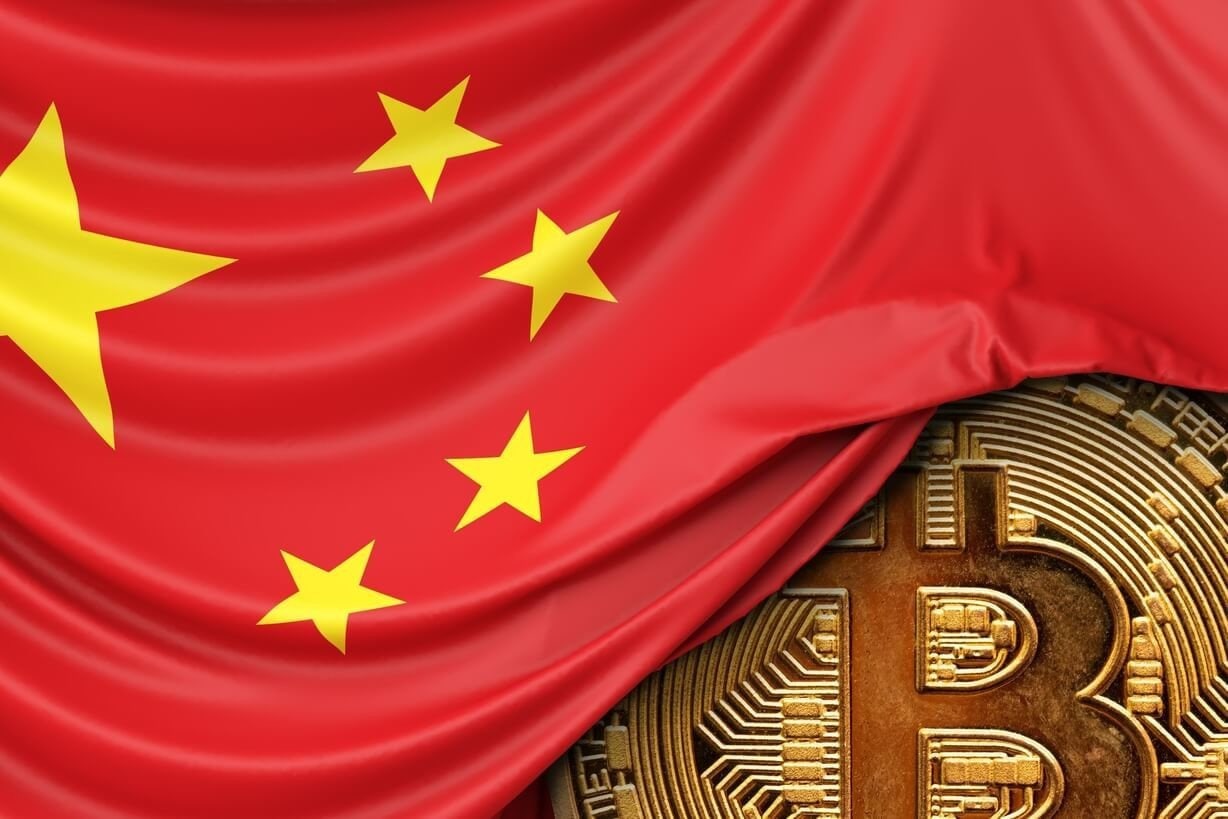
China’s Global Bitcoin Hashrate Share Leaps up from Zero to Over 21% - Report
The latest Cambridge Bitcoin Electricity Consumption Index (CBECI) hashrate figures will make interesting reading for anyone in the Bitcoin (BTC) mining space.
Last year, the University of Cambridge’s Judge Business School reported that the “leading share” of global Bitcoin network hashrate “now sits in the United States, followed by Kazakhstan and Russia.” Indeed, per the August 2021 numbers, China’s hashrate sat at a big fat 0%.
But despite one of the most intense crackdowns on BTC mining anywhere in the world in September 2021, the latest CBECI data appears to show that Chinese hashrate actually climbed to 22.3% in September. And, in the months following (up to January this year), the data shows that Chinese BTC hasrate did not fall below the 18% mark.
The CBECI data – in fact – shows that Chinese hashrate fell from just under 50% of the global total in May 2021 to absolutely nothing in August before recovering to over 20% the following month.
Reports in China continue to suggest that some miners continued to operate underground in the months following the crackdown, but the majority of major industrial players are believed to have shut down their rigs.
On May 17, China’s CNR reported that the Energy Conservation Department at the Guangdong Provincial Energy Bureau had issued a notice warning residents and companies in the province about the risks involved with crypto mining and mining rigs.
Guangdong ordered residents to stop using rigs and stated that machines could be “confiscated according to the law,” adding that companies involved in illegal mining could be hit with business suspension orders or win-up notices.
However, such warnings have become less common in China in recent months – as have reports of police raiding illegal crypto mining “farms.” A number of mining pools have upped sticks and many others have closed their door to Mainland China-related participants.
The CBECI mining map shows that the United States still has the lion’s share of the total average monthly hashrate share – with just under 39% in January 2022. China’s 21.11% was next. And only Kazakhstan, which has had its own run-ins with BTC miners, came anywhere close to the Middle Kingdom – with 13.22%.
In another curious development, Russia’s figure in January (prior to the invasion of Ukraine) was 4.66% – down significantly from August 2021’s figures of 11.23%, and also at a time when Russian media reports had claimed that mining was on the up in the nation.
South Korean LUNA Buying Skyrockets, Token Trading at Huge Premium on Domestic Exchanges
While some furious South Korean crypto investors are readying multiple lawsuits for Do Kwon and the masterminds of the troubled terra (LUNA) protocol, others in the country are snapping up LUNA tokens at rock-bottom prices – even though the coin is currently being delisted from most major exchanges in the country.
Per Chosun, data from the country’s biggest exchanges shows that the number of customers with LUNA holdings in wallets linked to trading platforms has “more than tripled” since the recent price plunge.
Global LUNA prices have plummeted almost 100% from an all-time high of over USD 119 in April this year to an average of USD 0.00014534 (8:00 UTC), per CoinGecko tada.
All five of South Korea’s licensed fiat KRW-trading exchanges have announced they will cease support for LUNA, with some to halt LUNA operations as soon as tomorrow (May 20).
But Chosun reported that “speculation” on a LUNA recovery appears to have sparked a last-minute shopping spree among some investors, who appear to believe that snapping up tokens at low prices could pay off at a later date – particularly with Kwon apparently determined to breathe new life into the project.
What is more, phenomenal demand for the coins has actually increased the price of LUNA on domestic platforms to the extent that a kimchi premium – usually reserved for cryptoasset like bitcoin (BTC) – appears to have emerged for LUNA.
Per Bithumb – which halts all LUNA trades on May 27 – almost 7.2 million LUNA tokens have changed hands in the past 24 hours, and prices dropped from around USD 0.6 to USD 0.4 at the time of writing.
In the Chosun article, which was published in the early afternoon (KST) of May 19, the article’s author noted that prices on the Upbit exchange were over seven times higher than LUNA prices on international platforms like .
Janet Cho, a Seoul-based journalist, told:
“This is absolutely typical behavior for some South Korean investors. After stock market crashes of similar magnitudes, some investors rush and pick up shares at super-low prices. It’s a wild punt on a rank outsider, to use horse racing terminology, but super-low prices are sometimes too attractive for some less-risk averse individuals.”
Chosun added that some South Korean traders are seeking to avoid skyrocketing prices by buying on international platforms such as Binance. Others still, it seems, are looking to make fast profits by buying abroad for lower rates and then selling high on domestic platforms.
Due to Travel Rule-related restrictions on transactions, some are being forced to make multiple low-value transactions – rather than larger one-off transfers – in order to avoid being flagged as potentially suspicious traders.
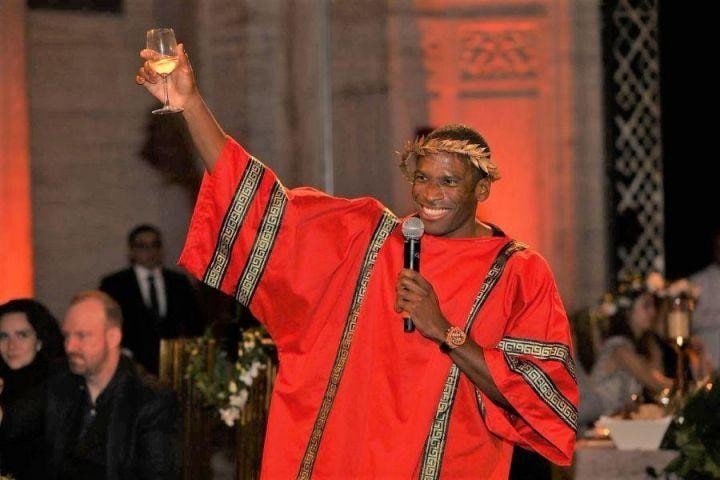
BitMEX Co-founder Arthur Hayes Spared from Prison
In the US, BitMEX co-founder and former CEO Arthur Hayes was sentenced to two years’ probation and will spend the first six months of his sentence in home confinement.
As reported, Hayes and two other BitMEX co-founders Benjamin Delo and Samuel Reed, pled guilty to violating the Bank Secrecy Act by willfully failing to establish, implement, and maintain an anti-money laundering program at the exchange. They each agreed to separately pay a USD 10m criminal fine.
Allowing Hayes to stay out of prison "would send a message to him that the cost of doing business is merely a fine, and he could continue to violate the law for huge amounts and pay any fine," Assistant US Attorney Samuel Raymond said before US District Judge John Koeltl in Manhattan pronounced the sentence, per Bloomberg.
Hayes's lawyer, James Benjamin, said that prosecutors were trying to make the case a "referendum on abstract principles they seek to endorse," pursuing a "draconian sentence" to vindicate US policy, per the report.
Meanwhile, the former CEO reportedly told the judge that he took "full responsibility" for his role in BitMEX’s failure to implement the measures and he's "ready to turn the page and start again."
Delo is scheduled to be sentenced in June and Reed in July. Meanwhile, BitMEX's former head of business development Gregory Dwyer has pleaded not guilty and is set for trial in October, per the report.
Ready to celebrate Millionaire's Day🤑
Meet the holiday tournament from Fairspin - Millionaire's Fortune💲
💰Prize fund $30000
🗓20.05-02.06
🎰ALL slots included
🤩NO minimum qualifying bets!
🏆100 winners
😎The more TFS tokens that you have for bets in games, the higher your place will be on the leaderboard
The Road to a Million Starts at Fairspin😉
JOIN🏆 - https://bit.ly/3wFXpAP
LUNA Jumps as 273M Tokens Burned Despite Do Kwon Opposing the Idea
Terra (LUNA) holders have sent over LUNA 273m to the burn address provided by the Terraform Labs founder and CEO Do Kwon in a bid to reduce the token supply - an idea that Do Kwon is not in support of.
Upon request from some community members, the CEO shared a burn address over the weekend. Subsequently, a token holder shared the address on Terra’s Research Forum, a space where developers and users discuss Terra protocols, asking the community to burn a portion of their tokens.
"Let’s go vultures, show that you really care about Luna and take the initiative and burn some of your coins, aren’t you guys true supporters," the user said.
Many in the community showed support for the plan, with some claiming that they have already sent some tokens to the address. "Great. Burned a few K just for the culture," one user said.
As of Monday morning (7:15 UTC), the burn address has received 273.35m tokens (USD 52,000), according to Bitquery.io. Considering that LUNA’s current supply is over 6.5trn, the burned amount is trivial. Still, it seems to have positively impacted the coin's price.
At the time of writing, LUNA is trading over USD 0.00019, up by more than 19% over the past 24 hours. It almost doubled since Saturday. In either case, the price is down almost 100% this month.

South Korean Regulators to Inspect Companies Linked to Terraform
South Korea’s financial regulators are planning to launch onsite inspections into domestic companies that have a business relationship with Terraform Labs – and particularly those that have made use of terra (LUNA) ecosystem coins.
In an exclusive article, the South Korean media outlet Money Today explained that the Financial Supervisory Service (FSS) will begin with an onsite probe of the SoftBank-backed e-payment provider Chai to
“determine whether the fallout of the ‘LUNA-Terra incident’ has spread to the financial market.”
Chai, which was launched in 2019, has been a close Terraform partner since its inception and provided KRT-related payment services until March this year.
The FSS further plans to carry out on-site inspections at companies belonging to the Terra Alliance, particularly those that have offered Terra-linked payment and settlement services.
Quoting financial authority insiders, the media outlet noted that the FSS plans to carry out on-site inspections on companies that have provided payment and settlement services using terra coins or non-fungible tokens (NFTs) in the “past three years.”
Chai was founded in 2019 by the Terraform co-founder Shin Hyun-sung (also known as Daniel Shin). Shin – who has been attempting to distance himself from the Terraform fallout – has previously claimed that Chai’s business relationship with Terraform came to an end in 2020.
However, the media outlet noted that the Terraform CEO Do Kwon owns a 22.4% stake in Chia’s holding company.
Shin is also the Chairman of the e-commerce platform TMon, which is also likely to face an FSS probe, the media outlet noted.
Further probes are also planned for the food delivery titan Baedal Minjok, the media outlet noted.
An unnamed financial regulator explained,
“We will check the status of funds and withdrawal funds, companies’ management status after terra-ecosystem services were suspended, as well as their user protection measures.”

MetaMask Aims to Help Crypto Scam & Phishing Victims Take Legal Action Against Fraudsters
The browser-based crypto wallet provider MetaMask has announced that it will attempt to aid users who fall prey to crypto-related scams and phishing attacks in their quests to recoup lost or stolen assets.
In a press release, the wallet provider explained that it has teamed up with the UK-based firm Asset Reality, which specializes in investigating cases of stolen cryptoassets. The deal will see the latter handle individual cases, and the companies said their partnership represented “an industry-first approach in improving digital asset recovery.”
MetaMask claims to have 30 million monthly active users, and added that the arrangement would see Asset Reality provide MetaMask users support “globally.”
The firms explained that “traditional recovery uses civil litigation, and usually involves instructing a lawyer,” which was problematic in the absence of “special crypto processes,” with costs that “can be in excess of USD 75,000” and take long periods of time to complete.
But Asset Reality’s “offering,” it explained, “allows multiple victims of a scam operation to join forces and build a larger forensic investigation against a scam operation” – with the firm handling cases “free” of charge to MetaMask users.
However, the companies warned, “users may need to cover legal costs should they decide that the route of recovery makes economic sense.”
However, the firms claimed that in cases where “legal costs are too high,” they would “help them join forces with other victims as a group.”
The arrangement will also involve the blockchain analytics firm ConsenSys, which will be called upon to “pursue larger scale scam operations.”
The wallet provider will provide an interface whereby users can report on the nature of their losses, whereupon Asset Reality “will take over communication with the users, and will proactively keep users updated on the status of their cases.”