
Wolf of Wall Street Says Bitcoin Investors Will ‘Almost Certainly Profit,’ But What’s His Bitcoin Track Record Like?
Jordan Belfort, the former stockbroker better known as 'The Wolf of Wall Street,' argued that investors who buy bitcoin (BTC) now will “almost certainly” profit. However, this is not the first time Belfort commented about bitcoin and its future - admitting that he has changed his mind about the coin - and his track record has so far been mixed.
Belfort’s recent prediction for how bitcoin will perform going forward was shared during a video interview with Yahoo Finance at the very end of June. “With reasonable luck, I think if you take a 24-month horizon you’ll almost certainly make money,” Belfort said during the interview. He added:
“If you take a three or maybe five-year horizon, I would be shocked if you didn't make money because the underlying fundamentals of bitcoin are really strong.”
Asked for his top three investment picks for “a long-term play,” Belfort replied by recommending “bitcoin,” “ethereum,” and “bitcoin” as his first, second, and third favorite picks.
The praise of Bitcoin as an investment asset marks a sharp turnaround for Belfort, who as recently as in 2018 was of the opinion that bitcoin is based on the ‘greater fool theory’, advising holders to get rid of their coins before they lost all value.
However, that was not the only time Belfort predicted bitcoin's demise - and, over time, his comments would slowly transform into more positive ones.

Here’s Why Russia Has Issued a New Crypto Payments Ban
Vladimir Putin, has signed a new law that will ban the use of cryptoassets and other “digital assets” in the payments space – even though crypto pay is already illegal in the country.
The use of cryptocurrencies as a means of payment was prohibited in January 2021, when Law 259-FZ (which passed the State Duma in mid-2020) was officially adopted in Russia.
The new law, which comes into force at the end of this month, does little but reinforce Law 259-FZ. It does, however, contain more detail and does away with some of the sometimes confusing and vague terminology used in the 2021 law.
The outlawing of crypto payments is the only crypto-related point upon which the Ministry of Finance and the Central Bank actually agree. The ministry, which has created a bill aimed at regulating crypto, would like to legalize the industry, while the Central Bank favors a total ban. Lawmakers will hope that now that the ban on crypto payments has been reinforced, the two parties will hurry up and reach a compromise on crypto policy.
The new law also makes specific mention of security tokens and utility tokens, which are expressly outlawed as a means of payment. It adds that no “goods, performed works, or services rendered” can be exchanged for cryptoassets or other forms of digital payment.
A leading Russian crypto blog channel named SelfInvestorz noted in a post that “experts agree that the new law will not have a significant impact on the market,” as crypto payments is a very small niche in Russia. Few if any Russian companies have pursued crypto payments-related initiatives.
The blogger added that the law will simply “strengthen the role of the ruble as the only legal means of payment” in Russia.
And, the same blogger wrote, the development is both “good and bad news” for crypto advocates.
They added that the good news was that “regulation is always a harbinger of stability,” which could lead to “industry development.”
But the “bad news,” the blogger concluded, was that regulators would inevitably “get to” the sector, and would follow up with “additional restrictions, obstacles, bans, fees, commissions, and taxes.”
Meanwhile, Russian psychologists are reporting a spike in the number of patients admitted with addictions to crypto and stock trading.
The media outlet Izvestia reported that the Dr. Isaeva rehabilitation center in Moscow stated that it had seen a rise in cases related to cryptoassets. The center noted that many of the admissions had previously shown signs of addictive behavior, such as “gambling.”
The clinic reported that the “average age of cryptocurrency addicts” was around 30.
An expert from the clinic was quoted as stating that many addicts turned to crypto after they had lost large amounts of money elsewhere and were no longer able to trade on the stock exchange.
The expert added that crypto trading addicts’ behavior had much in common with both “alcoholics and workaholics.”
Leonardo Guevara, a psychiatrist, narcologist, and psychotherapist at the Marshak Clinc, was quoted as explaining that stock trading addicts were more likely to turn to psychiatrists for help, while crypto trading addicts are more reluctant to seek assistance.
Guevara concluded that an “impulsive desire” to perform crypto-related “actions” spurred some trading addicts to chase the “feelings of euphoria and excitement” often associated with buying and selling tokens.

Meet Kyrrex -the best regulated crypto-fiat platform built by real traders🏆
💥Kyrrex has an extremely holistic approach to all the crypto processes and solves a wide range of crypto field issues.
💥It provides a one-stop-shop digital finance experience through advanced trading, payment and custody technology, for retail and institutional clients
💥 Kyrrex has a Class 4 virtual Finance asset (VFA) Licence from the Malta Financial service authority (MFA), the highest of its kind.
👉🏻Kyrrex is the official sponsor for the Pramac Racing Team competing in the MotoGP World Championships.
💸The Kyrrex Earn Program is a service for users, investors, and companies for safe cryptocurrency storage and dividend payout💸
Trade volume - per week it's more than $86 millions
Also Kyrrex have their own KRRX token which provides exclusive benefits for all KRRX holders
💰Up to 14.5% APY with KRRX token
JOIN KYRREX for more benefits
https://kyrrex.uno/M5jWtgtx
Today, crypto projects are multiplying at an alarming rate, but most of them are junk.
🏆That's why we particularly liked Aquaris. It is the first ever project that combines advanced blockchain technology and real business. It is a bridge that connects the traditional profitable aquatic business with the blockchain world and technologies.
📍Now the guys will have a project launch on the DEX, where anyone can buy an AQS token.
🚀Aquaris offers cool staking based on a real product.
In addition, the project offers a stable Staking Program based on real profitable business up to 30% (25% APY and an additional 5% is with unique Aquaris NFT).
🔥So come on here ASAP - https://t.me/AquarisCommunity
Media is too big
VIEW IN TELEGRAM
👾KunciCoin Ecosystem🕹
#1 Biggest Project in Indonesia 🇮🇩
We Will be listed on Bybit and Gate io. Targetting 100 World Exchange🔥
✅ Asia’s Hidden Gem 💎
✅ Listed in 24 Top Exchanges
✅ $8-10 Millions Trading Volume/Day
✅ Game Studio with 20Million Downloads
✅ Licensed payment gateway
✅ 70+ companies in conventional business chain ready to integrate
✅ 6 months old (since listed on PancakeSwap in 16 February 2022)
✅ Developing AAA rate Games
KUNCI is the only Token in the world integrated with the Physical offices and Physical utilities like Theme parks Hotels apart from Virtual assets like NFT MARKET PLACE ,KUNCISCAN ,KUNCI GAMES
Apart from that we have world's top singers like Bandifanseventeen and world's top comedian MONGOLISME promoting his works through our NFT MARKET PLACE and a lot of companies associated with us
For more details
Buy Kunci here: bit.ly/GetYourKunci
Join Kunci global group
https://t.me/kunciglobalofficial
Twitter
https://twitter.com/Kuncicoinglobal?t=g27U5qkkpNdh5R3jVSBIsw&s=09
#1 Biggest Project in Indonesia 🇮🇩
We Will be listed on Bybit and Gate io. Targetting 100 World Exchange🔥
✅ Asia’s Hidden Gem 💎
✅ Listed in 24 Top Exchanges
✅ $8-10 Millions Trading Volume/Day
✅ Game Studio with 20Million Downloads
✅ Licensed payment gateway
✅ 70+ companies in conventional business chain ready to integrate
✅ 6 months old (since listed on PancakeSwap in 16 February 2022)
✅ Developing AAA rate Games
KUNCI is the only Token in the world integrated with the Physical offices and Physical utilities like Theme parks Hotels apart from Virtual assets like NFT MARKET PLACE ,KUNCISCAN ,KUNCI GAMES
Apart from that we have world's top singers like Bandifanseventeen and world's top comedian MONGOLISME promoting his works through our NFT MARKET PLACE and a lot of companies associated with us
For more details
Buy Kunci here: bit.ly/GetYourKunci
Join Kunci global group
https://t.me/kunciglobalofficial
https://twitter.com/Kuncicoinglobal?t=g27U5qkkpNdh5R3jVSBIsw&s=09
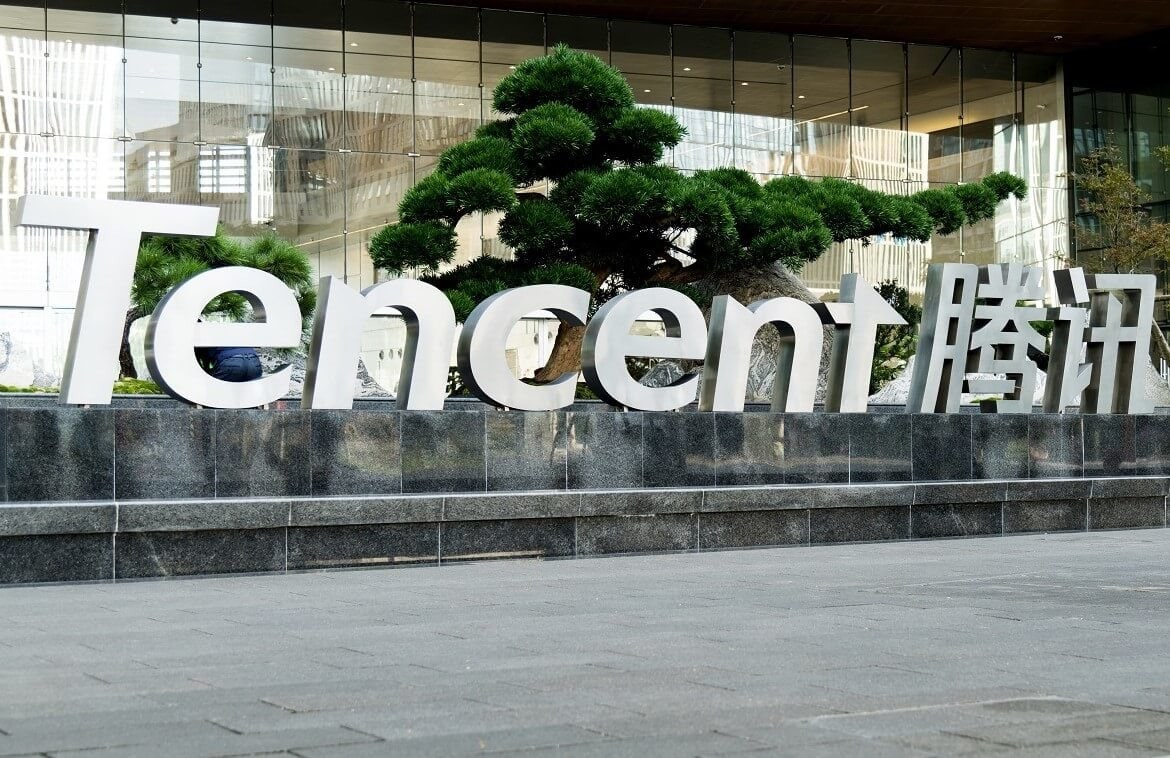
Tron’s Justin Sun Eyes ‘Acquisition’ Move for Tencent’s NFT Division
The Tron (TRX) founder Justin Sun says that TronDAO, a decentralized autonomous organization (DAO) that governs the Tron network’s development, wants to “acquire” a non-fungible token (NFT) arm of the Chinese tech powerhouse Tencent.
As previously reported, Tencent once had high hopes for its NFT units and could have theoretically developed them into some of Asia’s most lucrative platforms. Tencent has massive financial resources and a vast preponderance of gaming and entertainment IPs. But the firm was forced to heavily water down its offerings by the Chinese government, which imposed strict regulations on the NFT sector.
These regulations included a de facto ban on the term “NFT” itself (Tencent and its Chinese rivals were forced to call their offerings “digital collectables”). Beijing has also placed heavy restrictions on secondary market trading, and companies have been forced to use private blockchains – rather than popular public networks.
Tencent had attempted to soldier on, launching the Huanhe app and trading platform. After a promising start last year, more recent Huanhe collections have experienced sluggish sales. And earlier this week, the firm reportedly announced that it was closing down Huanhe for good.
Per Jiemian, a number of other NFT-related Tencent services, including Magic Core, have also been earmarked for closure, and Tencent is keen to take “cost-saving” measures after experiencing a 23% year-on-year slump in net profits in the first quarter of the current financial year. The company saw similar drops in the last two quarters of FY2021.
The media outlet stated that Magic Core would cease operating “this week,” quoting unnamed Tencent insiders.
Sun, however, is keen to step in – and wants to integrate Huanhe as part of the ApeNFT ecosystem.
On Twitter, he wrote that,
The TronDAO “intends to acquire” Huanhe “so we can continue to support and build on it to provide a top notch platform for all users with the ApeNFT platform.”
When a Twitter user replied by challenging Sun to “make sure” he “screened the employees so that you have someone who can make the team successful,” the Tron founder replied:
“Yes. It is the first thing we would do.”
ApeNFT was launched in April this year as the “first official NFT marketplace on” the Tron network. Sun has attempted to kickstart interest in the platform by “donating several well-known artworks,” including the works “Le Nez” by Giacometti and “Femme nue couchée au collier (Marie-Thérèse)” by Pablo Picasso to the ApeNFT’s foundation “to support the development of NFT art.”
Grassroots Sports Body Accountancy Chief Says She Stole Public Funds to Pay for Bitcoin
A South Korean local government official in charge of managing public funds for grassroots sports has admitted to embezzling over USD 367,000 worth of tax payers’ money – which she says she and her husband spent on crypto investments and internet gambling.
KBC reported that the police are now processing the unnamed official’s case in the city of Mokpo, South Jeolla Province, in the southwest of the country.
The woman appears to be an employee of the Mokpo Sports Council, which pays the operating costs of a whole host of sports teams in the city – mostly amateur and semi-professional. The council also pays for the upkeep of facilities such as running tracks, football pitches, and basketball courts – and helps support young athletes in the Mokpo area.
But, the media outlet reported, council officials recently began noticing issues with its budget, and traced the problems back several months.
Officials discovered an irregular and unfamiliar set of deposits and withdrawals made from the budget, with an inordinate amount of money chalked off as “expenses.” When one senior employee on the council’s accounting team stopped turning up at work shortly after, the police questioned her on suspicion of embezzlement. During the questioning, she reportedly made a full confession, stating that she had “stolen public funds” on 20 occasions, beginning in March 2022.
She had access to funds set aside to pay labor costs, as well as funds that were to be allocated as subsidies to teams and individual athletes.
Police say the woman then transferred these funds to an account belonging to her husband – and that the duo then proceeded to spend the money on cryptoassets and betting sites.
The woman was quoted as stating that some of the money had gone to fund a number of bitcoin (BTC) investments.
The incident appears to have left the council financially crippled, and the council was quoted as explaining that it was not able to pay coaches and other staff their monthly salaries as a result.
The woman was said to have bypassed “internal monitoring systems” and exploited known

WELCOME TO THE NEW DOGE 🐶
🐕🐕🐕TAMADOGE!!!!
🚀The interactive crypto game with tokens ready to 10x
📣These are NFT pets you can take care off! Minted as a puppy and you have to grow them to a FULL Tamadoge (Make sure you do or they may end up a Tamaghost👻)
📲App launching soon too take care off your Tamadoge.
🔥You are very early as presale starts soon!!!
Join Twitter🐦: https://bitesly.io/box_ac64fdaf66408cc1d6c65e4831e49b50
Join Telegram✈️: https://t.me/TamadogeOfficial
FTX Proposal is a 'Low-ball Bid Dressed Up as a White Knight Rescue' - Voyager
Crypto platform Voyager Digital argued that a joint offer proposed by crypto exchange FTX and linked trading firm Alameda is a “low-ball bid” that could disrupt the company’s bankruptcy process, to which FTX CEO Sam Bankman-Fried replied that the offer would provide Voyager customers with 100% of the remaining assets that Voyager has, as opposed to the “traditional” process under which, before customers obtain their assets, “they get fucked.”
“The AlamedaFTX proposal is nothing more than a liquidation of cryptocurrency on a basis that advantages AlamedaFTX. It’s a low-ball bid dressed up as a white knight rescue,” Voyager’s lawyers said in response to the bid in a recently submitted court filing obtained by Bloomberg.
The lawyers claim that while Voyager will evaluate any “serious proposal” filed under the bidding procedures, the bid by FTX and Alameda, which is controlled by Bankman-Fried and holds a major stake in Voyager, is “designed to generate publicity for itself rather than value for Voyager’s customers”. The bid undermines a competitive process, declares Voyager’s platform holds no value and intellectual property, and also ignores the potential deal’s tax consequences, among others, according to the court documents.
FTX’s CEO claims that the involved consultants “likely want the bankruptcy process to drag out as long as possible maximizing their fees. Our offer would let people claim assets quickly.”
“Anyway we've made our offer, hopefully customers are allowed to choose it if they want. If not guess it's up to the consultants to ensure prompt liquidity,” he tweeted.
The bid is currently non-binding and has not been accepted by Voyager which says it is undergoing a restructuring process.
“Over the past few days, leading up to our next hearing on August 4, we filed several motions with the Court to support our objective of maximizing value for all stakeholders, including customers. These filings are part of the restructuring process, as we work collaboratively to reorganize the company,” the company said in a July 22 statement.
As reported, earlier this month, Voyager Digital filed voluntary petitions for relief under Chapter 11 of the United States Bankruptcy Code as it seeks to implement its reorganization plan and "maximize value for all stakeholders

🚨Everyone can get 100 V tokens just for signing up on the VooVoo website🚨
VooVoo is a game changing NFT platform which brings together the most recognisable brands and legendary artists to create unique experiences for users globally.
🔺Personal collections are neatly stored in rs profiles with access to past performance, trade history, suggested collections and more
You can pay in Fiat and get NFT's directly into their wallet
🔺 You can purchase NFT tickets to at genuine world and virtual events giving them exclusive access to their favourite artists
🔺Weekly giveaways and prizes
VooVoo has it’s own token that will be launching in the Q3. It gives amazing opportunities for Creators and Users
💥You can win 25000 USDT just for holding💥
Total token supply - 500,000,000
Private sale price - $0.05; amount of the V Token - 100,000,000
Launchpad price - $0.075; amount of the V Token - 10,000,000
Mint tokens, enjoy and earn with Voovoo🚀
https://bit.ly/3BgBzb0
Harmony Proposes Minting Billions of ONE Tokens to Reimburse Hack-Affected Users
Layer-1 blockchain Harmony has proposed to mint billions of its ONE tokens in order to reimburse the victims of the Horizon bridge hack that saw around USD 100m of user funds stolen.
The Harmony blockchain would have to hard fork and increase the supply of ONE to mint new tokens. The team said reimbursement would be in the form of ONE tokens and span a three-year period due to the treasury's limited ability to provide immediate reimbursement.
In a blog post, the Harmony team put forward two working options and asked for the community's feedback.
The first option is "an estimated 100% reimbursement" that proposes minting ONE 4.97bn, which equates to a 3-year monthly emission of 138m tokens, or around USD 2.76m, using the token price of USD 0.020, they said.
The second option is "an estimated 50% reimbursement" that suggests minting ONE 2.48bn over a three-year period, which translated into a monthly emission of 69m tokens, worth around USD 1.38m using the token price of USD 0.020.
"The amount of ONE distributed will be based on the USD value of tokens lost across impacted wallets from the time we perform a snapshot," the team said.
They added that, from the snapshot forward, the distributions will be made based on the number of pre-calculated ONE tokens, not based on their fiat-currency value.
This means that affected users would receive a specific amount of ONE based on the snapshot disregarding the token's price. Some users argued that this "doesn't make sense," suggesting that it should change based on market value.
"The reimbursement should be at least based on current market value each month and not .02. So if One goes to USD 1. You just reimbursed USD 4 billion+ to those that lost USD 100 million," one user said, while another wasn't as optimistic about the price, saying: "if ONE goes to USD 1 I'll give you my mother."
not a realistic option to have the reimbursement be dynamically based. it would require a hard fork every month for 3 years to pay out the tokens
and it could result in massively more newly minted tokens over those 3 years
TrickLuhDaKidz
Many users, however, criticized the team for wanting to "print money" out of thin air, arguing that they would be driving the price down for others in the community as "more supply usually means lower prices."
Arpit Sharma, another community member, noted that minting billions of new tokens could crash the price of ONE.
Banking Giant Santander is Set to Offer Crypto Trading to Brazilians as Crypto 'Is Here to Stay'
Banco Santander S.A., the Brazilian subsidiary of the Spanish Santander Group, plans to start offering crypto trading, possibly already this year.
The bank plans to start offering crypto-related services to its Brazilian customers “in the coming months,” reported Folha de S. Paulo, citing the CEO of Santander Brazil Mario Leão.
The CEO is quoted as saying that the bank expects to have “definitions about it” in the next few months, during the next quarterly results release or “even before,” adding:
“We recognize that it is a market that is here to stay, and it is not necessarily a reaction to competitors positioning themselves, it is simply a view that our client has demanded this type of assets, so we have to find the most correct and more educational way of doing so.”
The Latin American banking giant Itaú announced the launch of its own asset tokenization platform, Itaú Digital Assets, on July 14, while last May, XP and Nubank had announced their crypto offerings as well, noted the report.
Also, as reported in May, Nubank had said it was set to invest 1% of its portfolio in bitcoin (BTC), and that it would begin rolling out functions that allow its app users to buy, sell, and hold BTC and ethereum (ETH).
And that’s not all, as crypto has been spreading throughout the region for a while now. For example, as reported in January this year, Argentine-headquartered e-commerce giant Mercado Libre invested in Mercado Bitcoin and Paxos (PAX) as it aims to boost its presence in the cryptosphere, as well as digital asset development and adoption in Latin America.
Meanwhile, on Thursday, Banco Santander Brasil SA “beat second-quarter net income market expectations,” Reuters reported, as its net profit rose 2% from the previous quarter to BRL 4.08bn (USD 787m).
That said, loan-loss provisions – an indicator of how much cash the bank has set aside to cover loans that are unlikely to be fully repaid – rose against the “challenging” macroeconomic backdrop and hit BRL 5.75bn (USD 1.1bn), up 24.6% on the quarter.

📣 Lucky Block V2 token is now LIVE on LBank! 📣
Join Lucky Block for the chance to win Prizes & Earn Rewards 🏆:
✅ Daily jackpot draws are live - with over $2,000,000 won already! 🤑
✅Fastest-growing crypto reaching $1 BILLION market cap!
✅ 1,000,000 community members
✅ Pre-sale out 9 days early
Join this opportunity for MASSIVE gains! 🔥
V2 Token listed on LBANK and up next MEXC Global on August 1st🚀
➡️ Buy $LBLOCK now HERE ⬅️ 🚀
➡️By entering Lucky Block Competition you could win a:
A Lamborghini 🏎
$1,000,000 in Bitcoin 🤑
A $1,000,000 house 🏡
And more 💸
There are amazing Prizes to be won with Lucky Block! 🦾
Follow Twitter ✅
Join Discord ✅
🕹Don't miss this opportunity for 100x gains, join the gaming revolution with Battle Infinity!🕹
💪🏼Battle Infinity IBAT PRESALE IS SMASHING IT!
⭐️$313,000 worth of IBAT (1,252 BNB) sold in just a week – and full marketing hasn't started yet!
At 10:50 UTC 18 July 2022 7.59% (1,252.3 BNB / 212,240,000 IBAT) of presale allocation has been sold.
Presale allocation is 2,800,000,000 (28% of the 10 billion total supply).
PRESALE INFO:
💸Presale price $0.0015 (no vesting period)
💰 Minimum purchase 0.1 BNB
🤑 Maximum purchase 500 BNB
💵 Connect your wallet at: https://supaflysafe.co/box_8c639c541dbc12ac9b2408005e6ca8bf
💲 Presale started 11 July 2022
🗓 75 days left & selling out fast
🔗IBAT runs on the Binance Smart Chain
🧐Learn more about Battle Infinity, follow them on Instagram: https://supaflysafe.co/box_8a4c9c6b4ed78678d18295b7eb3a0183
The Right Side of Crypto Regulation: Institutions Need to Avoid Thucydides’ Trap
The days when cryptocurrencies were reserved for the underground are fast becoming history. But the power dynamics in finance are all too familiar.
As cryptocurrencies edge into the mainstream – with global adoption up 881% in June 2021 compared with the year prior – opinions in the institutional world remain split. While some financial leaders – like MicroStrategy – are adding to their crypto holdings, the general support for adoption among the rank and file continues to be overridden by scepticism. The recent crypto crash has only exacerbated this, with many institutions backing out of the market and furthering the cynicism.
Older institutions, in particular, feel compelled to defend the foundations of traditional finances against the more radical characteristics of the crypto movement: decentralization, anonymity, and, in their eyes, instability.
Facing a challenge to the status quo, institutions now find themselves at a historically precedented fork in the road: Thucydides’ trap.
The Thucydides Trap is a political theory describing a scenario in which a rising power challenges the dominance of existing power. The dominant power, when threatened, becomes paranoid and is likely to respond with war.
Although the original applied to Sparta and Athens of ancient Greece, this applies to the relationship between the crypto industry and financial institutions.
That sentiment is encapsulated by the comments of the well-known opponent of cryptocurrencies and the embodiment of traditional finance, Warren Buffett, who said in an interview with CNBC, “Cryptocurrencies basically have no value, and they don’t produce anything. I don’t have any cryptocurrency and I never will.”
This paranoia has grown as institutions have come to realise that the world of cryptocurrencies can create not just competition for them, but even a significant threat. The cryptocurrency markets are constantly expanding, both in size and sophistication.
Some have accepted the rise of crypto as inevitable. 52% of financial institutions now own cryptocurrencies and many have recently launched crypto capabilities, including investment banking giants like JPMorgan, asset management stalwarts like BlackRock, and infrastructure payments pioneers like Visa, as well as established Fintechs like Revolut.
But for those financial institutions that are preparing for war, they need not fall into the trap. Institutions that can lay their ego aside and open themselves to the opportunities inherent in crypto will be able to leverage the rise of digital assets to fuel their own growth.
However, to encourage a fruitful relationship between institutions and the crypto industry, four key changes must take place.

SEC Charges 11 People over USD 300M Crypto Pyramid Scheme
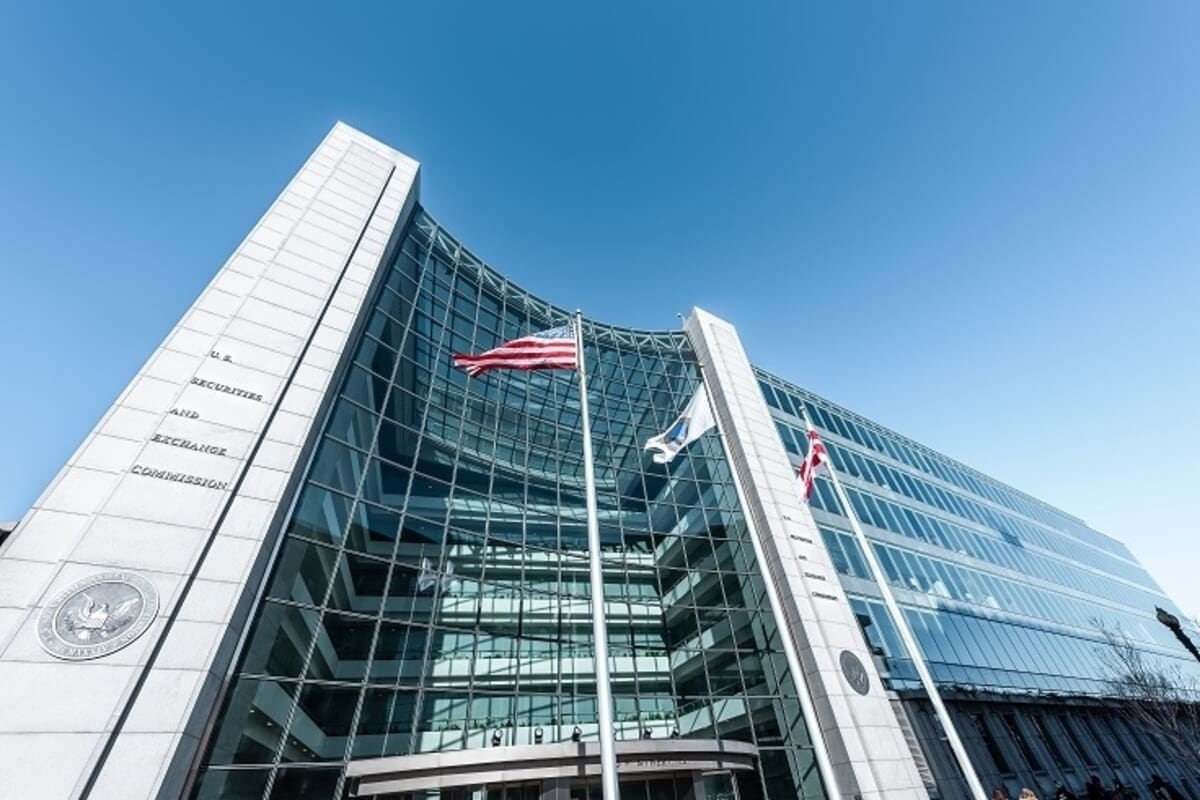
The US Securities and Exchange Commission (SEC) has charged 11 individuals for their roles in an alleged crypto pyramid and Ponzi scheme that raised over USD 300m from millions of investors worldwide, including in the United States.
The watchdog filed a civil complaint on Monday against blockchain networking platform Forsage, which claimed to be a decentralized smart contract platform allowing investors to enter into transactions via smart contracts that operated on the Ethereum (ETH), Tron (TRX), and BNB Smart Chain blockchains.
According to the SEC, Forsage functioned like a standard pyramid scheme for more than two years, allowing investors to earn profits by bringing others into the operation.
In its formal complaint, the SEC also said that the company was a “textbook pyramid and Ponzi scheme,” which did not sell “any actual, consumable product,” and that “the primary way for investors to make money from Forsage was to recruit others into the scheme.”
“As the complaint alleges, Forsage is a fraudulent pyramid scheme launched on a massive scale and aggressively marketed to investors,” Carolyn Welshhans, acting chief of the SEC’s Crypto Assets and Cyber Unit, said. “Fraudsters cannot circumvent the federal securities laws by focusing their schemes on smart contracts and blockchains.”
The SEC detailed that those charged include the company's four founders, whose whereabouts are currently unknown and were last known to be living in Russia, the Republic of Georgia, and Indonesia.
Three US-based promoters, as well as several members of the so-called Crypto Crusaders, the largest promotional group for the scheme that operated in the United States from at least five different states, were also charged.
Launched in early 2020, Forsage has reportedly received several cease-and-desist orders from regulators around the globe. In September 2020, the Securities and Exchange Commission of the Philippines and in March 2021, the Montana Commissioner of Securities and Insurance in the US ordered the startup to stop operations.
Despite this, the defendants "allegedly continued to promote the scheme while denying the claims in several YouTube videos and by other means."
Samuel D. Ellis, a self-proclaimed "cryptocurrency mindset coach," and Sarah L. Theissen, who were among those charged, have agreed to settle the charges, subject to court approval.
Solana Blames Slope Wallet for Hack While Slope Says that 'Nothing is Yet Firm'
The team behind the Solana (SOL) blockchain has tied the widespread hack that affected over 8,000 wallets and resulted in the loss of over USD 8m worth of funds to the closed-source Slope wallet.
"After an investigation by developers, ecosystem teams, and security auditors, it appears affected addresses were at one point created, imported, or used in Slope mobile wallet applications," the official Solana Status Twitter account said.
In an official statement, Slope neither confirmed nor rejected the claim, but said that "nothing is yet firm" and that they currently have "some hypotheses as to the nature of the breach."
"We are actively conducting internal investigations and audits, working with top external security and audit groups," the Slope team said, asking users to create a new and unique seed phrase wallet and transfer all their assets to this new wallet.
Slope is a web-based, non-custodial crypto wallet and browser extension that allows users to manage assets on the Solana blockchain.
As reported, an ongoing Solana hack that affected more than 8,000 wallets drained millions worth of funds from users. The exact amount of lost funds varied between USD 4.5m and USD 8m worth of funds, depending on the source, but per the dashboard provided by the scanning tool for the Solana ecosystem, Solscan, at 7:30 UTC on Thursday morning, a total of USD 8.58m has been transferred to the hacker's wallets so far.
The Solana team has rejected any possibility that the hack was a result of a bug with the blockchain's core code. "This does not appear to be a bug with Solana core code, but in software used by several software wallets popular among users of the network," the team said

Japanese Crypto Industry Urges Tokyo to Reform Tax Laws
Japanese cryptoasset-related firms have urged the government to make tax reforms – claiming that the current system is out of sync with tax rules in other countries.
The proposals come from the Japan Cryptoasset Business Association (JCBA) and the Japan Virtual Currency Exchange Association (JVCEA), which, per CoinPost, released a joint report calling for tax reform in 2023.
The bodies also addressed the press and spelled out their aims, which chiefly centered on the need to simplify the crypto tax filing process. It also pointed out “inconsistencies” within the existing system. And, as well as noting that Japan’s policy is out of step with “overseas cryptoasset tax systems,” the bodies insisted that crypto has a key role to play in the world of Web3.
The latter point may well catch the eye of senior lawmakers in the ruling Liberal Democratic Party (LDP), which has launched a Web3 taskforce. The taskforce, too, has spoken of the need to reconsider Japan’s crypto tax rules – amid claims that overly restrictive protocols are forcing companies, talent, and capital abroad. Opposition leaders have also become vocal in their own calls for change.
The crux of the issue is that crypto is currently classified as “other income” in tax declarations. This is quite unlike the picture in other countries, where crypto is usually subject to capital gains tax rules. In many nations, crypto-related profits are not taxed at all until coins are converted to fiat.
But in Japan (and under current rules), the rate at which crypto-related income is taxed depends on the total income of an individual. This means that crypto tax payments – in the case of higher earners – can rise to around 50%.
Foreign exchange trading, by contrast, is subject to a flat 20% capital gains tax levy.
The JBCA stated that it had conducted an investor survey, speaking to over 26,000 people – and claimed that data from this survey showed that the tax reforms it was suggesting would actually lead to “an increase in the number of taxpayers” and would “not necessarily lead to a decrease in national revenue” from crypto tax.
The body further claimed that it had conducted “trial calculations” on the basis of a 20% capital gains tax levy – and found that tax revenue would actually increase under this system “by about 20%.”
However, these calculations appear to have taken into account the fact that there would likely be an increase in demand for crypto should the tax reforms take place.
The body, which mainly represents crypto-related firms claimed that “if things continue in the status quo, the taxation system will become a bottleneck for the spread of cryptoassets.” This would hamper the “development of products and services in Japan” and leave the country lagging behind Asian, European, and American counterparts in the Web3 era, the body said.
It further added that the level of regulation that the crypto sector was now conforming to in Japan was “inconsistent” with the existing tax rules – suggesting that the industry was becoming even “more sound” than the world of traditional finance. As such, the JBCA suggested, a more lenient tax system was now appropriate.
The JVCEA represents domestic and international crypto exchanges that are either registered with the regulatory Financial Services Agency or are in the process of applying for an operating permit.

Big Week for Voyager Digital Clients as Cash Withdrawals About to Begin
Troubled crypto lender Voyager Digital said it plans to "restore access" to cash deposits in USD this week. Here's what the process might look like.
In a Friday blog post, Voyager said clients with cash in their accounts would be able to withdraw up to USD 100,000 in a 24-hour period starting as early as August 11.
The company said eligible customers would receive an email with more details before the withdrawal process begins. "We anticipate customers will receive their funds in about 5-10 business days after making their requests," they added.
The move comes after a court approved Voyager’s proposal to return USD 270m worth of funds held for the benefit of the company's customers at Metropolitan Commercial Bank, where Voyager had a deposit account.
As part of its next steps in the reorganization process, Voyager reiterated that it would consider a standalone restructuring process and a potential sale of the company.
"As part of our efforts to maximize the value of crypto on the platform, we are simultaneously pursuing a standalone restructuring process and a potential sale of the company," the company said, adding that the court has already approved their bidding procedures that will govern the sale process.
As reported, the lender already received “multiple bids for its assets in excess of an earlier offer” from the crypto exchange FTX and linked trading firm Alameda Research.
Voyager filed for bankruptcy protection in July after suffering massive losses from the failure of crypto hedge-fund Three Arrows Capital (3AC) and the broader crypto meltdown.
In its bankruptcy filing, Voyager claimed it had over USD 110m of cash, more than USD 350m of cash held in the For Benefit of Customers account at Metropolitan Commercial Bank, approximately USD 1.3bn of cryptoassets on its platform, and claims against 3AC of more than USD 650m.
This media is not supported in your browser
VIEW IN TELEGRAM
🔥DIGITAL DOLPHINS MIAMI’S MUST HAVE NFT🔥
The first ever charitable city-centric NFT collection with the first iteration being centered around Miami and the lavish Miami lifestyle. 3,050 unique holders will have access to the luxurious living that is associated with Miami within and beyond the borders of this incredible and unique city. Holders will gain access to the most exclusive, sought after, and first class experiences, events, opportunities, etc. The scope of our utility ranges anywhere from fine dining to exotic cars to clubbing in the hottest city.
✅ Pod (A network of dolphins ready to work together at all times)
✅ IRL Utility (includes access to nightlife,restaurants,events,etc)
✅ Donation ($100,000 donation to Miami Waterkeeper)
✅ Finfund (details coming soon…)
Launching August 18…⏰
More information can be found in the discord:
https://discord.gg/9UbunhkWPs
Website:
https://digitaldolphins.io/