After Catching 5 Crypto Pump & Dumps, AI Targets Ponzi Schemes
Artificial Intelligence (AI) technology is being used to hunt down Ponzi schemes related to cryptocurrencies in South Korea, and was already successful in catching two suspects who reportedly cheated around 56,000 people of a total of KRW 21.2 billion (USD 18.7 million). This comes after AI was already proven to be useful in cases such as pump and dump schemes, recognizing such events before they even happen.
Last Thursday, the Seoul Special Judicial Police Bureau for Public Safety arrested two CEOs of an unspecified online marketplace that reportedly preyed upon people with little knowledge about cryptocurrencies, along with 10 other members, all of which had been recruiting people for six months since May 2018 in a Ponzi scheme, Korea JoongAng Daily reported.
Along with offering existing members cash rewards for recruiting new people, members were also awarded with 600 M-Coin - the business’ official, unlisted cryptocurrency, which was also sold to the same victims for a range between KRW 100 - KRW 500, and the malicious actors told the members that it would rise to KRW 200 - KRW 600, promising immediate profit, according to the report. Since the coin was unlisted, members never made any money - nor could they, it added.
“Through keywords such as Ponzi, loan and recruiting members, we were able to teach the AI patterns of Ponzi schemes. The program can also identify advertisement patterns and identified the enterprise in question, which was caught with evidence provided by an unnamed informant,” Hong Nam-ki, section chief of the bureau’s second investigation team, was quoted as saying in the report.
This is not the first time AI is being used to catch malicious actors in the cryptocurrency space. In December 2018, a research team from Imperial College London came forward with an idea of how to use the technology to recognize pump and dump schemes. Their machine learning algorithm was taught to recognize unusual buying activity around certain coins, managing to pinpoint six different cases, five out of which turned out to be pump and dump schemes.
Pump and dump schemes are quite simple: a group of malicious actors buy some obscure cryptocurrency quietly, and then generate hype around the coin so that other, unsuspecting traders may buy as well which, in turn, makes the coin’s price spike. Once the price peaks, the original group sells their hoard and makes a quick profit off anyone who was too slow to sell off.

50 Percent Jump in 24 Hours by Bitcoin Cash, and Latest on BCH New Wallet and Token
In the past seven days, Bitcoin cash (BCH) has been taking the lead role in the crypto market rally. It has shown major crypto growth goals this week. It has recorded a great jump of 50 percent within a day’s time span on 2nd April. This has pushed the Bitcoin cash into the top five digital coins in the crypto sphere. It has reached the market capitalization of 5 Billion U.S Dollars.
Although it is great news, yet it had minor reactions on the network. There were major network congestions observed on the Bitcoin Core network due to the increase in the prices and the number of transactions. It did not stop there. The number of ‘unconfirmed transactions,’ as per the latest reports, on the Bitcoin Cash mempool, has been reported to be constantly growing. This, as a result, has affected the transactions to become really slow and more expensive on the other hand.
On the other hand, ‘Crescent Cash’ has got recently released. It is an open source Bitcoin cash wallet. One of its main features is that it makes use of Cash Accounts protocol which is a default program in the crypto wallet. This one is a non- custodial crypto wallet and is along the lines of a traditional Bitcoin cash wallet. This application works well with the standard Bitcoin cash address format- Cashaddr, as per the reports obtained from news.bitcoin.com.
This week seems to be packed with some exciting news. Recently ‘Rizki Presents: Blockchain’, which is a six-episode documentary series, was released. It was launched on the Amazon Prime platform. The main focus of the six-episode documentary series is around the potential of blockchain technology and cryptocurrencies in changing the traditional ways of the current fiat system. In episode one and six of the series, you can watch the highlights of Bitcoin Cash.
Talking about more exciting news, the first ever Bitcoin backed SLP token got listed on a crypto exchange. It is known as Merit (LLM.) The Bitcoin backed SLP token has been issued by Liberland. Liberland is a- “libertarian micronation established on a piece of disputed land between Serbia and Croatia. The LLM tokens can be traded at Altilly.com,” as per latest reports.
If you wish to dig deeper into the above-stated news, you can watch the Bitcoin.com’s YouTube channel. Here you can listen to the news update with Roger Ver.
Peter Todd Favors Bitcoin Inflation to Support the Value of the Coin
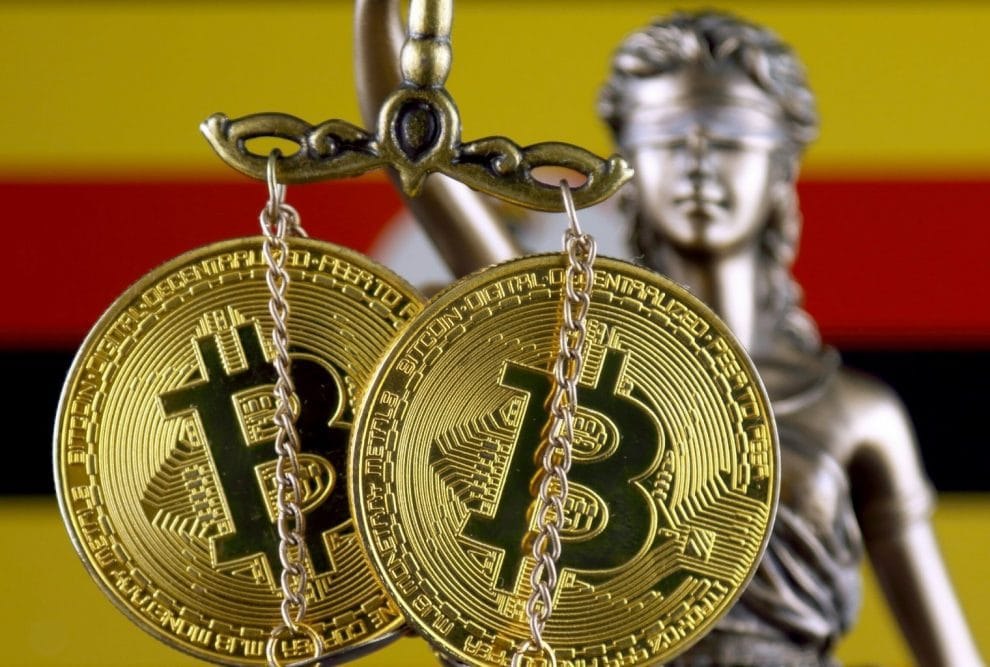
Peter Todd, a Core Bitcoin developer, has said that “Bitcoin should have had a 0.1% or 1% monetary inflation tax to pay for security”. He also warned that if it’s a hard limit is not changed in time, and it will die. He explained that the coin already has an inflation rate of 4%. He has used this fact to counter the debate that users of Bitcoin would fork away One method to get this done would be to cancel further halving (for miners). The next fork is expected in spring of 2020.
This concern over the Bitcoin is raised on the background of the fact that a few developers are worrying that if the fees become too cheap, it will not enable miners to operate any significant hardware. These hardware are crucial as they protect the crypto from any internal and external risks like a cyber attack. However, even this judgment or prediction has a counter.
If Bitcoin transactions are taking place at $0.10, but the network is growing to 10 MB with 3 million transactions/day, then it would come up to USD 300,000 a day. Now, this is precisely opposite to the Lightning Network which believed that it could gather multiple penny transactions into thousand dollar transactions. However, it did not pay attention to the reality saying that its users would still be paying huge fees to become a part of the network when the main network is clogged.
The Bitcoin network at present has inflation this is largely affecting its adoption rate. As a matter of fact, it recently had a chain split with Bitcoin Cash too. When it comes to creating a new network, the biggest hurdle is to gather support for the new coin. It is not just about investing hours in developing the network but the time goes in collecting the required support and then promoting for its adoption to increase the numbers of users and be able to capture the significant market share.
Dash Seems to Have a Solution to This
The first attempt made by Dash to deal with the security issue of mining is splitting the community on the basis of operations and responsibilities- Miners and Master modes. Miners who get 45% of block rewards, and masternodes, who get 45% of block rewards along with 1,000 Dash vested interests.
Dash did not stop here; it went a step ahead with the help of ChainLocks which made Dash more secure. It basically locked the first block recorded on the network at each height.

Blockchain and Crypto Would Help In Reinforcing Tourism and Culture in Italy
Every country has something or other to cash in. India, Switzerland, Spain, etc. are making the best out of their resources to attract tourist and increase foreign currency flow.
Now, Italy also wants to make the best of its resources and is making efforts to strengthen its cultural tourism. The country is pondering over the thought of using new-age technologies like blockchain and AI, crypto and IoT to lift the tourism industry.
Italy is the nation in the entire world with huge cultural impact, as indicated by the U.S News magazine and the University of Pennsylvania. A meeting was conducted in Italy where sector employers and their associations, along with decision makers, economic experts, etc. were involved.
The meeting had people from varied sector so that the new direction of the economy and tourism sector can be understood. The meeting was conducted to understand the extent to which the cultural heritage, facilities, etc. are enhancing and whether they are heading in the right direction.
The next meeting would be scheduled today, which is named “The Value of the Stars: Smart communities, blockchain and AI for the revolution of trust in tourism and culture.” This meeting would be conducted in the Matera.
The meeting would discuss a few topics like community, DLT, machine learning, etc. International experts along with Basilicata Chamber of Commerce would be present. Italy wants to focus on tourism sector to implement these new technologies, is because the tourism sector of Italy is one of the biggest in the world, the industry plays a significant role in the domestic economy and employment, plus the country wants to serve its visitors better.
The country government feels that the use of blockchain technology would be suitable for this sector, plus it has seen many other countries using it effectively in the industry. The technology would also make it possible to use cryptocurrencies like Bitcoin and altcoins.
The Italian digital travel industry has opened more doors to boost the economy, and the nation presently plans to make a powerful national procedure to uplift digital money and further build big project which would add a block to the nation’s travel industry.

IOTA Join the Initiative of EU Blockchain
As per the recent reports, the not-for-profit IOTA Foundation has joined INATBA, short for International Association of Trusted Blockchain Applications, as its recognized founding member. IOTA supports the standardization and development of latest DLTs (distributed ledger technology).
The Foundation primarily concentrates on the protocol of IOTA Tangle that is specially conceived for the environment of IoT, short for Internet of Things. It’s an open source convention that facilitates interactions between machines such as secure transfer of data, real-time small payments without fees, and collection and circulation of sensor-backed as well as other data.
But what exactly is INATBA?
The INATBA has been formed with the core objective of encouraging the utilization of DLTs by creating a transparent, reliable and predictable global framework. Moreover, it provides the users and developers of DLT with a global platform to establish interaction with both policymakers and regulators and take the technologies of blockchain and DLT to another level.
The basis of this initiative comes from the EU Blockchain Industry Round Table, a group hosted by the EC or European Commission to determine the correct conditions that boost DLT. The Associated came into existence in March and has over a hundred founding members that belong to diversified industry verticals. Some of these members include renowned blockchain providers and major DLT providers in addition to start-ups, users, business as well as sectoral entities.
The event of digitally signing this association will take place at the headquarters of the EC. The event will see significant personalities as attendees and speakers. While Mariya Gabriel, the European Commissioner, and Roberto Viola who is the director-general, are declared to be hosting the signing, Mariya will also give the keynote speech.
According to reports, the Tangle network of IOTA and other DLTs will hash these digital signatures to build an audit stream of this signing.
On this development, IOTA Foundation’s co-chair and co-founder Dominik Schiener said that it is essential to develop a regulatory system around the blockchain technology and DLTs to enable their growth and mass adoption.
He continued saying that they are excited to have joined the esteemed list of INATBA’s founding members and they have also formed their own public administrating affairs team for leading this effort. The size and strength that this association brings along with the EC and governmental support only showcase the future potential for DLTs which appears to be limitless.

What will the Future Hold for Cryptocurrency and the Legal Industry?
Current Scenario of the Legal Business
The usage of blockchain in the legal sector is still in the early stage. In any case, the improvements like the acknowledgment of blockchain information in the court demonstrate that the eventual fate of blockchain in the legal segment is secure.
Recent News
Even though the regulators have not yet sufficiently structured laws to oversee the muddy crypto waters, the criminals are not backing off. China and a few different governments restricted the vast majority of the digital currency exercises inside their jurisdiction. Different governments like Switzerland and Bulgaria lead in attempting to grasp the new technology. The supporters of blockchain have planned measures to oversee it without obstructing its development.
Reports show expansion in the blockchain and crypto world; however debate continues to spell condemnation on the new markets. A month ago, QuadrigaCX, Canada’s greatest crypto trade, shut down after the unexpected demise of the CEO. At that point when Ernst and Young accessed the cold wallets which belonged to the now expired CEO, they discovered them empty.
The wallets might have contained up to $150 million in digital currencies but what was there was under $500,000. Any framework that is directed even incompletely by people is bound to errors at some point in time. Henceforth, the predictable final product is a legal activity.
Lawful Issues rising around Cryptocurrency
The previous decade saw the rise of blockchain and digital money advances that are taking steps to move the world order. The most influenced industry by the growth of these innovations is the global financial sector. These advances have provided organizations and private financial specialists with an assortment of exciting opportunities.
Moreover, these numerous advantages have accompanied a literal heap of risks. Although being around for a long time now, crypto still works in generally unregulated universal lawful grounds. A large portion of the legal frameworks that as of now attempt to control cryptographic money existed before the same cryptos existed.
Financial specialists endeavor to explore the legal issues encompassing the crypto world. The SEC guidelines and compliance necessities verge on offering an answer for the regularly changing digital currency activities. However, the elements move quickly rendering a portion of the new laws practically ineffectual to the advanced resources group.
The development of computerized tokens offers culprits with new ideas and chances to cheat clueless financial specialists. The legitimate issues that emerge include authoritative problems and the legal commitments and rights of private people and corporates. For the time being, the regulators are behind, however, endeavoring relentlessly attempting to get up to speed.
The future is brilliant for the digital currencies considering some strength is slowly discovering its way in the business sectors. The QuadrigaCX case demonstrates some advancement of how cryptographic money and the legal business related. When finished expertly, the fact will give a hope of expectation indicating a future where the digital culprits in the crypto world will never get away with unlawfully gained loot.
Gamblers Are The Main Adopters Of Cryptocurrencies And Blockchain, Ethereum, Tron and EOS Favourites
Crypto and blockchain markets have been moving at a great pace for the past few years. After being seen as just a speculation game, the crypto space, in particular, is now growing strongly in terms of adoption.
Several sectors have been benefitted with the emergence of blockchain and digital tokens. And on the flip side, more and more industries adopting them meant better research and development, which ultimately benefitted the digital asset space. Major sectors, including forex, banking, global payments, finance, have adopted cryptocurrencies in their operations.
JPMorgan, Bank of America and HSBC, three of the biggest banks have invested tremendously. JPM rolled out its own stablecoin, BoA filed the most blockchain patents, while HSBC executed forex transactions worth over $250 billion using blockchain in 2018 alone.
VISA is incorporating blockchain in its operations to facilitate cryptocurrencies as valid payment instruments, and Facebook, on the other hand, is launching its own digital token focused towards cross-border payments. Even tech giants like IBM, Microsoft, and TCS have invested huge amounts in the Distributed Ledger Technology (DLT) to capitalize on the rising blockchain and crypto demands globally.
And the best thing is that despite a horrible 2018 for digital currencies, crypto adoption across the globe has only risen. However, as per a report published by dApp explorer, Dapp.com, gambling is the biggest driver of cryptocurrency and blockchain adoption. The report was motivated to provide an insight into Ethereum, EOS, STEEM, and TRON, as they have reportedly had the most active users in the market.
According to the report, about 504 new dApps were launched in the first quarter of 2019, half of which were based on the Ethereum platform. The report states that Ethereum is still the most preferred choice developers to build their dApps. The report also adds that games based on Ethereum have created a stable community and a loyal user base.
But Ethereum’s network isn’t to the most active one, says the report. There about 600 inactive dApps on the Ethereum platform, which haven’t seen any activity in the past 3 months. On the activity front, EOS leads the way, with about 95% of dApps on the platform have had at least one activity in the first quarter of 2019, followed by TRON, which had 80% of dApps with at least one activity during the corresponding period.
As per the data accumulated for the report, most of the activities on these platforms are related to gambling. In fact, 99% of activities on EOS network in 2018 were on gambling dApps, though new games and a few financial services joined the network. In total, about 350,000 active accounts of Ethereum, EOS, and TRON are engaged in gambling activities

Could InterLedger Protocol by Ripple Become the International Payment System?
XRP, the cryptocurrency of Ripple, is going through a stagnant phase even the cryptocurrency market is experiencing a high at present. XRP has reported an increase of only 16%, reaching its present price of USD 0.36, after experiencing a monthly drop of USD 0.30. On the other hand, other cryptocurrencies with a large market capitalization as well as numerous altcoins have registered gains that have gone over 20% which has left XRP behind in the market number game.
However, it seems things are going to change for XRP soon as the stage for its increased adoption is believed to be set, thanks to Ripple’s ILP implementation.
During the recent 2019 InterLedger Summit, there was an announcement that revealed Stronghold Inc. would be implementing the 1st InterLedger Protocol or ILP. The move will prove to be a massive step towards the adoption of XRP. The company Stronghold Inc. offers a platform for financial services that facilitates global payments as well as networks of foreign exchange.
ILP will offer a means to bridge the cryptocurrency and fiat to enable efficient, interoperable, and fast exchange. In fact, it is considered a link that would eventually accelerate the adoption of all the digital currencies, not just XRP, thanks to its interoperability feature.
There was also a demonstration of streamlined payments by Kava Labs’ Kevin Davis who went on to swap XRP, Bitcoin (BTC), and Ethereum (ETH), in mere seconds utilizing the SDK Switch of InterLedger.
This demo captured all the attention from crypto enthusiasts across the world, especially XRP fans, who were delighted witnessing such ease and speed offered by InterLedger for swapping ETH and XRP.With the introduction of such fintech products by Ripple, it would become possible to easily onboard financial corporations with XRP for performing both the international and local transactions that are cheaper, faster as well as more seamless in nature.

Overwinter – The Forthcoming Hardfork of Zcash Explained!
Zcash
According to Founder and CEO of Zcash Zooko Wilcox, “Zcash is another blockchain and cryptographic cash which grants private trades (and all things considered private data) in an open blockchain. This authorizes organizations, purchasers, and new applications to control who finds the opportunity to see the central points of their trades while using a universal approval less blockchain.”
Zcash is a digital currency dependent on a decentralized Blockchain, directing to make exchanges more private than they are in the Bitcoin blockchain. ZEC (Zcash token) exchanges, as Bitcoin’s, are distributed in an open Blockchain, contrary to Bitcoin, Zcash enables clients to specifically reveal private data.
Zcash provides encoded memo fields that offer a chance of conveying messages to the beneficiary of the exchange that exclusive view key holder can see. This can be utilized to transmit basic messages or such things as payment code sand secret or business data.
What does Zcash Offer?
Zcash offers its customers the choice of secured trades, which consider substance to be encoded using an advanced cryptographic methodology or zero learning proof improvement called a zk-SNARK made by its group.
These advancements ensure the authenticity of trades and furthermore secure record of equalities without giving out some other information, like, social occasions or aggregate included. Subsequently, Zcash offers an extra component over bitcoin, while ensuring that nobody is cheating or stealing.
Zcash utilizes a zero-information verification development called a zk-SNARK, created by a group of experienced cryptographers dependent on ongoing achievements in cryptography. These developments enable the system to keep up a secure ledger of balances without disclosing the group or sums included.
Zcash additionally empowers clients to send open payments which work comparatively to Bitcoin. With the help of both protected and transparent locations, clients can send Zcash secretly or openly. Zcash payments sent from a protected area to an open place uncover the received balance, while payments from a transparent location to a protected location ensure the receiving benefit.
Features of Zcash
In simple words, when we consider Bitcoin to be HTTP, ZCash is HTTPS. This unmistakably shows ZCash is an additional layer for protection. This makes it substantially more secure. Besides, it makes it very difficult for hackers or for any other person to think about the origin of the exchange. There is zero information evidence engaged with ZCash. Therefore, it is difficult to discover the source of the trade or the group which are involved with the exchange.
Individuals are beginning to understand that Bitcoin does not give protection. ZCash is one such digital money which offers such protection. It is experiencing a friendly fork to build up the system. Few people are doubtful about ZCash. The main reason why the experts won’t permit ZCash to progress toward becoming widespread is because of the protection which it gives. This is the motivation behind why the market cap of ZCash is on the lower side.
When you have a look at the market cap of ZCash in the valuation, it is the 22nd most significant digital money. Moreover, last month, it has picked up practically 40%. Numerous individuals trust that it can rise considerably in the future. That is the reason they are considering investing resources into ZCash at the present level.
YouTube Sensation Felix Kjellberg Aka PewDiePie signs Deal With DLive, Moves Closer To Bitcoin And Crypto
Cryptocurrencies have become one of the most popular topics for discussion, especially among internet savvy people across the globe. Many big names in the tech and industry space have openly supported digital currencies, while some have also criticized them.
Extending the list of celebrity crypto supporters, Felix Kjellberg, owner of world’s most subscribed YouTube channel PewDiePie, is edging closer to Bitcoins and other cryptocurrencies. The Swedish Internet sensation has signed a deal with DLive, a blockchain based online streaming platform, as his relationship with mainstream media continues to deteriorate.
DLive is a decentralized online videos streaming platform, which rewards both, content creators and viewers with a digital token called Lino. The platform claims itself to be the “YouTube on blockchain,” as it neither charges fees nor it takes any part from earnings.
PewDiePie has been involved in serious controversies over the past several months. Recently, about 80,000 people signed a petition to ban his channel, accusing it of promoting white supremacy. Especially, after being name-checked by the terrorist who carried the fatal attacks on the two mosques in New Zealand killing over 50 Muslims, agitations against PewDiePie have grown significantly.
Markets at large are showing signs of recovery since February this year, after the greatest depression which the crypto space witnessed in 2018. However, the main thing that the markets require to thrive and grow consistently is mass adoption. This is one area which still needs to improve significantly.
As per a report published by KPMG earlier this week, more than 60% of companies in the world don’t use blockchain technology, though they wish to do so. The report indicates that most companies in the world don’t use cryptocurrencies yet, as adopting crypto is not possible without implementing blockchain. This shows that crypto space has a scope of growth as global market mostly remain unexplored.
PewDiePie’s entry is extremely important, as he has a fan base of about 100 million across platforms. With the YouTube star coming on the platform for livestreams and other exclusive content videos, which are usually paid, a lot of Lino is expected to be exchanged, further expanding the crypto markets.
Meanwhile, Bitcoin has had a good run for the past few as it crossed the $5,000 mark, after losing for months together. Also, the world’s largest cryptocurrency also crossed the milestone of crossing over 400 million transactions since it was first launched in January 2009.

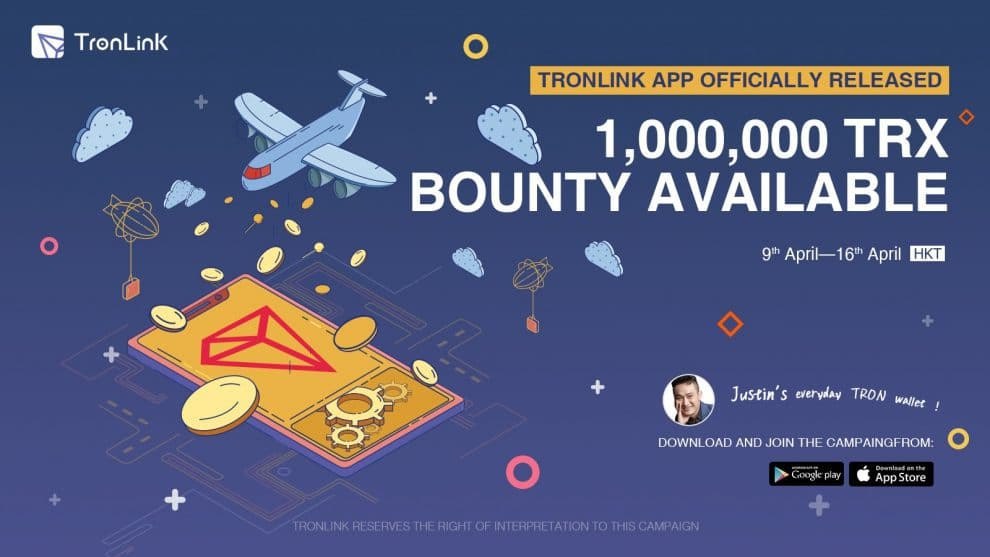
TronLink App Leaps to #1 Rank Within 6 Months; Allows Its Users to Share 1,000,000 TRX by Proportion
On 9th April team, TRON officially released TronLink App version. Within six months of the launch of TronLink Chrome, it has risen to some commendable growth and has bagged the number one spot in the TRON ecosystem on the Chrome extension wallet. You can find the TronLink App version on Google Play and the App Store. You can easily download the TronLink App version from the TronLink official website.
What makes it so exciting that it rose to the number one spot in just six months? Well, the reason is that it is packed with great features. First of all, it is a decentralized wallet; it offers its users to store their private keys and other sensitive information locally, it comes with physical insulation too, it assures great safety features based on its several layered algorithm encryption systems. It also offers features such as ‘breakpoint reconnection’ that allows great stability to the nodes and offers reliable functioning. There is smooth synching with the TRON’s MainNet.
Moreover, the TronLink App backs the TRX and all the TRC 10 and 20 tokens. This is done to cater to the TRON community on the international level. The user also gets to use services such as ‘resource freeze or unfreeze, as and when needed. The user can also vote on this platform, which brings about great participation from the users in the platform, thus, creating a sense of trust, mutual understanding.
Another point that sets the TronLink App apart is its ability to open SDK and support the testing structure. This is especially directed towards the developers with a sight of constantly improving TRON’s services through mutual endeavors.
The platform is made with a clear aim of keeping it user-friendly and making it as simple as possible. All the user is expected to do is to click and create wallets simply. It is quite handy, easy to understand and supports the convenience of the user. You can also find support for many types of wallet account building.
Since it is packed with so many features, whether you are using it in the desktop version or the mobile version, it offers and supports you with all the features required. The handy decentralized application by TRON can be used conveniently at any time of your choice.
The procedure is quite simple. First, you need to download the TronLink Application. Then you need to create a wallet. After this step, you can start to send TRX. Alternatively, you can also import the TRX wallet. Reports say that one can share around 1,000,000 TRX by proportion.
Despite Stricter Crypto Regulations, Australian Banks Still Reluctant Towards Cryptocurrencies
Crypto space across the globe are being brought under severe regulations, especially after the market crash of 2018, where many digital currencies lost up to 90% of their price value. Major economies like India, US, China, and Japan have all either placed several regulations or in the process in doing so.
In some countries, authorities have banned traditional banks from providing services to crypto related businesses. For instance, the Reserve Bank of India released a circular in April 2018, prohibiting banks for serving banks from providing services to cryptocurrency related businesses, which led to the closure of many crypto exchanges in the country. Similar bans were put in place in many countries including the world’s second largest economy, China.
Australia has no such restrictions in place which restrict crypto businesses, but strangely, banks and other financial institutions still keep avoiding and depriving the crypto space. Australian banks are known for their relatively conservative policies, which is in absolute contrast to the high-risk crypto businesses. Banks down under are extremely cautious towards cryptocurrencies.
The regulatory authorities in the country have imposed a strict framework for the electronic money sector, which ensures more security and stability. However, this hasn’t been enough to make lenders liberate their policies. Some banks do allow crypto trading also through credit cards, but under strict monitoring, which makes it very difficult to do so. A Westpac Bank spokesperson recently stated,
Similar policies are adopted by other major banks in the country, including Westpac-owned St George Bank, Bank of Melbourne, and Bank SA. One of the biggest banks in the country, Australia and New Zealand Bank (ANZ), also has similar policies towards cryptocurrencies. The bank allows customers to buy digital currencies and also as accept crypto payments. But ANZ closely monitors crypto related transactions to prevent fraudulent activities.
While these banks strictly monitor credit card usage for crypto trading, there are banks which do not let customers use their credit cards for crypto purchases. The largest bank in down under, Commonwealth Bank of Australia (CBA), imposed a ban on the use of its credit card for purchasing digital token, in early 2018. CBA users can only use either their debit cards or net banking for crypto trading.
Also, though there are no corresponding directions from authorities like the APRA or ASIC, a few banks completely refrain from serving crypto businesses. Brisbane based regional bank Suncorp is one such lender which does not provide services to cryptocurrency businesses.
Resentment For Taxes Continues In The Crypto Space, Majority Investors Refuse To Report Earnings
When the first cryptocurrency, Bitcoin was launched, many thought it to be just a digital gimmick, and hence, authorities did not bother checking it for taxes. However, over the past few years, the rise of Bitcoin and the emergence of other altcoins invited attention from tax regulators, who imposed taxes on earnings from digital currency trading.
Especially, after the peak in December 2017 and market crash in 2018, Regulatory bodies have become tightened their policies, and have become stricter for tax regulations. As the deadline for tax filing closes in, crypto investors need to assess their gains and losses related to Bitcoin and other crypto holdings and report taxes if applicable.
The move to regulate did not go well with crypto investors, who have staunchly opposed taxation on crypto trade. This was evident from a recent poll conducted on Twitter by famous crypto personality, Crypto Wendy O, which reflected that investors are adamant on not reporting taxes, and are willing to pay heavy penalties if the Internal Revenue Service department finds out their unreported earnings.
According to the poll, more than 80% of respondents are not ready to report taxes as the voted for the ‘Not a chance’ option on the poll question of “What’s the status of your crypto taxes?” Only a mere 15% said that they were doing the assessment, while 5% said that they would do it next week.
The cryptocurrency market faced its worst bears in 2018, with many digital coins losing as much as 90% of their price value. Even Bitcoin kept losing for six straight months, ending the losing streak only in February this year. Because of this most crypto investors might have sustained losses instead of gains. However, investors still need to report their capital asset trading, regardless of profits or losses, and failing to do so may invite heavy penalties and even a jail term.
The US Tax Laws related to crypto assets are often accused of being too confusing and difficult to ascertain. It was reported in January 2019, that the confusion in tax laws could lead $5 billion to be unrealized crypto losses. However, times are changing, as many services have emerged, specializing in crypto taxation. Service providers like Bitcoin.tax and Turbo Tax seamlessly pull data from customer’s crypto exchanges, and automatically calculate losses and gains from the API data, and gives step by step assistance in filling all relevant forms.
Digital currency trading is still a risky affair as it is still an emerging market, and not paying taxes will make it even more vulnerable. Crypto exchanges have been supportive of the IRS and continuously supply users’ information regarding crypto trade, which will be compared with the reported figures of gains or losses submitted by investors. Any substantial discrepancies will lead to strict actions, the minimum of which would be an audit.
Many crypto traders, who have hundreds of transactions to account, may find it a daunting task. However, another famous crypto face, Crypto Tax Girl, gave a feasible solution for this. She stated in a tweet that instead of accounting each and every transaction, calculating total gains or losses per coin would be much easier.

Bitcoin, Satoshi Nakamoto And Craig Wright – The Latest Drama Of The Crypto Space Unfolds
In this world, there are certain things or events which change the general perception completely. They revolutionize the way people think and create products and services which change the industry forever.
Charles Babbage did it with computers, Steve Job with iPhones, Bill Gates with Windows, and Alexander Fleming with Penicillin. These are products which inspired innovations for generations to come. A similar event happened in January 2009, which took the world by storm and challenged the common perceptions about currencies. Bitcoin was the product, and Satoshi Nakamoto was its inventor.
The only difference between Nakamoto and other great innovators was that no one knew who he was, from where did he come, whether he was an individual or was it a group. Nonetheless, the name Satoshi Nakamoto went on to become one of the most popular ones of the 21st Century. Over the years, several individuals claimed to be Nakamoto, but all turned out to be bluffs. Hence, the face behind the name remains a mystery.
However, one of the most talked about personalities who claimed to be Nakamoto is Dr. Craig Wright, who has been firm on his claim since 2015-2016 and has time and again furnished proofs, which are countered by someone or the other. Recently, though, things have suddenly heated up as several major crypto players are raising voices to boycott Bitcoin SV, the digital token which Wright created in August 2018.
Most recently, Binance Exchange CEO, Changpeng Zhao, has threatened to delist Bitcoin SV from the world’s largest cryptocurrency exchange. Zhao’s threat was a reaction to the defamation case filed against Hodlonaut by Wright. Hodlonaut is a crypto personality on social networks like Twitter and has been a prolonged critic of Craig’s claim of being Satoshi Nakamoto.
It is not only Hodlonaut who has rejected the claim, but several industry experts and major crypto influencers have done the same. Zhao himself has rejected Wright’s claims. After Wright’s lawyers filed defamation, many members of the crypto fraternity came forward in support of Hodlonaut and expressed solidarity by using the hashtag #WeAreAllHodlonaut. A Crowdfunding campaign was initiated to support Hodlonaut in his legal fight against Craig Wright, and within 24 hours, over $15,000 was collected.
Craig has not only demanded an open apology from Hodlonaut but has also announced of a bounty of $5,000 worth Bitcoin SV for exposing his true identity. In fact, Wright has announced that he would sue all of those who say that he is not Satoshi Nakamoto. Hodlonaut has a consistently criticized Wright on Twitter and was the initiator of the #CraigWhiteIsAFraud, #CSWFraud.
Interestingly enough, technology stalwart and Tesla boss, Elon Musk has also joined the movement against Craig Wright. Other big names who have received legal notice defamation include Ethereum founder Vitalik Buterin and Peter McCormack. However, Zhao hasn’t backed off and said that his team is ready to fight a legal battle against Craig Wright if need be.
Moves by Wright doesn’t seem to be going down well with the crypto community at large. This could possibly result in a boycott of Bitcoin SV, which could be devastating for the “wannabe Bitcoin” digital token, and delisting from Binance will only make matters worse.

The Ethereum Classic Hard Fork Will Be A Paradigm Shift In The Philosophy of Its Creators
The creation of Ethereum Classic has been one of the most talked about topics in crypto circles. One of the greatest teams in the digital currency space was divided due to differences in opinion which in itself was a tragic incident.
It all started way back in 2016 when Ethereum came under a severe cyber attack, which resulted in a loss of Ethereum coins worth over a staggering $50 million. Following the attack, the team Ethereum Foundation started to explore ways to minimize the loss and chose to carry out a hard fork.
A ‘hard fork’ means a radical change in the initial protocol of a blockchain, which makes previously valid blocks as invalid. This way, Ethereum could render the hacked crypto tokens as invalid. However, there was a group within the team which was against some of the changes like changing accounts, contracts and balances, as they considered it to be against the concept of decentralization, which was the core philosophy behind the creation of cryptocurrencies.
Therefore, the rebel team walked out and created their own cryptocurrency, Ethereum Classic, which was based on the original Ethereum Blockchain. However, in a turn of events Ethereum Classic (ETC) is all set for a hard fork itself, which is scheduled at the 8,750,000th block.
The hard fork is termed as Atlantis, and it would allow modification in the formula of the mining adjustment of the blockchain, while also adding new functionalities to the Virtual Machine of this network. Donald McIntyre, the famous ETC volunteer said,
“Ethereum Classic, like Ethereum, generates the main blocks but also produces what are called “uncles” which are valid blocks, that arrive at the same time, but are not considered part of the central chain. Since these also receive a small compensation through the mining reward, they can be manipulated to issue more ETC than what the monetary policy estimates.
With this modification, the difficulty for general blocs will be adjusted to include the number of uncles, making it more difficult to create them, minimizing the possible creation of money through the uncles.”
The reason for the hard fork arose after the 51% attack executed on ETC in January 2019. The attack began on the 5th and went on for three days, finally ending in the 8th. Total loss was estimated at $1.1 million.
The crypto space has predominantly been divided in the debate on whether hard forks are morally correct, as they are against the very basics of digital assets. The group which separated from the main team for its stand against hard forks is now ironically adopting the same thing. However, it can be argued that users may be willing to sacrifice a bit of decentralization policy for safety and security, but still, it remains subjective.
ETC’s Atlantis hard is expected in early September 2019, at the current rate of block generation. In his recent blog, Donald McIntyre listed the proposed changes, which include Spurious Dragon state-trie clearing, and replacing the intermediate state root field in transaction receipts with the contract return status.