BitTorrent Live: World’s First Blockchain-based Live Streaming Platform Goes live
The launching of the long waited peer to peer blockchain-based live streaming platform, BitTorrent Live, has been initiated with an internal alpha testing.
CEO Justin Sun disclosed the announcement via twitter after Tron Foundation published a detailed information about the development on its medium page.
Today #BLive officially began internal testing, the world’s leading live stream platform based on #BitTorrent. With more than 100M MAU, it can tap consumers who want to seamlessly combine entertainment with cross-border payments to content creators. #BTT https://t.co/5ItiOEjCHa\
Also known as BLive, BitTorrent Live is dubbed the first blockchain based live streaming platform in the world, interestingly, it is built on Tron and BitTorrent protocols.
During the period of the alpha testing, BLive users will be able to use the platform’s audio/video live streaming services as well as payment systems, account system and user relationship, among other tools.
The released mentioned that while the over 100 million monthly active users of BitTorrent enjoy cross-border remittance and content creation service on BitTorrent, they will also be opened to BLive multifaceted tools.
BitTorrent will launch the public beta of BLive on September 20 for extra feedbacks from users, after a successful internal testing.
Benefits of BitTorrent Live
BLive is designed with the aim of uniting content creators, consumers and investors in a newly revitalized way through the BLive’s tokenized system.
Using an organic virtual ecosystem, the platform redefines the policy biding participants as they meet and transact with each other.
Tron Foundation mentioned that BLive will offer users in the live-streaming industry a greater experience by combining constant audio/video output with token economy, hence, content creators will be giving the fatter share of profits made on contents.
Poloniex Exchange Will Upgrade XRP Wallets Monday, Limiting Activities
U.S.-based crypto exchange Poloniex took to Twitter today to announce the upgrade of its XRP wallets, which will result in withdrawals and deposits being suspended for several hours.
What will change?
On Sept. 5, the crypto exchange took to Twitter to explain that it will upgrade its XRP wallets to further enhance the user experience. Once the upgrade is implemented the base reserve deposit requirement of 20 XRP to create a new address will no longer be needed. In addition, deposit confirmations have been reduced from 12 to 2, which will reduce deposit times from 20 minutes to about 15 seconds.
Poloniex will reimburse users affected by flash crash losses
On Aug. 13, Cointelegraph reported that Poloniex announced a scheme to reimburse users affected by a flash crash in May, which led to total losses of around 1,800 Bitcoin (BTC). The cryptocurrency exchange pledged to repay daily trading fees (in BTC) to impacted lenders until their losses were fully recovered.
Some users were displeased with how Poloniex generalized the loss, with some users claiming the leading cryptocurrency exchange stole their funds because they didn’t have active margin loans on the day of the crash. Cointelegraph reached out to affected lenders on Reddit for their views, to which Reddit user geopo321 responded:
"If Poloniex were operating in any regulated financial space, they would not be allowed to get away with this. They are simply taking advantage of the fact that there are no regulations or standards for them to abide by set by the industry. Instead of keeping payback as a high priority, they have pretty much deemed it as the lowest priority and taken the minimum amount of steps to try and appease affected parties."
Please note, there is no confirmation if the respondent was indeed affected.

China’s New Digital Currency Will Be Similar to Facebook’s Libra
Changchun Mu, the Digital Currency Research Institute chief and former deputy director of the payments and settlement division at the People’s Bank of China (PBoC) commented on their newly proposed digital yuan. He revealed that the new digital currency bears similarities with Facebook’s proposed cryptocurrency, Libra and would be usable across major payment platforms such as Tencent’s (0700.HK), WeChat and Alibaba-backed (BABA.N) Alipay.
Mu described digital currency as an electronic payment tool with “value characteristics.” He also added that the development and issue of the coin would help protect the foreign exchange supremacy of the country because the commercial applications of such currencies have expanded.
Mu explained to the state-run newspaper Shanghai Securities News,
Why is the central bank still doing such a digital currency today when electronic payment methods are so developed?. It is to protect our monetary sovereignty and legal currency status. We need to plan ahead for a rainy day.
He said that the tokens would be safe like the central bank-issued paper notes and could be used even in the absence of an internet connection. So, it would allow transactions to continue even in situations where communications have been disrupted, such as an earthquake.
The proposed Chinese yuan will likely be under surveillance by the Chinese government and can be used to circumvent U.S. trade bans. The central bank had set up a research team in 2014 to explore launching the digital currency to cut the costs of circulating traditional paper money and improve policymakers’ control of the money supply in the Economy. It had not announced anything since, but last month Mu announced that the digital currency was “almost ready” for release.
Facebook’s Libra had sparked concerns among global indexes that it could swiftly become a dominant digital currency and a podium for money laundering because of the social network’s massive cross-border influence.
Libra will be backed by a reserve of real-world assets, like bank deposits and short-term government securities, held by a chain of custodians. Its structure is designed to foster trust and price stability and could be used on mobile devices and is to provide financial services to those people who don’t have access to traditional bank accounts. It will be exchangeable with a variety of traditional currencies, like the U.S. dollar and the Euro.
Some financial analysts say China appears to have stimulated the push ‘towards digital money’ after the US social media giant announced its plans to launch its digital coin, in June.
Changchun Mu said China’s digital currency would strike a balance between allowing anonymous payments and preventing money-laundering. Mu also said that the digital currency would be used as per central bank-issued coins in terms of losses incurred when a platform goes down, because of its ability to be used in the absence of an internet connection.

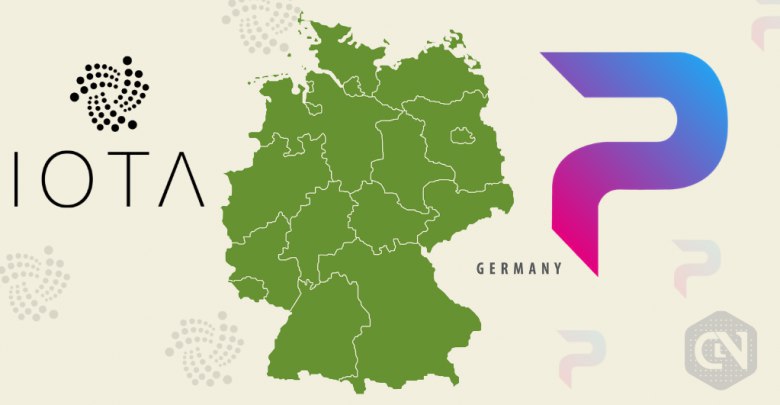
IOTA Smoothens Transport Management in Germany as Trive.Park Collaborates with Tangle
The next-generation Distributed Ledger Technology platform, IOTA has partnered with motor industry giant, Trive.Me.
Trive.Me, the creator of Trive.Park has brought IOTA’s Tangle technology together with Trive.Park platform to facilitate automatic booking and payments for the parking spaces management in Germany.
IOTA is the popular acronym for Internet of Things Applications. It allows users to enjoy instant transactions with zero fee charges which make it an unprecedented mode of cost-effective micro-payments involving cryptocurrencies.
With the growing demand for parking in Germany, an array of advanced systems, infrastructures, and solutions are surfacing up to render to the problem. The new app created by IOTA and Trive.Park lets the motorists reserve their parking spot in advance.
The prominent online reservation feature of the app gives the parking garage owners a fair opportunity to make their assets in the digital form and later monetize them.
Alexander Süssemilch, the Head of Product at Trive, applauds IOTA for its crucial minimal fee micro-payments service. He also addresses the digital platform as the best solution for their parking management app.
Trive.Me acknowledges IOTA to be efficient in giving the ultimate satisfactory experience to the motorists who have until now struggled for parking spaces.
About IOTA:
IOTA or the reputed coin for the Internet of Things transactions is a new-edge technology that leaves behind the traditional blockchain network pedagogy, unlike the majority of digital coins, and finds its base in a platform named Tangle.
Tangle is an advanced technology that employs a mathematical concept of Directed Acyclic Graphs to run its system. The DAG Tangle relieves the investors by restraining the involvement of miners in validating the transactions. This, in turn, speeds up the trading process. Also, it fosters a directly proportional link between the network’s growth and speed with the number of users in operation.
IOTA rubbishes scaling issues and allows users to benefit free-of-cost transactions. It is also facing a downfall due to high selling pressure like other major cryptocurrencies. On Monday, IOTA opened at $0.2449. The intraday high showed the figures of $0.24528. Presently, IOTA is struggling at $0.2391 after experiencing a loss of 2.25% during the day.
UAE to Get Its First Asset-Based Cryptocurrency from The Golden M Group
The Golden M Group has announced to launch a Sharia-compliant cryptocurrency in the Middle East called ‘COIN M.’ This cryptocurrency is expected to enter the United Arab Emirates (UAE) market before the end of 2019.
It will be the first real asset-based (gold-based) cryptocurrency to set foot in the Middle Eastern market and will offer the potential to double its investment or give 100% returns within a year.
Investment can start as low as $100 and has an inclusive environment, so, investors from all income level will find it suitable. And unlike the first-generation cryptocurrencies, it is backed up by a tangible and ‘real-world asset’ which makes it less prone to the price volatility.
The Golden M Group, founder and CEO, Mustafaa Motiwala, stated:
The upcoming launch of Coin M will undoubtedly have a global impact as it is a one-of-a-kind scheme empowering the working class to safely invest in a new cryptocurrency that is gold-based and Sharia-compliant. Unlike most investment opportunities, investors will have a chance to double their investment within a year.
He also added,
Whenever you invest in COIN M, you are in a position to make your money back as it is based on a real asset, which can be bought back. With cryptocurrencies that are not backed by any asset, you would typically have to find your buyer to make a return on investment.
The ‘COIN M’ logo was also recently revealed at a press conference held on a private yacht in the UAE managed by Uniquorn Studio LLC. It was attended by as attended by the family, and friends and close advocates of Motiwala and his team, including Mukti Abu Bakar -Malaysian Consul for Investments, MIDA, UAE; Empress Universe 2018-Sneha Rao ; and Umar Saif, a popular Indian singer from Sa Re Ga Ma Pa Middle East, and a few more.
According to collective data, the UAE had emerged as the world’s capital for sales of digital currencies, accounting for more than a fourth of all funds raised in contributions this year by early April. Sales in the UAE had reached over $210 million which had put it way ahead of the US, the former and longtime leader of the market. That showcased the growing potential of the sector, and the influence UAE would have on the cryptocurrency market of the Middle East and the world.

Ziktalk, Foreign Language Learning Platform, Announces to List Its Cryptocurrency ZIK on ProBit Exchange
Recently, Ziktalk, a Foreign language learning platform declared that its cryptocurrency token ZIK would be listed on ProBit Exchange on Monday, September 9, 2019. Precisely, it will be accessible for exchanging from Monday, September 9, 2019, at 15:00 Korea Standard Time. Also, it is the second listing from the BW.COM, a worldwide cryptocurrency platform.
Succinctly put, Ziktalk is a foreign language learning social platform that encourages the purchase of different services with importance to learning a foreign language to build a worldwide group of spectators. With more than 1600 enrolled students and tutors around the world, and over 80 percent of Ziktalk’s clients are international. Further, the services offered on Ziktalk are extended to incorporate direct access to specialists in Marketing mentoring, law consultation, business, and more.
In Ziktalk, by utilizing a single platform, clients can use all the essential functions like voice call, chat, video call, SNS (social networking service), and talk material enrolment without exiting the application. Moreover, clients can effortlessly gain learning experience in foreign language systematically through corresponding with local speakers and expert mentors.
Nevertheless, ZIK tokens were developed to be used in Ziktalk platform. Ziktalk plans to extend its services which are right now centered on foreign language learning platform for talent sales for worldwide experts like, marketing mentoring, legal counseling services, and tour guide services. Furthermore, Blockchain technology has been used to deal with universal exchanges of global clients reliably and rapidly. Talent experts like language tutors can get the fees for their services either by ZIK tokens or US dollars.
On July 16, ZIK token was listed on BW.com, a most popular worldwide mega cryptocurrency exchange platform. Moreover, the ZIK token would be the first merit-based exchange platform to be listed on ProBit. ZIK coins will be utilized to unlock the platform and support global clients with a practical and convenient type of payment for further growth and development.
ProBit Exchange is a well known worldwide cryptocurrency exchange. Furthermore, ProBit Exchange lists only qualified, deserving, and promising cryptocurrency ventures. ProBit Exchange has control of order matching the speed of over 1.5 million requests for each second, absolute security which supports customizable user interface and hardware security keys.
Besides, ProBit Exchange can support an Initial Exchange Offering with five currencies and above, different bonus rates, many sales round, and different lock-up structures. Further, the assets received are stored with similar high-level security that ProBit Exchange utilizes for its exchange deposits.
France Won't Tax Crypto-to-Crypto Trades, Economy Minister Reveals
Bruno Le Maire, France’s Economy Minister, has revealed the country won’t tax crypto-to-crypto transactions, but will tax cryptocurrency gains when they’re cashed out into fiat.
According to Bloomberg, the approach is set to help France track cryptocurrency transactions. Le Maire noted:
We believe that the moment the gains are converted into traditional money is the right time to assess tax.
The minister added that value-added tax (VAT) will also only be assessed once cryptocurrencies are used to acquire a product or a service, and that France is already applying this approach.
Le Maire has earlier today, September 12, noted France “cannot authorize” the development of Facebook’s upcoming cryptocurrency Libra in Europe, as it’s seen as a threat to European governments’ “monetary sovereignty.”

Ethereum Development Firm ConsenSys Becomes a Premier Hyperledger Member
Consensys, an Ethereum development firm founded by the cryptocurrency’s co-founder Joseph Lubin, has joined the Linux Foundation-led blockchain consortium Hyperledger as a premier member.
According to the consortium’s announcement, ConsenSys will work as part of Hyperledger to explore blockchain interoperability and to promote standards that’ll help support “enterprise-grade blockchain environments.”
The startup’s PegaSys protocol engineering group has reportedly submitted its Ethereum client to the consortium as the Hyperledger Besu project. The project, formerly known as Pantheon, looks to provide a platform for the “open development and deployment” of blockchain technology.
Joseph Lubin himself reportedly joined the governing body of Hyperledger. He was quoted as saying:
PegaSys and ConsenSys have been committed to open source software and submitting Hyperledger Besu to Hyperledger demonstrates that commitment. Public networks with tens of thousands of nodes are most appropriate in a world in which we will see the tokenization of many types of assets and resources.
Currently, Hyperledger has over 270 members across several industries, 22 of which are premier members. Brian Behlendorf, the consortium’s executive director, was quoted as saying that the more technologies and members it has working together, the “stronger the foundation we can collectively build for blockchain-based solutions.”
Featured image via Unsplash.
Crypto Milestone: New Decentralized Fiat-to-Crypto Gateway Launches on Ethereum Blockchain for Visa and Mastercard Users
A decentralized cryptocurrency exchange developed on the Ethereum blockchain by the creators of the Kyber Network is launching one of the first non-custodial fiat-to-crypto gateways.
KyberSwap is being introduced through a partnership with Coindirect, a Hong Kong-based crypto payment service provider backed by MakerDAO. The goal is to help anyone buy crypto with fiat more easily, with low fees of 3.5% by using Visa and Mastercard debit or credit cards.
According to the announcement, KyberSwap supports trading with Ether (ETH) and ERC20 compliant tokens, and is designed to be a fast, simple and secure DEX (decentralized exchange) for anyone, including totally new crypto users.
Key features:
-Fiat to crypto on-ramp
-Fully on-chain token swaps
-Non-custodial Limit Orders
-iOS and Android mobile apps
-Straightforward UI/UX
KyberSwap expects the new platform to spur adoption by eliminating complex KYC for small amounts and enabling the crypto curious.
“Imagine a curious user who wants to try DApps on Ethereum, and would like to start by buying a small amount e.g. 20 Euro worth of ETH. There aren’t many fast and convenient ways to do so. Coindirect allows small purchases of crypto, with just basic credit card information. Once the user is comfortable with crypto purchases and wants to increase his trade limit (~3000 Euro per day) and get even lower fees, he has the option to furnish more personal details.”

CME Wants to Double Its Monthly BTC Futures Trading Cap to USD 100M
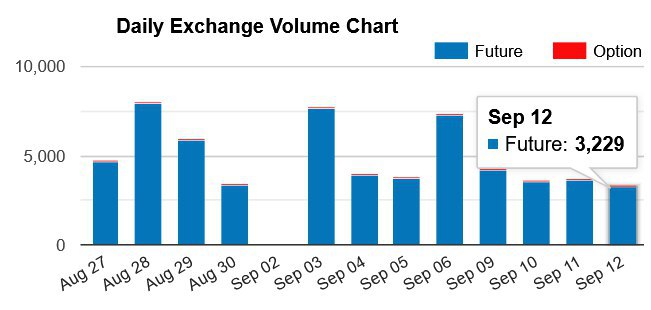
The Chicago Mercantile Exchange (CME Group) has announced that it intends to double its monthly Bitcoin futures trading cap to BTC 10,000 (USD 103 million) – and has already asked America’s Commodity Futures Trading Commission (CFTC) for regulatory permission.
Currently, individual investors may not purchase more than 1,000 contracts per month, with each contract representing BTC 5. But per a letter to the CFTC hosted on the CME Group’s website, the group says it wants to boost that number to 2,000, for a maximum limit of BTC 10,000.
The company says it “deems the new proposed limit to be adequately stringent to discourage attempted manipulation of the Bitcoin Reference Rate benchmark in connection with final settlements of expiring contracts.”
The CME says that its increased spot month limits will become effective at the close of trading on September 30 for the contract month of October 2019 and subsequently, although its move is still subject to CFTC approval.
The company took to Twitter to further explain its decision.
However, as previously reported on Cryptonews.com, Bakkt has already begun testing its own Bitcoin futures product, and hopes to begin offering this via the ICE Futures US exchange starting September 23.
Earlier this week, Bitcoin.com stated that it was hopeful of convincing the CME Group to list Bitcoin Cash futures derivatives.
Meanwhile, major cryptocurrency exchange Binance said that their Binance Futures will go live today, September 13. The company added that all users will receive a 50% discount on trading fees when trading on Binance Futures for the next 3 months.
At pixel time (06:21 UTC), bitcoin trades at c. USD 10,367 and is up by 2.5% in the past 24 hours, while it's down by more than 3% in the past week.
How Much BTC Do You Need to Be a Bitcoin Whale?
So you wanna be a Bitcoin whale? The amount of BTC you need to influence the markets in the future could be drastically smaller than today.
A Bitcoin Whale Moves $1Bn (94,504 BTC)
10 days ago, a Bitcoin whale (yes, the mother of all Bitcoin whales) moved $1 billion of BTC in just one transaction.
Understandably, that amount of bitcoin on the move from the largest non-exchange address triggered a wave of speculation–from Bakkt warehousing to a massive incoming dump.
Whatever the reasons, you have to admit, moving that much money in one whale tail swipe is pretty awesome… And a little bit scary.
Bitcoin whales have the power to move the markets. As per research conducted by Diar this time last year, more than 55% of the world’s circulating supply of Bitcoin was controlled by less than 1% of all BTC wallets.
That means that a very small amount of people have a very large influence on what happens to BTC’s price.
But as one user pointed out on Reddit earlier, the number of bitcoins needed to be a BTC whale may change significantly over time.
How Many Bitcoins Make a Whale?
The Reddit user wrote:
10 years ago if you had 10,000 Bitcoin you’re not a whale. You’re merely a pizza eater. Today I believe hodling 1,000 BTC (maybe even less?) would make you a whale. Is there a future ahead where 100 BTC qualifies you as a whale? 10 BTC? Even one single coin?
It’s certainly an interesting question which, naturally, sparked a host of interesting answers.
Some people believe that, in the future, to be a Bitcoin whale, you’ll only need to own 0.28 BTC. Others disagreed, arguing that you’ll still need around the same amount as now.
Why? Because the ability to move the market has “nothing to do” with the USD value but the percentage of the total supply you have.
This may not be the case, however, according to some. After all, they argue that your ability to influence the market is not relative to how much BTC you hold but “the total amount of available liquidity on the markets.”
This means that as more individuals hold bitcoin, there will be less liquidity and smaller amounts of BTC will yield more influence.

Ethereum Co-Founders Welcome Collaboration with Facebook’s Libra
Ethereum co-founders Vitalik Buterin and Joseph Lubin welcome Facebook’s digital currency libra as a gateway to ETH and crypto adoption.
Libra Collaboration
Speaking at the Ethereal Summit event in Tel Aviv on Sept. 15, the founders discussed the progress of Ethereum 2.0 in addition to Facebook’s libra. While neither would commit to a precise date for the launch of 2.0, they did divulge that the network will be interoperable with applications built upon the original Ethereum blockchain.
Buterin said,
[Ethereum 2.0] is an updated version of the same vision. It’s a sandbox where people can try things and see what works. The thing that has changed are the tools we use.
Lubin, who is also CEO of ConsenSys, discussed a potential partnership with Facebook’s libra. While Lubin does not believe that libra will become a direct competitor to ETH, he did open the door for collaboration between the two platforms,
There’s definitely been some talks. There’s the possibility of interoperability with Ethereum if there’s a viable wallet connection. But I don’t see [Libra] being a viable competitor to Ethereum as a decentralised [financial system]. Actually, it could be an excellent onboarding mechanism for us.
Buterin was also supportive of libra, and endorsed potential collaboration with ethereum,
There’s definitely people looking at making a Libra Litecoin that runs on the Ethereum blockchain. I think we should extend an open hand to systems that are more decentralised than we would like.
How informed are you about Bakkt?
Anonymous Poll
65%
Very well informed
22%
I know some things about Bakkt
13%
What is Bakkt?
Second ICO for EOS Turns Out a Disappointment, Hitting 35% Low From the First
Gone are the times when virtual currencies made so much money. Now the fundraising from cryptocurrencies seems to have taken a beating.
According to a report, the first few months of the year 2018, $25.5m was raised by the initial coin offering at an average according to a report by PwC. The EOD offering which is touted to be the largest ICO of all, closed in that time raising $4.1 billion.
The second round of ICO aimed at making EOS more functional within the markets hasn’t been able to garner much attention from the coveted industry investors.
According to recent news, LiquidApps has been making another solution that functions on the company’s token DAPP, that has been traded in auctions since February this year. On August 19th, after its 233rd cycle of the auction, the sale could scrape only $2.8m in cryptocurrencies.
The founder of Lynx crypto wallet, (built to be compatible with EOS), spoke that he wasn’t astonished at the return values of the ICO of LiquidApps.
He said:
Most end-users and token buyers understand one thing – native tokens for blockchains.
A spokesperson fromLiquidApps spoke in an interview:
They’ve done an interesting job and have been innovative in learning from the Block.One sale and mechanics in crafting how to fundraise for a project should be done. Where they’ve struggled is, not just different market conditions, but finding the right investors and participants for their sale that fully understand the value proposition for the project.
LiquidApps refused to respond on the outcomes of the token sale even after being repeatedly nagged by the paparazzi.
The firm is assumed to take off a little from the plate of blockchain RAM framework of EOS. But as the situation speaks, that has been put to rest while the company faces scarcity of assets by market capitalization.
After 6 months of the sale in EOS, Block.One, a startup that inspired EOS, raised $700m, according to the Wall Street Journal in 2017.
But landscapes have changed and LiquidApps has promised a much real offering than other ICOs.
The CEO, Hakka of the company said in a previous statement that,
Our goal with the Token Generation is to bring as many stakeholders into the ecosystem to best establish it for success. As true believers in the free market, we don’t involve ourselves with price speculations – there is no technical possibility to combine an auction, like we’re doing, with a capped amount. This is an idea that, in the old days, would attract no more than $225K in seed funding from angels and a few VCs, and those VCs would be considered mavericks for taking this on.
Litecoin Project Developers Plan To Add Mimblewimble Support To Its Network
Charlie Lee, founder and executive director of the Litecoin Foundation, announced yesterday that the Litecoin project intended to add MimbleWimble support to its network, and would associate with David Burkett, a major Grin ++ developer for this purpose. Earlier in the last month, Lee had stated that Litecoin developers were interested in the implementation of Mimblewimble and that they are working to develop it further. A Grin developer had also joined the Litecoin project team to work on the implementation. This announcement comes a month later on Twitter clearing the air about the progress of the project, which was initially developing at a snail’s pace.
This was one of the primary reasons why Burkett was added to the team, that is for speedy development of the project. It is believed that he voluntarily and actively decided to offer his services after the slow progress of the project was talked about. In his words,
I’m just a crypto-anarchist who happens to spend his spare time developing o alternate node and wallet for Grin. My ultimate goal is financial privacy for everyone, and I would love nothing more than to see Mimblewimble on Bitcoin itself. Getting MW added to Litecoin seemed like the obvious next step.
Mimblewimble is a protocol change (does not use Bitcoin’s original “open-sourced protocol”, with its underlying codes altered) that allows “confidential transactions” and “non-interactive coin joints”, and thus, provides a number of added benefits. Confidential transactions primarily imply that the transaction values of customers who would use MW on Litecoin would be concealed and would be difficult to track by third parties as they would be mixed among other participants on the network. Thus this would also render the tracing of and logging the activity of these users arduous. Grin ++ is a variant of Mimblewimble’s original protocol Grin, with a greater focus on “speed, reliability, security, modularity, and scalability alongside the main upstream branch”.
Lee had also asserted that Mimblewimble would not replace the original or base protocol but possibly would be added as an extension block akin to a sidechain. However, in this case, it would be attached to the main chain and miners would have to mine the main chain as well as the extension block at the same time. If the soft fork (variant) follows this and is activated, the miner will have to mine both the main and extension blocks or else an invalid block would be created. He also said, brushing aside common contentions that implementation of Mimblewimble would harm Litecoin’s adoption, that the general response to Mimblewimble was far from negative as “people really like fungibility and privacy”.
Albeit all skepticism that this implementation might have an adverse impact on the cryptocurrency’s potential adoption (as Litecoin might be delisted by crypto exchanges), Lee has offered a donation of 1.5 Bitcoin to the security audit of Grin ++ as a token of support to all the developers behind Mimblewimble as well as in exchange of Burkett’s contribution in particular to the protocol.
WELCOME TO THE FIRST EVER GREEN ICO
At EBCF we use blockchain technology to support Amazon Rainforest conservation, its biodiversity protection, the sustainable development of traditional local communities and reduce CO2 emissions, within the new tokenized economy.
The Amazonians Green Coin (AMACOIN) is a new cryptocurrency that supports sustainable initiatives and environmental assets, services and products
AMACOINS are an integral part of Empresa Brasileira de Conservação de Florestas (EBCF) - the custodian of a mosaic of private conservation units focused on the Amazon rainforest conservation.
We see a world where sustainable values are the currency rather than a by-product of financial donations and profit-driven strategies.
"Nature is not a place to visit. It is HOME." - Gary Snyder
Israeli Start-up GK8 Develops Offline Wallet For Cryptocurrency; Holds Online Transaction Capability
GK8, an Israeli start-up in the cybersecurity space, has launched a cold-storage digital currency wallet that also possesses online transfer capabilities. As per the local Israel publication Globes’ reports dated September 18, 2019, this new system relies on the proprietary cryptographic technologies of the company that facilitate instantaneous blockchain transactions of crypto without requiring internet connection.
As highlighted by the reports, GK8’s technology eliminates multiple dangers that are usually associated with internet-accessible cryptocurrency wallets, such as attacks, hacks, and unexplained losses. At the same time, the technology allows the firm to retain features in its offering like receiving and sending digital assets. Thus, in a way, GK8 has developed a cold wallet that includes hot wallet functions as well, providing an increased level of security to users.
Lior Lamesh, the co-founder of GK8, stated in one of his recent interviews that it is because of the “unidirectional connection” that the company is able to record transactions on the blockchain in an offline mode. So, the asset transfer is carried out exactly the way traditional wallets do. Moreover, the company’s one-way signaling itself is not operated on the web. Lamesh also said that their technology could be utilized for Bitcoin as well as other cryptos.
As GK8 points out, their techniques evade the core assumptions surrounding crypto transfers and get rid of the attack vectors to asset transfers.
Cryptography expert, one of the board members of GK8, and one of the founding scientists of Zcash token, Prof. Eran Tromer, explained in a video that the company’s cold wallet offering has unidirectional communication from the wallet. It never accepts raw information back into the wallet from the outside. As a result, it is possible to reduce the attack possibilities as well as prevent it altogether, he added.
Per the official announcement, GK8 has secured 5 patents for their innovations.
For those who came in late, GK8 was established in 2018. Its founders are veteran Israeli cybersecurity experts. Divulging further information, Lamesh revealed that he along with his co-founder, named Shahar Shamai, had started working on the cold wallet solution after coming across security loopholes in even the “state-of-the-art” digital asset wallets. The risks associated with storing the assets online concerned them and led them to come up with such an offering.
Ethereum Announces Launch Dates for Testing its Hard Fork, Istanbul
A recent update on Ethereum maintenance released a while ago, known as Frozen Pyjack, secures in the dates that Ethereum’s mainnet upgrade, where Istanbul will be utilized on Ethereum testnets. For quite some time, Istanbul is Ethereum’s long-time discussed hard fork that pledges to make the system increasingly efficient. The Istanbul mainnet fork will go out in two sections. The first update will happen later this year and the second, in the first quarter of 2020.
Besides, Ethereum Istanbul is a hard fork that carries a progression of changes to the Ethereum blockchain focusing on data storage, code execution, and mining protocol. Further, the hard fork for the most leading test network, called Ropsten, is planned for October 2nd. The hard fork for the testnet Görli is scheduled for October 30th, and for the testnet Rinkeby, will be November 13th.
Moreover, Istanbul is the Ethereum hard fork, and it is professed to open the route for Ethereum 2.0. This upgrade should able to make a new, increasingly adaptable blockchain that uses a various consensus algorithm and sharding to build transaction speed and efficiency. Also, the changes during the Ethereum Istanbul hard fork are expected to give additional protection against replay attacks.
Testnets can be explained as testing environments utilized by developers to stimulate the genuine Ethereum network in advance, while their code goes live on the mainnet. Further, Developers can experiment with smart contracts without paying the cost.
Peter Szilagyi, a core developer, remarked on the two-phase plan of the upgrade, said:
We split Istanbul into two. One of them we can actually ship within weeks. The other contains two big EIPs that would be nice to have but require some stuff that cannot be done within the two- or three-week time span.
Istanbul denotes the eighth major hard fork upgrade to be executed upon the blockchain system, which is worth around 22 billion dollars today. The hard fork is set to lift chain interoperability with the Zcash, a privacy coin, in securing the broader system against replay attacks amongst other advancements.
Succinctly put, Ethereum was intended to be the decentralized internet, a blockchain-based platform where organizations can build smart contracts and build products. Ethereum is currently home to several numbers of dApps, from the decentralized fund (DeFi) to blockchain games. Over and above, the Ethereum blockchain utilizes the PoW (Proof-of-Work) consensus mechanism, which makes it a little bit slow in executing transactions. The system still cannot give long term answers for big business clients, and it is as of now dealing with issues of scalability.
Alex Holmes, MoneyGram’s CEO Acclaims XRP Along with Its Consequences
Alex Holmes, CEO of MoneyGram, a major money transfer company, praised XRP after using its cross border payment platform xRapid.
In one of his latest interviews, Holmes was exuberant, while sharing his experience about the use of digital asset XRP. The praise comes after the series of steps taken by both firms, which mutually benefited them to expand their businesses.
Key Points of Collaboration Between MoneyGram and Ripple:
The strategic partnership between MoneyGram and Ripple happened in June 2019.
Ripple backed MoneyGram by purchasing its $50 million worth of shares with 10 percent stakes in MoneyGram. In return, MoneyGram partnered with Ripple to resolve digital cross border payments settlements.
What Ripple offered to MoneyGram?
XRP based two main products, xCurrent and xRapid are being utilized for faster settlement of payments. Transfers via xRapid reduce cross border operating cost and can transfer instantly.
MoneyGram has been carrying out cross border transactions via xRapid platform from last few weeks. Holmes seems impressed with its easy and rapid functionality.
Alex Holmes stated,
Ripple has large distribution blockchain technology and an interesting crypto coin like XRP can cross borders in seconds. What they don’t have is pools of global liquidity in fiat currency.
He added,
We, however, have pools of money across the world and our speed is only enabled by the ability to pre-fund and move money in advance. One system is really fast but lacks liquidity; the other has massive amounts of liquidity but is inherently slow.
Holmes remarked that cryptocurrency could surface as a crucial threat to the central banks and governments. He said,
If cryptocurrency can translate into fiat currency, it can be disruptive to cash markets. Most governments understand that, but most governments fear that too.
MoneyGram disclosed publicly that it has utilized XRP based cross border payment transactions service successfully, but has been vocal about using the xRapid for settlement transactions.

SoFi Launches Beta Version of Crypto Trading Feature “SoFi Invest” Using Bitcoin, Ethereum, and Litecoin
Social Finance Inc., popularly known as SoFi, has started rolling out a beta version of its cryptocurrency trading service for the current users of the platform, focused around three initial assets namely, Bitcoin, Litecoin, and Ethereum.
The highly reputed firm involved in consumer finance and wealth management has integrated with San Francisco domiciled cryptocurrency exchange, Coinbase to kickstart the highly anticipated trading activities.
The new platform will be known as SoFi Invest and will be easily accessible to the users through SoFi.com and the SoFi app. It does not create any coin nor does it serve as a wallet; but is a feature which allows individuals to sell and buy cryptocurrency. More than 40 other coins will soon be available.
In order to indulge in the trading of cryptocurrencies, users need to fund their SoFi Invest active account through SoFi.com or its app. After funding of the account, a person will be able to trade crypto, stocks, and ETFs.
Cryptocurrency trading through SoFi Invest will be accessible in 36 states, including Alabama, California, and Ohio. The residents of New York City will not be able to sue SoFi Invest for trading. As per the announcement made by SoFi, the users will not be able to transfer cryptocurrencies to an external wallet.
The statement made by SoFi read that “by having a closed system, we can better secure your crypto assets.” It further clarified, “in the future, we may consider adding the ability to transfer crypto into or out of your SoFi Invest account, but it isn’t a planned feature at this time.”
The platform has fixed the daily maximum order limit of $50,000 for each user, while the minimum order size per transaction is set to $10.
Concerning the SoFi charges, the platform is likely to demand a markup of up to 1.25% on crypto transactions. A user who sells all or a part of his/her crypto holdings on SoFi Invest will receive the returns in USD, in their account, the next business day.
Earlier in February, SoFi announced its plan to explore the crypto arena by gearing up to offer cryptocurrency trading in the second quarter of 2019.