Don't Take Your Privacy For Granted As Regulators Get Anxious About Crypto
Global regulatory actions might be sending a worrying sign to the whole crypto industry and its players that are urged to stay vigilant and protect their right to privacy.
A regulatory change is coming, with governments globally looking to impose harsher restrictions on access to cryptoassets, according to Jake Chervinsky, General Counsel at Compound Finance.
When looking at the big picture of recent crypto regulation and enforcement news, what we have on our hands is "an ideological war over self-custody and privacy," said Chervinsky.
He argued in his recent Twitter thread that,
"Perhaps most importantly, policymakers worldwide are signaling a desire to expand existing laws to restrict access to crypto."
An example is the 'Swiss Rule,' which he said "practically prohibits self-custody in the guise of verifying the owner of a private key." Furthermore, the Financial Action Task Force (FATF), an international standard-setting body for anti-money laundering (AML) regulation, said in June that the "lack of explicit coverage of peer-to-peer transactions...was a source of concern", and next June, they might adopt the Swiss Rule as a global standard, warned Chervinsky.
As other examples, the Counsel noted numerous governments' statements naming financial privacy as a major risk, with the Bank for International Settlements (BIS) saying in its report on central bank digital currencies that: "Full anonymity is not plausible."
There is a change coming, wrote Chervinsky. While converting fiat into crypto and withdrawing any amount to one's own wallet is "quite easy" for most people, with not enough regulation "to seriously infringe on the freedoms of self-custody & privacy" - now the approach to AML regulation by policymakers is "shifting significantly toward harsher restrictions on a global scale."
The reason is that, when it comes to paper cash and electronic cash, AML regulations "break down." There is no intermediary, that is, financial institution, to deputize so to detect transactions, identify counterparties, determine sources of funds, conduct censorship and seizure, etc. for the governments, so the governments are less able to perform these actions.
And while paper cash is less of a worry, as it's used for in-person transfers and is difficult to transport far in large amounts, "regulators are much more concerned about digital transfers," said Chervinsky.
They've been satisfied so far with tracking crypto transfers via blockchain analytics, regulating on-ramps and off-ramps, limiting access to conversion, given that they believe crypto's main utility comes from conversion into fiat, and catching criminals in the process. However, said Chervinsky, over the last year, Bitcoin (BTC) has gained geopolitical significance, while stablecoin trading volume jumped, making authorities worried about illicit activity, as well as the threat to their monetary sovereignty.
"I fear we're heading for a world where withdrawing crypto from exchanges to self-custody is restricted as a means of attacking privacy. We'd have two separate crypto markets: one of "clean" custodial coins & another of "dirty" self-sovereign ones, with no bridge between."
But this is a worst-case scenario, he added, with industry insiders working to change the policymakers'' stance on these issues, but it is "our main challenge for years to come."
All that said, the authorities in different countries are hard at work creating digital money they can fully regulate and control. The European Central Bank (ECB) Executive Board member Fabio Panetta stated that "a digital euro would conform to the people’s fundamental right to privacy" and that, unlike private suppliers, "the central bank has no commercial interests related to consumer data."

🤑 Currency.com is listing DeFi tokens LINK, COMP & UNI – 2x leverage available
Regulated crypto exchange Currency.com announces the listing of 3 popular DeFi projects: Chainlink (LINK), Compound (COMP) and Uniswap (UNI). Each token will be available in pairs with USD and USDT.
You can trade the following pairs on the spot exchange:
🔸 LINK/USD & LINK/USDT
🔸 COMP/USD & COMP/USDT
🔸 UNI/USD & UNI/USDT
Leveraged trading will also be available for the pairs LINK/USD, COMP/USD & UNI/USD. The leverage margin is 2x.
Trading with a 2x leverage is a great way to hedge the price risks – remember that DeFi tokens are very volatile.
Register now on Currency.com now and start trading the best DeFi tokens!
Former Gulag in Russian Arctic Bids to Become Bitcoin Mining Hotspot
A Russian firm is set to open a hotel with a difference in the Arctic Circle – although it isn’t the kind most folks would ever dream of visiting. Instead it’s a crypto mining “hotel” fitted with ASIC bitcoin (BTC) mining rigs and powered with 11.2 MW of electrical energy.
In a uniquely crypto-themed twist, the Norilsk-based “hotel” will be housed in facilities owned and formerly operated by Norilsk Nickel, a company (fronted by Russia’s richest man Vladimir Potanin) that is working on the launch of a government-approved tokenized metals trading platform.
Built on permafrost in the 1930s, Norilsk is one of the world’s most northerly permanent human settlements – and was the center of the region’s Gulag labor camps in Soviet times. Camp residents were put to work mining and smelting nickel and other metal resources in the city. Average yearly temperatures are a frosty -6 to -10°C.
The bitcoin mining project appears to be the brainchild of Norilsk’s local authorities, which, per media outlet Zapolyarnaya Pravda, hinted that more mining operators could soon be welcomed to the region. The city’s council leader stated,
“Building mining farms in the Arctic will attract large investments here. And that will undoubtedly drive up regional growth.”
The facilities, run by a new Switzerland-based mining venture called BitCluster will initially be kitted out with 150 Chinese firm Bitmain’s S19 ASIC rigs.
The media outlet added that BitCluster has entered into a direct agreement with the local energy provider, the Norilsk-Taimyr Energy Company.
However, it appears that the city council has been actively pushing for the mining industry to consider Russia’s Arctic Circle territories as a destination – particularly for Chinese miners looking to relocate from the Middle Kingdom.
The city council’s chairman Alexander Pestryakov has been actively courting mining interests since 2019, the media outlet added. As cooling expenses are almost non-existent and electricity costs are low, in the past the only barrier to mining ventures was poor internet connectivity.
Pestryakov claimed that high-speed internet infrastructure is now widely available in Norilsk, potentially opening the floodgates for more mining “hotel” initiatives in the near future.

BTC Transfers, CBDC Airdrops, Regulatory Warnings and 20 Crypto Jokes
It was a fun crypto week. OKEx suspended withdrawals as they couldn't get in touch with a private key holder. Also, somebody moved Satoshi era 1,000 bitcoin again, Marc van der Chijs told us that hodling bitcoin would've been a better strategy than trying to outperform it, Kraken researchers said that BTC finished its worst-performing month in September, and that higher returns and volatility could be expected in October, and it was debated whether Elon Musk’s Tesla Gigafactory 1 plant was fitted with a BTC ATM. Also, PwC said that the Americas are loosing their share in crypto M&A and fundraising, and that five blockchain use cases might boost global GDP by USD 1.76T, while Fidelity Digital Assets said that growing institutional investor base could increase BTC's correlation with traditional assets. Also, the BTC in your "brainwallet" might be stolen in less than a second.
And more stuff happened in the Cryptoverse, as KBA asked the South Korean government to suspend crypto taxes until 2023, China started a digital yuan airdrop, and G7 is looking into CBDCs, reiterating that Libra can't be launched until it’s regulated. Fundstrat Global Advisors warned that trading on offshore exchanges might become riskier, and General Counsel at Compound Finance warned that governments globally are looking to impose harsher restrictions on access to cryptoassets. The OECD wants its members to adopt crypto tax frameworks, and the Russian Central bank wants to cap bitcoin buying at USD 7,800 a year. Meanwhile, Kate Winslet joined the cast of OneCoin crypto scam movie, crypto cruise ship Satoshi might set sail soon from the Mediterranean, and a Russian firm is set to open a crypto mining "hotel".

Yield.Claims
Few understand... infinite APY (currently over 3 million % APY).
Yield.Claims is a new experiment which over reached THREE MILLION APY for the first time in the entire ecosystem.
Join it before it will be too late
https://yield-global.medium.com/yield-claim-yield-farming-program-of-yield-global-9f6646b5e0f7
Filecoin Miners Strike, Protesting 'Chicken & Egg' Problem, FIL Crashes
Decentralized storage network Filecoin experienced its first major issue a day after its long-anticipated launch, as miners decided to go on strike, resulting in an early release of token rewards.
Per a 8btc.com October 17 report citing interviewed miners, five of Filecoin's largest miners shut down their machines in order to protest the economic model, because, "today miners actually have a lot of mining machines, but not enough FIL." They've been preparing the machines for a couple of years for the project, but claim it's unfair for the project to require a large amount of FIL as an "Initial Pledge Collateral" (as an insurance that the services will be delivered) for the miners to even start their operations.
Crypto analyst Nico Deva commented on the development on Twitter, stating that miners didn't stop mining blocks but stopped pledging and sealing capacity. Going into the technical details and calculations, the post argued that there is a chicken and egg problem there, for which the Filecoin team designed 'spaces races' to solve.
Nevertheless, "miners need to buy FIL to keep ramping up to full capacity, or just stay at 1/7 capacity," said Nico Deva. With reportedly USD 240m worth of hardware installed and ready at mainnet launch, "here in China people are disgusted," said the thread. "A napkin calculation shows you early on that your mining system that requires USD 20k hardware also forces you to buy more coins. ... Miners provided huge support to the Filecoin team during the development years, and now are rekt."
Some other crypto industry observers also criticized the project's economic model. "The power requirements were absurd and required incredible commitment from before the mainnet even began, where miners had to shell out money for totally untested things without knowing what returns they're getting or how secure their money would be," said 'LargeSnorlax on Reddit.
A general problem for untrusted file storage, commented theoretical physicist Bob McElrath, "is that you must constantly interrogate the storage provider to prove he still has your file. In any design the computational load on storage is high."
Miners can earn token rewards to use them as collateral, but the rewards are released over the course of 180 days, meaning that miners earn little when just starting. And while FIL can be purchased, some miners don't have the funds for that, and it might not pay off given the coin's price and potential transaction fees.

💰Currency.com gives away $50 to every trader from BitMEX and OKEx
Have you heard that BitMex and OKex are in trouble with the regulators? First CFTC filed a legal suit against BitMEX, and now OKEX has blocked all withdrawals, because one of the private key holders has apparently disappeared. Traders are rushing to get their funds off these exchanges and looking for more reliable platforms that won't have these legal problems.
Regulated exchange Currency.com has a special offer for all those affected. We invite all the traders from BitMEX and OKEx to register on Currency.com and get a $50 trading fee credit.
To get the $50 bonus, pass a simple KYC, top up your account on Currency.com, and send an email to support@currency.com with the key word BITMEX or OKEX.
Currency.com strictly complies with the requirements of the Digital Economy Development Decree in the Republic of Belarus. In 2020, Currency Com Limited obtained a DLT license in Gibraltar.
Register now and start trading on a regulated exchange!
EY, Samsung SDS & Naver-Line Consortium Bids to Test South Korean CBDC
There has been mixed news for the central Bank of Korea (BOK) as it prepares to launch its first pilot for the digital won.
The bank is still yet to make an official decision on whether it will actually launch the central bank digital currency (CBDC) or not, but recently claimed that it would deliberate on the matter once the pilot is complete.
Per ZDNet Korea, a consortium has already expressed its willingness to take part in the project. Led by consulting EY’s South Korea operation EY Hanyoung, the group also comprises Samsung’s blockchain technology and IT services arm Samsung SDS, as well as Naver-Line. The latter is the web giant Naver – the South Korean answer to Google – and its crypto-keen chat app affiliate Line, which also announced this week that it is in talks with an unnamed Asian nation about CBDC issuance.
However, the BOK had hoped other firms would also come forward and take part in a bidding process. The deadline for applications to take part in the pilot was originally set for October 19. However, the BOK has since extended this deadline to October 29 after no more companies besides the EY-led consortium submitted official applications.
If no other bidders approach the BOK before this date, only the EY-led proposal will be considered.
The EY consortium would see the consultant act in a management role, with Samsung SDS and Naver-Line in charge of the system architecture.
A budget of USD 70,000 has been set aside for the project, which will be carried out in 2021.
However, it appears that the BOK may have set the bar prohibitively high with its bidding requirements.
ZDNet Korea quoted an unnamed industry insider as confirming that “there are many companies who want to take part in testing, but few are qualified enough to do so.”
The source added that “designing a CBDC business model” is one of the BOK’s requirements – a task that appears to be beyond many companies who feel better-equipped to tackle more practical CBDC issuance-related matters.

Banking Giant With 11m Clients May Be on Verge of Launching Crypto Exchange
Major Asian bank, Singapore’s DBS, could be set to debut a crypto and securities token exchange – offering trading in bitcoin (BTC) and three major altcoins against not only the fiat Singapore dollar, but also three other major international currencies.
A DBS page devoted to what the bank seems to have called the DBS Digital Exchange already went live but now can be found in cache form.
The page shows that the new exchange will apparently allow customers to trade in BTC, as well as XRP, bitcoin cash (BCH) and ethereum (ETH) with the Hong Kong dollar, the Japanese yen and even the American greenback, in addition to the Singaporean fiat.
And this appears to be the tip of the iceberg – with an “STO offering” to “be announced and introduced in due course,” allowing “qualified investors” to “securitize real assets into tradeable digital tokens.”
And it appears that the DBS Digital Exchange may have obtained a regulatory green light – with claims on the site that it is “regulated by the Monetary Authority of Singapore,” the country’s national bank and chief financial regulatory body.
Crypto custody services also seemed set for lift-off, with the bank apparently writing,
“To keep customers’ digital assets safe, DBS Bank has deployed DBS Digital Custody, an institutional-grade custody solution specially tailored for safekeeping digital assets.”
In 2019, DBS had SGD 579bn (USD 426bn) in assets, while its income reached SGD 14.5bn and net profit stood at SGD 6.4bn. The bank claims it has over 240,000 institutional banking customers and almost 11m consumer banking/wealth management customers.
Cryptonews.com has contacted DBS for comment on this story.
A Twitter user claimed that the bank had been working on the project for the past two years.
🤔 New to crypto & investment? Not sure where to begin and struggling to make sense of all the info?
Start with the basics:
🔸 What is a cryptocurrency or a tokenized asset;
🔸 How to create an account and trade on an exchange;
🔸 What are market & limit orders;
🔸 How to analyze markets & withdraw profits;
🔸 How to use Bitcoin, and much more.
💥 You can learn all this FOR FREE in the Currency.com Trading Academy!
10 text & video lessons, written in a clear human language. You'll learn the basics of crypto and investments – and even try your new skills on a demo account without any risk. The regulated exchange Currency.com features 1,500+ assets – both crypto and traditional.
👉 Click on the link and start learning right now!
🤑 What's the best day of the week for a crypto trader? Lucky Friday!
Every Friday between 8am and 6pm UTC, regulated exchange Currency.com cancels ALL leverage trading fees for one of the tokenized assets.
📆 This Friday, October 30, you can trade tokenized S&P500 with a 0% commission!
This is a great chance to make money in the stock market – especially with the US elections coming up and the second wave of Covid-19 in full swing!
👉 Register and make profits on Currency.com!
Russian Central Bank Says CBDC Will Wipe Out Need for Crypto
The Russian Central Bank has been banging the drum again on what has become its favorite subject – regulating crypto, and has apparently responded to criticism of its plans to issue a digital ruble by claiming a central bank-issued token could eliminate out the need for people to use crypto.
In an op-ed piece for Plusworld, Alexei Guznov, the head of the Central Bank (CB)’s Legal Department, stated that the central bank digital currency (CBDC) that the CB hopes to pilot next year can function as a “response to the challenges being shaped by cryptoassets.”
The CB is by far and away the most vocal opponent of crypto in the Russian governmental system, and has repeatedly come out in favor of issuing nationwide bans or enacting a China-style crypto crackdown.
However, after stating that it had no interest in issuing a digital fiat a year ago, the CB has since pulled off a u-turn, joining many advanced and developing economies the world over in the race to issue a token.
Despite the sea change, the CB is refusing to budge on its anti-crypto stance.
Although Guznov conceded that “crypto is a definite challenge for national payment systems and for the stability of national financial systems in general” due in part to their speed and adoption rate, he opined,
“There is undoubtedly a problem with cryptoassets being used part of a system that comprises money laundering, drug trafficking and the financing of terrorism.”
(However, as reported in September, documents uncovered by an investigation conducted by 110 news organizations appear to show global banking giants moving trillions of dollars for clients allegedly involved in fraud, embezzlement, money laundering, and more.)
This led him to a refrain that will be all-too-familiar for Russian crypto advocates.
Guznov wrote,
“Therefore, we believe that cryptoasset circulation should be strictly regulated – either in the form of a ban on the circulation of cryptoassets, or in the form of restrictions.”
And rather than help crypto’s cause, Guzov believes that CBDCs – in Russia and abroad – will effectively wipe out the need for bitcoin (BTC) and altcoins. He stated that CBDCs could be a “worth alternative” to crypto, and concluded,
“We see that countries are now experimenting with projects to create national digital currencies. These can certainly be a clear alternative.”
However, as many crypto advocates have already stressed, a CBDC would help governments to increase their control over finances of its citizens, in contrast to decentralized cryptocurrencies such as BTC.
This is How Institutional Players Help Bitcoin Mining Industry Grow
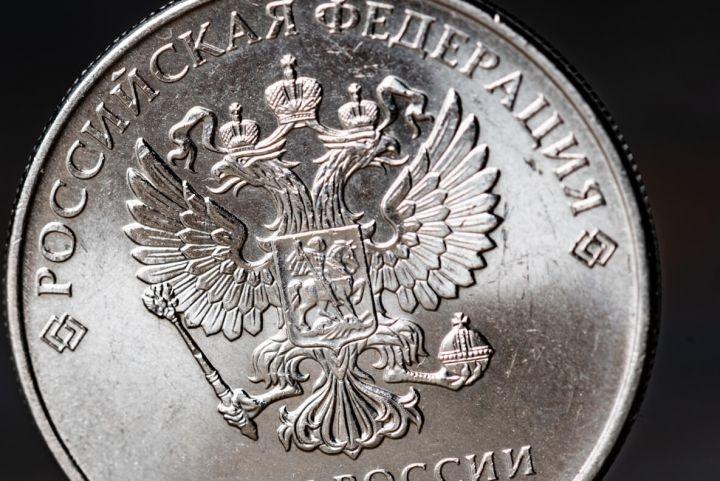
Institutional players are entering the cryptoasset mining industry, prompting the creation of enterprise-grade solutions, but also offering new solutions for existing challenges, according to Igor Runets, founder and CEO of BitRiver, a Russia-based mining services provider that is now open to approaches from strategic investors.
Runets and his business partner had started a fund for Bitcoin (BTC) mining back in 2016, but geopolitical issues of the time, which prevented the purchased mining machines from being located in Russia, forced him to face a dilemma: declare bankruptcy on the data center dedicated to those devices, or buy it and convert it into a colocation business. He told Cryptonews.com that he chose the latter, thus forming BitRiver. “Soon after the data center started generating profit, I raised money from international investors,” said Runets, claiming that they are today “the largest datacenter that offers Bitcoin mining colocation services in Russia and Central Asia, and are operating profitably.”
The CEO, however, has noticed some trends becoming more prominent lately, saying that,
“One of the main trends in the mining industry is the entrance of institutional players and, as a result, the introduction of new enterprise-grade services for the mining industry.”
As examples, Runets gave companies such as Digital Currency Group starting a subsidiary, Foundry, to offer financial services to miners, as well as financial services company Charles Schwab purchasing shares of cryptoasset mining companies, thus joining major companies like Fidelity and Vanguard.
A main challenge in the industry today, said the CEO, is timely delivery of ordered mining hardware. Customers of major mining hardware maker Bitmain, for example, have been experiencing delays because of internal management issues at the company, he said.
However, here too institutions might bring a solution.
“As mining becomes more institutionalized, institutional players are also offering new solutions to existing challenges in the mining industry," Runets said, giving an example of a recently announced partnership between Foundry and MicroBT, a China-based major crypto mining hardware manufacturer, as the latter aims to increase its market share in North America and improve supply chain efficiencies for North American buyers of its mining machines.
💣 Crypto exchange Currency.com announces cancellation of trading commissions for tokenised assets
Regulated cryptocurrency exchange Currency.com has announced the cancellation of commissions on 1,539 tokenised instruments when trading with leverage, including:
🔸 Shares
🔸 Stock indices
🔸 ETFs
🔸 Currencies
🔸 Commodities
🔸 Bonds
❗️This offer is only valid between 2 November 2020 and 31 January 2021. The cancellation of fees does not apply to cryptocurrencies and DeFi tokens.
The operations of Currency.com are regulated by the Presidential Decree "On the development of digital economy" and other laws of the Republic of Belarus. Currency Com Limited is DLT-licensed by the financial regulator of Gibraltar.
👉 Register and trade tokenised assets without fees!
Bitcoin Mining Difficulty Sees Its Second-Largest Drop Ever
Bitcoin (BTC) mining difficulty just had its largest drop since 2011 and the second-largest in history of the network.
According to major mining pool BTC.com, mining difficulty, which is the measure that shows how hard it is to compete for mining rewards, has dropped more than nearly 15% estimated yesterday. It fell 16.05% - which is the largest drop it has seen in 9 years - reaching 16.79 T, or the level last seen in July/August.
The last time the mining difficulty fell more than this was October 31, 2011. It went down 18.03% to just 1.2 M. This was actually the largest drop in bitcoin's history.
This adjustment is particularly relevant if we take into account the recent skyrocketing fees on the Bitcoin network, crowded mempools, dropping hashrate - reportedly due to Chinese miners relocating equipment for the dry season, and consequently numerous users reporting that they had to wait for hours or days for their transactions to be confirmed. Many have been looking towards this difficulty adjustment for some relief.
The hashrate (the computational power of the network) dropped from the average of 142.94 EH/s two weeks ago to 120.12 EH/s following this adjustment. BitInfoCharts.com also shows BTC hashrate dropping sharply: 26.6% to 108.29 EH/s since October 18.

Bitcoin At New High, Altcoins Gain Momentum
☄️Bitcoin price climbed above USD 14,200 and traded to almost a three-year high.
☄️Ethereum surged above USD 400, XRP is attempting an upside break above USD 0.240.
☄️HEDG extended its rally by over 50% and it broke the USD 1.00 resistance.
There was a steady rise in bitcoin price above the USD 13,800 and USD 14,000 resistance levels. BTC even broke the USD 14,200 resistance and traded to almost a three-year high. It is currently (06:00 UTC) consolidating gains and trading well above the USD 14,000 support level.
Also, there are positive signs emerging for most major altcoins, including ethereum, XRP, litecoin, EOS, XLM, LINK, BNB, TRX, bitcoin cash, and ADA. ETH/USD gained more than 5% and it settled above the USD 400 resistance. XRP/USD is also showing positive signs, but it must settle above USD 0.240 to start a strong increase.
Bitcoin price
Amid 2020 US election results, bitcoin price followed a bullish trajectory and was able to clear the USD 13,800 and USD 14,000 resistance levels. BTC even cleared the USD 14,200 barrier and traded close to USD 14,400. The price is currently correcting lower, but downsides might be limited below USD 14,150 and USD 14,000. The main support is now forming near the USD 13,800 level.
On the upside, the USD 14,400 and USD 14,500 levels are immediate hurdles. A successful break above USD 14,500 could open the doors for a push towards the USD 14,850 and USD 15,000 levels.
Ethereum price
Ethereum price started a strong increase after it cleared the USD 388 and USD 395 resistance levels. ETH rallied over 5% and it even surged above USD 400. The price traded to a new weekly high above USD 405 and it is currently correcting lower.
An initial support on the downside is near the USD 400 handle. The next major support is near the USD 395 level (the recent breakout zone).
Bitcoin cash, chainlink and XRP price
Bitcoin cash price managed to clear the USD 240 and USD 242 resistance levels. BCH is now attempting an upside break above USD 245. If the bulls succeed, there are chances of a strong upward move towards the USD 255 and USD 260 levels. If there is a fresh decline, the USD 240 level might act as a decent support.
Chainlink (LINK) traded to a new weekly low near USD 9.75 before it started a fresh increase. It is back above USD 10.20 and trading just above the USD 10.50 resistance. If the price settles above USD 10.50, there are high chances of a break above USD 10.80. The next key resistance on the upside is near USD 11.00.
XRP price is regaining strength and it is trading well above the USD 0.235 pivot level. The price is trading above USD 0.238, but it must gain strength above USD 0.240 to start a strong increase. The next key resistance is near USD 0.245. On the downside, the USD 0.235 level is a major support in the short-term.
Other altcoins market today
In the past few hours, a few altcoins gained over 5%, including HEDG, CEL, SNX, DCR, OKB, MANA, ALGO, RVN, BNB, and REP. Conversely, UNI, YFI, ZB, and XRM are down more than 5%.
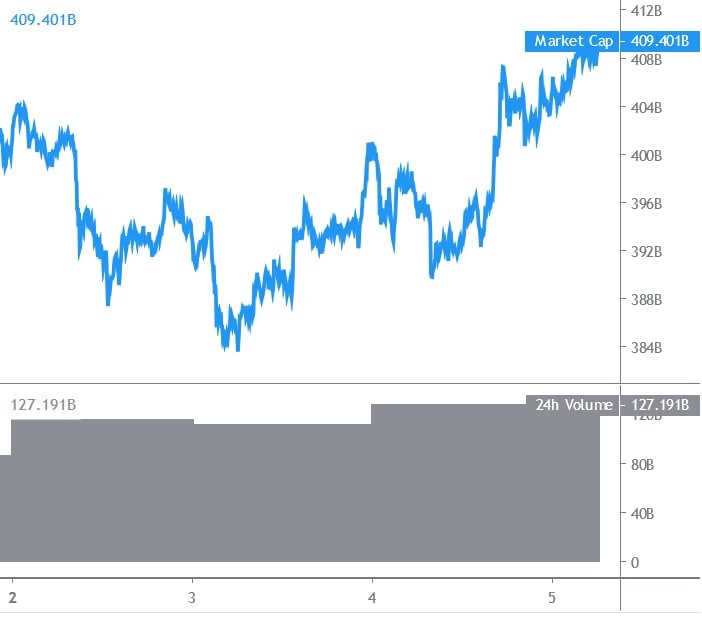
Overall, bitcoin price is gaining momentum above USD 14,000 and USD 14,200. If BTC clears USD 14,400 and USD 14,500, it could gain 4%-5% in the next two sessions.
Total market capitalization:
Bitpanda Eyes New Markets, Assets as Regulators Move 'Into The Right Direction'
The recent crypto-related regulations are beneficial for both the industry and the end-user, as they not only bring more trust leading to more adoption, but are also harmonizing the crypto frameworks across Europe, Lukas Enzersdorfer-Konrad, Chief Operating Officer (COO) and Global Head of Communications at Vienna-based digital investment platform Bitpanda, told Cryptonews.com as the company aims to expand into new markets and offer more traditional assets to trade.
The regulatory space for bitcoin (BTC) and other cryptoassets was challenging in the last couple of years “because there was simply none,” according to him. However, collaboration with the Austrian regulatory bodies and with European regulators has increased trust in the company, the COO said.
Having a close relationship with the regulators enabled them to notice what Enzersdorfer-Konrad described as “a very positive thing” - that “all European regulators are moving into the direction of not just saying, ‘okay, we need to regulate crypto, but how to make it regulated in a way where it makes sense’.”
As an example, the COO gave the recently much-discussed draft legislation, the Markets in Crypto-Assets (MiCA) regulatory framework, per which the European Commission, the executive branch of the European Union, would treat crypto as it does other financial instruments. This is a positive development as it “really gives more security and more maturity to the whole market to enable traditional players to also understand it and handle it; and on the other side, gives more security to the end consumers,” Enzersdorfer-Konrad argued.
For Bitpanda, short-term, regulatory hurdles are “moving in a not yet harmonized regulatory environment throughout Europe,” where there are different regulatory frameworks in different countries, or they are not yet defined, or there is none. Therefore, another benefit of MiCa is an effort to harmonize these frameworks, said Enzersdorfer-Konrad.
Regulators are stepping away from their fear of crypto, or strictly worrying about crime and money laundering, and towards synchronizing the regulations among European countries.

Bitcoin Dives Below USD 15K as Joe Biden Announced US President-Elect
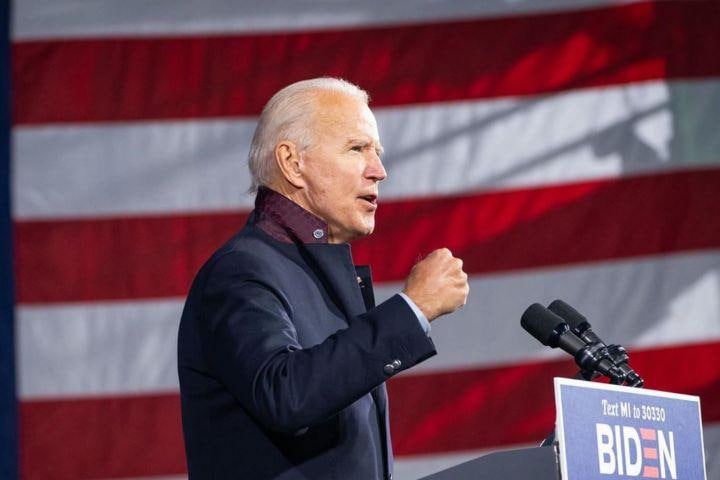
On Saturday, after a few nail-biting days of vote-counting, Democratic candidate Joe Biden announced as the winner of the US presidential election, beating Donald Trump. Bitcoin (BTC) price dropped following the expected news.
Biden, who now should become the 46th president of the United States, has secured 284 electoral votes while 270 were necessary, Trump has 214, according to Bloomberg data.
At pixel time (06:27 UTC, November 8), BTC trades at USD 15,033, having recovered from as low as USD 14,479, reached on November 7. It traded between USD 15,250 and USD 15,400 when the news about Biden's victory started to circulate at around 16:00-17:00 UTC on November 7. The price is now down by 3% in a day, trimming its weekly gains to less than 10%. Other major coins are down by 4%-8% in a day.
According to a popular Bitcoiner, known as BitcoinTina on Twitter, "stock guys" might be behind this drop in price.
"Selling your bitcoin cause Biden is going to raise taxes is stupid. IF there is a Democratic Senate, House and White house. The budget and spending will be huge and bitcoin is the thing to own. Pay Taxes to buy bitcoin back is silly," BitcoinTina argued.
In November 2016, when Trump won his presidency, BTC traded at around USD 700.
Bitcoin Above USD 16,400 as More PayPal Users Start Buying Crypto
Bitcoin (BTC) extended its gains following the news that online payments giant PayPal opened its new crypto services to all its users in the US (excluding Hawaii), doubling the maximum dollar amount that could be spent on cryptoassets.
"We are pleased to announce that all eligible PayPal accountholders in the US can now buy, hold and sell cryptocurrency directly with PayPal," the company said yesterday.
At pixel time (04:33 UTC), BTC trades at USD 16,422 and is up by 5% in a day and almost 6% in a week. Among the top 10 coins by market capitalization, the most popular cryptocurrency is outperformed only by litecoin (LTC) (+6%, USD 62) which is is also available on PayPal.
The company is also offering ethereum (ETH) and bitcoin cash (BCH). ETH is up by 1% to USD 464, BCH advanced by 2% to USD 259.
In its FAQ section, PayPal confirmed that it has doubled the maximum dollar amount for weekly cryptocurrency purchases to USD 20,000, or more than was planned two weeks ago (USD 15,000). The maximum dollar amount for any single crypto purchase is also USD 20,000.
Also, until December 31, there are no extra fees for using these new services.
The company rolled out these services to 10% of its customers in the US around two weeks ago.
Back then, Dan Schulman, CEO of PayPal, said that their customers are "very eager" to start using crypto and their waiting list of new crypto users exceeded their expectations by "2-3" times.
As reported, the company plans to expand its new crypto services to other countries as well as Venmo, the company’s digital wallet app, in the first half of 2021.
Bitcoining, Bulling, Billing, Banning and 20 Crypto Jokes
The week opened with major Covid-19 vaccine news, followed by bitcoin and altcoins dropping, but then bitcoin smashed through USD 16k. Meanwhile, Bill Miller and JPMorgan’s analysts made bullish statements on BTC, Ray Dalio said governments would ban it while the Cryptoverse disagreed, and Kraken researchers said that BTC whales accumulation will drive further appreciation in price in November. The launch of ETH 2.0 Phase 0 may have to wait till January, and Infura went down for a few hours due to an "unannounced hard fork" of the Ethereum blockchain. Meanwhile, a Ripple exec lost thousands on ‘worthless’ tokens like many others in the space, the troubled Cred suggested three ways it could refund customers, and a company seeks to collect royalties from BTC ATM operators and manufacturers.
In the crypto-regu-land: the Cryptoverse might face a 'more aggressive' SEC under the US President-elect Joe Biden, the Fed hinted they wouldn’t be rushed into issuing a digital dollar, the Council of the European Union is allegedly seeking to bypass encryption, an ex-CIA analyst said that the Beijing blockchain network may spark Chinese net dominance, and an Argentinian crypto bill is headed toward a parliamentary vote. Also, central banks may be on the hunt for a hedge and they may catch some BTC. And while an ex-Microsoft engineer was convicted in a landmark case involving bitcoin tax fraud, a critic said that Russia’s blockchain-powered voting systems could be exploited by unscrupulous politicians. Speaking of Russia, their Ministry of Finance plans to hit crypto holders with jail time if they fail to declare their earnings.
And here is your weekly crypto treat.