
Venezuelan Authorities Clamp Down on Off-The-Books Crypto Pay Vendors
Customers spending foreign currency and cryptoassets in Venezuelan stores have been warned to demand invoices and receipts in fiat bolivars, with the nation’s tax authorities worried that crypto pay and payment in overseas fiats like the USD or euros could facilitate tax evasion.
Merchants across the country have increasingly moved to abandon the sovereign bolivar, which has experienced ballooning inflation as the country’s economy continues to suffer in the wake of intensifying Washington-led sanctions and the ongoing coronavirus pandemic.
But Jose David Cabello Rondon, the Superintendent of the National Integrated Tax and Customs Administration (known locally as SENIAT), has taken to Twitter to remind customers that failure to demand bolivar invoices or receipts could help abet tax evasion efforts on the part of unscrupulous merchants. The authority believes that many merchants are using the legality of crypto pay and foreign currency pay programs to keep transactions off their books.
Cabello tweeted,
“Demand a legal invoice in bolivars for any purchase you make, even if you are paying in foreign currency or cryptoassets.”
He also posted an image with a caption that read,
“Do not collaborate with tax evaders! Demand a receipt!”
And Cabello added in a separate tweet, that on-the-spot inspections were already in place, using undercover investigators in some cases, making sure that vendors issued legal receipts for sales and were not shirking their obligations to help make “social investments” for the betterment of the country.

Game of New Highs and 20 Crypto Jokes
Bitcoin and altcoins have witnessed another exciting week. Bitcoin has accelerated all the way up to USD 18,500, leaving previous levels of USD 16,000 and USD 17,000 in the dust. And while billionaire investor Ray Dalio acknowledged he might be missing something about BTC, Ethereum followed along and hit USD 500 for the first time in more than two years just a few days after it was revealed that another major investor, Mike Novogratz, acquired ETH 500,000 at a premium back in 2015.
Rather unsurprisingly, more big names have entered the crypto industry, including Mexican billionaire Ricardo Salinas Pliego and a popular Game of Thrones actress Maisie Williams. Spanish security giant Prosegur has entered the crypto custody game, while the South Korean government mulled plans on how to nurture its blockchain unicorns. Even Deutsche Bank strategists expressed positive sentiment about bitcoin, though Jamie Dimon of JPMorgan is still holding on to his doubts. And while some regulators are getting ready for a new round of crypto policing, others seem to be leaning towards a more liberal stance on the emerging sector.
As the world is seemingly preparing to adopt Henry Ford’s predicted energy standard and remove cash for good by the end of this decade, hackers once again outsmarted the developers of DeFi protocols for a fourth DeFi hack in a month. Finally, major crypto exchange OKEx confirmed that it will reopen withdrawals by November 27, and crypto lender Nexo told Cryptonews.com that it is launching an internal exchange and is working on prime brokerage and commercial banking capabilities.
It’s safe to say that crypto is no longer to be treated as a joke. Hence, let’s cement this argument with 20 crypto jokes from the last week.

XRP Jumps 50%, Ether Eyes More Gains While Bitcoin Consolidates
☄️Bitcoin price is still trading in a broad range below the USD 18,800 resistance.
☄️Ethereum settled above USD 600 and it could surpass USD 625, XRP moves above USD 0.675.
☄️XLM rallied over 75% and it broke the USD 0.185 resistance level.
Bitcoin price remained in a range below the USD 18,800 resistance levels. BTC is holding the USD 18,200 and USD 18,000 support levels, but there are few bearish signs emerging. The price is currently (05:00 UTC) trading below USD 18,500 and it might soon attempt another upside break in the near term.
In the past few sessions, there was a strong increase in most major altcoins, including ethereum, XRP, litecoin, EOS, XLM, LINK, BNB, TRX, bitcoin cash, and ADA. ETH/USD climbed 7% and it is now trading well above the USD 600 level. XRP/USD is still surging and it was able to climb above USD 0.650 and USD 0.675.
Bitcoin price
There were more than two rejections in bitcoin price near the USD 18,800 resistance zone. BTC corrected lower, but the bulls were able to protect the USD 18,200 and USD 18,000 support levels. The price is recovering higher and trading above USD 18,350.
The first key resistance is near the USD 18,500 level, above which the price could retest the USD 18,800 resistance. Any more upsides might clear the path for a strong rally towards USD 19,500.
Ethereum price
Ethereum price climbed higher steadily above the USD 600 resistance. ETH even cleared the USD 612 resistance and it is now trading near the USD 620 level. An immediate resistance is near the USD 625 level, above which the bulls might aim for a test of USD 640 or even USD 648.
If there is a downside correction, the USD 605 and USD 600 levels might provide support. The next major support might be forming near the USD 585 level.
Bitcoin cash, litecoin and XRP price
Bitcoin cash price gained over 15% and it surged above the USD 300 and USD 325 resistance levels. BCH is trading close to USD 350 and it might correct a few points. An initial support is near the USD 325 level, below which the price could test the USD 310 level. Conversely, the price could rise further above USD 350 and USD 365.
Litecoin (LTC) is now trading above the USD 88.50 and USD 90.00 resistance levels. If the current price action stays intact, there are chances of a steady rise towards the USD 98.00 and USD 100.00 resistance levels. On the downside, the USD 88.50 and USD 86.50 levels might provide support.
XRP price remained elevated and it rallied over 50%. There was a clear break above the USD 0.650 and USD 0.675 resistance levels. If the price breaks the USD 0.700 level, the next stop for the bulls could be USD 0.715. On the downside, there are many supports forming, starting with USD 0.675 and USD 0.662.
Other altcoins market today
In the past few hours, many altcoins gained over 15%, including XLM, ZEN, NANO, BTG, SNT, XEM, OXT, MONA, QTUM, TRX, ALGO, RVN, NEO, ETC, ICX, BAT, ZRX, and ZEC. Out of these, XLM performed well and it could soon hit the USD 0.200 resistance.
Overall, bitcoin price is trading in a broad range below the USD 18,800 resistance levels. On the other hand, major altcoins are gaining pace and it seems like ETH, XRP, LTC, BCH, and XLM might continue to outperform in the near term.
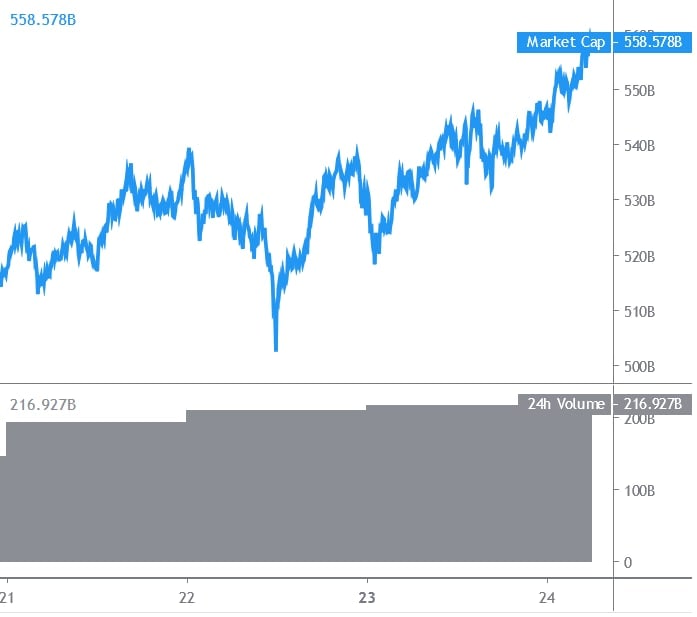
Total market capitalization:
Ripple-SBI Bond Intensifies Again with XRP Lending Plans in Pipelines
There appears to be no end in sight for the crypto bullishness for long-standing Japanese Ripple partner and financial services provider SBI – with the firm’s SBI VC Trade crypto exchange this week announcing the launch of crypto lending service, with firm plans to start allowing XRP holders to lend their tokens back to the exchange.
Per a press release, the firm stated that it would initially offer only bitcoin (BTC) lending, but – being SBI – the company was quick to add that XRP services would also be online soon, as well as ethereum (ETH) lending.
Customers can lend a maximum of BTC 5 (USD 96,790), and no less than BTC 0.1, and will not need to pay account management charges, although those making fiat withdrawals will need to pay a fee.
SBI appears to have gone all-in on crypto in 2020, with token-related activity at the financial giant now at fever pitch. Last month, the company gobbled up a direct domestic rival, buying out Yahoo Japan’s stake in the TaoTao crypto exchange.
The firm also bought a minority stake in the British liquidity provider B2C2 for a cool USD 30m back in July. It followed up last month with the announcement that it will co-launch an unlisted securities fund with the Swiss crypto bank Syngnum, with the aim of attracting European and Asian investors.
The latest move will once again cement the watertight SBI and Ripple bond, bolstered earlier this month when SBI’s SBI VC Trade-sponsored esports subsidiary added a third batch of pro gamers to its roster – with every single player on its squad list agreeing to receive their annual salary in XRP.
At pixel time (10:36 UTC), XRP trades at USD 0.69 and is up by almost 13% in a day and 134% in a week. It rallied by 166% in a month and 209% in a year.
Limited Facebook's Libra Might Be Launched in January - Report
Facebook-led digital currency Libra is preparing to launch as a single coin backed one-for-one by the dollar as early as January, the Financial Times reported, citing three undisclosed people involved in the initiative.
The other currencies and the composite would be rolled out at a later point, the report said, adding that the exact launch date would depend on when the project receives approval to operate as a payments service from the Swiss Financial Market Supervisory Authority.
Meanwhile, one person involved in Novi, the developer of digital wallet designed for Libra digital currencies, told Financial Times that the wallet was “ready from a product perspective”, but would not be rolled out everywhere initially, with the company prioritizing “half a dozen high-volume remittance corridors” including the US and some Latin American countries.
Undetected Inflation: Your Money Devalues Faster Than You Think
Marshall Reinsdorf is a senior economist in the International Monetary Fund (IMF)’s Statistics Department and past president of the International Association for Research in Income and Wealth.
Lockdowns, working from home, and physical distancing caused people to spend larger shares of their household budgets on food and housing, while fewer people bought nonessentials, like airline tickets and clothing. And with incomes down as millions have lost their jobs, spending on nonessential items will likely remain depressed.
The consumer price index (CPI) does not reflect these abrupt changes in spending patterns because the CPI weights are not continuously updated. For example, the CPI could be pulled down by a decline in the prices of nonessentials that are no longer purchased.
A new IMF staff paper uses spending estimates derived from credit and debit card data to adjust the CPI weights to match spending patterns during the pandemic. The study finds that inflation during the first three months of the pandemic was actually higher than we thought.
The chart of the week looks at the difference over the February–May timeframe between a COVID-19 price index that adjusts the CPI weights based on the impacts of COVID-19 on spending in Canada and an index with unchanged CPI weights. The diamonds in the chart show the difference between the two indexes by region. In seven of the eight regions shown, the CPI is below the COVID-19 index. Looking at the average for all regions combined, the gap is 0.23 percentage points.
The main positive contributors to the gap between the COVID-19 index and the CPI are food and transport, each contributing 0.16 percentage points to the world gap. Rising food prices contribute to the faster growth of the COVID-19 index in all eight regions. Falling transport prices, which have a larger weight in the CPI than in the COVID-19 index, also contribute to the faster growth of the COVID-19 index in all regions except sub-Saharan Africa.
The main negative contributors to the world gap are housing, which contributes –0.03 percentage points, and clothing, which contributes –0.08 percentage points. Housing has a higher weight in the COVID-19 index than in the CPI, but its price index is so close to the overall CPI that increasing its weight does little to move the COVID-19 index away from the CPI. The downward effect of clothing is due to seasonal price increases having a smaller weight in the COVID-19 basket.
Despite the finding that CPI weights underestimated inflation in the early months of the pandemic, a quick update of the CPI weights to reflect the spending patterns during the pandemic would be impractical. Furthermore, introducing weights that are based on a short timeframe can reduce an index’s accuracy over the longer run. A better approach would be for statistical agencies to develop a supplementary index whose weights reflect spending patterns during the pandemic. This would give policymakers a better picture of the effect of inflation on the prices that consumers are actually paying.

Bitcoin Makes US Dollar Less Relevant - BlackRock CEO
While the most popular cryptocurrency, bitcoin (BTC) is still an untested territory, it possibly can evolve into a global market, and already makes the US Dollar less relevant, according to Laurence D. Fink, CEO of the world’s largest asset manager, BlackRock.
He was answering a question on digital currencies during The 2020 Stephen C. Freidheim Symposium on Global Economics on December 1.
"Having a digital currency has a real impact on the US Dollar," Fink said, while former Bank of England Governor Mark Carney, who was also participating in this discussion, seemingly agreed with this statement.
According to the CEO, digital currency makes the need for the US Dollar less relevant.
"I'm not talking about Americans, I'm talking about international holders of dollar-based assets. The question I would raise - does it change the need for the dollar as a reserve currency if they were a true digital currency that was separated from dollar-based assets?" he asked.
According to Fink, BTC is still an untested, thin and relatively small market that could possibly evolve into a global market one day.
For him, the fact that so many people are excited about it and want to learn about it - is "a very telling sign."
The CEO argued that digital currencies help bring down costs, but it needs to be organized and be "a component of a governmental policy worldwide."
"Many questions need to be answered before I could say it's real and alive. It certainly has the potential to evolve into something real," Fink said.
As reported, in November, Rick Rieder, BlackRock's Chief Investment Officer of Global Fixed Income, said he thinks that BTC "could replace gold to a large extent" because BTC is "much more functional."
At the end of last year, BlackRock had USD 7.4 trillion in assets under management.
At pixel time (07:08 UTC), BTC trades at USD 18,954 and is down by 2% in a day and is almost unchanged in a week. The price rallied by 37% in a month and 154% in a year.
Meanwhile, during the discussion with Fink, Carney joked about the importance of mentioning "the B word" as this "gives us the headline" while other things they were discussing on the implications of the coronavirus pandemic on global economic policy "will be far more determinative to our future."
Stablecoins Get Another Headache In US, Ethereum Camp Feels Attacked Too
The stablecoin regulation act proposed in the US Congress has once again stressed an important difference between centralized and decentralized projects in terms of regulation. (Updated at 13:22 UTC: updates in bold.)
There is much discussion currently in the Cryptoverse over the recent announcement of an act that seeks to regulate stablecoins within the US. A major one is that the act proves once more that decentralized options need to be developed more, as anything that is remotely centralized will be supressed by heavy regulation. "This is why it’s imperative to focus on truly decentralized and permissionless finance down the entire stack," argued Eric Conner, a product researcher at blockchain startup Gnosis. "Any centralized points of failure will be stifled by regulation written by those who do not understand what we are building."
Bitcoin educator Andreas M. Antonopoulos also argued that the act won't be enacted, but what's interesting about it is that "it can only apply, by definition, to centralized fiat-backed stablecoins, therefore making decentralized alternatives even more attractive."
The restrictions posed by the bill
This week, US Congresswoman Rashida Tlaib, with Congressmen Jesús "Chuy" García and Chairman of Task Force on Financial Technology Rep. Stephen Lynch, introduced the so-called 'Stablecoin Tethering and Bank Licensing Enforcement (STABLE) Act,' aka the 'Stablecoin Classification and Regulation Act of 2020.'
The announcement said that this act would "protect consumers from the risks posed by emerging digital payment instruments, such as Facebook’s Libra and other stablecoins currently offered in the market, by regulating their issuance and related commercial activities," which they find particularly necessary during the COVID-19 pandemic.
However, significantly for all the current and future issuers of stablecoins wanting to do business in the US, they would have to obtain a banking charter; get an approval from the Federal Reserve, Federal Deposit Insurance Corporation (FDIC) and appropriate Federal banking agency; provide conduct an ongoing analysis of any potential systemic risk; and obtain FDIC insurance or otherwise maintain reserves at the Federal Reserve to ensure that all stablecoins can be readily converted into United States dollars, on demand.
But many, such as Meltem Demirors, CoinShares' Chief Strategy Officer, argued that the act would have the opposite effect of what the trio stated they want to accomplish.

First ETHs, High BTCs, Pushed USDCs and 20 Crypto Jokes
This rallying week, after a short correction, bitcoin started hitting all-time highs. We took a look at the 3 and a half phases Ethereum will go through on its path to full ETH 2.0 rollout, just before the long-awaited launch of Phase 0, with a number of exchanges supporting ETH 2.0 staking. Speaking of ETH, a professor said that EIP-1559 can’t lower the fees on its own. Meanwhile, two DeFi protocols were set to merge, YFI and SUSHI, with their respective tokens surging. And as the new month started, we also looked into the top winners and losers of November, BlackRock CEO said Bitcoin makes the USD less relevant, and Kraken’s clients said that in 2021 bitcoin and ethereum may hit USD 25K and USD 900, respectively.
That's far from all. As Visa makes a stablecoin push with Circle’s USDC, stablecoins got another regulatory headache in the US, the ECB President touted the digital euro, but also bashed bitcoin and stablecoins, China’s state-run press agency urged citizens to ignore the BTC hype and keep faith in the pro-blockchain policies, and BIS said CBDC issuance will be a success only if the private and public sectors work together. Meanwhile, a report showed how Cubans are sidestepping US sanctions by using BTC, ETH, and DOGE; another major company joined the investment competition and announced its plans to allocate up to 10% of its net assets to BTC, and JPMorgan said that investments into and out of the GBTC over the coming weeks will be key for the BTC price direction. Also, Sberbank hinted that it may issue its own cryptoasset Sbercoin, and BitMEX's 100x Group found a replacement for Arthur Hayes in Europe.
And here’s that special weekly crypto treat made just for you!
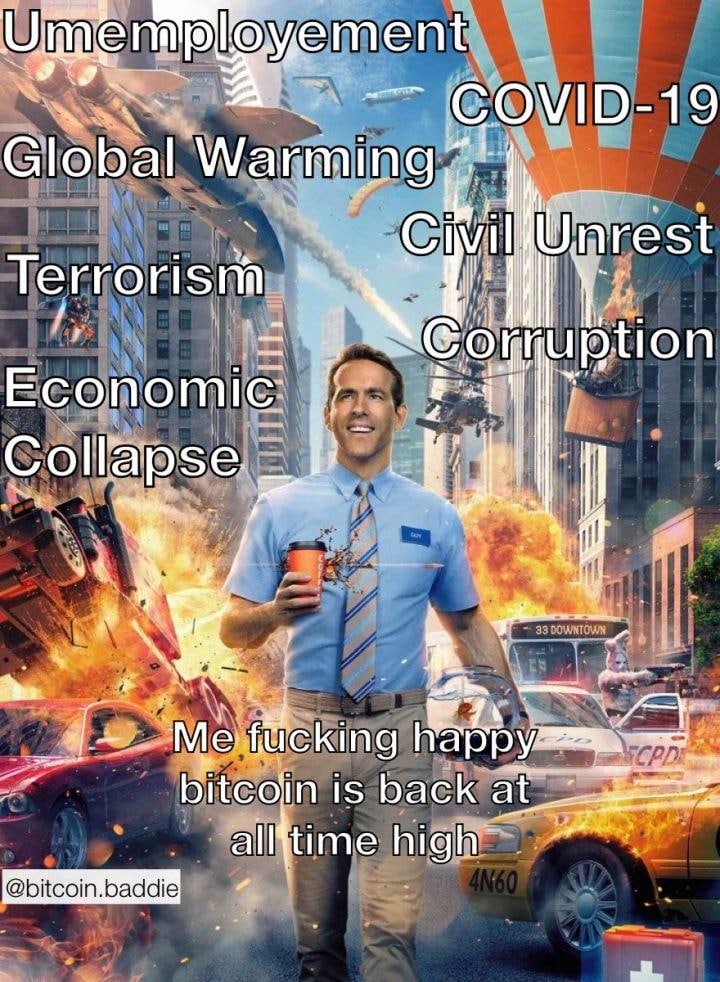
Taproot, One Of Bitcoin's Biggest Upgrades May Be Coming Next Year
Taproot, one of the most anticipated Bitcoin (BTC) upgrades, and its largest alteration since 2017, expected to improve privacy, scalability, flexibility, and speed of the network - may be coming in a matter of months.
Pierre Rochard, Bitcoin evangelist and strategist at crypto exchange Kraken, suggested that the next year is the one to look forward to for all those waiting to see this protocol upgrade.
Per taprootactivation.com and the corresponding GitHub document, ten of the twelve contacted Bitcoin mining pools have declared support for Taproot, including Poolin, BTC.com, F2Pool, and others. SigmaPool is undecided and there is "no answer" from the Binance Pool. Total hashrate (1 month average) in support of Taproot is 82.05%, states the website.
As previously said, per the Bitcoin Improvement Proposals (BIPs) revealed by developer Pieter Wuille, Taproot is a code change that is designed to increase privacy of the world's number one coin, by making all transactions on the blockchain look the same to outsiders. Therefore, Taproot would also hide Bitcoin users' advanced payments, so that any complex payment would seem like any other, common payment.
This code will be bundled with an upgrade called Schnorr, a soft fork that developers have been working on for a long time, which improves privacy, scalability, and speed. It enables signature data to be merged, thus encoding multiple keys into a single one.
Wuille submitted a "pull request" concerning Schnorr/Taproot in January this year, letting others know that a code change is ready for reviews, discussions, suggestions, etc. In October, Taproots code was merged into Bitcoin core, that is, included in Bitcoin Core's coding library, waiting for the node operators to adopt the new ruleset and then for the upgrade to be activated.
Meanwhile, Bitcoin researcher at major blockchain technology firm Blockstream, Jonas Nick, tweeted a timeline of the Taproot development so far, arguing that the time it took up until this point is "appropriate."
Crypto Can Disrupt Legacy Finance And Add Another Layer On It - Panel
Blockchain and cryptocurrencies have the potential to disrupt the financial status quo, but they can also reform the existing legacy financial services such as banks and insurance companies by adding an additional tech layer on top of their activities, according to the participants of a panel discussion held during this year’s Paris Blockchain Week Summit today.
The virtual panel, titled How tech companies challenge the financial status quo, featured a number of industry representatives on its first day on December 9. These included Bernard-Louis Roques, Co-Founder and CEO of venture capital firm Truffle Capital, Charlie Meraud, CEO of liquidity provider Woorton, Pietro Grassano, Business Solutions Director Europe at blockchain platform Algorand, and Imre Fazekas, Co-Founder of banking platform developer Perfinal Technologies.
Roques, whose company has about USD 1.5bn in assets under management, said Truffle Capital’s interest in fintechs dated back to 2014, and the last years have brought a surge in the firm’s investments in blockchain-focused startups.
“We start from use cases, what can actually be useful for insurance companies and banks,” Roques said, adding that blockchain was a good tool for anti-fraud, enhancing the security of transactions, and tracking the flow of funds to the insured. Owing to the use of public ledger, “the verification process is costless, but also the network is costless”.
Roques admitted to being a hodler, adding that he has personally invested in crypto for about four years.
“And I will stick to it, I will not sell my assets” in the near future,” the VC manager said.
Algorand’s Grassano said he sees “a sort of tripartite distinction in the market. You see startups, you see government and regulatory interest such as central banks, and then you see private finance”.
Grassano said this was triggering challenges in extending the scope of blockchain tech over the more traditional financial sectors.
“This is a real disruptive infrastructure … and it’s not only about cost savings. It’s about new business models, new revenue streams,” Grassano said.
The key condition for banks to increasingly embrace crypto lies in the regulatory barriers, according to Perfinal Technology’s Fazekas.
“Our clients definitely have an intention to investigate the use of cryptocurrencies,” Fazekas said, but he added that the banks’ main focus was on “digital currencies”.
For most banks, to move a large share of their assets into crypto in compliance with the existing regulations could be “a tricky road”, according to him.
Woorton’s Meraud said that the entrance of big tech companies such as Square, MicroStrategy, and PayPal into the cryptoasset world means we are witnessing a major shift which mostly takes place in corporate mindsets, as those companies could have already come onboard the crypto train several years ago.
“When you’re PayPal, giving more space to bitcoin is very simple,” Meraud said.
According to Woorton’s CEO, as a liquidity provider, the company does not have to long bitcoin.
“We could be shorting bitcoin as well. We’re taking what the market is trading … and the result is our volume is mainly BTC,” said Meraud.

MassMutual's Example Might Attract Fresh Billions To Bitcoin - JPMorgan
If pension funds and insurance companies in the US, euro area, UK and Japan allocate 1% of assets to the most popular cryptocurrency, bitcoin (BTC), that would result in additional BTC demand of USD 600bn, strategists at JPMorgan said.
However, these investors face regulatory hurdles relating to risk levels and liability mismatches, likely limiting how much they can put into BTC, Bloomberg reported, citing a note by the strategists.
As reported last week, America’s Massachusetts Mutual Life Insurance (also known as MassMutual) has purchased USD 100m worth of bitcoin to add to its general investment fund. MassMuttual’s holdings are now 0.04% held in BTC, but the firm also moved to also snap up a USD 5m minority equity stake in NYDIG, a Stone Ridge-run subsidiary firm that provides crypto services to institutional investors.
Should the above-mentioned pension funds and insurance companies in the US, euro area, UK and Japan also allocate 0.04% of their assets to BTC, that would mean additional demand of USD 24bn. Today, BTC's market capitalization is around USD 355bn.
"One can see the potential demand that could arise over the coming years as other insurance companies and pension funds follow MassMutual’s example," according to the strategists at JPMorgan.
Meanwhile, on Friday, US-based business intelligence company MicroStrategy confirmed it raised USD 650m by selling convertible senior notes due 2025 in order to buy more BTC.
After a rally on Sunday, BTC trades at USD 19,111 (05:14 UTC) and is up by 1% in a day, trimming its weekly losses to less than 1%. The price rallied by 18% in a month and 169% in a year.

Ethereum 2.0 Has Another Mystery - Taxes
As ethereum (ETH) holders are now learning how to stake their tokens and earn interest along the way, there is one question they’ll eventually need to ask, and hope there is a clear answer by then. Yes, it’s taxes. And the only thing that’s clear is that there’s no regulatory clarity on how ETH stakers will be taxed (at least in the US).
Shehan Chandrasekera, Certified Public Accountant (CPA), Head of Tax Strategy at CoinTracker, a cryptoasset portfolio tracker and tax calculator, said even the US Internal Revenue Service (IRS) is trying to wrap its arms around what it all means for taxpayers. The tax rules are outdated and “super generic,” Chandrasekera told Cryptonews.com, adding that people can interpret them in different ways.
“There is guidance on crypto taxes, that’s good. The problem is that the guidance came out in 2014, and during that time, we only had bitcoin (BTC) as the most prevalent cryptocurrency. Since 2014, things have changed drastically,” he said, pointing to the rise of DeFi (decentralized finance) and staking developments that are coming up.
Chandrasekera went on to explain that the issue of staking surfaced when Tezos (XTZ) launched its mainnet in 2018. The difference is Tezos is the 19th biggest cryptoasset based on market capitalization, while ETH is in the No. 2 spot.
“Now it’s a bigger problem with ETH — the second biggest crypto — going from the proof-of-work (PoW) consensus algorithm to proof-of-stake (POS). So that’s why how it’s taxed and when it’s taxed are getting a lot of attention now,” he said.
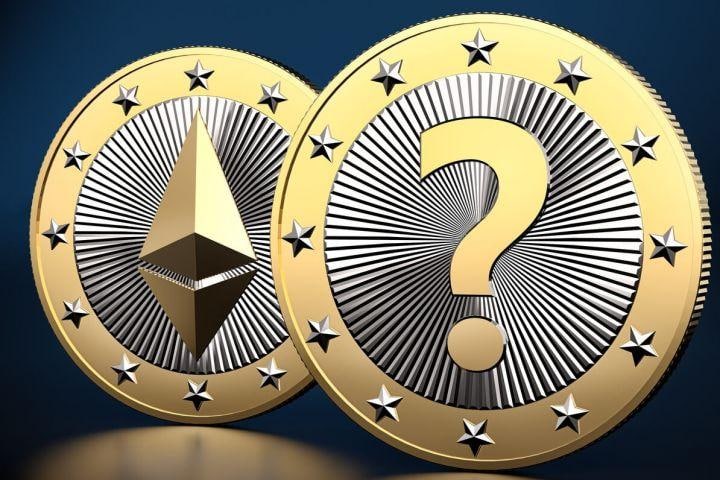
Can Decentralized Finance Ever Be Regulated?
Iwa Salami, Senior Lecturer in Financial Law and Regulation, University of East London.
As stock markets around the world struggle through the pandemic, bitcoin (BTC) has seen a steady rise in its price. In December, the cryptocurrency surpassed its all-time high of USD 20,000 and hit USD 24,000 just this weekend.
While this growth can be partially explained by investors being spooked by stock markets during the pandemic and looking for better investments, it is also influenced by the new, but evolving, decentralised finance market, also known as DeFi.
DeFi allows people to engage in financial services such as borrowing, lending and investing but without intermediaries such as banks using blockchains and cryptocurrencies. Blockchains store digital records of transactions. Individual records, called “blocks”, are linked together in a single list, which creates the “blockchain”. Blockchains are used in DeFi to create “smart contracts”, which are automated, enforceable agreements that don’t need intermediaries, such as banks.
The DeFi market with over USD 16bn locked in its protocols is one to watch.
DeFi has enormous potential in international trade by making payments more efficient. It could do away with the need to use intermediaries such as correspondent banks, which are financial institutions that offer services to a customer on behalf of another bank, usually in a foreign country. DeFi could also potentially help with the availability and equality of opportunities to access financial services.

XRP Drops As 'SEC Voted to Attack' Ripple
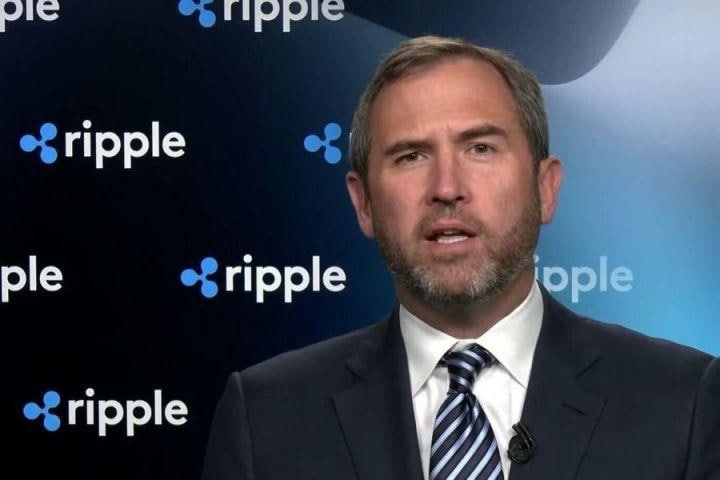
XRP-affiliated, US-based major blockchain company Ripple claims that the US Securities and Exchange Commission (SEC) plans to file a lawsuit against the company because it allegedly violated investor-protection laws when it sold XRP. (Updated at 05:41 UTC: updates are in bold. Updated at 07:36 UTC: new reactions have been added.)
"Today, the SEC voted to attack crypto. Chairman Jay Clayton - in his final act - is picking winners and trying to limit US innovation in the crypto industry to BTC and ETH," Ripple CEO Brad Garlinghouse said.
At the time of writing (04:51 UTC), XRP trades at USD 0.484 and is down by 14% in a day and is one of the worst performers among the top 20 assets today. The price is down by 2% in a week, trimming its monthly gains to 9%. It also rallied by 145% in a year.
The lawsuit will also name Garlinghouse and cofounder Chris Larsen as defendants, the CEO told Fortune, adding that the SEC will file the case "in the near future."
"Make no mistake, we are ready to fight and win - this battle is just beginning," the CEO tweeted, adding that Ripple has and will continue to use XRP because it is "the best digital asset for payments - speed, cost, scalability and energy efficiency."
"It’s traded on 200+ exchanges globally and will continue to thrive," Garlinghouse said.
According to him, the SEC should not be able to cherry-pick what innovation looks like, "especially when their decision directly benefits China".
In remarks to Fortune, the CEO noted that the bulk of bitcoin (BTC) and ethereum (ETH) is created in communist China, while Ripple is an American company.
Expert Warns CBDCs Won’t Carry the Same Advantages as Bitcoin
A leading Russian academic has told Moscow what many in the crypto world have been thinking for a very long time – that central bank digital currencies (CBDCs) like the so-called digital ruble will not provide many of the advantages of a cryptoasset like bitcoin (BTC).
Speaking in an interview with Finveria, Vasily Solodkov, the head of the Higher School of Economics’ Banking Institute, stated,
“The Russian Central Bank says it wants to position its own official cryptoasset as a competitor to existing tokens, but the digital ruble will obviously lose to them and will be weaker. … The digital ruble will not have the indisputable advantages of existing cryptoasset as anonymity, cross-border functionality and a finite supply.”
The expert added that payments firms would likely suffer as a result of the Central Bank’s project, which would effectively wipe out the need for third-party financial providers.
And he added,
“Bitcoin’s main advantage is its ability to bypass various restrictions. You buy bitcoin, pay it to anyone, anywhere, or vice versa. You get paid in bitcoin, you sell it and get your money. Can this be done with a digital currency offered by the Central Bank? Most probably not.”
However, it appears that Solodkov’s points would be relevant not only to Russia and its digital ruble project, but also to the many other countries now working on CBDC issuances and hoping to gain all the same advantages tokens like BTC currently have – while retained what some would claim are outmoded financial models, including centralization.
Meanwhile, elsewhere in Russia, Alfa-Bank, the head of one of the country’s biggest commercial banks, has urged Moscow to regulate crypto. In an interview with media outlet RBC, the bank’s chairman of the board of directors Petr Aven stated,
“I don’t believe in cryptoassets. And it seems completely natural to me to tighten the existing legislation on crypto. Not one single nation state – as I learned at university – will allow a parallel currency to emerge.”
And in a further development, the Russian parliament, the State Duma, has approved a new crypto tax bill in its first reading. According to the Parliamentary Gazette, the lower house has voted in favor of the bill, which will now head toward a second reading – and could become the nation’s second piece of crypto-specific legislation.
The bill proposes levying taxes on crypto trading profits – with a failure to declare crypto-related taxes made a criminal offense, with violators facing jail time if convicted.

Data Leaks, Regulatory "Fun" and 20 Crypto Jokes
In the week leading to the holidays, a Twitter exchange between Elon Musk and Michael Saylor added fuel to the BTC rally, but shortly, as BTC dropped below USD 23K, and then it went back up. You know, the usual. But then serious problems hit the fan for Ledger and their users when personal info was dumped on Raidforums, with users reporting increased phishing attempts and even death threats hours later. The fan was hit some more when Ripple said the SEC plans to file a lawsuit against it because it allegedly violated investor-protection laws when it sold XRP, and then it filed it, and then some exchanges started suspending XRP trading. Meanwhile, Mike Novogratz said very few cryptoassets will become lasting SoV outside of bitcoin, but that the Ethereum community will help reshape the future of finance. And we got the answer to the question how many Spark tokens will XRP holders get when Flare launches. Meanwhile, BitPay data suggested that major altcoins are slowly gaining ground on bitcoin in the payments sector.
In exchanges news, Thai regulator filed a criminal lawsuit against Bitcoin Company Limited, FTX listed Coinbase pre-IPO contracts, and American crypto exchanges have begun a fightback against new Treasury-backed proposals that would 'wall off' the poor. And while BTC prices have been skyrocketing globally of late, and crypto adoption ballooned in Venezuela and Argentina this year, in South Korea crypto fever is not yet making its mark to the extent that it did three years ago. Meanwhile, Telegram is forced to monetize and the US SEC may be to blame. A Puerto Rico neobank was the latest to unveil bitcoin and ethereum custodial services, while GamerHash prepares its services for South Korean gamers. As Russia’s parliament braces for a “surge in token issuance” in 2021, Russian mining giant Nornickel issued metal contract-backed, blockchain-powered digital coins.
And now, your crypto jokes, last of this year. Merry Christmas and Happy New Year, Cryptoverse!

South Korean Crypto Exchanges Prepare for Order Book Sharing Shutdown
A number of South Korean crypto exchanges are ceasing policies that see them share order books with overseas exchanges in preparation for the promulgation of a new crypto law that comes into force early next year.
As reported, a series of amendments to a financial law will take effect in March, and is set to transform the way exchanges (previously unregulated) go about their business. As well as multiple banking-related regulations, the terms of the amendment specify,
“Cryptoasset providers may not allow customers to trade tokens with the customers of other cryptoasset providers through alliances.”
However, order book sharing with international exchanges is a common practice among South Korean exchanges, and this regulatory headache is just one of the many that has many smaller exchanges contemplating their very survival.
Others have decided to move fast ahead of the legal change, ending their order book sharing deals before 2020 is out.
Per Decenter, on Monday, the Aprobit exchange announced it was ending its order book sharing policies with the Bitfinex platform, although Aprobit claimed it would continue to do other forms of business with the firm.
Huobi Korea has also stated that it will stop its order book sharing with its parent company, Huobi Global, in accordance with the new law.
However, others are less keen on the policy and would prefer to bide their time while organizations such as the Korea Blockchain Association prepare legal challenges or lobby for a late amendment to the new ruling. The association and a number of its most prominent members are thought to believe that the rule will provide an unfair restriction of trade for domestic exchanges.
The same media outlet quoted a spokesperson for the Korea Digital Exchange – the firm that operates the Flybit exchange – as stating that the trading platform is “preparing plan to stop sharing our order books if it becomes a problem,” but will wait to see on the result of the association’s bid to reverse the ruling.
Flybit currently has an order book sharing deal in place with international exchange giant Binance.
Some exchanges have claimed that the block on order book sharing is nonsensical as they believe they can comply with good banking practices without needing to end their dealings with overseas exchanges and their order books.

Order Book Sharing Ban Could Shake South Korean Exchanges to the Core
New government regulations that will force South Korean crypto exchanges to cease order book sharing with overseas trading platforms could have a seismic effect on the crypto players in the country - and the issue is reportedly the main reason why major player Binance is set to close down its Binance Korea operations next month and only four out of 77 exchanges on target to meet stringent new guidelines.
Per EBN, the problematic ruling, which Cryptonews.com reported on earlier this week, Binance Korea “decided to close down due to the difficulty of discontinuing its order book” sharing policies with its international platforms.
Binance gave other reasons for the shutdown in its own official notice earlier this month.
Rival Huobi, however, has claimed it will stop its Huobi Korea exchange sharing order books with its overseas branches. Digifinex Korea has indicated that it is prepared to do likewise.
Regardless, the scale of the issue appears to be large than first thoughts. As the EBN report’s author notes, small and medium-sized exchanges have relied on order book sharing with overseas partners as a means of getting by, and many appear stumped as to how they will proceed without it.
Industry bodies have petitioned Seoul to amend a key crypto-related law that will promulgate in March 2021, ending order book sharing, and some exchanges are hopeful lawmakers will change their minds.
Per Bizwatch, only 11 out of South Korea’s 77 crypto exchanges have obtained the information security management system (ISMS) accreditation that the new law requires them to have in order to continue operating after March (plus a six month grace period).
And of that number only four (namely Bithumb, Upbit, Korbit and Coinone) have put into place real-name banking systems, making it “highly likely that only these four companies will survive” past the deadline.
However, some are doubtful about the possibility of a u-turn, with the regulatory Korea Financial Intelligence Unit writing ominously about the money laundering-associated risks of allowing exchanges to deal with “cross-transactions” between domestic and overseas trading platforms in the report that led to the clause being included in the act.
And EBN quoted an unnamed industry official as claiming that the upshot of the legislation would likely be that South Korean crypto investors take their funds to overseas exchanges.
“South Korean investors only use domestic exchanges out of convenience’s sake. There is no reason for investors to use domestic exchanges rather than overseas exchanges if they are high-volume traders,” the source said.
And another unnamed industry player was quoted as saying,
“I don’t expect the government’s attitude to crypto to change rapidly. Many people who are tired of the government’s strict regulations have already left the industry.”
