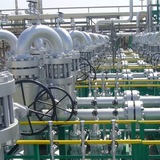
What is NPS, NB, CF, in Piping
#fbpost2025シ #viralpost2025 #ukmechanic #usamechanic #mechanicalengineering #picturechallenge #mechanical #whatiscf #whatisnps
"All position welding" refers to welding that can be performed in all positions (flat, horizontal, vertical, and overhead) on plate and pipe joints. These joints are commonly used in structural steel, pipelines, pressure vessels, and shipbuilding. Below are the welding joint types and positions typically used for plate welding, along with their details.
🔧 Common Welding Joint Types for Plate Welding
Joint Type,Description and Common Use
Butt Joint :- Two plates in the same plane Pipe & structural welding
Tee Joint :- One plate perpendicular to another Fillet welds
Lap Joint :-One plate overlaps the other Sheet metal & automotive
Corner Joint :-Plates meet at a corner (L-shape) Box structures, frames
Edge Joint :-Plates are side-by-side with edges touching Sheet metal, tanks
📐 Welding Positions for Plate Welding
Welding positions are classified according to plate orientation and welding direction. These are covered in ASME and AWS (American Welding Society) standards.
Position, Code and Description.
Flat :- 1G / 1F Plate is flat; weld made from above
Horizontal :- 2G / 2F Plate vertical; weld horizontal
Vertical :- 3G / 3F Plate vertical; weld runs vertically up/down
Overhead :- 4G / 4F Plate above the welder; weld made from below
G = Groove weld
F = Fillet weld
📄 Detailed Joint & Position Examples
Joint Type, Position, Weld Type & Typical Use
Butt Joint :- 1G (Flat) Groove High-strength joints, easy access
Tee Joint :- 2F (Horizontal) Fillet Structural frames
Corner Joint :- 3G (Vertical) Groove Tank corners, box structures
Lap Joint :- 4F (Overhead) Fillet Automotive panels
Edge Joint :- 1G–3G Groove or fillet Pressure vessels, tanks
🧪 Additional Considerations
WPS (Welding Procedure Specification) required for each joint and position.
Preheat/Postheat treatment may be required based on thickness/material.
Back gouging/backing strip used in some full penetration welds (especially in butt joints).
Testing (NDT, visual, bend tests) is often required, especially for certification or structural work.
✅ Summary
To weld plate in all positions, a welder must be proficient in:
Multiple joint types (butt, tee, lap, etc.)
All positions (1G to 4G / 1F to 4F)
Using various processes: SMAW, GMAW, FCAW, TIG
Reading WPS and understanding weld symbols.
Great! ✅ “Done fit-up” usually means the pipe spool or joint alignment and preparation is complete and ready for welding. Here’s what typically follows after fit-up:
✅ Next Steps After Fit-Up:
1. Final Inspection:
Check alignment, root gap, hi-lo, squareness, and orientation.
Ensure all dimensions match the drawing.
2. Tack Welding:
Secure the joint with tack welds (if not done already).
Prevent movement during full welding.
3. Welding (Full Joint):
Proceed with root pass, fill, and cap welds.
Follow WPS (Welding Procedure Specification).
4. Visual & NDT Inspection (if required):
Visual inspection of weld quality.
NDT methods: RT, UT, MT, PT as per QC plan.
5. Marking & Documentation:
Mark weld number, welder ID, and date.
Update fit-up and welding log.