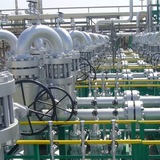
What is the meaning of PN 40 and DIN 80 written on the valve? 🤝
#CathodicProtection: Pipeline's first line of defense against corrosion! ⚡️🛡️
In the world of underground and undersea infrastructure, steel pipes have always been threatened by a “hidden enemy”: corrosion!
But fortunately, there is strong and effective technology that stands in the face of this threat, namely:
Cathodic Protection (CP).
---
WHAT IS CATHODIC PROTECTION? 🤔
It is an electronic technology that converts the metal tube from anode to cathode, that is, it prevents it from losing electrons, thus stopping the corrosion process.
---
The most common types of Catholic protection:
1. Sacrificial Anode Cathodic Protection (SACP) 🔩
Anodes made of more active metals such as Magnesium, Zinc, Aluminum are being installed to corrosion instead of tube.
Ideal for small tubes and isolated sites.
No external power needed.
Certified in standards such as ISO 15589-1 and NACE SP0169.
2. Impressed Current Cathodic Protection (ICCP) ⚙️
It depends on an external power source that is dominated on the tube to make it a permanent cathode.
Suitable for long pipes (buried gas, petroleum or marine pipeline).
Can be monitored and controlled with high precision.
Recommended in DNV-RP-B401 and NACE SP0576 standards.
---
Why do we need cp?
Prevents corrosion in environments rich in moisture or salts
Protect huge investments in pipelines, tanks, offshore structures
Extending the lifespan of metal facilities for decades
Basic requirement in oil and gas projects according to API 651 and ASME B31.4
---
Important concepts in the Catholic protection system:
Potential is measured by a reference such as Copper/Copper Sulfate Electrode (CSE).
Coating Quality: A good coating reduces the flow required for protection.
Current Drain: Should be calculated accurately to determine the number and size of anodes or current unit.
Stray Current Corrosion: Undesirable currents may affect efficiency and require periodic inspection.
---
Where to use cp?
Buried oil and gas pipelines ️️
Marine tubes under the sea surface 🌊
Underground Metal Vault نية️
Ports docks and marine facilities ⚓️
---
When is cp not necessary?
In plastic tubes or non-conductive materials.
In stainless steel pipes that are highly corrosion-resistant, according to the environment.
---
Did you know?
In 2021, NACE International estimated annual losses due to corrosion to exceed $2.5 trillion globally!
Catholic protection techniques reduce these losses by at least 20% when applied correctly.
---
خلاصة:
Catholic protection is not an engineering luxury, but a strategic necessity for any corrosion-prone metal infrastructure.
It's the investment that protects the investment!
Publisher:
PIPE LINE DZ by Battaze Tarek
(Content is based on: NACE, ISO, DNV, API, ASME)
#CathodicProtection #CorrosionControl #PipelineProtection #NACE #ISO15589 #ICCP #SACP #OilAndGasEngineering