
The U.S. trademark protection system is based on the right of market priority. This was told by the lawyer and partner of JSC "Arzinger" Ekaterina Oleynik.
"Disney, as a Corporation whose success is built on the commercialization of its products, and which values the reputation of its brands, uses all the mechanisms of intellectual property rights protection in order to prevent cases of illegal use of its brands and their associated reputation," she commented on TRON's unsuccessful attempt to patent its name.
"Disney, as a Corporation whose success is built on the commercialization of its products, and which values the reputation of its brands, uses all the mechanisms of intellectual property rights protection in order to prevent cases of illegal use of its brands and their associated reputation," she commented on TRON's unsuccessful attempt to patent its name.
The cryptocurrency and blockchain industry has experienced a rather difficult year. High volatility of the main coins, uncertainty in regulation led to a decrease in the interest of venture investors and a reduction in the inflow of large capital.
Nevertheless, several projects managed to attract attention and make very profitable deals.
Nevertheless, several projects managed to attract attention and make very profitable deals.
US Crypto Lender BlockFi to Launch Bitcoin Rewards Credit Card.
Major crypto lender BlockFi aims to develop a Bitcoin (BTC) rewards credit card, with a view to rolling out this year.
In an official announcement, co-founders Zac Prince and Flori Marquez stated that the new card would allow customers to earn “an industry-leading, BTC cash-back rate on every transaction” they make, in place of conventional rewards such as air miles or cashback.
The company made no mention of the exact scale of the “industry-leading rate” in question, however.
The co-founders wrote,
“We see the credit card as a way to add value to crypto OGs, as well as a novel way to introduce crypto to non-owners in an easy, familiar way.”
The company also says that it intends to make a major overhaul of its portfolio in 2020 – with stablecoin and altcoin products in the pipelines.
“The first order of business in January will be expanding our services. In the first few weeks, we will be adding support for USD Coin (USDC) and Litecoin (LTC) with some of the most competitive interest rates in the market.”
BlockFi also spoke of launching a mobile app and “adding fiat on and off ramps” in the months ahead.

Proof of Bitcoin's Birthday: The Power of an Individual Action in Crypto.
It would certainly be strange to draw all money from a bank like people are taking their crypto off the exchanges today. And it would be unthinkable for the banks to support their customers taking their money out en masse. Yet, that's what we see in the Cryptoworld. What’s more, this approach seems to be either solving some problems, or bringing them up to the surface for consideration.
Happy Bitcoin Birthday! It’s January 3rd – the eleventh anniversary of the first block in the Bitcoin blockchain mined, also known as the Genesis block. It’s also the second Proof of Keys Day (PoK), meant to display that the owners control their funds, and it’s led by the famous ‘not your keys, not your coins’ adage. Since last year, people in the crypto community have been adding Jan/3 [key emoji] to their Twitter handles to show support for the event and the meaning behind it.
And this is the point of the blockchain and Bitcoin, and it's the point of the PoK event too – to give the people privacy and control over their funds and remind the other players in the industry, exchanges and those wallets that hold users’ keys, where that control truly lies. “It’s about strengthening the ecosystem as a whole,” said the event initiator Trace Mayer. “Satoshi gave us this wonderful gift for monetary sovereignty,” and individual action by all of us is one of the things that’ll maintain it.
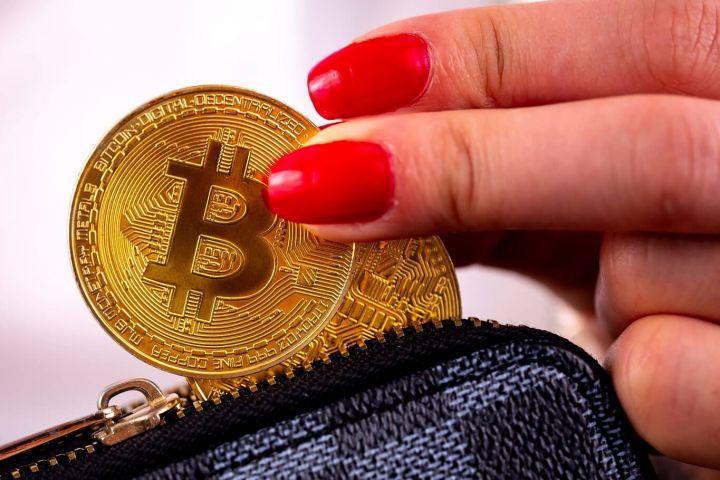
Collaboration to Intensify in the Blockchain Industry - WEF.
As the focus on blockchain shifted from hype to quality last year, in 2020, the technology is facing an opportunity to have an increased social impact, says Sheila Warren, the head of Blockchain and Distributed Ledger Technology at the World Economic Forum, the organizer of the Davos meeting. However, the business-driven projects that are likely to succeed this year will be the ones that demonstrate adequate governance and a collaborative approach, she added.
Warren says that in 2019, the organization “saw less of established actors pitching competitors on unilateral projects. Instead, we saw either totally internal initiatives or creative attempts at consortium building (for example, Food Trust, TradeLens, INATBA, Libra), with varying degrees of success. Companies are waking up to the idea that to go far, they ought to go together.”
Building on that trend, last October, the organization launched a consortium, the Mining and Metals Blockchain Initiative, to explore the use of blockchain in the mining and metals industry. Its founding members include Antofagasta Minerals, Eurasian Resources Group, Glencore, Klöckner & Co, Minsur SA, Tata Steel Limited, and Anglo American/De Beers.
The designed blockchain platform is “to address transparency issues, the track and tracing of materials, the reporting of carbon emissions or to increase efficiency,” according to the official who recognizes that such “a collaborative approach would have been hard to imagine even a few years ago”.
“We expect to see a similar collaborative approach from the public sector as 2020 progresses, and in fact, the Forum has already seen an increased willingness on the part of public sector agencies to share learnings and challenges,” Warren says.
In response to the latter development, the Forum manages a Central Banks Digital Currency project which brings more than 45 central banks in a bid to explore parameters for successful deployment of central bank digital currencies. Under the plan, the organization is to launch its CBDC Policymaker Toolkit in Davos at the WEF’s forthcoming Annual Meeting on 21-24 January 2020.
Building on these observations, the WEF forecasts that this year will bring “increased experimentation with hybrid blockchain models, both in the financial sector”, such as decentralized finance and 'synthetic' CBDCs, and the public sector, for instance through an expanded use of smart contracts.
“We are not close to realizing the promise of truly decentralized systems, but the space continues to evolve in exciting new ways, and it’s just a matter of time before something huge gains traction,” according to Warren.

How Many Cryptos Died in 2019?
Data from various sites show that between 500 and a thousand coins have perished in 2019, and this number could in fact be higher. However, these sites disagree on whether 2019 saw fewer or more coin deaths than the year before.
It's not really possible to say how many dead coins are out there exactly, and this number changes practically every minute. It also depends on how one defines a dead coin. In general, dead projects are those that were scams or were connected to scams, never delivered a product, have a dead website, have been abandoned by their founders, or have extremely low or no trading volumes and adoption rates, etc.
DeadCoins.com is one of the websites that track failed cryptocurrency projects at it currently has 1,839 listed as dead for a number of reasons since 2017. The coins on this site are presented with a reason as to why they've died, including hacks, parodies, jokes which the tracker says couldn't have been taken seriously, like 'CuntCoin', but majority of them were scam projects.
The available data shows the following:
674 coins were added as dead in 2017
647 coins died in 2018
518 coins died in 2019
What this suggests is not only that there were fewer dead coins between 2017 and 2018, but that there was almost a 20% drop in the number of deaths in 2019.
Another aptly-titled site is Coinopsy, which shows 1,407 dead entries in total, for projects that ended from 2013 onward. The data shows, besides 85 coins whose death is marked as 'current':
2 dead projects in 2013
209 dead coins in 2014
235 dead coins in 2015
169 dead coins in 2016
223 dead coins in 2017
399 dead coins in 2018
85 dead coins in 2019
Finally, if we go by the definition of very low daily trading volumes as a sign of death or at least incoming death, we find quite a few such coins on Coinpaprika and CoinMarketCap. Many of these have (far) less than USD 1,000 daily trading volume. For example, in the last 24 hours, 2Give has had trading volume of USD 0.003121; 7ELEVEN had USD 0.041027; 808Coin had USD 50.46; 3DCoin had USD 73.39, etc. We've written previously about ten coins that are worth almost zero, some of which have already been declared dead.

More Altcoin Mining to be Integrated by Mining Pools in 2020 - Report.
2020 will see the mining pools start to integrate more altcoin mining with huge market potential and risks, says token data and rating agency TokenInsight.
The agency's 2019 mining industry report claims that there are only 64 mineable coins including Bitcoin (BTC) with more than USD 100,000 trading volume in 24 hours, and these (with BTC) account for 82% of total crypto market capitalization. What we're seeing now is altcoin mining and staking entering the “main” stage, says the report. These will get more market attention, and an increasing number of mining pools will start to integrate them, wanting to differentiate their services, diversify revenue streams and compete with other mining pools.
Also, as the industry faces the issues of transparency and supervision, major mining pools are actively building brand credibility, and it’s likely that the future will bring inspection and reporting in cooperation with independent third parties and decentralized mining pool protocol.
This year, we might also see more cloud mining products launched targeting the broader market. However, the future of the cloud mining market is outside of China, particularly in Russia, TokenInsight finds, adding that the number of users in Russia is “staggering.” The country’s development and participation in BTC mining will increase in 2020 with the ease of policies on crypto, but also the weather advantages.
Also, the researchers claim that the whole mining industry is extremely concentrated, with the top four companies accounting for c. 95% of the market. The agency made 2020 predictions for SHA-256 ASIC mining hardware market shares, finding that Bitmain will continue its reign with 63%, Canaan will climb up, back to the 2nd place, with 18% of the market share. If Eband goes public in 2020, it will have a positive impact on its market share and will squeeze out other players. Whatsminer has more than 20% of the market share in 2019, but its founder Yang Zuoxing, was arrested in 2019.

Will Ethereum Reach Serenity This Year?
Ethereum 2.0 will launch by the end of 2020, estimates Andrew Keys, a managing partner at investment firm Darma Capital and one of the first employees at Ethereum application developer ConsenSys. Meanwhile, the Ethereum 2.0 Phase 0 that will be the base for the multi-client testnet is already out.
Ethereum's major network upgrade, Ethereum 2.0 (a.k.a. Serenity), should be rolled out in phases and will bring with it sharding, proof-of-stake (PoS), and a new virtual machine among other things
“Proof of Stake Ethereum exists. It’s alive! The roadmap to Serenity is in full effect. 2020 will see Ethereum move stridently beyond Phase 0 of Ethereum 2.0, onto Phase 1 and the launch of shard chains. Then, it’s game on,” writes Keys in his blog post.
As a reminder, the network went through Istanbul as its last upgrade as Ethereum 1.0, with the unplanned addition of the Muir Glacier update. Istanbul itself changed the underlying Ethereum protocol and created new rules to improve the system, with six relevant Ethereum Improvement Proposals (EIPs) chosen to be implemented. Ethereum is expected to launch phase zero of Serenity, which will trigger the switch from the proof-of-work (PoW) consensus algorithm, used also by Bitcoin (BTC), to PoS (e.g., used by Tezos). Phase zero will bring forth Beacon Chain, followed by Shard Chains and State Execution in the subsequent phases.
That said, though we know that Istanbul was the last step to phase zero, the date for this next phase is not clear and has been postponed from the end of 2019 already, at least according to the roadmap provided by ConsenSys. In October, Buterin said it was months away. In December, Ethereum researcher Justin Drake suggested the fifth anniversary of Ethereum as the date (July of 2020), but the comments were not in favor of that suggestion, with people expecting other details to be worked out before setting a date, and others not wanting to delay the upgrade for an anniversary of any sorts.
Bitcoin SV Rally Cools Off as Craig Wright Opens 'Pandora's Box'.
While Craig Wright news prompted bitcoin SV (BSV) rally is still based on speculations, rather than clear answers, the price of now the 4th largest coin has already dropped from its heights reached earlier today.
At pixel time (11:15 UTC), BSV trades at c. USD 362 and is down 17% from its peak of USD 436. The price even touched USD 327 earlier today. So far, this is the biggest correction during the recent rally. In either case, it's still up 77% in a day, increasing its weekly gains to 212%.
The price rise is not all that has prompted an uproar in the crypto community, as we've seen BSV flip bitcoin cash (BCH) - that is, BSV's total market capitalization surpassed that of BCH. The token landed in fourth place with the market capitalization of USD 6.5 billion, compared to now 5th-placed BCH's USD 6.2 billion. The market capitalization of the 3rd largest coin, XRP, stands at USD 10 billion.

Are Attacks Between Rival Blockchains About to Rise?
It's no secret that rival blockchain networks, or to be more precise, the people behind the projects, don't like each other. The Bitcoin community rags on Ethereum, while the EOS community rags on Tron, and so on, in a seemingly endless chain of barbs, criticisms and mockery.
But does the war of words between cryptos ever spill over into something more aggressive and destructive? Possibly, if previous attacks on the likes of Verge and IOTA were the responsibility of rival developers, rather than random hackers.
And according to some commentators within the wider crypto community, the future could bear witness to a rise in rival chains attacking each other in one way or another. In an already fractious climate, this is likely to only make relations between cryptos even colder, and could even damage the future viability of some projects.
However, developers working with specific blockchains believe that such a scenario is unlikely. Yes, hackers who think they can make some money by attacking a network might attempt to do so, but rivalry alone isn't enough to motivate developers into doing the same.
A very brief history
First, is there any evidence that one network has somehow attacked a rival? Well, back in July 2018, an Ethereum developer accused members of the EOS community of a Sybil attack, which in this case saw the Ethereum blockchain being spammed with airdrops of tokens with no value, thereby inflating the price of the gas needed to process transactions.
Obviously, no one associated with EOS accepted this charge, but the fact that around USD 2 million was spent to send the worthless tokens indicates that whoever was behind the attack had deeper pockets than the average user.
Other evidence of rival attacks is scarce, although numerous breaches of various networks have taken place over recent months and years. There was a series of attacks against Verge in 2018, the theft of IOTA tokens (also 2018), as well as an "intentional attack" Ethereum suffered this past New Year's Eve.
Nothing suggests that such attacks were the work of anyone other than one or two perpetrators. However, given that you'd probably have to already have experience with blockchain to pull off such crimes, you could potentially stretch the meaning of 'rival attack' to incorporate them, since they were likely committed by people 'aligned' with another project.

CME Doubles Bitcoin Options Volume, Leaving Bakkt in the Dust.
Seven days after the launch of bitcoin options contracts on the Chicago Mercantile Exchange (CME), the latest trading volume figures still indicate that CME completely dominates over its competitor Bakkt.
According to trading data from CME, 122 bitcoin options contracts changed hands last Friday (January 17), when bitcoin (BTC) rallied. That marks more than a doubling from the 55 options contracts that were traded on the first day of trading on January 13.
Each options contract at the CME represents a right, but not an obligation, to buy one bitcoin futures contract, which in turn represents 5 bitcoins. The latest volume figures from the CME show that contracts worth 610 BTC, or approximately USD 5.3 million, were traded on this market on Friday alone. In comparison, Bakkt reached a volume of USD 178,000 on the same day.
CME’s domination in the institutional segment of bitcoin options market was also highlighted in the latest report from crypto research firm Arcane Research, which noted that “it seems that the institutional investors are preferring CME for now.”
However, according to data from crypto analytics provider Skew, retail-focused exchanges such as Deribit and OKEx are still far ahead of their more institutionally-focused counterparts CME and Bakkt, with Deribit accounting for a large majority of the reported trading volume.
Judging from the open interest figures, however, it should also be noted that the current level is still below levels from September to December last year. Consequently, there is a reason to ask whether the most recent rise is mostly a natural uptick from the slow activity that would be expected around the December holiday season.

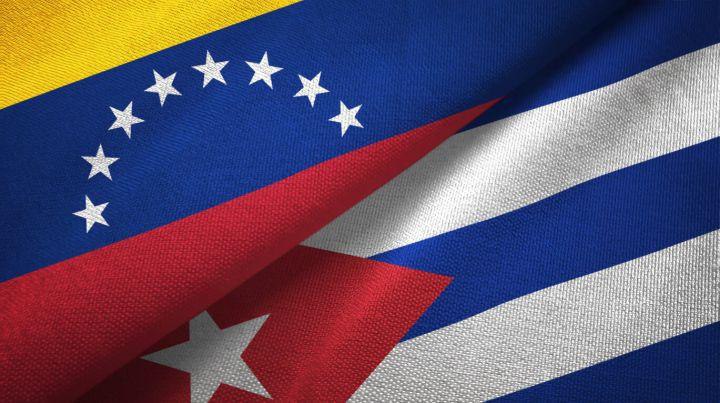
Cuba Considers Accepting Venezuelan Petro in Bilateral Deals.
Venezuela is in talks with Cuba about using the Petro, the former’s state-issued, oil-backed cryptocurrency, in bilateral payments including trade deals.
Per the Venezuelan state-run newspaper Correo del Orinoco, the two nations talked on the matter of cryptocurrencies at their most recent intergovernmental summit, held in the Casa Amarilla in Caracas last week.
The newspaper states,
“An important announcement was made at the meeting: Both countries will evaluate guaranteeing their agreements with the Petro cryptocurrency.”
The Venezuelan and Cuban governments made a number of trade-related agreements at the summit and pledged to work together on a number of economic measures.
The nations have signed an estimated 1,400 agreements since 2000, and reaffirmed their ties last week in Caracas, with sport, culture, energy, telecommunications, healthcare and agriculture pledges signed.
Correo del Orinoco stated that using the Petro in these deals would help “strengthen the economy and Venezuelan means of production.”
Both nations have been hit heavily by American sanctions, which have escalated significantly in the past year.
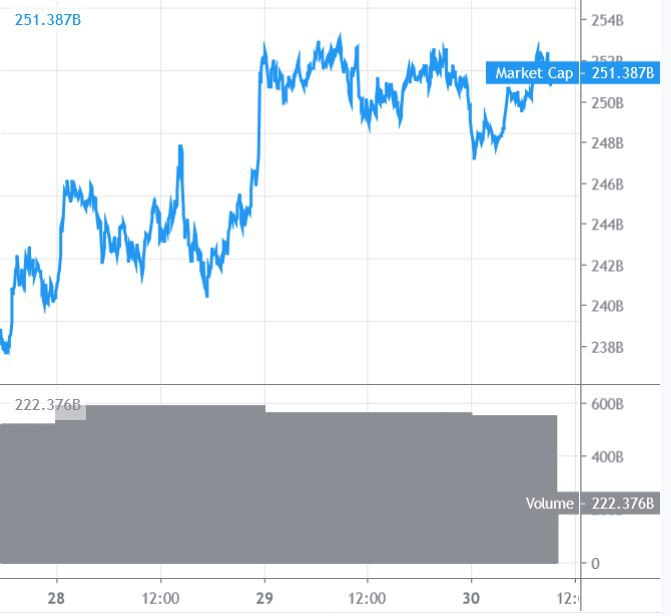
Bitcoin and Altcoins Consolidating Before Possible Fresh Rally.
After a short term downside correction, bitcoin price found support near USD 9,200. BTC/USD was well bid above the USD 9,200 level and it is currently (09:00 UTC) rising steadily. A clear break above USD 9,450 and USD 9,500 is likely to set the stage for a larger upward move in the coming sessions.
Similarly, there were range moves in most major altcoins, including ethereum, XRP, litecoin, bitcoin cash, BNB, EOS, TRX, ADA, and XLM. ETH/USD stayed above USD 170 and it is currently trading above USD 175. Moreover, XRP/USD seems to be consolidating above USD 0.232 and USD 0.230 support levels.
Bitcoin price
The current bitcoin price action suggests that the bulls are in control above USD 9,200. BTC/USD was well above the USD 9,200 level and it might soon make another attempt to surpass the USD 9,450 and USD 9,500 resistance levels. A clear break above USD 9,500 might call for a strong rise towards the USD 9,850 and USD 10,000 levels.
On the downside, an initial support is near the USD 9,250 level. The main support is near the USD 9,200 level, below which there is a risk
of a major downside correction towards USD 9,000 and USD 8,850.
Ethereum price
Ethereum price tested the USD 170 support area, where the bulls emerged. As a result, ETH/USD started a fresh increase and traded above the USD 175 resistance level. However, the main resistance on the upside is still near USD 178 and USD 180, above which the price is likely to continue higher.
On the downside, the USD 175 level is a short term support. The key support is near the USD 172 and USD 170 levels, below which there is a risk of a larger decline to USD 162.
Is Bitcoin New Ethereum Killer?
Unlike Bitcoin, Ethereum is more than just a payment system. It’s a platform for running an infinite variety of applications, called “smart contracts” or “distributed applications” (dapps).
In fact, Ethereum aspires to be a worldwide computer capable of doing anything that a single, standalone computer can do, with two key differences: It’s everywhere, distributed all across the internet. And nobody owns it.
That was the Ethereum dream. But then began the Ethereum nightmare — a traffic jam of epic dimensions.
You see, due to Ethereum’s low capacity and slow speed — plus huge demand — the door was flung wide open to a host of wannabe Ethereum killers, all aspiring to replace it and become the new smart contract queen.

Public Blockchain Is a 'Natural Choice for Survival,' Says Banker.
South Korean banks and financial services providers will increasingly look to use public blockchain solutions, say experts in the country.
Seoul has been supportive of a range of private-only blockchain projects, and has even provided such ventures with multi-million dollar funding.
But South Korean Blockchain consultant Mira Kim told Cryptonews.com that banks in the country are “already preparing for the eventuality of a policy change” from Seoul.
She said,
“Private blockchain solutions are very restrictive if you’re a bank and need to be interconnected. Public’s the future, and the pressure is mounting from major businesses who want to push ahead with innovation.”
Per Paxnet, a director at leading commercial bank NongHyup (NH Bank) has spoken out on the subject, warning that although banks are now looking toward public blockchain solutions, the government appears slow to act.
NH’s Chung Gu-tae, the bank’s Deputy General Manager of Digital Strategy, stated that there had been “no discussion on the introduction of public blockchain” as yet, despite banks’ willingness to use public platforms.
He warned that banks “will not survive” the forces of digitization “unless disruptive innovation is put in place.”

Bitcoin Predicted to Continue Higher After Breaching USD 10k.
After bitcoin (BTC) forcefully broke through the USD 10,000 mark on Sunday, followed by a flash-crash down to USD 9,700 on Monday morning, analysts now predict that even larger gains may lie ahead for the number one digital asset.
While the short-lived sell-off seen in the early hours of trading on Monday may have scared off some short-term speculators, the consensus in the community appears to be that this is normal profit-taking, potentially combined with a so-called “gap fill” on the CME futures market.
A gap in trading refers to the gap between the closing price one day and the opening price on the next trading day. In the case of the CME, trading is closed during weekends, and the futures market, therefore, has to catch up with that has happened in the spot market over the weekend. With large weekend moves in the underlying market, a gap up will be visible on the futures chart, and traders tend to “fill” these gaps by selling futures contracts.
Looking at the longer-term picture, however, Willy Woo, a popular bitcoin analyst, said the breakout we have witnessed in bitcoin is “the real deal,” given that “fundamental investment activity is backing” it.

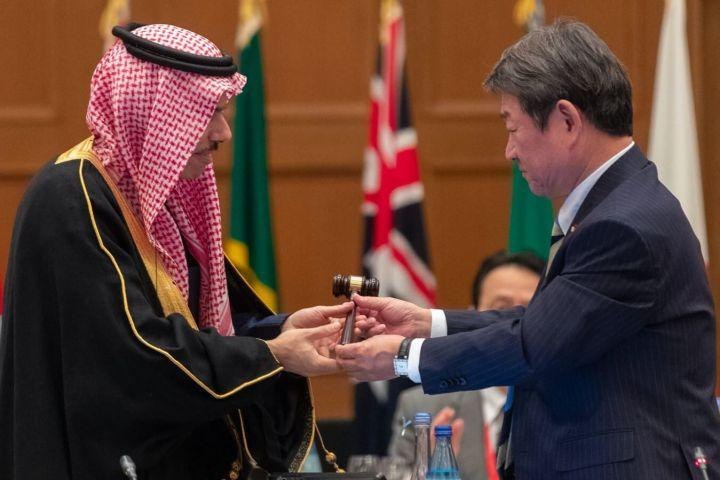
G20: Think Tank, Ministers, Central Bankers to Talk Crypto, CBDC Policy.
The G20 will once again tackle the issue of cryptocurrencies and central bank digital currencies (CBDCs), with an influential think tank, ministers and central bank chiefs set to embark on discussions in the weeks and months ahead.
The T20, a research and policy advice network that reports to the G20’s presidency (currently Saudi Arabia) on summit agenda items, has revealed that one of its task forces will be looking into cryptocurrency regulation.
The T20’s TF8 team, per its website, will be tasked with examining “the governance and regulation of cryptocurrency and fintech, their impacts on the international monetary system, their potential use in money laundering and terror financing, and how these activities can be monitored.”
The T20 team is made up of mostly Saudi Arabia-based experts, and its advice could be an indicator of the sort of crypto policy direction Riyadh intends to take at crucial G20 meetings this year.
The TF8 lists “governing and regulating cryptocurrency” as one of its seven priorities:
-Managing risks and crises in capital flows and international institutions
-Old and new threats: making financial institutions as modern as the markets
-Encouraging inclusive financial sector development in developing and emerging economies
-Governing and regulating cryptocurrency and fintech, and their impacts on the international monetary system
-Global financial governance, the cooperation between multinational and regional authorities, central bank independence and revisiting the G20's Eminent -Persons Group
-Global financial monitoring of money laundering, terror financing and the efficiency of financial institutions
-The role of Islamic finance.
In 2018, Saudi Arabia warned its citizens that cryptocurrency is illegal within its borders. However, in November 2019, reports have started to circulate that Saudi Arabia and the United Arab Emirates (UAE) plan to launch joint digital currency. Meanwhile, in the UAE, in January 2020, Dubai announced its plans to launch Crypto Valley – what it calls the world's largest ecosystem for cryptographic, blockchain and distributed ledger technologies.
The T20 also discussed cryptocurrency last year, ahead of the G20 Summit, where Japan actively pushed its international counterparts to adopt crypto policing measures and coordinate international efforts.
Per media outlet Mainichi, central bank governors and finance ministers will discuss “digital currencies” at a summit to be held on February 22-23 in Riyadh.
Swedish Central Bank Bids to Host BIS Hub for Digital Currency Research.
That lofty claim comes in Riksbank’s March 3 bid to host a Bank for International Settlements (BIS) Innovation Hub, an initiative by the "bank of central banks" that wants to scatter the world with local financial innovation policy clearinghouses.
One of the Hubs’ fields of study is sure to be central bank digital currencies. And there the Swedes, who are weeks into a long-term e-krona pilot project that report writers toiled over for years, are sure they’ve got a “comparative advantage” over the “tough competition” – “other central banks.”
The innovation hub is not an average non-governmental organization, the Swedish bid shows. It's actually a BIS outpost: an extrajudicial annex within whatever country one pops up. As such, Innovation Hub employees, and activities, are granted immunity from local prosecution.
“Given that the Riksbank has already come a long way in analyzing CBDC, it can, just as BIS requires from a hub, quickly supply analyses on the basis of already established collaboration between the public sector, private sector, academics and other central banks,” the petition said.
With the formal launch of the e-krona pilot, Sweden joined a fast-growing arena of central banks actively toying with digitizing some form of their money, including China, Cambodia, South Korea, Switzerland, Ukraine.
But in many respects Sweden is years ahead. Riskbank began seriously looking into a CBDC in 2017 when it decided something had to be done about its citizens’ rapid move away from physical cash. In consecutive reports it outlined many of the CBDC talking points – technology, policy, purpose – on which other central banks are just now getting started.
Riksbank now thinks its knowledge base makes it a strong contender to host an Innovation Hub, and it’s asking two key players – the Swedish parliament and the BIS – to agree.
Hosting a hub
It’s not free to host. Riksbank is asking parliament to allocate SEK 30 million ($3,203,500) a year for five years of Innovation Hub operations, which represents about half of Riksbank’s annual BIS equity dividend. Riksbank controls about 3.2 percent of BIS stock.
Riksbank sees this as a worthwhile investment, however. Its citizens are eschewing cash whether or not an Innovation Hub comes to town, and “there will still be a need to analyse financial technology developments in the payment market” if Sweden is not selected.
BIS declined to discuss its selection process.
The clash over hosting an Innovation Hub comes at a pivotal moment for the BIS and central banks in general. Just last week BIS signaled its belief the world’s payments landscape is rapidly changing with a quarterly report entirely dedicated to that digital future.
Against this, private stablecoin initiatives are posing a potential threat to central banks’ hold on monetary policy and financial stability - if the bakers’ public comments are any indication. In the bid documents Riksbank says Libra has triggered a wave of new action, even though its own CBDC dreams long preceded the stablecoin’s 2019 inception.
“After Facebook announced its intention, in partnership with a large number of companies, to introduce a global digital currency – Libra – central banks around the world have understood even more the need to cooperate to meet the challenges faced and take advantage of the opportunities offered by digitalisation to the global financial system,” the report sad
That’s spurred a lot of new activity, and, as Riskbank notes, a lot of interest in hosting a BIS Innovation Hub.
“In other words, there is tough competition for the other hubs that BIS will establish,” the report said.

Brazil’s New Blockchain Data Tool Cost $250K, Runs on Quorum.
Banco Central do Brasil (BCB) began developing PIER in 2017 and launched it in early April. In total it cost the bank R$1,300,000, roughly equivalent to $252,700 USD, Press Officer Ivone Portes told CoinDesk.
But BCB is confident that PIER will pay off. PIER is a unified data clearinghouse for BCB, the securities regulator (CVM), the private insurance regulator, (SUSEP) and eventually the social security superintendency (PRIVEC), replacing Brazil’s paper-based record sharing procedure with a fully digitized bureaucratic trove.
Tasks like business authorization “that took many hours or days” under the old process “now can take even seconds, since data is available online,” Portes said in an email.
PIER also makes that data more reliable by pulling it from the source, Portes said. It runs on JP Morgan’s open source Quorum blockchain, an Ethereum-based platform that BCB said is overlaid on a “private IT infrastructure.” BNamericas reported that PIER also utilizes Microsoft Azure cloud computing.
The blockchain gives each regulator easy access to its sister agencies’ records. That will help them process information – from vetting political appointees, to conducting financial investigations, to authorizing companies – more quickly and cheaply.

Grayscale Distances Itself from Fox News Shooting Controversy.
After its three-week-old ad aired during a controversial TV segment, Grayscale, a major crypto asset management firm owned by Digital Currency Group (DCG), has distanced itself from the FOX News program in question.
Grayscale made their decision known via a tweet after their ad was aired on a prime-time show during which the host Tucker Carlson shared his opinion on the Kenosha shooting that saw two people killed and one injured. The suspect was arrested on August 26, less than a day after the shooting.
Carlson, as reported by CNN, allegedly suggested that the shooting by a 17-year old was done to maintain order during a Black Lives Matter protest. "How shocked are we that 17-year-olds with rifles decided they had to maintain order when no one else would?," he asked, thus sparking a series of comments from the media world.
This position suggests that the firm might pull its ad support from the show.
The Grayscale ad aimed at “brrring crypto to the masses,” as noted by Grayscale CEO Barry Silbert has been aired on CNBC, MSNBC, FOX, and FOX Business.
Days after the commercial began airing on August 10, Silbert declared that the company had its largest fundraising week in which USD 217 million were invested into the Grayscale funds. Silbert opined that this milestone was achieved probably because people liked the commercial.
Meanwhile, shortly after the Grayscale TV ad began airing, Mike Novogratz’s Galaxy Digital debuted a full-page bitcoin-focused ad on the Financial Times Newspaper. As reported, Silbert didn’t seem to mind the competition, simply commenting “Love it” with a picture of the ad on Twitter the same day.
