India's Central Bank Plans to Launch Digital Rupee CBDC.
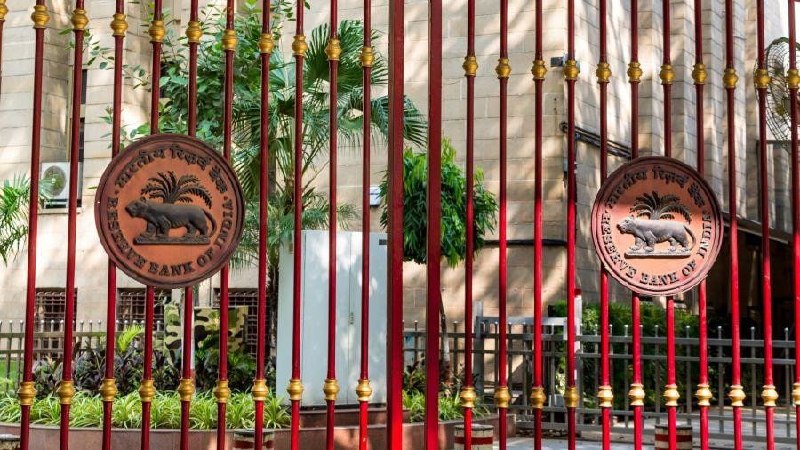
The Reserve Bank of India (RBI) will soon launch pilot tests for its upcoming digital rupee in a bid to increase awareness around its Central Bank Digital Currency (CBDC).
The country's central bank announced the news on Friday, detailing that the digital rupee will be available for specific use cases during the pilot. In a statement, the RBI said the pilot program will help create awareness around the planned features of the digital rupee.
“It explains the objectives, choices, benefits, and risks of issuing a CBDC in India. The note also seeks to explain the Reserve Bank’s approach towards the introduction of the CBDC,” the central bank reportedly said.
The RBI has also released a concept note for the digital rupee, which talks about key aspects of the CBDC, including its technology and design, potential use cases of the digital rupee, issuance mechanisms, and more. In addition, it explores how the introduction of a CBDC would impact the banking system, monetary policy, financial stability, and privacy issues.
“As the extent and scope of such pilot launches expand, RBI will continue to communicate about the specific features and benefits of e₹, from time to time,” the RBI said.
The country's Finance Minister Nirmala Sitharaman had previously announced the launch of the digital rupee in her 2022-23 budget speech earlier this year. The announcement marked another clear indication that the Indian government is determined to launch a CBDC.
💎 Bestarz is an NFT play-to-earn fantasy football platform based on the real-world results, in which players create a team, collect unique player cards, and participate in weekly matches concurrent to weekly football events. 💎
✅ STARZ is a BEP-20 governance token in the BESTARZ universe.Users of applications on the BESTARZ platform can receive STARZ tokens as special rewards. Pre-sale will start soon.🔥💰🚀
✅ Join their community to get more information👇👇
https://t.me/bestarzio
✅ Visit their website to learn more and get started NOW! 🪩
Crypto and digital bank MinePlex secures $100M in funding from GEM.
The funding will be used in new banking technologies, including a collaboration with Mastercard and Visa for crypto transactions.
In another round of investments in the crypto space, Singapore-based crypto bank MinePlex has secured $100 million from digital asset investment firm GEM Digital Limited (GEM), aimed at closing the gap between digital assets and traditional banking.
According to an Oct. 11 announcement, MinePlex will use the funding to develop new banking technologies, including a collaboration with Mastercard and Visa for transactions accepting Tether (USDT), Bitcoin, Ether and TRON.
Bringing digital assets and traditional banking services together is MinePlex’s big bet.
The platform offers fiat and crypto assets services within the same application, enabling transactions such as bill payments as well as purchases in crypto assets.
Introducing CrossFi, MinePlex’s co-founder and CEO, Aleksandr Mamasidikov, explained to Cointelegraph:
“We created CrossFi, a new technology that runs on the LPoS (Liquid Proof of Stake) consensus algorithm and MinePlex’s innovative blockchain, which provides such advantages as simplicity, operating speed, and low fees.”
According to MinePlex, its native MinePlex (PLEX) token will also be listed on new exchanges as part of the fundraising efforts.
The company also intends to open new offices in South Africa, Australia, India and Brazil, adding to its already established offices in Barcelona, Dubai, Uruguay and Singapore. The company claims to have processed more than five million cards across 50 banks in Russia, Europe and Asia.
GEM is a $3.4 billion alternative investment group that has been a source of capital for other startups in the crypto space.
In September, ParallelChain Lab secured $50 million in funds from GEM following the launch of its mainnet and native token listing, XPLL, while Sports Metaverse startup LootMogul secured a $200 million investment commitment from Gem Global Yield.
In June, the private equity fund closed a $200 million investment in the cryptocurrency exchange Unizen to expand the firm’s business and its ecosystem.
Japanese gaming giant’s hiring spree ahead of NFT marketplace.
Japanese entertainment and video game company Konami has posted new job openings to expand its NFTs, Web3 and metaverse offerings.
Japanese gaming giant Konami is seeking to expand its crypto-versed talent pool while it eyes the development of Web3 and metaverse “experiences” and a nonfungible token (NFT) marketplace.
The gaming giant is the latest in a lengthening list of big names signaling interest in expanding its Web3 offerings by seeking to acquire new talent.
On Oct. 13, the company announced that it was recruiting a “wide range of talent” for "system construction and service development,” relating to future metaverse and Web3 platforms.
Konami stated that it has been conducting research and development to incorporate the “latest technology” into its games and content, adding it also has plans to launch an NFT trading platform where players can trade their in-game digital items.
The company is well known among traditional gamer circles as the publisher behind the Metal Gear Solid franchise, Castlevania, Dance Dance Revolution and Frogger.
Konami is looking to fill several positions including system engineers, programmers, project managers, designers and directors for its venture into Web3.
The successful applicants will work on a “unique digital item distribution platform” that conforms to Japanese guidelines for blockchain games.
This is not Konami’s first foray into nonfungibles. In January the firm launched a collection of NFTs to celebrate the anniversary of its Castlevania franchise.
However, major moves into NFTs by some traditional gaming companies have been met with backlash, the most notable example being Ubisoft’s Quartz platform which came under fire earlier this year.
Last month, Ubisoft CEO Yves Guillemot walked back the company’s enthusiasm for NFTs, saying it was merely in “research mode” all along.
Some gamers saw gaming companies’ moves into the NFT space as a money grab. There were also environmental concerns over the proof-of-work mining process used to mint them, though much of these worries can be dismissed since Ethereum, the industry standard network for NFTs, has transitioned to proof-of-stake.
💎 Fashion TV and FTVIO released their official Token called STYL and it gained over +150% before getting listed in Gate.io 💎
✅ You can buy STYL on pancakeswap and uniswap 🔥💰🚀
✅ Join our community to get more information👇👇
https://t.me/stylike_io_official
✅ The coin is officially listed in CMC and Coingecko 📈📊
✅ Visit our website to learn more and get started NOW! 🪩
✅ You can buy STYL on pancakeswap and uniswap 🔥💰🚀
✅ Join our community to get more information👇👇
https://t.me/stylike_io_official
✅ The coin is officially listed in CMC and Coingecko 📈📊
✅ Visit our website to learn more and get started NOW! 🪩
Polkadot hits all-time high in development activity.
It's been almost one year since the start of the ecosystem's signature parachain auctions.
According to data from programming repository GitHub, Polkadot recognized more than 500 contributions each day in September — an all-time high for the multichain protocol. Simultaneously, data from Polkadot's cross-consensus interoperability standard XCM show that a record 26,258 messages were sent between its parachains. In total, 14,930 developers' contributions were recorded on Polkadot's GitHub in the month of August.
As told by project developers, 66 blockchains are now live on Polkadot and its parachain startup network Kusama. Since its inception, over 140,000 messages have been exchanged between chains via 135 messaging channels. Together, the Polkadot and Kusama Treasuries have cumulatively paid out 9.6 million DOT and 346,700 KSM ($72.8 million total) to fund spending proposals in the ecosystem.
Parachains are individual layer-1 blockchains that run in parallel on Polkadot and are first tested on Kusama. Auctions for parachain slots are held in the form of crowdloans, with the position going to the highest bidding project. The first of its kind took place last November.
Moving forward, Polkadot founder Rob Habermeier has recently published a roadmap on enhancing Polkadot and Kusama's scalability. Highlights include asynchronous backing, or the de-coupling of the extension of parachains from the extension of the relay-chain, as a potential mechanism for cutting parachain blocktime by 50% while increasing block space give to 10 fold. The upgrade, should it go live, is also estimated to increase network speed to between 100,000 to 1 million transactions per minute.
The asynchronous backing upgrade is scheduled for development on Kusama by the end of the year and then on Polkadot. Another network upgrade due next introducing 'pay-as-you-go' parachains would theoretically combine launching a blockchain on Kusama with simultaneously launching smart contracts. The move would shorten the development process for building on Polkadot.
Metaverse trading volume plummeted 80%, but hype hasn’t decreased.
A DappRadar report found that while trading volumes have taken a sharp hit during Q3, the average number of NFT sales for these 10 projects only decreased by 11.55%.
Third-quarter trading volume for the top 10 metaverse projects may have fallen 80% compared to the second quarter, but analytics firm DappRadar suggests that interest in virtual worlds still remains.
The metaverse sector has been hit with a fair amount of negative press as of late, particularly around suggested low user activity across certain platforms, such as Decentraland and Meta — reports which they have refuted.
DappRadar noted in an Oct. 20 report that while trading volumes have taken a sharp hit during Q3, the average number of NFT sales for these 10 projects only decreased by 11.55% compared to Q2.
DappRadar explains that lower trading volumes could merely reflect decreasing asset prices and not necessarily lack of interest, noting that:
“We consider this a bullish sign because it shows that the hype for these types of projects hasn’t decreased. Instead, the fall of cryptocurrency prices has affected the projects’ overall trading volume instead of a lack of interest.”
A caveat to these sentiments, however, is that eight of the top 10 metaverse projects saw significant decreases in their nonfungible token (NFT) sales counts during Q3, with Yuga Labs’ Otherside seeing a 74% decrease for the quarter.
The positive action was primarily driven by The Sandbox and former Minecraft-based platform NFT Worlds V2, which saw NFT sale count increases of 190% and 79% apiece.
DappRadar attributed this to the hype surrounding The Sandbox’s Alpha Season 3, which offers a host of new gaming experiences and collectibles. While NFT Worlds V2 being booted off of Minecraft may have been seen as a “buying opportunity” as the value of its NFTs dropped by 90% in Q3.
Meanwhile, DappRadar’s report indicated that the floor prices for NFT land plots had decreased by 75% on average, which may have been one of the reasons why trading volumes had decreased by so much.
While the value of any piece of real estate, virtual or otherwise, is subject to swings, “Metaverse real estate is currently very depreciated,” DappRadar stated, adding that the declining prices are in accordance with the broader bear market of the crypto sector.

Congratulations 🎉
STARS presale is live🚀🚀
💎 Bestarz is an NFT play-to-earn fantasy football platform based on the real-world results. STARS is a BEP-20 governance token in the BESTARZ universe 💎
✅ KYC
✅ Audit
✅ CECs & DECs listing soon
Presale link on the Pinksale launchpad👇
https://www.pinksale.finance/launchpad/0xFB4C66d1907Af054dc57fa01C236d07ce433E92d?chain=BSC
Join their Telegram community for more info👇
https://t.me/bestarzio
Craig Wright Defeated in Lawsuit Against Hodlonaut.
Australian computer scientist and self-proclaimed Satoshi Nakamoto, Craig Wright, has been defeated in a defamation case in Norway against the popular Bitcoin (BTC) influencer Hodlonaut.
The win for Hodlonaut came after a seven-day trial in Oslo, Norway in September. The trial came about after Hodlonaut sued Wright in Norway in an attempt to avoid another lawsuit that was brought against him in the UK by Wright.
Central to the case was whether Hodlonaut, an outspoken critic of Wright and his Bitcoin SV (BSV) cryptocurrency, was justified in calling Wright a liar and a fraud in 2019.
According to a transcript of the ruling, “the prevailing opinion in the media” has been, and still is, that “Wright is unlikely to be Satoshi Nakamoto.”
As such, Hodlonaut’s tweets where he called Wright a fraud were justifiable, the judge concluded:
“Against this background, the court believes that [Hodlonaut] had sufficient factual grounds to claim that Craig Wright is not Satoshi Nakamoto in March 2019 […] Wright has come out with a controversial claim, and must withstand criticism from dissenters.”
“In a situation where [Wright] has not succeeded in, nor does he wish to, provide cryptographic evidence that can support his claim to be Satoshi Nakamoto, the court believes that he must accept that there is a debate as to whether he is who he says he is,” the ruling said.
In conclusion, Hodlonaut was acquitted of all claims for compensation, and is not liable for damages related to the claims he made on Twitter three years ago. Instead, Wright has been ordered to compensate Hodlonaut for his legal fees worth around $380,000.
Craig Wright’s attorneys told CoinDesk on Thursday that he would appeal the ruling, noting that “anonymous online bullying and harassment risks having a chilling effect” on public debate.

S. Korean watchdog goes after crypto whales to ensure AML compliance.
The South Korean regulator noted that popular stablecoins used by the public might become a primary tool for money laundering using digital assets.
South Korea’s financial watchdog, the Financial Services Commission (FSC), will monitor crypto whales with assets of over 100 million won ($70,000) to prevent money laundering efforts using digital assets.
The FSC noted that having a larger proportion of digital assets and stablecoins equates to a higher money laundering risk. Thus, special focus should be placed on monitoring crypto whales with significant digital-asset and stablecoin holdings under the new Anti-Money Laundering guidelines, reported local media.
The report also noted that stablecoins, especially those commonly used by the public, are more likely to be used as a means of crime. The report reads:
“In the case of an independently listed virtual asset, it is possible that it did not meet the listing criteria of other virtual asset operators, and it can be evaluated that the risk of money laundering of virtual asset operators with a high proportion of the virtual asset is high.”
Apart from monitoring crypto whales and their activities, the report also advocates for keeping an eye on retail customers making high-value deposits. Those customers should be monitored for any significant change in holdings every quarter.
“Customers with large virtual asset holdings are at higher risk of money laundering.”
South Korea is known for its strict implementation of crypto-related policies, especially in the wake of the collapse of the Terra ecosystem. Its financial regulators have doubled down on their efforts to ensure investor protection and bring crypto legislation by early 2024.
In August, the chair of FSC said the regulator plans to expedite its review of 13 bills related to digital assets pending in the country’s National Assembly. The aim of the review is to make institutional supplements that will take a balanced approach to blockchain development, investor protection and market stability.

Google still promoting crypto phishing sites warns Binance boss.
In a tweet this week, CZ warned that when searching for CoinMarketCap on Google, phishing sites with an “ad” tag were showing up in front of the actual website.
Binance CEO Changpeng Zhao (CZ) has warned that Google search results are still promoting crypto phishing and scamming websites.
Despite Google’s strict policies on crypto marketing for its ads service, scammers have still been slipping through the cracks over the past few years. At times, scam websites have even been displayed higher than legitimate crypto and blockchain projects.
In an Oct. 27 tweet, CZ warned that when searching CoinMarketCap on Google, phishing sites with an “ad” tag were showing up in front of the actual website.
“This affects users adding smart contract addresses to MetaMask using these phishing sites. We are trying to contact Google for this, and in the meantime alerting users about this through social channels,” he said.
Google displays phishing sites when users search CMC. This affects users adding smart contract addresses to MetaMask using these phishing sites. We are trying to contact Google for this, and in the meantime alerting users about this through social channels.
CoinMarketCap is one of the most commonly used crypto data aggregators on the market and was acquired by Binance for an undisclosed fee back in April 2020. Given its popularity, a lot of traffic could be directed toward these scam ads.
In some cases, phishing websites can be hard to spot, as they generally use copycat URLs to trick people that aren’t paying attention into clicking. For example, one of the websites CZ highlighted was spelled “coinomarketcaap.”
In April this year, blockchain security firm SlowMist uncovered a Terra-related phishing scam in which bad actors were using Google Ads to run copycat websites utilizing Achor Protocol and Astroport branding.
According to SlowMist, the promoted websites ranked ahead of the actual sites people were searching for and went on to swipe around $4.31 million worth of Luna Classic (LUNC) from 52 addresses between April 12 and April 21.

Trade Leaf announces Learn to Earn Challenge!
Trade Leaf are giving out $150 (USDT) in total, $25 per 6 winners
🤓 What do you have to do?
Subscribe to their Twitter and make your own tweet with correct answers to questions below. Make sure to add following hashtags: #TradeLeaf and #LearnToEarn
👇👇👇
1. What is Trade Leaf?
2. Who are core participants of the Trade Leaf ecosystem?
3. What are the main technologies that Trade Leaf use?
We wish you good luck 🍀
Twitter | Telegram | LinkedIn | Medium
Argo Blockchain is at risk of closing if it fails further financing.
Argo Blockchain has been selling its Bitcoin holdings earlier this year to cut debt to Michael Novogratz’s crypto investment firm Galaxy Digital.
The London Stock Exchange-listed cryptocurrency firm Argo Blockchain has warned that it’s at risk of ceasing operations due to a lack of financing.
The crypto mining company Argo Blockchain continues to explore new financing opportunities after failing to raise major capital from a strategic investor, according to an announcement on Oct. 31.
Argo has been seeking to raise about 24 million British pounds ($27 million) via subscription for ordinary shares. “The company no longer believes that this subscription will be consummated under the previously announced terms,” Argo said in a statement.
While Argo is exploring other financing options, there can be no assurance that it will sign any definitive agreements or consummate any deals. The firm will continue to work to reach sufficient capital for at least the next 12 months from the day of the announcement, Argo noted.
Argo will have to cut or event halt operations in case it fails to raise capital during this period, the firm noted, stating:
“Should Argo be unsuccessful in completing any further financing, Argo would become cash flow negative in the near term and would need to curtail or cease operations.”
Amid the lack of financing, Argo has been taking measures to preserve cash and optimize liquidity. The company sold 3,843 brand-new Bitmain S19J Pro miners for $5.6 million, which was the last batch of the original Bitmain order scheduled for installation in October 2022. Argo’s total hash rate capacity remained at 2.5 exahashes per second.
Previously, Argo has also been actively selling its mined Bitcoin holdings in order to cut debt to Michael Novogratz’s crypto investment firm Galaxy Digital. In July, Argo sold another 887 BTC after previously getting rid of 637 BTC in June 2022. In doing so, Argo became one of many crypto mining firms that opted to sell self-mined BTC amid the bear market of 2022, including Bitfarms, Core Scientific and Riot Blockchain.

NFTs bridge music communities across genres and blockchain ecosystems.
A new NFT drop featuring music industry icons such as Snoop Dogg and Billy Ray Cyrus is bringing together music communities from across the genre spectrum, as well as blockchain networks.
Nonfungible tokens (NFTs) are stepping into the next wave of Web3 with utility capabilities and community building at the forefront. A new collection from the Mint NFT marketplace and metaverse entertainment platform Animal Concerts does this across the musical genre spectrum an blockchain networks.
The collection, “A Hard Working Man,” features the crypto-savvy hip-hop star Snoop Dogg in combination with country music icons Billy Ray Cyrus and the Avila Brothers. The collection features highlight phygital experiences with digital artwork alongside in-person concert perks.
Colin Fitzpatrick, founder and CEO of Animal Concerts, highlighted the “major existing fan bases” of all three artists involved in the collection and how Web3 provides these existing communities the tools to evolve.
The cross-genre collaboration will premiere on the new Minted Launchpad platform.
Minted Launchpad falls in line with the idea of cross-genre collaborations, as it allows users to mint, purchase and trade NFTs native to both the Ethereum and Cronos blockchains. Additionally, a select number will also be able to mint on Crypto.com NFT at the end of Q4 2022.
Such collections not only bridge gaps between genres and blockchains but also, as Matt Wan — director of Minted — commented:
“‘It will also serve to bridge the gap between Web2 and Web3 users.”
Users active on the Minted launchpad platform will also be able to browse digital asset collections from both ecosystems. “A Hard Working Man” was initially announced in April, with additional collaboration with Cointelegraph for the artwork.
Snoop Dogg is known for his involvement in the crypto scene through various NFT projects, even turning Bored Ape Yacht Club avatars into a music video.
Similarly, NFTs have catered to fans across various genres, including opera, classical music and country music with Dolly Parton’s Dollyverse.

Web3 Foundation makes bold claim to SEC: ‘DOT is not a security. It is merely software’.
According to CLO Daniel Schoenberger, the team developed a “workable theory of how token morphing may be achieved” for DOT based on the SEC’s concerns and federal securities laws.
The entity supporting research and development of Polkadot, as well as overseeing fundraising efforts for the blockchain, has argued that the United States Securities and Exchange Commission should not consider the Polkadot token a security under its regulatory purview.
In a Nov. 4 blog post, the Web3 Foundation Team’s chief legal officer Daniel Schoenberger said Polkadot’s native token had “morphed” and was “software” rather than a security. Schoenberger said the claim was “consistent with the views” it had shared with the SEC following discussions it began in November 2019.
“While the Polkadot vision had not contemplated that the blockchain’s native token would be a security, we understood that the SEC’s view was likely to be that the to-be-delivered token would be a security, at least at the time of delivery,” said Schoenberger. “Whatever it took in order for DOT, the native token of the Polkadot blockchain to be — or to become — a non-security, we were willing to do it.”
Web3 Foundation announces Polkadot's native token DOT has morphed and is software, not a security!
After 3 years of proactive engagement with the SECGov, W3F announces a landmark step towards the achievement of Web 3.0, a decentralized, trustless, serverless internet.
The chief legal officer said the Web3 Foundation had met regularly with the SEC’s fintech wing, FinHub, as part of chair Gary Gensler’s long-standing offer to crypto firms to “come in and talk.” According to Schoenberger, the team developed a “workable theory of how token morphing may be achieved” for DOT based on the SEC’s concerns and U.S. federal securities laws.
Though the fundraising entity said it “shared this theory many times with the SEC” on DOT not qualifying as a security, it’s unclear whether the federal regulator will respond to the claims seemingly infringing on their purview.
Claims and rumors fuel crypto market turmoil amid FTX collapse.
A report from Reuters claimed that FTX had used some of its customer deposits to support Alameda Research.
While information leaks and unconfirmed reports can be a way for the truth to reach the public, they can also be a tool that fans the flames to grow even further in an already burned-out crypto market.
In a recent article, Reuters claimed that FTX had used some of its customers’ deposits to support Alameda Research from its financial difficulties. Apart from this, the mainstream media outlet also described Binance pulling out of the FTX acquisition as a “failed bid to save crypto.”
A message from FTX CEO Sam “SBF” Bankman-Fried was also leaked to crypto podcaster Cobie on Twitter. The message shows that the FTX CEO is unsure of what “the right pathway forward” is. However, the messages also highlighted that SBF is working on a more thorough explanation of what truly happened.
A recent post on the Twitter account called Autism Capital highlighted more rumors saying that FTX employees knew that the company had been breaking the law since 2021 but continued working anyway. According to the tweet, the employees are now being used as “fall people.” Members of the crypto community responded to the tweet, saying that if they really knew, they should “be in jail.”
On a somewhat positive note, another leaked document that surfaced in the media suggests that FTX still has at least $1.3 billion worth of assets. According to a report by Trustnodes, the spreadsheet that looks to be based on decentralized application Zapper sparked rumors that FTX still has more than a billion in funding.
Throughout the FTX crisis, anonymous sources were used by mainstream outlets to report developments on the FTX collapse. Unnamed figures told Reuters that FTX had witnessed $6 billion worth of withdrawals. Citing more unconfirmed sources, Bloomberg reported that FTX may file for bankruptcy. Apart from these, The Wall Street Journal also mentioned that a “person familiar with the matter” has claimed that government agencies were after FTX.
The FTX and Alameda Research crisis have led the crypto market into a state of frenzy, leading asset prices to go downward and investors to worry about crypto.
Exchange outflows hit historic highs as Bitcoin investors self-custody.
Confidence in centralized exchanges appears to be waning as Bitcoin flows into self-custody wallets at near-record levels.
Bitcoin investors have been increasingly moving their holdings to self-custody solutions following the collapse of the world’s second-largest crypto exchange last week.
On-chain exchange flow data is showing a surge in withdrawals to self-custody wallets, according to analytics provider Glassnode.
In a Nov. 13 post on Twitter, Glassnode reported that Bitcoin exchange outflows had hit near historic levels of 106,000 BTC per month.
It added that this has happened only three other times — in April 2022 and November 2020, as well as in June/July 2022. It also reported that the number of Bitcoin wallets receiving the asset from exchange addresses surged to around 90,000 on Nov. 9.
Exchange outflows are usually a bullish sign that BTC is being hodled for the long term. However, in this scenario, it appears to be the result of loundering confidence in centralized crypto exchanges.
Glassnode commented that outflows have resulted in “positive balance changes across all wallet cohorts, from shrimp to whales,” before adding:
“The failure of FTX has created a very distinct change in Bitcoin holder behavior across all cohorts.”
Since Nov. 6, when the FTX fiasco began, balance changes have increased across all BTC wallet sizes, with “shrimps” that have less than one coin increasing by 33,700 BTC. Whale wallets with more than 1,000 coins have seen an increase of 3,600 BTC, indicating that the self-custodian push is happening across the board.
Industry leaders are now starting to advocate self-custody solutions as the phrase “not your keys, not your coins” bears more weight than ever before.
On Nov. 13, Ethereum educator Anthony Sassano said that crypto holders shouldn’t be storing their assets on centralized exchanges unless their actively trading large amounts.
MicroStrategy’s Michael Saylor told Cointelegraph in an interview that self-custody prevents centralized third parties from abusing their power.
Glassnode also reported that stablecoins, many of which destabilized last week, have been flowing onto exchanges at increased rates over the past week.
Cheelee: GameFi short video platform. Watch. Play. Earn.
Cheelee is the first GameFi short video platform where the user can make money while viewing the feed. Upon registration of your in-app wallet, you receive special NFT glasses, and you can start making money.
The mechanics are based on the Attention Economy model, where user’s attention is treated as a commodity for which social networks begin to pay. I looked into WP and got to the point.
Let’s take a look at some of the highlights:
1. A sustainable financial model. An extremely important indicator in the current market.
Cheelee is a social network, whose revenue is by 30% provided by advertising, in-game purchases and collaborations with brands, while for most m2e projects this figure is no more than just 1%.
2. The project is focused on a wide audience of social networks, it is 4.6 billion people, and plans to reach the 1st billion in the next 4 years.
3. The Cheelee social network was not created from scratch. There are almost three years of development behind it, 100+ team members, experience and continuity in the form of NUTSon social network with more than 1.5M uploads.
4. Free project entry. You do not need to spend hundreds and thousands of dollars to become a member of Cheelee, you just need to sign-up and start using the app.
5. You can earn without changing any of your habits. Just scroll through the feed, watch videos and get tokens.
All this sounds cool, but what about the prospects for the token price?
The emission of tokens is limited. There is a deflationary economic model, while the complexity of the mining will increase.
To support the token rates (there will be two CHEEL and LEE), the project has a Stability Fund, where up to 100% of profits from NFT sales and in-app transactions and 70% of advertising revenue, in-game purchases and collaboration with brands will be donated.
Now there is a chance to get WL and take a part in the giveaway of 50 000$!!!
http://bit.ly/3X2KCEX
GiveLab.com
Cheelee is giving $50,000!
Hanging on social networks scrolling the feed for hours? Times are changing: your attention is your...
Win Up To $100k For FREE With Duelbits World Cup Predictor
Duelbits is a crypto casino and sportsbook platform, aiming to narrow down the gap between bookmakers and casinos.
⚽️ FREE Duelbits’ World Cup Predictor
Duelbits is giving you the opportunity to play for free and win up to $100,000 by entering your predictions for each match. The predictions game began on November 7th and will end December 18th.
For each match, there will be four questions that you need to answer. For every correct prediction, you will gain points. At the end of a round, if you finish in the paying places in one of our Leaderboards you will win one of the Cash Prizes! If a user finishes with the most points in a specific round, they will win the highest prize from the prize-pot. Duelbits will also offer daily odds boosts on the games and a cashback to all sports users, allowing them to earn up to 37.5% rakeback on the theoretical sportshouse edge of 1%.
Join Duelbits And Make Your Predictions Today
FTX acquisition no more: Canadian exchange Bitvo backs off the deal.
Bitvo managed to back off its acquisition agreement with FTX thanks to the deal’s long approval process by local regulators.
Canadian cryptocurrency exchange Bitvo has terminated its expected acquisition agreement with FTX and will continue operating independently.
Bitvo’s shareholder, Pateno Payments, has discontinued the acquisition deal with FTX Canada and FTX Trading in accordance with the agreement terms, Bitvo announced on Nov. 15.
The firm emphasized that its operations have not been affected, as Bitvo has no material exposure to FTX or any of its affiliated entities. Bitvou201 trading operations, including withdrawals and deposits, are intact.
Bitvo also stressed that it’s not a party to the bankruptcy proceedings entered into by FTX and its affiliated entities. Bitvo has also never owned, listed or traded FTX Token or “any similar token,” the announcement notes.
“Since inception, Bitvo has operated as an independent, Canadian crypto asset trading platform,” the company stated, adding that the platform has not been offering lending or borrowing services:
“Bitvo operates on a full reserve basis, meaning it does not lend customer funds. Bitvo has always chosen to operate in this fashion, and it is a requirement of Bitvo’s regulatory status as a Restricted Dealer registered with the Canadian Securities Administrators.”
As previously reported by Cointelegraph, the troubled cryptocurrency exchange FTX entered into an agreement to purchase Bitvo in June 2022 as part of the company’s expansion plans in Canada. But the plan went wrong as FTX became the subject of a massive industry scandal, with the exchange misappropriating user funds for trading on its sister firm, Alameda Research.
On Nov. 14, Bitvo officially announced that its acquisition by FTX was still a pending transaction that wasn’t closed. “Digital assets are held with independent third-parties BitGo Inc. and BitGo Trust Company, with over 80% of assets held in cold storage,” the company said.
“We are happy the acquisition didn’t close, as it would have been devastating to our staff and, just as importantly, our customers,” Bitvo CEO Pamela Draper told Cointelegraph. The acquisition process that took place since the announcement was made in June involved working to satisfy the closing conditions, the most significant of which was regulatory approval, she added.