Nansen's indexes reveal insightful trends in the NFT space.
The platform's newly-introduced NFT-500:ETH index reports a 68.5% growth for the top-500 Ethereum NFT’s since the beginning of the year, despite experiencing a corrective 28.8% decline over the course of the past 30-days.
The research branch of Nansen, a popular blockchain data firm, has published a meticulous twelve-page report quantifying the performance of Ethereum-based nonfungible tokens, or NFTs, since the turn of the year, unveiling a number of compelling indications as to the economic and cultural future of the ecosystem.
Citing the profound impact of traditional financial indexes such as the Dow Jones Industrial Average, S&P 500 and the Nasdaq Composite, the report contemplates the vast potential for comparable models focusing on NFT's, arguing that both education and adoption could be significantly enhanced through their wide-scale utilization.
Last month, Nansen released six NFT indexes: Nansen NFT-500, Nansen Blue Chip-10, Nansen Social-100, Nansen Gaming-50, Nansen Art-20, Nansen Metaverse-20, all which according to the accompanying blog post, were designed to “raises the bar for quality financial infrastructure that supports the growing depth of the NFT industry.”
Nansen’s NFT-500 index aggregates the performance of the leading 500 NFT collections on Ethereum for both ERC-721 and ERC-1155, across ETH and USD market capitalization. These collections equate to 85.4% of the daily market volume since 1 January 2022.
Assessing the performance of the NFT-500 index across the period Jan 1st to March 9th 2022, it is revealed that the price of assets increased by 68.5% when denominated in ETH, and gained 20.9% when measured in USD.
In contrast, the performance of the ETH index of the last 30-days — as illustrated in the line graph below — stands in stark contrast, recording -28.8% and -38.5% in ETH and USD, respectively.
Upon our request for specific clarification as to the calculation method for the numerical figure seen on the y-axis, research analyst at Nansen, Louisa Choe stated that “the index level is the value of an investment relative to its value at one fixed point in time. The index started at 1,000 on 1/1/2022.”
Qatar exploring digital banks and central bank digital currencies.
The central bank is expected to set a direction for its future focus soon, particularly on various fintech verticals.
The Qatar Central Bank (QCB) is reportedly investigating the possibility of launching a digital currency and issuing digital bank licenses.
According to the head of the fintech section at QCB, Alanood Abdullah Al Muftah, the central bank is expected to set a direction for its future focus soon on a range of fintech verticals.
Al Muftah noted that QCB will also determine whether Qatar can establish a central bank digital currency (CBDC). She explained:
"Each central bank should study digital banks, considering their growing significance in the global market. We also see the direction of the market moving toward having a digital currency. However, it's still being studied whether we're having a digital currency or not."
While commenting on Qatar's regulatory sandbox, Al Muftah said that three firms in the payments sector are currently testing solutions with the central bank. She also stated that the QCB is considering other firms interested in utilizing the regulatory sandbox.
A regulatory sandbox is a space in which fintech firms can test new products, services, business models and delivery mechanisms in a real-world setting while benefiting from an accelerated authorization process and supervisory monitoring.
Private Qatari bank Dukhan Bank, meanwhile, is examining the possibility of creating a digital bank in Qatar, its chief operations and digital officer Narayanan Srinivasan told The Peninsula. However, Srinivasan warned that his institution would only build a digital bank after a better understanding of its economics. As per the report, Dukhan Bank is also considering blockchain technology in the payments sector.
Although private virtual currencies like Bitcoin (BTC) have grown in popularity and followers, government-backed CBDCs, frequently regarded as an antithesis to private cryptocurrencies, have been accelerating rapidly. According to data from the Atlantic Council, as of June 2019, 87 nations are currently developing their own digital currency, with only 14 having completed the pilot phase. Nine countries have already implemented a CBDC.

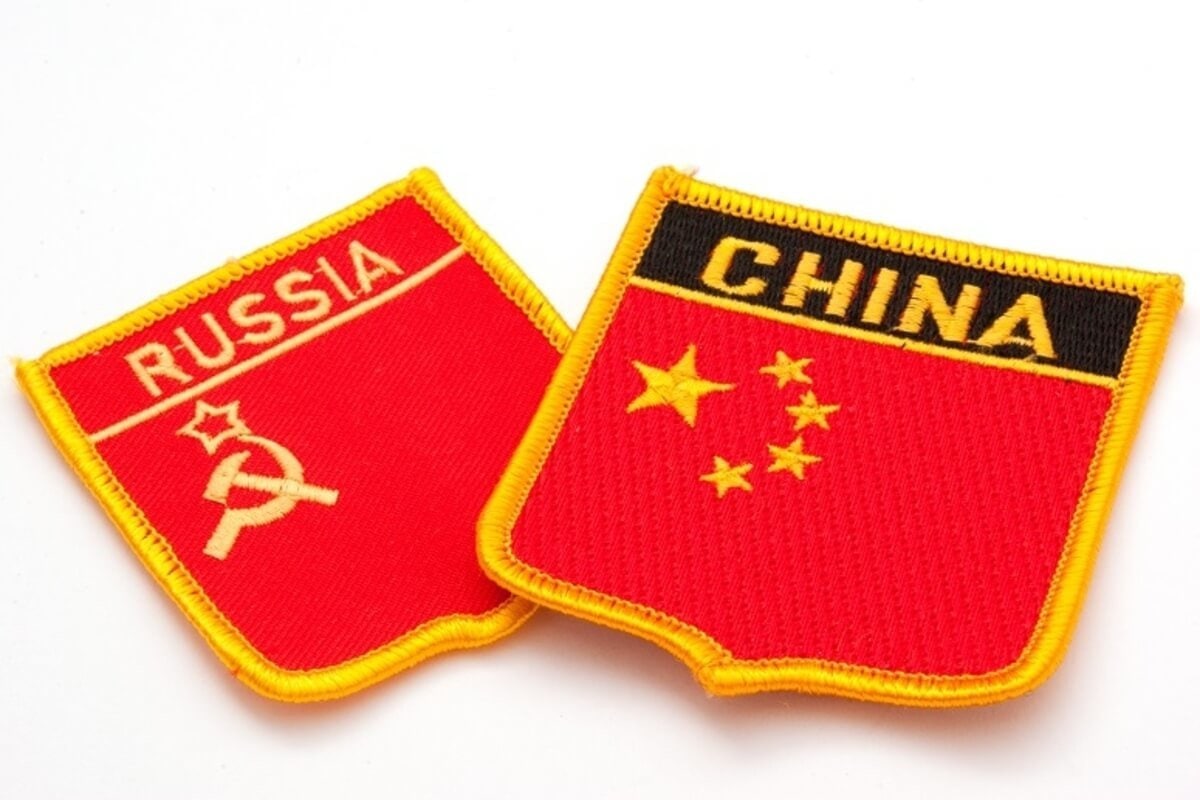
Russian, Chinese Central Banks ‘Working Together On SWIFT-Alternative Interoperability’.
A senior Russian parliamentarian has claimed that the Central Bank is working with the People’s Bank of China on workarounds that may help the countries bypass the SWIFT banking network – including domestic alternatives, blockchain solutions, and digital fiats.
Per Tass, via Rambler, Anatoly Aksakov, the Chairman of the State Duma’s Committee on the Financial Markets, told attendees at a recent press conference that the central banks were working on interoperability solutions that may allow Moscow’s homegrown SWIFT alternative SPFS to connect with China’s own version, the CIPS.
Aksakov claimed that in the first two months of 2022, trade between Russia and China had increased by “more than 40%,” and predicted that the trend would continue upward – particularly if a mutual SWIFT workaround can be agreed upon.
SWIFT is a banking messaging network, and Russia’s exclusion from it as a result of Western-led sanctions has hit exporters particularly hard. But as previously reported, both Moscow and Beijing have long anticipated the need for homegrown alternatives – and have been working on them for years.
Russia's attack on Ukraine, however, has sped up the need for innovation on this and other financial technology fronts.
Aksakov was quoted as stating that in order to “remove risks” associated with conducting trade without a bank messaging system solution, it was “necessary to establish interaction between” the SPFS and CIPs networks.
He said:
“I know that this work is underway. The Central Bank is interacting with the People’s Bank of China. And I believe that the current situation will stimulate the relevant processes. We have a very efficient system [the SPFS] and the current situation demonstrates that.”
Sphere Finance aims to do governance acquisitions using a treasury amassed by investors, for investors. The profits from the investments are then sent to investors as dividends in the form of the $SPHERE token every 30 minutes, 48 times a day. The treasury is amassed through taxes that users agree to pay for buying, selling & transferring their tokens, including the "Dynamic" tax, an additional tax for every % of the LP that you hold and sell on a transactional basis. Later, the project will take the form of an index fund, like an S&P 500 of crypto, airdropping tokens as dividends to holders. Join the movement.
Telegram: https://t.me/SphereDeFi
Discord: https://discord.gg/spheredefi
Twitter: https://twitter.com/SphereDeFi
Telegram: https://t.me/SphereDeFi
Discord: https://discord.gg/spheredefi
Twitter: https://twitter.com/SphereDeFi
Malaysian deputy finance minister responds to proposal to legalize Bitcoin.
Similar to countries like Indonesia, Malaysia has not banned crypto trading but the government doesn't want to adopt crypto for payments.
An official at the Ministry of Finance of Malaysia reportedly opposed the idea of adopting cryptocurrencies like Bitcoin (BTC) as a payment method following recent crypto-friendly proposals by the deputy communications minister.
Malaysia has no plans to recognize BTC as legal tender, deputy finance minister Mohd Shahar Abdullah said in a parliamentary meeting on Thursday, according to a Bloomberg report.
“Cryptocurrencies like Bitcoin are not suitable for use as a payment instrument due to various limitations,” Mohd Shahar declared, citing risks like volatility and potential cyber threats.
Instead of adopting cryptocurrency for payments, Malaysia will continue to focus on the potential development of the central bank digital currency (CBDC), the official added, stating:
“The growing technology and payment landscape have prompted Bank Negara Malaysia to actively assess the potential of CBDC.”
The Ministry of Finance of Malaysia did not immediately respond to Cointelegraph’s request to comment. This article will be updated pending new information.
Mohd Shahar’s remarks came shortly after Malaysia’s deputy communications and multimedia minister Datuk Zahidi Zainul Abidin called on local regulators and lawmakers to legalize certain use cases of cryptocurrencies and nonfungible tokens (NFTs) on Monday. The official stressed that such measures would significantly support young people as crypto and NFTs have been growing "massively" popular among the younger generation.
Some sources also suggested that Zahidi proposed not just legalizing certain cryptocurrency transactions in Malaysia but rather adopting cryptocurrency as legal tender.
Despite not being willing to adopt cryptocurrency as a means of payment, Malaysian regulators have apparently not restricted the trading of cryptocurrencies so far, following in the steps of many other countries like Indonesia.
Coinbase to track off-platform crypto transfers in Canada, Singapore, Japan.
Certain Coinbase users will need to disclose recipient information when sending cryptocurrencies to non-Coinbase wallets.
Citing compliance with local jurisdictions, crypto exchange Coinbase announced to soon collect additional information from users based in Canada, Singapore and Japan.
Effective from April 1, Coinbase users from Canada, Singapore and Japan will be required to provide additional information while sending cryptocurrencies to a different (non-Coinbase) platform.
However, while Singaporean and Japanese investors will be required to share additional information about the recipient for every single off-platform transaction, Canadians sending less than $801 (1,000 CAD) will be exempted from this requirement.
Screenshot of Coinbase requesting recipient information from Canadian users. Source: Coinbase
As shown in the above screenshot, Canadian users will need to share the full name and residential address of the recipient.
Moreover, Canadian users — that suffice the above two conditions — will lawfully require to provide the recipient’s (self) information even while transferring funds between their own crypto wallets.
On the other hand, both Japanese and Singaporean regulations will require Coinbase to collect information about the recipients from local investors for every single off-platform transaction with no minimum threshold.
Similar to Canadian users, investors from Japan will need to disclose information including the recipient’s name and full address and the name of the crypto exchange handling the wallet.
Singapore users will not require to provide the recipient’s residential address but will require only the recipient’s name and country of residence. The lack of any required information will bar the user from sending cryptocurrencies out of the Coinbase platform for the jurisdictions in question.
Coinbase users that no longer reside in these jurisdictions will need to update their country of registration in order to gain exemption from the soon-to-be-implemented rule.
For many jurisdictions, the road to mainstream crypto adoption is paved by stringent regulations under the pretext of investor protection. Starting April 2022, the Thailand Securities and Exchange Commission (SEC) announced a ban on crypto payments throughout the country.
Argentinian Tax Agency Amps Up Scrutiny for Crypto Traders and Holders With New Requirements
The Argentinian Tax Agency (AFIP) is watching the movements of cryptocurrency traders and holders, to tighten its control over their transactions. The institution is now sending emails to Argentinian citizens asking for a series of data regarding supposed cryptocurrency operations made in their names. The agency requires the public keys of the citizen and a list of transactions made during a certain time period.
The AFIP, the Argentinian tax watchdog, has decided to take the battle against cryptocurrency tax evasion directly to users of these currencies. While the agency had required information from exchanges before, the responsibility is now directed to certain users that have received a requirement to answer a series of questions regarding their history with digital assets.
The requirement compels users to deliver data like the public keys of the wallets they are currently managing, and a list of digital asset movements that must include dates, the cryptocurrencies involved, the amounts moved, and the kind of operation. Furthermore, the citizens must justify the origin of the funds used to perform these transactions and the complete crypto savings held.
The required info is to include transactions that go back to 2018, so the numbers could be very high, according to Germán Nlhoul from Criptocontador.
The opinion of experts in the country is divided regarding this new move of the AFIP. Some think that the institution has the right to require this information from crypto users. This is the case with Juan Manuel Scarso, a fintech tax expert who explained:
[The AFIP] has broad powers to verify, at any time, including with respect to current fiscal periods, the compliance that the obligors or those responsible give to the laws, regulations, resolutions and administrative instructions, supervising the situation of any alleged responsible.
However, others differ in their views and state that the Argentinian Tax Agency might be overreaching by requiring some of this data from the citizens, without stating the purpose of these requirements clearly. This is the case with Mariano Neira, who stated:
Among the requirements on crypto assets that are circulating, an excessive request for information and also a clear affectation of patrimonial intimacy can be observed.
This information is already required by the organization from the exchanges, which must comply with this requirement by law. However, some have speculated that this pivot is due to the exchanges being non-compliant with the regulation, forcing the agency to look for the info from other sources.
XRP Lawyer Predicts SEC Will Come After Crypto Exchanges Next
The U.S. Securities and Exchange Commission (SEC) issued guidelines for the crypto trading platforms. The advisory asked platforms to reflect digital assets they hold for users on their balance sheets at fair value.
John Deaton, Lawyer for XRP holders in the Ripple Vs SEC lawsuit, predicted that now the commission will be filing cases against exchanges.
The SEC in the advisory has highlighted the technological, legal, and regulatory risks linked to protecting crypto assets.
The release cites an October 2020 report which includes the amount of digital assets stolen from crypto trading platforms in 2018.
However, the commission says that these risks are not new and the staff has reviewed the financial statements of some organisations.
👉 Read more
Crypto Helps Ukraine Defend Itself Against Russia's Invasion, Here’s How You Can Contribute.
Cryptoassets continue to prove their case in Ukraine, as well over USD 100m in crypto was raised during the first five weeks of the Russian invasion.
Per a report by blockchain research firm TRM which analyzed over 50 crypto donation campaigns, official government entities have received over USD 50m of donations. Other popular non-governmental organization (NGO) campaigns have netted another USD 50m in donations.
Bitcoin (BTC) and ethereum (ETH) were the most popular cryptoassets and together facilitated over 85% of all transactions. Alternative networks like Tron (TRX), BNB, and Litecoin (LTC) have stayed distantly behind.
According to Alex Bornyakov, The Deputy Minister of Digital Transformation of Ukraine, cryptoassets have been “extremely useful” in the facilitation of funds in the country and have already purchased invaluable equipment for the Ukrainian Army.
In the recent episode of the Wolf of All Streets show, Bornyakov elaborated that cryptoassets were especially beneficial during the first days of the war when there was a lot of chaos in the country. “If you want to send a wire, and wire is going to get to your supplier in three days, you honestly don’t have three days, and maybe in three days you’re not going to live in this country anymore,” he said. In these circumstances, crypto is much faster, he added.

Let's meet the international #fintech ZEN.com! It will accept and convert digital assets to fiat upon receipt.
Currently, the service supports Bitcoin (including instant transfers and top-ups), Ethereum, and USD-T, as well as Litecoin (only transfers from fiat account to an exchange or a wallet).
Convert also digital assets to EUR or other currencies and spend funds conveniently with your Mastercard. One of the attractive features of the service is its competitive pricing.
Top-ups, meaning sending the assets from an exchange or a digital wallet to an EUR currency account at ZEN.COM incurs a fee of 0.5% (Platinum plan) or 0.9% (Gold plan). This is a no-brainer. ccess to Gold plan costs EUR 0,99 monthly, while Platinum is just EUR 4,99 monthly.
Use the code SOCRYPTOLANDZEN in their app and get 120 days free subscription: https://www.zen.com/personal?utm_medium=SOCRYPTOLAND&utm_source=Influencer&utm_campaign=PERFORMANCE_X

This media is not supported in your browser
VIEW IN TELEGRAM
KunciCoin keeps on pushing their way to succeed in DeFi and we are proud to see that they are listed in @BitrueOfficial
Since we posted for the first time, over 14 top exchanges were listed, over $5M to $7M of daily trading volume and a game studio with 20 million downloads , They are coming up with their own NFT MARKETPLACE
With World famous Music Artists promoting their music on NFT through KUNCI on APRIL 14TH
Congratulations to the team for the achievements, join @KunciGlobalOfficial to know further.
Singapore aims to streamline financial watchdog's authority over crypto firms.
"We could be exposed to reputational risks brought by DT service providers created in Singapore, and which provide services relating to virtual assets," said Alvin Tan.
The Singaporean government has approved legislation that will give the Monetary Authority of Singapore, or MAS, additional power to respond to crypto firms doing business outside the country.
Records from the Parliament of Singapore show the government passed the Financial Services and Markets Bill on Tuesday following a second reading on Monday. According to the MAS, the legislation will require virtual asset service providers doing business outside Singapore to be licensed and subject to Anti-Money Laundering and Combating the Financing of Terrorism requirements, or AML and CFT, respectively.
“Digital token service providers could easily structure their businesses to evade regulation in any one jurisdiction, as they operate mainly online,” said MAS board member Alvin Tan, speaking on behalf of senior minister Tharman Shanmugaratnam. “We could be exposed to reputational risks brought by DT service providers created in Singapore, and which provide services relating to virtual assets such as Bitcoin outside Singapore.”
The financial watchdog will have the power to conduct inspections of digital token service providers related to AML/CFT compliance and assist financial regulators and enforcement agencies in other countries. Cointelegraph reported in December that the MAS denied license applications from more than 100 crypto firms seeking to operate in Singapore.
“DT service providers created in Singapore without providing any DT services in Singapore are currently unregulated for AML/CFT,” said Tan. “These entities may claim to be headquartered here to take advantage of Singapore’s global reputation. This creates reputational risks for Singapore.”
The bill will also expand the MAS’ authority to issue prohibition orders against financial industry figures “who have shown themselves to be unfit to perform key roles, activities and functions.” In addition, financial institutions could be fined 1 million SGD — roughly $736,589 — “for a serious cyberattack or disruption to essential financial service.”
Singapore’s monetary authority issued guidelines in January that effectively barred crypto firms from advertising in areas including public transportation, public websites, social media platforms and broadcast and print media.
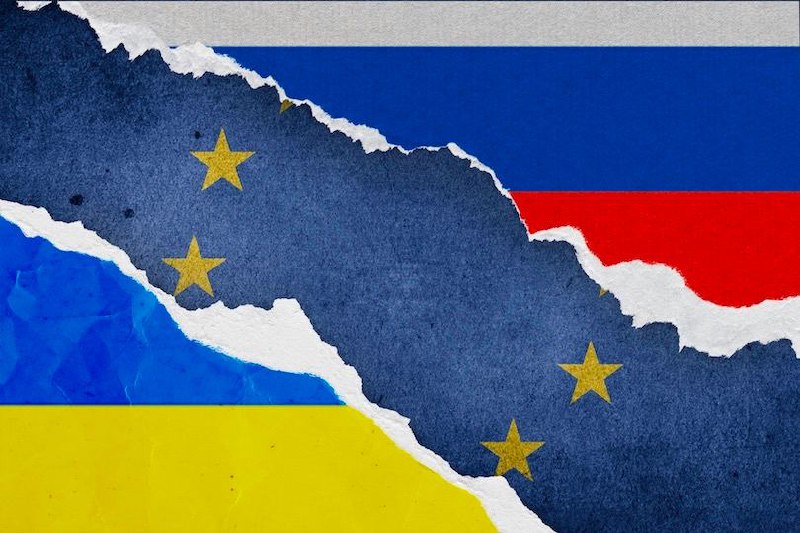
EU bans providing 'high-value crypto-asset services' to Russia.
Prohibiting crypto services was one of three financial measures the European Commission proposed in addition to an import ban on Russian coal.
The Council of the European Union has cut Russians off from certain cryptocurrency services as part of a package of restrictive measures against Russian President Vladimir Putin’s “brutal aggression against Ukraine and its people.”
In a Friday announcement, the EU council said it would be closing potential loopholes in using digital assets for Russian entities and individuals to evade sanctions with a “prohibition on providing high-value crypto-asset services” to the country. The action was one of three financial measures the European Commission proposed alongside banning transactions and freezing assets connected to four Russian banks as well as a “prohibition on providing advice on trusts to wealthy Russians.”
Russian Prime Minister Mikhail Mishustin claimed on Thursday that Russians hold more than $130 billion in crypto assets — an amount reportedly comparable to the country’s gold holdings, valued at roughly $140 billion as of March 2022. Though it’s unclear whether the Russian nationals and banks named in sanctions from both the United States and the European Union are attempting to use crypto to evade these restrictions, the narrative persists among many lawmakers and regulators.
The European Commission included crypto assets as part of its sanctions targeted against Russia and Belarus in response to the invasion of Ukraine announced in March. In the United States, the Treasury Department warned companies and individuals not to facilitate crypto transactions sent to certain Russian nationals and banks.
While lawmakers continue to hint at crypto’s possible role in evading sanctions, oil and gas exports from Russia to EU member nations remain a major source of income for the country currently attacking Ukraine. The package of restrictive measures from the Council of the European Union included an import ban on Russian coal but did not mention oil or gas. The United States Congress passed a bill on Thursday to ban oil and gas imports from Russia, which represents roughly 2% of the U.S. supply compared to an average of 20% across Europe.
Philippines' fintech achieves unicorn status after embracing crypto payments.
Voyager reportedly plans to integrate cryptocurrencies, micro investments and insurance products into PayMaya, which already includes a digital wallet.
Voyager Innovations, the firm behind the Philippines' top digital payments app Paymaya, has announced it has achieved unicorn status after a recent round of funding, surpassing a $1 billion valuation.
Voyager Innovation announced Tuesday that the new $210 million capital boosted its valuation to $1.4 billion. The company highlighted that the new funds will be used to develop the crypto offerings, which it recently added to its flagship digital payments app PayMaya.
According to the news release, the recent financing round was led by SIG Venture Capital. It included well-known firms such as KKR, First Pacific Co., Tencent Holdings Limited and PLDT Inc., the Philippines' largest telecom provider.
As reported by Cointelegraph, PayMaya recently introduced crypto services into the app, allowing consumers to buy, sell and earn crypto. The money will be used to develop the crypto offerings further. PayMaya also recently obtained a Virtual Asset Services Provider (VASP) license from the Philippine Central Bank. The firm will also invest the cash in PayMaya-branded digital bank services, such as savings and credit.
According to Voyager, most of the Philippine population is "underserved" in terms of internet and digital finance. It aims to take advantage of this by extending its market reach. As of March 31, PayMaya has over 47 million users.
Over the past two years, the Philippines' digital economy has increased, thanks largely to Voyager and its rival Mynt. According to a study by Google, Temasek, and Bain & Co., the Philippines ' digital economy increased 94% from 2020 to 2021 and it is projected to reach $40 billion by 2025.
The expansion of internet commerce in the country will likely increase cryptocurrency adoption. The Philippines does not currently have any regulations restricting the trade of digital currencies. However, the central bank has repeatedly warned investors about the risks in the nascent market.

This media is not supported in your browser
VIEW IN TELEGRAM
KunciCoin keeps on pushing their way to succeed in DeFi and we are proud to see that they are listed in big exchanges @BitrueOfficial and @Bitmartexchange
They have listed in 18 exchanges in last one month and with lot of Utilities
Now they will keep listing until they reach 100 exchange , next listing is Hotcoin Global.
Since we posted for the first time, over 14 top exchanges were listed, over 8M$ to $11M of daily trading volume and a game studio with downloads,They Launched their own NFT MARKETPLACE
With World Famous MUSIC ARTISTS
On the Occasion of their NFT platform they 2nd time burned 10% of their supply
They are Coming with their OWN BLOCKCHAIN ECOSYSTEM AND 3 BIG EXCHANGES
U need to check this Wonderful coin from Indonesia
It had best utilities more than any token in the world
This is something that we've been waiting for.
Wait for more announcement coming in, should be epic in upcoming months
JOIN
@KunciGlobalOfficial
Contract address
0x6cf271270662be1c4fc1b7bb7d7d7fc60cc19125
#DYOR
Montenegro makes Vitalik a citizen, part of plans to promote it as a blockchain hub.
The small southeast European nation is beginning to sift through the murky waters of blockchain regulation by granting the Ethereum co-founder citizenship.
The Montenegrin government has begun fulfilling its pledge to become a hub for blockchain innovation by reportedly making Ethereum creator Vitalik Buterin its newest citizen.
Montenegrin news outlet RTCB reported that Prime Minister Zdravko Krivokapić recommended Buterin receive the privilege to help the southeastern European nation promote its efforts to become a blockchain innovation hub.
There does not appear to be an official announcement, however, this photo was reportedly shared by the Minister of Finance and Social Welfare Milojko Spajić when Buterin received his passport.
Vitalik Buterin receiving citizenship to Montenegro from the Minister of Finance and Social Welfare Milojko Spajić. Source: Twitter
Montenegro hosted the Ethereum (ETH) co-founder on April 7 at the Future Now! panel discussion hosted by Minister Spajić. There, panelists Buterin, Ethereum researcher Vlad Zamfir, University of Memphis professor of law Boris Mamlyk and Minister Spajić spoke on the legality of the blockchain identity, smart contracts in government and other topics.
In an April 4 meeting, Prime Minister Krivokapić, Buterin and several other government officials also discussed Montenegro’s options in terms of the blockchain industry, as reported by local news outlet Mina. One important aspect brought up was how to regulate crypto for its citizens.
Minister Spajić stated that he wishes his country to be strict on criminals in the industry, but feels fairness would stimulate growth and “reduce the gray economy in all areas.” He added:
"Montenegro strives to become a center of innovation in blockchain technology with an emphasis on all the advantages of a legitimate industry that will bring attractive regulations.”
Montenegro’s government is now starting to dig into the complicated regulatory entanglements that come from integrating blockchain technology into its various systems.
During the Future Now! event, the panelists focused on the issue of how people can legally create a community using blockchain, verify their identity and stay protected against identity theft.

🚨🚨🚨BREAKING NEWS (For #AQRU)🚨🚨🚨
🤩🤩🤩The critically acclaimed (By the economic times and many more) AQRU is launching an AMA coming this Friday!
Founder Phil Blows will be taking all your questions and answering them.
This will be your chance to ask any #AQRU questions, that will hopefully get answered!
In addition to speaking to a crypto project founder🚀🔥
Follow our accounts for more details.
Telegram: https://t.me/AQRU_Official
Twitter: https://bit.ly/AMAAQRU

Russian bankers reportedly want to outlaw noncustodial crypto wallets.
The Association of Banks of Russia has previously collaborated with Binance as part of its expert center focused on crypto regulation.
A major Russian banking association wants to criminalize keeping your own cryptocurrency keys.
The Association of Banks of Russia, an organization that includes more than 300 Russian banks and financial institutions, has called on lawmakers to criminalize storing crypto outside of centralized exchanges on noncustodial wallets, local news agency Izvestia reported on Monday.
In contrast to accounts at centralized crypto exchanges, noncustodial or self-custodial wallets allow users to store crypto without relying on a third party that is able to freeze, block or seize the user's crypto assets. This essentially enables investors to “be their own bank” by getting full control over their crypto and the associated private key.
But the Association of Banks of Russia apparently is not a big fan of letting people control their crypto. The association has developed a framework for foreclosure on crypto stored on noncustodial wallets due to the “serious difficulties” of seizing crypto on such wallets from debtors and criminals, the association’s vice president Anatoly Kozlachkov said.
Developed jointly with the Ministry of Internal Affairs, the framework aims to introduce criminal liability for not storing cryptocurrencies like Bitcoin (BTC) on noncustodial wallets. The association also proposed to introduce criminal liability for refusing to provide keys to authorized agencies.
The association reportedly sent out a letter with the proposed framework to several agencies and regulators including the Bank of Russia and the Federal Financial Monitoring Service in mid-April.
The bankers admitted that their proposal is complicated by technical difficulties associated with forced access to noncustodial wallets due to the anonymity of owners and the technical complexity of accessing such funds without the consent of their owners. “This makes it practically impossible to enforce seizure of such assets,” the report notes.
KunciCoin (BSC) || 🟨⬜️
Thrilled to announce our staking feature for KunciCoin will open soon You can get up to 15% APY, by staking you $KUNCI on doyanrebahan.com
KunciCoin keeps on pushing their way to succeed in DeFi and we are proud to see that they are going to be listed on
3 Big Exchanges
SOON THEY ARE RELEASING THEIR 2ND BATCH OF NFT ARTISTS AND MUSIC ALBUMS FROM BAND IFAN SEVENTEEN AS THEIR FIRST NFT RELEASE SOLD IN 7 MINUTES On
http://kuncinft.com
They have listed in 18 exchanges in last one month and with lot of Utilities
Now they will keep listing until they reach 100 exchanges
Since we posted for the first time, over 14 top exchanges were listed, over 8M$ to $11M of daily trading volume and a game studio with downloads
They are Coming with their OWN BLOCKCHAIN ECOSYSTEM AND 3 BIG EXCHANGES
U need to check this Wonderful coin from Indonesia
JOIN TG
@KunciGlobalOfficial
Announcement channel
@kunciglobalchannel
CA
0x6cf271270662be1c4fc1b7bb7d7d7fc60cc19125
Russian central bank needs to ease up digital asset projects, governor says.
Elvira Nabiullina is concerned about the Bank of Russia not treating digital asset projects softly enough to attract funding and maintain the economy.
Elvira Nabiullina, governor of the Bank of Russia, has admitted that Russia’s central bank might have taken a bit too tough a stance on digital assets and should look to reconsider that.
On Thursday, the Russian State Duma reappointed Nabiullina as Bank of Russia governor, marking the third time for her to take the post since she started serving in the position back in 2013.
At the official Duma session, Nabiullina talked about many measures that Russia has been taking and is planning to adopt in order to help the government mitigate the impact of massive Western sanctions against the Russian economy.
As part of the government’s measures to maintain the economy, the Bank of Russia is working to bring the topic of digital financial assets to a “working state,” Nabiullina stated.
She emphasized that Russia adopted its crypto-related law, “On Digital Financial Assets,” more than a year ago, but it didn’t help the country get many “real projects.” The Russian government is set to pass another legal initiative, the bill “On Digital Currency,” which is designed to clarify regulations around crypto trading and mining.
Nabiullina hinted that the Bank of Russia may reconsider its tough stance on the digital asset industry, stating:
“We need to see if we are too tight here and we need to ease up these projects on digital financial assets. This can become another channel for attracting funding through digital financial assets.”
Nabiullina stressed that the government should focus on encouraging the development of digital asset initiatives that have a “responsible person” issuing them, in contrast to private cryptocurrencies, which don’t have a responsible party.
She noted that the Bank of Russia continues to discuss crypto mining-related issues with the government to reach a systematic decision. She added crypto mining-related decisions are not a direct competence of the central bank.