Happy Easter, Sunday, 12 April, 2026 for all of my Christian friends who belong to Eastern Christianity. ☦️🥚🐇
Happy Yazidi New Year, Wednesday, 15 April, 2026 (Çarşema Sor or Red Wednesday), only for the followers of Yazidism.
Sofia Florina
Photo
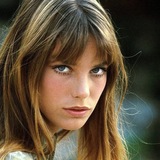
Jane Birkin (14 December, 1946 - 16 July, 2023), English-French actress, singer, model, and designer. She was one of the French fashion icons, especially in 1960s. Originally from England, she then moved to France and became a cultural symbol for both countries and the world. As an icon of "French girl" aesthetic, she was, and still, a source of inspiration for the chic, sophisticated, and effortlessly cool stereotypical image of French girls, for example her bangs. She had a prolific career in cinema, appeared in more than 70 films in various genres.
Her story with the legendary and highly controversial French singer-songwriter, Serge Gainsbourg was something that defined her. They met in 1968, on the set of the film "Slogan", Jane at 22 and Serge at 40, marked the beginning of their 13-year iconic relationship until 1980. At the film's premiere in 1969 with Serge, she was wearing a mini dress that, without her really realising it, was very transparent, which made her nipples visible especially with the flashes from many cameras. She told Vogue “I didn’t realise [the dress] was so transparent..."
It is important to remember that her success as a singer cannot be separated from Serge, in large part due to the erotically-charged song “Je t’aime… moi non plus" that he originally wrote for Brigitte Bardot. The song even got banned in several countries, haha. Relationship with Serge was not always that lovely, lots of drama because Serge was "a very difficult man to live with", said Jane, thus why they separated for his toxic relationship. Although not married, however, they had a daughter, Jane's second child, Charlotte Gainsbourg.
However, even so, she said "If you knew him you would have loved him. He was so funny ...with his bulging eyes... absolutely irresistible." Well, it was the reality. It's impossible to think of her without him, and also with that cult-like orgasmic, full of moans song, really. She was almost a one-hit wonder but apparently not like that. I myself know more about her films than her songs. They are very unique and in various genres. Try these if you are new: "Wonderwall" (1968), "Slogan" (1969), "La Piscine" (1969), and "Jane B. for Agnès V." (1988).
Although I personally think that her public image was sometimes too exaggerated, mostly because of Serge, she is one of my inspirations. Apart from that, she was also kind, an activist since her days in London, supporting immigration, environmental, women's, and LGBTQ+ rights. Jane ever said “My look is a cocktail, I’m not as nicely turned out as the French, but I don’t care like the English." Jane is that one "je ne sais quoi" girl, aesthetic, nonchalant, mysterious, but loved by many people. In this photo Jane Birkin was photographed in 1969.

Forwarded from Sofia Florina
Now I know how does that feel to make someone bleed. Well, I didn't start it, he started it, I was just defending myself.
Forwarded from Sofia Florina
You know that I have a particular disgust, enmity, and aversion towards my city and most of its people.
This media is not supported in your browser
VIEW IN TELEGRAM
When they, the capitalists, say that capitalism is the best economic model, well, apparently not. What has capitalism done to anyone except exploitation, exploitation, and exploitation? Also, don't forget the extreme wealth inequality and environmental destruction.
Capitalism is inherently exploitative, yes, because the capitalists accumulate wealth by paying workers less than the value their labour produces, a gap known as surplus value. Workers, who need wages to survive, are forced to create more value than they receive.
So, there are unpaid wages, and that is the main source of their profit. What does that mean? It's theft. The entire capitalism is based on this, prioritising profit over human welfare. As a result, basic needs are commodified, such as education, healthcare and housing.
Happy International Workers' Day, 1 May, 2026! Workers of the world, unite! ☭☭☭
Happy International Workers' Day, 1 May, 2026! Workers of the world, unite! ☭☭☭
This picture is a Soviet propaganda poster for International Workers' Day in 1963.
On this poster there is a crowd of workers in a long, continuous line of people from various skin colours marching forward over a big word "May" in Russian. Above them there are many red flags and a strikingly big and thick number "one" in red. To the left and right of the number is the writing "1 May" in several languages. On the bottom there is a block of writing in Russian "International Workers' Solidarity Day" followed by a short historical note about the origins of it in the late 19th century labour movement. The background of the poster is white but mostly dominated by red colour.
Michael Jackson, the King of Pop, becomes the number one global digital artist since 1 May, 2026, even 17 years after his death, driven by a surge in streaming following the release of the biopic "Michael" in April 2026. Michael's enduring cultural impact is indeed unmatched, he has fans that are not even born yet.