
Libra: we will continue to work successfully without PayPal, Visa, and Mastercard
David Marcus, CEO of the blockchain direction of Facebook, is sure that despite the departure of seven key partners from the Libra Association - PayPal, Visa, Mastercard, Stripe, eBay, Mercado Pago, and Booking - the project will continue to develop successfully. And those who left Libra now will return sometime after the launch.
Also, Marcus emphasized that the above-mentioned companies will continue to provide their services to the project, even without being members of the association - leaving does not mean breaking the cooperation. As an example, CEO Libra indicated the possibility of issuing cards for the Calibra payment system by Visa and Mastercard.
Marcus stressed that the main reason for the partners to leave the project, in his opinion, is no pressure from the US financial regulators, but the reluctance to take part in the launch of the cryptocurrency, which in itself implies serious responsibility to shareholders.
Recall, it became known earlier that 1,500 companies are already applying for Libra's retired partners, 180 of which fully meet Facebook’s selection criteria.
Bakkt to launch first US-regulated Bitcoin futures options
Bakkt's crypto-derivative platform this Thursday announced the launch date of options contracts for its deliverable bitcoin futures. According to the announcement, the first regulated options for bitcoin futures will enter the market on December 9.
According to Kelly Loffler, CEO of Bakkt, the decision to launch a new product was made based on “customer reviews and aimed at hedging or gaining access to bitcoin, creating revenue and increasing efficiency in the context of costs and capital”.
“Bakkt's bitcoin futures options are another important step towards developing this asset class for institutional investors, as well as their clients and investors,” she added.
When working with futures, both parties are required to fulfill the terms of the contract, however, the option gives its buyer the right, but not the obligation, to buy or sell the asset at a predetermined price at a certain point in the future. In this case, the option seller cannot refuse to fulfill the terms of the contract. He compensates for additional risks with the premium that the buyer gives him when concluding the contract.
According to Loeffler, ICE Futures US has used the self-certification of a new instrument to market it by the provisions of the US Commodity Futures Trading Commission (CFTC).
“We are committed to ensuring the trust and practical value of digital assets, and options contracts are an example of one of the many products we develop for regulated markets,” said CEO Bakkt.
Unlike Bakkt bitcoin futures, options contracts will allow platform clients to receive payments in traditional currency, which does not exclude the possibility of paying the cryptocurrency itself.
Loeffler also mentioned that on Wednesday Bakkt set a new record for the volume of trading in monthly bitcoin futures, amounting to about $ 4.8 million.
Earlier, the Chicago Mercantile Exchange (CME) reported its intention to launch bitcoin options.
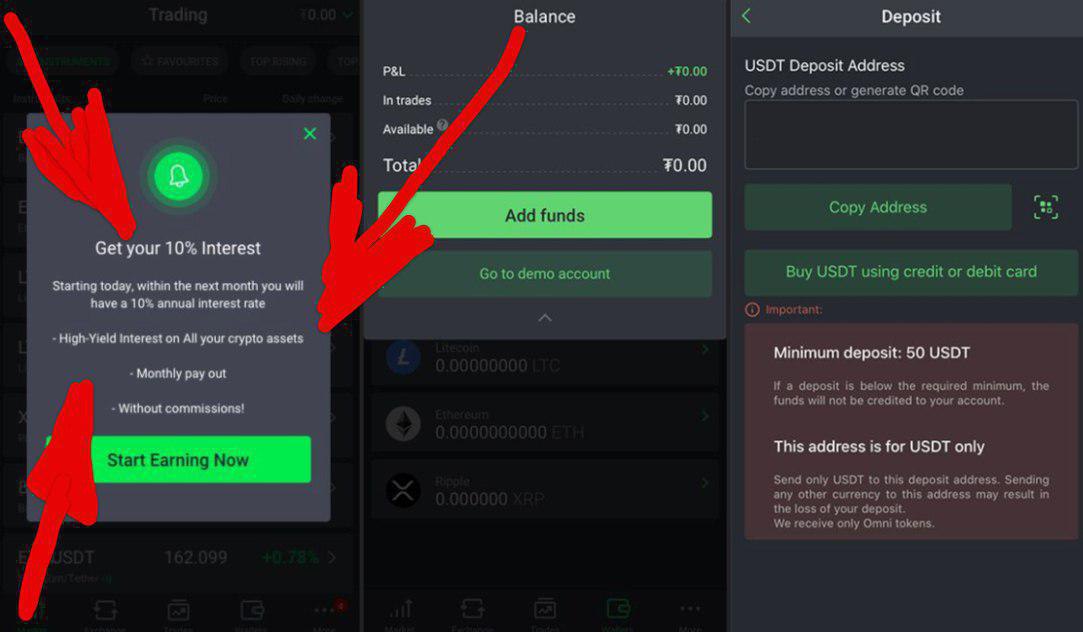
Earn 10% interest on your crypto deposits with StormGain! 🔥
We’re glad to announce an absolutely new era of making money on your crypto assets. Starting on 28 October, 2019, StormGain clients will receive guaranteed interest on their deposits equivalent or higher than 100 USDT.
Get guaranteed profit on your deposits in 4 simple steps:
▶️ Download the StormGain app for iOS or Android or register your account here.
▶️ Apply for the interest rate.
▶️ Deposit at least 100 USDT on your StormGain account.
▶️ Start making money with StormGain
Deposit via the link: http://bit.ly/2MWIMTT
Smart Bitcoin pinned «Earn 10% interest on your crypto deposits with StormGain! 🔥 We’re glad to announce an absolutely new era of making money on your crypto assets. Starting on 28 October, 2019, StormGain clients will receive guaranteed interest on their deposits equivalent…»
Tezos and tZERO tokenize real estate worth £ 500 million in the UK
The tZERO security token platform and the Tezos Foundation jointly tokenize £ 500 million as part of a planned construction project funded by the British company Alliance Investments.
“The offer of security tokens (STO) allows you to raise funds with a greater degree of efficiency, autonomy, democracy and lower costs than using traditional tools,” said Alliance Investments Investment Director Rani Zar. “We believe that we are at the forefront of technological change that could revolutionize the current funding paradigm.”
The first security token offer will take place in the first quarter of 2020 when tZERO will tokenize shares of £ 20 million in Manchester real estate under development.
“This is one large multi-story building, the first for the Alliance, but it is part of a large-scale conveyor that they intend to finance through STO,” said Roman Schneider, financial director of the Tezos Foundation.
The Tezos protocol will be used as the basic infrastructure for the issuance, transfer, and storage of digital assets, which will then be available on the secondary market of PRO Securities, a tZERO registered SEC unit.
Another real estate will be tokenized over several years, including residential premises, commercial property, and healthcare facilities.
Kadena High-Performance PoW Blockchain Launched
Brooklyn blockchain startup Kadena has launched the main PoW blockchain network with a stated goal of 10,000 Tps at low fees.
Most of the KDA native tokens will go to reward the miners, but the startup allocated another 30 million for two token sales on the CoinList site. The developers plan to raise up to $ 20 million.
As part of the first sale, the price of the token will be $ 1. At the same time, US residents, for example, will not be able to acquire an asset. In the second round, the startup will remove restrictions on investor residency and allow you to buy tokens at $ 0.50 with the term of mandatory retention until the end of 2020.
In the past, Kadena has already raised $ 15 million, including from Scalar Capital affiliated with Coinbase.
China allowed VeChain to track tea shipments
The government of Shuangjiang Province of China has published the approval of the blockchain platform for tea supply chain tracking, developed by VeChain.
VeChain has partnered with leading tea producers in the region and introduced its supply chain tracking platform to track the full path of tea from raw materials to consumers. Customers will be able to scan the QR code on the package or use NFC technology to verify the authenticity of the product.
The blockchain platform for tracking puer tea, developed by VeChain, was one of the first in the framework of the National Strategic Product Tracking System program launched by the Chinese government.
“We attach great importance to this platform, which tracks every package of tea, its origin and logistics, and which will increase the reputation and popularity of Yunnan tea around the world,” said Lu Xiuyan, a spokesman for the Ministry of Commerce
Ethereum is experiencing an increase in block time and a drop in rewards amid activation of a difficulty bomb
The Ethereum network sharply began to produce less ether than, for example, two weeks ago. The number of rewards for miners per day decreased from 13,500 ETH to 12,500 ETH, according to etherscan.
As you can see in the graph above, in 2016, miners earned 30,000 ETH per day. This value was reduced to 20,000 ETH at the end of 2017 by updating the network and to 14,000 ETH at the beginning of this year.
Recently, the network has not been updated in order to reduce emissions, while the block time has increased by about one second, despite a simultaneous increase in the hash rate.
It's all about activating a complexity bomb, Trustnodes portal notes. The complexity bomb is an algorithm established at the protocol level that increases the amount of computing power needed to detect a block after the release of a given number of blocks.
The jump in 2017 is connected with the activation of the complexity bomb in March-April. For a six-month period, by October, the block time then rose from 14 seconds to 30. The difficulty bomb was activated again in December 2018, and by February the block time reached 20 seconds. After that, it was postponed for another year, and now we can again observe an increase in the block time from 13, and at a certain moment, from 12 seconds.
At first, the complexity bomb begins to act very slowly, but over time it grows exponentially and in the long run reaches a point where it is almost impossible to get a block. Thus, it can be expected that another six months will pass before the value grows to 30 seconds, that is, by May, and then by the fall, it will reach one minute.
With a block time of 30 seconds, Ethereum emissions will decrease slightly more than half, and once they reach one minute, they will again fall by half, i.e. to about 4,000 ETH per day. It is noteworthy that earlier the founder of Ethereum Vitalik Buterin proposed reducing Ethereum emissions by 2/3 by the end of next year.
It is possible that the developers will decide not to carry the complexity bomb at all this time, in order to motivate the miners not only not to interfere with the existing network, for example by activating the ProgPoW algorithm, but also actively support the development of Ethereum 2.0, perhaps even provide funding so as not to wait for the total drop in emissions.
The Ethereum update, which is due to take place in a few weeks, does not provide for the transfer of a complexity bomb. Therefore, this can happen only after six months, when the next hard fork will be activated. Then, hopefully, decentralized control points will be launched for the new network based on the Proof-of-Stake consensus algorithm.
Interestingly, against the backdrop of these events, Ethereum began to grow again in relation to bitcoin.
This can be explained both by a game of advancing market participants that take into account the activation of a complexity bomb, and a decrease in the cryptocurrency supply. From the position of miners, a drop in emissions is not such a disastrous event if it is compensated by fiat currency, and for holders, this option will become even more profitable.
At the same time, an increase in block time leads to a decrease in the ability of the network to process data. Nevertheless, the current restrictions are set precisely taking into account the block time and can be changed if necessary. The only negative effect will be an increase in transaction confirmation time. On the Bitcoin network, the release of one block on average takes 10 minutes, while for Ethereum, one minute can be a viable approach, especially if it is a temporary measure.
Given the current dynamics, Ethereum can undergo halving even earlier than Bitcoin.
Shanghai branch of the People's Bank of China proclaims the fight against bitcoin trading
The Shanghai branch of the People’s Bank of China this Friday published a notice on the official website of the department that it will pursue cryptocurrency exchanges in its jurisdiction.
The regulator promises "to take monitoring measures, including interrogations and checks, and to prohibit the activities of entities falling into his field of vision-related to virtual currencies in order to timely eliminate the corresponding risks."
The bank notes that cryptocurrency speculation is growing amid the advancement of blockchain technology, and urges investors not to confuse these two concepts.
“There are many risks in the field of financing through the issuance of digital currencies and their exchange, including the risks of false assets, the risks of a business collapse, the risks of investment speculation and so on. Investors should pay close attention to preventing such risks and beware of fraud, ”the publication said.
According to the Shanghai branch, people involved in securing the turnover of Bitcoin, Ethereum and other virtual currencies, as well as participating in related activities, violate a number of provisions of the law, including unlawful fundraising, issuing unregistered securities, organizing fraudulent schemes and financial pyramids, which ultimately seriously harm the economic well-being of the country.
This week, Shanghai authorities, including a Central Bank unit, conducted an audit aimed at identifying cases of illegal trade in cryptocurrencies and the distribution of tokens issued through the infrastructure of foreign platforms.
In addition, today the Shenzhen administration announced its own investigation, during which it managed to detect 39 illegal platforms for exchanging digital currencies.
Gladius, a cybersecurity blockchain startup, has shut down, failing to comply with the U.S. Securities and Exchange Commission (SEC) request for a refund to investors. Suspension notice was sent out by co-founder and technology director Alex Godwin to Telegram.
In a statement on behalf of the Gladius team, Godwin writes: “We regret to inform you that Gladius Network LLC has stopped its activity from this moment and is submitting documents to eliminate legal education. Despite all our efforts, the company did not have the money left to continue its operations. ”
Earlier, the US Securities and Exchange Commission accused Gladius of selling unregistered securities. The project raised about $ 12.7 million during the token sale in late 2017. The SEC decided not to impose penalties on him, taking into account the fact that Gladius voluntarily reported the violations.
“The SEC did not impose a penalty because the company independently reported the violation, agreed to return the money to investors and register the token as a security.”
Last week, it became known that Gladius was among the startups that did not fulfill the terms of the agreement with the SEC, and did not pay off with investors.
German banks will be able to store and sell cryptocurrency from 2020
Previously, banks were forbidden to offer direct access to crypto assets, but a new law implementing the Fourth EU Anti-Money Laundering Directive will change that. The local business newspaper Handelsblatt reports that the bill has already been passed by the German Federal Parliament, the Bundestag, and is expected to be signed by 16 states.
The bill is wider than previously planned, the publication said. Initially, banks were not allowed to act as crypto custodians, and they had to rely on external custodians or special subsidiaries.
Sven Hildebrandt, head of the DLC consulting company, welcomed the news, telling Handelsblatt: “Germany is on the way to becoming a cryptocurrency. The German legislator plays an innovative role in regulating [crypto assets]. ”
The German banking association BdB believes that this bill will allow investors to invest in digital assets through funds from Germany, without the need to withdraw their money abroad. BdB also spoke positively about custodial capabilities:
Credit institutions have extensive experience in safeguarding customer assets and managing risk, are committed to protecting investors, and are always controlled by financial supervision. Thus, banks will be able to effectively prevent money laundering and terrorist financing while working with crypto assets.
Elliptic: 0.2% of XRP transactions are related to illegal activities, mainly pyramids
Elliptic, an analytical firm has identified illegal transactions using XRP cryptocurrencies totaling over $ 400 million. A significant part of them is connected with financial pyramids and other fraudulent schemes.
According to Elliptic co-founder Tom Robinson, their company was the first to offer XRP transaction monitoring services and has already discovered several hundred accounts related to illegal activities. In total, only 0.2% of XRP accounts for illegal transactions.
However, their focus is different, for example, from bitcoin, which is mainly used in darknet markets, while XRP is more often featured in questionable schemes for fast enrichment. “I suspect there are many retail investors among XRP holders, which is why they are becoming an attractive target for scammers,” said Robinson.
He also claims that the XRP blockchain has a unique structure, which is why Elliptic had to spend more time creating monitoring solutions than for bitcoin or Ethereum.
“When we decided to add another asset, our choice was dictated by customer demand, which is primarily due to market capitalization and cryptocurrency trading volume. XRP was the obvious solution, ”added Robinson.
In September, Elliptic attracted investments from Morgan Creek Digital and Avon Ventures, a Fidelity Investments affiliate.
Huawei will install HarmonyOS on smartphones in 2020
At a press conference at Huawei CEO, Wang Chenlu confirmed that next year the company will bet on the HarmonyOS operating system. However, he did not say which particular models would work on it.
Nevertheless, other important details became known. Firstly, HarmonyOS will not replace Android, the Google operating system will continue to be used as the main one. Secondly, the new OS will enter the international market.
This is not the first time that one of the major manufacturers is trying to introduce a new operating system for its smartphones as an alternative to Android OS. Samsung also tried to do something similar with the Tizen OS, but then the situation was completely different.
They released a limited series of smartphones and quickly realized that this was a big mistake. Soon, the brand abandoned the idea of installing its OS on smartphones.
Chainalysis: cryptocurrency payment processing grew by 65% in the first half of 2019
Chainalysis conducted a study and found that the number of transactions through 16 processing services increased by 65% from the beginning of this year to July. Moreover, bitcoin accounts for about 89% of transfers.
The current dynamics are fundamentally different from those that Chainalysis observed last year when the use of bitcoin in retail trade was declining. This time, the company decided to also analyze transactions in Tether, Litecoin and Bitcoin Cash.
“The current results of the study may signal that confidence in cryptocurrencies is growing steadily,” said Kim Grauer, senior economist at Chainalysis.
The field of retail payments using cryptocurrencies is developing steadily. Recently, the Intercontinental Exchange announced plans to launch consumer cryptocurrency payments based on its Bakkt platform in the first half of next year. For this, a partnership with Starbucks has been entered into. BitPay and other processing services are constantly adding support for new coins, this also increases the number of transactions.
The total amount of cryptocurrency payments in commercial activities in July amounted to approximately $ 5.5 million per day, in January the indicator was in the region of $ 3 million.
Analysts also note that the stablecoin Tether has become more often used in commercial transactions - over the study period, the number of transfers increased by 5 times. From January to July, USDT accounted for about 9% of such payments.
⚡️2 great contests from SwapZilla — unique infrastructure solution that revolutionizes crypto trading.⚡️
🎬 Swapzilla Video Contest 🎬
Create a video and win up to $1500
How?
Create a creative video
Upload it to the YouTube and send us a link
Make your video popular and get up to 1500 USDT +
qualifying contestants will get a guaranteed 25 USDT!
Competition conditions
💰 Win up to 5 ETH every day💰
Each participant has an opportunity to receive up to 5 ETH daily and up to 10% of the total amount raised monthly.
How?
After purchasing SwapZilla tokens, you will be automatically added to the list of contest participants.
If you have bought at least 25 SWZL, then on this day, you will get an opportunity to win up to 5 ETH.
Competition conditions
Do not miss the opportunity to get up to 5 ETH every day or up to 1500$ for your video!

The Poloniex exchange, breaking out of the tenacious clutches of Circle startup owned by the bankers, announced that from now on all its customers will become class 1 customers.
All new customers, having registered on the exchange only by email address, do not need identification procedures. Now, a Seychelles-registered exchange is going against the wool of tightening control over customers of crypto exchanges around the world.
For unverified users, the number of funds entered and trading is unlimited. There is only a limit on the withdrawal of funds, not more than $ 10K per day.
Also, all the methods of input-output of fiat from cards and accounts work. Fantasy.
It's simple, just one, two, three.
Enter your e-mail, come up with a password, trade!
The question of reliability remains. Good old Poloniex now belongs to Seychelles offshore. Whether its owner is going to India, for example, with private keys from wallets. How did the founder of the infamous Quadrigacx exchange?
Chinese IT giant Tencent forms a team to study virtual currencies
Chinese Internet giant Tencent has allegedly formed a team to explore new applications for digital currencies, CoinDesk reports citing local media.
According to their information, the company sent notifications to its employees, where it announced the search for a manager for a new unit, which will be part of its payment wing. The team will study the possibilities of using digital currencies on the Tencent payment platform and other commercial scenarios. Also, her tasks will include studying the place of cryptocurrencies in the current regulatory system.
The activities of the group will be aimed at supporting government initiatives in this area. Allegedly, the People's Bank of China sees Tencent as a contender for the role of the issuer of the digital renminbi. Media reports also reported that the new unit will take part in pilot tests of digital currency in Shenzhen.
Tencent did not refute these reports but declined to comment further.
Tencent-controlled WeChat Pay accounts for about 40% of China’s multi-trillion mobile payment industry. Over 900 million people used WeChat Pay in 2017.
In November, the company announced preparations for the launch of its virtual bank to provide financial services using blockchain technology.
Mati Greenspan: Ripple has a serious competitor in the face of USC
Matum Greenspan, the founder of Quantum Economics, has entered into an argument on Twitter with an army of XRP fans. First, he shared his opinion that he discovered 2 main problems with the XRP token and its price, and then proposed a scenario in which the central bank of each country has its own digital currency (CBDC).
The XRP community immediately began to “preach” about XRP. In response, Mati Greenspan dedicated this opinion to the daily newsletter and talked about the problems that XRP may face in the short term.
XRP community misunderstands
Mati Greenspan refers to his tweet about CBDC and says that the XRP community misunderstood his point of view, but he gives them that, and that’s why he shares yesterday’s newsletter.
“When I tweeted yesterday about the central bank’s digital currencies, I actually talked more about the reluctance of the US dollar to innovate.”
Greenspan was surprised that the army of fans of XRP believes that all central banks will need an “intermediate currency”, believing that it is XRP that is perfect for this role. Mati Greenspan mentions a statement by Bank of England head Mark Carney, who noted that central banks may actually use digital currencies in the future. However, Carney did not speak of XRP as an intermediate currency.
CTO Bitfinex Explains the Nature of an Unknown $ 1 Billion Bitcoin Transfer
Whale Alert's Twitter account this night recorded a move of 123,447 BTC or more than $ 1 billion at the current rate between two unknown wallets.
This event aroused the considerable interest of observers, and some of them even began to suggest that Craig Wright, who is supposed to receive the keys to the multi-billion dollar state in Bitcoin, maybe behind the transfer.
Earlier, the plaintiffs in the case against Wright said that he had complied with the court order and provided a list of bitcoin addresses, however, they still do not have tools to gain access to assets on these wallets.
Paolo Ardoino, technical director of the Bitfinex cryptocurrency exchange, intervened in the discussion, saying that the transfer was initiated by the trading platform in order to replenish the hot wallet.
Wright's lawyers, meanwhile, are asking to reject the plaintiffs' request for a postponement of further legal proceedings for 90 days. They see this as an attempt to delay the proceedings for no apparent reason and note that Wright should submit a dissertation in June, so visiting the court at this time may interfere with his plans.
Bitfinex, in turn, recorded a 40 percent decline in the volume of long positions on Bitcoin since the beginning of the year after reaching maximum levels in December.
In previous days, Whale Alert noted multiple transfers of large amounts of bitcoin from unknown wallets to cryptocurrency exchange wallets, including Coinbase, Bitstamp and Binance. Despite this, the price of bitcoin remains relatively stable after its recent rise and holds above $ 8,600.
LocalBitcoins suspended service for residents of several countries due to EU requirements
An alarming trend, from time to time making itself felt in the centralized elements of the cryptocurrency ecosystem, has received yet another confirmation. According to the BitcoinKE crypto portal, the LocalBitcoins peer-to-peer exchange has limited access for users from several countries.
The message sent to clients contains a list of regions where, in accordance with the requirements of the European Commission, LocalBitcoins decided to implement an “enhanced legal examination process”. It includes Afghanistan, American Samoa, The Bahamas, North Korea, Ethiopia, Ghana, Guam, Iraq, Libya, Nigeria, Pakistan, Panama, Puerto Rico, Samoa, Saudi Arabia, Sri Lanka, Syria, Trinidad and Tobago, Tunisia, US Virgin Islands and Yemen.
While residents of some countries on this list were no longer able to use LocalBitcoins due to current international restrictions, others were included in it for the first time.
In addition, users from countries that are not on this list report problems. So, a trader from Uganda confirmed that he, like everyone else, was offered to wait for the introduction of a new account activation process or close it and get their bitcoins.
“At first I noticed that all the offers in GHS for Ghana were completely removed from the site,” said another trader. “Then, trading volumes dropped significantly.”
A number of Twitter users have confirmed that they receive emails of the same content from LocalBitcoins.
Earlier, mandatory verification of users was introduced at LocalBitcoins and the possibility of exchange in person was eliminated. LocalBitcoins, as a Finnish company, has to comply with the Fifth EU Anti-Money Laundering Directive and comply with other applicable requirements.