<b>Game Of My Life #01: VENI, VIDI, JAVI</b>
In a highly competitive Supercup final against FC Chelsea, FC Bayern managed to get a taste of revenge for the lost Champions League <em>Finale dahoam</em>.<em>Article written by Katrin.</em>Anything but Chelsea!, many FC Bayern fans may have thought recently when the UEFA Champions League round of 16 was drawn. The lost Champions League final in 2012 against the Blues obviously left a permanent mark and remains one of Bayern’s biggest traumas in recent history – despite winning the treble a year later.But Bayern also had thrilling and exciting games against Chelsea with a happy ending. The UEFA Supercup in August 2013 is definitely one of them.15 months after losing against Chelsea in the Champions League final in a dramatic penalty shootout at home, the two finalists were to meet again in the Supercup, albeit under different circumstances: Bayern Munich had finally clinched the Champions League title in 2013, while the Blues had won the Europa League.With Pep Guardiola, who had replaced Jupp Heynckes as Bayern Munich’s coach, the team was dead set on not letting Chelsea take away yet another title from them, and every single fan longed for a little redemption, no matter how small.<a href="https://miasanrot.com/wp-content/uploads/sites/2/2019/12/FCBCHE2013en-650x650.png">Media</a><a href="#in-case-you-missed-it">In case you missed it<a href="#the-starting-lineups">The starting lineupsBayern started the 2013/14 season with three wins. But in the last game before the Supercup, which took place in the Eden Arena in Prague, they had only managed a 1:1 draw against Freiburg.Bastian Schweinsteiger, the tragic hero of the 2012 Champions League final, was sidelined for the Supercup – he suffered an ankle injury against Freiburg – and thus, Pep Guardiola was forced to experiment. He began with a 4-1-4-1 formation: Toni Kroos took over the role as holding midfielder, and Philipp Lahm also moved into midfield. Rafinha started as right back.<a href="#first-half">First halfBayern’s start into this game was anything but ideal. In the 8th minute, the Blues used their first counter attack to score the opening goal: Alaba had moved forward and therefore left Andre Schürrle with too much space to pass the ball to Torres who finished emphatically. With the lead in their pocket, Chelsea let Bayern control the game and mostly waited for chances to hit them on the break.As a result, Bayern had more possession of the ball but only few goalscoring opportunities because Chelsea’s defense remained solid – it was Franck Ribery, Europe’s newly chosen Player of the Year, who looked most dangerous in front of the goal. Bayern’s best chance in the game came in the 22th minute when the Frenchman took a shot at goal after a superb one-two with Mandzukic, but goalkeeper Cech was able to turn the ball away. In the 38th minute, Thomas Müller only hit the side netting after a fine pass from Robben.Guardiola reacted quickly and directed Kroos and Lahm to switch positions, which was a better fit for Kroos because his defensive skills are not as refined as his ability to pass, cross and steer the game. Nevertheless, Bayern was one goal down by halftime.<a href="#second-half">Second halfAlmost immediately after the beginning of the second half, Ribery rewarded himself for his efforts in the first 45 minutes by scoring a goal from 20 metres (47th minute). He sprinted to the sideline to celebrate his goal with Pep Guardiola. Their tight embrace almost resembled a wrestling match. Shortly afterwards, Martinez replaced Rafinha whose performance had been mediocre. As a result, Lahm moved back to his usual position, and the Spaniard took over as holding midfielder. That way, Kroos was covered defensively and Müller could interpret his role more openly. Bayern now controlled the game, while Chelsea focused on their defense.<a href="https://miasanrot.com/wp-content/uploads/sites/2/2019/12/Bayern-Muenchen-v-Chelsea-UEFA-Super-Cup…
In a highly competitive Supercup final against FC Chelsea, FC Bayern managed to get a taste of revenge for the lost Champions League <em>Finale dahoam</em>.<em>Article written by Katrin.</em>Anything but Chelsea!, many FC Bayern fans may have thought recently when the UEFA Champions League round of 16 was drawn. The lost Champions League final in 2012 against the Blues obviously left a permanent mark and remains one of Bayern’s biggest traumas in recent history – despite winning the treble a year later.But Bayern also had thrilling and exciting games against Chelsea with a happy ending. The UEFA Supercup in August 2013 is definitely one of them.15 months after losing against Chelsea in the Champions League final in a dramatic penalty shootout at home, the two finalists were to meet again in the Supercup, albeit under different circumstances: Bayern Munich had finally clinched the Champions League title in 2013, while the Blues had won the Europa League.With Pep Guardiola, who had replaced Jupp Heynckes as Bayern Munich’s coach, the team was dead set on not letting Chelsea take away yet another title from them, and every single fan longed for a little redemption, no matter how small.<a href="https://miasanrot.com/wp-content/uploads/sites/2/2019/12/FCBCHE2013en-650x650.png">Media</a><a href="#in-case-you-missed-it">In case you missed it<a href="#the-starting-lineups">The starting lineupsBayern started the 2013/14 season with three wins. But in the last game before the Supercup, which took place in the Eden Arena in Prague, they had only managed a 1:1 draw against Freiburg.Bastian Schweinsteiger, the tragic hero of the 2012 Champions League final, was sidelined for the Supercup – he suffered an ankle injury against Freiburg – and thus, Pep Guardiola was forced to experiment. He began with a 4-1-4-1 formation: Toni Kroos took over the role as holding midfielder, and Philipp Lahm also moved into midfield. Rafinha started as right back.<a href="#first-half">First halfBayern’s start into this game was anything but ideal. In the 8th minute, the Blues used their first counter attack to score the opening goal: Alaba had moved forward and therefore left Andre Schürrle with too much space to pass the ball to Torres who finished emphatically. With the lead in their pocket, Chelsea let Bayern control the game and mostly waited for chances to hit them on the break.As a result, Bayern had more possession of the ball but only few goalscoring opportunities because Chelsea’s defense remained solid – it was Franck Ribery, Europe’s newly chosen Player of the Year, who looked most dangerous in front of the goal. Bayern’s best chance in the game came in the 22th minute when the Frenchman took a shot at goal after a superb one-two with Mandzukic, but goalkeeper Cech was able to turn the ball away. In the 38th minute, Thomas Müller only hit the side netting after a fine pass from Robben.Guardiola reacted quickly and directed Kroos and Lahm to switch positions, which was a better fit for Kroos because his defensive skills are not as refined as his ability to pass, cross and steer the game. Nevertheless, Bayern was one goal down by halftime.<a href="#second-half">Second halfAlmost immediately after the beginning of the second half, Ribery rewarded himself for his efforts in the first 45 minutes by scoring a goal from 20 metres (47th minute). He sprinted to the sideline to celebrate his goal with Pep Guardiola. Their tight embrace almost resembled a wrestling match. Shortly afterwards, Martinez replaced Rafinha whose performance had been mediocre. As a result, Lahm moved back to his usual position, and the Spaniard took over as holding midfielder. That way, Kroos was covered defensively and Müller could interpret his role more openly. Bayern now controlled the game, while Chelsea focused on their defense.<a href="https://miasanrot.com/wp-content/uploads/sites/2/2019/12/Bayern-Muenchen-v-Chelsea-UEFA-Super-Cup…

<b>MSR awards: most improved player of the season 2019/20</b>
There was no shortage of candidates to choose from for our “most improved player of the season” award. Jérôme Boateng, for example, to whom it was intimated publicly by the club hierarchy during last season’s official championship festivities that he should leave the club, is now well-nigh world class again. David Alaba has made impressive progress both on the pitch and as a human being. Had he yet been a frequent source of concern before the season, he has since become Bayern’s main man in the back four and an absolute leader. Thomas Müller and Leon Goretzka, too, could lay a fair claim to this award. But at the end of the day, the Canadian up-and-comer simply ran away with the prize.When news of Bayern’s interest in Lucas Hernandéz broke about a year ago, most people nodded their heads in approvement. He was seen not only as an excellent centre-back, but also as a fitting addition to the squad to fill the vacancy at left-back behind David Alaba that had not been properly filled since the departure of Juan Bernat. But things took a different turn. Now neither David Alaba nor Lucas Hernandéz play at left-back, but an altogether different player has grabbed public attention in spectacular fashion in that position.<a href="https://miasanrot.com/wp-content/uploads/sites/2/2020/08/mostimprovedplayer2020-650x650.png">Media</a><strong>Alphonso Davies – Entwicklung der Saison 2019/20</strong>
(Render Image: Lars Baron/Bongarts/Getty Images); Background Image: GLYN KIRK/AFP/Getty Images)<a href="#the-beginnings"></a>The beginningsWhen sporting director Hasan Salihamidžić introduced Alphonso Davies as Bayern’s freshest addition to the squad during the summer tour of 2018 in the US, nobody quite new what to make of that. Although s considerable <a href="https://twitter.com/Goalimpact/status/985473397336494080">Goalimpact</a> score for a 16-year old and the general mood were largely <a href="https://miasanrot.de/scouting-report-alphonso-davies/">positive</a>, there was a latent suspicion that a so far non-descript sporting director was trying to bolster his public image by pulling off a spectacular stunt. And so a few months later a young Canadian football player went on his journey to Munich, in his bag a meanwhile well-known life story that has earned him the sympathies and the hearts of everyone in a way that few other young players ever do. Yet what matters on the field at Bayern are not endearing origin stories, but proper super hero skills.Davies took the first steps in his new surroundings in Bayern’s second team and in first team training, without, however, leaving much of a mark. Sure, he played a small role in the second team promotion run, but the sporting equivalent of the millions of Euros Bayern had dished out for him remained conspicuously hidden. And lo and behold, it did not take the tabloid media long to begin remarking that his efforts in training were rather sobering to observe.Looking back now, Davies is a prime example of how one can be tempted to judge a young player’s talent prematurely. If they do not perform as well as expected in the fourth division, this can be due to wider problems with the team and not their lack of individual quality. This is true for Alphonso Davies, as it is for the players competing for the teams of the UEFA Youth League. Perhaps it is not down to a lack of individual quality of the players when Bayern lose to Dinamo Zagreb, but to a scattershot composition of the squad. The judgement of youth teams may generally need to be done with a bit more circumspection than it sometimes appears to get.<a href="#first-steps-in-autumn"></a>First steps in autumnFrom a lukewarm pre-season preparation, Davies emerged as one of the winners. Already back then there were first glimpses of Niko Kovač’s (and Hansi Flick’s?) idea to pull him back from winger to full-back. But when the various competitions commenced, his situation seemed…

<b>15 YEARS FULL OF TITLES, TEARS, AND TRIUMPHS</b>
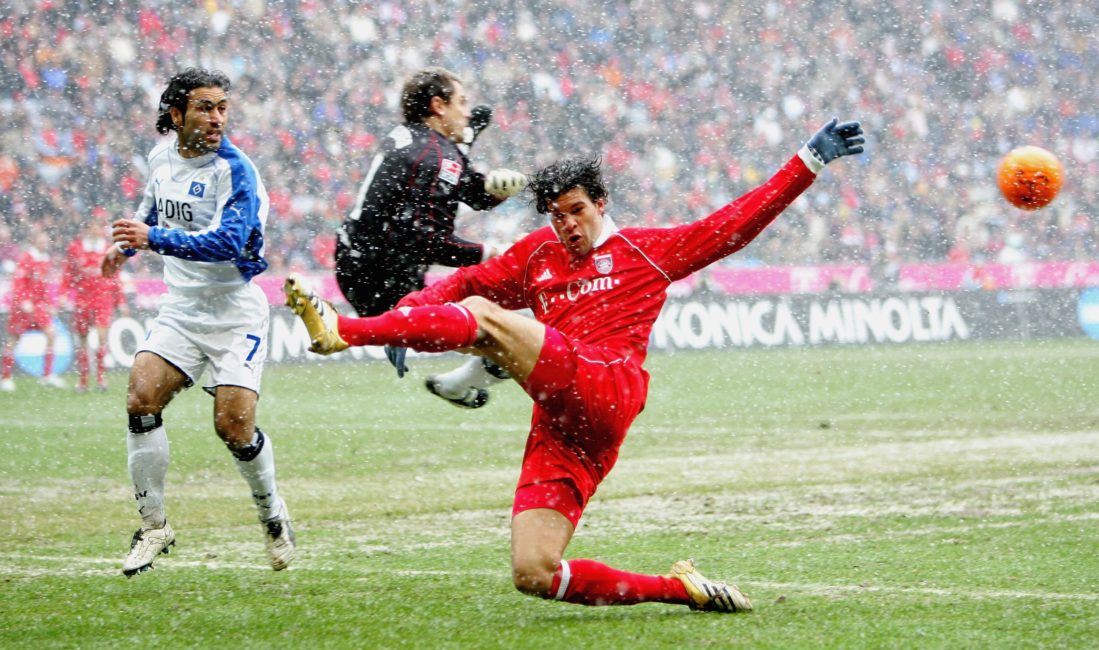
For 15 years, the home of FC Bayern Munich has been a red and white air cushion at the Fröttmaning Autobahn exit. A lot has happened in the meantime: a fairytale World Cup, a forbidden final, a blue exodus, and much more. The Miasanrot editorial staff looks back.It was with a heavy heart that the Bayern family left the Olympiastadion in early summer 2005 after it had been the home of the German record champions for decades. Now they left the center of the city for the north of Munich – into a spaceship.The highlights from the last fifteen years in quick succession are: May 30, 2005: Official opening game by TSV 1860. May 31, 2005: First match of FC Bayern (against the national team). July 26, 2005: First competitive match in the late DFB League Cup. August 5, 2005: First Bundesliga game of Bayern. June 9, 2006: World Cup opening game. May 19, 2012: Lost in history. 2012 and 2014: Increase to 75,000 seats. July 2017: 1860 move out.On the occasion of the 15th anniversary of the Allianz Arena, we asked our editorial staff and a number of guest authors to provide us with a special memory of theirs of the Arena. Stories about tears, shoot-outs and a particularly cold snowstorm.<a href="#first-defeat-in-a-snowstorm">FIRST DEFEAT IN A SNOWSTORMBy Günter KleinOne of the main reasons why FC Bayern did not to like the Olympiastadion any more was that when the weather was bad, you got soaked to the bone there. The opposite stand did not have a roof, but the wind drove the nasty rain onto the main stand as well. The VIPs in particular were exposed to this, which is why they always were equipped with blankets in FC Bayern red. The hope was that the Allianz Arena’s thorough protection from the elements would radiate comfort from now on. Wind, rain, snow – no more!And so 2005/06 rolled around, the first season in Fröttmaning – the big weather test. Alas, the Arena did not pass it. However: It was a particularly severe winter; two games remained in my memory.The first one came on February 12, 2006, a Sunday evening. FC Bayern played host to the 1st FC Nürnberg, they won 2-1, business as usual. But despite the win, the game must have been a huge disappointment for the crowds, because they had to realize that their new stadium could not protect them from extreme weather conditions. The day saw heavy snowfall with thick flakes which a stiff wind blew high up to the press gallery in what was supposed to be the actually protected upper area of the first stand. A white wet mush settled on the desks and the keyboards of the laptops everywhere. Another handicap for me was that I had returned from a skiing vacation with a broken thumb and had my left hand in a casket, which made typing difficult anyway. I even had to get out of my insulating jacket with one arm because my padded hand did not fit through the sleeve. In my way home, I cursed a bit about the Arena, but thought I had the worst game of the season behind me.Then three weeks later, March 4, 2006: This date occupies a prominent place in the history of FC Bayern and the Allianz Arena because the team suffered their first Bundesliga defeat there. 1-2 against Hamburger SV (if you believe it). In the Mixed Zone – unforgettable – the then still active Hamburger Abendblatt reporter Dieter Matz told the astonished young players about other great victories in the history of the HSV. For once, the tables were turned: A journalist tells, the players listen. In the 89th minute, HSV scored the winning goal through Nigel de Jong. Deserved. They had led until the 83rd minute before Bayern drew level through Mehmet Scholl. At this time, the HSV had not yet become the laughing stock it later would become.<a href="https://miasanrot.de/wp-content/uploads/2020/08/bayern-munich-v-hamburger-sv-1099x650.jpg">Media<strong>Amidst heavy snowfall FC Bayern lose their first game in the Allianz Arena. Among the spectators: A thoroughly frozen Günter Klein.
</strong>(Image:…