
<b>Game of my Life #08: The final act for “Effe” and Co.</b>
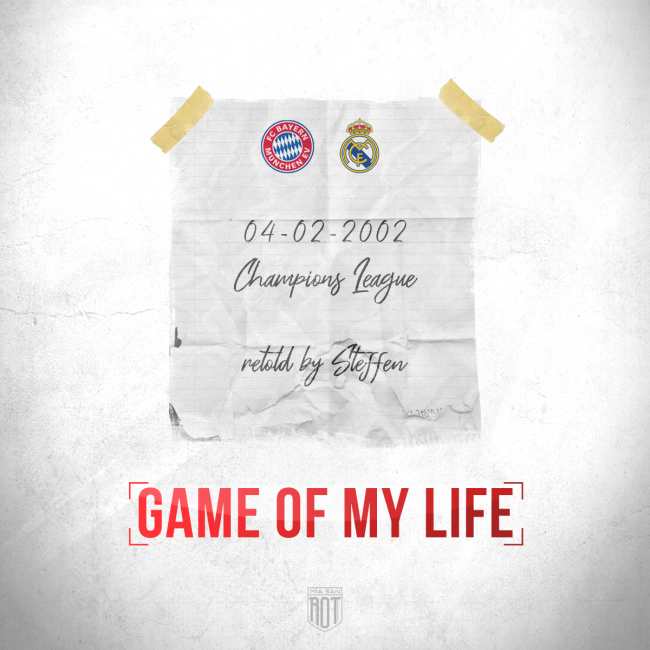
FC Bayern’s comeback against Real Madrid in the in the Champions League quarter-finals on 2 April, 2002 was the final chapter of a golden era.Bayern was going through a slump after a lofty three year high with three Bundesliga championships in a row and the Champions League Triumph in 2001. They were third in the league at the beginning of April, seven points behind leaders Leverkusen. They had already been kicked out of the DFB-Pokal by Schalke, and they had been struggling in the Champions League as well. Yet despite a couple of patchy performances against Prague, Nantes, and Rotterdam, they survived both group stages relatively comfortably and had qualified for the quarter-finals.<a href="#what-the-game-meant"></a>What the game meantFC Bayern against Real Madrid. This was probably the most emblematic duel of elite European football at around the turn of the century. Both teams had met no fewer than six times only in the period from 1999 to 2001. FC Bayern were victorious in five of these matches, among them a legendary 2-4 away win at the Bernabeu in the spring of 2000 that turned Bayern into something of Real’s bogey team of the time (“la bestia negra”).Real, who had won the Champions League two times in 1998 and 2000, made one landmark transfer after another during this period. In 2000, they signed Luis Figo for €60m from Barcelona. In 2001, they signed Zinedine Zidane for €77m from Turin. Ronaldo (the original one) and David Beckham followed in the years after. So even though Bayern were the title holders, they were the outsiders for the game just like so often before.<a href="https://miasanrot.com/wp-content/uploads/sites/2/2019/12/FCBRMFC2002en-650x650.png">Media</a><a href="#in-case-you-missed-it"></a>In case you missed it<a href="#the-starting-lineups"></a>The starting lineupsFigo was ruled out with an injury, so the team’s backbone consisted of Roberto Carlos at left-back, Zinedine Zidane in the center of midfield, and Raul in attack in a slightly asymmetrical 4-2-3-1 formation. The always underrated Claude Makélélé as the pivot provided stability in defensive midfield.Bayern’s first eleven was still full of players from the 2001 title winning squad. Of the new arrivals, only Robert Kovač made the first team. Ottmar Hitzfeld had finally made the switch to a straight back four before the season. For years, Lothar Matthäus had played in a sweeper role positioned slightly behind or in front of of his defensive line. Patrik Andersson had followed him in a similar role as part of a back three. After he had left the club in the summer of 2001, a straight line of four at the back became more common with Frenchmen Sagnol and Lizarazu in the wide positions. Effenberg and Jeremies played in the center of midfield and Santa Cruz was given a start in attack next to Giovane Elber. Paulo Sergio added to the front line’s firepower with frequent attacking runs on the left wing. Owen Hargreaves was tasked with disrupting Zidane’s and Roberto Carlos’s efforts on the right side of the pitch and supporting Bayern’s build-up game. Hasan Salihamidžić had to make do with a place on the bench due to a muscular injury alongside regular goal scorer Pizarro. With Fink, Linke and Niko Kovač, the set of substitutes had a decidedly defensive character.<a href="#the-first-half"></a>The first halfIn the game’s early stages, both teams’ respect for each other was clearly evident. Zidane in particular always drew a great deal of attention to himself whenever he touched the ball. Bayern’s players obviously put great emphasis on blocking his forward moves and switches of the play. Going forward, Bayern acted with extreme caution and tried to hit long balls in the general direction of Fernando Hierro, who had already had problems with the very nimble Giovane Elber in earlier games. Bayern’s efforts, however, remained fruitless at first.Geremi put the visitors in front in the…
FC Bayern’s comeback against Real Madrid in the in the Champions League quarter-finals on 2 April, 2002 was the final chapter of a golden era.Bayern was going through a slump after a lofty three year high with three Bundesliga championships in a row and the Champions League Triumph in 2001. They were third in the league at the beginning of April, seven points behind leaders Leverkusen. They had already been kicked out of the DFB-Pokal by Schalke, and they had been struggling in the Champions League as well. Yet despite a couple of patchy performances against Prague, Nantes, and Rotterdam, they survived both group stages relatively comfortably and had qualified for the quarter-finals.<a href="#what-the-game-meant"></a>What the game meantFC Bayern against Real Madrid. This was probably the most emblematic duel of elite European football at around the turn of the century. Both teams had met no fewer than six times only in the period from 1999 to 2001. FC Bayern were victorious in five of these matches, among them a legendary 2-4 away win at the Bernabeu in the spring of 2000 that turned Bayern into something of Real’s bogey team of the time (“la bestia negra”).Real, who had won the Champions League two times in 1998 and 2000, made one landmark transfer after another during this period. In 2000, they signed Luis Figo for €60m from Barcelona. In 2001, they signed Zinedine Zidane for €77m from Turin. Ronaldo (the original one) and David Beckham followed in the years after. So even though Bayern were the title holders, they were the outsiders for the game just like so often before.<a href="https://miasanrot.com/wp-content/uploads/sites/2/2019/12/FCBRMFC2002en-650x650.png">Media</a><a href="#in-case-you-missed-it"></a>In case you missed it<a href="#the-starting-lineups"></a>The starting lineupsFigo was ruled out with an injury, so the team’s backbone consisted of Roberto Carlos at left-back, Zinedine Zidane in the center of midfield, and Raul in attack in a slightly asymmetrical 4-2-3-1 formation. The always underrated Claude Makélélé as the pivot provided stability in defensive midfield.Bayern’s first eleven was still full of players from the 2001 title winning squad. Of the new arrivals, only Robert Kovač made the first team. Ottmar Hitzfeld had finally made the switch to a straight back four before the season. For years, Lothar Matthäus had played in a sweeper role positioned slightly behind or in front of of his defensive line. Patrik Andersson had followed him in a similar role as part of a back three. After he had left the club in the summer of 2001, a straight line of four at the back became more common with Frenchmen Sagnol and Lizarazu in the wide positions. Effenberg and Jeremies played in the center of midfield and Santa Cruz was given a start in attack next to Giovane Elber. Paulo Sergio added to the front line’s firepower with frequent attacking runs on the left wing. Owen Hargreaves was tasked with disrupting Zidane’s and Roberto Carlos’s efforts on the right side of the pitch and supporting Bayern’s build-up game. Hasan Salihamidžić had to make do with a place on the bench due to a muscular injury alongside regular goal scorer Pizarro. With Fink, Linke and Niko Kovač, the set of substitutes had a decidedly defensive character.<a href="#the-first-half"></a>The first halfIn the game’s early stages, both teams’ respect for each other was clearly evident. Zidane in particular always drew a great deal of attention to himself whenever he touched the ball. Bayern’s players obviously put great emphasis on blocking his forward moves and switches of the play. Going forward, Bayern acted with extreme caution and tried to hit long balls in the general direction of Fernando Hierro, who had already had problems with the very nimble Giovane Elber in earlier games. Bayern’s efforts, however, remained fruitless at first.Geremi put the visitors in front in the…
<b>Game Of My Life #09: A highlight of German football</b>
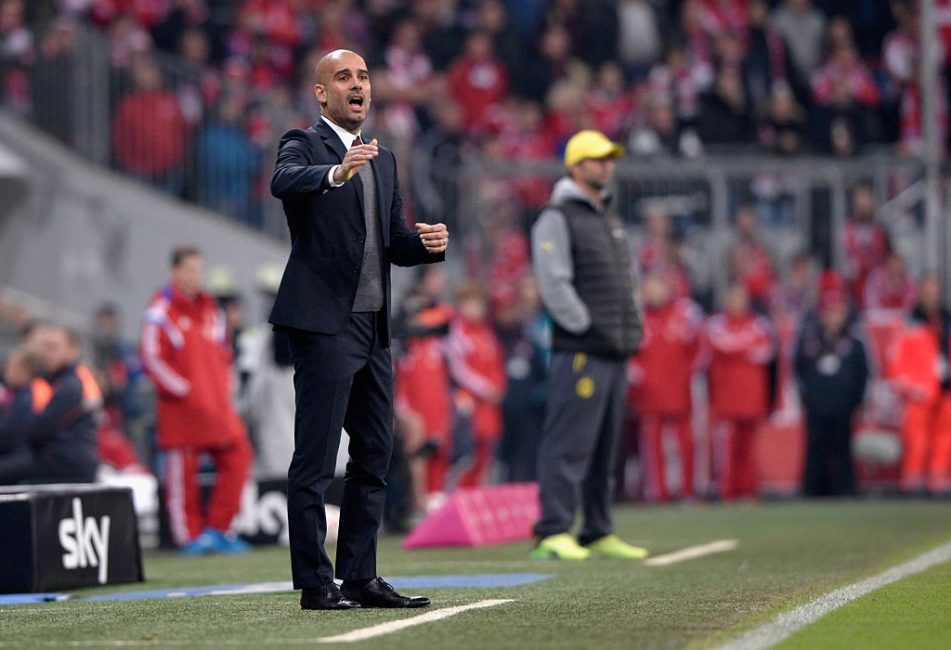
It is commonly held that the Champions League final of 2013 represents the pinnacle of German football in this still very young 21st century. And there is good reason to think so, too. Bayern and Dortmund had just cleared their Spanish competition out of the way and were set to take center stage at Wembley stadium, the temple of English football. This night belonged to German football and its two outstanding sides.<em>This article was written by Constantin</em>.<a href="#what-the-game-meant">What the game meantHowever, reaching the final did not equal the peak of either teams’ development. As accomplished as their football already was at the time, both clubs would go on to have many more quite memorable encounters in the following years. FC Bayern profited greatly from the intellectual input from Pep Guardiola, who tried to maintain the pragmatic and successful playing style that Jupp Heynckes had established while taking it to a higher level at the same time. Meanwhile, Dortmund was in a situation not quite of their own choosing that season after season they had to be creative to compensate for some of their most important players leaving. They were fortunate that Jürgen Klopp did not just have a sense for high-octane football, but also a knack for trying out players in positions to which they were not at all accustomed. Despite having suffered plenty of defeats and disappointments in the first half of the 2014/15 season, the team was far stronger than their points tally suggested.<a href="https://miasanrot.com/wp-content/uploads/sites/2/2019/12/FC-Bayern-Muenchen-v-Borussia-Dortmund-Bundesliga-1577484919-951x650-1.jpg">Media</a><strong>Klopp always breathing down your neck.</strong>
(Image: Adam Pretty/Bongarts/Getty Images)And so on 1 November, 2014, two teams met in the Allianz Arena who were about to deliver a full 90 minutes of the best football ever to have been staged in a German stadium. As an observer, one is not always able to fully grasp the special significance of an event while it is taking place. Retrospectively, however, in light of the disappointing turn German football has taken in the years since, the full extent of quite how extraordinary the game was becomes clear.<a href="#guardiolas-fear-of-counterattacking-football">Guardiola’s fear of counterattacking footballWhen Pep Guardiola arrived in the Bundesliga, he had already studied German football intensively. He had spent his year-long sabbatical not just frequenting New York coffee shops, but mainly studying German football on TV and on location. The Catalan was so impressed with, and in awe of, the quality of counterattacking football on display in the Bundesliga that he immediately started to contemplate how he would have to organize a defense and midfield to evade the pressing traps the German teams so often deployed in order to launch a counterattack. He nurtured, reassessed and fine-tuned his ideas until that famed match in November of 2014.<a href="https://miasanrot.com/wp-content/uploads/sites/2/2019/12/FCBBVB2014en-650x650.png">Media</a><a href="#in-case-you-missed-it">In case you missed it<a href="#the-starting-lineups">The starting lineupsBayern started the game in a 3-1-4-2 formation with quite a few interesting player positionings. Most notably, there was David Alaba at left center-back, Jérôme Boateng at central center-back, Xabi Alonso as a holding midfielder dropping in between the center-backs, Mario Götze and Philipp Lahm as the two number eights, and Arjen Robben as the right winger. This system was Guardiola through and through.They faced a Dortmund side that Jürgen Klopp had assembled no less creatively. Their starting formation was a 4-3-1-2/4-3-3 with the following assignments: Sven Bender was the right number eight next to Sebastian Kehl. Henrikh Mkhitaryan was the more offensive second number eight on the left. Center-forward Pierre-Emerick Aubameyang had a loose role that…
<b>Bayern sign Álvaro Odriozola on loan from Real Madrid until the end of the season</b>
Bayern have been active on the transfer market. As Germany’s record champions confirmed on Wednesday, Álvaro Odriozola has joined Bayern on loan from Real Madrid with immediate effect till the end of the season. The 24-year-old Spaniard is set to strengthen the squad in the right-back position.After Hansi Flick had firmly stated his intention to play Joshua Kimmich in midfield, there was an increasing need for Bayern to act in the right-back position. Apart from Benjamin Pavard, there was no longer any real alternative in the squad for this position.But now Bayern have strengthened their ranks with Álvaro Odriozola – initially on loan. At Real Madrid, the right-back never got beyond the role of a backup player. Since the 2018/19 season, he has made 27 appearances for Real, but only five this season. He managed 11 goal involvements in all games.Whether he gets more playing time at Bayern now depends on many factors. One of them will be how offensively Flick wants his right-back to act against the respective opponent. Whenever Flick wanted the right-back role to be interpreted offensively, Pavard has had major problems so far this season, although his defensive stability is a real asset for the team.<a href="#alvaro-odriozola-a-fitting-player-for-the-offensive"></a>Álvaro Odriozola: A fitting player for the offensive?But what kind of player has Bayern got? Odriozola originates from Real Sociedad’s youth team, where he played between 2006 and 2014 before breaking into the second team. He made his professional debut in 2017 and played 50 competitive matches for his club.Real Madrid became aware of him and his talents and signed him for around €30M. The hope: In the shadow and under the guidance of Dani Carvajal, he could grow into their new regular right-back. But nothing came of it.Real signed Odriozola mainly because he is a very dynamic and fast player. Especially at the beginning of his time in Madrid, he seemed to be someone who could link up in combinational play with the right number eight (usually Modrić). With his drive moving forward he is also a good support for the wingers, not only by way of classic overlaps, but also with diagonal runs into the penalty area.<a href="#dribbles-runs-in-behind-and-a-box-to-box-engine"></a>Dribbles, runs in behind and a box-to-box engine?What Real certainly took notice of before they signed him were his six strong performances in the 2017/18 Europa League, when Odriozola won an average of 2.2 of his 4.8 dribbles per 90 minutes – a strong figure.However, between 2017 and today, this has levelled off at around 2.7 dribbles per 90 minutes. This is partly because he never made the breakthrough at Real Madrid. He has not been able to take his great strengths in dribbling and deep runs to Real’s higher level so far, because he often seemeed to want to force the issue.A big problem of offensive-minded full-backs is often their lack of skill at working backwards. But Odriozola seems not to suffer from this weakness too much. At Real Sociedad, he won an impressive 73% of his challenges. With his speed, he was able to get back behind the ball again quickly after losing it. Nevertheless, proper integration in the back line and protection against attacks remain important issues for Bayern as well.<a href="#what-can-we-expect"></a>What can we expect?After his difficult time at Real, nobody at Bayern should make the mistake of seeing the next superstar in Odriozola. He is a sensible addition to the squad and brings a decent balance of offensive and defensive skills.Another option on the market would have been ex-Hertha player Valentino Lazaro, who has huge offensive potential, but is limited in his work back. In contrast, Odriozola is a more balanced player who brings more drive forward than Pavard.If Odriozola could build on his performances at Real Sociedad at Bayern, he would be an important addition to the…
Bayern have been active on the transfer market. As Germany’s record champions confirmed on Wednesday, Álvaro Odriozola has joined Bayern on loan from Real Madrid with immediate effect till the end of the season. The 24-year-old Spaniard is set to strengthen the squad in the right-back position.After Hansi Flick had firmly stated his intention to play Joshua Kimmich in midfield, there was an increasing need for Bayern to act in the right-back position. Apart from Benjamin Pavard, there was no longer any real alternative in the squad for this position.But now Bayern have strengthened their ranks with Álvaro Odriozola – initially on loan. At Real Madrid, the right-back never got beyond the role of a backup player. Since the 2018/19 season, he has made 27 appearances for Real, but only five this season. He managed 11 goal involvements in all games.Whether he gets more playing time at Bayern now depends on many factors. One of them will be how offensively Flick wants his right-back to act against the respective opponent. Whenever Flick wanted the right-back role to be interpreted offensively, Pavard has had major problems so far this season, although his defensive stability is a real asset for the team.<a href="#alvaro-odriozola-a-fitting-player-for-the-offensive"></a>Álvaro Odriozola: A fitting player for the offensive?But what kind of player has Bayern got? Odriozola originates from Real Sociedad’s youth team, where he played between 2006 and 2014 before breaking into the second team. He made his professional debut in 2017 and played 50 competitive matches for his club.Real Madrid became aware of him and his talents and signed him for around €30M. The hope: In the shadow and under the guidance of Dani Carvajal, he could grow into their new regular right-back. But nothing came of it.Real signed Odriozola mainly because he is a very dynamic and fast player. Especially at the beginning of his time in Madrid, he seemed to be someone who could link up in combinational play with the right number eight (usually Modrić). With his drive moving forward he is also a good support for the wingers, not only by way of classic overlaps, but also with diagonal runs into the penalty area.<a href="#dribbles-runs-in-behind-and-a-box-to-box-engine"></a>Dribbles, runs in behind and a box-to-box engine?What Real certainly took notice of before they signed him were his six strong performances in the 2017/18 Europa League, when Odriozola won an average of 2.2 of his 4.8 dribbles per 90 minutes – a strong figure.However, between 2017 and today, this has levelled off at around 2.7 dribbles per 90 minutes. This is partly because he never made the breakthrough at Real Madrid. He has not been able to take his great strengths in dribbling and deep runs to Real’s higher level so far, because he often seemeed to want to force the issue.A big problem of offensive-minded full-backs is often their lack of skill at working backwards. But Odriozola seems not to suffer from this weakness too much. At Real Sociedad, he won an impressive 73% of his challenges. With his speed, he was able to get back behind the ball again quickly after losing it. Nevertheless, proper integration in the back line and protection against attacks remain important issues for Bayern as well.<a href="#what-can-we-expect"></a>What can we expect?After his difficult time at Real, nobody at Bayern should make the mistake of seeing the next superstar in Odriozola. He is a sensible addition to the squad and brings a decent balance of offensive and defensive skills.Another option on the market would have been ex-Hertha player Valentino Lazaro, who has huge offensive potential, but is limited in his work back. In contrast, Odriozola is a more balanced player who brings more drive forward than Pavard.If Odriozola could build on his performances at Real Sociedad at Bayern, he would be an important addition to the…
<b>Squad considerations at FC Bayern: What about the 2021 expirees?</b>
The novel coronavirus has brought all sport to a halt, but the expiration date of players’ contracts shows itself unimpressed. Although Karl-Heinz Rummenigge has put all transfer efforts on hold for the time being, the club still has to make the consideration whose contracts they want to extend beyond their current durations. We take a look at the most important decisions.Leroy Sané and Kai Havertz are two of the names that keep coming up around FC Bayern when it comes to possible summer transfers. However, CEO Karl-Heinz Rummenigge has made it clear meanwhile that transfers are put on hold for the time being. Instead, he said, the first priority should be to extend the contracts of the club’s key players.Manuel Neuer, Jérôme Boateng, Sven Ulreich, Javi Martínez, Thomas Müller, David Alaba, Thiago Alcántara, Ron-Thorben Hoffmann – this is the list of the players whose contracts are due to expire in 2021, i.e. in the summer of next year. We analyse which of these players FC Bayern could part with, and who should definitely continue to be part of the squad.<a href="#goalkeeper-situation-obvious"></a>Goalkeeper situation obvious?Sven Ulreich’s time at FC Bayern seems to come to an end. Although there have not been any final statements made in this regard yet, it is hard to imagine that the 31-year-old will have the desire to compete with newcomer Alexander Nübel for the role of second goalkeeper behind Manuel Neuer. Only if the negotiations with Neuer should unexpectedly fail, it could be a serious possibility that he stays.Ron-Thorben Hoffmann, however, could very well stay with FC Bayern. He could become the number one goalkeeper of the Bayern reserves if Christian Früchtl is sent out on loan. Miasanrot has learned from a source familiar with the issue that the decision to loan out Früchtl has already been taken some time ago with FC Augsburg suggested as a possible destination. If there is no better alternative for Hoffmann than the 3. Liga, which seems likely at present, he will probably stay.Without a doubt, the most important case is that of Neuer himself. In recent months, the Germany and Bayern number one has proven that he is still able to perform at world-class level. But he was not happy with the signing of Nübel. Perhaps to soothe him, Oliver Kahn in a conversation with <em>SportBild</em> recently clarified the pecking order once again: “In Alexander Nübel, we have a highly talented goalkeeper who has the opportunity to develop and learn behind Manuel Neuer.”With this kind of appreciation and a corresponding contract offer, Neuerer’s extension should be closed in the coming weeks. Reports suggesting that the 34-year-old might join Chelsea at the end of the season are likely part of the typical poker game of contract negotiations.My assessment: Sven Ulreich will leave the club, Manuel Neuer will extend his contract long-term, and Ron-Thorben Hoffmann will become the reserves’ number one goalkeeper.<a href="#what-will-happen-with-jerome-boateng-and-javi-martinez"></a>What will happen with Jérôme Boateng and Javi Martínez?There is no question that Jérôme Boateng and Javi Martínez have been long-standing members in excellent standing at Bayern. But it is also beyond question that their performance has declined in recent years. A change of club by Boateng has already been mooted numerous times in the past. Despite his bounce in performance under Hansi Flick, it seems likely that he will soon part ways with Bayern. His departure in the summer would be the last chance for the club to generate a transfer fee, and Boateng will most likely not get the amount of game time he desires in the face of such competition as Niklas Süle, Lucas Hernández, Benjamin Pavard, and David Alaba. It is not inconceivable that he will stay, but a switch might just be the best solution for everyone.Generally speaking, the situation is similar with Javi Martínez. Flick usually draws…
The novel coronavirus has brought all sport to a halt, but the expiration date of players’ contracts shows itself unimpressed. Although Karl-Heinz Rummenigge has put all transfer efforts on hold for the time being, the club still has to make the consideration whose contracts they want to extend beyond their current durations. We take a look at the most important decisions.Leroy Sané and Kai Havertz are two of the names that keep coming up around FC Bayern when it comes to possible summer transfers. However, CEO Karl-Heinz Rummenigge has made it clear meanwhile that transfers are put on hold for the time being. Instead, he said, the first priority should be to extend the contracts of the club’s key players.Manuel Neuer, Jérôme Boateng, Sven Ulreich, Javi Martínez, Thomas Müller, David Alaba, Thiago Alcántara, Ron-Thorben Hoffmann – this is the list of the players whose contracts are due to expire in 2021, i.e. in the summer of next year. We analyse which of these players FC Bayern could part with, and who should definitely continue to be part of the squad.<a href="#goalkeeper-situation-obvious"></a>Goalkeeper situation obvious?Sven Ulreich’s time at FC Bayern seems to come to an end. Although there have not been any final statements made in this regard yet, it is hard to imagine that the 31-year-old will have the desire to compete with newcomer Alexander Nübel for the role of second goalkeeper behind Manuel Neuer. Only if the negotiations with Neuer should unexpectedly fail, it could be a serious possibility that he stays.Ron-Thorben Hoffmann, however, could very well stay with FC Bayern. He could become the number one goalkeeper of the Bayern reserves if Christian Früchtl is sent out on loan. Miasanrot has learned from a source familiar with the issue that the decision to loan out Früchtl has already been taken some time ago with FC Augsburg suggested as a possible destination. If there is no better alternative for Hoffmann than the 3. Liga, which seems likely at present, he will probably stay.Without a doubt, the most important case is that of Neuer himself. In recent months, the Germany and Bayern number one has proven that he is still able to perform at world-class level. But he was not happy with the signing of Nübel. Perhaps to soothe him, Oliver Kahn in a conversation with <em>SportBild</em> recently clarified the pecking order once again: “In Alexander Nübel, we have a highly talented goalkeeper who has the opportunity to develop and learn behind Manuel Neuer.”With this kind of appreciation and a corresponding contract offer, Neuerer’s extension should be closed in the coming weeks. Reports suggesting that the 34-year-old might join Chelsea at the end of the season are likely part of the typical poker game of contract negotiations.My assessment: Sven Ulreich will leave the club, Manuel Neuer will extend his contract long-term, and Ron-Thorben Hoffmann will become the reserves’ number one goalkeeper.<a href="#what-will-happen-with-jerome-boateng-and-javi-martinez"></a>What will happen with Jérôme Boateng and Javi Martínez?There is no question that Jérôme Boateng and Javi Martínez have been long-standing members in excellent standing at Bayern. But it is also beyond question that their performance has declined in recent years. A change of club by Boateng has already been mooted numerous times in the past. Despite his bounce in performance under Hansi Flick, it seems likely that he will soon part ways with Bayern. His departure in the summer would be the last chance for the club to generate a transfer fee, and Boateng will most likely not get the amount of game time he desires in the face of such competition as Niklas Süle, Lucas Hernández, Benjamin Pavard, and David Alaba. It is not inconceivable that he will stay, but a switch might just be the best solution for everyone.Generally speaking, the situation is similar with Javi Martínez. Flick usually draws…
<b>Mailbag Roundtable: May 2020</b>
Bundesliga is back. Football is back. Bayern is back. But what will it look like? Why does it feel surreal? Are the teams actually prepared for the grueling schedule awaiting them? The pandemic has derailed every facet of life on earth, but it is inevitable that we start to return to some semblance of normality. Football and sports in general are one somewhat meaningless, yet all too important, sign that things will move on and recover. So as we prepare to sit down and watch the Bundesliga for the first time in nearly two months, we are back with a mailbag to answer some of your questions on the things that happened while Bayern and the Bundesliga were on pause. Here to answer those questions (which were all from <a href="https://twitter.com/me_unplugged20">@me_unplugged20</a> on twitter) are Daniel, Maurice and Alex.<a href="#question-1"></a>Question 1<a href="#what-are-your-opinions-on-the-permanent-appointment-of-hansi-flick-and-miroslav-klose-as-his-assistant-what-do-you-make-of-the-player-extensions"></a><strong>What are your opinions on the permanent appointment of Hansi Flick and Miroslav Klose as his assistant? What do you make of the player extensions?</strong><strong>Daniel</strong>: Giving Hansi Flick a contract-extension was a must. When the games stopped there might’ve been some arguments to be made against him from a pure sporting-perspective but as things stood, this was far beyond just your typical run-of-the-mill contract-situation. Football was standing still but future decisions on other contracts were still coming up. So of course Neuer, Thiago, Müller and Alaba wanted to know who they’d work with in the coming years, plus all the alternatives to Flick were in the same boat together. You can’t sign a Ten Hag when Bayern and Ajax are still likely to have games in July.The length of the contract is more interesting to me, they could’ve given him a two-year-deal but an extension until 2023 shows true commitment to Flick, I very much like that.Klose is a fascinating figure. I didn’t think much of him when he first turned to a career in coaching but various interviews and that biography from Ronald Reng revealed a true football-enigma. I am now very curious where he’ll end up and I especially like how he is very cautious to only take one step at a time as a coach. Less and less ex-world-class players become great coaches but there will always be some exceptions, Klose just might be one of them.<a href="https://miasanrot.com/wp-content/uploads/sites/2/2020/05/Flick.jpg">Media</a><strong>Hansi Flick received the support of the board and was named the permenant manager till 2023.</strong>
(Image: Christof Stache/AFP/Getty Images)As for the players, I am happy with all of those extensions and am eagerly awaiting Thiago and Alaba’s.<strong>Maurice</strong>: There was no real alternative to extending Hansi Flick, especially given the current situation. However, he also might have been the best alternative on the market anyways. His record at Bayern so far is superb with 18 victories in 21 matches and no loss since September. The team showed improvement in various areas including counter pressure and positional play. There is still lots of room left for further enhancements and Flick will tackle those with a full summer to prepare. The addition of Miroslav Klose makes a lot of sense. Flick and Klose have obviously been close ever since the 2014 World Cup and the head coach knows about the expertise of his assistant and how to use him best. For Klose this will likewise be a rewarding position as he can learn from an experienced coach, while working on his coaching license.As for the players the extension of Davies was very important and overdue. It is a nice gesture of the club to recognize the value of their players and adjust contracts early to reflect that. The extension also serves as a warning sign for other suitors: Davies is one of the building blocks of Bayern’s future. It will…
Twitter
Me Unplugged (@me_unplugged20) | Twitter
The latest Tweets from Me Unplugged (@me_unplugged20). Just another MS3 on twitter