
“I Wanted to Win Triton — So I Won!” Rapper Papo MC Takes Down the Biggest Buy-In Tournament in 5 Years
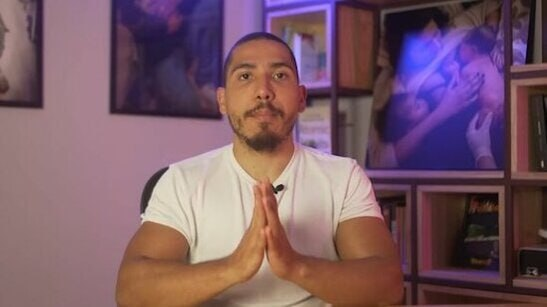
The Triton Million Invitational ($525,000 buy-in) concluded last night in the Bahamas. At the 6-max stage, Daniel Dvoress looked unstoppable, holding a massive chip lead over his opponents. But poker is unpredictable: Dvoress finished 4th, and Argentine rapper (and PokerStars ambassador) Alejandro Lococo, aka Papo MC, claimed the title. For his victory, Lococo earned $12 million, defeating Ben Heath heads-up. The rapper played with heart and openly admits to avoiding solvers:
🗣 “Many European regs bought a stake in me for this tournament—it gave me confidence. They respect my game! I’ve never studied theory; I win tournaments through energy and belief. I knew all along I could win! I play poker for the glory and the trophies. I always play to win. I wanted to become the best in Argentine battle rap—and I did. I dreamed of making the WSOP Main Event final table—and I made it. I believed I could win Triton—and here I am.”
Poker is alive and well! Here are some other offline highlights:
💪 Omaha $100,000 Heads-Up. This tournament drew an impressive 88 entries, but the champion is yet to be crowned. The second day lasted over 12 hours before play was paused. The bracelet battle will be between PLO legend Ben Tollerene and skilled Spaniard Lautaro Guerra. Jared Bleznick took 3rd ($1.17M), while the winner will walk away with $2.12M.
🏆 Eureka Main Event in Prague. The €1,100 buy-in tournament broke attendance records with 4,732 entries. The heads-up deal saw Bulgarian Martin Tsvetanov (€449k) and Austrian Gerald Karlic (€396k) splitting the top prizes. The final table featured one star: Brit Jack Sinclair, who finished 8th (€63k). Exactly two years ago, Jack made the same final table (4th, €169k), and recently took 2nd in the EPT London Main Event (£414,650) and 2nd in the Estrellas Barcelona Main Event (€377k).
😀 What’s a €50,000 Final Table Like? Pretty much as you’d expect. In Prague, the tournament had 25 entries, with 5 players making ITM. Heads-up saw a deal between Thomas Santerne (€386k) and Niklas Astedt (€356k). Other payouts went to Sergey Lebedev (€193k), Nikita Kuznetsov (€140k), and Espen Jorstad (€113k). Just days ago, Santerne won a €20k tournament (€175k), and earlier this year in Paris, he took down another €50k high roller (€889k in a 51-entry field).
Coming Up: The Triton $100,000 Main Event begins today in the Bahamas. In Prague, Day 1B of the €5,300 Main Event is underway, following 466 entries on Day 1A.

Giveaways, Holiday Tournaments, and $75,000 Leaderboards at CoinPoker
Until January 26, the cryptocurrency poker room is hosting its Holiday Extravaganza, featuring over $75,000 in bonuses and prizes. Here’s how to join in and boost your bankroll:
🔸 12 Days of Christmas (until December 12). Share your most memorable poker moments on social media: insane bluffs, bad beats, or big wins. The best hands will be rewarded with prizes totaling $10,000.
🔸 Cash Table Giveaways (December 13–22). If a player with the nickname HappyHolidays appears at any 7-max Hold’em or Omaha (including PLO5) table, prizes are distributed with BB multipliers (up to 200x the stake).
🔸 Christmas Cracker Tournaments (December 22). Two tournaments will offer $7,500 in Amazon vouchers, with additional prizes for eliminating streamers, CoinPoker ambassadors, and HappyHolidays.
🔸 Winter Sunday Special Tournament (December 29). The buy-in is $200, and $50,000 will be up for grabs. Save on the entry fee with freerolls, centrolls, and satellites, or win tickets via CoinPoker’s social media and ambassador giveaways.
🔸 New Year Giveaway (January 1–11). Another $5,000 will be distributed for sharing impressive hands on social media with the poker room’s hashtag.
🔸 $500,000 Series (January 12–19). The Winter KO tournament festival includes $10,000 added to the prize pool. A bounty leaderboard is also planned, but details are not yet published.
🔸 Cash Leaderboards (January 20–26). Payouts in the regular leaderboards will be doubled: $2,000 will be awarded at Hold’em and Omaha tables.
Register at CoinPoker using this link of GipsyTeam to maximize your profits with monthly bonus rakeback.

The Most Dramatic Hand in WSOP History: Phil Galfond’s Analysis
Phil revisited the legendary hand from the 2010 WSOP Main Event, which played a pivotal role in determining the tournament’s outcome. Watch his breakdown here.
👉 Top 15. Jonathan Duhamel raised J♥️J♣️ from the cutoff to 575k, and Matt Affleck 3-bet A♠️A♣️ on the button to 1.55M. The blinds folded, and Duhamel responded with a 4-bet to 3.9M, which Affleck called in position.
🤷♂️ With JJ, calling the 3-bet would’ve been fine—I probably would’ve done that myself for ICM reasons, as their stacks were nearly identical. Risking your entire stack isn’t optimal, especially considering the enormous value of making the November Nine (the final table was played separately in the fall that year).
💪 However, I love Affleck’s call of the 4-bet. It shows just how high-level Matt’s game was even back then. He recognized the polar nature of Duhamel’s 4-bet and wanted to keep weaker hands in play. In 2010, solvers weren’t available, so the EV of this call wasn’t obvious. Plus, it was a nerve-wracking stage—many players in Matt’s spot would’ve shoved to avoid complications. But he played fearlessly.
👉 Flop: T♦️9♣️7♥️ Duhamel checked, Affleck bet 5M into 8.4M, and Duhamel called.
👌 A fantastic flop for JJ—short of flopping a set, this is as good as it gets. Duhamel’s stack was only twice the pot, so he likely wanted to get it in quickly. A check-raise shove or even an outright 2x pot shove would’ve been reasonable to deny equity and avoid tough decisions on future streets. For instance, KQs is a plausible hand for Affleck that would fold to a check-shove. While check-call is an option, it leaves Duhamel with little clarity on most turns.
👉 Turn: Q♦️Duhamel checked, and Affleck shoved 11.6M into 18.4M.
🤔 The Q♦️ improved Duhamel to an open-ended straight draw (OESD), but his equity actually dropped from 27% to 21%. Affleck had no choice but to shove—at this stage, the pot was already 1.5x his remaining stack. Duhamel’s turn equity meant it was critical for Affleck to deny him a free card.
🙄 Duhamel began to calculate. He needed to call 11.6M to win a 30M pot, giving him nearly 3-to-1 odds (28% equity required). However, Duhamel didn’t have that equity here, nor could he reasonably expect much more against Affleck’s range. Affleck could have JTs, but Duhamel blocked that hand.
☝️ It’s not just about the odds. Even if he had the required 28% equity, that wouldn’t justify risking his tournament life. The ICM pressure in the Main Event is insane. You need overwhelmingly strong reasons to gamble your stack. Yet Duhamel called—and that decision changed everything.
🫡 River: 8♦️The river gave Duhamel a straight, making him a massive chip leader in the top 14. With the average stack at 15.7M, Duhamel now had over 50M in chips and went on to become the World Champion. Meanwhile, Matt Affleck finished in 15th place ($500k). The scene of his dramatic bustout became one of the most iconic moments in WSOP broadcast history.
YouTube
The Most Brutal WSOP Bad Beat Ever? [Analysis]
I'm hosting a live coaching event this May in Las Vegas, join me + top high performance experts to improve your game on and off the felt: https://philgalfond.com/summit Was this brutal bad beat DESTINED? High Stakes Pro Phil Galfond dissects the poker strategy…
Why Do People Believe In An Unfair RNG? A Bit About Cognitive Distortions In Poker
An article on a rare topic appeared in the blog of the Russian Firestorm Fund. It explains why it is difficult for poker players to evaluate not only rooms' RNG, but also their own game impartially.
🤔 What is confirmation bias? It's a phenomenon that means people tend to ignore things that disagree with their opinion. We all basically listen only to what confirms our picture of the world - and distrust facts contrary to our beliefs. The consequences are clearly visible on social media, where people actively lock themselves into "bubbles" - and only read those with whom they agree in advance.
🤷♂️ What to do about it? Well at the very least don't ignore it! And ideally, try to compensate. That is, try to analyze opposing points of view, look for errors in their own arguments, come up with arguments in favor of someone else's point of view. And also notice whether the authors (or media) whose opinion you used to trust are doing the same.
🙄 What does this have to do with poker? In the game, too, we pay attention to the data that supports the decisions we make (and ignore the rest). For example, you write a "fish" note on an opponent who played poorly. But he could have made a rare mistake - but you have already labeled him, and you will view all his future actions through the prism of your notes. This includes building exploits that are actually based on erroneous conclusions.
🫣 And our memory is also unreliable and selective. Looking for patterns and basing predictions on them - a natural need of the brain. But it can also play a cruel trick on you: for example, if a flush-draw has not closed many times, it may seem that it closes less often than it should. You should trust a large sample and software, but not your own impressions. It's the same with believing in a "tweaked RNG": every time a conspiracy theorist loses an all-in, he is once again convinced that his paranoia is real.
🎓 What to do about all this? The solution starts with recognizing the problem. If you're unable to see the flaws in your game, you can't fix them either. Prejudices protect your ego from reality, but cost you big time at a distance. So you must become your own biggest critic - and question all your usual strategies and beliefs. And you have to analyze not only the losing hands, but also the winning ones.

How to Dominate Final Tables: 4 Tips from Espen Jorstad
Espen shared insights with the GTO Wizard channel on how to maximize pressure when you’re the chip leader at a final table. Watch the full video here.
1️⃣ Expand your ranges smartly. Imagine you’re on the button, with players on the blinds holding stacks of 8 BB and 16 BB. In a ChipEV simulation, the solver suggests 17.6% raises and 20% shoves. Adjusting for ICM, the ranges expand to 38.2% raises and 19% shoves. The shove percentage remains the same, but the hand selection changes. Instead of offsuit Ax, the solver prefers suited Kx, Qx, and mid-strength suited connectors like J7s and 87s.
2️⃣ Don’t be shy about leading. As the big blind, you can defend wide, often connecting with low boards. Meanwhile, opponents will raise tight ranges dominated by Broadway hands, which miss these flops. This makes leading into boards like 8♦️3♠️5♠️ or 9♥️5♣️2♦️ highly profitable.
👉 Example: Lojack (second in chips) opens, you defend the BB, and the flop comes J♠️7♦️7♣️. Your range holds only 37% equity, a notable deficit, but the solver still leads 26% of the pot in 46% of cases. Why? You have more trips in your range, and the second chip stack can’t afford to engage with you aggressively.
3️⃣ Don’t fear risk if the table is tough. Actively raise and adjust your ranges smartly. From Lojack, open weaker hands with blockers (K9o, Q9o, K4s, Q6s) rather than stronger hands without blockers (like small pairs or connectors). When facing a 3-bet, expect opponents to have tight ranges, making your bluff 4-bet shoves more effective with hands containing blockers, especially Ax.
☝️ Example: Against a balanced, narrow, and polarized SB 3-bet range (4.1%), a 4-bet shove with A7s has nearly 6x the EV of TT.
4️⃣ Apply postflop pressure on mid-stacks. Take this situation: on the flop, both players check. Despite having a range advantage, the solver checks 75% of the time as the button due to the final table stack dynamics.
👉 On the turn, with an appropriate hand, the solver often opts for a 150% pot overbet, pressuring middle stacks. Why? The solver is even prepared to fold hands like AQ or KK in response to such aggression. This demonstrates how much ICM impacts postflop strategy and ranges.
#strategy_gt

Playing Suited Connectors: 5 Key Tips
A new article on the Upswing Poker blog breaks down the strategy for playing suited connectors. Read the full guide here.
1️⃣ Avoid 3-betting against stacks of 60 BB or less. This is especially true for smaller connectors like 76s and 65s. When stacks are deeper, 3-betting is profitable because you can often build equity and bluff, and when you hit a strong hand, you have a chance to win a massive pot. In low SPR situations, there’s little room for bluffing, and implied odds are worse.
2️⃣ Don’t 3-bet against calling stations. Lack of fold equity is the most obvious reason, but there’s another: the loose player’s 3-bet calling range will often dominate you. Hands like A6s, K7s, and J8s will crush your 87s and 65s more often than you’d like, leaving you on the wrong side of coolers when you both hit trips or flushes.
3️⃣ Suited connectors don’t make great 4-bet bluffs. When choosing bluffing hands for a 4-bet, prioritize blockers. Since ranges are narrow, blocking strong hands is critical. Suited connectors are terrible in this regard: they block hands your opponent might fold and unblock their strongest holdings.
4️⃣ Be cautious with overcalls. Imagine a raise from the lowjack, a call from the hijack, and you’re on the cutoff with 65s. If you call, you’re investing 2.5 BB for a 9 BB pot, needing 27% raw equity (or 29% with a 5% rake). Against reasonable ranges, your hand only has 25% equity, which isn’t enough. Plus, others could call behind (lowering your equity) or squeeze, leaving you in a tough spot.
5️⃣ Don’t cold-call 3-bets. This isn’t the same as calling a 3-bet when you’re the original raiser! Your pot odds will be worse, you won’t close the action, and you’re already facing two raises. Avoid getting involved in these situations with suited connectors—they’re not strong enough for the risk.

Continuation Bets and Responding to Them: Matt Affleck's Lesson Summary
RecPoker podcast host Jim Reid has been training with Affleck since summer and shared what he learned about flop play.
🤔 How to determine if a continuation bet (c-bet) is appropriate?
It's no secret that c-bets are more common on T-high boards and higher compared to low boards. However, there are nuances. Imagine raising from early position and getting called by the big blind (BB). Here are situations where it makes sense to c-bet less, even on Broadway-heavy flops:
1️⃣ Connected boards. On flops like T98 or T87, c-bets are less frequent than on T84 or T62, especially in deep stacks. If there’s a made straight on the flop, solvers bet less.
2️⃣ Monotone boards with an ace. Most of your suited hands include an ace, reducing the need to c-bet.
3️⃣ Low boards with an ace. On boards like A53 or A42, the BB has more sets, two pairs, and straight draws, allowing them to check-raise more often.
4️⃣ Flops like AKx. Kx hands in your range don’t need protection and prefer to check back.
5️⃣ Flops like A88 or A66. The BB’s range has more trips.
6️⃣ With AKs on a flush-draw flop. Bet less often than with low Axs hands. With the latter, you can fold out better Ax hands and avoid blocking the BB’s K-high flush draws.
What if you're the BB? Matt also provided useful advice:
💪 Fewer leads, more check-raises. Get comfortable check-raising not only value hands but also flush draws, straight draws, and strong backdoors (preferably with overcards to the board).
👌 Call wide against small bets on rainbow flops. On flush-draw boards, however, stick to suited hands for defense and avoid over-calling with offsuit hands.
👉 When choosing hands to call, avoid blocking backdoor draws in your opponent’s range.

Ossi Ketola Plays Without His Funny Hat but Keeps Crushing: Live Poker News
The Triton Main Event is down to 15 players out of 182 entries. Huge chip leader at the end of yesterday was the super-energetic young Finnish player Ossi Ketola, who lost heads-up to "Gambledor" in Monte Carlo. His poker résumé includes only four ITM finishes, all within the past month. Second in chips is Fedor Holz, with Alexander Zubov, Alex Foxen, Nikita Bodyakovskiy, and Stephen Chidwick also still in. Play resumes tonight, with a live stream starting at 18:00 GMT. Top prize: $3.85M 💰
Justin Bonomo shared his impressions of playing with Nikita Bodyakovskiy:
🗣 "This guy is incredible. He bets the river, gets raised. Says, ‘I’m beating nothing.’ Thinks for a while, burns three time bank cards, and mutters to himself. Then sighs, ‘I keep looking at my hand, but it’s not getting any stronger.’ Burns two more cards. Calls with 2 seconds left on the clock. Opponent mucks their cards."
Other Live Poker News:
♥️ A beautiful story in the $2,500 Mini Main. Belarusian live regs Andrei Petrushchenko and Alina Polegoshko flew to the Bahamas together after Andrei won a satellite on GGPoker. They powered through a 2,000+ field hand-in-hand, making it to the 3-handed stage. However, both were outplayed by American Jeffrey Hakim ($575K), but the young couple still cashed for nearly $800K combined. Viktor Ustimov finished 4th ($261K).
🏆 Eric Wasserson wins the $25K Dealer’s Choice with 49 entries. Journalists have called Eric one of the best WSOP regs without a bracelet. Previously, he lost heads-up in WSOP events twice and took bronze three times. Along with the bracelet, he won $353K. The final table featured many usual suspects, including Josh Arieh, Mike Gorodinsky, Dan Zack, and Benny Glaser.
💪 Gleb Tremzin makes the final table of the $5K Deepstack. There were 363 entries, and Gleb shared his run in his Telegram last night (source). He’s 5th in chips and will face players like Bruno Volkmann and Vlad Darie. “I was debating going for a third bullet or not,” Gleb cheerfully told his followers. No live stream. Good luck, Gleb!
👑 EPT Main Event sets a new record. The €5,300 buy-in attracted 1,458 entries. About 10% of the field remains in Day 3, already ITM. Swedish player Daniel Erlandsson leads, with big stacks also held by Chris Rudolph (WATnlos) and Enrico Camosci (Wh4TisL0v3). The winner will take home €1.14M.

Freeroll Satellite for the WSOP-C Stage in Morocco
From January 10 to 19, a WSOP-C stage will take place in Marrakech. A total of 13 rings will be awarded, with buy-ins ranging from €350 to €2,700.
Thanks to the tournament poker school Pocarr Team, you can participate in the series for free! Pocarr is organizing a freeroll offering 5,500 AED (about $1,500) for buy-ins and additional expenses for the series. Here’s how to enter:
1. Subscribe to their Telegram channel: 👉 https://t.me/+b9C0r-f6jGBlZDFk
2. Complete the tasks listed in this post.
That’s it! Important note: To participate, you must be able to travel to the series in Morocco in January 2025 and have a Hendon Mob profile with at least one ITM result in live events.

EPT Paris Canceled. What’s Happening?
In mid-November, PokerStars announced the first three festivals of the EPT 2025 season: Paris (February 12–23), Monte Carlo (April 30 – May 10), and Barcelona (August 18–31). Less than a month later, the first stop was suddenly canceled. PokerStars released a joint statement with Club Barrière (a casino on the Champs-Élysées where the tournaments were supposed to take place):
🗣 "With great regret, we announce the cancellation of EPT Paris. This is due to unforeseen changes in French government policies and legislative reforms. The situation is beyond our control, but we are exploring the possibility of rescheduling EPT Paris for a later date."
What’s going on with the regulatory rollercoaster in Paris? The problem is that as of December 31, casinos in Paris could theoretically be forced to shut down. Technically, casinos have been banned since 1919, and what currently operates are "gaming clubs" offering only table games (no roulette or slots). This arrangement was supposed to continue into 2025, but due to a political crisis, no one has renewed the necessary law. Without it, these "clubs" may become illegal starting January 1. 🤷♂️
The irony is that the government appeared to be preparing a bill to make "gaming clubs" permanently legal, eliminating the need for yearly license renewals. Christine Bonneau, director of Club Barrière, called the situation a "social and economic catastrophe," warning that up to 1,500 jobs are at risk. Casino administrators, just two weeks before the new year, still don’t know if they need to shut down on January 1 or if the government will provide any compensation to employees.🙄
EPT was held in Paris for the first time in 2023 and repeated this year with great success. The Main Event drew 1,747 entries (huge!) and was won by Hendon Mob founder Barney Boatman (€1.29M), with Alexey Ponyakov taking third (€575K).

WSOP Paradise Online Reaches the Final Stretch
The last chance to win a WSOP bracelet this year — from the comfort of your home! The WSOP Paradise Online series continues on GGPoker until the end of the week. Every day, tournaments feature hundreds of thousands of dollars in prize pools, and the platform is giving out random rewards: tournament participants can unexpectedly receive tickets worth $25, $60, $250, $600, or even $2,750 for another satellite or series event.
The highlight of the online stage is Event #11 Mystery Millions Online with a $5,000,000 guarantee. The winner will take home the iconic WSOP gold bracelet and at least $456,000.
Participation is likely to be especially lucrative — two days before the start, the overlay is almost $3M! The direct buy-in for the tournament is $2,750, and daily stages are ongoing, with the final stage starting on December 15 at 15:30 GMT. Day 2 of the tournament kicks off on Sunday at 18:00 GMT.
Right after WSOP Online ends, the next massive festival, Winter Giveaway, will launch with $100,000,000 guaranteed. The buy-ins are more accessible, with several hundred Hold’em and Omaha tournaments ranging from $8 to $1,500 on the schedule.

Alex Foxen Wins $3.85M, a Trophy, a Bracelet, and a Stylish Fur Coat: Weekly Poker Highlights
Every Friday, we share news snippets and follow-ups on stories we’ve covered earlier in the week.
🏆 Foxen wins the Triton Main Event. The overnight final table was thrilling. Finland’s new fan favorite, Ossi Ketola, finished 5th ($1.17M) but wasn’t upset—he even gifted his trendy fur coat to champion Alex Foxen ($3.85M). Alexander Zubov placed 4th ($1.48M), and Fedor Holz finished 3rd ($1.83M). Foxen defeated João Vieira heads-up ($2.59M). Just days earlier, Alex finished 6th in the Triton Million ($2.8M).
🕺 The Super Main Event kicks off. This $25,000 tournament in the Bahamas boasts a historic $50M guarantee. Day 1A drew 411 entries and 50 re-entries. The chip count is star-studded: Juan Pardo leads, Jonathan Jaffe is second, Sean Deeb is third, and Kayhan Mokri is fourth. Day 2 is Monday, and online qualifiers will join on Day 3.
✌️ Garrett Adelstein returns. The Hustler Casino legend appears today on the Bally Live Poker stream. The game is $100/$200 with a $50,000 minimum buy-in. Phil Laak and popular Japanese vlogger Masato Yokosawa are also expected. The live stream starts at 21:30 GMT on YouTube.
💰 Barny Boatman is auctioning his WSOP bracelet. The Hendon Mob founder is raising funds for children in Gaza on Twitter. Barny won the bracelet in a 2013 Hold’em tournament with 2,247 entries. Starting bid: $1,000. Current highest bid: $10,000.
⚔️ “Online battle in 6 cameras.” Today on Twitch, well-known regs are playing PLO100. The main star is PLO legend Alexey Altshuller, joined by Yuri Joke703, Dukalis, Rocknrolla, and others. The stream just started.
🏎 Still time to join our rake race on TON! Until December 30, GipsyTeam players earn points for every dollar of rake. There are 10 prize spots, with top prize being $1,500. Competition is still light on GipsyTeam. Jump in! On December 30, all participants will be entered into a draw for a one-month GTO Wizard subscription.

How Jaycer Munieza Made a Brave Call: A Hand Through Both Players’ Eyes
Jaycer discussed some high-stakes online hands with Sergey Nikiforov on his YouTube channel. Soon, we’ll provide a full translation for GipsyTeam, but here’s a breakdown of one hand where the two faced off on YouTube.
👉 $50/$100, 3-max, stacks nearly 200 BB deep. Munieza opened for $225 from the button, Jaycer 3-bet to $1,000 from the SB with A♦️5♦️, and Munieza called. The flop came J♠️5♠️4♦️, and Jaycer bet one-third of the pot ($692). Munieza raised to $2,076.
🤷♂️ Jaycer: A solver’s favorite hand — how can I not 3-bet here? With your raise, I think you’re representing sets like 44 and 55 or 45s. For bluffs, you’d use hands like 22, 33, weak 4x, 5x, or 66 (especially with a spade), and also hands like QT, KQ, Q9, and various draws and backdoor diamonds.
😎 Munieza: In deep stacks, this is a great board for the button because of the 4 and 5 connectors. The SB’s range won’t have many hands like 76, 87, A2, or A3. That means on some runouts, the button will hold all the nuts, allowing me to continue aggression successfully.
👉 Turn: 8♣️. Jaycer check-called $4,374 into $6,249.
🤷♂️ Jaycer: Terrible card! It’s worth noting that against the average opponent (not a high-stakes reg), there will be far fewer bluffs on the turn than there should be in theory. Against those players, it’s an easy fold. Against you, it’s borderline between folding and calling but closer to a fold.
😎 Munieza: Yes, I need to include bluffs here that the 8 doesn’t improve. I can pressure your range on this turn with hands like 22, 33, or even others that can continue bluffing on various rivers. If I were in your spot, I’d lean toward folding. My range here can include 8x hands (87, 86) that beat pairs like TT/99 and extract value from weaker draws.
👉 River: 7♦️. Final board: J♠️5♠️4♦️8♣️7♦️. Jaycer checked, and Munieza shoved $12,124 into $14,997.
🤷♂️ Jaycer: Interesting card. Some of your bluffs got there, like 66 and 86. Sets will keep attacking too. I counted around 8-10 value combos. For bluffs, you might play 22, 33, A2, A3, QT, or KQ this way. Plus, the card is so obviously bad for my range that I expect some over-bluffing, even from hands with bad blockers (like spades).
😎 Munieza: Many of the bluffs from the flop will keep bluffing all the way through. Your bluff-catcher isn’t bad here — it’s definitely better than QQ, KK, or AJ, for example.
Jaycer called with a pair of fives. Munieza showed a straight with 6♣️5♣️ and won a nearly $40,000 pot. Both players agreed that Jaycer should’ve folded the turn, but the river hero call was reasonable since there should be enough bluffs in Munieza’s range.
YouTube
Analyzing Our High-Stakes Hands With MunEZ_StaRR | PT.1
In this video, we dive into the thrilling world of high-stakes poker with none other than MunEZ_StaRR, one of the best online 6-max cash players in the world. Together, we analyze challenging hands from high-stakes games played by both of us, breaking down…
Can everyone succeed in poker? Essay by Saulo Costa
The top Brazilian coach regularly sends his articles to subscribers. Mostly these are texts about poker strategy, but the latest one turned out to be personal and heartfelt.
🤔 "Poker is not for everyone." I read such a comment on 2+2 and was struck by nostalgia. In 2019, I started sponsoring and coaching players. At that time, I was crushing ZOOM NL200 and NL500. The plan was simple: quickly move up to these limits with more regs to earn a lot of money together. I was sure that skill was all you needed for a successful career. I developed a powerful training program, investing hundreds of thousands in it, and step by step showed students how to make a living.
🤷♂️ What could go wrong? Well, first of all, I'll say: I built the school, it's successful. But the idea that everyone could be turned into a strong reg crumbled to dust. The vast majority of my students didn't become top players and didn't start making serious money. No matter how cool the coaches were, no matter how much I paid mental coaches, no matter what research I showed. Only a couple percent of players reached the level I dreamed of pulling all the students to.
👌 Now it's obvious to me why. After all, skill is just a small part of what you need for a career. I've seen so many different fates over these 5 years! Some had too much money (rich parents) - and they became too lazy to study seriously. Some had too little money - and thoughts of not being able to pay for rent broke their game. One student, I remember, was perfect: smart, loving poker, young, super promising! But his girlfriend got pregnant, and he went back to work as a bartender to support his family.
👉 The path in poker can be very different in difficulty. Mine was very, very easy. Started at 22, lived with my parents, all the profit went into the bankroll. I had the opportunity to play for 2 years straight, from morning till night, and had no commitments. By nature, I'm calm, never tilted. Not a gambling addict and never played in a casino. And I'm also an introvert and a nerd! Sitting at home all day and digging into a solver for me is absolute bliss, not torture.
👍 I was lucky with all of this. Why am I more successful than many other regs? Thanks to luck! You don't control where and with what data you were born. Whether your loved ones will support you when you decide to play poker. Are you prone to tilt or depression. Are you persevering, interested in learning. What kind of people you will meet along the way. Whether some tragedy will happen. These and many other things fundamentally determine your chances of success. They are different for everyone: someone is luckier, someone is much less lucky.
🙅♂️ So don't compare yourself to anyone. Most success stories grow from very favorable ground. For someone, everything comes easily, while someone else's chances are close to zero in advance. Do you think someone is overhyped? Most likely, they are! But that's how the universal RNG dealt the cards, nothing can be done about it. Focus only on what you can control - and don't think about anything else. Can everyone succeed in poker? In theory - yes, in practice - no. But everyone can try. And if you decide to try - try your best. There is no other way.
Playing Overpairs in a 550-BB Pot: A Thrilling Hand by Patrick Leonard
Recently, Pads was playing heads-up $50/$100 against a wealthy crypto investor (and former poker pro). They were battling in deep stacks, over 550 BB. At one point, this hand unfolded:
👉 Pads raised to $300 with K♥️K♦️, got 3-bet to $1,000, and responded with a 4-bet to $4,000, which his opponent called. On the flop 8♠️7♣️6♦️, the opponent led out for $5K into $8K (call). On the turn 3♥️, he bet again, $15K into $18K (call). On the river Q♦️, he shoved for $31,000 into $48,000. “What do we do?” Pads asked his followers.
Most commenters, including Scott Seiver and Joe Cada, said they would never fold. Patrick, as it turns out, didn’t fold either — and later recorded a hand analysis on Twitter.
🤷♂️ Flop: The board was better for the opponent. He could, in theory, lead this flop with his entire range — something rarely seen! However, the solver chooses a smaller sizing. I have almost no raises here; the most frequent one would be with the lower straight (54s). His lead knocks out hands like AQ, KQ, and KJ from my range.
👌 Turn: The solver also recommends a large bet. The value range revolves around sets and two pairs, while the bluffs include hands blocking straights, such as AT/A9 and A5/A4, or J9. Kings aren’t folded in my spot, but a call with JJ is neutral EV — because it blocks J9, which the solver bluffs with at full weight.
🥊 River: He shoves a large portion of his range, including bluffs with A5/A4. According to the solver, Kings are still a very profitable call. Interestingly, with AA, the solver mixes calls and folds. That’s because AA blocks some Ace-high bluffs. Opponent calls 4-bets with suited Ax, but rarely with Kx (only the best, like KJs/KTs).
When Pads called, the opponent said “I’ve got it.” Patrick’s heart sank — but a second later, it turned out his opponent also had K♥️K♦️. Oh, these crypto millionaires!

5 Preflop Tips from the Level-Up Podcast
Mike Brady and Gary Blackwood shared several preflop strategy tips in their podcast on YouTube. Here’s a summary, from basic to advanced concepts:
1️⃣ Tighten your BB defense range in multiway pots. Ruthlessly fold trash hands like K5o, 97o, or T4s. Defend hands that perform well in multiway scenarios: pairs, suited Ax, and suited Kx. Calling “because you’re priced in” after a raise and three callers is a super common leak and an expensive mistake.
2️⃣ Widen your BB 3-bet range. If a skilled player raises from the button, the solver suggests a broad 3-bet range, up to 14%. This includes hands like A5s, K6s, QJs, T9s, and other suited connectors down to 65s.
👉 If your opponent raises correctly (around 45% of hands), they should fold 60% of the time to a 3-bet. You 3-bet K3s, they fold K9o — perfect. Even if they don’t fold, it’s better to play a 3-bet pot as the aggressor than an SRP as the caller. You’ll have range advantage on more flops.
☝️ Against a lojack open, your 3-bet range will be much narrower (around 6%) but should still include bluffs with small suited Ax, broadways, and some suited connectors. This allows you to regularly take down the pot preflop and maintain board coverage. Without such coverage, you’ll never have strong hands on flops like 654.
3️⃣ Adjust your ranges based on opponents. If there’s a calling station on the button, don’t raise 65s from UTG and end up playing postflop out of position. If there are hyper-aggressive 3-bettors ahead, avoid raising hands like 22 or J9s. Instead, raise hands that can comfortably call 3-bets.
👌 Other exploits include cold-calling monsters (anticipating a squeeze) — but only from early positions! Another adjustment is using oversized raises if someone ahead doesn’t care about sizing. Pay attention and experiment.
4️⃣ Fewer calls in high-rake games. The solver drastically tightens ranges to avoid losing money. For example, on the BB facing a 2.5x BTN raise, it folds hands like K8o, Q9o, J8o, J4s, 95s, 42s. Marginal calls become unprofitable. This applies beyond the BB: on the button against a cutoff raise, the solver has no calling range (0%), only 3-bets (15%).
5️⃣ Lean towards aggressive actions. Look at the best players: they 3-bet, isolate, and aim to play heads-up pots instead of 5-way multiway pots. Be one of them, not someone they exploit! Aggression works particularly well at low and mid-stakes, where players rarely 4-bet light. Betting is almost always better than hero-calling, and 3-betting is usually better than flatting.
#strategy_gt
YouTube
5 Poker Tips for Playing Preflop | Upswing Poker Level-Up
✅ Upgrade your poker skills with the best training product on the market: https://upswingpoker.com/lab-2-youtube
Every hand begins with preflop play, so making correct decisions is critically important. Upswing Poker VP Mike Brady and Scottish poker pro…
Every hand begins with preflop play, so making correct decisions is critically important. Upswing Poker VP Mike Brady and Scottish poker pro…
Poker in Ireland Under Threat: New Gambling Laws Ignore the Game
Welcome to the latest episode of the European poker regulation tragicomedy! Following France, where the EPT had to be canceled due to a political crisis, Ireland has now taken center stage. The country has passed a new regulatory framework covering "the full spectrum of offline and online gambling." These laws, spanning 220 pages of new provisions and clarifications, will come into effect in 2025.
🤷♂️ …And there’s no mention of poker. Most of the new rules focus on sports betting. The government is trying to curb expensive betting habits, proposing a maximum bet of €10 and a maximum win of €3,000. Larger payouts will only be available through lotteries — which, of course, poker does not qualify for. Legislators appear to have simply forgotten about poker, leaving operators unsure of how to proceed.
☠️ If nothing changes, poker in Ireland could disappear. The €3,000 cap on payouts makes hosting series or even moderately large tournaments impossible. The game might survive only at the lowest stakes online, while live cash games would effectively die out: with a €10 max bet per street, Hold’em and Omaha lose their meaning.
😠 The Irish Poker Open, the country’s most famous poker series, is under threat. Its director, Fintan Gavin, has already publicly appealed to regulators, outlining the problem, but has yet to receive a response. It’s unclear whether the 2025 Irish Open festival will proceed in April. The series was supposed to feature its first-ever Mystery Bounty tournament and a €2.5M guaranteed Main Event. This year, the festival broke attendance records, with 3,233 players competing in the Main Event in Dublin.
Operators, including Flutter, the parent company of PokerStars, fear that poker in Ireland might suffer the same fate as in Australia. There, poker isn’t explicitly banned, but the law left no loopholes for its legalization. As a result, all licensed operators had to withdraw from the Australian market.

Jamie Gold: “I Hope I Have a Big Future in Poker”
For the second year in a row, the 2006 World Champion has flown to the Bahamas. Over the last 18 years, Jamie Gold has played poker sparingly, having returned most of his millions to the poker economy by the late 2000s. Nonetheless, Jamie remains upbeat and cheerful. A small interview with him appeared on PokerNews yesterday, and here are the highlights:
👍 The Bahamas are amazing. Many friends came here, so I didn’t think twice. It’s the perfect mix of poker and relaxation — like the WSOP in Vegas, but with the ocean nearby! Plus, I really wanted to play a tournament with a $50M guarantee. I’ve actually never played a tournament with a buy-in over $10,000 before.
🤷♂️ I think the overlay is inevitable. Thank you, GGPoker, for your generosity! I believe the WSOP brand has a bright future. GG clearly has the resources to invest in its growth, and we’re already seeing improvements. For example, you can now buy in with Bitcoin! The Bahamas series is a real gift for players. December has beautiful weather here, and Atlantis is an incredible venue.
👌 I believe in poker’s bright future. I also want to start playing more. I’ll definitely appear at the World Series this summer, and maybe at a couple of WSOP Circuit stops. Lately, I’ve been studying a lot, and I’m taking the game very seriously. The more I learn about poker, the more I enjoy it. I hope to achieve great things again.
😎 I still work in Hollywood. Next year, several films and shows I’ve worked on will launch. Plus, I’m preparing to bring a dental-related product to market. After all, it’s a family business: my father was a dentist, and my mother managed a dental clinic. I can’t share more details yet, but I hope to make an official announcement soon.
Yesterday, Day 1D of the $25,000 “Super Main Event” concluded with 228 entries, bringing the total to 1,124 entries (excluding online phases). Alongside Jamie Gold, other poker legends like Scotty Nguyen, Jason Mercier, Vanessa Selbst, and Liv Boeree also made appearances in the Bahamas. The top chip counts across the four starting days are packed with stars:
Day 1A: Top 4 stacks — Juan Pardo, Jonathan Jaffe, Shaun Deeb, Kayhan Mokri.
Day 1B: Chip leader — Fedor Holz. Also bagging 100+ BB: Alexey Boyko, Chris Hunichen, Igor Soika, and Alex Foxen.
Day 1C: Ana Marquez leads with 146 BB, followed by Santosh Suvarna, Eelis Pärssinen (EEE27), and Anatoly Filatov with 100+ BB.
Day 1D: Massive stacks yesterday from Minton and Bryn Kenney.

The First-Ever Spin Tournament Held in Prague: Runner-Up Played Live for the First Time
PokerStars awarded a spade trophy to Spin&Go regulars. The format was first tested in Barcelona, where 27 European regs were invited. In Prague, the tournament grew to 81 players, including satellite qualifiers and special guests like room ambassador Felix Schneiders. Early rounds were played in a best-of-4 format, while matches from the top 27 onwards required 5 wins to advance ☝️.
The ITM stage began with three tables remaining, and players competed for mystery prizes: €2,000, €5,000, and €10,000. The action was intense — at one table, the score even reached 4:4:2. There was plenty of drama and push-fold play as blinds were 4 minutes, and stacks were only 400 chips, demanding serious all-in mastery 😎.
In the final, Spanish top Spin reg and former Supernova Elite Carlos Gurdiel crushed his opponents, claiming the trophy and €25,000. The runner-up was Brazilian Murilo Monteiro (€15K), a €5 Spin regular who had just won a €10,000 prize Spin the round prior. He earned his invitation by topping the low leaderboard qualifier. Monteiro had never held real poker chips before 🤷♂️.
The EPT Prague series has concluded. The Main Event, with 1,458 entries, was won by experienced Portuguese player Pedro Marques. He started heads-up against Romanian Paul Rancan with a 5:1 chip deficit but managed to even the stacks. They eventually agreed to a deal, splitting €900K each, before Pedro defeated his opponent to claim an additional €63K.

How a Strong Mental Game Can Help You Make Tons of Money: Tips from Ben Rolle
Ben frequently emphasizes that a solid mental game is the most valuable skill for any poker pro. Today, he listed on Twitter the things every player should be prepared for.
1️⃣ Patience with a short stack! Remember that several world champions started Day 2 of the Main Event with just 10-20 BB.
2️⃣ Sometimes, you’ll bust on the first hand of the final table. It happens. Be mentally prepared for it.
3️⃣ Attack the bubble confidently. Don’t be afraid to make risky moves. There’s a chance to pressure your opponents — use it.
4️⃣ Move down in stakes if needed. It shouldn’t feel like a blow to your ego.
5️⃣ Won a big tournament? Great, but keep working on your strategy as diligently as before.
6️⃣ As you move up in stakes, don’t over-adjust. Stick to your standard strategy.
7️⃣ Terrible session where nothing goes right? Find the strength to quit. Protect your mental state and bankroll.
8️⃣ Overcome the fear of losing your profit. If you’re winning, it’s not a reason to stop your session.

❤1