
Ways Companies Can Benefit From Blockchain Technology
When looking for a simple explanation, the best way to describe blockchain is by saying it’s a database technology with attributes that on their own have no value and are not unique to it. But, when collected together, it is a clear demonstration of a technological breakthrough in terms of storing, verifying, and exchanging sensitive digital information.
The first wide-known example of blockchain technology was the Bitcoin cryptocurrency, which in its start seemed too risky and uncertain of ways it can be used for business purposes. All of this changed a few years ago when the open source community started working on complete enterprise platforms, which also includes the programmable blockchain, Ethereum.
Only in the past two years, big companies such as IBM, Walmart, and Visa have successfully implemented blockchain technology and demonstrating to others how an enterprise blockchain can enhance their operations.
How Blockchain Works
The majority of key attributes of blockchain are coming from being a type of distributed ledger technology (DLT). These ledgers used to be utilized to record financial transactions, but now they’ve found their role in a digitized form in ERP and other pieces of business software.
When compared to those centralized approaches, distributed ledger technology distributes ledger copies to the nodes on the blockchain network. This makes each of them responsible for recording new transactions and being involved in a consensus mechanism to sign on the ledger updates.
This unique data format that blockchain has is what differentiates it from DLT. While traditional databases keep data in rows, columns, and files, blockchain keeps it in blocks that are linked together and crypto-protected.
Due to data block and transaction-verification mechanisms, it’s almost impossible to hack a blockchain, change data, or even disrupt transactions. A traditional central authority that hackers are aiming to attack here doesn’t exist, so no one can take data private or change the rules on their own.
Value Of Blockchain For Businesses
It’s very likely that investing in enterprise blockchain will become essential due to competitive reasons. This technology is revealing the enormous potential to reduce IT costs, widen B2B and B2C networks, enable new products, and create wealth. As a result, the value of blockchain’s business is predicted to increase as all of these enterprise implementations are being refined.
Enterprise blockchain shows even greater potential when it comes to processes that involve multiple parties who need access to the same data but are coming with different information. As companies were spending an insane amount of time reconciling data, having blockchain removing middlemen and automating processes that usually take time and effort is extremely valuable.
With the help of blockchain, businesses can expand their customer bases, reach out to their customers in a more efficient way, and expand the area of suppliers and partners. However, the biggest blockchain benefits that businesses state are trust, built-in privacy, security, and data integrity and transparency.

DeFi On Bitcoin Gains Momentum As RSK Introduces Secure Smart Contracts Platform
Following the launch of Bitcoin in 2008, several promising trends have emerged across the blockchain ecosystem. While some have faded with time, other trends have gained enough traction to establish themselves as transformative movements capable of disrupting traditional business and financial models.
Decentralized finance (DeFi) is one such trend that has exploded in popularity over the last couple of years. Per a recent Forbes report, growth in the DeFi industry accelerated in 2020, especially due to the influx of DeFi protocols on the Ethereum network, increasing from $700 million in December 2019 to $13 billion as of December 31, 2020.
Even though DeFi has grown manifold, cementing itself as one of the most promising sectors within the blockchain universe, the majority of DeFi products and protocols are on Ethereum. Accordingly, the rapid growth of the DeFi sector has led to several problems within the Ethereum network, including increased gas costs, low throughput, and high network congestion. Due to these problems, the demand for alternatives like layer-2 scaling solutions has reached an all-time high.
While the idea of incorporating DeFi within the Bitcoin network has floated around for quite some time, RSK Network has successfully developed the first smart contract platform secured by the Bitcoin network. The promising solution introduced by RSK adds value and functionality to the legacy network by powering smart contracts on top of it that ensure greater scalability, helping Bitcoin and the DeFi ecosystem take a step closer towards long-term sustainability.
Launched in January 2018, RSK merges the best features of Ethereum and Bitcoin networks into a highly scalable platform. The first smart contract platform secured by the Bitcoin network enables trustless and transparent decentralized finance opportunities. With RSK, all Bitcoin users can now lend, borrow, trade, and earn interest on their holdings.
Since its inception, RSK has achieved several notable milestones. The platform achieved 72% hash power in April 2021, securing its spot as the best layer-2 platform on the Bitcoin network. In terms of total value locked (TVL), RSK has surpassed Bitcoin-based Lightning Network by achieving a TVL of 1,445 BTC, over 259,000 smart contract transactions, and more than 50,000 active users, further highlighting the growing demand for DeFi on Bitcoin.
As the world’s most secure smart contracts platform, RSK uses a similar hashing mechanism and is covered by roughly 40% of the total computing power of the Bitcoin network. In addition, RSK natively supports Ethereum’s Solidity Smart Contracts and APIs, making it easier for developers to migrate their dApps to the platform. Furthermore, the RSK infrastructure is fully interoperable, allowing seamless movement of ERC-20 tokens from Ethereum to Bitcoin-powered RSK smart contracts.
With the Ethereum network staring down efficiency and performance issues, RSK has emerged as a potent alternative for traders who hold DAI, the stablecoin tethered to the US dollar. For instance, the massive growth of DeFi apps and transactions on the Ethereum network has inflated transaction costs, due to which many developers are migrating their dApps to layer-2 chains. The platform also allows merge-mining with BTC or any other shared blockchain, enabling miners to simultaneously mine on two or more blockchains while using the same hardware, thus generating more income opportunities.

Jack Dorsey Reveals Square’s Plans Of Building A Bitcoin Mining Station
The CEO of Twitter and Square, Jack Dorsey, has revealed that Square was exploring building a bitcoin mining system that would make mining more accessible to people. Square would develop the system in addition to its hardware wallet, which is already under development.
Dorsey took to Twitter to confirm his plans in a thread, going on to explain exactly how his system would function and why it is necessary. He stated that his ideal system would utilize “custom silicon” (especially customized ASICs) and open-source development. Dorsey stated that his system would be similar to Square’s hardware wallet, designed in open collaboration with the community.
According to Dorsey, in order to maintain the Bitcoin network’s security in the long run, the process of mining needs to be more distributed. Currently, Bitcoin mining has a very high barrier of entry, thanks to the large amounts of hash power required to generate any significant returns.
Until recently, Bitcoin mining was heavily concentrated in China, but with the government’s crackdown on cryptocurrencies in China, there has been an influx of bitcoin miners and mining operations into other areas of the world.
Dorsey also stressed the importance of mining becoming significantly more energy efficient. The ban on mining in China has helped to reduce the amount of coal used by the mining industry. However, Dorsey stressed that there is still a considerable amount of work left in this area. Currently, only about half of the Bitcoin network’s hashrate uses renewable energy sources, although the number is steadily growing.
Dorsey took to Twitter to highlight Bitcoin’s need to be more energy-efficient, stating,
"Mining needs to be more efficient. Driving towards clean and efficient energy use is great for Bitcoin’s economics, impact, and scalability. Energy is a system-level problem that requires innovation in silicon, software, and integration. What are the largest opportunities here?"
Dorsey believes that currently, Silicon design is too concentrated, creating an overconcentration of supply. Dorsey believes that these factors, coupled with a lack of vertical integration in the industry, make mining inaccessible for the average person.
“There isn’t enough incentive today for individuals to overcome the complexity of running a miner for themselves. What are the biggest barriers for people running miners?”
The team at Square has already started the technical investigation required for the new project, with the team being led by Jesse Dorogusker. Despite other accomplishments, Dorsey currently considers Bitcoin his most important work and has dedicated himself to increasing bitcoin adoption and infrastructure through Twitter and Square.
Revolut Moves To Reduce Crypto Trading Fees For US Users
British digital bank Revolut has disclosed that it will be providing a fee reduction scheme for its users based in the U.S., effectively raising its limit for crypto trades on a monthly basis.
Revolut’s U.S.customers may now trade up to $200,000 (USD) worth of crypto transactions per month without any commission fees charged on their accounts. The digital bank previously provided a limit of only up to $200 per monthly cycle for the said charges, hence giving a new, 1000x threshold for prospective crypto investors.
The move comes as Revolut tries to capture its share of the U.S. crypto and fintech payments market. In March this year, the $33 billion British digital bank applied for a bank charter in the states, pending approval from the Federal Deposit Insurance Corporation (FDIC) and the California Department of Financial Protection and Innovation (CDFPI) last month.
“We had a very quiet opening. Now it’s about where are we going from here. What we’ve discovered is that we have the deepest and widest offering of any fintech in the United States today.” shared Ron Oliveira, Revolut’s CEO for the U.S.
Oliveira, who has led the digital bank’s U.S. expansion strategies since November of 2019, is set to exit the company in the coming months as the new services and product offerings roll out. Oliveira further explained that Revolut is thinking about restructuring its crypto offerings alongside its primary banking platform:
“Is crypto inside or outside the bank? For us, crypto is outside the bank. How it’s structured is that if you have the Revolut app and you want to buy crypto, you’re not going into the bank to buy that, you’re going outside the bank. You’re going to a different entity to do that.” the executive said.
Revolut was recently granted a license to offer commission-free trades last month, and is now operating with a U.S. broker-dealer license, competing with similar startups in the U.S. market such as Robinhood and Square. It has also applied for a similar license in the U.K. and Europe, which constitutes the majority of its now 16 million users. The digital bank facilitates an average of over 150 million transactions per month across a range of financial and banking products.
Mimir Quiz - Bringing Blockchain Games To The Mass Market
You’ve heard the phrase that community is everything. Well, perhaps not everything, but the community is extremely important for any project in today’s world.
Social media has accelerated the building of communities and teams like the world have never seen before. Communities are a vital component of an ecosystem where the winners are many, instead of just a few. Incentives of one kind or another that reward members for participating in a community are needful for the expansion of that community.
Let’s look Looking at some examples:
There is the story of PayPal. While this is old news now, less than two decades ago Elon Musk and Peter Thiel oversaw the boom of this new startup with a single idea, long before it had 361 million users across the world.
Being able to send money faster by linking emails together made for a superior user experience in the field of personal finance, but the problem was that the network and the service were only useful to the degree that there were existing users. A new idea - pay people to join and invite friends. The company invested and lost millions to build its user base before it was able to collect any fees. The rest is history.
In the more modern world of cryptocurrency, new projects and tokens may have a great idea, but without a community, they are unlikely to increase in value. The reverse is also true, all of the most recent crypto successes have strong, growing communities on Twitter and Telegram. Just looking at the Twitter community, each of the following projects has had massive success over the past year:
Binance - 5.1 million followers
Polygon - 706,000 followers
Solana - 672,000 followers
OpenSea - 427,000 followers
Mimir, which is the world’s first trivia game built on the blockchain and that has its cryptocurrency token. Mimir plans to build its Twitter, Discord, and Telegram communities but it also has another element up to its sleeve: live streaming.
There is a long history of successful trivia games: Jeopardy, The Price is Right, and Trivial Pursuit to name a few examples. These were all televised. In today’s world, streaming services have replaced television is attracting huge audiences. Netflix (209 million) is the king of the mountain but competitors like Disney Plus (116 million) are quickly building huge audiences as well, showing the popularity of this medium. Mimir seeks to make live streaming on its app and website rapidly grow its community, which will, in turn, grow its value to new members joining and participating.
The Mimir app will host live-streamed events where users will be able to compete in live quizzes, interact with the community and win big prize pots of Mimir tokens which will be distributed between all the winners. The goal is to rapidly build a vibrant and interactive community that enhances the user experience to provide sustained growth to the ecosystem.

Big Media Continues To Swipe At Crypto – Is This Well-Informed Journalism?
Stories continue to be published on the world’s media platforms that appear to be designed to change the minds of the would-be new crypto investors out there. Can the kind of simplistic rhetoric that we are often seeing in the media do crypto a disservice?
Media outlets are publishing more and more news about cryptocurrencies. The public want to hear about it because the word out there is that you can make some money by buying them. But the word is also out there that cryptocurrencies are harmful to the economy as well as to the investors that buy them.
Among some of the articles and videos for and against cryptocurrencies there are certainly some that take a rather simplistic approach. Parts of the crypto sector are extremely hard to understand, even for quite tech savvy people, so for some outlets to try and boil it all down and make it simpler to understand can’t be a bad thing.
However, it can surely be argued that this depends on the agenda of those behind the reports. A recent video published today by CNN Business, probably aimed at those who might think to invest in cryptocurrencies, dumbed cryptocurrencies down, and painted a rather negative view of them overall.
The jovial Jon Sarlin, who delivered the report, started by hinting that cryptocurrencies were not actually very useful. He stated:
“Good luck trying to find a place to buy a cup of coffee with it”
He didn’t mention that even Starbucks lets you buy your coffee with crypto, but to be honest, using your precious bitcoin to buy a coffee probably isn’t the best use of it anyway. He also didn’t refer to any cryptocurrencies that might well dominate the pay rails in the future, and that buying your coffee this way may well be a far better option than fiat payments.
Sarlin commented on whether crypto might be:
“the biggest transformation of money since the invention of paper, or the biggest scam since Charlie Ponzi”.
For such reputable media outlets as CNN, to continue to refer to crypto as a “scam” makes the viewer wonder at the legitimacy of such reporting. Obviously, there are scams in crypto, just as there are in traditional financial businesses. But to tar all cryptocurrencies with the same brush does this incredibly innovative technology a huge disservice.
When supposedly diving into the kinds of crypto out there, Sarlin refers to Bitcoin, but then jumps straight into naming DOGE among one of the thousands of smaller cryptocurrencies whose “value fluctuates wildly”.
He dwells on how slow it is on the bitcoin network for a transaction to be sent and how expensive the fees are, never once mentioning how bitcoin is primarily a store of value, or that it competes extremely favourably against gold (try and figure out how slow and expensive it would be to send gold anywhere).
Next is cryptocurrency being “backed by nothing”. We won’t go into what fiat currency is backed by, and how it is heading for zero as its value is constantly eroded by ridiculous amounts of printing.
Our narrator states with a hint of disbelief that people are “putting their faith in these decentralised networks over a central bank or a corporation”, without seeming in the least bit interested as to why?
The video then plays an excerpt from one of crypto’s biggest haters in Nouriel Roubini. The economist gives the impression of having made it his lifetime goal to vehemently denounce cryptocurrencies, and in the video, he is enraged that supposedly 99% of cryptocurrencies are just used to buy another one.
From there we head to crypto as an energy guzzler. It is highlighted that an NFT of a cup of coffee uses on average “as much energy as driving around 500 miles in a car”, but then goes on to say that billions of dollars are still pouring into this tech – might it be wondered why?
Animoca To Launch NFT Metaverse For K-Pop Fans
K-Pop Fans Rejoice
Animoca Brands has been betting big on the NFT metaverse for a while now. The blockchain gaming company doubled down on its love for non-fungible tokens by making the partnership announcement on November 15. According to the statement, Animoca will work with the Korean entertainment company Cube Entertainment to build the K-Pop metaverse. The NFTs featured in the metaverse will be based on popular actors and K-pop stars from Cube’s roster of entertainers and celebrities. Artist portraits, album arts, full-length albums will be featured as visual or audial NFTs in the metaverse.
Discussing the potential of the metaverse, co-founder and executive chairman of Animoca Brands, Yat Siu, stated,
“K-pop is taking the world by storm, and here at Animoca Brands we can’t wait to work with Cube Ent and its roster of K-pop artists as we continue our efforts to make the open metaverse a reality.”
Entertainment Partner - Cube
Cube Entertainment is a leading Korean entertainment company that multifunctions as a record label, talent agency, and music production company. The company manages roughly 50 K-pop artists, including 4MINUTE, BEAST, G.NA, BTOB, PENTAGON, CLC, (G)I-DLE, and LIGHTSUM.
Ahn Woo Hyung, CEO of Cube Ent, commented on the partnership,
“We are excited to collaborate with Animoca Brands to create NFTs and an associated ecosystem featuring Cube Ent’s IPs of music, images, and more. We anticipate this will be an important beginning for leading the global digital culture market and advancing the digital content industry."
NFTs And The Metaverse
Animoca Brands has been looking for opportunities to expand into the metaverse market since Facebook’s rebranding as Meta. While speaking at a panel at the Cyberport Venture Capital Forum, Animoca’s president, Evan Auyang, said that the company is looking for its next round of funding to help it participate in the metaverse industry.
On the other hand, the crypto market, especially NFTs, is expanding and evolving into different forms. Animoca’s decision to launch the K-pop metaverse is not the first attempt to merge NFTs with the music industry. Last week, global music label Universal Music announced their decision to launch a new band called Kingship, where all the band members will be characters from the Bored Ape Yacht Club. According to reports, each band member will have their own personality and sound, and the band will release original musical tracks, just like a regular band.

harles Hoskinson Brings Up The Problematic Use Of Language In The US Crypto Infrastructure Bill: "We Need To Work Together As An Industry"
Charles Hoskinson, founder of Cardano, recently shared his thoughts on the US Crypto Infrastructure bill via a Twitter video titled “Brief Regulatory Update”. Hoskinson brought up the problematic language included in the Crypto Infrastructure bill.
The Cardano founder discussed the language used in the Crypto Infrastructure Bill, stating that:
“we are in a slightly bad position today, because the Infrastructure Bill was passed. If it's left to its own devices, by 2023 when these mandates come into place...depending on how they are interpreted and what the IRS does with it, it can cause catastrophic damage”.
Hoskinson added that the industry needs to be proactive in the way they lobby for positive cryptocurrency legislation, citing Texas and Wyoming. He added that they (Cardano) would be doing their best to lobby and bring attention to this issue.
“This is not going to be a problem that is going to self-correct, we need to work together as an industry, and as a community to be vigilant and push for” he said.
The language that Hoskinson is referring to in the Crypto Infrastructure Bill includes the definition of the term ‘broker’ which has caused a great deal of debate. Pro-crypto Senator Cynthia Lummis has advocated for clarity of that term, noting:
“I'm hopeful that in the Senate, before the end of this calendar year, that we will have a stand-alone original piece of legislation on the floor of the Senate that will define not only a broker in a very clear manner but a lot of other terms that are used in the digital asset world and that would be helpful to them as we form this framework of regulation that allows them to continue to innovate and grow”
Legislative reform is agreed upon by most as a necessary trajectory for the crypto industry to evolve and grow. As a well-known and well-respected voice in the community, Charles Hoskinson’s thoughts on the topic of regulation are likely to be heard by both the crypto community and regulators.

Crypto Weekly Roundup: Taproot Upgrade Live, Staples Center Renamed, MoneyGram+Stellar Pilot Project, TIME To Hold ETH, And More
Last week witnessed the launch of the latest Bitcoin upgrade, Taproot, which aims to improve the privacy of this premier cryptocurrency network. Since all BTC transactions are fully traceable, Taproot will keep complex transaction details hidden without sacrificing transparency.
Furthermore, there have been many other exciting developments in cryptocurrencies and blockchain. Let’s take a quick look.
Bitcoin
Bitcoin’s highly anticipated upgrade, Taproot went live. This will allow developers to integrate new features with the Bitcoin network for better scalability, privacy, and security on the network.
Privately-owned investment manager Fidelity has received approval from the Investment Industry Regulatory Organization of Canada (IIROC), the Canadian regulatory body overseeing the country’s financial firms.
Ethereum
The Ethereum Foundation announced that it has set aside $1 million for grants to help fund organizations and non-profits that educate policymakers and government departments about Ethereum and blockchain technology.
In a partnership deal with Galaxy Digital, TIME Magazine will be sponsored in Ether to produce metaverse-related content.
Business
Gemini Trust Co., the cryptocurrency exchange founded by Tyler and Cameron Winklevoss, is seeking to raise $400 million at a company valuation of $7 billion.
Altcoins
MoneyGram’s partnership with Stellar has launched a live cash-in and cash-out pilot in the US, where participants can deposit funds into their digital wallets at any participating MoneyGram location.
Acala has secured the first parachain on Polkadot after narrowly beating Moonbeam in the first candle auction on Polkadot. The Parachain auctions are scheduled to take place every week all through the months of November and December.
Regulation
India’s PM Modi virtually delivered the keynote speech at the Sydney Dialogue, where he stated that it is the responsibility of democracies to ensure that cryptocurrencies do not end up in the wrong hands.
London’s public transport system has been called upon to ban crypto adverts that appear on Transport for London (TfL), over concerns of promoting an unregulated industry.
NFT
In a partnership with Ticketmaster, NFL has launched a pilot program under which Virtual Commemorative Tickets will be distributed as NFTs to fans who attend certain games.
Blockchain gaming unicorn Animoca Brands has announced its plans to collaborate with Korean record label Cube Entertainment to create a “K-pop Metaverse.”

New Order Nabs $4 Million, Seeks To Back 20-30 DeFi Projects Per Year Through Its DAO Incubator
New Order announced it has secured $4 million in funding to support its efforts to launch a community-led venture DAO incubator for disruptive DeFi projects.
The raised funding was secured from venture and angel investors including Digital Finance Group, Outlier Ventures, LedgerPrime, Near Foundation, FalconX, Yenwen Feng (Founder of Perpetual Protocol), Mapleblock Capital, Moonwhale Ventures, Youbi Capital and others.
The incubator will provide funding for startups and projects that are designed on the belief DeFi is becoming more and more machine savvy and multi-chain. New DeFi trends also point towards the market expanding towards new digital assets.
“DeFi is entering a new phase and most investors and alliances which help early teams are not getting their hands dirty enough at the ground level - this means building alongside founders” said Eden Dhaliwal, Co-founder of New Order.
“With our DAO structure, we are really committing to gathering the best DeFi builders while funding and building out in the open with the community from day 0”.
DAO Incubator is expected to launch early next month while the first incubated projects could be announced at the beginning of the next year. The project said that it has already incubated three projects developed by “well known partners.”
DAO Incubator seeks to launch between 20 and 30 projects per year as recent trends show there is no such a thing as lack of funding for promising DeFi projects. Instead, projects are facing challenges related to bootstrapping community and liquidity.
New Order will hope that its extensive partner network and a high focus on community-shaped incubation will pay dividends. The DAO incubator will evaluate DeFi applications and decide which projects deserve funding and guidance.
“As a DAO, New Order prioritizes building over investing, sweat capital over venture capital and permissionless incubation community over permissioned investment groups,” added Yenwen Feng, Founder of Perpetual Protocol.
New Order also said it is working to involve a venture platform that will provide projects that are seeking cross-community and cross-chain assistance. James Wo, CEO of Digital Finance Group, is confident New Order will be able to “build one of the largest and most diversified DAO treasuries.”
New Order prides itself as a platform that is community-driven. In addition to providing funding for innovative DeFi startups, New Order will also use its extensive network of partners to support incubated projects with talent and resources to scale their growth and development.

A Decentraland Parcel Of Real Estate Just Sold For $2.4 Million
A parcel estate of virtual real estate in the Decentraland metaverse has sold for a record $2.4 million leading the MANA token to reach an all time high shortly after the sale.
What the sale of the 116 parcel estate demonstrated is that the price of virtual land mirrors that of real-world real estate, demonstrating the popularity of virtual real estate and current appetite for anything metaverse.
The Decentraland metaverse comprises over 90,000 parcels of virtual land and runs on the Ethereum blockchain. Users of the platform can buy and sell land to create their own unique scenes and structures, from shopping malls to entire villages.
Reuters reported the sale of parcel 116 on Tuesday, with the hefty sum of 618,000 MANA (Decentraland’s native currency) paid for by The Metaverse group - a Tokens.com subsidiary.
Following the sale, Decentraland’s native token MANA hit $5.84 for the first time pushing it up 40% over the last six days.
The firm Metaverse REIT, commented on how the scarcity of digital worlds is what makes them highly desirable::
“Digital scarcity is a tenant of all virtual Worlds. There is a limited amount of virtual real estate in these Metaverse’s and just like the physical realm, only a subset of that available real estate is considered desirable.”
Similar virtual worlds such as Axie Infinity have also experienced high investor interest, with a plot of digital land in the Axie Infinity metaverse selling for $2 million this week. At the time Axi tweeted: "we believe this is the largest sum ever paid for a single plot of digital land," overtaken by the recent sale in Decentraland.
As the first virtual world, Decentraland has received a lot of interest from investors, and while the $2.4 million sale may seem ludicrous to many, the money going into virtual worlds is very real.

Sneaky Vampire Syndicate Teams Up With Scream Movie Franchise To Bring Real-World Utility To Its NFTs
Partnerships and collaborations can elevate cryptocurrency and blockchain projects to new levels. Sneaky Vampire Syndicate, one of the prominent NFT projects, explores a new partnership with Scream. More specifically, this marks the first partnership between an NFT project and a major film franchise, which unlocks many possible use cases and benefits.
Most people have heard of the Scream movies, a production by Paramount Pictures and Spyglass Media Group. Several movies in the franchise have captivated audiences for decades and remain go-to movies during Halloween. A new Scream movie is on the horizon, featuring Melissa Barrera, Kyle Gallner, Mikey Madison, Jack Quaid, Courteney Cox, David Arquette, and others. Buzz is building for the upcoming movie release, and the Sneaky Vampire Syndicate team capitalizes on the momentum.
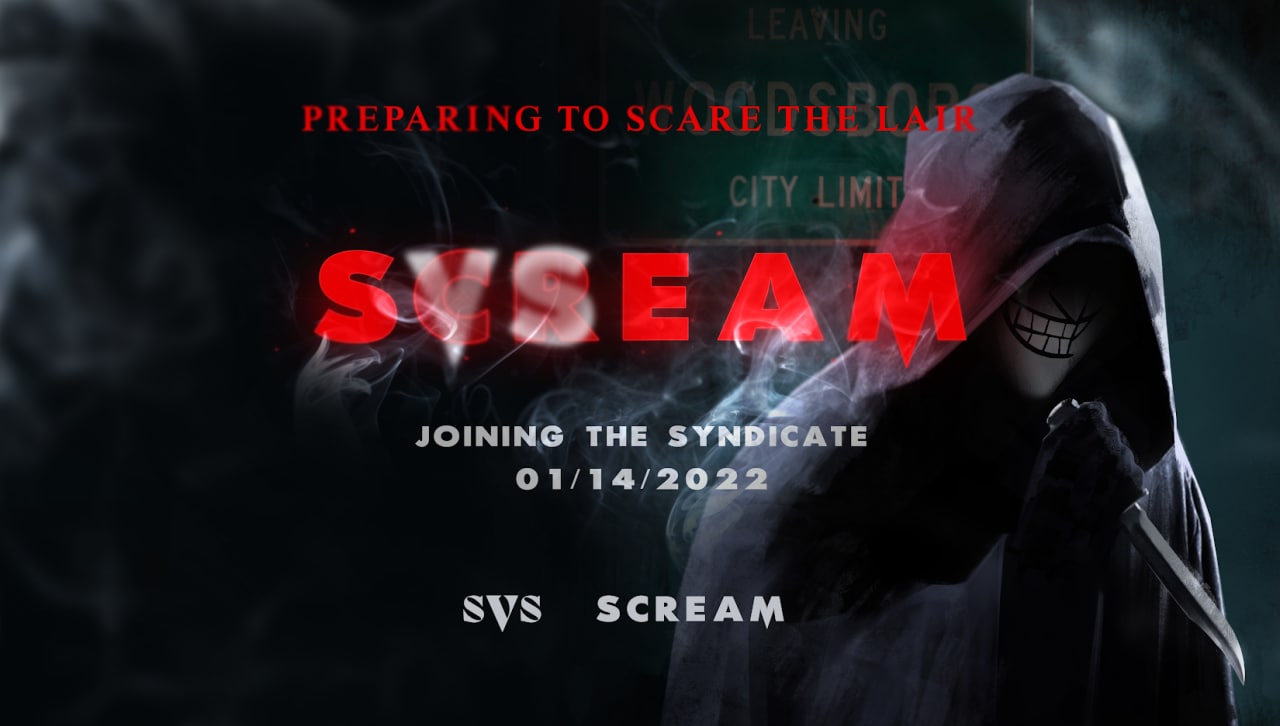
The partnership between Scream and the Sneaky Vampire Syndicate (SVS) is a remarkable development. While the NFT project is very successful and a topic of debate, partnering with a major film release has not been done before. More specifically, it has not been done by any NFT project, creating an exciting precedent for future collaborations. Sneaky Vampire Syndicate ad Scream's team will promote the latest film in the franchise ahead of the release on January 14, 2022.
More importantly, the partnership brings real-world benefits to holders of Sneaky Vampire Syndicate NFTs. The non-fungible token collection already provides much utility to holders, although there is always room for improvement. Blurring the line between the NFT space and mainstream media remains the number one priority.
The collaboration between Scream's team and the Sneaky Vampire Syndicate revolves around a fan art contest starting on December 17. The contest incentives the SVS and Scream communities to post fan art influenced by this collaborative effort using the official creative assets released as inspiration. Moreover, the SVS and @ScreamMovies social platforms will engage with all entries submitted by enthusiasts.
The fan art contest runs until January 4, which is when the Blood Raffle Entry period kicks off, which runs until January 10. During this week, the Scream film will allocate several pairs of tickets for advanced screenings across North America for SVS holders. All holders of a Sneaky Vampire Syndicate NFT can enter the Raffle by using the $BLOOD utility token to win advanced screening tickets.
Additionally, Blood Raffle participants can win a limited print (1 of 500) of the creative asset released on December 16 or a free ticket to the film when it is officially released across cinemas. Moreover, holders staking SVS NFTs receive three $BLOOD tokens every day, allowing everyone to enter this Raffle. Advanced screenings and free tickets are exclusive to the US, but the limited print can be shipped to SVS holders worldwide.
SVS Holders who attend the screenings will receive a gift featuring various Scream and SVS-branded merchandise items and collectibles. The collaboration will bring more attention to the Scream and Sneaky Vampire Syndicate franchises and sets an industry-first in the NFT space.
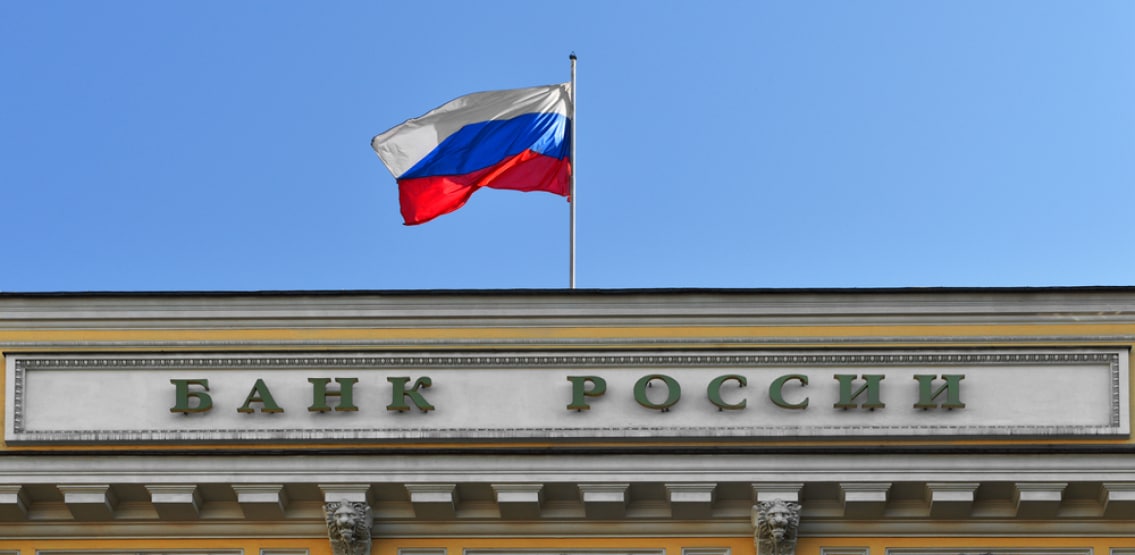
The Bank Of Russia Has Announced That They Intend To Regulate Rather Than Ban Cryptocurrencies.
The Deputy Chairman of the Bank of Russia has recently revealed that they intend to regulate, rather than ban, cryptocurrencies.
The Deputy Chairman of the Central Bank Vladimir Chistyukhin told reporters on Monday that Russia aims to regulate the circulation of cryptocurrencies,
The regulator also referred to changes in legislation that would enable cryptocurrencies to circulate, as opposed to a ban on transfers of funds from citizens' accounts in Russian banks to crypto exchanges that many were concerned about.
"I think that we will resolve the issue through amendments to the legislation. There will be a more precise definition of how cryptocurrencies can circulate," Chistyukhin said.
The Bank of Russia previously released a list of requirements for banks to use when determining suspicious transactions, including cryptocurrency transactions, back in September which followed an earlier recommendation in July advising against the listing of securities tied to crypto assets on Russian stock exchanges.
The Bank of Russia is currently preparing a report on cryptocurrencies that will provide greater clarity on the role of cryptocurrencies in Russian finance, Chistyukhin revealed:
“I think we will publish a report on cryptocurrencies in the near future. This report will contain our approaches to the place for cryptocurrency we see in the Russian financial market. I give a hint – we do not see a place for cryptocurrency in the Russian financial market,”.
According to the latest reports from local media, Russian citizens and businesses will have the right to acquire and store cryptocurrency, but will not be able to do this through domestic infrastructure or intermediaries.
Despite the insinuation that cryptocurrency will not be banned, the Deputy Head of the Central Bank’s ‘hint’ that cryptocurrency will have no place in Russia’s financial market may see the digital currency unable to thrive, if legislators proceed to restrict rather than aid its growth.
Binance-Backed Shark Metaverse StarSharks Raises $4.8 Million From Dozens Of Prominent Investors
Blockchain investors continue to take note of new developments bringing the metaverse one step closer. The approach by StarSharks to disrupt GameFi and make NFTs transferrable within the metaverse changes the nature of this entire industry.
StarSharks has closed a $4.8 million private round to disrupt the GameFi aspect of non-fungible tokens and the metaverse. Building the shark metaverse will help users, developers, and investors transfer NFTs across different games within this ecosystem. Moreover, there will be functionality for owning, mating, and trading shark NFTs globally and without intermediaries.
As a Binance-backed venture, StarSharks has attracted a $4.8 million financial injection through a private round. Participants include 3 Commas Capital, Bas1s Ventures, Everest Ventures Group, Forward Analytics, Geekcaptel, Hyperedge Capital. LD Capital, Unix, YBB Foundation, and many others. Dozens of respected companies contributed to the round, amplifying the appeal of what StarSharks will bring to the table.
StarSharks CEO Franky adds:
"StarSharks is dedicated to developing a state-of-art blockchain game platform, to share and maximize the value of creativity through co-creation. We are grateful to be supported by over 30 prestigious institutional investors and communities who believe in StarSharks' vision, and we look forward to building the game platform of the next generation together."
Ahead of the private round, StarSharks received a strategic investment from Binance Labs, the incubator and venture capital arm of Binance. StarSharks' founders include individuals who have worked for Timi Studio, Binance, and Google. Moreover, the shark metaverse will be built on the Binance Smart Chain, as it is an efficient, effective, and powerful blockchain network to use.
StarSharks intends to disrupt the GameFi industry and provide freedom to in-game assets. Currently, these assets are limited to one game, even if the overarching company has multiple titles under its banner. With StarSharks, NFT holders can transfer assets across the different games, creating more appeal, liquidity, and utility.
An extra feature of SurfSharks is how users can either buy n NFT to access the metaverse or rent one from other players. The concept of rent-to-play provides exposure to the metaverse for those who don't have sufficient capital to purchase entry NFTs right away. However, they can still earn in-game rewards with rented NFTs, although they will split earnings with the original asset owner.

Decentraland To Recreate One Times Square's New Year's Eve Drop In The Metaverse
Crypto investment firm Digital Currency Group (DCG) has partnered with Jamestown, a real estate investment and management firm, to launch a recreated version of One Times Square on the Decentraland metaverse.
Known for its annual New Year's Eve Ball Drop, One Times Square has become a staple cultural site, with the event being broadcasted and streamed worldwide. The site itself is a 26-story structure built right in the middle of New York City's Time Square. The property is owned by Jamestown. Every year-end, the New Year’s Eve Ball Drop Celebration is hosted from its rooftop, with the event beginning at dusk. This year, the event will be replicated, except this time, it's on the metaverse.
"The future of real estate is the thoughtful integration of the virtual and physical worlds, optimized for user experience. The metaverse is an important part of the evolution of real estate and the built environment. Whereas physical real estate is largely limited to people with geographic proximity, the metaverse can give people around the world meaningful access to places through immersive virtual experiences." shared Jamestown's President, Michael Phillips.
The virtual version of One Times Square on Decentraland will have its own digital New Year's Eve Ball, with its own event starting at an hour before midnight EST. This event marks the first time that a prominent cultural celebration such as the New Year's Eve Ball Drop is replicated into the metaverse. The metaverse New Year's Eve celebration will coincide with Decentraland's MetaFest 2022, a global party that would feature music and entertainment acts, rooftop VIP lounges, CryptoArt galleries, and immersive games.
"The metaverse is quickly evolving to bring together the most interesting and alluring parts of our favorite physical places around the world. From destinations, to gaming, education, retail and more, we can expect the metaverse to revolutionize our current online experience. This event highlights how virtual events can cohesively integrate with real ones in an effort to bring once-in-a-lifetime experiences to so many that would have never been able to participate otherwise." shares Simon Koster, DCG's Head of Real Estate.
Behind the metaverse instance of Decentraland's One Times Square are two metaverse development firms, GrowYourBase (GYB), a community-focused NFT platform, and MetaVenture Studios, GYB's in-house design and development studio. The One Times Square metaverse instance will be located at -106, -119 on the Decentraland platform, and is set to be the first high-rise build in Decentraland, featuring a recreation of the physical asset's digital signage and the New Year's Eve Ball. The metaverse build will span roughly 170 LAND parcels, and will include five other structures that have distinct exteriors and activated interiors.

Coin Race: Top Winners/Losers of December, Q4, and 2021
2022 is here, and it’s time to take a look at how the market has performed not just over the past month, but also in the 4th quarter of 2021, and during the full year behind us. And to summarize it all in one sentence: 2021 was mostly a good year for the crypto market, although it certainly saw its fair share of volatility.
Starting with the first half of 2021, market participants would probably say that the most memorable about this period was the epic rise in the price of both bitcoin (BTC) and many altcoins, which was followed by a crash in BTC of more than 50% between April and May.
However, a number of important events also took place during the first half of the year. Among these was the craze surrounding dogecoin (DOGE), which entered a parabolic rally to an all-time high of USD 0.74 in May, Tesla chief Elon Musk announcing that his company added USD 1.5bn worth of BTC to its balance sheet, and the beginning of “the great migration” of bitcoin miners out of China.
Moving forward and into the second half of 2021, July barely managed to end up in the green zone after most coins had fallen early in the month. At this point, however, the party had already ended for DOGE holders, who saw their favorite meme coin fall by 14% for the month (as the only coin in the top 10 that was down that month).
In August, decentralized finance (DeFi)-related tokens and smart contract platforms that aim to compete with Ethereum (ETH) stood out as the biggest winners. Cardano (ADA) and polkadot (DOT) both roughly doubled in price this month, while solana (SOL) saw a 250% rally.
Next, September was marked by two of the biggest stories of the entire year -- namely the implementation of the law that made bitcoin legal tender in El Salvador, and China banning nearly all things crypto once again.
October, dubbed “Uptober” by the community, was – as the name suggests – a good month for the crypto market. Bitcoin holders could watch their coin touch the USD 67,000 mark for the first time, while the “dogecoin killer” shiba inu (SHIB) for the first time entered the top 10 list of the largest coins by market capitalization.
November was the month when both BTC and ETH reached their all-time highs, with BTC hitting USD 69,000 and ETH reaching close to USD 4,870. However, November was also the month when the meme coin craze ended (for now), with DOGE and SHIB down by 21% and 34%, respectively, for the month.
Lastly, the month of December saw mostly lower prices for major cryptocurrencies, with BTC and ETH both down by close to 20% for the month. The month was further marked by the confirmed failure of many of the most bullish BTC price predictions for 2021. Among these, bitcoin analyst PlanB’s “worst case” bitcoin price target for the end of 2021 of USD 135,000 is perhaps the best-known example.

OpenSea Valued At An Eye-Catching $13 Billion After Series C Fundraise
After reports began emerging about its funding effort, OpenSea announced that it had successfully closed a $300 million funding round. OpenSea’s valuation showed the unparalleled growth experienced by the platform in recent months.
Sources stated that OpenSea, which had raised at a valuation of $1.5 billion last year, was planning a raise at a valuation of almost $15 billion before investors settled at a lower figure. The figure of $13 billion was first reported by Eric Newcomer while also revealing that Coatue Management and Paradigm were leading the round. Other significant participants in the round include Kathryn Haun’s new Web3 and crypto-focused investment fund. Haun was previously a partner at a16z.
OpenSea has seen its transaction volumes touch $2.4 billion in just the past 30 days and brought in millions of dollars in transaction fees. OpenSea’s valuation has seen unprecedented growth, given that just last year, it had been valued at $1.5 billion by Andreessen Horowitz’s crypto arm. The growth, while reflecting OpenSea’s own growth, also reflects the overall growth in the space and that of other NFT firms such as Dapper Labs, which raised $7.6 billion last year.
A Tweet by Joe Pompliano highlighted the scale of OpenSea’s growth. Pompliano highlighted the growth in the platform’s transaction volumes, which went from $474k in 2018 to $8 million in 2019. Transaction volumes reached $24 million in 2020 and then to a jaw-dropping $15 billion in 2021.
OpenSea currently has very few competitors in the market, although that landscape could change, with Coinbase eying the market and several other NFT marketplaces set to launch, with the NFT marketplace only set to grow further in 2022.
While confirming the funding, Devin Finzer, Co-founder and CEO of OpenSea, stated in a blog post how the funding would be utilized. He stated that the funding would be used towards customer support and safety and hiring, and product development. He also stated that OpenSea would be investing in the NFT and Web3 community.
“We are committed to expanding the entire NFT ecosystem. This quarter, we are launching a grant program to give us the opportunity to directly support the developers, builders, and creators shaping the future of the NFT space. Our ambition is to foster the scale and growth of the broader NFT ecosystem, including raising the profile of emerging creators and investing in the people who shape the NFT space for the better today.”
The new capital will enable OpenSea to consolidate its position in the NFT market while also staying ahead of new players emerging in the market.

Island Girl Token: Play2Earn, Metaverse, See You On The Island!
The Island Girl Token is the biggest Metaverse launch of 2022! It is a community-driven token on the Binance Smart Chain (BSC) and combines real-world pleasures with blockchain through NFTs, Metaverse and Play2Earn Gaming.
With the Island Girl Token ($IGIRL) holders are automatically rewarded with more $IGIRL tokens on every transaction. The project was carefully, and fair launched, having its liquidity locked up for up to 94 years, and its ownership renounced.
The story of Island Girl
The Island Girl project emerged from a recent viral TikTok video of two famous twin celebrities from South Florida. They made a freestyle video about the topic of being an Island Boy. Island Boy needed Island Girl, and the success story was there, with more organic people joining the Island Girl community.
The Island Girl Tokenomics are built with 2% Rewards, 2% added to Liquidity and 6% to Marketing. With their so called “Fair Launch” about 1.5 months ago, the price has increased by a multiple. We have seen a lot of promotion and talk about Island Girl by big Youtubers and Twitter Influencers.
Play2Earn Game
For their upcoming Play2Earn Game, Island Girl Token currently offers 10,000 Mystery Boxes with 6 different characters as NFT that are randomly allocated on each buy. The NFTs will be the playable characters in the game and at least one of them is needed.
Depending on the rarity level, characters will have added features such as higher range, shield, double jump, or extra life. Check out their Mystery Box NFTs website here.
Island Girl Metaverse
With all that has been mentioned, the team still has more in stock. The project aims to fully launch its own fully implemented Metaverse game in the coming months. This will bring more breathtaking features and allow participants to move around, discover goodies, buy land, build items, interact with others, and many more! All accessible with their IGIRL tokens. A first trailer of the Metaverse should be released in the last weeks of January 2022! #Staytuned
See You on the Island, eh… what?
You heard right! The ultimative goal of the Island Girl Token will be to buy a Real Island and build a resort for its holders. Crazy! Right? The area has been already set since most of the community is from Indonesia. We will have exclusive events, parties and Island Girl Token holders will be able to relax in the resort. Find out more about the Island Girl token, tickets are available in the form of unique NFTs, giveaways and contests. Get involved and join the Island Girl community now!

A First For Multi-Chain Staking By Community Approval From Orbs
Orbs is getting set to pioneer multi-chain staking through Ethereum and Polygon through Community Proposal.
Orbs is ahead of the curve in the blockchain field, having accomplished many firsts, the latest of which is its pioneering approach to staking, which allows users to stake across leading chains, Ethereum and Polygon. Polygon is a Layer 2 chain, which takes the security elements from Ethereum, but realizes the benefits of lightning fast transaction execution, with reasonable fees due to its unique architecture.
Staking on Polygon means that users can leverage returns on their ORBS tokens, while benefiting from Ethereum’s core technologies. This gives Orbs Delegators the ability to stake on their preferred chain in a multi chain approach.
Orbs Network can be considered a separate execution layer that operates in conjunction with EVM-based L1’s and L2's chains, in what the team is hoping will become the new Layer-3 of the blockchain realm. It makes activities conducted on both Layer 1 and Layer 2 chains more sophisticated through the deployment of an extra layer of smart contracts.
The team at Orbs are big believers in community governance and the holders of ORBS can vote on the future path of the multi chain staking functionality. If the members are in agreement, then Orbs can deploy Proof of Stake smart contracts directly on polygon and then further contracts to authenticate the bridge between the two chains through the results of the governing committee.
The Orbs community can now weigh in on the multi-chain staking proposal, for instance if a new product or feature would be best served on Polygon rather than Ethereum, then this would have to pass agreement through the community members.
Rio De Janeiro Will Invest 1% Of Treasury Into Bitcoin - The Dominos Teeter
The mayor of Rio De Janeiro, Eduardo Paes, has announced that his city will become another crypto hub, and that it will be the first Brazilian city to invest 1% of its treasury into Bitcoin.
Mayor Paes was attending the Rio Innovation Week alongside the mayor of Miami Francis Suarez, who is also pro Bitcoin, and named his own city a cryptocurrency hub only last year.
Where Miami is currently the hub for crypto in North America, Paes has just made Rio the major hub of South America with this announcement. He said:
“Rio de Janeiro has everything it takes to become the tech capital of South America. Events like the Rio Innovation Week come to strengthen the city’s image as the perfect place to work, live, and innovate.”
Following in the footsteps of Miami’s mayor, Paes is also looking at allowing the city’s citizens to pay their taxes in bitcoin, and giving them a 10% discount incentive for doing so.
In November last year, Brazilian congressman Luiz Goularte proposed a bill that would enable all public and private sector workers to be paid in bitcoin. The bill laid out that the workers would be allowed to stipulate the percentage of crypto and fiat currency that they would receive. The bill also proposed that all employers would be bound to honour the choices.
The fact that Rio De Janeiro is such a major city in Brazil, based on population, and economic development, makes this announcement extremely promising for bitcoin and other cryptocurrencies.
The odds must surely be on other cities doing a similar thing in order not to get left behind. Another country following after El Salvador must also be on the cards.
The dominos are starting to fall. Once those first few teeter and fall it will be nigh on impossible for governments tied into the failing fiat monetary system to put a stop to it.
The trickle will become a flood, and all cities and countries that want to help their citizens escape the current stranglehold of the banks will no doubt want to give their citizens the choice and opportunity offered by private and self-owned crypto assets such as bitcoin.
