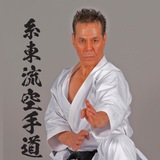
Kaizen (改善) means “continuous improvement” or “change for better.” It teaches that small improvements, practiced consistently, create great results over time. In Japanese martial arts, Kaizen goes far beyond technique; it reflects the development of mind, attitude, character, and daily discipline.
#kaizen #改善 #karate #tanzadeh #shitokai #shitoryu
Juroku (十六) Kata
Juroku (十六), meaning “Sixteen” in Japanese, is a relatively modern kata developed by Kaiso Kenwa Mabuni, the founder of Shitoryu Karate.
The kata was created in 1941, the 16th year of the Showa era (Showa 16), which explains its name. The number sixteen refers to the year of its creation and carries no additional symbolic meaning.
Although Juroku consists of relatively few movements, the kata incorporates the five fundamental principles of the Shitoryu blocking system, known as Uke no Go Gensoku (受けの五原則).
Juroku also emphasizes the essential principles of Tenshin Happo (転身八方), developing body shifting, directional movement, and coordinated offensive and defensive techniques.
#juroku #kenwamabuni #shitokai #worldkarate #Karate #糸東会 #糸東流 #空手道
Unshu (雲手), literally “cloud hands”, It contains many intricate hand techniques, such as the Ippon Nukite (one finger strike) in the opening sequence. Unshu was created by Seisho Aragaki sometime around 1860-1870. Aragaki was a Japanese and Chinese language interpreter to the Shuri court, and a master of monk fist and white crane styles. It is somewhat a condensation of other katas (e.g., Bassai, Kosokun, Jion, Wanshu, Jitte, Chinto and Niseishi), hence it is essential to have mastered these before practicing Unshu.
#unshu #shitoryu #worldshitoryu #雲手 #空手道 #空手 #糸東流 #糸東会
The bronze bust of Ryuso Kenwa Mabuni, the founder of Shitoryu Karate, has now taken its permanent place at the WSKF and Shitokai Honbu Dojo in Japan.
This meaningful tribute honors the life, teachings, and extraordinary legacy of our founder. His spirit, philosophy, and dedication to Karate-do continue to inspire generations of practitioners around the world.
Standing proudly at the Honbu Dojo, this bust serves as a lasting symbol of respect, gratitude, and our commitment to preserving and passing on the authentic traditions and noble values of Shitoryu Karate to future generations.
His legacy lives on through every generation dedicated to the true spirit of Shitoryu Karate.
With profound respect and eternal gratitude to Ryuso Kenwa Mabuni.
#shitoryu #kenwamabuni #空手道 #空手 #糸東流 #糸東会
Media is too big
VIEW IN TELEGRAM
Bassai Dai (拔塞大)
Bassai Dai captures the sharp, decisive spirit of Shuri-te, where movement is controlled yet explosive, and each technique expresses a sudden breakthrough against pressure. Its rhythm shifts between composed readiness and immediate action, reflecting a mind that reads the moment and responds without hesitation. A strong sense of strategy runs throughout the kata, as each movement creates a path forward with precision, timing, and clear intent.
#拔塞大 #bassaidai #糸東会 #糸東流 #shitoryu #日本空手
Sonkei (尊敬) is a cornerstone philosophy in karate and all traditional Japanese martial arts. Respect is the heart of karate. Every bow, every lesson, every partner is a chance to honor others and the art itself. Sonkei means respect with honor, a deep acknowledgment of the value, skill, and dignity of others. It’s more than simple politeness; it’s a conscious attitude of reverence for teachers, fellow students, opponents, and the art itself. Sonkei is expressed in many ways: bowing at the dojo (Rei), acknowledging instructors and seniors, respecting training partners, honoring opponents in kumite, and more.
#sonkei #尊敬 #shitokai #Karate #糸東会 #糸東流 #空手道 #糸東流空手
Media is too big
VIEW IN TELEGRAM
Heian Yondan, 平安四段, in Shitoryu Karatedo develops mobility, balance, coordination, directional control, and smooth transition from defense to counterattack. The kata places strong emphasis on Neko Ashi Dachi, while Kosa Dachi plays an important role in its transitional movements and changes of direction. Its techniques include Kote Uke, Hiji Sasae Uke, Sukui Uke, Kosa Uke, Shuto Uke, kicks, Hiji Ate, and Hiza Geri. Heian Yondan also develops the coordinated use of both hands, where one hand receives or controls while the other prepares or attacks. The rhythm changes between controlled movement and sharp Kime, helping the practitioner develop relaxation, acceleration, timing, and continuous technique. Overall, Heian Yondan teaches the karateka to receive, control, reposition, and counter with mobility, balance, and efficient body movement.
#heiankata #平安四段 #shitokai #shitoryu #糸東会 #糸東流 #空手道
🥋 MEXICO 2026 | INTERNATIONAL SHITORYU KARATE EVENT
SAN LUIS POTOSÍ, MEXICO
Join us for three days of Shitoryu Karate, technical seminars, international friendship, and celebration of the 50th Anniversary of Sensei Toshiaki Nogiwa.
🏆 COPA IWATA
🏆 COPA NOGIWA
🥋 INTERNATIONAL TECHNICAL SEMINARS
📅 November 20–22, 2026
📍 Convention Center, Hotel María Dolores
San Luis Potosí, Mexico
This special gathering brings together karate practitioners to share technical knowledge, strengthen international friendships, and celebrate the traditions and values of Shitoryu Karate.
Together we share our Karate’s noble values to better serve others.
📩 For information and registration:
nogiwatoshiaki@hotmail.com
shitoryuslp@hotmail.com
See you in San Luis Potosí!
#nogivecup #iwatacup #shitokai #wskf #pskf #shitoryu #mexico
Kisoku no Donto, 気息の呑吐, (the Principle of Inhale–Exhale Control) means controlling the rhythm of breathing in kata, when to inhale and when to exhale. It is one of the classic kata principles. You match breath to movement, so power, posture, and timing stay consistent. Kisoku no Donto is structured breath control for kata. You choose inhale or exhale per technique to support power, posture, and timing.
Use abdominal breathing to load during preparation, release at impact, and maintain steady internal pressure during transitions. Naha-te kata such as Sanchin and Tensho are classic training models for this type of breathing control, which you can also apply in kihon practice and other kata as appropriate.
Six breathing patterns often taught under Kisoku no Donto:
1-Long inhale, long exhale, 2-Long inhale, short exhale, 3-Short inhale, long exhale, 4-Short inhale, short exhale.
Combinations of the above (1 to 4) are chosen to fit specific techniques.
波形呑吐 (Hakei Donto) – Wave-Shaped Breathing. Continuous, seamless breathing where inhale and exhale merge naturally without pause, like a wave. Represents the most advanced form of Kisoku no Donto, where breath and motion become one.
#kokyuho #karatedo #kisokunodonto #shitoryu
Media is too big
VIEW IN TELEGRAM
Matsukaze (松風) Kata
Matsukaze 松風 (“Wind in the Pines”). Master Kenwa Mabuni renamed the kata Matsukaze from its original name Wankan, a kata practiced in Okinawa's Tomari region . Matsukaze is considered an intermediate kata in Shito-ryu. It includes both attacking and defensive strategies performed simultaneously at various stages. It is stated that the phrase "Wind in the Pines" implies strength but adaptability in the face of adversity, similar to a pine tree on top of a mountain facing strong winds. As a result, all movement is forward, either driving the opponent backwards or remaining still.
#matsukaze #松風 #shitoryu #糸東会 #糸東流 #空手道
Breathing Training Methods 呼吸法 (Kokyūhō)
Proper breathing plays an essential role in Karate training. It supports body control, concentration, relaxation, and the coordination of movement.
Three simple breathing exercises help develop breath control, timing, and rhythm.
1. Circle Breathing
円形呼吸法 (Enkei Kokyūhō)
Inhale for 4 seconds and exhale for 4 seconds in a smooth, continuous cycle. Maintain a natural rhythm without holding your breath between phases.
2. Triangle Breathing
三角呼吸法 (Sankaku Kokyūhō)
Follow three equal phases:
Inhale for 4 seconds.
Hold for 4 seconds.
Exhale for 4 seconds.
This method develops breathing discipline, control, and rhythm.
3. Square Breathing
四角呼吸法 (Shikaku Kokyūhō)
Follow four equal phases:
Inhale for 4 seconds.
Hold for 4 seconds.
Exhale for 4 seconds.
Hold for 4 seconds.
This technique promotes calmness, concentration, and controlled breathing.
Important: Abdominal (Diaphragmatic) Breathing
腹式呼吸 (Fukushiki Kokyū)
All three methods should be practiced using abdominal or diaphragmatic breathing. During inhalation, allow the diaphragm to descend and the abdomen to expand naturally. During exhalation, allow the abdomen to gently contract as the diaphragm relaxes.
Keep your shoulders relaxed and avoid unnecessary tension. Begin with a comfortable rhythm and never force your breathing.
In Karate, breathing should work in harmony with posture, body movement, timing, and the application of power.
Think Dynamic. Be Dynamic. Train Dynamic.
This media is not supported in your browser
VIEW IN TELEGRAM
Mastery begins with the fundamentals. Make sure your foundation is strong. Every block, punch, and kick is an opportunity to improve your technique. The mastery of the fundamentals is the key to success.
Keep in mind that each attack, block, and kick brings you closer to mastery. Continue to work hard, refine your strategies, and let the accuracy of your actions to create a route to success.
#shitoryu #糸東会 #糸東流 #空手道 #日本空手 #沖縄空手
正確 (Seikaku): Precision and Accuracy in Karate
In Shitoryu Karate, Seikaku emphasizes the precise execution of techniques through correct body alignment, posture, timing, distance, and control. Speed and power must be supported by accuracy and proper coordination. Through consistent practice of Kihon, Kata, and Kumite, precision becomes a natural part of movement, making every technique more efficient, effective, and reliable.
Accuracy makes every technique count. すべての技に価値を与えるのは、正確さである。
#seikaku #accuracy #正確 #shitoryu #karate #糸東会 #糸東流 #空手道
Media is too big
VIEW IN TELEGRAM
Kicks develop more than flexibility and power. They strengthen balance, coordination, control, confidence, and many other important qualities. Do not train only your favourite techniques. Work on your weaknesses and develop both your hands and legs. Strong legs create strong movement. Good kicks create more options. Never neglect your kicks.
#糸東流 #糸東会 #shitoryu #糸東流空手 #Karatedo
Wonderful Memories from Portugal!
I recently had the pleasure of conducting a Shitoryu Karate Technical Seminar in Portugal, organized and hosted by Karate Clube Margem Sul, under the leadership of Sensei Ricardo Camisão, and sanctioned by Shitoryu Karate Portugal, under the leadership of Sensei Carlos Pereira.
My sincere appreciation to Sensei Ricardo Camisão and Sensei Carlos Pereira for their warm hospitality, excellent organization, and continued dedication to promoting and developing Shitoryu Karate in Portugal.
A special thank you to all the instructors, students, and participants for their enthusiasm, dedication, and positive spirit throughout the seminar.
Beyond the technical training, I truly enjoyed the friendship, wonderful moments, and time we shared together.
It was a pleasure to see everyone training with such passion and commitment. I look forward to seeing you all again and continuing our journey of learning, sharing, and growing together through Karate.
Together we share our Karate's noble values to better serve others.
👇👇👇👇👇👇👇👇👇👇👇👇👇👇