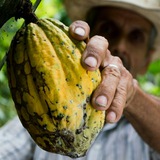
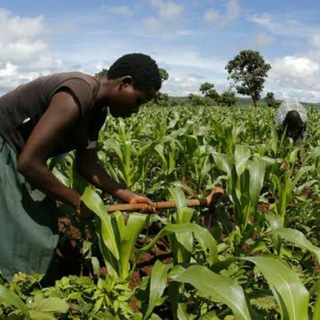
Great farmers Great Nation
Agriculture accounts for 32% of Africa's GDP and offers greatest potential for poverty reduction and job creation. So pls don't stop in doing good
Agriculture accounts for 32% of Africa's GDP and offers greatest potential for poverty reduction and job creation. So pls don't stop in doing good
“Maize stemborers are among the most damaging insect pests, causing variable but sometimes devastating yield losses.” According to researcher, Yodit Kebede, pest control must be based around the overall landscape setting and consider farmers’ needs to select which control methods will be effective. Read more about her research here: http://bit.ly/2DLjbbG
#Africa #Stemborers #PestManagement #IPM Wageningen University & Research MAIZE
#Africa #Stemborers #PestManagement #IPM Wageningen University & Research MAIZE
FHMC AFRICA pinned «Great farmers Great Nation Agriculture accounts for 32% of Africa's GDP and offers greatest potential for poverty reduction and job creation. So pls don't stop in doing good»
Good afternoon great farmers, am very glad to announce to you, the start up of this group E magazine. The E magazine will be a Monthly series, featuring members of this group with fascinating stories and interviews. The E magazine will be titled
AFRICA AGRICULTURAL MAGAZINE.
This month series will feature 5 Agriculturist from this group, this 5 individuals will be notified soon.
The editorial team will be headed by MISS RABIYAT USMAN ( media consultant Nigeria)
AFRICA AGRICULTURAL MAGAZINE.
This month series will feature 5 Agriculturist from this group, this 5 individuals will be notified soon.
The editorial team will be headed by MISS RABIYAT USMAN ( media consultant Nigeria)
PROTEIN SUBSTITUTES TO REPLACE LAYERS FEED
2. Cottonseed Meal
Cottonseed meal is what is left after the cotton has been ginned and the seeds have had all of the oil extracted out of them. The remains get fed to livestock as a protein boost.
So if you happen to live where there is a cotton farm nearby (I grew up near one. They are gorgeous!) you could potentially strike up a deal there and get your own cotton meal for less money.
You can also buy cottonseed and make your own cotton seed meal. Remember, cottonseed meal is also used as a fertilizer so this is one you’ll want to use caution when feeding to your chickens due to toxicity.
PLS READ A STORY OF GABE BROWN TITLED DIRT TO SOIL
Gabe Brown didn’t set out to change the world when he first started working alongside his father-in-law on the family farm in North Dakota. But as a series of weather-related crop disasters put Brown and his wife, Shelly, in desperate financial straits, they started making bold changes to their farm. Brown—in an effort to simply survive—began experimenting with new practices he’d learned about from reading and talking with innovative researchers and ranchers. As he and his family struggled to keep the farm viable, they found themselves on an amazing journey into a new type of farming: regenerative agriculture.
Brown dropped the use of most of the herbicides, insecticides, and synthetic fertilizers that are a standard part of conventional agriculture. He switched to no-till planting, started planting diverse cover crops mixes, and changed his grazing practices. In so doing Brown transformed a degraded farm ecosystem into one full of life—starting with the soil and working his way up, one plant and one animal at a time.
In Dirt to Soil Gabe Brown tells the story of that amazing journey and offers a wealth of innovative solutions to our most pressing and complex contemporary agricultural challenge—restoring the soil. The Brown’s Ranch model, developed over twenty years of experimentation and refinement, focuses on regenerating resources by continuously enhancing the living biology in the soil. Using regenerative agricultural principles, Brown’s Ranch has grown several inches of new topsoil in only twenty years! The 5,000-acre ranch profitably produces a wide variety of cash crops and cover crops as well as grass-finished beef and lamb, pastured laying hens, broilers, and pastured pork, all marketed directly to consumers.
The key is how we think, Brown says. In the industrial agricultural model, all thoughts are focused on killing things. But that mindset was also killing diversity, soil, and profit, Brown realized. Now he channels his creative thinking toward how he can get more life on the land—more plants, animals, and beneficial insects. “The greatest roadblock to solving a problem,” Brown says, “is the human mind.”
1. Classic strawberries
Classic strawberries create large amounts of fruit in a single harvest each year, generally in June.
2. Perpetual or Ever-bearing strawberries
Perpetual strawberries provide two crops each year: one in June and the other in late summer. They are not as prolific as the classic strawberries, but fine nonetheless.
3. Alpine strawberries
Alpine strawberries grow like ground cover and produce teeny tiny strawberries from June until the fall.
"Hey farmer,
Thank you for joining our community. We are here to connect together and achieve zero hunger.
Welcome on board
Thank you for joining our community. We are here to connect together and achieve zero hunger.
Welcome on board
FHMC AFRICA pinned «"Hey farmer, Thank you for joining our community. We are here to connect together and achieve zero hunger. Welcome on board»
agricultural innovation system is about people, the knowledge, technology, infrastructure and cultures they have created or learned, who they work with, and what new ideas they are experimenting with. The approach represents a major change in the way that the production of knowledge is viewed, and thus supported.
Women in Africa represent nearly 70 percent of the workforce in agriculture and contribute up to 90 percent of the labor, but many women lose land after losing a husband. In fact, in Zambia, nearly 33 percent of widows lose access to family land. Unlike women, men have greater access to productive resources and therefore produce more per acre. By giving women access to resources, agriculture in Africa can produce up to 30 percent more and reduce hunger by 12 to 17 percent. In other words, women in Africa have the potential to feed as much as 150 million people.
The owner of this channel has been inactive for the last 18 months. If they remain inactive for the next 7 days, they may lose their account and admin rights in this channel. The contents of the channel will remain accessible for all users.