Russian Ministry Slams Bill to Ban Crypto: Will India Follow Suit?
The world is standing still this year, every other day we come across something that makes us question, what else are we going to witness this year? And yesterday it was yet another day where the crypto community in India was left in doubt when the finance ministry of India proposed a bill in the parliament to ban crypto. As of now, we are all skeptical about what is going to be the final verdict. Well, talking about the verdict, we have Russia who has taken a step and slammed the bill for the crypto ban.
The Ministry of Economic Development of Russia has passed on a letter to the Duma State, which is the lower house of the Federal Assembly of Russia, criticized the bill that asks to ban cryptocurrency in the country. The letter sent by the ministry throws light on the idea of “creation of mechanisms for the controlled circulation of cryptocurrencies.”
Since the Indian government also seems to have a plan to introduce a law to ban cryptocurrency, a lot of crypto enthusiasts are panicking about their investments and future prospects. On the contrary, the big names in the crypto industry seem to have an optimistic approach and are hoping for the best. Nischal Shetty, the CEO of WazirX, seems to believe in the Indian government immensely.
After the Russian ministry declared to slam the crypto bill, Shetty believes that that’s exactly how the Indian ministry is going to deal with this matter. He thinks that there can be some people who don’t want India to move ahead in technology, but its quite evident that one cannot unsee them. Shetty believes that the Russian ministry has made the right move, and even the Indian government will make a wise decision.
The Co-Founder of Crypto Kanoon, Kashif Raza, also released a detailed video on the decoding about the bill passed by the Indian government based on the article released by the Economic Times.
Raza states that the release of this article is not something that we need to panic about. The fact that the news is making rounds in the market is definitely something that creates a little hustle in our minds. But that’s not the final decision yet, and definitely, the government is supposedly going to take the right steps.

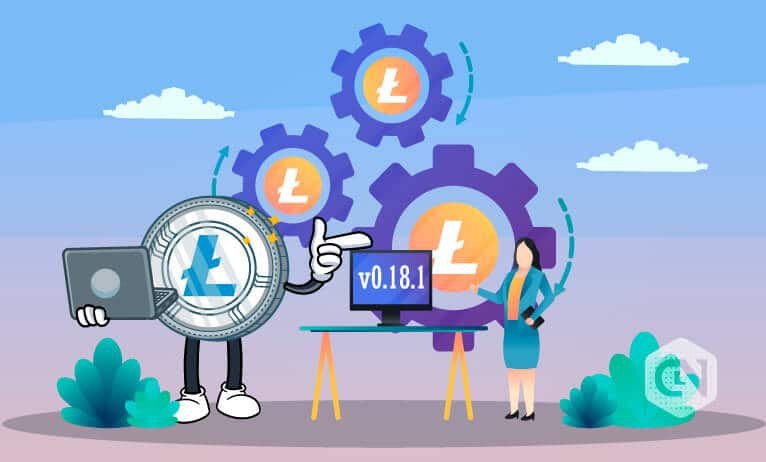
Litecoin Core v0.18.1 Now Released; Charlie Lee Tweets the News!
The creator of Litecoin, Charlie Lee, expressed his joy over the final release of Litecoin Core 0.18.1 through a tweet. He is thankful all to all the creators who have worked on this new update. He also talks about the upcoming release, i.e., Litecoin 0.20, which will make it stand in line with the latest Bitcoin Core.
With one more tweet further, Lee talks about the release of Litecoin 0.20, which is supposed to be done before David Burkett’s work for MimbleWimble is done. Burkett is a crypto-anarchist and grin developer. Lee wishes to see the 0.20 first and then release it, it will further include MW as the extension along with a soft fork.
With a further tweet, he talks about the addition of Jeremey Rubin’s CheckTemplateVerify (CTV) feature as the soft fork. Lee believes that this is a great feature, and adding this will allow us to test the capability of the new smart contract capabilities.
This new version comprises some latest features, bug fixes, and improves performance, and along with this, it also updates translations. The users are advised to update to this version soon.
If the users are running with the old version, they will have to first shut it down. The shutdown will take a few minutes or so. After it is completely shut down, the user will have to run an installer (on Windows). When the user runs version 0.15.0 or any newer version, their chain state database will be converted with a new format. The process may take a few minutes or approximately half an hour, and that depends on the user’s system speed.
The users should make a note that upgrading directly from 0.7.x without redownlo ading the blockchain will not be supported. The old wallet version is still supported as usual.
Helios Staking Joins Elrond Network as a Partner to Launch its Mainnet and Genesis Block
Crypto staking service provider Helios Staking announced on Monday that it has joined Elrond Network as a partner after helping it for months on its testnet. It will help and support Elrond as a partner to launch its mainnet and ERD token genesis block.
Elrond Network is a blockchain platform focused on enterprise-grade distributed applications and the internet economy. In the official announcement on Medium, Elrond stated that the network is ready and equipped to provide the Internet with the layer of speed and trust it requires. Talking about their partnership with Helios Staking, Elrond CIO Lucian Mincu said,
Elrond CIO Lucian Mincu said
Elrond Network co-founder, Lucian Mincu tweeted that the network has prospered by applying business thinking terms in everything. He also said that he finds the same quality in the Helios Staking team as well.
Helios Staking is a Dublin-based Staking-as-a-Service provider, dedicated towards the growth of Proof-of-Stake blockchain networks. It has been a long-time contributor to the Elrond testnet and its validator community. CEO Kevin Lydon said that the partnership with Elrond Network will allow them to further their digital services.
Kevin added,
Kevin added
As a part of the partnership agreement, Helios Staking will offer services like ERD tokens delegation and innovative staking products that assure guaranteed annualized returns.
Litecoin (LTC) Lacks Momentum & Trades in a Narrow Range
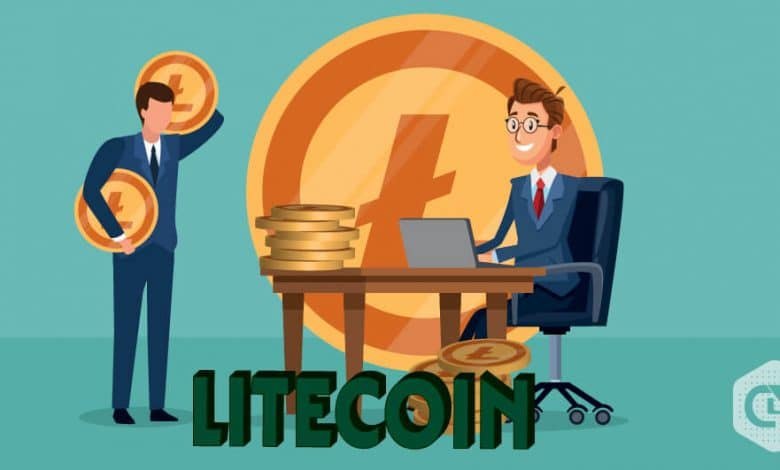
Litecoin, at the time of penning down this article, was trading at 43.94 against the US Dollar and is lacking support from both 50-day and 200-day MA on the 24-hourly chart. Additionally, it was just towards the end of the previous week, Litecoin Hashrate was hitting an All-Time High.
Litecoin Hashrate is a numerical value that reckons how many hashes are mined by LTC miners who solve blocks. The present Litecoin Hashrate is 221.05 TH/s and holds a mining difficulty of 7.87 M at a block height of 1,860,187. Now, the major catch here is not the speed of mining a particular block, but how long does it take to mine a block based on its difficulty level in a constant time frame.
With this, we see an amazing rise in the trading transactions of LTC against the US Dollar but is yet to gain pace in comparison to other altcoins of the market that are just trading amazing. However, with the beginning of the trading session today, Bitcoin gained an amazing pace and is hitting above $9.4k after a brief visit around $9.59k.
LTC/USD Chart By TradingView
Litecoin is appearing flat since the previous month and has been trading in the range of $39.11 to $50.5 with an intermittent dip recorded in the ongoing month at $19.84. Having said that, the coin has rebounded amazingly well from testing support around $19 to the current trading price.
However, there has been a fine uptrend seen after the massive market crash in March, which many altcoins are exhibiting simultaneously. But, LTC has restored the trading level around which it was trading at the onset of the year against the US Dollar.
The technicals have been holding a calm notion as the 20-day Bollinger Bands laid are seen squeezing, and the price trend of Litecoin is hitting the lower band, which shows lack of intraday momentum. The coin is also lacking steady support due to intraday rejection.
Helios Staking Joins Elrond Network as a Partner to Launch its Mainnet and Genesis Block
Crypto staking service provider Helios Staking announced on Monday that it has joined Elrond Network as a partner after helping it for months on its testnet. It will help and support Elrond as a partner to launch its mainnet and ERD token genesis block.
Elrond Network is a blockchain platform focused on enterprise-grade distributed applications and the internet economy. In the official announcement on Medium, Elrond stated that the network is ready and equipped to provide the Internet with the layer of speed and trust it requires. Talking about their partnership with Helios Staking, Elrond CIO Lucian Mincu said,
Elrond CIO Lucian Mincu said
Elrond Network co-founder, Lucian Mincu tweeted that the network has prospered by applying business thinking terms in everything. He also said that he finds the same quality in the Helios Staking team as well.
Helios Staking is a Dublin-based Staking-as-a-Service provider, dedicated towards the growth of Proof-of-Stake blockchain networks. It has been a long-time contributor to the Elrond testnet and its validator community. CEO Kevin Lydon said that the partnership with Elrond Network will allow them to further their digital services.
Kevin added,
Kevin added
As a part of the partnership agreement, Helios Staking will offer services like ERD tokens delegation and innovative staking products that assure guaranteed annualized returns.
Crypto staking service provider Helios Staking announced on Monday that it has joined Elrond Network as a partner after helping it for months on its testnet. It will help and support Elrond as a partner to launch its mainnet and ERD token genesis block.
Elrond Network is a blockchain platform focused on enterprise-grade distributed applications and the internet economy. In the official announcement on Medium, Elrond stated that the network is ready and equipped to provide the Internet with the layer of speed and trust it requires. Talking about their partnership with Helios Staking, Elrond CIO Lucian Mincu said,
Elrond CIO Lucian Mincu said
Elrond Network co-founder, Lucian Mincu tweeted that the network has prospered by applying business thinking terms in everything. He also said that he finds the same quality in the Helios Staking team as well.
Helios Staking is a Dublin-based Staking-as-a-Service provider, dedicated towards the growth of Proof-of-Stake blockchain networks. It has been a long-time contributor to the Elrond testnet and its validator community. CEO Kevin Lydon said that the partnership with Elrond Network will allow them to further their digital services.
Kevin added,
Kevin added
As a part of the partnership agreement, Helios Staking will offer services like ERD tokens delegation and innovative staking products that assure guaranteed annualized returns.
Kyber Says its FPR is Uniquely Designed, Allows Market Makers and Developers to Make Profits On-Chain
On-chain liquidity protocol Kyber Network tweeted on Tuesday that its Federal Price Reserves (FPR) is uniquely designed to allow market makers and advanced developers to generate profits on-chain. In a Medium post on the topic, Kyber stated that FPRs make the market making profitable and feasible for a wide range of tokens.
The network further added that market makers that use FPRs provide about 70-80% of the liquidity to the blockchain trades on Kyber. The advantages of these FPRs included high capital/gas efficiency, instant exposure to a wider set of takers in DeFi, precise control over pricing strategies and risk exposure, and several safety mechanisms.
The network further added
In a subsequent tweet in the Twitter thread, the network claimed that Kyber is the most used and integrated protocol for decentralized finance market makers. An infographic shared in the tweet showed that its FPRs are used by a large number of DeFi applications, traders, and end-users. Some of the big names integrating Kyber Network’s FPRs include Coinbase, Opera, ChainFuel, Coinplan, Torque, InstaDapp, etc.
Further, in the Twitter thread, Kyber also informed that it had joined the Chicago DeFi Alliance, which will help it understand the needs of professional market makers more effectively. The alliance will also allow Kyber to work with other similar projects, and together push the envelope of DeFi space. Apart from Kyber, the Chicago DeFi Alliance includes CMT Digital, Compound, Cumberland, DV Trading, dYdx, IDEX, Jump Capital, Opyn, Set Protocol, Synthetix, TDAmeritrade, Volt Capital, etc.

Fake Gov't Officials Blackmail People to Put Money in 'Bitcoin Machine'
The local police department in a Canadian town is sounding the alarm over a bitcoin (BTC)-related scam that sees criminals impersonate government officials and call unsuspecting residents to tell them to deposit money into a “bitcoin machine.”
The scam, first reported by local news outlet The Sherwood Park News, has so far duped two victims into depositing a combined sum of CAD 21,000 (USD 15,500) into bitcoin kiosks by threatening to arrest the victims if they did not comply.
According to the article, the scammer in the first instance said he was an officer from the Royal Canadian Mounted Police (RCMP), while in the other instance the individual pretended he worked for the Canada Revenue Agency (CRA), the country’s tax authority.
In the case of the fake police officer, the scammer reportedly told the victim that his social security number had been compromised, and that there were several pending fraud allegations against him. If the victim complied, however, everything would be sorted out and he would not be arrested.
The particular scam has so far only been reported in Strathcona County, located outside Edmonton in the Canadian province of Alberta.
According to the article, one of the victims lost CAD 12,000 (USD 8,850) as a result of the scam, and the police is now warning others against falling victim to the same scammers:
“There is no circumstance where police will contact individuals requesting bitcoin,” Cst. Chantelle Kelly with the Strathcona County RCMP said in a comment.
Kelly added that “scammers typically contact hundreds of people hoping someone will send them money.”
Indeed, this is far from the first time scammers impersonated government officials in Canada in order to get their hands on bitcoin.
The same thing also happened in October last year, when scammers impersonating officers from the Canada Revenue Agency threatened people with accusations of various financial wrongdoings, while demanding thousands of dollars in bitcoin for dropping the case, CBC reported.

Japan: SBI to Issue Blockchain-powered Local Gov’t Gift Certificates
SBI Holdings, a Japanese financial giant, crypto exchange operator and Ripple’s biggest Asia-based partner, is to begin developing blockchain-powered gift certificates with the Fukuoka Chamber of Commerce and Industry.
Per Fisco, via Kabutan, the initiative will be conducted in the city of Ukhia, in Fukuoka Prefecture. The Chamber of Commerce and Industry regularly issues gift certificates in an attempt to boost the local economy, but in the past has mainly done so using paper-based solutions.
However, as the coronavirus pandemic continues to disrupt life in the prefecture, the province instead wants to digitize its operations as quickly as possible – and has turned to SBI for answers.
The certificates essentially function as a type of local stablecoin – particularly popular across the sea in nearby South Korea.
Those issued with the certificates – which will be pegged 1:1 with the Japanese yen – will be able to access them via a smartphone app, featuring a QR code. Merchants in Ukhia stores will then be able to scan these codes and receive payments – with the entire process digitized and taking place on a blockchain-powered platform.
SBI says it will work with merchants on tech-related solutions, and stated,
“We will work with individual companies on regional revitalization projects by utilizing blockchain and distributed ledger technology.”
The certificates are slated for release in September this year – and will be available for use in Ukhia from October until February 2021.

Bitcoin is the 'One Shot' to Separate State and Money, Pomp Argues
Although he does not consider himself a bitcoin (BTC) maximalist, Anthony Pompliano, co-founder of Morgan Creek Digital and host of the Pomp Podcast, still finds that bitcoin will become the currency to rule them all. This coin is the only chance to separate money from the state, he says.
Speaking on the Altcoin Daily podcast, Pompliano said that “there’s only gonna be one currency” that will rule all others in the future, and this will be bitcoin.
Further, Pompliano said that the reason why bitcoin’s ultimate success or failure will determine whether money and state can be separated is because money is “all about trust.”
“Money is not a technology problem, it’s a trust problem,” he explained, while using the lack of trust in fiat currencies like the inflation-plagued Venezuelan bolivar as a real-world example of why this is so important.
However, when asked about his view on bitcoin versus the many altcoins on the market, Pompliano said that he does “not at all” consider himself a bitcoin maximalist.
“It’s less about maximalism around a single blockchain,” he said, but instead more about what distributed ledger technology have the potential to do for the world.
“To me, the breakthrough in all of this, is triple-entry accounting, or what I call automated finance,” he said. What this does, according to Pompliano, is “connecting balance sheets” with each other and “turning them into a shared ledger where you, I and ten other people can all now transact with each other in a very connected way.”
“Triple entry accounting will be the most disruptive innovation in our lifetime, hands down, period," the crypto thought leader explained his view by saying.

South Korea Developing Solution that Hunts Down Dark Web Crypto Deals
A South Korean government agency will develop software that will trace the movement of cryptocurrencies on the dark web. The move is a direct response to the Telegram Nth Room case, a rape and sexual exploitation video ring that has flummoxed police.
Per New Daily, the new initiative is the brainchild of the Korea Internet and Security Agency (KISA), which says it has been working on a solution since January this year. However, KISA appears to have intensified its efforts in the wake of the Nth Room case.
The case involves a group of young men who have been accused of running a private paid-access chat room with would-be members sending crypto payments. The admins posted videos in the chat room featuring graphic rape and torture perpetrated on female victims, some of whom were underage. The admins appear to have conducted many of their transactions in monero (XMR) in an attempt to avoid detection.
However, as the suspect accused of masterminding the ring, Cho Joo-bin, has refused to cooperate with police, law enforcement agencies have struggled to track down payments and access crypto wallets – despite extensive raids on a number of crypto exchanges.
The room is said to have been in operation since 2018, and appears to have remained beneath the police radar until it was exposed by journalists earlier this year.
KISA says its new solution will make use of AI and machine-learning technology, and will automatically trawl South Korean dark web sites in search of crypto-related activity. It will also build up a database of information that will help the police profile criminals operating on the dark web.
KISA added that the need to develop tools like these was now more pressing than ever as crypto-powered dark web deals were shooting up in the country. The agency said that last year the number of dark web users in South Korea averaged 15,000 per day, more than triple the figure from 2016.
Also last year, dark web cryptocurrency trading volumes rose by 1.5 times from 2018 numbers.
The agency says it will create a testbed environment to pilot its new solution, and could have it up and running by 2022, with Seoul providing thousands of USD worth of funding

USD 200m Hacker Group Targets American, Japanese Crypto Exchanges
A security firm has warned that a group of hackers named CryptoCore has been raiding crypto exchanges – and may have amassed a USD 70 million crypto pot, leaving a USD 200 million trail of damage in its wake.
Per a report from Clear Sky Security, CryptoCore is thought to comprise individuals based primarily in Eastern Europe, with links to “Russia, Ukraine or Romania” noted. The group, says the security firm, appears to mainly target crypto exchanges, and has attempted to execute the majority of its attacks in Japan and the United States.
The report’s authors said that the hackers may be hanging on to USD 70 million worth of crypto holdings from their raids since they became active in 2018. The cumulative raids total, said the firm, is around UD 200 million.
They explained,
“This group is not extremely technically advanced, yet it seems to be swift, persistent and effective, nevertheless. We assess it to be active at least since May 2018, and it maintained steady activity since then. Its activity has receded in the first half of 2020, one possible reason being the limitations induced by the COVID-19 pandemic, but it didn't stop completely.”
The hacker group uses spear-phishing attacks, says the security firm, and sends employees emails that appear to come from high-ranking exchange staff. The goal is to “gain access to cryptocurrency exchanges’ wallets, be it general corporate wallets or wallets belonging to the exchange’s employees.”
If it succeeds, the group looks to gain access to “the victim’s password manager account.” From here, they can access wallet keys. The group also uses malware as part of its campaign.
The firm says that the hackers are fast to respond to efforts to fight back.
The report’s authors stated,
“The group is generally quick to register and employ new domains and links. … In one case, a new domain was registered. We alerted the client, and within 30-40 minutes their systems identified an attack from that new domain.”

Binance Teams up with Payments Firm to Allow ‘Low-fee’ Crypto Buying
Estonia-based payment solutions provider Mercuryo says it has struck a partnership deal with Binance that will allow exchange customers to buy crypto with fiat. The latter claims that the move will allow customers to pay lower transaction fees for token purchases made using fiat.
In a release shared with Cryptonews.com, the company wrote that “the vast customer base of Binance can buy bitcoin (BTC), ethereum (ETH), tether (USDT) and tron (TRX) at lowest card processing fees.” The company says gateway will ensure that “no conversion charges” are imposed by regional issuing banks.
Mercuryo currently supports the United States dollar, as well as the pound sterling, the euro, the Russian ruble, the South Korean won, the Japanese yen, the Turkish lira, the Ukrainian hryvnia and Argentina’s peso.
Mercuryo also told Cryptonews.com that it is planning to add support for more fiats in the future.
A spokesperson stated that the firm “plans to add support for the Norwegian Krone, Swedish Krona, Israeli New Shekel and Swiss Franc.” In addition, Mercuryo told us that it will add support for the national fiats of Nigeria, Kenya, South Africa, Brazil, Mexico and Poland “within a month.”
The company added that in addition to Binance, Mercuryo has partnerships with other exchanges, including Trust Wallet, Bitfinex, OKEx, Bithumb, BTC-Alpha and LATOKEN. The spokesperson added that the firm “plans to add support for more exchanges in the future.”
Mercuryo claims to offer a gateway for cryptocurrency exchanges, as well as an acquiring platform and a personal cryptocurrency wallet that is compatible with iOS and Android platforms.
It added that it plans to issue Mercuryo Cards, which will allow its users to pay using Google Pay and Apple Pay.
Meanwhile, Binance has also been expanding its operations in China.
Per Sina, Binance China has signed a partnership deal with Xinyuan Group, a NYSE-listed real estate firm. The company says that its China-based Blockchain Institute will work with Xinyuan Group on a number of R&D and talent-nurturing programs.

Reaching Highs, Buying Crypto, Making Partnerships and 20 Crypto Jokes
This crypto-week, we saw that Bitcoin and Ethereum networks hit a number of all-time highs, they both recovered most of their losses after Black Thursday, and the gap between their fees was narrowed. Anthony Pompliano said he's not a BTC maximalist but that BTC is our one shot to separate money from state. Ripple and SBI are looking to roll out XRP liquidity solution ‘this year’, LibertyX enabled Americans to buy BTC at 7-Eleven, CVS Pharmacy, and Rite Aid, and there were rumours that PayPal is planning to offer buying and selling of cryptocurrencies directly from both PayPal and the PayPal-owned mobile payment app Venmo.
Furthermore, Steve Hanke said that Bitcoin must be tied to a basket of commodities to be a currency, and several economists predicted bitcoin's demise, calling it a ‘fiat’. The Italian Banking Association approved ten criteria for a CBDC, a South Korean government agency will develop software that will trace the movement of cryptocurrencies on the dark web, and Russians are offered a gift card incentive to use blockchain voting platform. Meanwhile, a judge said no to sanctions on Craig Wright and cleared case for a July trial.

Thai Authorities Go After Crypto in Search for Drug Money
Authorities in Thailand are determined to hunt down the country’s well-hidden drug lords by going after everything from gold shops to oil, construction firms - and cryptocurrency, a new report by news agency AFP claims.
According to the report, it is the recent downfall of a large meth syndicate, which allegedly laundered tens of millions of US dollars through various industries in Thailand, that have made the police determined to do whatever they can to track down those who are pulling the strings behind the curtains.
“We have found an irregular flow in the banks of 170 billion baht (USD 5.4 billion) – it may not all be drugs,” Thai Justice Minister Somsak Thepsuthin was quoted as saying in the article, while adding: “But we are confident there is at least 12 billion baht (USD 388 million) in drug-related assets – drug money is being turned into gold, zinc, steel rods and oil,” the minister further said.
And according to the article, Thai authorities are now ready to “change the game” by targeting drug money held in cryptocurrency, and often laundered through more traditional industries like construction and gold shops.
AFP further wrote:
“It is a cycle of drug production, trafficking and laundering that generates untold billions and turns a secondary economy of cryptocurrency, supercars and plush overseas properties.”
And despite “millions” of people being hooked on drugs in Thailand, the article explained that South East Asian drug lords consistently remain hidden in the background, behind a number of middlemen and “complex money laundering schemes.”
In fact, the drug lords often re-emerge even stronger after crackdowns, partly by raising production and bribing their way out of trouble, the article said, while referring to the “Golden Triangle” – a region between northern Thailand, Laos, China, and Myanmar – as a hotspot of meth-producing labs, often protected by armed rebels.
According to AFP, one Thai woman is already in custody in relation to the latest meth syndicate bust, with police alleging she ran a drug operation that “spanned the country using gold shops and construction companies.”
Thai authorities have reportedly been working with the US Drug Enforcement Agency (DEA) on following the money trail after the latest bust. However, the report did not reveal whether this particular cooperation involved any cryptocurrency-related investigation.

Mining, Steel Giants Complete USD14m Blockchain-powered Iron Ore Trade
One of the world’s largest mining companies, BHP Group, says it has completed a USD 14 million blockchain-powered iron ore transaction with China’s Baosteel – one of the largest steelmaking firms on the planet.
The move follows on from last month’s trade between the two companies that saw BHP conduct its first-ever yuan iron sale to Baosteel.
Baosteel is part of the China Baowu Steel Group, while BHP is based in Melbourne, Australia.
A number of Chinese companies have been keen to move commodities and resources trading onto more efficient, faster blockchain-powered platforms, while Beijing is keen for them to pursue United States dollar-free transactions.
Per Reuters and JRJ, the blockchain-powered BHP-Boasteel deal took place earlier this month, and made use of a platform developed by Canada’s MineHub Technologies.
Reuters quotes MineHub Chief Executive Arnoud Star Busmann as stating,
“Current pandemic events and fraud cases in the commodity trading industry are causing a step-change in the adoption of digital solutions.”
The Canadian firm added that “other industry partners” were also set to make use of its blockchain platform for commodities deals, including base metals concentrates.
Other steel companies have also expressed an interest in expanding their blockchain operations, including South Korea’s POSCO, which has been training blockchain experts at a university it operates since 2018. The company’s POSCO Techno Park in Pohang will also be the site of a new blockchain business hub – currently in construction.
Samsung Collaborates with Uppsala Security
The prolonged and widespread lockdowns have almost forced everyone to go digital, and this seems to be a boon for the businesses which provide services that are largely electronic-based. The tech-savvy masses can now totally enjoy digital transactions with a sense of maximum possible safety with the Samsung Blockchain Wallet.
While the year has been largely about all the saddening news, this can trigger a bit of cheery vibe among the Samsung users. Notably, Samsung, one of the topmost electronic companies in the world, is consolidating its initiative towards blockchain wallet space, and it is nothing less than a milestone for the blockchain space as well as for the electronic giant.
Samsung is the firm that solidly believes in the assurance of its userbase’s security. The tech giant has recently joined hands with Uppsala Security. This major step is going to consolidate Samsung’s stance regarding the safety and security of its customers. Lately, Uppsala Security has announced the same on its Twitter handle.
⚡️ BREAKING: We are very excited to share that Uppsala Security signed an agreement contract with Samsung Electronics through which it engaged to provide customer support services for the #Samsung #Blockchain Wallet!
👉 Link to official announcement: https://t.co/cfVLHYoAIv $UPP pic.twitter.com/jAyukeJ5Ef
— Uppsala Security (@UPPSentinel) June 30, 2020
Uppsala Security is a leading name when it comes to the security zone. It has inked a ‘Business Service Partnership’ contract with Samsung Electronics. Uppsala Security possesses more than 50 Million accumulated cryptocurrency security indicators as of now, which it uses to combat hacking and theft attempts. Also, it has dealt with more than 100 crypto scamming/hacking cases. Uppsala Security serves both end-users and companies with the utmost efficiency. Uppsala utilizes ’Digital Asset Tracking Services’ proving efficiency.
Uppsala Security that holds a headquarter in Singapore, has been operating branches in Seoul, South Korea, and Tokyo, Japan. Uppsala helps those who have fall prey to hacking incidents using a tracking report. In certain cases, it also offers help for judicial documentation that can be referenced as legal evidence to law enforcement agencies.
As far as Samsung’s Blockchain Wallet is concerned, Uppsala will help the consumer if a scam or hack occurs, causing a loss of digital assets. Here, a user needs to report the scam, which will be received by Global Crypto Incident Response Center (CIRC). Here, Uppsala will get into the picture by providing an analyzed report of the hacking/theft incident. This can be considered as evidence to law enforcement agencies.
Twitter
Uppsala Security
⚡️ BREAKING: We are very excited to share that Uppsala Security signed an agreement contract with Samsung Electronics through which it engaged to provide customer support services for the #Samsung #Blockchain Wallet! 👉 Link to official announcement: http…
Young Robinhooders Might Be a Driving Force for Bitcoin Market
The article also found that bitcoin's 14-day Relative Strength Index, which is a momentum indicator used to measure the magnitude of recent price changes, is at a neutral point, further stressing "its muted range."
However, the solution to bitcoin's further growth might lie in the hands of the "bored millenials, ... relatively young retail traders who use platforms like Robinhood, the same cohort that’s sometimes been cited for driving the record comeback in stocks from the worst of their coronavirus swoon," as Bloomberg described the group.
The article cited this as the opinion of chief market strategist at Miller Tabak + Co, Matt Maley, who estimated that if BTC "breaks above its trend line, it’s going to get some nice momentum."
The marketing strategist said that, if bitcoin manages to surpass its 2020 high of nearly USD 10,500 seen in February, "the thousands of small-time players could generate a frenzy." All these players would have their interests peaked by the new development and would likely decide to venture into the space, said Maley.
As reported previously, many young investors have turned towards equities recently, using Robinhood to invest in penny stocks. And as many hopes are generally placed in the tech-savvy younger generation, commenters at the time said that this group of investors buying stocks of dying companies, and not investing in BTC, meant that the world's most popular crypto won't pump soon.
Maley suggested that bitcoin is not an unknown area for these people: this specific group of traders is "playing in another sandbox right now," while at the same time keeping an eye on "all the other sandboxes because they know that something like Bitcoin can make them a big profit very quickly." So it's just a matter of bitcoin's new high giving them a reason to shift their focus to the bitcoin sandbox.
Among other products, Robinhood also offers crypto trading.
Furthermore, the article also quoted Benn Eifert, managing partner of QVR Advisors, who says that there's a similarity between people flocking to buy shares of bankrupt companies on Robinhood and people moving into crypto in 2017, when BTC hit USD 20,000 before crashing to almost USD 3,000 in 2018. Per Eifert, "it’s a social media-like dynamic," where somebody posts a stock and charts, influencers pick up on it, and many people follow.
Meanwhile, Arthur Hayes, CEO of crypto derivatives exchange BitMEX, said recently that a large move below or above USD 10,000 is more likely in this second half of the year, but whether it'll go up or down depends on where millenials will invest their stimulus money.
At the time of writing (09:48 UTC), BTC is trading at USD 9,248. It remained largely unchanged in the past day and in a week. The price is down 8.5% in a month and 16% in a year.
Cardano and Coinbase Enter Custody Partnership
Cardano has entered a custody agreement with major crypto exchange Coinbase, stating that near the end of the year, holders will be able to store their ADA in Coinbase’s cold storage, as well as stake their funds.
Charles Hoskinson, CEO of Cardano's developer IOHK, has announced the news today, during the second day of the Cardano Virtual Summit: Shelley Addition.
According to the agreement, ADA holders will gain the option to store their assets in Coinbase Custody’s cold storage, but without losing the ability to delegate their stake, the emailed press release said. The feature will be available sometimes in the fourth quarter of 2020.
The press release also said that Coinbase Custody the first to offer staking while also keeping assets stored in cold wallets.
The custody agreement enables IOHK "to offer the same secure storage solutions that can be found in traditional finance to ADA holders, without sacrificing what makes Proof of Stake blockchains special - being able to participate in the network," Hoskinson said.
He added that IOHK hopes that "Coinbase can be the custodian of preference for many institutional holders of ADA and other people who have large amounts" of it.
The companies found that these types of partnerships are "essential" on the path towards widespread adoption of crypto, given that they provide a solution for secure fund management, but one that also adheres to regulatory requirements. "The ability to successfully operate within a regulatory framework is essential for the long-term survival of cryptocurrencies," said Sam McIngvale, Head of Product at Coinbase Custody.
"This will hopefully alleviate concerns from regulators about the security of cryptocurrency which have previously hampered it from being accepted into mainstream finance," said the announcement.
At pixel time (14:40 UTC), the 8th coin by market capitalization, ADA, is trading at USD 0.098. It appreciated almost 3% in a day and 23% in a week.
Multibillion Investor Doubles Down on Bitcoin Mining
US-based multibillion investment manager Horizon Kinetics (HK) just doubled down on its Bitcoin (BTC) mining strategy.
After tripling the number of miners it hosts with Core Scientific (CS), a US-based blockchain hosting provider, HK has now agreed to upgrade the miners to the Antminer S19 and S19 Pro models manufactured by Bitmain, CS said in a press release, without providing any numbers.
However, last week, CS announced joining hands with Bitmain - a partnership that saw the host purchasing 17,595 units of the latest mining machine models, which are retailing for USD 1,785 (S19) and USD 2,407 (S19 Pro). At these prices, this deal would be worth up to USD 42m.
These machines, said the company, are bought for its own operating needs and on behalf of its hosting clients. The units will be deployed over the next four months across Core Scientific’s 655,000 square feet (60,851 sqm) of data centers in the United States.
The S19 and S19 Pro models are meant to help the company stay competitive following the Bitcoin halving event that occurred in May.
Taras Kulyk, the newly-appointed Senior Vice President of Blockchain Business Development at Core Scientific, claims that more leading institutional investors like Horizon Kinetics are including digital assets, especially cryptocurrency mining, in their investment exposure.
"Given the massive increase in attention the digital asset sector is experiencing, over the next few months I will be leading Core Scientific’s effort to onboard an increasing number of institutional players; in essence, providing a stable, North American-based mechanism for sophisticated investors to gain direct exposure to this rapidly maturing asset class," he was quoted as saying.
In a separate interview, he also said that we'll see more financial institutions move their blockchain mining operations from overseas locations to North America.
As previously reported by Cryptonews.com, Chinese BTC miners' share in Bitcoin's hashrate, or the computational power of the network, shrunk this year, while the US returned to second place.
Meanwhile, in their recent report, HK said that "if bitcoin ever becomes sufficiently accepted, one should expect an absolutely enormous rate of return in a very brief period of time."
"The idea that someone can observe bitcoin gradually moving higher and then buy some might prove to be an incorrect analysis; by then, it would be too late," they concluded.
In March of 2019, Horizon Kinetics Asset Management had approximately USD 5.3 billion in assets under management.
At pixel time (10:33 UTC), BTC trades at USD 9,112 and is down by 1% in a day and 1.5% in a week. BTC also lost 4% of its value in a month and 22% in a year.
New Partnership Lets Travelers Book Expedia Hotels with Bitcoin
Crypto payments for travel bookings just got another option as the crypto-friendly travel booking service Travala.com integrated hotels offered by booking giant Expedia on its site.
The site’s users will be able to book hotels and accommodations from Expedia through Travala.com’s platform, using an API offered by Expedia Partner Solutions (EPS), one of the brands of Expedia Group, Travala.com said today.
Today’s news also marks a turnaround for Expedia, which in mid-2018 said it had disabled a bitcoin (BTC) payment option from its website, after having offered it as part of a partnership with Coinbase since 2014.
Now, the selection for travelers reportedly covers more than 700,000 Expedia Group hotels, which through the new partnership can be booked and paid for with more than 30 cryptoassets.
Among the cryptoassets Travala.com allows purchases in are BTC, ethereum (ETH), binance coin (BNB), and Travala.com’s own token AVA.
Commenting on the new partnership with Travala.com, Senior Vice President at Expedia Group, Alfonso Paredes, said that providing more payment choices is of importance to the company, saying “At EPS we are passionate about innovation and recognize that booking and payment choice continues to evolve in a fast-changing world.”
Meanwhile, Travala.com’s CEO and co-founder, Juan Otero, stressed that their own usage data shows that “the desire for travel is returning, with an 81% increase in room nights booked and website traffic up 50% week-on-week.”
The news of the new partnership comes after Travala.com in May this year announced a merger with the Binance-backed flight booking portal TravelbyBit. According to the announcement back then, the two companies will for now continue to operate separate services, but will cross-market one another’s travel offerings, while at a later date fully integrate with each other and create a “large online travel agency.”