Tired of big corporations making money on your healthcare data?
The @MPayzToken focused on revolutionizing healthcare inequities worldwide in access and data.
MPayz will help you save money at the doctor and allow you to earn rewards on your data.
Join the Telegram group with this link: https://l.mpayz.io/3bwm0S5
The @MPayzToken focused on revolutionizing healthcare inequities worldwide in access and data.
MPayz will help you save money at the doctor and allow you to earn rewards on your data.
Join the Telegram group with this link: https://l.mpayz.io/3bwm0S5
Crypto Turmoil Latest: Nuri Files for Insolvency while CoinFlex Files for Restructuring
The crypto winter continues to claim victims, with German crypto exchange and Africa-based CoinFlex being the latest to make moves.
Nuri GmbH, one of Germany’s largest crypto exchanges, has filed for insolvency with a Berlin court, the company said in an announcement on Tuesday.
"Due to the current challenging market developments and subsequent effects on financial markets on Nuri’s business development, we have filed for insolvency on Tuesday 9. August 2022," the exchange said.
The exchange claimed that,
"The temporary insolvency proceedings do not affect your deposits, cryptocurrency funds and Nuri Pot investments which have been done with us."
Nuri said customers will have "guaranteed access" to deposits and withdrawals at any time.
The exchange cited negative developments in the crypto markets, including the implosion of Terra, the insolvency of Celsius, and other major crypto funds, as well as macroeconomic headwinds driven by the economic and political uncertainties of the war in Ukraine, as the reason for the decision.
Meanwhile, CoinFlex, another crypto exchange, has reportedly filed for restructuring in a Seychelles court. According to a Bloomberg report, the company has sent out a notice on its restructuring process in emails to customers.
Mark Lamb, Chief Executive Officer of CoinFlex, reportedly said that,
“We look forward to welcoming a new group of shareholders to CoinFLEX and are glad to be in a jurisdiction where we can quickly resolve this situation and return maximum value to depositors.”
CoinFlex's filing comes as the exchange strives to resolve a shortfall due to a counterparty failing to make a margin call. As reported, the exchange paused withdrawals in late June, and later announced a plan to tokenize the debt of a "high integrity" individual in order to raise USD 47m.
After a series of tweets, Mark Lamb claimed that this individual whose account went into negative equity during recent market volatility is the Bitcoin Cash (BCH) proponent Roger Ver. However, Ver denied the claims, even saying that a counterparty owes him "a substantial sum of money
Man Arrested in Amsterdam in Tornado Cash Crypto Mixer Case, More Arrests Possible
The Fiscal Information and Investigation Service (FIOD) of the Netherlands said it arrested a 29-year-old man in Amsterdam on suspicion of "concealing criminal financial flows" and "facilitating money laundering" through crypto mixing service Tornado Cash.
The suspect is brought before the examining judge and "multiple arrests are not ruled out," the FIOD said.
As reported, this week, Tornado Cash was placed by the US government on the OFAC sanctions list.
The FIOD added that this service and the Financial Advanced Cyber Team (FACT) started a criminal investigation against Tornado Cash this past June.
"It is suspected that persons behind this organization have made large-scale profits," the FIOD added.
Tornado Cash is a virtual currency mixer that operates on the Ethereum (ETH) blockchain and facilitates anonymous transactions by obfuscating their origin, destination, and counterparties, thus increasing privacy of its users. Tornado mixes transactions before transmitting them to their individual recipients.
The US Department of the Treasury’s Office of Foreign Assets Control (OFAC) claims that Tornado Cash has been used to launder more than USD 7bn worth of virtual currency since its creation in 2019.
Meanwhile, US-based blockchain analysis company Chainalysis argued that, since becoming active in August 2019, Tornado Cash has received over USD 7.6bn worth of ETH, "a sizable portion of which have come from illicit or high-risk sources."
Per their report,
"Half of those funds came from DeFi protocols, but 18% came from sanctioned entities (almost entirely, we should note, before those entities were sanctioned), while just under 11% were funds stolen from other cryptocurrency services and protocols

🔥Airdrop Web3.Jobs🔥
💰 Reward: 25$
🍀 Winners: 200 Random winners get 25$
💵 Pool: 5,000$
🔗Airdrop Link: Airdrop Gleam link
🧙 Task:
⭐️ Join our Web3Jobs Twitter
⭐️ Join our Telegram Channel
⭐️ Retweet Introduction post
⭐️ Retweet Airdrop post
⏰ End date: August 19, 2022
📅 Distribution date: August 26, 2022
Disclaimer: Airdrop is 100% free. Don't send any fee or penny for receiving airdrop tokens. Just join airdrop for free
gleam.io
Web3Jobs AIRDROP 5,000$
Hi, friends! 👋 Web3Jobs is the job board with vacancies from Crypto companies glad to announce our first Airdrop🚀 200 random users will have the opportunity to win 25 USD from the reward pool of 5,000 USD . To participate, please complete the actions below:…
🪂 Last chance to get some free $SNFTS, Seedify NFT Space new token! 🪂
Don't miss the chance to get a free airdrop of Seedify's new token. The successful Launchpad and Incubator will launch the $SNFTS, its new utility token. 🤑
The $SNFTS will guarantee its holders unique advantages when purchasing NFTs in the Launchpad and the Marketplace, besides offering some passive income opportunities with the staking and farming pools that will be available from the first hour after the launch.
👉Get ready for the last snapshot to get the $SNFTS airdrop. All you need to do is:
💵Purchase some $SFUND
🧑🏼🌾Stake your $SFUND in one of the available pools
📸Snapshot on August 15th at 11:11 pm UTC
🤑Claim your $SNFTS on August 31st
Stake and farm SFUND to get the airdrop! Start Now 👉 https://staking.seedify.fund/
Learn more:
🔗https://blog.seedify.fund/details-about-the-snfts-bonus-snapshot-cb00eaf4fc89
🔗https://blog.seedify.fund/everything-about-the-upcoming-snfts-airdrop-6fe13238b85b
Why Celsius and Voyager Were More Like Uninsured, Quasi-Banks
There is a well-known saying shared by both crypto experts and skeptics: “Not your keys, not your coins.” The phrase, popularized by Bitcoin entrepreneur Andreas Antonopoulos, refers to how the contents of a crypto wallet are the property of whoever has access to that wallet’s digital “keys.”
This means that unless you personally have the keys to your crypto assets and store them offline, you are vulnerable to hacks, scams and bankruptcies. The endless stream of crypto scams has been well documented. So have the security breaches — and not to mention the eye-popping carbon emissions.
Of course, offline storage requires an extra level of understanding, technological sophistication, and inconvenience. Enter crypto exchanges like Coinbase and Crypto.com, which offer simple, convenient platforms for users to buy and sell cryptocurrencies and NFTs.
However, the crypto crash has revealed that these firms are not just exchanges — they are more like banks. Except defunct crypto exchanges like Celsius Network and Voyager Digital were only banks if you read the fine print. Most customers, of course, did not.

With JumpTask, you can earn money by sharing your bandwidth 🤳, playing games 🎲, staking your JMPT 🪙...
And now completing SURVEYS 📋🆕, too!
https://jmpt.io/getcoinit
Get ready to turn your free time into crypto earnings 💰
In just 6️⃣ months, 1M+ active users joined JumpTask – now's your turn! 🤑
✅ Worldwide availability
✅ Effortless earnings
✅ Regular Airdrops
✅ Free to join
❌ No pricey transactions
❌ No unclear commissions
Discover the tomorrow of the gig economy today.
🔥 https://jmpt.io/getcoinit
📲 https://t.me/jumptask
🐦 https://twitter.com/JumpTask_app

El Salvador’s Chivo BTC App Largely Disused & ATM Booths ‘Empty’ – Report
Under 2% of remittances made to El Salvador make use of the state-operated Chivo bitcoin (BTC) app and wallet – and bitcoin ATM booths in the nation are “empty” less than a year after their launch, a new report has claimed. But the government claims that the app is still popular among many citizens.
El Diario de Hoy, one of El Salvador’s leading newspapers, reported that “few Salvadorans use the Chivo app and the ATMs to receive remittances.”
The media outlet is generally opposed to the government of President Nayib Bukele and his bitcoin adoption plans. It quoted data from the Central Reserve Bank that shows that between September 2021 and June 2022, USD 120.46 million entered the country via crypto wallets. That represents just 1.8% of the USD 6.4 billion total remittances sent to the nation – mostly from overseas-based Salvadorans – in the same period.
The figures also show that USD 29.68 million was remitted in BTC via the crypto wallets in October 2021 – one month after bitcoin was adopted as legal tender in El Salvador. Since then, however, senders have remitted no more than USD 20 million per month. In some months, that figure fell to around the USD 10 million mark.
But while the media outlet appeared keen to paint a picture of a fast decline in BTC remittances, one month’s data did stand out: in May this year, USD 15.6 million worth of BTC was remitted to El Salvador from overseas, marking a large rise from the previous month. The media outlet remarked that remittances are often generally higher than usual in May, the month in which Mother’s Day falls.
But, optimists may claim, this would still indicate that a small but significant minority of people are already choosing BTC as a remittance tool just ten months after Chivo’s launch and the BTC adoption law.
The data was released to the EFE news agency, which says the Central Reserve Bank refused to tell it if the figures represented BTC sent via Chivo only, or if it also included data from other BTC wallets.
Such information, the agency claimed, has been “placed under secrecy.”
El Diario de Hoy, meanwhile, claimed that “in the center of” the capital San Salvador, most Chivo ATM booths “look empty, with “few Salvadorans” coming to ask staff about how to use machines.
Others seem reluctant to “make transactions” using the app, the media outlet added.
The same newspaper claimed that multiple businesses in downtown San Salvador have removed the “bitcoin accepted” signs they put up only a few months ago.
But those itching to write Salvadoran BTC obituaries could be getting a little too trigger-happy.

🟢Is Core Blockchain Leagues Ahead? A New Network Promises WEB 4.0 and DeFi 2.0
Make sure not to miss out on a once-in-a-lifetime opportunity to be right there at the beginning!
⚒❗️Start Mining or be ready to buy your Core Coin at the right time.
🌟Read the article to find out more:
➡️ https://ccnews24.net/core-blockchain-outruns-competition-bringing-web-4-0-and-defi-2-0-via-codetech-2/
✅COMMUNITY👥
TELEGRAM
Info: t.me/codetechcc
Chat: t.me/coreblockchaincc
TWITTER
Core Blockchain - twitter.com/CoreCoinCC
CoDeTech - twitter.com/CoDeTechCC
Make sure not to miss out on a once-in-a-lifetime opportunity to be right there at the beginning!
⚒❗️Start Mining or be ready to buy your Core Coin at the right time.
🌟Read the article to find out more:
➡️ https://ccnews24.net/core-blockchain-outruns-competition-bringing-web-4-0-and-defi-2-0-via-codetech-2/
✅COMMUNITY👥
TELEGRAM
Info: t.me/codetechcc
Chat: t.me/coreblockchaincc
Core Blockchain - twitter.com/CoreCoinCC
CoDeTech - twitter.com/CoDeTechCC
This media is not supported in your browser
VIEW IN TELEGRAM
Real Estate Investment Club - Asset Of The Future🔮
🔝Access to an exclusive club & its partner ventures
✨Metaverse compatibility & interoperability catered to UE5
🙌🏼NFT = access to the REIC - MetaHQ (MaaS) and monetisation of assets, skills & knowledge
⚙️Limitless opportunity throughout REIC & its partner concepts
📈Opportunity to customise your avatar
🌎Education on Real Estate, Blockchain, Cryptocurrency & Finance
🔥Artwork by GTA & Red Dead Redemption designer
👌🏽Concepts & NFTs built by Real Estate Investors, Developers, Graphic Designers, and blockchain engineers
💡Premium quality NFTs x4 different moving aspects
👍🏽Ethereum - ERC-721 blockchain
🎁Utility & giveaways will continue to expand
💎NFT grants access to professionals, real-world assets, deals, & investment opportunities
💰Access our token at the earliest stage of investment
👉🏼Website: https://supaflysafe.co/box_a6afbbf0211cc8259070bf88aaa88bed
🔗Discord: https://supaflysafe.co/box_24ce3ad0f774ea7cfe262e6d045c428e
South Korean Kok Play Token Masterminds Reportedly Face Prosecution Probe, Investors 'Must Escape Now'
South Korean prosecutors are reportedly set to investigate the company behind an Ethereum (ETH)-based altcoin named Kok Play over allegations of fraud.
The coin is, per its white paper, the brainchild of the Kok Foundation, and has been listed on a number of large international crypto exchanges. Its value grew by a whopping 2,205% in 2021, but the coin has since fallen from over USD 6.50 to under USD 0.30 at the time of writing (9:42 UTC on Friday morning), per CoinMarketCap data.
The foundation states that the coin helps power content creators, and has touted the launch of a K Stadium platform that could one day rival the likes of Netflix. It has also spoken of floating K Stadium on the Nasdaq stock exchange.
But investors have made allegations about the way tokens are “mined” and “staked” on its platform. According to the South Korean media outlet MTN, investors are invited to send tokens such as ETH to a Kok Play account on a smartphone-based “wallet” platform – and can enjoy “guaranteed” monthly staking rewards of between 3% and 12%.
The project also operates a “tiered membership” system whereby users who refer additional members can allegedly receive higher rewards.
On the foundation’s Twitter account, all appears to be rosy, with the coin apparently powering the production of a web-based cartoon series (webtoon) and a drama series.
But, MBN reported, a group of South Korean individuals claiming to be investors have filed a complaint with the police, claiming they have struggled to make withdrawals from the platform.
The case had initially been dismissed by the police, which included allegations against four executives, including the foundation’s Chief Technical Officer, but has now been referred to the Seoul Central District Prosecutors’ Office.
The investors’ legal team, the law firm Right Law, objected, claiming that police had failed to investigate the case thoroughly enough. Such objections are rarely accepted “unconditionally,” a Right Law attorney was quoted as stating – unless prosecutors believed police officers have made major errors in their investigations.
Another law firm, Daegun, which specializes in fintech-related cases, wrote in a blog post that it was preparing a class action lawsuit against the company, and urged users of Kok Play to withdraw any funds they have on the platform. The legal firm also asked any investors who were struggling to obtain their funds from the platform to come forward and join the suit.
“Controversy” surrounding the coin began in May last year, MBN reported, when a group of 97 investors in Japan attempted to sue the foundation – claiming that they could not access their funds. That case is still ongoing.
Then, in May this year, a group of expat South Koreans also vented their grievances. The Korean-language Canadian media outlet Korea Times Daily reported that Korean-Canadian users were experiencing what the legal firm termed “problems.”
The lawyers wrote that “due to the nature of” the Kok token’s “Ponzi”-like structure, the possible “damages” to investors could “be enormous.”
They added that Kok platform users are warned that if they withdraw their funds, they will not be allowed to return – a fact that makes many “hesitate” about making withdrawals.
Investors must also pay “cancellation fees” in certain cases, and investors must pay heavy penalties if they attempt to withdraw funds within a month of making their investments.

🤑 Bybit's Deposit Campaign for New Users — Up to $4,000 in Rewards
🤩 Deposit Blast-Off: Summer Reloaded is BIGGER and BETTER than ever! Make your first deposit and trade to earn up to $4,000 in rewards.
👉 Join Now
🤩 Deposit Blast-Off: Summer Reloaded is BIGGER and BETTER than ever! Make your first deposit and trade to earn up to $4,000 in rewards.
👉 Join Now
Russian Hospital Employee ‘Mined Crypto in a COVID-19 Ward’; SBI Crypto to Halt Mining in Russia
A Russian medical specialist could face up to two years behind bars after authorities caught him allegedly running an illegal mining setup in a facility designed to treat coronavirus patients.
The specialist had been placed in charge of information security at a state-run hospital in Gorno-Altaisk, a town in the Altai Republic, in Southern Siberia.
RBC reported that the man began mining unspecified tokens in February 2021 and managed to connect his own mining rigs to the hospital’s server. After the need for ventilators and other such equipment slowly began to subside in the city, the room used appears to have laid vacant – and the specialist appears to have taken full advantage.
The republic’s Ministry of Internal Affairs eventually teamed up with the nation’s secret services agency, the FSB. Together, the parties raided the hospital, and also conducted a search of the suspect’s place of residence.
The investigators claimed to have found that the specialist had been “illegally using” the hospital’s electricity “for about a year,” and claimed that he had “caused material damages” to the tune of around USD 6,800.
The investigators decided to press charges against the individual on the basis of the evidence they collected.
Crypto mining is not illegal under Russian law, but police and the courts have previously come down hard on individuals they believe have stolen power from state-operated institutions or the grid to pay for their own private mining activities.
Meanwhile, the crypto mining arm of the Japanese securities giant SBI – SBI Crypto – has announced it will halt its Russia-based crypto mining activities, Interfax reported. This follows a call from Washington-based diplomats last month, who urged Japanese crypto players to sever their remaining ties with Russia.
A number of Japanese mining firms had previously launched Siberia-based mining farms, taking advantage of low electricity costs and even lower cooling fees.

🔥 Lucky Block V2 to be listed on Gate Io The 5th Ranked Exchange on CoinGecko and CoinMarketCap 🔥
Learn more about Lucky Block - the number 1 NFT Competition and Rewards Platform! 🖥
🚀Become a holder of the V2 token, which has gained 250% and is expected to continue rocketing!🚀 ! 📈
🔥 LBLOCK’s listing on Gate io will likely to lead to a further increase to the price of $LBLOCK on centralised exchanges. So Don’t miss Out! 🔥🚀
🔥 This tax free version of Lucky Block is perfect for traders looking to take advantage of a token about to be listed on the largest global exchanges 🔥
Now is an opportunity to buy a token with a huge community and a great platform, with the backing of the largest crypto marketing agency globally 🚀
🔥 We all know what CEX listings do for small cap tokens so don’t miss out on the best bear market opportunity you’ll get ⏰
If you want to buy LBLOCK you can do so at:
CEX: 💸 BUY ON MEXC Global now 💸
DEX: 💰BUY ON UNISWAP NOW 💰
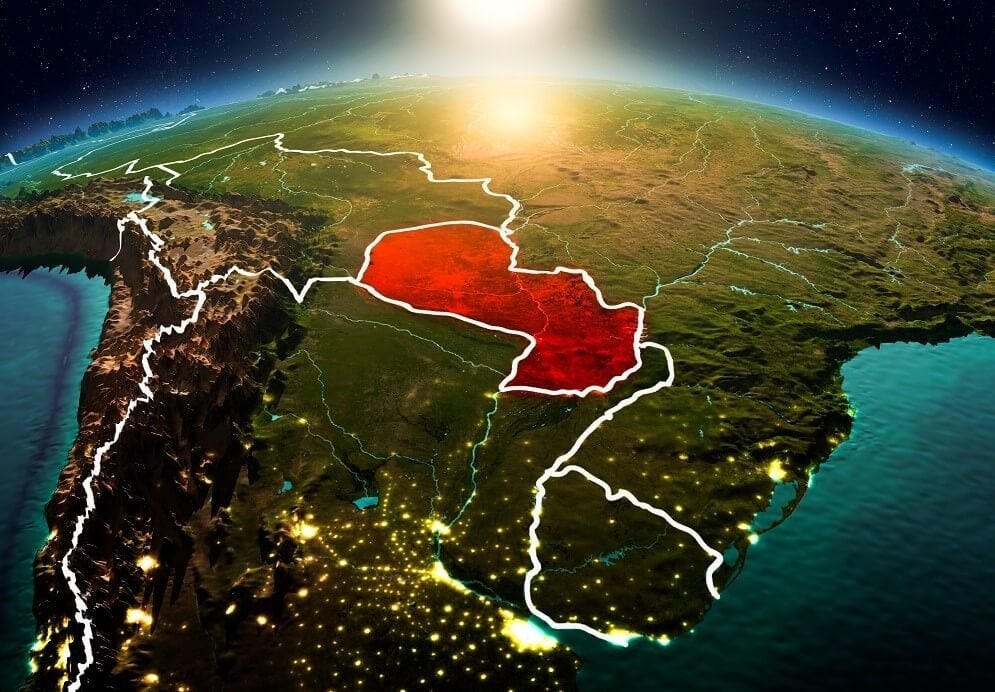
LATAM’s New Crypto Mining ‘Promised Land’: Pluses & Minuses for Paraguay
Paraguay has become a “new Latin American Mecca for cryptocurrency mining,” a new report has claimed – but not everyone seems to be happy about the fact that more miners than ever are choosing to set up shop in the nation.
As previously reported, the Paraguayan Senate last month signed off on a bill that will regulate crypto mining and trading in the nation. The bill, which has been in the pipelines since September 2021, seeks to legalize mining and ensure that miners pay taxes and declare their activities.
Many Paraguayan politicians have argued that the mining sector could be a major money-spinner for the government and power companies. The nation is home to a number of large hydroelectric power stations that periodically produce surplus power.
As this surplus power often cannot be used by Paraguayans, many advocates have called for international miners to be encouraged to set up shop near dams and power plants. While other industries have little use for irregular power supply, this is not the case for miners, whose rigs can take advantage of power when it is available and sit idle when this is not the case. Miners from as far afield as Canada and China have already been courted, with talks still ongoing with some of the parties fleeing China’s crypto crackdown of September 2021.
El Pais reported that an abundance of “very cheap electricity” has turned the nation into a “promised land for profitable Bitcoin mining,” and remarked that former “jungles” in Ciudad del Este, San Pedro, and Paraguarí have already become major mining centers.
This is also the case in “rural towns” with high populations of ethnic Germans, such as Villarrica.
The bill, which must now be approved or vetoed by President Mario Abdo Benítez, will seal the fate of the nation’s crypto mining sector.
But Luis Benítez, a university professor and long-time home crypto miner, claimed that only industrial miners stand to benefit – and that “amateur and domestic” miners stand to gain nothing from it. Benítez claimed that politicians had “only met with large mining firms” before formulating the bill, and had created legislation “very hastily, without taking into account issues pertaining to energy and tax policy.”
In fact, power companies have also expressed their concerns. A national energy provider has previously asked the government to oblige miners to pay in advance for electrical power – and to settle their bills in USD.
Other political critics have claimed that the energy should instead be donated to poorer families.
But the reality of the situation is that right now, Paraguay has little use for hydroelectric power. The media outlet explained that the country has “hardly any industry or infrastructure” that can harness the electrical energy, so “its seven million inhabitants cannot benefit from” the resource. Instead, public transport, cars, and agricultural vehicles generally make use of fossil fuels – meaning that a mere 20% of Paraguay’s hydroelectric power actually gets used in the country where it was generated.
This means that some miners have been wooed with promises that they will pay as little as USD 18 per megawatt hour for electricity. This is a huge difference from “the average price paid in South America,” which, per the former energy minister Mercedes Canese “is around USD 100 dollars per megawatt hour.”
Canese claimed that this price was too low, and claimed that energy importers are charged higher rates than miners.
Canese opined that “in the context of climate change,” it does not make sense to “dedicate so much energy to something that does not produce anything and does not create jobs.”
Binance to Help South Korean City of Busan Launch a ‘Digital Assets Exchange’
The crypto exchange giant will set up shop in South Korea’s “blockchain hub” city of Busan – and although the firm will not be opening a token trading platform in the nation as of yet, the company could help the city launch an exchange of its own.
In a press release, Binance announced that it has signed a memorandum of understanding (MoU) with the City of Busan that would allow the latter to “receive technological and infrastructure support from Binance for the development of the city's blockchain ecosystem and promotion of the Busan Digital Asset Exchange.”
The latter has been in the pipeline for some time, and city authorities envisage the creation of a kind of city-run stock market for certain types of cryptoassets, such as security tokens. This plan has remained very much on the drawing board for several years, with the government of President Moon Jae-in maintaining a hardline stance on all things crypto-related – particularly domestic token launches, which remain outlawed in all their forms.
But President Yoon Seok-yul, who took power earlier this summer, has promised to “review” the ban, and the public sector has already responded. SK, the second-largest business group in the nation, has already revealed plans to launch a token via one of its subsidiaries, and multiple South Korean industry insiders have told Cryptonews.com that other companies may well follow suit.
South Korean media outlets have also suggested that other large business groups are actively formulating their own token launch plans, albeit behind closed doors.
Busan was granted regulation-free status for blockchain-related technological developments under Moon’s government, but was hampered by the fact that Seoul insisted heavily on private blockchain adoption – rather than allowing companies in the city to make use of public blockchain networks.
Yoon, however, has promised to breathe new life into the industry as a whole – and the Busan initiative in particular.
The city’s Mayor, Park Heong-joon, was quoted as stating that the Binance agreement had moved the city “one step closer to establishing the Busan Digital Asset Exchange as a global integrated platform for digital assets.”
Park claimed that the deal would help turn Busan into “a blockchain-specialized city” and a “global digital finance hub” – and that it would act as a “growth engine for the local economy.”
As part of the MoU agreement, Binance has also pledged to “establish a presence in Busan by the end of the year.” Doing so would give the exchange a physical foothold in the country, and could – theoretically – allow it to begin exploring the possibility of applying for an operating licence. The South Korean market is currently dominated by domestic players, and at present only five exchanges have the regulatory permits that allow them to offer fiat trading.
Binance stated that it would also begin order book sharing with Busan, and claimed it would start “supporting blockchain-related research and investments in the city,” as well as “providing specialized blockchain education and online resources” from its Binance Academy education wing.
The firm will look to make an immediate splash by aiding “with the organization” of Busan’s Blockchain Week, an event slated for October this year.
Changpeng “CZ” Zhao, Binance’s CEO and Founder, was quoted as stating that he was looking forward to “close cooperation with the city to support the establishment of digital asset exchanges,” as well as “various blockchain industries."
The South Korean media outlet Munhwa Ilbo reported that Busan’s “digital asset exchange” could be launched at the city’s Busan International Financial Center as early as “next year.”
The media outlet added that “blockchain-specialized training courses” would be launched at universities in Busan, with Binance’s aid – and that the firm would back “internship programs” and “investment”-related projects.
OMFC is a collection of 5,000 NFTs which give owners access to the Official Maradona Fan Club. After mint, 10% of the 5,000 NFTs will receive a new NFT airdrop, where 2 lucky winners will be randomly selected to win 2 prizes of all expenses paid trips to Qatar in December including tickets to the 2022 Final as a guest of the Maradona family.
With the official IP rights of Diego Maradona, we are working to continue building brand Maradona whilst also expanding his reach by bringing him into the metaverse via this NFT collection.
Utility:
'1. Entry into our 2022 Final in Qatar prize draw. 2 x all expenses paid, 'Meet the Maradona Family' experiences at this year's Final.
'2. Access to the Official Maradona Fan Club, including hidden never seen before content and exclusive discounts on merchandising.
‘3Early access to our upcoming drops including our physical MetaToys and linked blockchain game with liveable assets, 'Goal Rev'.
‘4Holders will get access to Maradona IP and have the opportunity to pitch and design future products with us.
WL GIVEN TO ANY NEW JOINERS IN NEXT 24 HOURS!
Discord Link: https://discord.gg/eCVzSuwh
Website Link: https://www.maradonaofficial.io/
When Should You Run Your Own Blockchain Node?
When we talk about crypto and blockchain, one of the first things that come to mind is decentralization. We love the idea of a system that works without any central authority or a single point of failure. But as it turns out, most crypto apps and wallets you know and use rely on centralized providers for their backend stack.
While blockchains themselves are praised for the decentralization they created, and many protocols are rated by how decentralized they are, most crypto apps you know and use actually have to rely on centralized providers. These services run their own nodes to connect to the blockchain and in turn provide an API (application programming interface) to their customers.
The thing is, there aren't really any good reasons for this other than wallet apps. As crypto is getting closer than ever to consumers and finally expands into even ecommerce companies realize their backend stack now needs to work closely with the blockchain. Need to track the number of wallets in Ethereum? Need to know what happened with a specific transaction? Want to know which addresses have received money from a certain address? All of these activities might be important whether you have an online store or running an investment fund
🔥Battle Infinity Is Now Listed On LBANK - The 18th Largest Exchange With A 24-Hr Trading Volume Of More Than $1 Billion!🔥
🔥Fill Your Bags With $IBAT On LBank Exchange & Become A Holder Of A Token That Sold Out Its Pre-Sale 65 Days Early & Raised 16500 BNB, And Is Expected To Continue Rocketing! 🚀 📈
💎$IBAT Has Seen Massive Gains Of 400% From Presale Price Even In The Middle Of The 2022 Bear Market! So Buy Now!
TOKEN INFO:
💲Current Price On LBANK -$0.0037
🖇 Trading Pair: IBAT/BNB
🤖Battle Infinity is a new metaverse platform with play-to-earn (P2E) mechanics.
🔥Built-in fantasy sports league with NFT integration
✅Presale sold out 66 days early, raising over $5 million.
💎BAT has a total token supply of 10 billion
💵$IBAT is also liquidity locked (1-year Lockup)
🤯$IBAT is also listed on Pancakewap-The largest and most popular decentralised exchange on Binance Smart Chain!
🚀 IBAT rocked to over 5x the listing price after launch and is currently sitting at over 3x.
🔥Yes-More Exchange Listings On The Way (So Don't Miss Out!)
🚫Rug-pull protected - KYC’d on Coinsniper
💰BUY ON PANCAKESWAP NOW: https://bitesly.io/b_BIAttackerwebsite
🚀JOIN THE COMMUNITY: https://bitesly.io/b_BIAttackerTG
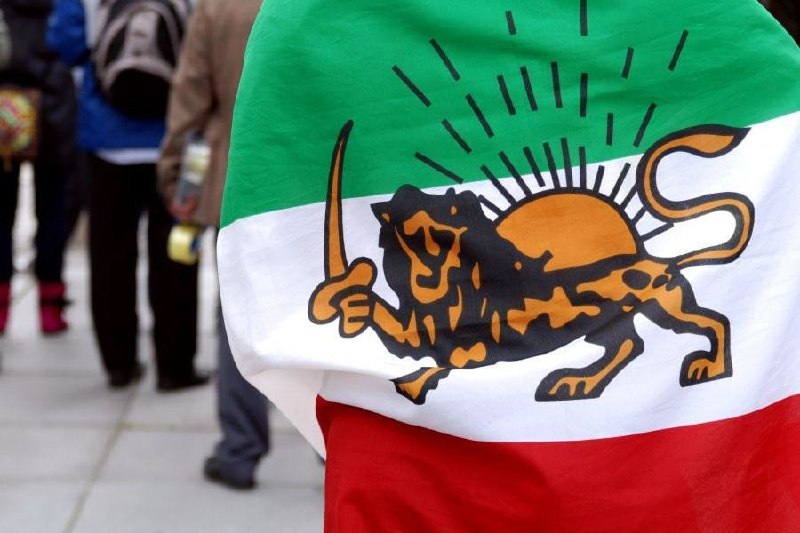
Iran Passes Bill to Authorize Use of Crypto for Imports - Report
Iran has passed a bill authorizing trade transactions with cryptocurrencies, officially approving the use of digital assets for imports.
The bill redefines regulations on cryptocurrencies, the authorization to use cryptocurrencies for imports, and the supply of fuel and electricity for mining, Iranian news agency Tasnim reported, citing Minister of Industry, Mines, and Trade Reza Fatemi Amin.
The Central Bank of Iran has also agreed that the imports can be processed in cryptocurrencies. People can now even import cars using digital assets instead of US dollars or euros, per the report.
As reported, Iran announced that it has completed its first crypto-based order, worth USD 10m, earlier this month. At the time, the country's Ministry of Industry, Mines and Trade said they would significantly expand the use of cryptocurrencies for import by the end of September.
Iran’s crypto moves come as the US announced a new round of sanctions against the country's oil companies in early July.
In fact, Iran was the most sanctioned country in the world by March this year. However, the country lost that spot after the US and its allies announced multiple sanctions against Russia following its invasion of Ukraine.
Iran's crypto move is largely considered a measure to circumvent the US sanctions and evade trade embargoes.
US lawmakers have recently expressed concern over the use of crypto as a tool to evade sanctions, citing the possibility that heavily sanctioned Russian entities could be using crypto to mitigate the fallout.