Kik Messaging App is Closing Down; The Focus Has Now Shifted to KIN
Many reports are surfacing that the Canada-based firm “Kik” is looking into shutting down its messaging app platform. Further, Ted Livingston Founder & CEO of the Kik, also confirmed that the shutdown plans for the messaging app are true.
The main reason that has been stated is to have room for focusing on KIN. KIN is the native token from Kik. The development of the crypto token will benefit from the concentrated focus approach. As of now, the company is considering laying off its staff members to 19 members. In this direction, reports say that around 70 employees have been laid off. Some reports suggest that an alternative transfer has been offered to many of the company’s employees in the same sector.
Another reason behind shutting down the messenger app is around holding grounds tightly in the legal conflict with the U.S. SEC (Securities and Exchange Commission.) The U.S. SEC sued the Canadian startup on the grounds of the unregistered token offering. The offering was of $100 million. This case has raised questions on the ICO (Initial Coin Offering) status of Kik.
On the other hand, SEC accuses the Canadian startup of depriving the investors of the KIN ICO, which was organized by Kik. The startup, as per SEC, has not been transparent about the crypto token during this ICO. This transparency was the legal right of the users and investors, which prevented them from making an “informed decision.” Co-director of the SEC’s Division of Enforcement, Steven Peikin said that the startup has “deprived investors of information to which they were legally entitled. and prevented investors from making informed investment decisions.”
In its defense, the Canadian startup said that the SEC does not have any solid proof to back up its allegations. The startup rather says that the SEC has taken the matter out of context, and has badly presented them to fit them with the allegations. The startup thinks that the U.S. SEC lacks any solid evidence to support its claim.
Kik was released back in 2009, and very quickly it climbed up the success ladder to become one of the tops used apps in the app store. It especially made its mark in the United States and attracted around 300 million users from the country. The majority of the user base of Kik comprises of teenagers.
Kik’s focus on the crypto sphere started taking pace two years ago with the launch of its native token KIN. Through the ICO of KIN, it raised 100 million U.S. Dollars. This has made the crypto rise to fame with 600K active investors of the coin every month, thus making the crypto coin the most sort after crypto coin. On this, Ted Livingston had the following to say,
Two years ago we set out to build a new economy that offered equal opportunity to billions of people. Today millions of consumers and hundreds of developers have come together to build this better future with Kin.
Despite SEC’s allegations and the ongoing legal matters on the company, Livingston says,
But no matter what happens to Kik, Kin is here to stay. Kin operates on an open, decentralized infrastructure run by a dozen independent companies. Kin is a currency used by millions of people in dozens of independent apps. So while the SEC might be able to push us around, taking on the broader Kin Ecosystem will be a much bigger fight. And the Ecosystem is close to adding a lot more firepower.

CoinShares Urges Customers to Support the Crypto ETNs Against the UK Ban
CoinShares, a UK-based digital asset management company that offers financial services and products to professional investors has urged its consumers to come forward in support of crypto ETNs (Exchange-traded Notes) against the proposed ban on it by the FCA (Financial Conduct Authority) of the United Kingdom. ETN is a kind of an institution-issued unsecured debt note which can be traded or held till maturity. CoinShares offers ETNs for Bitcoin, Litecoin, Ethereum, and XRP.
CoinShares has posted a letter on September 23, 2019, on its website in which it has talked about the lack of enough pieces of evidence provided by the FCA to justify the suggested ban on the crypto ETN product. It has also issued an alert to its consumers that if the ban comes into effect, they would not be capable of trading such products anymore.
The firm further stated that the regulator had made little attempts to support its claims with genuine evidence. Instead, they have cherry-picked datasets for illustrating their perception of the crypto assets and ETNs, as well as the supposed harm they believe these products result in. That is the reason why the firm has resorted to its clientele to fight the matter.
The digital asset manager has asked the customers to send text messages or emails that express their disagreement with the suggested ban to the UK regulator directly before the comment deadline of October 3. To make it a bit easier, the firm has also put up a ready template on their website. Customers only have to replace the details present on the template with their own and submit the response through email to the regulators.
Continuing further, CoinShares said that the analysis by the FCA on crypto and other associated assets showcases a lack of understanding of their value, functionality, and the motivation for why investors may seek out such products.
Therefore, the company hopes to garner strong support from its userbase in the form of submitted responses. The firm was also quoted as saying,
The more responses the FCA receives in protest to these measures, the more likely they are to see sense and abandon these proposals.
Meltem Demirors, the CSO of CoinShares, stated on the matter that the ban, if approved, could prove to be a set back for the whole industry, inside as well as outside the United Kingdom. That’s because the FCA also has intentions of working with the other regulators to make sure the ban isn’t evaded.
The FCA, on the other hand, does not consider these products to be suitable for the retail consumers as they can’t asses the risk associated with ETNs and derivatives that reference particular crypto assets.
Tauros Would be Accepting Crypto Payments via Debit Cards
The banking company, Tauros claimed that they would accept payments from their customers in cryptocurrencies if, the customers use their debit cards.
The banking firm announced that their new digital accounts would let customers deposit money via tokens like Bitcoin and will also accept fiats. Although the new card currently allows Mexican Peso transactions only, “in the coming months, customers will be able to make payments in cryptocurrencies such as bitcoin.”
Tauros claimed to have a solution to the problem of cryptocurrency being considered illegal in Mexico. Reportedly, El Universal stated that the company had commented that the Mexican government recognizes cryptocurrencies as a “means of storage or value transfer, with which payments can be made.”
Many onlookers have predicted that even with the introduction of the new fintech laws in Mexico, the demand for cryptocurrency payments would likely increase, in the coming years.
The new regulatory laws will dramatically outlaw many classes of e-wallet for payment platforms like PayPal. They are clashing with the accelerated growth of fintech activities in the country.
The Mexican Peso has been dropping low continuously for the last 8 months against the U.S. dollar, and the central bank is all set to reduce the interest rates. Under such circumstances, crypto may be the only way to replenish the country’s economy.
As per Global Digital data’s survey, conducted a year ago, around 6% of the surveyed Mexican internet users were owners of cryptocurrency; that was the world’s 16th-highest figure while crypto ownership among the surveyed internet users in Colombia stood at 7.7%.
Mexico’s interest in cryptocurrencies is outranked by Brazil and Colombia only. However, the crypto-fever seems to be spreading fastest in the Republic of Colombia.
Many companies are embarking on crypto ventures considering the rapid growth rate.
One of the many companies who had officially declared their crypto venture plans was, Paxful. They were looking to install 20 new Bitcoin ATMs in Colombia, in partnership with the crypto ATM Company, CoinLogiq.
Hoping that the customers will be keen to flee from fiat to crypto, Paxful stated:
Colombia is our main market in the Latin American region. Last month, we processed 30,000 cryptocurrency transactions with sellers located in Colombia. This year, we have seen a growth of 65%, and over USD 1 million has been processed on our platform.
Previously this year, Amero-Isatek, announced to give Mexico its first physical cryptocurrency exchange in Nuevo León, Monterrey, and seven other locations across the country. The company had estimated that it would serve over 800,000 crypto users in central Mexico alone.

Bcnex Announces Listing of Tron (TRX) on its Platform
Bcnex, a promising trading platform for cryptocurrencies, has listed TRON on its platform. The official announcement was made by Bcnex on September 20, 2019, through an official blog post on its website.
As per the announcement, TRX, for starters, will be available in three trading pairs which are TRX/BTC, TRX/USDT, and TRX/ETH. The deposits of TRX had begun on September 20, 2019, at 17:00 (SGT) while the trading and withdrawals started on the same day at 18:00 (SGT) onwards.
Justin Sun, the Founder and CEO of TRON, also confirmed the new development through his Twitter post dated September 24, 2019.
For those who are wondering, Bcnex has been founded by ambitious technology experts who believe in the value blockchain can bring to the world. Their belief translated into forming the basis of a budding crypto trading platform. The Bcnex platform is capable of handling up to 2,000,000 orders. Thanks to its utmost security, exceptional customer service, as well as lowest fees (0,0375%), it has garnered a reputation of being one among the best in the digital asset trading world.
TRON, on the other hand, is a dedicated project that works towards building an Internet infrastructure that is truly decentralized. The TRON Protocol is one among the biggest operating systems based on blockchain technology across the globe.
Yesterday, on September 25, 2019, TRON officially released the MainNet for Sun Network Version 1.0 (DAppChain), the sidechain solution of TRON.
How North Korea Uses Cryptocurrencies to Get Around U.S. Sanctions
North Korea has always been under suspicion for either being involved with some notorious projects or for directly or indirectly funding weapons of mass destruction using digital currencies. Recently, the country was accused of stealing cryptos worth $2 billion to support the development of deadly weapons. Mostly South Korean and Japanese exchanges were targeted for the theft, and hackers used phishing to hack into user accounts. Although Kim Jong Un’s official state media, the Korea Central News Agency (KCNA), denied all allegations of this massive theft.
Now, North Korea claims that it is in the early stages of developing its very own cryptocurrency as a resort to avoid crippling international sanctions and also circumvent the U.S.-dominated global economic system. The proposed digital currency, which doesn’t have a name yet, will most probably be “more like bitcoin or other cryptocurrencies,” said Alejandro Cao de Benos, a special delegate for the Committee for Cultural Relations for the Democratic People’s Republic of Korea (DPRK) and also the official person in charge of North Korea’s cryptocurrency conferences. He added,
We are still in the very early stages in the creation of the token. Now we are in the phase of studying the goods that will give value to it, stating that there are no plans to digitize the Won as of now.
On the other hand, the North Korean Embassy in New York neither confirmed nor denied de Benos’s claim. The spokesperson from the embassy only said they are in “no position to give an answer,” and hung up.
Close watchers of North Korea’s use of cryptos have already reported that the regime has immense expertise to build and deploy its blockchain and cryptocurrency that would help the North Koreans avoid sanctions. Over the last few years, the country has exhibited extensive interest in cryptocurrencies, along with areas of mining, hacking exchanges, cryptojacking, and lots more.
The problem, however, lies in the fact that North Korea can skirt financial restrictions to some extent, by using cryptocurrencies. So even at a stage when sanctions from the U.S. hurt North Korea’s physical economy, there remain a handful ways in which America can curb Pyongyang’s growing digital economy. It implies that North Korea is powered with much greater ability to run its nuclear programs than we might think.
On top, if they build their cryptocurrency, Pyongyang would be directly able to control how it functions and who accesses it—the very same reason why other countries like Russia, Venezuela, and Iran have explored similar projects. This secretive country has vouched on cryptocurrencies, more than once, to raise cash via illegal avenues. Previously, Bitcoin has also been used by the country’s hackers, as a preferred currency for ransomware attacks on the West.

Blame These Traders for Bitcoin Price Crash
Recent bitcoin selling pressure actually originated from short-term traders that got bitcoin at prices between USD 10,000 and USD 12,000, claims crypto market analysis firm Coin Metrics.
By analyzing the composition of their realized capitalization measure, introduced as a reportedly more precise alternative to market capitalization, the firm discovered “important information about the psychology of current owners,” and they’ve presented the change in the number of BTC in each cost basis bin between the day before the start of the sell-off when bitcoin was at USD 10,000, which was September 20th, and October 1st. In their recent report, they’ve included three groups of traders:
Owners with a cost basis above USD 13,000: before the market sell-off, some BTC 720,000 belonged to this group, while almost all BTC remained dormant during the sell-off, with only 4,140 moved in the last nine days, based on the analysis of on-chain activity, which suggests “that capitulation among these traders is complete” and that these are long-term holders that didn’t cause a lot of pressure.
Owners that acquired bitcoin at prices between USD 10,000 and USD 13,000: this is fresh capital “bought in during the minor euphoria over the summer when prices reached new highs of this market cycle.” This is the cohort of traders that caused the majority of the selling pressure, and the analysis shows that “these short-term holders were protecting their positions by taking a moderate loss.” A large rotation was observed from the USD 10,000 cost basis bin to the USD 8,000 cost basis bin over the past nine days, says the report, which means that some BTC 500,000 with a cost basis of USD 10,000 was sold in that period and that the USD 8,000 cost basis bin increased by BTC 750,000.
Owners that acquired bitcoin at prices below USD 8,000: some BTC 11.46 million belong to this group of “long-term holders with a strong long-term conviction in bitcoin,” who moved only 150,000 bitcoin on-chain. “Profit taking or panic selling was limited among these holders. This behavior indicates that for the majority of bitcoin holders, the market view of bitcoin being in a bull market remains unchanged,” claims the report, but that view might change if the price continues to decline or panic-selling begins.
“Drawdowns of a magnitude similar to what we have observed since the market peaked early this summer are rare but not unprecedented,” claims the report, as during the run-up to the 2017 bubble, bitcoin price corrected by nearly 40% from peak two times, so if the USD 13,000 level is presumed to be a local peak, “the current drawdown is also nearly 40% - the edge of historical norms.”
At pixel time, bitcoin trades at c. USD 8,344 and is up by 3.5% in the past 24 hours, but is still down more than 13% in the past week and the past month.
Meanwhile, Binance Research said today that bitcoin price tends to rise the day prior to the Chinese Golden Week, a week-long national holiday, only to fall the day it begins. This year, this week starts today, October 1. During the week, "BTC tends to fall slightly then recovers," the researchers said, noting, however, that there is no strong relationship between the Golden Week and Bitcoin price.

Reserve Bank of India Restricts Indian Police to Seize Crypto Scam Amount
Legal implications on Banks by the Reserve Bank of India (RBI) have caused trouble for the Pune city police department wanting to cash out seized cryptocurrencies worth of 8.42 crore INR. That amount of Indian currency was acquired by selling 244.0925 Bitcoins.
The cryptocurrency was seized from Akash Kantilal Sancheti, who was one of the main accused in the notorious 2000 crore digital currency fraud called the Gainbitcon Ponzi scheme.
The Pune police had hired then the Discidium Internet Labs Private Ltd to intervene in the process of selling the cryptocurrency. Discidium operated via Indian crypto exchange Koinex to sell the seized Bitcoins in the scam. The amount in INR was then deposited at RBI in the account of the Discidium Company, but RBI froze the amount as per its crypto-policies.
The police appeal to seize this amount has been pending before the court. RBI, however, has cleared its stance that it neither has directed RBI to freeze the account nor it has frozen the Discidium account.
Discidium has filed a plea to the Supreme Court of India to ask RBI to release an order to unfreeze its account.
What is the GainBitcoin Ponzi scheme?
Ponzi scheme was an investment fraud in which 8000 investors across the country were cheated in multilevel marketing and cryptocurrency scheme. The main accused Amit Bhardwaj and Vivek Bhardwaj have already been released on bail in March 2019.
Akash Sancheti has been released on conditional bail on October 3, 2019. His company Cloud Miners, which collected multi-crore from the investors, was closely connected with the Gain Bitcoin Company.
RBI Instructions about cryptocurrency ban
As per the order released on April 6, 2017, RBI had banned all the cryptocurrency-related functions. It had restricted the banks and payment service providers to discontinue all relevant transactions, including trading, opening accounts at crypto exchanges, disbursing loans against digital tokens, money transfer transactions for cryptos, etc.
Subsequently, all the crypto activities had been shut down, including the shutdown of the Koinex exchange in the following months. The exchange closed its operations, declaring that RBI has frozen the user bank accounts.
Many account holders at Koinex have had challenged the decision of RBI in the Supreme Court, which is under hearing. Regarding this case, a hearing was expected in the last week.
Government’s crypto policy bill
Under the clouds of financial crisis India, the Indian government is reconsidering the decision to ban cryptocurrency. The case regarding crypto policies has been postponed until January next year. The government has submitted a crypto bill in Supreme Court and has elaborated that it will introduce the bill in the next parliamentary session.

Crypto-Derivatives Can Be Tagged as Illegal in the UK by Next Year as Per the Latest Proposal
Cryptocurrencies, since their launch, have always had to bear a certain amount of uncertainty from the financial world. Taking pride in being the first virtual currency, Bitcoin has been at the forefront to experience the good as well as the bad waves in the first place. Till date, governments around the globe do not have a clear picture of Bitcoin management, its future, and its dynamic present. Varied zones of this arena should be addressed uniquely.
The marketplace in the United Kingdom is showing an unwelcoming attitude towards crypto-derivatives laying the possible threat of making the vehicles illicit in the near future.
Crypto-Derivatives are Lucrative:
Bitcoin, despite being the hot-shot topic for a majority of people around the world, has never seen a strong desire for physical ownership from the traders. This issue of lack of interest in physically owning the Bitcoin amongst the traders needs a solution that is quite effective in dealing with the situation. Here, crypto-derivatives turn out as perfect for the investors as they allow them to “gamble” on the Bitcoin price fluctuations without compelling them to own the coins.
Service providers opined that there is a strong demand for crypto-subsidiaries. The price dynamics and variations of Bitcoin present crypto-derivatives shine as a gambling option to a certain extent. This feature of the derivatives has earned negative attention from the UK regulatory authorities who are willing to objectify the derivatives market as illegal soon.
This drastic step is likely to leave a negative impact on the growth of cryptocurrency in the UK. However, nothing confirmed has been decided as of now.
The Crucial Proposal:
Before taking any step, there is a need to understand the vast scope of crypto-derivatives, which includes options, fates contracts, and other similar trading solutions. With Bitcoin not being officially administered in the UK in the current scenario, investors who like bearing risk indulge in these options trading. These products also do not follow the strict derivatives guidelines covering the region, and this creates a more alarming situation.
As per the current proposal, the Financial Conduct Authority aims to make any Bitcoin-related trading vehicle, apart from BTC itself, illicit in the UK. The blanket-ban on crypto-derivatives sold to retail traders is likely the probable move of the regulating bodies. This proposal has yet to be voted upon by the concerned dignitaries. As per the reports, the decision is expected to be announced by Q2 2020, most likely.
The blanket ban on the crypto-derivatives is likely to bring a major unexpected change in the Bitcoin price as pacifying retail investors has never been something, Bitcoin enthusiasts prefer.

Apple Denies Speculation of Its Entry into Crypto Space
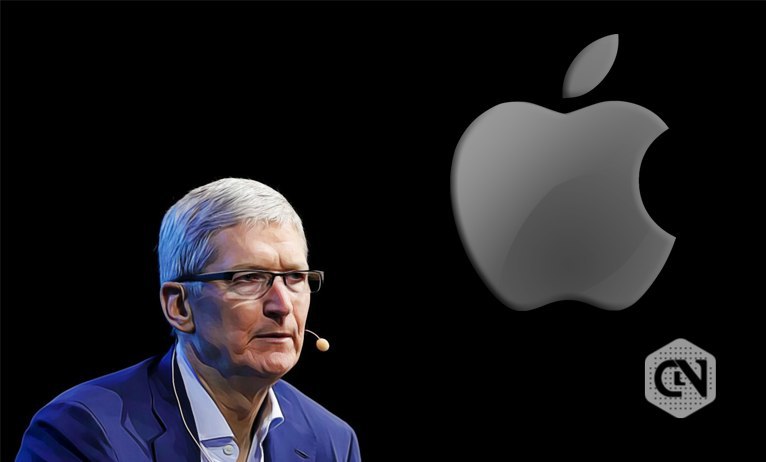
Laying all speculations to rest, CEO of Apple Inc., Tim Cook, has virtually opposed the idea of private companies launching their currencies. The top executive said that private organizations should refrain from getting access to power by launching their own competing currencies.
Just a couple of months ago, Facebook announced its Libra cryptocurrency project, which has got backing from several well-known corporate houses, including the likes of Visa, Master Card, Uber, and PayPal, among others. Facebook is planning to launch Libra stablecoin in June next year, and in this background, when asked whether Apple was also thinking of taking a plunge into cryptocurrency. In response, Cook said to the daily newspaper, Les Echos, that it was not on his agenda.
Private Currency
Elaborating on his point, Cook said that he is not comfortable with an idea of a private corporate house coming up with its currency and trying to get access to the power in this manner. So that you know, the Libra project of Facebook has met with strong opposition from many quarters with countries like Germany and France opposing Libra strongly. These countries have already said that they would not allow Libra to operate in Europe.
The speculation of Apple might be taking a plunge into cryptocurrency started when one of the senior executives of Apple hinted to CNN Business that the company was “watching” crypto space. As Apple has an ecosystem supporting payments on phones, many speculated that it might come up with its cryptocurrency similar to what Facebook is trying to do.
Cook further said that issues like the currency, the defense must remain in the hands of the government. People choose their representatives in governments and designate them to work, but the same is not true when it comes to private organizations. The people do not elect executives of a firm, and hence, they should refrain from venturing into the fields like currency and defense.
Gibraltar Provides DLT License to B21 Crypto-based Platform
B21 is a crypto investment platform that allows a user to create their profile for the cryptocurrencies. A user can easily create, buy or sell the portfolio and also help in obtaining the cash vouchers in their local currency to provide funds in their B21 account.
Gibraltar Financial Services Commissioner (GFSC) grants a Distributed Ledger Technology (DLT) license to B21, the innovator of the crypto-based investment management. It deals with purchasing, trading, and managing digital assets.
According to the recent news, this DLT license will help the B21 to become the first investment application in cryptocurrency. To earn the DLT license, B21 struggled a lot and even joined other cryptocurrency firms. Now, people from Europe and Asia can access the application, and in 2020, it will be available for the US market.
The co-founder of B21, Miles Paschini, said that he is happy with the rising regulation of the sector. The DLT license makes its application one of the regulated investment app. They support crypto adoption across the world and commit their loyal services to their users.
B21 is a fantastic platform that uses its many liquidity providers to make sure the execution of optimal trade. A user can buy or sell his assets in cryptocurrency in a faster way.
B21 works similarly like other traditional fiat investing applications such as Wealthfront and betterment. The retail investors can use this app to create customized profiles, provide funds, and track overall progress easily. It is simple for a user to buy or sell multiple assets in no time. The important part is that a user can trade his assets in cryptocurrencies without any fear from keys and wallets, and verification of multiple KYC and AML accounts.
India Needs a Far-sighted Approach Regarding Cryptocurrencies
We’re most definitely at a stage where corporations and governments around the world are moving their financial services up to the Blockchain. Standing at this point, India, however, might be at the risk of ceding ground to other countries that have already opted cryptocurrencies rather than outlawing them.
Although, there have been reports back in 2017 that the Reserve Bank of India (RBI) was actually considering a proposal to introduce its own digital version of the Rupee akin to Bitcoin; the token was to be called Lakshmi. But that idea died a premature death last year when RBI, much contrarily, proposed to bar banks and financial institutions from dealing in cryptocurrencies. That’s not the end of it. This year in July, an inter-ministerial panel, set to study Bitcoins, led by the top bureaucrat Subhash Chandra Garg, recommended holding cryptocurrencies a crime that would put one behind the bars.
Such stringency of crypto laws is rather myopic. The phase India is in right now demands more openness to the possibilities of using cryptocurrencies for international transactions bypassing the dollar. Even more so, as the world now desperately needs to get out of the U.S. dollar’s stranglehold.
On the contrary, India, considering its current political and economic scenario, could be well poised to become one of the first nations to entrench the credibility of digital currency as an alternative to the existing monetary system. There are a couple of strong reasons that might make India the first to regulate cryptocurrency.
The foremost major factor would be India’s huge unbanked population. Although the country happens to be the world’s 7th largest economy with a GDP of $2.5 trillion, a 2016 study reported that as much as 233 million Indian citizens or a hefty 40% of its population, still has no bank account or financial record. This mass completely relies on cash, which hinders their transaction abilities. Cryptos, on the other hand, make international transactions quick, cheap, seamless, and securely—without the need for a bank account.
In addition, another report cites that last year, over 500 organizations in India, including five of the country’s largest companies like Dell, accepted cryptocurrencies as a mode of payments. Also, a recent Forbes article states that Bitcoin’s craze in the country is gaining unprecedented momentum, and, to date, there are more than 600,000 crypto users in India.
Despite repeated warnings from the RBI regarding cryptocurrency use and its perils, a steering committee report by the finance ministry, released in September, encourages the positive impact of Blockchain technology, which empowers from cryptocurrencies to fintech. Even last year, the government has formed an inter-disciplinary committee to further study the framework of virtual currencies, alongside setting up a government forum for public opinion on such digital assets.

Apple Denies Speculation of Its Entry into Crypto Space
Laying all speculations to rest, CEO of Apple Inc., Tim Cook, has virtually opposed the idea of private companies launching their currencies. The top executive said that private organizations should refrain from getting access to power by launching their own competing currencies.
Just a couple of months ago, Facebook announced its Libra cryptocurrency project, which has got backing from several well-known corporate houses, including the likes of Visa, Master Card, Uber, and PayPal, among others. Facebook is planning to launch Libra stablecoin in June next year, and in this background, when asked whether Apple was also thinking of taking a plunge into cryptocurrency. In response, Cook said to the daily newspaper, Les Echos, that it was not on his agenda.
Private Currency
Elaborating on his point, Cook said that he is not comfortable with an idea of a private corporate house coming up with its currency and trying to get access to the power in this manner. So that you know, the Libra project of Facebook has met with strong opposition from many quarters with countries like Germany and France opposing Libra strongly. These countries have already said that they would not allow Libra to operate in Europe.
The speculation of Apple might be taking a plunge into cryptocurrency started when one of the senior executives of Apple hinted to CNN Business that the company was “watching” crypto space. As Apple has an ecosystem supporting payments on phones, many speculated that it might come up with its cryptocurrency similar to what Facebook is trying to do.
Cook further said that issues like the currency, the defense must remain in the hands of the government. People choose their representatives in governments and designate them to work, but the same is not true when it comes to private organizations. The people do not elect executives of a firm, and hence, they should refrain from venturing into the fields like currency and defense.
Laying all speculations to rest, CEO of Apple Inc., Tim Cook, has virtually opposed the idea of private companies launching their currencies. The top executive said that private organizations should refrain from getting access to power by launching their own competing currencies.
Just a couple of months ago, Facebook announced its Libra cryptocurrency project, which has got backing from several well-known corporate houses, including the likes of Visa, Master Card, Uber, and PayPal, among others. Facebook is planning to launch Libra stablecoin in June next year, and in this background, when asked whether Apple was also thinking of taking a plunge into cryptocurrency. In response, Cook said to the daily newspaper, Les Echos, that it was not on his agenda.
Private Currency
Elaborating on his point, Cook said that he is not comfortable with an idea of a private corporate house coming up with its currency and trying to get access to the power in this manner. So that you know, the Libra project of Facebook has met with strong opposition from many quarters with countries like Germany and France opposing Libra strongly. These countries have already said that they would not allow Libra to operate in Europe.
The speculation of Apple might be taking a plunge into cryptocurrency started when one of the senior executives of Apple hinted to CNN Business that the company was “watching” crypto space. As Apple has an ecosystem supporting payments on phones, many speculated that it might come up with its cryptocurrency similar to what Facebook is trying to do.
Cook further said that issues like the currency, the defense must remain in the hands of the government. People choose their representatives in governments and designate them to work, but the same is not true when it comes to private organizations. The people do not elect executives of a firm, and hence, they should refrain from venturing into the fields like currency and defense.
$12M Cryptocurrency Extortion reported against Ethereum “ICO architect”
The news headlines are yet again stormed by news of cryptocurrency extortion, and this time the convicts are high profile personalities, including a former advisor to blockchain projects like Ethereum.
Steven Nerayoff, the former Ethereum advisor and his partner, Michael Hlady, supposedly threatened a not-so-popular Seattle based cryptocurrency company for not paying them millions of dollars’ worth of Ethereum. The company uses cryptocurrency to reward customer loyalty.
In July 2017, the Seattle based cryptocurrency exchange planned an ICO (Initial Coin Offering) and signed a legal contract with Maple Ventures, which is a blockchain consultancy founded by Nerayoff. As per the agreement, Nerayoff was supposed to deliver the ICO against 22.5% of the total funds raised and 22.5% of the tokens issued. However, just a couple of days before the ICO was due to commence, he bent down and demanded more from the firm.
According to reports, Nerayoff asked to increase the price of his shares by 17,000 ETH against the agreed amount of 13,000 ETH. By doing this, he thought he could extort $8.75 million worth of Ethereum. However, the firm managed to pay off Nerayoff as per his demands, but Nerayoff never showed up after receiving the amounts. Nor did his company paid any services to the startup company after that.
However, this is not the end of the incident. Maple Ventures continued to dupe the startup company, now by introducing one of his associates named Michael Hlady. Nerayoff introduced him as the “operations guy” as per the reports. Hlady brainwashed the officials of the startup company and claimed to have been long associated with many government agencies like CIA and NSA.
In March 2018, Nerayoff had again demanded a loan of 10,000 ETH from the company by continuously threatening them to destroy their community, following which the company was compelled to grant the credit. That was when the accused Nerayoff and Hlady showed off their dark sides. As per the reports, the claimant had to stay at Nerayoff’s home due to adverse weather conditions outside. Nerayoff and Hlady did not let go of this opportunity to threaten the claimant alone and demand more money. They entered the claimant’s room and threatened for money.
After all this treachery and threatening, the startup company lodged a report against the convicts, following which both appeared at the court yesterday. While Nerayoff was granted bail against $750,000, Hlady has been ordered to appear at the court again next week.

Politicians Can Use Cryptocurrency Donations to Fund Election Campaigns in Japan
Cryptocurrencies have to keep outside of the purview of Japan’s stringent election funding law, which states that donations to individual candidates in yen or through stocks, bonds, etc. have to be reported either by the donor or the candidate receiving it. Japan’s Ministry of Internal Affairs and Communications has stated that individual candidates do not have to report the amount or source of any funding they receive in cryptocurrencies.
This news would ideally see as leveling the field for fresh candidates as well as for people who don’t have deep pockets. Surely, cryptocurrency users would rejoice as they can now support their favorite candidates without going through the cumbersome process of reporting it to the government and candidates can take multiple small donations in digital currency without having to employ people to record every transaction and submit the voluminous records to the government for clearance. Small donations in fiat currency were banned as political parties were hiding large contributions by corporations by recording them as multiple small contributions. They were not required to keep any record of donors, as it would be too tedious. Thus, they could escape the law using this loophole.
Such accounting creativity is not possible in cryptocurrencies where each transaction, whether small or big, by a user, is recorded in immutable blocks, which are validated in a decentralized manner.
Still, several experts have voiced concerns over this move. In their opinion, cryptocurrency being a currency should be subject to regulations, and relevant law should amend for this. In a strange situation, cryptocurrency is taxable in Japan. So, not reporting crypto transactions will hamper tax collection as the government would not be able to track the transfer of digital assets. If it is taxable, then surely government departments are keeping track of digital transactions in other spheres of an individual’s life. Then, it makes little sense to keep election funding out of the purview of such monitoring, especially when tools for such monitoring are already available to government agencies.
In this scenario, large corporations or hedge funds may transfer huge sums of cryptocurrency to their preferred candidates and will not even have to report it. They will not have to maintain a record of their contributions or may be allowed to keep a partial record showing the amount contributed but not the candidate it was given to. The ramifications of this can be enormous. All the good work done till now in keeping election funding clean would go down the drain. Laws specifying limits on individual digital contributions as well as a limit on a maximum number of contributions per individual would be needed to control this.
Thus, it would be interesting to see whether cryptocurrencies end up leveling the playing field or skewing

Ethereum Looks For 1 Million Devs While Ether Price Surpasses USD 190
With the fifth annual Ethereum conference, Devcon, about to finish tomorrow, a new challenge has been issued: get 1 million developers to build on Ethereum in a year.
Devcon is an annual conference held by the Ethereum Foundation for developers, researchers, engineers and others to gather and discuss their thoughts and ideas, happening in Osaka, Japan this year, and these developers have been challenged by one of their own. Joseph Lubin, co-founder of Ethereum and founder of blockchain company ConsenSys, came up with a mission which, if completed, would get 1 million developers to build on this platform by Devcon 6.
"There are 30M+ devs worldwide. Let’s give them their ‘holy shit’ #blockchain moment, and jumpstart a more open & transparent Web 3.0," Lubin tweeted.
The website dedicated to the mission and the upcoming dapp (decentralized app) claims that there are more than 200,000 active Ethereum developers. Also, the site gives more details, stating that the developers across the planet are playing the part in this "radical change brought in by blockchain," and that Ethereum and ConsenSys mission is to bring as many of these developers to Ethereum “by providing an interactive and immersive space for newbies and veterans alike, to learn, collaborate, share, and build in a fun and easy manner.” While the dapp is “coming soon,” those who become part of this mission will be able to create decentralized developer profiles to share their own projects, join the community, and build their reputations, the website says.
The site also prominently displays the relevance of “an ‘a-ha’ moment” – in other words, the point of revelation when the Ethereum ecosystem participants “finally grasped the potential of Ethereum and dropped everything to participate in the Web3 movement.” To find this ‘a-ha’ moment, developers will be given an opportunity to earn rewards while participating in interactive “Adventures and Quest,” meant to showcase tools and concepts within the Ethereum ecosystem. Additionally, the idea is for these new developers to draw their colleagues to Ethereum and show them what it has to offer by creating their own interactive adventures or quests.
On their side, the team accepting the challenge came out with a project overview, giving itself two weeks to create this series of quest to get the users to this 'a-ha’ moment, with rewards and referrals features, the final goal being to “make the platform not only interesting for new Ethereum developers, but also for those already involved in the space - to keep them around - by creating a platform which allows them to connect and collaborate.”
To accomplish this, the Rapid team, a Research and Development team within ConsenSys, want to “push the limits of decentralized Authentication, Storage and Messaging” and use 3Box which offers a suite of decentralized identity tools that allow quick building of social applications, which the website uses as a content management system, they say.

Is the Next Altcoin Season on the Horizon?
The digital currency market appears not to be exhibiting any particular trend at the moment as major cryptos have initially recuperated from the September selloff. Moreover, some of the altcoins have bounced back to the pre-selloff levels; still, they mostly stayed in the upper side of the current trading range and still, they have not established a trend reversal.
Current Scenario of Altcoin
Currently, the situation seems to be changing. Several altcoins have lost a lot of significant value that they are geared up to start another market cycle. This provoked a group of reputable traders to begin feeling bullish about the possibilities of these coins. They accept that an alt season or altcoin season is seemingly on the Horizon.
Altcoins Progress
In the fast-paced world of cryptocurrencies, there is no deficit of scams. Shockingly, this reality has instilled a kind of polarization in the space, where, at times, regardless of how great the idea is, it is not acknowledged.
Micro-economics are in great demand for different customized projects and initiatives, which still exist. This is the place where altcoins and other unique tokens like those of Simple Ledger Protocol (SLPs) can enter and give flexible service to significant players.
The quantity of coins available has multiplied aggressively over the previous years, so filtering through the tokens to discover the best coin can be a tedious assignment. Earlier in May 2018, there were around 1,500 altcoins available on the market. Afterward, it increased to more than 2,300 coins.
Fluctuations in Bitcoin Price allow Altcoins to Shine
Over 2019, Bitcoin’s price bracing into another bull market run has taken out all the enthusiasm and capital out of the altcoin business, causing mass capitulation. Bitcoin has been trading between the range of 8000 to 9000 for quite a while now. Due to the volatility, crypto traders have opted for altcoins like Ethereum and Ripple.
Altcoins start to take-off
As Bitcoin price surges and altcoins start to take off, Bitcoin’s influence seems to be falling. Any alt season that happens over the weeks following Bitcoin’s idleness is probably going to be short.
Altcoin Season
It is a known fact that in the crypto market, altcoins regularly have their bull market season after Bitcoin has completed its course. With Bitcoin dominance breaking above 60 percent, it appears that the altcoins will soon be able to reach new peaks.
Wrap Up
While we have seen the proof demonstrating that the current economic situations appear to be progressively ideal to altcoins, nonetheless, we can see that it is still too soon to require another new beginning of an Altcoin Season. In spite of the improved specialized indicators, altcoins’ social metric appears to be revealing a different report.

US Regulatory Body Gets Restraining Order Against Telegram and TON Issuer
In the highly dynamic world of digital currencies, nothing can be aforesaid until it happens in reality as its almost impossible to assess the future outcomes easily. The recent news about the giant messaging app the Telegram Group being halted by the SEC had indeed taken the cryptocurrency arena in a blow as it had popped up when it was expected by none.
On Friday, the U.S. Securities and Exchange Commission (SEC) announced that it has acquired an emergency restraining order against the Telegram Group as well as its subsidiary TON Issuer concerning their $1.7 billion token sales. The Telegram Network, which was slated to go live on October 31, 2019, has been stopped by the governing body from indulging in the sale or otherwise distribution of its gram tokens within the US boundaries.
As per the allegations stated in the complaint, Telegram failed to register its recent offer or sale in which it sold 2.9 billion gram tokens at “discounted prices to 171 initial purchasers globally.” During the sale, more than 1 billion gram tokens were sold to the U.S investors.
Stephanie Avakian, who works as the co-director in SEC Division of Enforcement, stated in her statement that the emergency action is “intended to prevent Telegram from flooding the U.S. markets with digital tokens that we allege were unlawfully sold.” She further added that the platform restrained itself from feeding the investors with the necessary information about the gram token and the firm’s internal operations.
Fellow co-director Steven Peikin quoted that,
“We have repeatedly stated that issuers cannot avoid the federal securities laws just by labeling their product a cryptocurrency or a digital token. Telegram seeks to obtain the benefits of a public offering without complying with the long-established disclosure responsibilities designed to protect the investing public.”
Contrary to many sponsors of cryptocurrency ICOs, Telegram raised funds from a small group of private investors, including rich individuals, venture capitalists, and large hedge funds. By limiting the fundraising process to a handful of rich people and industrial investors, the firms save themselves from the requirement of filing public disclosures with the SEC.
This was argued by the SEC in the case proceeding where its legal filing stated that Telegram’s private ICO failed to comply with the law merely because the initial investors will resell the tokens as soon as the coins are delivered. SEC attorney’s filing read, “Their ultimate goal is the wide dispersal of grams into the public markets.” The regulatory body clarified that it filed for the restraining order on urgency because otherwise, the app would have employed the situation to veil “who has purchased grams and/or to know who is a current investor in grams.”
The complaint filed also states that Telegram should return any amount earned as illegal profits and also pay a civil monetary penalty.

Alipay Bans All Cryptocurrencies Transactions on Its Platform
In a significant development that doesn’t bode well for the mass adoption of cryptocurrency, Alipay has decided to ban all the transactions involving Bitcoin and other cryptocurrencies. So that you know, Alipay is one of the subsidiaries of the Alibaba group, which is involved in the business of digital payments.
Official Announcement
Announcing this on its twitter handle, Alipay said that it is closely monitoring all the transactions going through its platform to identify any deviation from the rules and standards laid out by the government agencies. Warning that the platform will immediately stop payment, which involves crypto, Alipay wrote on its Twitter handle that people should not indulge in transactions involving cryptocurrencies. That has come after the news that Alipay is being utilized by many users to do transactions in cryptocurrency, including Bitcoin.
Binance Reaction
Reacting to the development, Binance’s CEO, Changpeng Zhao, said in a clarification that his exchange is not directly working with Alipay or WeChat, and users can still conduct transactions without any issue. Binance was founded in 2017 in China, and in mid-September last month, it made a strategic investment in Beijing amid the reports that Bank of China is also planning to launch its digital currency in the country. However, these plans were brushed off by the bank, later on, claiming that there is no plan of launching the bank’s digital coin.
Despite a Row of Defections, Facebook Unveils its Crypto Libra
The recent row of defections by major global companies doesn’t seem to have deterred Facebook’s spirits. The leading social network giant, on Monday, has officially taken a step forward with its plans of creating its own cryptocurrency known as Libra. The Libra Association has signed up 21 members officially on October 14, 2019, at their first inaugural meeting held in Geneva, Switzerland. For those wondering, the Libra Association is the non-profit entity that will have governance over the crypto Libra.
The Geneva meeting was held with the aim of crafting a structure for the organization as well as form a board of directors. In its recent statement, the Association has shared that as many as 180 organizations have expressed their interest to become a part of the Association. However, the names of these firms were not revealed.
The meeting also saw the Association appointing David Marcus, Libra co-creator and Facebook executive, as one among its 5 directors. Katie Haun, a General Partner at Andreessen Horowitz, was also elected as a board member. The remaining three board of directors are Kiva Micro-funds’ Matthew Davie, PayU’s Patrick Ellis, and Xapo Holdings Ltd.’s Wences Casares.
It is critical to note that the Libra Association has lost 7 big players from its initial list of 28 founding members in the course of the past two weeks. While PayPal was the first to pull the plug, Visa, Mastercard, eBay, Stripe, and Mercado Pago announced their decision of backing out of the Libra project in the previous week. Booking Holdings became the latest one to have withdrawn as a member on October 14, 2019.
Hence, the Association now only comprises of non-profits, blockchain entities, along with venture capital companies. There is no globally leading payments processing firm in the member group now. However, the project still has a few known names in the form of Uber, Vodafone, Lyft Inc., and Spotify.
It seems the growing stringent stance taken by regulators and lawmakers from around the world has taken a toll, leading to major organizations choosing to drop out of the project. From addressing privacy concerns to potential money laundering issues, Libra has a tough battle ahead to obtain regulatory clearance from the authorities.
The company has previously assured the regulators that they wouldn’t begin accepting deposits or trading Libra until all the regulatory concerns are addressed. Dante Disparte, who heads Libra’s department of policy and communications, stated that they are actively talking to the regulators now for obtaining approvals.
Meanwhile, the CEO of Facebook, Mark Zuckerberg, is supposed to appear before the US House Financial Services Committee on October 23, 2019, to talk about the Libra project.

Bitcoin and Ethereum Donations Won’t Be Converted to Fiat Currencies: UNICEF
UNICEF, last Wednesday, became the very first United Nations organization and one of the handfuls of international bodies to reap the benefits of cryptocurrencies. They proudly announced that the agency would now be accepting Bitcoin and Ether as donations through the UNICEF Cryptocurrency Fund.
UNICEF also took its crypto avocation to the next level by declaring that all the contributions made in cryptocurrencies to the UNICEF fund, will be held and even be distributed as the same cryptocurrencies as received instead of converting the raised funds into fiat currencies. The goal behind this is to bring more positive attention to the supported cryptocurrencies.
This initiative from UNICEF is being considered by many as the “paradigm shift” taking place at the highest levels of international superpowers, which is most likely to send across a wave of mass adoption of digital currencies. UNICEF, rather than automatically converting their crypto donations to traditional currencies, seems to be much more interested in HODLing and spending crypto donations as it is. The motive behind this move is to further enhance transparency, which, in return, would attract a larger number of donors around the globe. The international organization believes that since every donation related transaction will be permanently recorded on the blockchain and everything will be visible on the public ledger, and there will remain almost no room to ‘lose’ funds.
Experts are dubbing this approach by UNICEF as an undeniably impactful move that makes sense than ever in the current scenario. Henrietta Fore, UNICEF’s Executive Director, confirmed that since Bitcoin and other altcoins are the only global form of money today, each and every option in this regard should be explored. She also believes we’re at a juncture when digital currencies are strongly poised to transform the lives of our future generations. And standing at this point, she considers the creation of the UNICEF Cryptocurrency Fund as a significant step forward in humanitarian.
According to reports, the Ethereum Foundation has already donated its contribution to the UNICEF Cryptocurrency Fund, which “will benefit three grantees of the UNICEF Innovation Fund.” Contributed through Ethereum’s French national committee, the initial funding will benefit three grantees—Prescrypto, Atix Labs, and Utopixar alongside a project coordinated by the GIGA initiative to connect schools across the world to the internet. The former three primarily focus on the areas like prescription tracking, matching investors with those needing funding, and community tokens and engagement.
UNICEF functions across over 190 countries and territories worldwide with the aim of reaching out to the world’s most disadvantaged children. Now, the introduction of the UNICEF Cryptocurrency Fund depicts a crucial move from the international organization towards the adoption of blockchain and cryptos to reach its wider goal.