
VeChain Would Attend the Inaugural Launch of “The Capital” by CoinMarketCap
VeChain Foundation, a public blockchain platform, is planning to attend ‘The Capital’ to be held by CoinMarketCap on the 12th and 13th of this month in Singapore. The Capital is a global event that is being organized for the first time by CoinMarketCap. This inaugural event would be launched for various users, stakeholders, partners, and others interested in the growing field of cryptocurrency to provide a platform for discussion, to meet at different places annually, where the objective of the meet would not be determined by a single element but by the various representatives of the projects, leaders, investors, interested citizens, consumers, enthusiasts, etc.
VeChain is a company that started its operations in 2015 to act as a channel between the real and virtual/digital world, in other words, to connect blockchain technology with the real world. It attempts to do so by setting up a holistic structure of governance, IoT integration and providing a comprehensive economic model. “VeChain has evolved into a PoA based public blockchain platform with balanced governance and economic model.” It has also been a reliable supplier of off-the-shelf blockchain applications, commercial blockchain-as-a-service solutions, turnkey solutions, and has enabled other builders by strengthening the public blockchain infrastructure.
The CEO and Co-founder of VeChain, Sunny Lu, has been invited to the Capitol as a ‘keynote speaker,’ and he is expected to talk about his varied experiences about the use of blockchain technology in the real world. He would also provide his insights on the integration of VeChainThor’s enterprise into the Fortune500 enterprises of the world and the potential that it has in the world of blockchain and digital technology. CoinMarketCap also has an important role to play in this regard as its primary role is to provide information that would help to understand the market capitalization of various cryptocurrencies and the volume and magnitude of trade across different cryptocurrency exchanges. Thus VeChain and CoinMarketCap can work together to supply the resource and information to sustain and enable the digital ecosystem, which is also one of the major objectives of this event.
Different stakeholders in the field of blockchain, finance companies, government, technology firms would have an opportunity to meet and interact “and have global conversations on crypto-asset adoption, liquidity, and discovery.” Both companies share a common vision about the future of blockchain and how that technology would be adopted on a public scale and have therefore decided to launch a limited edition of artwork backed by the VeChain ToolChain. VeChain would also showcase business case studies of distributed ledger technology. This technology would be backed by the VeChainThor blockchain and has found its application across many industries, and thus participants would also get to see how blockchain-based applications were being implemented across different fields, including adoption in the Fortune 500 companies.
dForce Launches its First Monetary Protocol—USDx
USDx is a monetary protocol launched by dForce. It is the first monetary protocol, which is decentralized and is a synthetic indexed stablecoin. It is backed by several stablecoins at pre-determined weights, which are adjustable through on-chain governance.
Initially, the USDx protocol reserve constitutes of four stablecoins. The component stablecoins along with their weighting are as follows: 30% USDC, 30% TUSD, 30% PAX, and 10% DAI. It is pegged at an equal proportion to a basket of component stablecoins, which can earn interest. Synthetization and disaggregation of USDx are completely based on-chain to make sure that there is maximum transparency, not susceptible to change, and is auditable.
U.S. dollar index (USDX) is a measurement of how much the U.S. dollar is worth in relation to the value of currencies of majority of the strategic trade partners of U.S. The worth of U.S. Dollar is weighed with these six currencies: the euro, Swiss Franc, Japanese Yen, Canadian dollar, British pound, and Swedish Krona. This value of the index shows the worth of Dollars in the world market.
The index is equipped with a strong peg and robust trust model and also can diversify risk to protect the system for unwanted elements. There are multi-layer risk buffers to detect and neutralize the effect of threat.
dForce Network has developed a money market, Lendf.Me. Here, USDx can be put to earn compound interest and there is also no lock-in period, so money can be withdrawn as and when required. It also gives the advantage of borrowing USDx by guaranteeing ETH to Lendf.Me at a modest rate for the purpose of leverage trading or just to pay bills.
dForce believes in developing and promoting blockchain-native decentralized finance projects and monetary protocols to serve as the main framework for Defi and open finance applications. dForce developed the first stablecoin and Defi protocol platform that obtained strategic financial backing from mainstream commercial banks.
Stablecoins are cryptocurrencies that have been designed to minimize the volatility in price by backing them up with some “stable” asset or group of assets. The exchange value of stablecoin can be fixed with a virtual currency, fiat money, or any exchange-traded commodity (like precious or industrial metals). Stablecoin, which can be redeemed by way of currency, commodities, or fiat currency, is known to be backed, and those that are associated with an algorithm are denoted as not backed.
Mitsubishi UFJ Financial Group Sets Blockchain Consortium on Security Token Research
On November 6, 2019, Mitsubishi UFJ Financial Group (MUFG) announced to establish a blockchain-based research consortium on Security Token with Mitsubishi UFJ Trust, The Trust Bank Corporation, MUFG Bank, Mitsubishi UFJ Morgan Stanley Securities Co., Ltd. (MUMSS), and other 21 companies. The objective is to develop an infrastructure that allows securities and funds settlement automatically and helps in securing the rights of the investors by using the blockchain technology.
Recently, the Japanese-based MUFG is also looking for a patent in Japan to develop the infrastructure for managing the security tokens.
The partner companies researched various topics like arrangement/intermediation, funding/investment, and technical cooperation/settlement studies, etc., to introduce Security Research Consortium (SRC). The Trust bank managed the consortium committee and provided many services with the help of MUMSS and MUFG banks. These banks helped in gathering all the relevant information for developing the Service. They searched for the corporations and considered the requirement of product using the Service.
The company aims to provide fundraising and management on a single platform where they can manage many financial products like bonds, securitized commodities, etc., anytime and anywhere. The Service will be developed by the combination of the security tokens, external programmable money, and smart contract, which have an enormous scope in the future. This Service will help in allowing efficient financial transactions by their platform.
The company will protect the investors by creating a secure blockchain infrastructure to reduce the risk of the counterparty, and tokenization will sort the issue of fundraising. The system will save all the information about the existing bonds. The interest payments, as well as redemption, will also implement automatically. The security information will automatically update at the time of issue or any transfer of funds. SRC provides a chance to tokenize the fixed income assets, which is also known as bonds. The platform with the Service will bring a revolution in the financial system.
Libra is Now Available on SWFT Blockchain
Today, the Libra testnet version was launched on SWFT Blockchain. This brings Facebook’s Libra a step closer to being able to be swapped with other 200+ cryptocurrencies.
SWFT Pay is an instant exchange and payment aggregation platform. It has got access to all the major cryptocurrency payment networks. This cross-chain wallet and exchange platform enabled the swapping of more than 200 digital currencies instantly. It has also collaborated with other wallets to allow users to in-wallet currency swaps. Once Libra goes onboard full-fledged, it can be swapped with other tokens on SWFT Blockchain within seconds.
Libra is an independent, not-for-profit association of 31 institutions that constitute diverse organizations, including financial firms, technology firms, and startups too. The association is headquartered in Geneva, Switzerland. Their mission is to empower the poor and unbanked mass by creating a global currency and financial infrastructure. They are striving to launch the Libra token, which is facing a lot of resistance from US regulatory bodies at present. Facebook’s CEO, Mark Zuckerberg, had to face the ire of congressmen for six long hours. He had asked with questions related to the ethicality of the payment system and also how would the company be ensuring that it is not used by the wrong people.
In the face of such uncertainty, Zuckerberg assured the Congressmen that Facebook would not be supporting any move by the Libra Association till all the US regulatory concerns have been put to rest.
In an interview with CNN Money Agustin Carstens, General Manager of Bank of International Settlements, which is a bank of many central banks, termed Libra as a “provocative proposition” that does not add any big value to the present fiat currency.
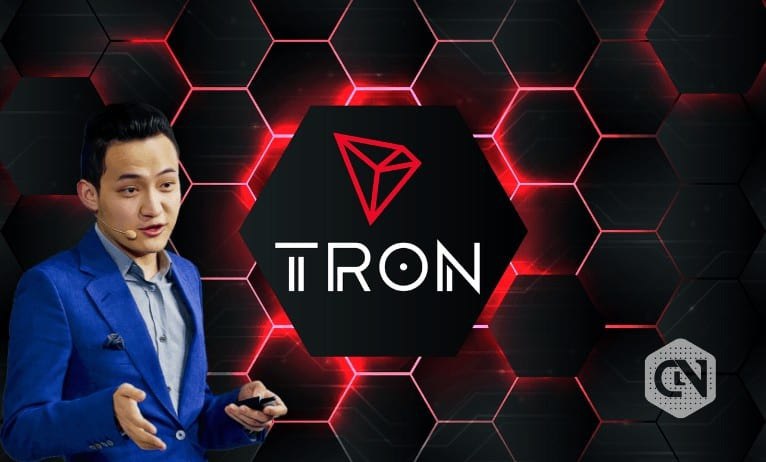
Justin Sun to Turn 30 Soon; Shares an Infographic Summarizing His Journey
TRON has been one of the forerunners of the crypto industry for quite a while, and its founder, Justin Sun, has been one of the most influential crypto personalities. Apart from this, Justin is also included in the youngest among crypto leaders and will be entering the “3rd decade” of his life in a couple of months. Reminding the community of his 30th birthday, the TRON chief shared an infographic depicting his journey from his early days.
Justin Sun’s story is one of the several rags-to-riches tales associated with the advent of Bitcoin, the apex cryptocurrency. As the world knows, Justin invested a year’s college tuition fees in BTC in 2010-2012, and the rest is history. However, there’s more to just the Bitcoin-luck, and therefore, the community needs to realize what he’s done and is capable. Yes, there have been several controversies associated with him, like his infamous fallout from the $4.57 million Power of One Lunch with Warren Buffett or openly criticizing the Ethereum crypto project, but that’s not definitely the end of the world.
Justin is, in fact, a master from an Ivy League university, the University of Pennsylvania, and is a young prodigy chosen by none other than Jack Ma, to study the state-of-the-art Hupan University, where he became the first millennial graduate. Apart from that, the whiz kid has also been a serial entrepreneur, having created the Chinese answer to Snapchat, an app called Piewo, which became an instant hit in the world’s largest consumer market.
Apart from this, Justin has also been among the leaders of the crypto community for charity and donations, giving millions for holistic and novel causes. Even in the community itself, Justin has worked his way up by working for predominant crypto projects like Ripple, which have helped him create a project as strong and formidable as TRON. By the acquisition of BitTorrent, we get a sense of how the future of the crypto community is strongly favorable for TRON.
All that said, Justin still needs to act more responsibly while conducting marketing, especially when it concerns the community directly. For instance, the chances crypto industry had of luring a traditional investor as big as the Berkshire Hathaway CEO, were never as big as the famed charity lunch, and Justin could have been a game-changer. However, the way he over-promoted it invited troubles, and ultimately, it was called off. Similarly, maintaining competitive respect is absolutely essential, especially at times when the crypto industry is drawing attention for wrong reasons.
Nevertheless, Justin Sun is a force to reckon with in 2019, and the future looks bright for the TRON community as well. All we can hope that the industry flourishes, which will require Justin to do pretty well, which he is, more or less, doing at the moment.
60% of WEST Tokens to Be Burned Before Network Upgrade
Waves Enterprises has taken the crypto world in a blow with its recent announcement about its native digital asset—the WEST tokens. The firm is gearing up to burn 60% of all WEST tokens. The process will decrease the total supply value of WEST from the initial 1 billion mark to a mere 400 million mark.
This strategic decision is likely to be a critical measure by the platform, which will bring down the supply substantially without introducing any change in the protocol. Interestingly, the company recently changed the name of its native digital token to Waves Enterprise System Token or WEST. The token will be available with the new ticker name on all exchange platforms where it is listed.
As per the reports, the platform has already collected the necessary amount of funds that are required for the development of the project and so it does not need any additional funding. Waves Enterprises will burn 600 million tokens while the remaining 400 tokens shall be spread in the following manner:
200 million WEST tokens: Will be purchased by early investors
40 million WEST tokens: Will be airdropped to Waves/WCT holders and in the market
160 million WEST tokens: Will be held by Waves Enterprise
About the Burn Protocol
Burning of digital tokens is a familiar, quite common, and straightforward mechanism in the crypto world, which indicates the permanent removal of a certain amount of coins from the total amount of digital assets available using cryptographic measures. Waves Platform will implement the burn process via a special “burn transaction.” For the holdings that have been transferred to the WEST Enterprise network through the WEST gateway, a smart contract will be curated along with a script that will restrain outgoing trades. Six hundred million tokens will be moved to this contract rendering them frozen forever. WEST tokens will be locked at 12:00 GMT on November 12, 2019, on the Waves Enterprise network.

China to Spend More Than $2 Billion to Further Blockchain Adoption by 2023
Despite the tough stance adopted by Chinese authorities against cryptocurrencies, the spending of the world’s most populous country on the blockchain technology is going to shoot through the roof.
International Data Center (IDC) has recently reported that China is going to spend more than $2 billion on blockchain technology by 2023. The report came into light just after the distributed ledger technology got an endorsement from the Chinese President Xi Jinping. Xi recognized the huge potential of blockchain technology and the reforms it can bring to the table on both the administrative and industrial front. So that you know, China is gearing to adopt the blockchain technology on the state level, which means various government departments will adopt the open ledger to achieve higher operational efficiencies across the board.
IDC estimated that the adoption of blockchain technology in China would witness a compounded annual growth rate of as high as 65.7% for the period between 2018 and 2023. As of now, the major spending on blockchain technology is done by the banking sector, followed by manufacturing, retail, and other professional services.
In the top political circuits of the Communist Party of China, the debate over the adoption of distributed ledger technology has been raging for quite some time now. Some of the top officials of the party have emphasized that China must not remain aloof to such a technological breakthrough. One of the important study sessions of the communist party culminated with the viewpoint that blockchain adoption is the need of the hour and should be adopted to harness the benefits of the technology to its fullest.
This official endorsement is the prime reason behind the optimistic figures released by the IDC about the rise of blockchain adoption in China. Unlike other capitalist economies, the role of government in allowing the adoption of new technologies is a major influential factor in China. Any new invention lacking government support is not able to survive in China, and this official endorsement should give impetus to the blockchain adoption in the country.
Argo Blockchain Intends to Increase the Number of Crypto Mining Machines
The cryptocurrency mining company, Argo blockchain is preparing to raise its production base with the inclusion of over 7000 new crypto mining machines by the mid of next year. Their production capacity will almost treble within the next five months as a result of this business development. The new machines would take the total hash rate to 1,360 Peta hashes, which could make Argo the largest publicly-listed mining company in the market.
They have also declared their plans to employ over 17,000 miners by the end of the first quarter of 2020. By far, the 1,026 S17 Antminer machines, which were in employment since May, have already accomplished a full return on their investment, indicating that the profit mining capacity of crypto mining was still very active.
Argo Executive Chair Mike Edwards commented:
We are pleased with the mining results in July as they demonstrate that we can use our existing investment in people and facilities and add new mining hardware with no increase in staffing and no material increases in non-mining costs. This operational gearing is very important as we triple our mining capacity over the next two quarters with no significant increase in non-mining costs.
Argo’s plans may seem ambitious, especially in terms of capital. However, the crypto industry saw massive improvements in 2019, which promised potential and an uprising trend in the coming years.
Facebook Launches a New Payment Platform “Facebook Pay” For Social Networks
Facebook launched a payment system, Facebook Pay, which will operate on its platforms, including Facebook, Instagram, Messenger, and WhatsApp. The Social Media site also cleared that it has nothing to do with the platform’s proposed cryptocurrency Libra. In a press brief, the company’s official stated that people had already been using its apps to shop, donate and, send money to each other. However, Facebook Pay will make these transactions easier and will ensure the security and integrity of payment information.
Earlier, the ambitious crypto project of Facebook, Libra, faced a major backlash looking at the appalling track record of the social media site. The lack of trust among regulators and bankers seems to be the biggest factor for this pitiful situation of Libra. At first glance, Facebook Pay seems to be somewhat like Google Pay or Ali Pay, but it will be used only on platforms owned by Facebook, while latter payment options are suited to serve on other apps as well.
Notably, Facebook assured that users would get to choose apps on which they want to opt Facebook Pay. Users can also access payment history, update settings, or manage payment methods. Facebook Pay will have real-time support in the United States, along with a live chat feature. It will be made available in settings on the app or website. For now, it can be accessed on Facebook and Messenger and will be made available on WhatsApp and Instagram soon.
In 2015, Facebook launched a fundraising tool and had processed $2 billion in donations since then. Facebook Pay supports most major credit and debit cards as well as PayPal. It has also partnered with well-known payment gateways like PayPal, Stripe, and others for the smooth processing of transactions. With Facebook Pay, they are continuing to invest in security.
Although Facebook Pay will store users’ card and bank account numbers, it will be encrypted and secured with multi-level authentication to keep a check on fraud, theft, or hacker attack. Users can also add a PIN or use your device biometrics like touch or face ID for an added layer of security. Facebook assured that it would not store biometric information of the users. Not to forget that there are several payment apps out there in the market, and it will be interesting to see how Facebook Pay competes with them.

Crypto.com Announces a Partnership With Xfers
Leading payments and cryptocurrency platform Crypto.com has entered into a partnership with Xfers. Crypto.com announced the partnership on Wednesday at the Singapore Fintech Festival. Xfers is a renowned Singapore-based payment processing company, and through this alliance, it will allow Crypto.com users to purchase and sell crypto in SGD by December 2019.
As a result of this partnership, now Crypto.com users can immediately purchase crypto that may include BTC, LTC, ETH, XRP, CRO, MCO in SGD. The partnership seeks to simplify the sale and purchase of cryptocurrencies with fiat currencies and boost the adoption of cryptocurrencies in Singapore.
Crypto.com is also planning to support StriatX, which has emerged Xfer’s pilot stablecoin initiative, and XSGD, its Singapore Dollar backed stablecoin. Apart from this, Crypto.com also strives to provide XSGD as part of Crypto.com Pay, its mobile payment solution that allows immediate and zero fees settlement between customers and dealers.
Tianwei Liu, Co-founder, and CEO of Xfers asserted that alliance with Crypto.com is vital to push our goal of establishing an open payment infrastructure for the region.
Meanwhile, Kris Marszalek, Co-founder, and CEO of Crypto.com said, that partnership will allow crypto purchase in SGD and on the key stablecoin initiatives covering StraitsX and XSGD.
Crypto.com came into existence in the year 2016 and Xfers was founded in the year 2015.
TRON Starts Registration Process for the Sun Network Developer Challenge
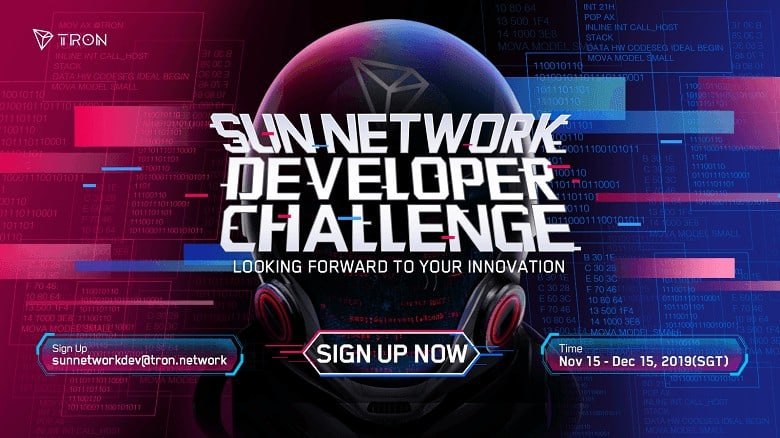
TRON has kickstarted the registration process for its highly anticipated project, the SUN Network Developer Challenge. The decentralized platform has urged developers, tech enthusiasts, entities, and organizations exploring the blockchain space to come and participate in the challenge, which is designed to strengthen the TRON network with the best strategies and plans.
The exciting challenge is curated to recognize the potential of efficient teams, ideas, businesses, and individuals that will give a boost to the integrated innovation and employment of decentralized technology. The firm aspires to enhance the TRON’s DApp community along with a critical upliftment of the complete blockchain niche through new and innovative ideas and researches.
The interested candidates who are willing to participate in the challenge are required to send an email to the official website of the Tron network before the deadline assigned by the company, i.e., December 15, 2019.
Important Dates About The Sun Network Developer Challenge
November 15, 2019 — The starting of the registration process
December 15, 2019 — The closure of the registration process
February 15, 2020 — The project submission deadline
Mid-March, 2020 — Announcement of the challenge winners
The Pre-Requisites of The Challenge
The challenge is open for both individuals and teams
All the DApps created by the participants should be deployed on the SUN Network Dappchain
It is essential for the projects to be in English or Mandarin Chinese for qualifying for the challenge
There is no bar on the choice of programming language and developer tools
Each and every participant of the challenge is required to take the legal responsibilities for their projects
Judgment Criteria
The top three projects will be selected by the TRON community on the basis of four factors, namely:
daily trading volume
product innovation
user experience
operational stability
The challenge has an exciting prize layout for the top three participants. The participant who will win the first prize shall be entitled to a prize worth 5000 USDT; the second prize winner shall get 3000 USDT, while the third prize winner will be given 1000 USDT. The prize-winning DApps will receive the expertise of the marketing tools of TRON network.
Apart from these top tier prizes, there will also be given a participation award of 100 USDT/person to the first 20 developers who will submit valid DApp during the challenge period.
Indian Government Introduces New Crypto Courses for Undergraduates
Cryptocurrencies and blockchain technology have started making a place for themselves in the Indian marketspace. Having covered with stringent regulatory measures and banking restrictions, the Indian government has added a breather for the digital currency niche with the introduction of education courses for cryptocurrency and blockchain terminology for the public and law enforcement officers.
According to the latest news, a new teaching course concerning the digital currency space has been added to the crucial initiative of the Ministry of Human Resource Development, Swayam. The course is named “Introduction to Blockchain Technology and Applications.”
The above-mentioned AICTE-approved course will be spread across the eight-week span and will be designed for the undergraduate students who are willing to explore the cryptocurrency and blockchain domain. The students will get the golden opportunity to enrich themselves with the knowledge given by highly qualified professor Sandeep Shukla of the Indian Institute of Technology (IIT), Kanpur. The program will begin from February 24, 2020, and will end on April 17, 2020. The interested students can appear for the exam as well after the completion of the course. The exam date is April 25, 2020.
During the course period, the students will immerse themselves in the knowledge about the basic concepts of cryptography and blockchain pedagogies like hashing and public-key cryptosystems. The course will focus on the concept of private vs. public blockchains and their applications. There will be given special attention to Bitcoin blockchain, its mining process, and its use in micropayments. Other topics that will find their place in the course will be Ethereum, IOTA, mining consensus, Hyperledger, Corda, etc.
The official information page on Swayam’s portal stated that there would be no enrollment fee for the course. But if a student aims to get a certificate of the completion of the course, then he/she needs to get registered and appear for the exam at any of the designated exam centers. The exam fee is Rs. 1000/- only.
This is not for the first time that the Swayam portal has initiated a course focused on cryptocurrencies and blockchain. It ran a course named “Blockchain Architecture Design and Use Cases” from July 29 to October 18 earlier this year. The government initiative will launch another course named “Cryptography and Network Security” in the approaching year for the aspiring students.
Apart from the courses offered by the Swayam portal, there is also a dedicated course designed by Sardar Vallabhbhai Patel National Police Academy to imbibe the knowledge of cryptocurrencies amongst the high-ranking officers.
The course entitled “Advance Course on Cyber Crime, Dark Web & Investigation of Cryptocurrencies” will be spread across for 5 days beginning from December 16 and ending on December 20. The course will cover information about the various cryptocurrencies available on the internet along with the working pedagogy of the blockchain technology.

MakerDAO Project is Launching Multi-collateral Dai on Crypto.com
According to the recent announcements, the MakerDAO project will launch its token, Multi-Collateral Dai (Dai), on November 18, 2019. Existing Single-collateral Dai (Sai) will be converted to Multi-Collateral Dai after its release. This token will be launched on the Crypto.com application.
There are specific changes that are required to implement on the Crypto.com application to support the Multi-collateral Dai token before its community successfully activates it.
Single-Collateral Dai (Sai) needs to be converted to Multi-Collateral Dai automatically in the application, Crypto.com.
There should be a single wallet for storing Dai. In that wallet, token deposits in both Sai and Dai should be acceptable from other wallets. All the deposited tokens in Sai, as well as Dai in Crypto.com app, should be consolidated in the Dai wallet. The address of the wallet, which is available on Crypto.com, will not change.
The company is supporting Sai deposits from other wallets until a new notice comes into existence. The support to the Sai can terminate at any time after receiving short notice. If anyone wants to transfer Sai token to the Crypto.com application, then the company will suggest specific ways to arrange such type of transfer from other wallets.
Dash Mexico Joins Hands With Cubobit to Launch New Remittance Platform Remezaza
Dash crypto project’s Mexican arm, Dash Mexico, has announced that it is collaborating with local digital payments network, Cubobit, to launch a new crypto remittance platform called Remezaza. As per the announcement, shared via a tweet by a prominent member of the Dash Mexico community Roel Castaño, this new platform will be based on the Dash blockchain.
Castaño also shared the link to the official announcement made by Cubobit via a blog post on Medium. In the blog, Cubobit states they are excited to work with the Mexican arm of DAO (Decentralized Autonomous Organization) of Dash. Amir Manzur Escobar, Co-founder, and CEO of Cubobit noted that the company is excited to help the Mexican people with a simplified remittance delivery system with the launch of Remezaza. He further added,
The instantaneous global transactions of the Dash Blockchain, its instantaneous re-expenditure capacity, and the ease of use make it the ideal tool to automate international payments. With Dash, we can now receive remittances in Dash, change them to Mexican pesos, and deposit them to the beneficiary’s account, almost instantly.
Mexico and other Latin American countries are growing to be an important market for remittance delivery companies. The amount of money coming in the region from countries like the US, Canada, and Europe has increased significantly, which shows no signs of slowing down in the foreseeable future. As per the data released by the National Population Council’s Yearbook of Migration and Remittances, Mexico for 2019, about a humongous $35 billion is estimated to be coming into the country alone from the US.
Digital currency-based payments are becoming quite popular in Mexico and neighboring countries, which has lured several crypto companies into placing fat bets in the region. It was June 2019, Mexico alone, to get eight new crypto exchanges in 2019-2020. At a time when uncertainties regarding crypto are growing throughout the established economies, demand for crypto in emerging markets like South America has given some hope to the companies. In fact, in Mexico alone, there are about a million active crypto users, and Dash would want a big piece of the pie.
Scorechain Introduces New AI to Detect Cryptocurrency Fraud
Scorechain initiates Artificial Intelligence to disclose fraud schemes in its anti-money laundering cryptocurrency transaction checking software. The organization signs a revolutionary development in the blockchain analytics space with the wallet type’s prediction.
Artificial Intelligence introduced by Scorechain includes plans to offer a more exact risk-scoring for cryptocurrencies activities with increasingly refined blockchain services identification.
By using Scorechain Artificial Intelligence (SCai), the platform is currently capable of predicting the kind of service that represents a group of addresses. Besides, the scalable model has just demonstrated its effectiveness, as SCai has shown over 92 percent of good expectations during the validation stage.
SCai forecasts entity types identified with dark web gambling, market places, mixing and trade platforms. The AI model, equipped with over 90 attributes, can analyze transaction trends and service operations over 120 million addresses. Besides, the SCai bot has been created dependent on academic research and learnings from Scorechain labeled information.
Scorechain CEO, Pierre Gerard stated that,
“Finding new entities and improving our Blockchain naming coverage is one of our top priorities. Our clients want to have the most rigorous risk-based approach. This is a breakthrough since the AI already identified five million addresses, such as darkweb marketplaces. Results have proved false positive are really low.”
Scorechain clients can choose whether to initiate SCai or not at any time and can have permission for full customization. Further, this full customization enables clients to think about false or positive practices. This feature is accessible on the UI and by using the API.
Crypto Voucher Allows Users to Buy BNB, Steem, and ONT Token Through Credit Cards
For all the crypto freaks, Crypto Voucher, the leading platform that works in lubricating crypto purchasing, has announced that it will now accept credit cards from customers without charging any payment fees from them.
This amazing facility will be available for the investors trading in Crypto Voucher’s partner and supporting entities as well, including leading crypto platforms like Binance, Steem, and Ontology. This will allow the customers to indulge in purchase of BNB, Steem, and ONT digital currencies through credit cards in a convenient manner.
According to the official announcement made by Crypto Voucher, it shall not be accepting payment fees from the customers during their purchase of cryptocurrencies through debit/credit cards rather will cover these charges from the service fee (4%) that is accrued on every transaction.
With an aim to induce more and more customers, Crypto Voucher will allow the customers to use credit cards for the purchase of assets worth a meagre value of 10 euros. Apart from these lucrative features, the platform has opened a promotion program for the users, which will remain valid until December 31, 2019. During the program, Crypto Voucher will give a voucher worth 10-euros to every new investor who will indulge in a minimum purchase of digital currencies of 200-euros using credit cards.
Crypto Voucher is hopeful that allowing credit cards as a medium of payment the overall customer experience is likely to get enhanced in a big way. The firm aspires to improve the entry point and shopping experience of the crypto enthusiasts.

WazirX CEO Calls for Crypto in India; Explains “Bitcoin for a Common Man”
Indian crypto exchange WazirX CEO, Nischal Shetty, in conversation with Sumit Jain, Co-founder of Commonfloor, at the OpenTalk platform explained why crypto is important for the common man in India.
When asked his views on “Bitcoin for a common man”, he stated that the entire ethos of the internet is to empower the people, and Bitcoin is empowering them monetarily. He also added,
The Indian government is completely neutral right now. They have not said that crypto is illegal, they have not said crypto is legal. And because off the Innovative nature of crypto, there’s nothing in the law that states what to do with it…That’s how crypto seems to be today, but what can you do and what can you not do? So, the only government-related body that has come up with something was the RBI, where they said that none of the banks should deal with crypto-related businesses. So, as a crypto exchange today, we do not have a bank account in India. We cannot accept money from people because we are not allowed to according to RBI, but RBI does not set the rules for the people of the country like for you and me.
Why Indian Government Needs a Positive Approach Towards Crypto?
Even after a decade of existence and covering most of the first and second world, the crypto industry hasn’t been able to penetrate the Indian market as prominently as it would’ve liked. The reason? Government’s pessimistic approach towards crypto. While there are several factors which the authorities highlight to justify their banning crypto in the country, there’s one area where India is losing ground to its fiercest economic rival and neighbor, China. That’s the area of capitalizing the crypto-blockchain tech, which the Chinese mainstream is gradually adopting.
Nischal’s Campaign on Twitter #IndiaWantsCrypto
Reminding this to the government, Nischal tweeted with his long running campaign on social media platform, that recent surge in the blockchain industry in China has helped the country to gain a competitive edge over India, with thousands of companies adopting blockchain. He shows his concern, tagging Indian PM Narendra Modi and Finance Minister Nirmala Sitharaman, that India will lose on this crucial tech battle if the government doesn’t take necessary steps.
About WazirX
WazirX is India’s largest crypto exchange, and one of the few companies that have managed to survive the wrath of regulatory authorities in the country. Especially, after the RBI announced stringent regulations, and directed commercial banks to refrain from serving crypto companies, many established players on the Indian crypto scene failed to stay active and were forced to suspend operations.

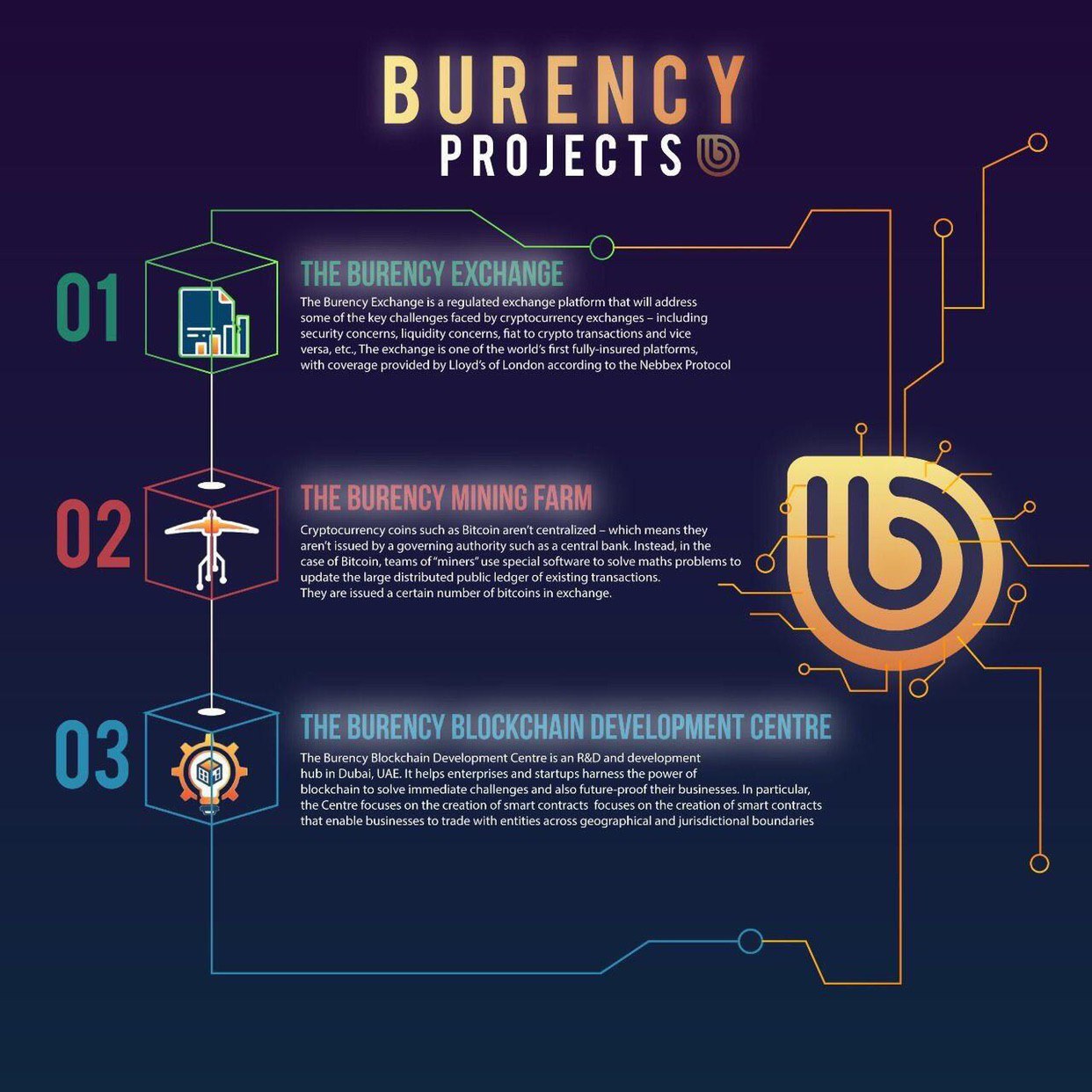
We’re thrilled to announced a new partnership with the new big one, Burency Project ! ✅
The burency platform is designed to address key challenges that are preventing widespread adoption within the cryptocurrency and blockchain ecosystem, especially in the Middle East through 3 major points :
1/ REGULATED AND FULLY INSURED CRYPTOCURRENCY EXCHANGE🔥
The Burency Exchange is a regulated exchange platform that addresses key challenges including security, liquidity, fiat to crypto transactions and vise versa, and more. The exchange is one of the world’s fully insured platforms, with coverage provided from LIoyd’s of London through the Nebbex Protocol.
2/ SUSTAINABLE MINING OPERATION⚡️
The Burency Mining facility answers some of the challenges associated with crypto mining such as mining destruction to environment and excessive mining power expenses by creating a sustainable facility powered by renewable hydropower. Burency provides a streamlined platform for the generation of cryptocurrency via purchased timeshare slots within the mining facilities using the BUY token. Additionally, computational power can also be purchased via the BUY token which governs purchases across the Burency ecosystem.
3/ BLOCKAHIN RESEARCH & DEVELOPMENT CENTER 🚀
The Burency Blockchain Development Center is dedicated mainly for advising enterprises on Blockchain applications and helping them operate on the blockchain for more efficient operation and business transactions execution. In particular, the center focuses on the creation of smart contracts that enable businesses to trade with entities across geographical and jurisdiction boundaries.
——————————
We have rarely seen such a qualified and competent team, as well as the project advisors, for example John Mcafee is one of them.
Their fundraising is one of the fastest in the market today, the private sale has just started and they are already receiving a lot of interest from investors.
Feel free to take a look at their website for more information: https://burency.io/
We highly recommend you to join their Telegram group so you don't miss out on this incredible project : https://t.me/BurencyCommunity
Twitter : https://twitter.com/BurencyOfficial
China’s Crypto Game—Understanding the Dragon’s Move
China has been one of the staunch critics of cryptocurrencies and has always adopted a reserved approach. The country has strict and stringent laws imposed on the crypto industry, which forced several companies to either end operations or move their bases out of the country.
Ironically, some of the most powerful names in the crypto space come from China, like Binance Chief Changpeng Zhao, and TRON CEO Justin Sun. However, the strict policies of the government against crypto compelled them to move out of the country, like CZ shifted to Japan.
Interestingly, China has been quite optimistic about blockchain technology and has been openly supportive of it. China’s supreme leader Xi Jinping had made a statement that blockchain is acceptable and the country will keep focusing on the ways to adopt the tech. Contrastingly, he has always opposed the use of Bitcoins and other cryptocurrencies, terming them as fraudulent.
The country’s negative approach towards crypto doesn’t come as a surprise, as the core ethos of decentralized currencies goes against the policy of the Chinese government. Cryptocurrencies give people freedom from the government-controlled systems, and that’s what China’s leader cannot afford.
In fact, the communist regime has thrived on the state-concentrated economy and tight controlled systems. There have been several incidents, which indicate that the current government is threatened by free access to information and money for the people, which is why cryptocurrencies are a big no in the country, alongside global platforms like the Google Search Engine, Facebook, Twitter, Instagram, Snapchat, Gmail, YouTube, etc.
So then, is it that the Chinese will never adopt crypto? Quite contrarily, the Dragon is planning on crypto adoption, but the one which they can easily control, and not something as decentralized as Bitcoin or Ripple. There have been reports of the Chinese government working on a digital currency, which will be managed by the state and there are quite a few reasons for them to do so.
Why is China Taking a U-Turn on its Crypto Stand?
First of all, they might have realized that crypto has the power to subside, if not end, the global dominance of the US Dollar. This was clearly evident in the case of Venezuela, where the people were able to bypass the sanctions imposed by the United States using Bitcoin. The Russians, one of the US arch-rivals of Washington, and a recent aide of China, has openly stated that they are developing a government-backed cryptocurrency, which is already in the final stages of development.
China bitterly realizes that no matter how big it becomes, it can never attain global dominance unless and until the reign of the USD comes to an end, which has been quite evident in the ongoing Sino-US trade war. However, if more and more countries start accepting crypto payments, the US Sanctions won’t be a big problem, as they are now. Especially, the ill-effects of the trade war felt in Europe and other regions can be significantly reduced, once China doesn’t need to spend or accept US Dollars in these areas.
On the other hand, China is equally aware that relying on truly decentralized currencies can cause it to lose the socio-economic control and authority it currently enjoys over its people, which has been a major reason for the growth of the Dragon. In this case, the best option left is to introduce a digital currency, under complete control of the government, like Russia is doing, and like many other countries are doing.
Dash CEO Thinks That Dash’s Instasend and Chainlocks Can Solve Issue of Market Volatility
CEO of the Dash Core group, Ryan Taylor considers that instantaneous cryptocurrency confirmations, which are provided by Dash’s InstantSend and ChainLocks, can help in solving the diligent problem of market volatility. This was mentioned in a recent podcast of the Abra Money 3.0.
Dash’s Ryan Taylor Believes Instant Cryptocurrency Confirmations Can Solve Volatility#Crypto #Fintech #Cryptocurrency #Blockchain #Bitcoin #Dash @Dashpay https://t.co/NPxhxdBvaH
— Dash News (@DashpayNews) November 21, 2019
In his latest interview with Bill Barhydt, founder and CEO of Abra, Taylor explained the problem of market volatility, which influences Dash more fundamentally than Bitcoin. This is because of its small market capitalization, by saying that he accepts that transactions that are instantly confirmed can balance the problem of market volatility.
“The volatility issue is real. It’s even more real for a smaller cryptocurrency like Dash, which has about 25% higher volatility than Bitcoin does.”
Regardless of the noteworthy benefits that Dash offers in fighting market volatility through faster transactions, Taylor sees the exchanges did not solve the present issues. He said those issues could be solved by benefitting from Dash features.
Besides, Dash’s feature of Instasend functionality secures the transactions instantly, taking a normal time of under two seconds to finalize the payment successfully. This has been executed as a default for all the transactions carried out from April.
He additionally clarified that the kinds of payments that Dash encourages truly well are point-of-sale sort of transactions. Firstly, it is instant. Moreover, all transactions are locked inside one to two seconds and that makes it truly practical at a point-of-sale. Further, it is not expensive and the user can get the combination of low cost and speed.
Additionally, in July, Dash also activated ChainLocks, securing the blocks as permanent instantly. These two functionalities increase the trustworthiness and security of Dash transactions immediately, and after the first confirmation in the block.
Ryan said they have launched a new technology called ChainLocks that prevents 51 percent attacks. Within around four to six seconds of another block being published, the whole block cannot be turned back. The blend of the two enables them to do what is called Chained Instant Sends.
Moreover, they have already counteracted the technical hurdles; regardless, Taylor sees the benefits of instant confirmations in fighting volatility as appealing enough and expects exchanges to honor Instasend.
He said,
“We have to go out and educate them on how to accept these, how to recognize the InstantSend locks and so on, and recognize the benefits to them. Exchanges that honor InstantSend, it’s probably obvious, see higher volumes. They see higher trading volumes.”
