ACD Inc. Partners With Alchemy to Strengthen ACD Tokens Network in Asia
Leading cryptocurrency payment platform, Alchemy Global Payment Solutions Limited has announced the news about its strategic partnership with ACD Inc., a Tokyo-based joint-venture group facilitating e-commerce and air cargo delivery and logistics services in Japan. The two leading firms have joined hands to offer ACD tokens at businesses and merchant networks in Japan and across Japan.
As a part of the agreement between the two firms, the holders of ACD tokens will be able to buy products using their ACD tokens at various outlets, including both online and offline merchant resources of ACD Inc.’s e-commerce solutions as well as QFPay Japan. ACD Inc. is the sister concern of ANA Holdings, TSE:9202.
Alchemy Global Payment Solutions Limited earned popularity in the payment provider sector by launching Asia’s first hybrid cryptocurrency and fiat payment platform, branded as “Hybrid Payment Solution.” Interestingly, with its collaboration with ACD Inc., Alchemy will provide the excellence of its Hybrid Payment Solution to strengthen the e-commerce service solutions and retail merchants of the platform in a big way. These traders will now be able to accept payments from customers via ACD tokens, Bitcoin Cash, Bitcoin, Ethereum, etc. Wallets such as Rakuten Pay, Alipay, and WeChat Pay shall also be accepted.
While talking about the partnership, Mr. Patrick Ngan, co-founder and CEO of Alchemy, stated that,
“This partnership is set to benefit the entire payment ecosystem, from payment partners to merchants and consumers including ACD token holders who can now use their tokens to purchase goods and services. We have recently launched our hybrid payment system at the iconic lifestyle restaurant Ce La Vi in Singapore and have received strong interest from customers who wish to pay with cryptocurrencies.”
Mr. Yasuhiro Sonoda, CEO of ACD, also showed overwhelmingness on successfully collaborating with Alchemy and QFPay. The honorable CEO of QFPay Japan, Ms. Angie Li, shared similar happiness while commenting on the firm’s partnership with ACD Inc. and Alchemy.

France Declares to Research on State-backed Blockchain-based Cryptocurrency
The Central bank of France, in a recent speech, declared that they would research a state-supported blockchain-based digital currency. Denis Beau, Banque de France’s First Deputy Governor, expressed that the eurozone needs to develop a Central bank digital currency (CBDC) because “disorderly approaches and heterogeneous adaptations” would develop during its absence.
“As a major provider of critical wholesale clearing and settlement services in euro, the Euro zone should be open to experimenting with these innovations to revisit and possibly improve the conditions under which we make available central bank money as a settlement asset,” said Beau.
He further added that Banque de France is open for experiments in that area. The bank, along with the European Central Bank (ECB) and other central banks of the Euro system, is looking to materialize these experiments together.
Beau expressed that blockchain solutions are additionally being inspected for cross-border payment solutions inside the EU. As of now, the residents of the EU wait for longer periods for their payments to clear globally.
Moreover, Beau said, “Tokenized assets may give that method a jolt.” By combining with Distributed ledger technology (DLT), tokens could consistently move funds and will aid in answering market demands, he added.
Besides, Banque de France has been one of the most candid supporters of DLT. From October, it started looking for a blockchain analyst to assist it with developing a currency implementation program.
As indicated by Beau, the present financial model outcomes are quite costly and vulnerable to assistance. By using blockchain, cross-border payments can be completed flawlessly at a small amount of price, by answering the demands of the markets.
As per Beau, Banque de France was the first central bank on the planet to build up a blockchain registry framework.

✅ Monart art trading platform just had its grand opening!! Now the monart token purchase is open too, exclusively for you to benefit from the growth of the art market and from revenues from our innovative Art platform. And become an art patron as 50% of the token sales is invested to purchase a large permanent art collection!
✅ This offer is valid until November 30 but purchase early as there is a limited number of tokens available during this early bird special pre-private sale phase! The monart token purchase platform is open for you to purchase tokens and take advantage of this 50% free tokens bonus.
👉🏻 20+ people team based in Paris, Beijing (2.000 m2 art space), Malta & San Francisco including former contemporary art director of Christie’s.
👉🏻 Monart already raised $1 million, 1/3 in equity, 2/3 in tokens. Looking to raise both in equity and tokens with favorable offers.
👉🏻 Large 130.000+ social networks followers, large press coverage www.monart.art/press/
Monart, the New Platform of Art, was presented exclusively to the Press and to the Art community on October 17 in Paris at the privatized headquarters of Beaux Arts Magazine - leading French Art newspaper - in parallel with FIAC - 2nd largest Art Fair worldwide.
JOIN OUR WHITELIST NOW TO GET EARLY DISCOUNT!
♦️ https://www.monart.art/white-list
♦️ Input the information in the form
♦️ Chose the amount you want to invest
♦️ Early Discount Ends Soon
Join our community to keep posted on the latest update:
✅ https://t.me/MyMonArt
✅ https://www.monart.art/
✅ https://twitter.com/mymonart
✅ https://medium.com/monart
✅ https://www.instagram.com/my_monart/

Saga Announces Official Launch Date of SGA Token And Opens Online Onboarding Process
Saga Monetary Technologies (Saga) is delighted to announce that its Saga token (SGA) will launch on Tuesday 10 December 2019. In advance of this, its full onboarding process is now open online. Compliant with the ERC-20 token standard and addressing key concerns regarding volatility, governance and regulatory compliance, SGA is designed to serve as a frictionless global currency.
When building SGA, Saga has focused on creating a stabilized currency for global usage. The Saga Contract, as explained in detail in their Monetary Model, allows the SGA market to self-regulate the money supply. At launch, SGA will be fully backed by a basket of national currencies that replicate the International Monetary Fund’s SDR. Based on the SGA’s market movements, measured by the number of tokens issued, the Saga monetary model will gradually diminish reliance on the reserve as user confidence in SGA grows. Together, these measures are designed to reduce price volatility while allowing SGA to grow beyond a simple fiat-backed / pegged stablecoin.
Participants will be the Saga economy’s sovereign decision-makers through a number of governance mechanisms, including electing the executive council overseeing the project. Combining fair representation with effective administration will help ensure reliable governance of the project, ultimately increasing user trust in SGA. Furthermore, SGA is designed to comply fully with existing regulatory frameworks globally, which will help ease use around the world.
Senior members of the Saga Advisory Board include Prof. Jacob A. Frenkel, PhD, chairman of JPMorgan Chase International and former governor of the Bank of Israel; Prof. Myron Scholes, Nobel laureate in economic sciences and professor emeritus at Stanford University; Leo Melamed, former chairman of the Chicago Mercantile Exchange (CME); and Prof. Dan Galai, PhD, former dean of the School of Management at Hebrew University Jerusalem.
Accredited partners including Lightspeed Venture Partners, Mangrove Capital Partners, Vertex Ventures, Disruptive, Lool Ventures, and others have already demonstrated confidence in Saga’s vision by participating in its $30M seed funding. This funding has made possible Saga’s launch of the SGA token and the first steps toward the realization of Saga’s vision for a fair and reliable global currency. For more information, visit www.saga.org.
Online onboarding open
Future buyers of SGA can now be onboarded, allowing them to execute their SGA purchase as soon as the token launches on the 10th December. Saga’s onboarding platform comprises a risk-based Know Your Customer (KYC) and Anti-money laundering (AML) process, which requires more information the higher the desired transaction threshold. The process is compliant with all applicable UK and FATF AML-related regulations and practices.
Access to the online onboarding platform is available through Saga’s website, under the address: https://www.saga.org/
About Saga:
Saga is a UK company, limited by guarantee, working under not-for-profit principles. It is governed by applicable UK laws and regulations and has adopted KYC/AML procedures compliant with the strictest international standards and regulations. Ido Sadeh Man founded Saga in 2017, and his team today includes Barry Topf (chief economist), Dr. Ron Sabo (chief scientist), and many others.
Seba Unveils New Crypto Index to Strengthen Its Investment Solutions Network
Serving the global market as the world’s first licensed Swiss bank for traditional and digital assets, SEBA Crypto AG has broadcasted the news about the launch of a new index designed for digital assets to lend the necessary support and leverage to its investment solutions suite.
On Wednesday, the firm broke the news of SEBAX or SEBA Crypto Asset Select Index, which will operate as a dynamic and risk-optimized index rendering the users with the strategically important widescale proliferation into the crypto investment marketspace at their convenience. SEBA has collaborated with the European index administrator MV Index Solutions and Gentwo Digital to make the new index project a reality. Where on the one hand, MV Index Solutions helped in channelizing the launch process of the index, on the other hand, Gentwo Digital aided in the implementation of the strategic requirements of carving out the first investment project.
Earlier in the month of August, SEBA acquired a banking and securities dealers’ license from the globally reputed regulatory watchdog, the Swiss Financial Market Supervisory Authority, or the FINMA as it is widely known as. The license allowed the banking giant to facilitate digital asset-based investment instruments to institutional customers.
While expanding its operations to different sectors of the economy, the crypto bank kickstarted fostering banking services to other banking institutions, asset managers, pension funds, entities, and professional investors, tokenized investment solutions, real assets, etc.
In the case of entities involved in the blockchain industry, the bank will provide the facility of corporate accounts that play a pivotal role in managing the operations of a company.
Daniel Kuehne, chief of asset management at SEBA Bank AG stated that,
“With our investment solutions we want to offer investors the highest possible security and strengthen their confidence in the new, complex market environment of cryptocurrencies. With our product and investment expertise, we enable our clients to tap the new potential of digital asset classes with familiar rules from the existing financial world.”
Currently, Sygnum also acquired a capital markets services license from the regulatory authorities of Singapore, which gave it a fair chance to offer digital asset investment solutions to accredited and institutional clients.
Chainalysis CEO Gronager Discusses the Company’s Operations and Future Plans
The spearhead of the leading computer software providing firm Chainalysis, Michael Gronager recently appeared for a podcast session on the popular show, Change Wave by Treehouse. The co-founder and CEO of Chainalysis gave an insight about his firm, its operations, and a lot more during his intriguing interaction with the host of the show, Tim Nicolas. The entire podcast session had an array of interesting questions asked by the host and even more interesting answers given by Michael Gronager in an engaging and realistic manner.
Chainalysis: For the Investors
To begin with, Tim asked Michael about Chainalysis and his role in the company as the first question for the podcast session. In response, Michael stated that Chainalysis is a blockchain analysis company which helps the investors in understanding the patterns of the industry in a better way.
Michael said that his firm assesses transactions and then draws patterns that later help in creating necessary solutions. Undoubtedly, the expert analysis and investigation tools of Chainalysis have made the firm quite popular, with clients ranging from government agencies, exchanges, and financial institutions spread around 40 countries globally. He said that he tries hard to manage the operations of his firm in the best possible way.
About Michael’s Professional Journey
Michael shared his happiness while talking about the expanse of his company and client base. He revealed that while working as the co-founder and COO of Kraken, one of the leading crypto exchanges, before joining Chainalysis, he realized the need for a system that would solve the persisting issues existing in the system and this paved the way for the launch of Chainalysis. He said that Chainalysis aims to popularize cryptocurrencies in the global marketspace and to ensure reliability and trust amongst the customers.
The CEO shared his views regarding the pooling of buyers by different platforms. He said this process should be irrespective of gender, status, or any such criteria as every individual has his own sense of intelligence. While discussing about his past life and experiences, Michael talked about his earlier jobs. He said that his toughest job experience was working in a factory. The leader mentioned about how he earned his PhD degree in Quantum Mechanics primarily to satiate his curiosity about computers.
The interesting podcast session between Tim and Michael turned out to be quite successful and it helped the listeners to attain more knowledge about Chainalysis and the inspiring journey of its co-founder Michael Gronager.

Google’s Quantum Supremacy and Its Possible Impact on Crypto World
A report published in the Financial Times recently focused on Google’s achievement of successfully building a quantum computer. This computer is ultra-fast in its processing, and the potential of its speed can be estimated by the fact that it takes only 200 seconds to solve the mathematical problems that an ordinary computer will take years to process. In other words, if reports are true, then Google has achieved Quantum Supremacy.
Potential Impacts
This gigantic achievement comes as a double-edged sword, having both merits and demerits. It is advantageous as it will help to solve complex problems with ease and, more importantly, at lightning speed. In its practical applications, quantum computers can be utilized in large corporations and data centers to handle issues that are out-of-bounds for ordinary computers and even supercomputers. We may witness the application of quantum computer industries like automobile, pharmaceutical, and Biotechnology, among others.
On the flip side, quantum computers will strengthen the supremacy of Google in the way information is searched, processed, and used for decision making. This kind of monopoly is not good for healthy competition and will make Google even more powerful than its current status.
Quantum Computers and Crypto World
Specifically looking at the impact of quantum computing on the cryptocurrency and blockchain, it will be difficult to ascertain the holistic effect at present. Given the fact that information about quantum computing is still limited and yet to be verified, it will be wrong to predict that doomsday has arrived for the digital currency and open ledger technology.
That said, there are serious implications of quantum computing for the blockchain and crypto industry. Blockchain technology makes use of the elliptic curve cryptography (ECC), and in fact, the same cryptography technique is utilized to encrypt traffic on the internet.
Now considering the assertion of Andersen Cheng, CEO of Post-Quantum, that a quantum computer can easily decrypt the private keys of the users and forge their signature to do transactions, the evolution of quantum computing poses a serious threat to blockchain and digital currency. It essentially means that the safety aspect associated with the digital currencies will be compromised.
The premise of quantum computers possibly breaking ECC is also fueled by the fact that researchers, physicists, and scientists are already aware of an algorithm, Shor Algorithm, which can break the ECC. Many experts contend that the evolution of quantum computers in the future could render for blockchain technology obsolete in a manner that is beyond imagination.
Conclusion
In sum, it is too early to accurately predict the impact of quantum computers on the crypto world. Quantum computers have the potential to significantly undermine the safety and security offered by digital transactions powered by blockchain technology though we need to wait for some time to make a concrete analysis on this front.

Tron Foundation Announces Top 5 Winners of Community Developers Incentives Program
TRON Foundation has announced the news of the Five Lucky Winners of its highly anticipated TRON Core Developers Incentives Program. The event which was kickstarted two months back has witnessed widescale participation from the developers worldwide.
Through an official tweet on the TRON Foundation official page, the firm announced the names of the top five winners whose projects outshined other developers’ solutions being submitted by the end of November 30, 2019.
The names of the top five winners of the Community Developers Incentives Programme are:
Richardhallhall who has won 200 USDT
Zara-lang who has won 180 USDT
Tronalex who has won 150 USDT
Parachuteuk who has won 120 USDT
tomos01 who has won 100USDT
The firm has sent its heartiest congratulations to the winners through its post. It has advised the winners to claim their rewards by sending an email describing their USDT address to coreDevs@tron.network. The winners have to send this email via the email they used during the event by the end of December 10, 2019. The cash reward will be sent to the winners in the form of USDT by the month-end.
The post encouraged the participants who failed to grab a position in the top 5 this time. The platform has asked the participants to continue to earn points to win a reward slated for next month or the quarterly reward.
Tokenmania Broadcasts News About Cooperation With GST Ecology
Having established itself as one of the world’s highly reputed cryptocurrency asset management firm, TokenMania has announced its strategic partnership with GST Ecology.
According to the latest reports on the collaboration, TokenMania and GST Ecology will be closely working together on GST ecological asset management and token market value management.
The highly anticipated joint effort between the two leading platforms will aid GST Ecology in fostering all asset operations in a more professional manner while ensuring the highest standards of safety and value-addition to the digital holdings of the network participants.
Interestingly, GST Ecology recently broke the news about its critically important hard fork upgradation of its mainnet. This process paved the way for the addition of new lucrative features into the network along with an improvement in the overall network processing capacities.
It also led to an enhancement of the processing performance in the case of users who prefer large-scale trading activities. With a change in the minimum unit of transactions, the platform will aid an improvement in the flow of operations.
SBI Mulling a Company-wide Cryptocurrency Shareholder Payout in XRP
Japanese financial giant SBI is considering issuing Ripple (XRP) tokens as company-wide shareholder rewards, says the company’s CEO Yoshitaka Kitao.
In a recent address to shareholders shared by the company on YouTube, Kitao stated that a previous XRP handout to shareholders of SBI’s Morningstar subsidiary in August this year had proved a success.
The CEO said he is looking into the idea of offering XRP benefits to all SBI shareholders at the end of the current financial year (March 2020).
Kitao is a Ripple board member, and SBI is arguably Ripple’s closest East Asian partner. The two companies co-operate the SBI Ripple Asia payment platform.
The SBI chief said that the August XRP payout had driven up subscriptions to the company’s Japanese crypto exchange, SBI VC Trade – as Morningstar shareholder wishing to claim their XRP were obliged to open accounts on the platform to claim their tokens.
However, Kitao hinted that if SBI does go ahead with the XRP payout, shareholders will be able to choose whether or not they would like to receive their benefits in cryptocurrency.
At pixel time (09:38 UTC), XRP trades at c. USD 0.22 and is up by 1% in a day, trimming its weekly losses to 4.6%. The price is down by 28% in a month and by 37% in a year.
Kitao also made other announcements regarding SBI’s cryptocurrency-related business plans, with more materials shared online. SBI subsidiary SBI Crypto will begin operations at two new mining facilities before the end of FY2019 – with farms opening in the United States and Kyrgyzstan. Another farm will close down and move elsewhere – meaning the company will end the financial year with four overseas farms in operation.
Kitao also suggested that SBI was looking to cooperate with crypto-keen Yahoo Japan on possible cryptocurrency-related projects. The companies have already begun working together on forex trading-related business operations.
SBI said in October that SBI VC Trade and SBI Crypto are both making money for the company. The exchange business has posted pre-tax profits of USD 30 million, with SBI Crypto posting pre-tax profits of USD 2.7 million – despite a 17% decrease in the group’s overall financial performance.
In November, SBI Holdings entered another crypto business by investing in major U.S. based security token platform Securitize.
Hive Blockchain Lost 'Last Analyst'; Reports Record Income, Still Makes Loss
The first publicly listed blockchain infrastructure company, Hive Blockchain Technologies Ltd., reportedly lost the last analyst covering it, and the price of its shares is far from the early days of it going public. Meanwhile, the company reported an income increase of c. 84% in Q3, compared to the same period last year, but still suffered multi million loss.
Vancouver-based Hive Blockchain Technologies (HIVE) went public in 2017, but now the only analyst left covering it, PI Financial, abandoned the company, leading Hive to join “the list of flame-outs on Canada’s junior stock exchange,” Bloomberg reported . The media outlet cites analyst David Kwan who said that Hive “no longer meets our coverage criteria.”
Hive opened on the TSX Venture Exchange in September 2017, seeing great interest from investors and traders, particularly given the rise in prices of Bitcoin (BTC) and altcoins. In an interview in 2018, Hive Blockchain CEO Harry Pokrandt said that the largest listed blockchain infrastructure was established with the launch of Hive, which raised USD 115 million in funding in its first year.
Bloomberg also reports that the company was “an overnight stock sensation” after starting to trade publicly, seeing its share price triple on the very first day, then skyrocket more than 2,000% in the following weeks, later even hitting a market value of CAD 1.9 billion (USD 1.4 billion) “making it one of the largest blockchain-related companies anywhere.”
Meanwhile, Hive was busy this year. In January, it received regulatory approval from the TSX Venture Exchange for a 50% increase in ASIC capacity to mine Bitcoin. In February, Hive began trading on OTCQX under the symbol "HVBTF." In April news of contractual disputes with Hive’s largest stakeholder, Genesis Mining, were reported. Genesis “requisitioned a meeting of shareholders for the purpose of removing directors independent of Genesis and electing a board of directors, the majority of whom would be senior officers and employees of Genesis,” which Hive rejected. The two have settled in June, rebooting operations in Sweden and reaching 99% utilization of capacity there in July. In November, Hive completed the transition of its GPU chips in Sweden from Genesis Mining to Blockbase Group.
In September, they reported revenues of USD 31.8 million, a 143% increase of income from digital currency mining over fiscal year 2018, as well as USD 5.6 million of net income for the first quarter.
On December 2, the company announced its results for the second quarter of their financial year ended September 30, 2019, reporting “a healthy second fiscal quarter of positive free cash flow contributing to an already strong balance sheet.” Highlights include:
-generated record income from digital currency mining of USD 12.0 million, an increase of approximately 84% from the same period in the prior year;
-incurred a net loss of USD 11.5 million for the period;
-generated USD 0.3 million in cash flow from operations;
-increased net cash less loans payables to USD 5.3 million, with digital currencies assets at USD 7.2 million, as at September 30, 2019.
Meanwhile, Simply Wall St reported that “the general public, who are mostly retail investors, collectively hold 71% of Hive Blockchain Technologies shares.”
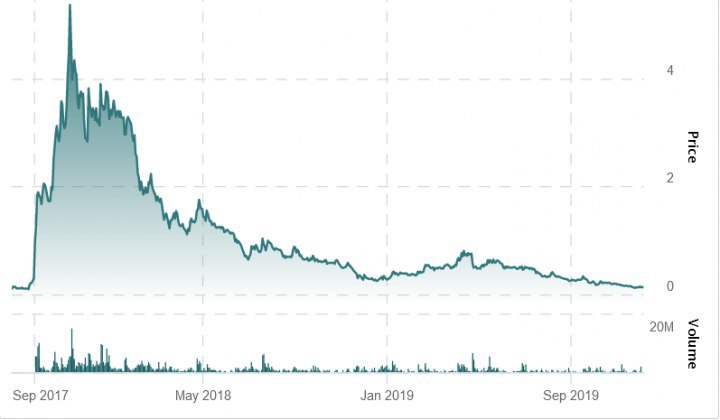
HIVE price chart:
UAE Central Bank Says It Doesn’t Approve Private Cryptos; Could This Be a Threat to the Middle East?
Cryptocurrencies have been one of the most polarizing concepts of the 21st Century, which have divided the world into two major fractions. First, who believe that Bitcoin is revolutionary, and is the future of global monetary systems. Second, who think that crypto is the threat of the sovereign governments of all the countries.
The debate, which has been alive for almost a decade now, got refueled after technology giant Facebook announced their ambitious crypto project Libra, and ever since, reactions from all over the world seem to be growing, with no signs of slowing down. The latest of these countries iterating their stand on crypto is the United Arab Emirates, the land which has been quite favorable for crypto projects. However, that might soon change, as the Central Bank of the UAE has stated that it doesn’t approve any private cryptocurrencies, and to break the hearts of enthusiasts, almost every digital coin, including Bitcoin, Ethereum, Dash, Litecoin, etc., is a private token.
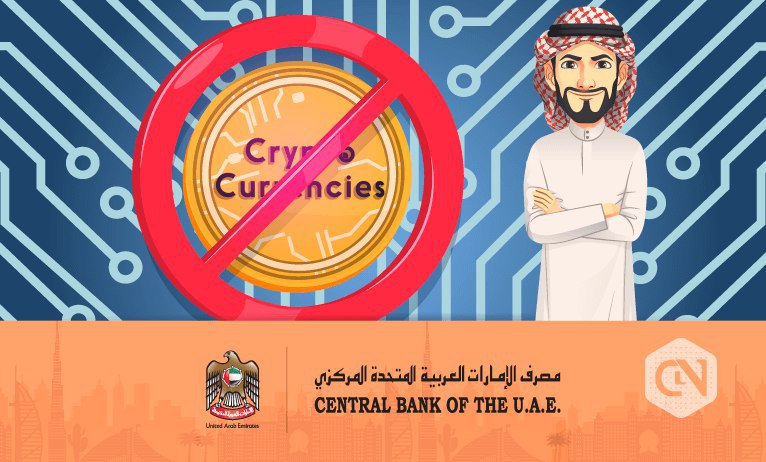
In answer to an article published on an online portal, which claimed that the Governor of the Central Bank of UAE (CBUAE) endorses a private crypto trading platform, the CBUAE released an official statement that it doesn’t endorse any such platform, called the portal that published the article as a “potentially fraudulent website.” The apex banking authority in the Gulf country said,
“The Central Bank does not approve any private cryptocurrencies or schemes and has not issued any licences in the UAE. CBUAE believes that private cryptocurrencies pose potential risks related to price volatility, money laundering, and terrorist financing.”
Those who have been following statements by political leaders on the crypto industry will soon remember that similar criticism was made by Donald Trump a few months ago. The US President had said,
“I am not a fan of Bitcoin and other Cryptocurrencies, which are not money, and whose value is highly volatile and based on thin air. Unregulated Crypto Assets can facilitate unlawful behaviour, including drug trade and other illegal activity. Similarly, Facebook Libra’s “virtual currency” will have little standing or dependability… We have only one real currency in the USA, and it is stronger than ever, both dependable and reliable. It is by far the most dominant currency anywhere in the World, and it will always stay that way. It is called the United States Dollar!”
What’s common in the statement by CBUAE and the earlier one made by President Trump is that both of them accuse private or unregulated cryptocurrencies of facilitating illegal activities like terrorism and drug trafficking. However, several reports recently and even in the past have shown that such anti-social activities are carried on significantly more on cash than crypto.
The statement by the CBUAE comes at a time when major economies in the world are criticizing crypto, and Bitcoin itself is on a severe downfall, priced below $7,500, which significantly lower than the yearly high of $13,500. Several crypto companies have settled in the UAE in the last few years. In fact, there were reports earlier this year that the governments of UAE and Saudi Arabia were to launch a joint crypto program, which would assist the joint cross-border trade between the countries.
Croatia’s Karic Automobili Now Allows Crypto Payments for Car Purchases
Croatia’s auto company Karic Automobili has announced that it would now accept cryptocurrency payments while purchasing all car models.
It has thus become the first auto dealer who has initiated crypto payments in the auto sector of Croatia.
Karic Automobili is an authorized dealer and service provider for luxury cars, including Ford, Alfa Romeo, and Fiats. Using the GoCrypto instant crypto payment service, it will now accept payments via major cryptocurrencies such as Ethereum (ETH), Bitcoin Cash (BCH), Bitcoin (BTC), and GoCrypto token (GoC).
Tomislav Karic, Head of Karic Automobili commented, “We are extremely proud that we can offer to the buyers of our brands, for the first time on the Croatian market, another simple payment method which is in response to the growing number of buyers requests for payment in cryptocurrency.”
He expressed optimism that more traders will be inspired to follow their steps. He said, “I believe our example will be followed by other traders in the industry who will start using this payment method, which benefits both sellers and buyers.”
It’s noteworthy that the transactional charges through cryptos are much lower than the debit/credit payments for the traders and it is also convenient for the customers as well.
The customers will be benefitted more through the GoCrypto loyalty program as well, which offers a partial fund back through its “Elly Wallet.”

Dash Core Group Announces a Comprehensive Strategy to Improve Dash’s Divergent Market Performance
Dash group CEO Ryan Tayler analyzed the root causes of the declining price of Dash and disclosed substantial plans to fix its dwindling value in the crypto markets.
After a pick point of $59. 33 at the November end, Dash prices are facing a consistent drop in December. The moving average has maintained $51.46 in the last week.
Owing to these fluctuations, Ryan Taylor has unveiled a bold strategy to fix the dash price in the ongoing bulling market. The strategy includes probable reduction of the proof of work mining reward and introducing proof of stake feature.
In a series of tweets on December 6, Ryan Taylor announced his ideas for the improvement of the Dash price, including the economic model, the future path for improvement, user staking, and miner staking policy.
At a Dash Evolution Open House event in Scottsdale, Arizona, Taylor presented the extensive plan which elaborated a comprehensive history of Dash‘s price structure and its resultant influence on deeps and highs in connection with rewards within the network.
To resolve the loopholes in incentive policies, Taylor revealed certain solutions, including the reward change plan and the alteration in Dash’s entire consensus method.
Highlights of the presentation:
Taylor elaborated various components involved in Dash’s incentive model, including the new coin’s creation, which was distributed further to a 45% reward split between the master nodes and miners each. The move was to keep the coins preserved off the market, while 45 % were provided to miners to sell them in markets to maintain the thin margins in the industry. This reward program further fluctuated the price of Dash in 2017.
Taylor revealed that most of the revenue of the miners is spent on labor, equipment maintenance, and electricity expenditure, which compels them to sell the new coins mined that eventually pushes the price downwards. During the market inflations, they are unable to spend more on expansion operations and new equipment purchases due to time constraints. During market crashes, their revenue is spent more on exchanges to cover their maintenance costs, which leads to more downfall of Dash value. This “boom and bust” structure has severely affected other cryptocurrencies and has more severely affected Dash due to its unique structure.
Dash has thus tested many network designs and models of economics to improve and iterate those policies for the improvement of Dash performance.
Decoding Litecoin With Charlie Lee on Let’s Talk Bitcoin
In the latest podcast of Let’s Talk Bitcoin, we have listened to a detailed and holistic perspective related to cryptocurrency. The guest on the show was Charlie Lee, the creator of the Litecoin.
Litecoin Vs. Bitcoin
Lee talked extensively on the issue of cryptocurrency adoption while highlighting similarities and differences in Bitcoin and Litecoin. Emphasizing the basic structure of Litecoin, Lee said that unlike Bitcoin, Litecoin has a known founder, which helps the coin to shape its vision in the long term.
Nature of Litecoin and Network Effect
Lee explained that several decisions had been taken in the history of Litecoin, which goes far beyond the commercial interest of the cryptocurrency. They don’t only focus on the price of Litecoin but are more concerned with the overall significance of the digital coin for society. The issue of trust, transparency, and fair business practices was highlighted during the discussion when the conversation moved from the competitiveness in the crypto industry to the collaboration aspect. The industry growth is heavily dependent upon new innovations, and in this regard, coming together of the cryptocurrency organizations will be beneficial for all the concerned stakeholders.
Anonymity and Market Valuation
The question of anonymity also figured in the discussions. Litecoin has a clear advantage over Bitcoin in this particular aspect. This, according to Lee, is something that people appreciate and feel reassured about. The whole operating mechanism of the digital coin, which includes the various stakeholder involved in the process such as miners, uptime, and technical support, is very important from the adoption viewpoint of a digital coin. More importantly, the transaction time in the case of Litecoin is one-fourth compared to Bitcoin, which comes as an added advantage.
One of the other key advantages with Litecoin is that the digital currency has its own set of miners, which plays a very important role in creating a robust ecosystem for the coin. It is good for transaction speed and overall safety offered by the Litecoin. When asked about the comparatively low market capitalization of Litecoin, Lee said that the more centralization aspect of the coin has some negative impact on its market valuation. Lee explained that it is more convenient for the government authorities or federal agencies to put a leash on the Litecoin as they know who the owner is – something that is not in case of Bitcoin, and this adds to the vulnerability of Litecoin.
Accessibility Strategy
One prominent issue related to cryptocurrency adoption is accessibility. Banking systems across the globe are still opposed to the idea of digital coins, and this opposition continues to remain one of the most critical stumbling blocks in the wider adoption of cryptocurrency. Litecoin has tried to find a way as its foundation acquired a 9.9% equity stake in WEG bank of Germany. This move is expected to have long-term ramifications as industry experts see it as a game-changer move, that will dissolve resistance of the bankers for the idea of cryptocurrency. Lee said the rationale behind this decision is to get its roots in the banking industry and convince them to start dealing the digital coins. It is a long way to go, although the start has already been made.
Conclusion
In sum, the discussion provided rich information on the comparisons of Bitcoin and Litecoin. While both digital coins have their own characteristics, it bodes well for the overall industry if players collaborate for the larger cause of crypto adoption.
A Thorough Analysis of Cryptojacking and Its Prevention
Ever since the cryptocurrencies have gained popularity in the financial world as a revolutionary medium of payment settlements, there has been an unfortunate increase in the crimes, frauds, and illicit activities around this new age technology niche. With hefty amounts being circulated in the crypto circuit and lack of complete knowledge about the operations, data of digital asset holdings are often compromised. The most recent crypto crime that is enveloping the crypto domain in its grip is “Cryptojacking.”
Cryptojacking is the term used for the process in which cybercriminals indulge in unauthorized usage of computer systems, mobiles, tablets, or connected home devices to mine cryptocurrencies notoriously. The criminals load the malicious crypto mining code on the victim’s computer through an infected email or by corrupting a website or online ad with a JavaScript code.
The Rampant Growth of Cryptojacking
It is unlikely to assess the volume of cryptocurrency that has been mined through cryptojacking in all these years, but it will not be wrong to say that the crime has strongly rooted itself into the depths of the industry.
According to the Bad Packets Report, published in February 2018, a total of 34,474 sites were found guilty of running the most well-known JavaScript miner Coinhive. Later in July 2018, Check Point Software Technologies stated that out of the top 10 malware they have detected, four were crypto miners with Coinhive and Cryptoloot grabbing the top two slots.
Cryptomining, which earlier accounted for 23% of all the total cyber attacks in 2018, now has succumbed to a mere 7% as revealed by the Positive Technology’s Cybersecurity Threatscape Q1 2019 report. The reports indicated that ransomware crimes have earned greater popularity in recent times.
The Cryptojacking Mechanism
Two widely used mechanisms are being used by programmers to facilitate cryptojacking. One of the most popular methods adopted by the scammers is to send legitimate-looking email into the computer system of a person, thereby forcing him to click on the link provided in the email. As soon as the person clicks the link, the crypto mining code starts running and the corrupted script gets installed on the computer.
The most prominent feature of these infected programs is that they continue to function in the background without getting noticed by the victims. The only significant signal one can pay attention to is the reduction in the performance speed and execution.
Another cryptojacking method is known as a web browser miner. The hackers corrupt the system by injecting a crypto mining script on a website or an ad that is present on various web portals. On the visit to an affected website, the script runs automatically on the system.
In both the methods, the victim remains unaware while the malicious code solves the mathematical problems and transmits the results to the hacker.
How To detect Cryptojacking?
The potent signs which convey cryptojacking infection include:
Unusual high processor usage
Overheating of the computer or device in use
Very slow response times
Cryptojacking Prevention
To keep oneself protected from the cryptojacking threats, one can use efficient security software like Norton Security. For additional coverage from the malicious software, one can also install ad-blocking or anti-crypto mining extensions on web browsers.
However, as the well-known proverb says that “Prevention is better than cure,” one should keep themselves aware of phishing emails, suspicious attachments, and links.
UAE Central Bank Says It Doesn’t Approve Private Cryptos; Could This Be a Threat to the Middle East?
Cryptocurrencies have been one of the most polarizing concepts of the 21st Century, which have divided the world into two major fractions. First, who believe that Bitcoin is revolutionary, and is the future of global monetary systems. Second, who think that crypto is the threat of the sovereign governments of all the countries.
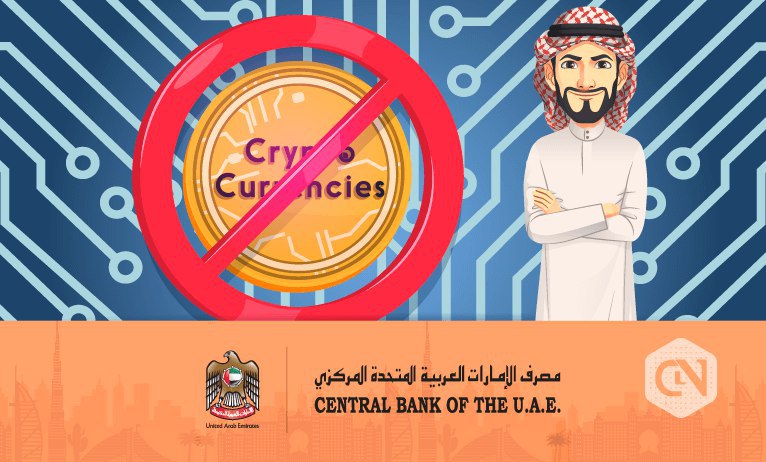
The debate, which has been alive for almost a decade now, got refueled after technology giant Facebook announced their ambitious crypto project Libra, and ever since, reactions from all over the world seem to be growing, with no signs of slowing down. The latest of these countries iterating their stand on crypto is the United Arab Emirates, the land which has been quite favorable for crypto projects. However, that might soon change, as the Central Bank of the UAE has stated that it doesn’t approve any private cryptocurrencies, and to break the hearts of enthusiasts, almost every digital coin, including Bitcoin, Ethereum, Dash, Litecoin, etc., is a private token.
In answer to an article published on an online portal, which claimed that the Governor of the Central Bank of UAE (CBUAE) endorses a private crypto trading platform, the CBUAE released an official statement that it doesn’t endorse any such platform, called the portal that published the article as a “potentially fraudulent website.” The apex banking authority in the Gulf country said,
“The Central Bank does not approve any private cryptocurrencies or schemes and has not issued any licences in the UAE. CBUAE believes that private cryptocurrencies pose potential risks related to price volatility, money laundering, and terrorist financing.”
Those who have been following statements by political leaders on the crypto industry will soon remember that similar criticism was made by Donald Trump a few months ago. The US President had said,
“I am not a fan of Bitcoin and other Cryptocurrencies, which are not money, and whose value is highly volatile and based on thin air. Unregulated Crypto Assets can facilitate unlawful behaviour, including drug trade and other illegal activity. Similarly, Facebook Libra’s “virtual currency” will have little standing or dependability… We have only one real currency in the USA, and it is stronger than ever, both dependable and reliable. It is by far the most dominant currency anywhere in the World, and it will always stay that way. It is called the United States Dollar!”
What’s common in the statement by CBUAE and the earlier one made by President Trump is that both of them accuse private or unregulated cryptocurrencies of facilitating illegal activities like terrorism and drug trafficking. However, several reports recently and even in the past have shown that such anti-social activities are carried on significantly more on cash than crypto.
The statement by the CBUAE comes at a time when major economies in the world are criticizing crypto, and Bitcoin itself is on a severe downfall, priced below $7,500, which significantly lower than the yearly high of $13,500. Several crypto companies have settled in the UAE in the last few years. In fact, there were reports earlier this year that the governments of UAE and Saudi Arabia were to launch a joint crypto program, which would assist the joint cross-border trade between the countries.
Does this mean that crypto companies will be banned?
Not really. UAE is an Islamic country and has a mixed approach towards policy-making. For instance, the UAE Government doesn’t promote the sale of alcohol, and hence, any advertisement of alcohol is banned. However, selling and consuming alcohol isn’t illegal, though the sale of alcoholic beverages requires licensing. After the statement of UAE, it would be too pessimistic to say that crypto will be made illegal, but some sort of strict and stringent regulatory policing should be expected.
Deutsche Bank Report Considers Libra Project as a Catalyst in Crypto Mass Adoption
Having been subjected to global backlash and criticism, Facebook’s stablecoin Libra project has finally received a welcoming note from a renowned financial entity, the Deutsche Bank. Based in Frankfurt, the bank said in a statement that Libra can play a major role in giving a boost to the crypto industry, which is already enjoying fast adoption than was expected. The statement added that Libra could help in bringing the crypto industry to the mainstream by 2030.
Some time back, the adoption of cryptocurrencies was substantially slow, and experts failed to show trust in its success in the future as a strong replacement of fiat currency. However, at present, the scenario has changed in a big way and even the biggest names of industries are putting their bets in the digital currency arena.
According to the recent Imagine 2030 report published by the Deutsche Bank, the process of mass adoption of cryptocurrencies will move at a fast pace. The report affirmed that this widescale success of cryptocurrencies has become possible only with the joint efforts of banks, card providers, and governments who are constantly striving to transit to an efficient “cashless society.” The report also bragged about Libra being an important medium supporting crypto mass adoption through its strong client base comprising of billions of users worldwide.
“When Facebook announced Libra, its new cryptocurrency payment system, earlier this year, the conversation hit all levels of society and politics. And no wonder. Facebook, with its potential user base of over 2bn, has the potential to disrupt the payment industry send the use of cryptocurrencies in to the mainstream,” said Marion Laboure, the author of the report’s crypto part.
Deutsche Bank also opined that governments around the world could play a pivotal role in popularizing digital currency adoption. The report stated that India and China might evolve as the leaders in the crypto space in the near future. The author is confident that as situations are changing rapidly, there are chances that the two countries lead the economy as users of cryptocurrencies.
Laboure mentioned Chinese President Xi Jinping’s take on cryptocurrencies, where he addressed them as “an important breakthrough for independent innovation of core technologies.”
The report stated about the Indian government’s formation of an economic panel for discussions on the introduction of an official virtual currency with the status of a legal tender by the banking regulator, the Reserve Bank of India.
Crypto-Twitter Could Be the Next Big Thing in the Crypto Sphere
In an interesting observation, the Angel investor and co-founder of Earn, Balaji S. Srinivasan, courted the idea of Crypto-Twitter. The thought was floated by Srinivasan on Twitter, and in response, a number of comments came from his followers – some appreciating the idea while others are identifying issues in the idea. Of course, the underlying mechanism for the Crypto-Twitter (if it fructifies) will be based on the open-ledger and the application programming interface (API) that is used in the blockchain technology.
Crypto-Twitter
Drawing a comparison between Twitter and hypothetical Crypto-Twitter, Srinivasan emphasized that the centralized and mutable nature of Twitter is something that makes the micro-blogging platform a bit conservative in its conversational approach. The idea behind Crypto-Twitter is to come up with a platform that will be completely decentralized and using the open-ledger technology for recording the feeds of its members. The immutable nature of blockchain is definitely going to be a big positive as nobody will be able to change the record, thereby bringing high safety aspects to the table.
In reaction to Srinivasan’s tweet of the crypto-twitter idea, many responded positively while some expressed their concern related to the requirement of resources, especially when the platform is conceptualized to take decentralized structure. Questions related to the resources involved in creating the database, network bandwidth, and meeting other requirements popped up in the responses. These concerns are legitimate ones and any step in the direction of launching Crypto-Twitter need to address these issues first.
Twitter working on the principles of cryptocurrency and blockchain curry favors with many, although the practical difficulties are aplenty in achieving this objective. While the concerns related to safety and security might be addressed through the immutability and temple-proof technology of blockchain, people may not like the idea that they are not in control once they tweeted about any particular incident or topic. The open-ledger and immutability characteristics of blockchain will take away the control that users and Twitter authorities have on tweets and operational procedures.
Conclusion
In sum, the concept of crypto-Twitter is sure to ruffle feathers as decentralization and weaning off authority will comprehensively change the scenario. Among the promoters, this is not going to go down very well as they have to cede the control. On the users’ side, though, the concept of crypto-Twitter can bring a host of advantages, including the rock-solid safety and security aspect.

Fraudulent Group Involved in $722 Scam Got Arrested by the US Authorities
On Tuesday, the Justice Department made an announcement regarding the arrest of three men involved in an alleged fraud that led to the embezzlement of a whopping amount of $722 million from the investors via fake bitcoin mining earnings.
According to the latest reports, the prosecutors have recognized and addressed the fraudulent activity as a “high-tech Ponzi scheme” operated by the “BitClub Network.” The scammers pooled in money from the investors and rewarded them for bringing in new shareholders.
The statement also revealed that the malicious activity was run by the fraudsters for a long period from April 2014 to December 2019 when finally, the authorities unveiled their scam in public. All this time, the group gathered a team of unsuspecting investors by luring them with illicit earnings claimed to have earned from the group’s mining pool.
An indictment signed by US Attorney Craig Carpenito of New Jersey affirmed that the fraud scheme was operated from Passaic, New Jersey, but was aimed to work as a “worldwide fraudulent scheme.”
The Justice Department stated that the defendant Matthew Brent Goettsche addressed the investors as “dumb” during a conversation with his other team members. The head scammer mocked that he was “building the whole model on the backs of idiots” while he ordered his accomplices to manipulate the data and figures.
Paul Delacourt, the assistant director at the FBI’s Los Angeles office, stated that the defendants “are accused of deploying elaborate tactics to lure thousands of victims with promises of large returns on their investments in a bitcoin mining pool.”
The Justice Department has accused and held Goettsche and Jobadiah Sinclair Weeks for channelizing a conspiracy to commit a well-planned fraud. Along with Joseph Frank Abel of California, Goettsche and Sinclair were charged for dealing in unregistered securities.
The officials of the Justice Department stated that the group involved two other defendants as well, and their identities are being kept hidden.