South Africa Leads Crypto Revolution In Africa – Challenges Spur And Slow Adoption
Africans rank atop global cryptocurrency ownership rates, according to a new report by Arcade Research. South Africa ranks third globally with 13% of its internet users owning or using cryptocurrencies, while 11% of connected Nigerians own cryptocurrencies in the fifth-placed populous West African country.
Uganda, Nigeria, South Africa, Kenya, and Ghana are listed in the report among the top 10 countries where “cryptocurrency” is most searched on Google. Economic challenges work both ways, as the digital divide slows the adoption of cryptocurrency while high financial fees make virtual currencies an attractive alternative.
Africa also has some of the world’s most inflationary economies where fiscal indiscipline and controversial monetary policies sometimes erode citizens’ savings overnight. Apart from governments’ heavy hand, external factors such as sanctions and conflict also threaten savings, making cryptocurrency a less exposed investment.
Sub-Saharan Africa records $48 billion remittances annually but transaction fees go as high as 9%, while some mobile payment transfer services charge around 11%. Cryptocurrency use is also a way to undercut the disadvantages of centralization while eliminating high remittances cost.
Arcane Research notes lack of infrastructures such as crypto mining operations, supporting merchants, smartphone penetration, and internet connectivity as slowing the uptake of cryptocurrencies. With rural-majority populations in some countries, significant swaths of the continent are not electrified, limiting the reach of bitcoin and other digital assets. .
According to the report, lack of policy clarity, with close to 60% of African governments yet to announce their positions on cryptocurrencies, slows down adoption.
“Africa is one of, if not the most promising region for the adoption of cryptocurrencies,” - said the report.
“This is due to its unique combination of economic and demographic trends. While the overall adoption is relatively low, the potential is enormous, the growth is rapid, and the development is likely to become defining for the cryptocurrency industry going forward,” it added.

Bitcoin Investment App CEO Calls BTC a Monetary Revolution, Not a Technical One
Bitcoin is not yet a go-to investment option in the public eye, but those days could be coming.
What needs to happen for Bitcoin (BTC) to cement its role in the public eye as a valid investment option?
"Time," Aleks Svetski, CEO and co-founder of Bitcoin investment platform Amber, told Cointelegraph in an email. "This is NOT a technological revolution," he clarified, adding:
"It’s a monetary revolution - which takes (traditionally) centuries to manifest, whilst in the digital age, Bitcoin is likely to do it in decades."
Bitcoin rising despite instability
Since Bitcoin's 50% March price dive, in the midst of coronavirus fear and uncertainty, the mainstream public has become increasingly interested in crypto's pioneer asset. The coin also rebounded dramatically in value, seeing more than 130% gains from its low.
Bitcoin's positivity comes during unstable mainstream market conditions. Traditional market barometers posted some of their worst performances since the market crash of 1987, as business closures and coronavirus prevention measures took flight. Although markets have since rebounded, unemployment numbers provide rationale for continued concern.
A global asset, Bitcoin sits independent of government control, which may prove attractive during economic uncertainty. Svetski explained:
"The more holes that appear in the edifice that we call society; whether monetary, fiscal, social, political - the more people that will want to preserve their wealth in something immune to the tampering of the state."
Bitcoin gaining recent steam in the mainstream
In recent days, Bitcoin has seen a number of mainstream entities express interest in the crypto industry, including billionaire Paul Tudor Jones and his Bitcoin hedge play.
Svetski mentioned two reasons pulling the public into crypto, explaining:
"I have a saying: 'People will get into Bitcoin for curiosity or pain.' I’d also add 'greed' but that can come under the banner of curiosity."
Even JPMorgan Chase has changed its tune on the crypto space, recently announcing the lending of its services to crypto exchanges, Coinbase and Gemini. The move shows a stark contrast from 2017, when the Jamie Dimon, the banking giant's CEO, called BTC a fraud.

South Korean Crypto Tax ‘Coming Next Year for Traders, Miners & ICOs’
South Korean ministries have pledged to impose tax on cryptocurrency trading and crypto mining “from next year.”
Per reports from E Daily and Decenter, the Ministry of Economy and Finance is preparing to make an amendment to the existing Income Tax Act that will include clauses about taxing profitable cryptocurrency sales, as well as the profits of crypto mining projects. The ministry also spoke about taxing the proceeds of initial coin offerings (ICOs) – perhaps a slightly puzzling statement for some, as ICOs remained banned in the country.
The media outlets quote an official from the ministry as saying,
“We are looking into ways to impose capital gains tax or other forms of income tax on the profits earned by both domestic and foreign investors using cryptocurrencies.”
The ministry says its proposed amendment will be ready by July and submitted to parliament in September.
It looks as though the ministry’s plans, which have also received input from the Ministry of Science and ICT, will be designed in the image of existing securities tax laws, which only seeks to tax profit-making deals, rather than transactions that make a loss.
Crypto-to-crypto transactions will also likely be exempt, and the ministries are expected to follow a policy of imposing taxation wherever income or profits can be found.
As previously reported, Seoul has already introduced a new crypto law that contains provisos pertaining to exchanges, who may have to provide data to tax officials as part of a set of new regulatory measures that comes into force in Spring 2021.
Seoul has spoken about imposing crypto tax on numerous occasions in the past, most notably back in late 2017 and early 2018, although none of its previous plans have come to fruition. However, in a highly contentious move last year, tax authorities in the country hit exchange Bithumb with a USD 67 million tax bill for transactions carried out by its overseas customers.
There could be further obstacles for the new plan, though. E Daily quotes an official from the Korea Institute of Local Finance as stating that individuals who want to evade taxes will be able to do by making use of over-the-counter (OTC) exchanges.
A blockchain industry chief, meanwhile, stated that the government should instead hold fire on its tax plans until it has developed a more effective way of calculating tax bills, payable in fiat, on crypto transactions – a process that could take “up to three to four years.”

Financial Giants Fujitsu & Nomura to Launch Digital Asset Trading on Blockchain
Japanese tech giant Fujitsu has signed a deal with major securities company Nomura that will see the duo co-launch an interoperable blockchain platform for trading “digital assets” such as securities.
Per a report from Nikkei, Fujitsu is working on the project with Nomura’s Boostry blockchain affiliate, and the parties have already completed a number of tests on their new platform, which they say will be ready to roll out in the second half of the current financial year.
The companies believe that “digitalized financial products” are set for a boom in the near future, and says the platform will act as a service that connects and enables transactions conducted in “digital assets” between different blockchain networks.
The parties claim their platform will be suitable for use across a range of industries, but singled out the agriculture, real estate and entertainment sectors for note.
Nomura Group companies Nomura Holdings and the Nomura Research Institute set up Boostry last year with USD 11 million worth of capital.
The news comes hot on the heels of another blockchain interoperability-related deal for Fujitsu, whose America-based Fujitsu Laboratories earlier this month said it was jointly developing a blockchain interoperability solution named Hyperledger Cactus with Accenture. The solution, the companies said at the time, can link private and public blockchain networks.
And in January, Cryptonews.com also reported that Fujitsu is now working with Japan’s largest credit card company, JCB, on a payment platform that will likely be able to use both cryptocurrencies and stablecoins.
Boostry became the first company to issue blockchain-based digital bonds directly to Japanese investors in March this year.
Nomura, meanwhile, is also one of the founding members of the Japanese Securities Token Association.
Samsung Adds Bitcoin Focused Exchange Gemini To Its Flagships
The world's largest smartphone maker, Samsung, has integrated the Gemini exchange into its Blockchain Wallet on Galaxy smartphones in the US and Canada. (Updated at 13:36 UTC: a quote by Jeanine Hightower-Sellitto has been added).
By connecting their Samsung Blockchain Wallet to the Gemini mobile app, users can buy and sell crypto, view their Gemini account balances, and also transfer their crypto into cold storage with Gemini Custody, the exchange said. They're the first US crypto exchange and custodian to partner with South Korean giant, according to the announcement.
The Samsung Blockchain Wallet and the Gemini Mobile App are available in the Samsung Galaxy Store for these devices: Galaxy S20 Series, Galaxy Z Flip, Galaxy Note 10 Series, Galaxy Fold, Galaxy S10 series (Verizon excluded).
“It’s a full integration between the two apps that’s very transparent and very easy to use,” Jeanine Hightower-Sellitto, Managing Director of Operations at Gemini, told Bloomberg. “It’s all integrated.” Terms of the deal were not disclosed.
24-hour trading volume (13:03 UTC) on Gemini stands at USD 20.6 million, while bitcoin (BTC) is responsible for 86% of it, ethereum (ETH) - 11%.
As reported, recession, a more favorable regulatory view, a better understanding of the technology, and traditional investors turning to crypto - are all aspects that are bringing adoption to crypto, Julian Sawyer, Gemini's Managing Director for Europe, recently told Cryptonews.com. Also as reported, major investment bank JPMorgan Chase recently welcomed Gemini and Coinbase as their first crypto clients.
Meanwhile, THETA.tv, the esports video platform powered by Theta (THETA) blockchain, recently said that might be featured as one of the content providers available in the Samsung Daily platform, pre-installed in every flagship Galaxy S20 phone shipped in the US.
Brave Aims At Zoom With 'Private and Unlimited Video Calling Service'
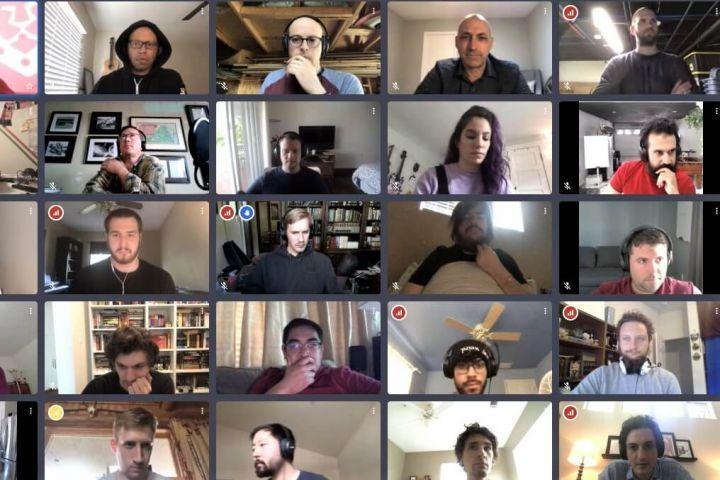
Blockchain-based decentralized browser Brave (BAT) has launched encrypted in-browser video calls, dubbed Brave Together.
The makers of the Brave web browser have announced the launch of a "private and unlimited video calling service" based on the open source app Jitsi. It offers end-to-end encryption for one-on-one video calls and is working on making that function available for multiple-person calls as well, engadget reports.
This is a trial version, its makers say, and it's available on Brave Nightly - the browser's testing and development version with incomplete features, where users provide feedback towards their completion.
It's currently available for users in North America who can access it via a widget. Also, the widget is available on the desktop version of Brave only, not for mobile at this point. All one needs to do is click the "start video call" button in the browser to create a room and then share the link with other participants, while it's also possible to share the screen, share a YouTube video, set video quality, etc., as ghacks.net reports.
The announcement of the feature was well accepted, with people praising the effort, particularly if it's smoothly integrated into the browser, allowing for a call to be made from a new tab. Some did question the need for this feature, especially one currently limited to desktop, saying that "video conferencing is a saturated space," and building a separate app would be better. Others disagreed with that idea, asking why create another app when everything could be done in one private and free place.
Many are comparing Brave Together to the online chat platform Zoom, which has surged in popularity during the ongoing pandemic. They appreciate that no personal information needs to be shared on Brave.
A year ago, Brave celebrated a number of successes, while in October they reached 8 million monthly active users, 10 million in December, and 12 million in March. In February this year, Brave added a 404 detection system and automated Wayback Machine look-up process.
BAT is currently (10:55 UTC) trading at USD 0.20, having appreciated 1.6% in a day and 3% in a week.
Russia Doesn’t Want to Ban Bitcoin - Leading Parliamentarian
The head of Russia’s parliamentary finance commission head has spoken out about new proposed legal amendments, details of which were released in the press – claiming that the measures will not criminalize cryptocurrency, such as bitcoin (BTC), purchases, and could even provide Russian crypto owners with limited property rights.
Subsequent media reports in Russia and elsewhere had claimed that the Duma was considering issuing an outright ban on crypto transactions.
In an interview with YouTube channel Prekrasnaya Rossiya, Anatoly Aksakov, the head of the State Duma Committee on Financial Markets, admitted that the Central Bank still remains opposed to legalizing the use of cryptocurrencies in Russia.
But Aksakov claimed that leading Duma financial policymakers were not behind any calls for a ban.
He instead insisted that the amendments would seek to ensure citizens declared their crypto transactions, stating that failing to declare crypto holdings would simply mean that those assets were not protected under Russian law. Failure to declare, he added, would not automatically lead to prosecution.
Aksakov added,
“The proposed legislation states that if you acquire cryptocurrency, you must declare it. And this gives you legal protection. In principle, even if you do not declare it, nothing will change for you, except for the fact that your [assets] will not be subject to judicial protection.”
He hinted that declared cryptocurrency holdings would grant owners de facto property rights, and explained that crypto could be inherited under the new proposals. In cases of cryptocurrency theft, rightful owners would have the right to take their cases to court.
He also further distanced himself from calls for a ban, and added,
“The Central Bank believes that it is necessary to limit the ability to acquire [cryptocurrencies], especially for people without expert knowledge who may be susceptible to making losses on investments.”
XRP Liquidity Indexes About to Reach New ATHs as Ripple’s Partner Invests in ‘Chinese Uber’
Crypto exchanges which run ODL-based corridors keep boosting XRP’s liquidity. Two of five of these platforms are showing figures which are about to overtake the current all-time highs and establish new ones.
In the meantime, Ripple’s major partner in Japan, SoftBank, has invested a substantial amount of funds into the 'Chinese Uber' – the Didi car-sharing giant and its AV subsidiary in particular, according to TechCrunch.
Notably, before this, SoftBank had also supported Uber.
XRP Liquidity Indexes about to hits new ATHs
The Twitter bot that regularly reports the state of XRP Liquidity indexes on four of the five ODL corridors has shared data that is likely to be positively received by the community.
Two of the ODL venues – the Mexico-based Bitso (XRP/MXN) and BTC Markets in Australia (XRP/AUD) – are showing figures that are very close to setting new all-time highs in XRP liquidity.
Not long ago, the Twitter bot added one more ODL corridor to its regular reports – the Luxembourg-based Bitstamp exchange (XRP/EUR).
Softbank makes a large investment in Didi
As reported by TechСrunch, the AV unit of the Didi car-sharing company has raised a $500 mln investment from Ripple’s major Japanese partner SoftBank.
Previously, SoftBank had also invested in the global ride-hailing heavyweight Uber.
Didi had been testing its autonomous driving cars of the AV unit for several years until it then allowed the subsidiary to become an independent company on the market.
The new investment will allow the new AV company to concentrate on the safety of its self-driving cars – there have been two lethal incidents in trials.
Besides, the investment is going to be spent on better R&D and on testing roads for the new vehicles operating without human drivers.
MoneyGram teaming up with Uber
Previously, U.Today wrote that another of Ripple’s main partners, the MoneyGram remittance behemoth, joined forces with the ride-hailing giant Uber.
To help soften the aftermath of the pandemic crisis around the globe, MoneyGram will be providing discounts on sending remittances around the globe for Uber’s drivers and couriers.
Western Union Aims to Acquire Ripple's Partner MoneyGram - Report
Payments giant Western Union is reportedly interested in purchasing major money transfer company MoneyGram, co-owned by American blockchain company focusing on payments technologies Ripple.
Western Union aims to acquire MoneyGram, thus joining two of the largest US providers of money-transfer services, and has already made a takeover offer, Bloomberg reported, citing an undisclosed person familiar with the matter. According to this person, however, a decision on this matter hasn't been made yet.
The report states that while more people are turning to online payments, the coronavirus-caused lockdowns and shelter-in-place orders imposed by governments has led the payments company to struggle with keeping its local branches open across the world, some of which had close their doors. Still, while people staying home led to an increase in the number of digital transactions, in the first quarter they accounted for 18% of the company's money transfers.
As reported, following the rumors in early June, MoneyGram partnered with Ripple later that month, at which point the blockchain startup made a USD 30 million initial investment, holding a right to invest another USD 20 million over two years. Ripple made that second investment in November. They said they'll own 9.95% of the outstanding common stock of MoneyGram, and approximately 15% on a fully-diluted basis including non-voting warrants held by Ripple.
MoneyGram on their part said they use Ripple's xRapid product that is aimed at minimizing liquidity costs and is powered by Ripple-affiliated XRP token, to buy a portion of their currency needs in major receive markets. It's moving c. 10% of its transaction volume through Ripple's On-Demand Liquidity (ODL) between the United States and Mexican borders, and had pushed over USD 100 million through the platform by December. It also established cross-border corridors in Europe, Australia, and the Philippines.
On May 1, during a Q1 2020 earnings call, MoneyGram chairman and chief executive, Alexander Holmes, described it as "a little bit of a relatively quiet quarter, in the sense of really pushing anything, particularly new into the market or expanding of the service." Holmes added though that the results will change by month and by quarter as Ripple is expanding the service and 'moving things around' to "really figure out what they want, the product to look and feel like, and how they want to take that to various market." A "variety" of new services is in the pipeline and will be expanding this year, he said, as well as new services and corridors.
Meanwhile, MoneyGram’s walk-in cash remittance business declined by 19% in April, reports PaymentsSource. It quotes chief operating officer Kamila Chytil as saying that, despite the pandemic, MoneyGram is better positioned now to respond to locked-down migrants’ need for digital alternatives to cash remittances.
MoneyGram's market capitalization is USD 164.3 million, with its stocks going up 6.15% on the latest news. Western Union has also seen a 3.45% increase in stock value, and it's current market value is USD 8.5 billion.
We asked Ripple, MoneyGram, and Western Union for a comment and will update should they reply.
XRP is trading at USD 0.212 and is up by 4% in a day and 9% in a week (09:59 UTC). The price dropped by 5.5% in a month and 52% in a year.

Bitcoin Settles Above USD 10,000, Altcoins Could Extend Rally
🔥Bitcoin price is up more than 5% and it broke the key USD 10,000 resistance.
🔥Ethereum is consolidating near USD 250 and XRP surpassed USD 0.210.
🔥LRC, NEXO, and ZIL rallied more than 15% today.
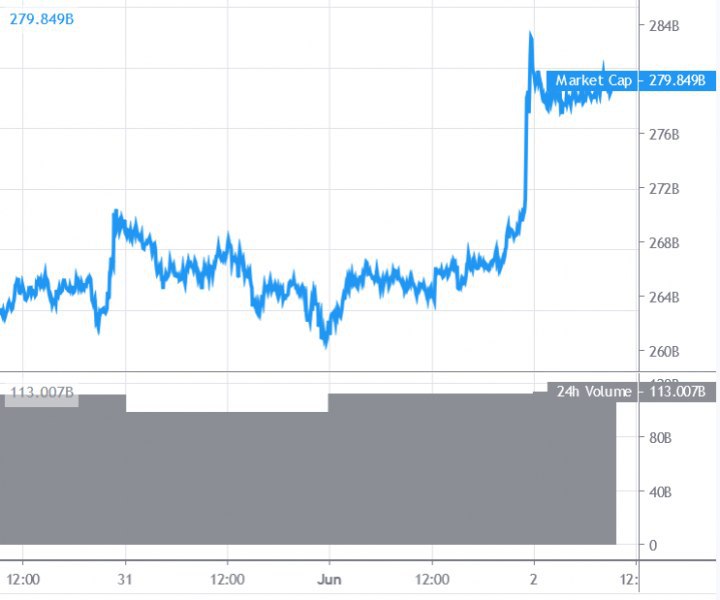
In the past two days, there was a steady rise in bitcoin price above the USD 9,500 resistance. The recent surge was such that BTC was able to clear the main USD 9,950 and USD 10,000 resistance levels. It tested the USD 10,350 resistance zone and currently (08:40 UTC) consolidating above USD 10,000.
Similarly, there was a strong upward move in most major altcoins, including ethereum, XRP, litecoin, bitcoin cash, BNB, EOS, TRX, ADA, and XLM. ETH/USD is up around 5% and it is trading near the USD 250 resistance. XRP is also rising and it recently settled above the USD 0.210 resistance zone.
Bitcoin price
The recent upsurge in bitcoin price took it above the main USD 9,950 and USD 10,000 resistance levels. It opened the doors for more gains in BTC above USD 10,200 and the price tested the USD 10,350 resistance zone. Recently, there was a downside correction, but the price is still trading above the USD 10,000 level.
On the upside, an initial resistance is near the USD 10,200 level. The first major resistance is near the USD 10,350 level, above which the bulls are likely to attempt a strong upward move towards the USD 10,500 and USD 10,600 levels.
Ethereum price
Ethereum price remained in a bullish trend and traded above the USD 245 level. ETH price even spiked above the USD 250 resistance and it is currently consolidating gains. It seems like there are high chances of more gains above USD 255 and USD 260 in the near term.
On the downside, an initial support is near the USD 245 level. The next key support seems to be forming near the USD 240 and USD 238 levels.
Bitcoin cash, litecoin and XRP price
Bitcoin cash price performed well and outpaced even bitcoin. BCH gained more than 8% and it broke the key USD 250 resistance. It is now trading above USD 260 and it seems like the bulls are aiming a break above the USD 265 and USD 270 resistance levels in the near term.
Litecoin is up around 6% and it settled above the USD 45.00 resistance. LTC price is now trading above USD 48.00 and it could soon test the USD 50.00 and USD 50.50 resistance levels. The next major barrier for the bulls could be near the USD 52.50 level.
XRP price remained stable above the USD 0.202 support area and it recently climbed above the USD 0.210 resistance. If the price continues to move higher above USD 0.212, there are chances of a push towards the USD 0.215 and USD 0.218 levels. On the downside, the USD 0.208 level is a decent support zone.
Other altcoins market today
In the past three sessions, many small altcoins rallied more than 6%, including LRC, NEXO, ZIL, VET, ONT, NEO, DCR, CRO, XLM, ETN, REP, MAID,
QTUM, HIVE, and EOS. Out of these, LRC jumped more than 20% and it surpassed the USD 0.060 level.
Overall, bitcoin price is showing positive signs and trading above the USD 10,000 level. The recent trend change might spark more gains in BTC above the USD 10,400 and USD 10,500 levels in the near term.
Total market capitalization:
Samsung & LG ‘Pursuing Business with Big International Crypto Players’
South Korean experts say that domestic business big-hitters like Samsung and LG are stepping up their crypto-related activities with overseas companies – rather than domestic players – as part of a strategy that has begun to take shape in the past few weeks.
As previously reported, Samsung last week struck a deal with American crypto exchange player Gemini. The deal saw Samsung integrated Gemini exchange functions for its flagship Galaxy smartphones equipped with Blockchain Wallet features in both the United States and Canada – allowing users to buy and sell crypto, and make use of Gemini Custody cold wallet storage functions.
LG, meanwhile, has recently become a member of the governance council of the Dallas-based Hedera Hashgraph (HBAR) project, also agreeing to run a node on the latter’s network.
Per Hanguk Kyungjae, the move is part of a concerted effort that has been expiated partially by the coronavirus pandemic.
The COVID-19 outbreak has forced many companies to explore contact-free technological solutions and business models – and bigger South Korean companies see cryptocurrencies as being a key part of this.
The media outlet quotes an unnamed industry insider as stating that big companies like LG and Samsung are keen to tap into the potential of crypto, but would prefer to partner with strong and high-potential players in the United States, where they feel the market is already in an advanced state.
Regulatory issues are a third factor, per the report.
The media outlet quotes another unnamed South Korean industry chief as stating,
“Due to regulatory uncertainty and the government’s reluctance to cooperate, large domestic companies are choosing not to pursue cooperation with domestic [crypto] companies.”
The same insider stated that although the National Assembly’s passed a potentially groundbreaking crypto-specific legal amendment in March this year, big South Korean firms are not convinced.
The industry chief stated that South Korean crypto regulation was “still inferior” to the regulatory frameworks in countries such as Japan and the United States.
One crypto-keen domestic player that both Samsung and LG do have strong relationships with is tech giant Kakao.
The latter yesterday launched a crypto wallet that is integrated with its 50+ million-user KakaoTalk app. LG and its subsidiaries are governance council members of Kakao’s Klaytn blockchain project, while Samsung’s smartphone blockchain wallet is also compatible with Klaytn’s native Klay token.
Relief to Bitcoin Miners as Double-digit Difficulty Adjustment In Sight
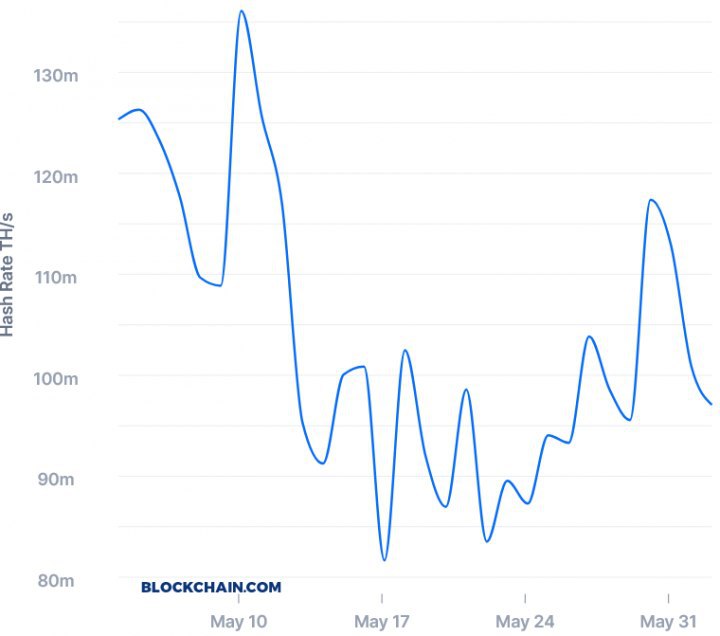
With the second post-halving bitcoin (BTC) mining difficulty adjustment set to occur shortly, miners might once again breathe a sigh of relief after the previous such event also made life easier for players in the highly competitive industry.
This time, difficulty, a measure showing how hard it is to compete for mining rewards, might drop almost two times more than two weeks ago, when it decreased by 6%.
Tomorrow, it might drop by more than 11%, to 13.45 T, or lower than the level seen at the beginning of this year, when BTC traded in a range of USD 7,000 - USD 9,000, according to data (14:30 UTC) by major Bitcoin mining pool BTC.com.
It would also be lower than the level seen after a historic difficulty adjustment following crypto’s Black Thursday in March.
Today, commenting on the adjustment after the release of its revenue figures for May, Argo Blockchain, a BTC mining company listed on the London Stock Exchange, said that the company is well-positioned for any difficulty adjustments, and that the upcoming adjustment will likely improve their margins:
“This week will see another BTC mining difficulty adjustment and we expect a further drop of between 4%-6% in difficulty based on current hashrate and projections. This change is expected to result in improvements to our overall mining margins,” the company’s CEO, Peter Wall, said in a statement.
Meanwhile, crypto mining publication Miner Update argued recently that this djustment will be entirely based on the computing power which miners deploy at the current difficulty level and block subsidy of BTC 6.25.
"The next difficulty adjustment will alter the network to the hashrate deployed over the next ~2 weeks and it will afterward become clear whether users are paying higher transaction fees post halving," they said.
While the median BTC transaction fee dropped more than 50% since mid-May, it is still around five times higher than it was in April.
Bitcoin hashrate:
Bitcoin's Wasabi Too Strong For Europol
Open-source, non-custodial Bitcoin privacy wallet Wasabi is popular enough to catch the attention of the European Union Agency for Law Enforcement Cooperation (Europol), the Hague-based European Union's law enforcement agency. As for what the law enforcement can do about this wallet's privacy options - it's not looking good for them.
In a two-part report for the eyes of "law enforcement only," one dated April and the other May, 2020, Europol’s European Cybercrime Centre (EC3), writes that they've noticed an "increasing number of investigations involving Wasabi Wallet." EC3 notes the wallet's use of the anonymization method for bitcoin transactions CoinJoin, integration of TOR software, that certain anti-money laundering (AML) legislation, such as the AMLD5, don't apply to it, and other privacy-focused features. The news was first reported by Coindesk.
As to how popular Wasabi is, the agency says "certainly popular enough to spark our interest." They go on to cite the data provided by blockchain and analytics specialist Chainalysis per which Wasabi stored keys to more than BTC 110,000 (USD 1 billion). Furthermore, almost USD 50 million in BTC were deposited in three weeks leading to the March report, with almost 30% from the dark web. "This is a significant amount, relatively speaking, given the dark web transactions are estimated to have only 1% share of total transactions," EC3 writes.
The report proceeds to analyze the use of the wallet in detail; it demonstrates a transaction, and looks into "the possibilities for law enforcement investigations," prefacing it with: "Spoiler alert: things are not looking good." Suspects who use the wallet correctly "have a very high probability of staying undetected."
Visually identifying a Wasabi transaction is possible and may be useful, it says, but if a suspect is consistently using the mixer, the commercial tracing tools should be able to identify them. However, they won't demix them. Whether Wasabi transactions can be demixed, "realistically speaking, in most cases the answer is negative." This may be possible, though, if a suspect makes a mistake and groups the mixed coins together. There also may be ways to do so in the future: Dutch financial crimes investigation agency FIOD started "promising technical research into behavior and demixing of Wasabi transactions ...."
While the transparency of blockchain is celebrated, it also prevents complete anonymity, given that one's balance and transaction history is available for all to see. Still, when it comes to personal funds, privacy is also a matter of great importance to the Cryptoverse. To those outside it, this may seem like setting a stage for illegal activities, but it's mostly about protecting funds from third-party attackers. There's probably some defiance there too, standing against regulators/authorities who find absolute privacy threatening, as it wouldn't allow identifying suspects, and are working to prevent it.

Bitcoin and Altcoins Stuck Below Key Breakout Hurdles
☄️Bitcoin price is struggling to settle above the USD 9,850 and USD 10,000 resistance levels.
☄️Ethereum is facing a hurdle near USD 250 and XRP might face sellers near USD 0.205.
☄️MKR gained more than 10% and WAXP is showing signs of more upsides today.
This past week, bitcoin corrected lower from the USD 10,400 resistance zone. BTC declined sharply below USD 10,000, but it found support near USD 9,300. It is currently (08:30 UTC) rising, but facing a major hurdle near the USD 9,850 and USD 10,000 resistance levels.
Similarly, most major altcoins are trading below major barriers, including ethereum, XRP, litecoin, bitcoin cash, BNB, EOS, TRX, ADA, and XLM. ETH/USD is struggling to gain bullish momentum above the USD 250 resistance. Besides, XRP is trading above USD 0.200, but facing sellers near USD 0.205.
Bitcoin price
There was a decent upward move in bitcoin price above the USD 9,600 and USD 9,700 levels, but the bulls seem to be facing a strong resistance near the USD 9,850 level. The main weekly resistance is near the USD 9,950 and USD 10,000 levels. A successful daily close above the USD 10,000 level may perhaps open the doors for a fresh rise to USD 10,400 and USD 10,500.
On the downside, an initial support is near the USD 9,500 level, below which the price might struggle to stay above the key weekly support at USD 9,300.
Ethereum price
Ethereum price is trading above the USD 230 pivot and support zone. However, ETH bulls are facing a strong selling interest near the USD 250 and USD 252 levels. To start a steady rise, the price must settle above USD 255.
Conversely, there is a risk of a bearish wave below the USD 240 support. The main support is still USD 230, below which the price could accelerate lower towards USD 220.
Bitcoin cash, litecoin and XRP price
Bitcoin cash price settled above the USD 250 resistance area and it is currently showing positive signs. To continue higher, BCH price must surpass the USD 260 and USD 262 resistance levels. The next key resistance on the upside is seen near the USD 275 level. On the downside, the bulls are likely to protect USD 240.
Litecoin is currently consolidating above the USD 45.00 pivot level. On the upside, the first hurdle is near the USD 48.50 level. However, the main barrier is still near the USD 50.00 level. If there is no upside break, the price might decline towards the USD 43.20 and USD 42.20 support levels.
XRP price is managing to stay above the USD 0.200 support area. On the upside, the price is facing a key hurdle near the USD 0.205 level, above which the bulls are likely to aim a test of the USD 0.215 zone. On the other hand, a break below the USD 0.200 support could spark a major bearish reaction towards USD 0.190 or USD 0.184.
Other altcoins market today
In the past three sessions, a few smaller altcoins gained more than 5%, including MKR, WAXP, DIVI, TRX, MAID, REP, CRO and ZEN. Conversely, CEL, HEDG, LRC, XSR, and KMD are gaining bearish momentum.
To sum up, bitcoin price is trading in a positive zone above USD 9,550, but it must gain traction above USD 10,000 for another strong and sustained rally. If not, BTC might retreat to USD 9,300 or even USD 9,000.
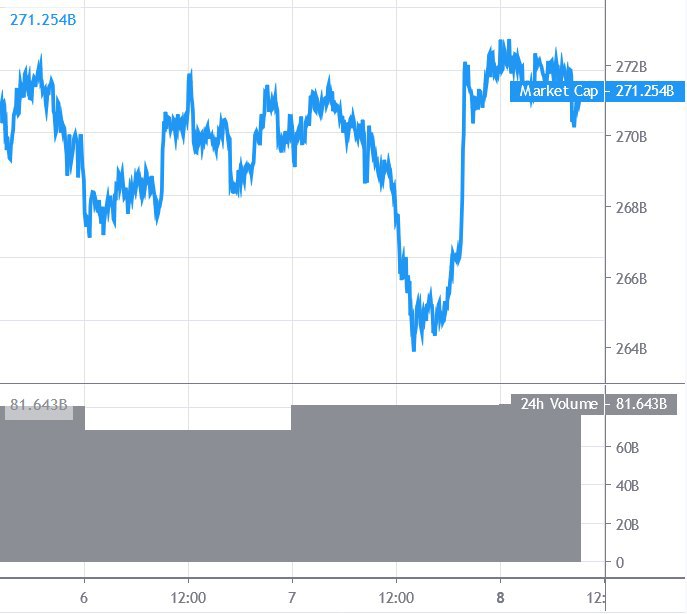
Total market capitalization:
The Rise and Fall of a Chinese Blockchain Star Kaiying Network
Just four years ago, Wang Yue was being fêted by the likes of Forbes as one of the “world’s youngest billionaires.” At 32, he had the world at his feet, as the head of gaming giant Shanghai Kingnet Technology, also known as Shanghai Kaiying Network Technology or just Kaiying Network – a company he built up from scratch in 2008.
In 2018, the Chinese business world held its breath with anticipation when he announced that the company was taking the plunge into the blockchain technology sector.
Just two years later, the Kaiying Network blockchain dream is in tatters – and the company says it has turned its back on blockchain, likely for good, with Wang placed behind bars.
The company’s blockchain fall from grace has been spectacular.
As recently as a few months ago, the Shenzhen Stock Exchange was still placing Kaiying on its Blockchain 50 Index, alongside business heavyweights like Ping An.
Wang Yue’s blockchain plans sounded grand at the time, and centered around a content-sharing platform which caught the eye of media giants like Xinhua. But, per a Bi Shi Jie report from last year, Wang Yue was already in dire financial straits when he made the announcement.
Stock prices tumbled in 2018, and his own finances had suffered worst of all, with share price falls of as much as 90% reported.
The blockchain platform was Wang Yue’s last throw of the dice, although few people except he know this at the time. When interest in the platform cooled quickly over the course of 2018, possibly coinciding with falling crypto prices, Wang Yue panicked.
Rumors of nefarious behind-the-scenes dealings began to surface by early 2019, and he dropped off the radar completely, with even the company he founded and still owned over 20% of unable to reach him. He was removed as CEO and by May last year “no longer held any position in the company,” per an official statement.
Days later, as recounted by KR-Asia, he was tracked down by the police in Shanghai and arrested on suspicion of manipulating the securities market, with a court freezing his shares.
The company was rocked once more in December last year when it lost a copyright infringement lawsuit to South Korean gaming giant WeMade (currently looking to reposition itself as a major blockchain player). As reported by Chosun, Kaiying was ordered to pay USD 3.4 million in damages and over USD 34,000 in compensation.
The Chinese company’s blockchain plans had been in de facto limbo ever since, but JRJ reports that at a recent Kaiying Network investor relations call, it appears to have finally drawn the line under its once-grand blockchain plans.
An investor asked,
“Has Kaiying completely withdrawn from the blockchain business?"
The company replied that it was now focusing on its core business of gaming, “having already explored blockchain and other fields,” adding that “no more” blockchain investment was currently on the horizon.

South Korean Merchants ‘May Accept Digital Yuan from Chinese Tourists’
Countries with a large influx of Chinese tourists could be among the first outside the Middle Kingdom to accept the forthcoming digital yuan, claims a South Korean report – although it comes with warnings of “Big Brother’s” creeping influence over Chinese finance.
Per South Korean news agency Yonhap, domestic merchants who cater mainly to Chinese clientele will likely look to accept the digital yuan.
The report’s author writes,
“In South Korea, tourist shops such as those in Seoul’s Myeongdong District, are used to taking payment using Alipay. But these same South Korean merchants may soon begin accepting digital yuan payments to cater to Chinese customers.”
Over 8 million Chinese tourists visited South Korea in 2016, although political tensions saw those figures drop in 2017, only to recover to around 6 million in 2019. Also per Yonhap, the coronavirus pandemic has hit South Korea for around USD 2 billion in tourism income losses – a figure that traders will hope to recoup fast when Chinese tourists return en masse.
And this could be yet another factor that may speed up the adoption of the digital yuan overseas, with cash-starved tourist-friendly businesses currently competing aggressively for the custom of a very small number of Chinese tourists.
The Yonhap report adds that Beijing is hopeful of winning larger-scale converts to the digital yuan – with cross-border trade hopes high.
The author writes,
“The digital RMB will probably be used for micro-payments in China at first, but is expected to expand its use worldwide after that. The digital yuan will likely be used widely – with ease – in many countries in Asia and Africa where economic exchange with China is currently active.”
As reported last week, an FT columnist in the United Kingdom expressed similar views, opining that “one can imagine that it would be easy to deploy throughout the orbit of China’s Belt and Road Initiative, as an attractive alternative for countries and businesses that want to trade with one another without having to use dollars to hedge exchange-rate risk.”
China’s Belt and Road infrastructure investment initiative has already seen it funnel money into the economies of some of Asia and Africa’s poorest countries.
However, the same report warns that the digital yuan could usher in an Orwellian scenario for its users in China.
The author claims that “Big Brother” could well take over and states,
“Even for micro-transactions, Chinese authorities will be able to instigate criminal proceedings and look into users’ transaction histories if they so much as suspect that a crime has been committed.”
However, the news agency quotes a senior People’s Bank of China chief as saying that "the digital yuan will strike a balance between personal privacy and crime prevention.”

Blockchain-powered Cross-border Trade Pilot Claims Breakthrough
A Chinese pilot zone specializing in free trade and blockchain technology claims to be enjoying blockchain-powered cross-border trade success – while the central government is now getting serious about blockchain-powered cross-border trade, and will draw up a list of “key blockchain enterprises.”
The Quingdao section of the Shandong Pilot Free Trade Zone says it saw a successful international shipment of 1,300 coronavirus-fighting face masks arrive from South Korea as part of a cross-border deal conducted on an e-commerce platform on June 3.
Per media outlet People.cn, a number of Chinese and South Korean companies took part in the process, which was supervised of city and provincial customs officials – marking a blockchain first for the country. The pilot zone operators claimed that the technology is now ready for adoption, and would enable “full traceability for cross-border e-commerce goods.”
The operators claimed that the blockchain platform they used for the shipment would help ensure the quality of imports and exports – an issue that has blighted e-commerce industries, particularly during the coronavirus pandemic.
E-commerce has boomed in China in recent years, and the Shandong Pilot Free Trade Zone, officially launched in August 2019 and covering a total 120sqkm, has been earmarked as a “digital economy” growth zone. It is made up of three sections, namely Qingdao, Jinan and Yantai.
Meanwhile, the central government is also ramping up its blockchain-powered cross-border trade rhetoric, following a number of successful province-level pilots, conducted with state-owned banks and customs officials.
Per state media outlet Xinhua, Beijing will formulate a list of what it terms “key blockchain enterprises” – companies that it believes should receive central government backing in order to ramp up cross-border trade and making use of blockchain solutions.
The media outlet says experts and Beijing are in agreement that current cross-border payment systems are high in cost and low in efficiency, while they also feel that blockchain technology “can significantly increase the speed of cross-border transfers."

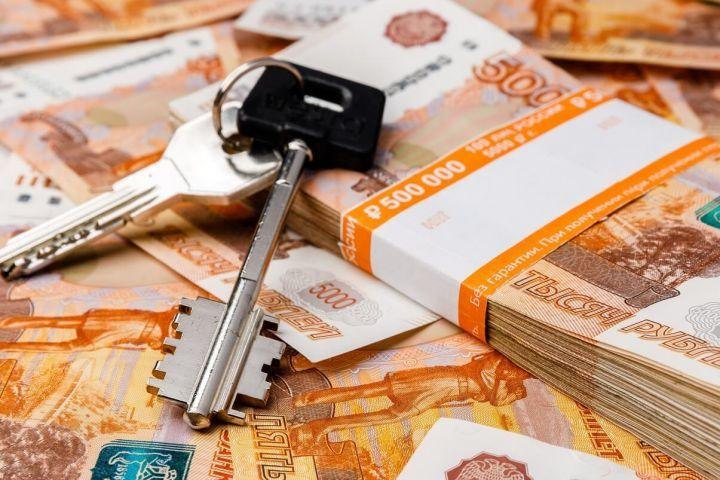
Russian Central Bank ‘on the Verge of’ Issuing Blockchain Mortgages
Despite its disdain for all things cryptocurrency-related, Russia’s Central Bank has lost none of its enthusiasm for blockchain – and looks to be doubling down on the technology with its fast-expanding plans to issue digital, blockchain-powered mortgages.
The Central Bank, which has already issued its own Masterchain blockchain network, yesterday fleshed out its plans – revealed earlier – to do away with conventional mortgages, instead using a fully digitized version on the Masterchain platform.
The bank’s crypto-skeptic head Elvira Nabiullina addressed the State Duma (Russia’s parliament) with a speech delivered on June 10 and published in full on the bank’s official website.
Nabiullina stated that the bank was on the verge of “fully digitizing” the mortgage application and issuance process, and had stepped up its efforts in a bid to keep the housing market healthy despite the enormous disruption caused by the coronavirus pandemic.
She stated,
“The epidemic has accelerated our work [on digital mortgages], and we will ask parliamentarians to support us by making the necessary changes to regulations.”
Nabiullina added that temporary biometric solutions used during coronavirus lockdown needed to be replaced with more sustainable technology.
As previously reported, Nabiullina is believed to be in accord with the much-maligned “On Digital Assets” draft bill presented to the Duma in recent weeks. The bill proposes a partial, China-style crypto crackdown, which Nabiullina and the Central Bank have spoken in favor of.
However, the nation’s own Ministry of Economic Development is opposed to the draft legislation, and a local industry player has told Cryptonews.com that the draft bill was likely a “scare tactic.” Instead, they expect a softer version of the bill to materialize sometime next year “at the earliest.”
The central bank chief also made mention of the controversial bill in her speech, stating that the country “needs to move forward and not slow down development.”
She added that parliamentary commissions were keen to speed up the pace of regulation and said she “warmly supported” this.
Pompliano Claims Bitcoin as the Best Performing Asset During the Current Crisis, Receives Flak from the Community
The Coronavirus Pandemic preceded by the global economic slowdown has resulted in multiple jolts to financial assets across the globe. Most of the markets are crawling, to say the least, but Bitcoin has performed better than anything else, thinks Anthony Pompliano, co-founder and Partner at Morgan Creek Digital. In a tweet on Tuesday, Pompliano claimed that S&P grew by 1%, NASDAQ by 2%, Gold by 11%, while Bitcoin grew by a whopping 35%.
While this may sound encouraging to potential investors, Pompliano has been criticized by a number of community members. For instance, an account named Institutional Allocator termed Pompi’s claims as untrue. The user shared a chart that showed that since the lock February’s peak price of $10,500, the price graph had gone down. Bitcoin is currently priced at $9,700 apiece, which is far from what the popular crypto influencer claims.
Pompliano, on the other hand, replied, arguing that the global crisis began before the US lockdown in February, citing the example of the lockdown of Chinese cities in early January. Prices at the beginning of January were hovering around $7,300 and, by the end of the month, reached over $9,500. This indicates that from the beginning of the year, Bitcoin grew exactly as Pompliano claimed.
However, in the first quarter of FY2020-2021, the performance of Bitcoin has been at par with other assets, and this is what should matter at the moment. Secondly, as many critics of BTC claim, Bitcoin has been on a bumpy ride for the last two years, and stability hasn’t been on its side.

Metanyx to provide Enterprise solutions based on the IOST Core protocol
Metanyx, a UK based Public Chain Validator that aims to provide Enterprise solution, which is based on the IOST Core Protocol. Metanyx will provide Enterprise Solution to Financial Services, Universities, and Governments in parts of the UK and Europe. The organization’s main aim is to help and assist the designing of the future outlook of the upcoming financial transactions with the use of Blockchain technology.
IOST Core is the Layer 1 Third Generation Blockchain, along with this, it comprises of Enterprise functionality also. IOST has proved itself to be a powerful Blockchain platform within the first year of beginning the operations. With their ongoing work, there were no such interruptions in-network and delays in block production.
Metanyx is planning to imitate the AIOU Technology business models amidst the UK and European markets as their official partner on the Internet of Services Foundation. Metanyx will be working with AIOU Technology with other partners that work upon new innovations in the IOST Blockchain ecosystem.
As of now, Metanyx currently operates a Public Chain Validator in IOST, IoTex, ICON, and the Open Application Network (AION). Metanyx is extremely proud to be a part of this network and ecosystem and will be further working with the partners of this foundation to build integration of these networks.
Metanyx will be working with the partners of this foundation to enable access to the markets in the UK. The organization has selected the networks carefully and will be totally committed to making their use in Public, Consortium, and hybrid chain offerings
Metanyx will work for Financial Service, University, and Government to place and connects with the Consortium Blockchain Network. Metanyx has partnered with all network IOST China, IoTex USA, ICON South Korea. For the last few months, the world has witnessed the deadly virus outbreak. In these unprecedented times, Metanyx is willing to see the resolution to the outbreak and feels immensely inspired by how people are standing strong for humanity.