http://www.mepskills.com/2021/07/pipe-color-code-standard-and-piping.html
Why Do We Required Pipe Color Code ?
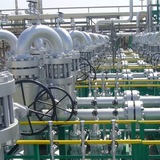
Pipes are used in facilities to transport liquids and gasses from one place to another, both short and long distances. Most facilities have dozens of pipes moving substances from place to place and because of this, it is important to be able to keep track of what is in each pipe and where it is going. This is where pipe color-coding can become essential.
More than that Pipe markings save lives. If color codes are ignored, employees are at a higher risk of causing an accident that may result in physical harm as well as facility damage. For example, If someone opens a pipe that is not marked with the proper colors, he or she may expect clean water but get a toxic chemical.
Pipe color-coding is not a complicated process, especially if industry standards are used. There are many standards out there from a variety of sources, but by far the most popular is the ANSI/ASME A13.1 standard. This standard explains colors, text, size, and placement of pipe marking labels.
#piping #pipe #water #chemical #engineering #transport #coding #construction #structural #scaffolding #waterproofing #design #safety #architecture #firesafety
Also Please Join Us On Telegram To Get More Updates on Your Mobile
https://t.me/pipingengineeringworld
Pressure Drop Simplified - For Every Process Engineer.
Ever wondered why pressure drop behaves differently in pipelines for Newtonian vs. Non-Newtonian fluids?
Or why some pressure drop formulas include a factor of 4 and others don't?
This one-page infographic covers:
Flow behavior index (n) and its effect
Darcy-Weisbach vs. Fanning equation
Pressure drop formulas (US vs UK format)
All variables clearly defined
A must-have visual for process design, hydraulic calculations, and troubleshooting.
#FutureOfEngineering
#InnovationInTech
#EngineeringSolutions
#EngineeringLife
#MechanicalEngineering
#CivilEngineering
#ElectricalEngineering
#EngineeringWonders
#LikeForLike
#FollowMe
#ViralPhoto
#PhotoOfTheDay
#InstaGood
#PicOfTheDay
#Snapshot
#PhotographyLovers
#Firefightingandfirealarmsystem
#viralfacebook
#viralpost
#engineering
#technology
#tech
#innovation
#artificialintelligence
#machinelearning
#programming
#coding
#robotics
#electronics
Flanges are crucial components in piping systems, used to connect pipes, valves, and other equipment. Here are some common types of flanges:
1. Weld Neck Flange
- Has a long, tapered hub and is welded to a pipe.
- Provides excellent strength and stress distribution.
- Suitable for high-pressure and high-temperature applications.
2. Slip-On Flange
- Slides over the pipe and is then welded in place.
- Easier to install than weld neck flanges but not as strong.
- Suitable for low-pressure applications.
3. Socket Weld Flange
- The pipe is inserted into the flange and welded.
- Provides good strength and is suitable for high-pressure applications.
- Often used in small-diameter, high-pressure piping systems.
4. Threaded Flange
- Has threads in the flange bore that match the pipe threads.
- Does not require welding, making it suitable for applications where welding is not feasible.
- Often used in low-pressure, non-critical applications.
5. Blind Flange
- Used to seal off the end of a piping system.
- Does not have a center hole.
- Suitable for applications where sections of piping need to be closed off for maintenance or testing.
6. Lap Joint Flange
- Used with a lap joint stub end.
- Allows for easy alignment and assembly.
- Suitable for applications where frequent dismantling is required.
7. Orifice Flange
- Used for flow measurement.
- Has special features like taps for orifice plates.
- Suitable for applications where flow measurement is critical.
8. Reducing Flange
- Used to connect pipes of different sizes.
- Available in various configurations, such as weld neck, slip-on, and threaded.
9. Expander Flange
- Used to increase the pipe size.
- Similar to a reducing flange but used for expansion rather than reduction.
10. Specialty Flanges
- Includes custom or proprietary designs for specific applications.
- Examples include ANSI flanges, DIN flanges, and ASME flanges.
Each type of flange has its own specific applications and benefits, making it essential to choose the right type based on the requirements of the piping system.
#Flanges #PipingSystems #Engineering #PipeFittings #IndustrialApplications
#engineering
#technology
#tech
#innovation
#artificialintelligence
#machinelearning
#programming
#coding
#robotics
#electronics
Valves and it's Symbols ‼️✅
.
.
#FutureOfEngineering
#InnovationInTech
#EngineeringSolutions
#EngineeringLife
#MechanicalEngineering
#CivilEngineering
#ElectricalEngineering
#EngineeringWonders
#LikeForLike
#FollowMe
#ViralPhoto
#PhotoOfTheDay
#InstaGood
#PicOfTheDay
#Snapshot
#PhotographyLovers
#Firefightingandfirealarmsystem
#viralfacebook
#viralpost
#engineering
#technology
#tech
#innovation
#artificialintelligence
#machinelearning
#programming
#coding
#robotics
#electronics