NO.127
Torri Superiore
A Medieval Village Transformed Into Self-Sufficient Eco-Community
Italy, Torri Superiore
• Started Planning: 1989
• Started Living Together: 1995
• Torri Superiore Cultural Association
• Area: 4.9 acres
Energy Sources: Solar, Biomass & Clean Energy from the Grid
• Type(s):
o Ecovillage (organized around ecology and sustainability)
o Shared Housing, Cohouseholding, or Coliving (multiple individuals sharing a dwelling)
• Programs & Activities:
o School, Educational Institute or Experience
o Volunteer, Internship, or Apprenticeship, or WWOOF’ing
o Ethical Business, Investment Group, or Alternative Currency
o Festivals, Conferences, Events
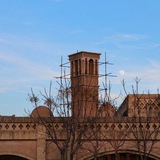
During the twentieth century, the medieval village of Torri Superiore was gradually abandoned by all the inhabitants, falling into decay and slowly turning into a ghost village.
Its beautiful stone towers, internal courtyards, connecting stairs and agricultural terraces gradually became deserted and ruined.
At the beginning of the 90s the Torri Superiore Cultural Association began negotiations for the purchase of houses by a huge number of owners, through a tiring and long cadastral research and laborious negotiations. The purpose of the Association was to transform the village into an Ecovillage, creating on-site residences and resources for a new resident community.
Over the following years, a detailed study of the structure of the buildings led to the development of a complex restoration project that balances the parts for public use and those for private use.
The careful restoration plan has been developed by a team of architects, engineers and surveyors who have generously supported the project over the years. This work has guaranteed the preservation and redevelopment of the medieval features of the structure through the use of natural and eco-friendly materials, the principles of green building and structural interventions in harmony with the surrounding environment.
Two areas have been designed for different uses: in the north part the structure for common use and open to the public, consisting of bedrooms, central kitchen, dining rooms, library and meeting rooms. This area is owned by the Torri Superiore Cultural Association. In the southern part, 22 private housing units, owned by the members, with an internal size that varies from 30 to 80 square meters.
Small local companies have been employed to manage the construction sites with the constant support of the members of the Association and the residents, and with the generous contribution of groups of volunteers from all over the world.
The restorations began in 1997 and in 2012 the works on the accommodation were completed. The restoration of the 22 private housing units ended in 2016. Solar panels were also installed for the production of hot water and electricity.
#Italy , #village, #ecovillage , #landscape , #eco_friendly, #sustainable , #hotel , #residence #ecotourism
@revitalization