🏆 $50 Risk-Free Bets for the World Cup 2022 Final With Duelbits
World Cup Final - the most awaited football event is coming to its end and Duelbits is giving you a chance to get a $50 Risk-Free Live bet when you place a $50 bet pre-match.
How to get the Risk-Free Bet
• Just place a bet between $5 and $50 on any Pre-Match market on the World Cup Final on Sunday 18th December.
• When the match starts, place a risk-free Live bet to the equivalent of your Pre-Match stake.
The first Pre-Match bet placed will be eligible, any other bets after this are not considered. It’s that easy!
It's Argentina vs France, who is going to get the trophy?
Bet Now To Win
🔥Bet Crypto on World Cup 2022 Qatar with 1xBit🔥
🇦🇷Argentina - 2.79x
🇫🇷France - 2.78x
The day has come. Two football giants made it to the Final match of the World Cup 2022. The probability of the victory of each team is high.
Will France defend their champion title or will Argentina win the World Cup for the first time in many years?
🏆Take part in TICKET RUSH - collect tickets and win up to 0.5 BTC🏆
Promocode - CRYPTOCUSH
#1xBit #WorldCup2022 #Crypto
Celebrate the Fifa World Cup Finals & WIN up-to $1,000 in $WHIVE Coins Playing the Play2Earn Trivia Game; Sign Up Here - https://play.nyukia.com/ref/635d85d2dfbfbM
Central Banks to set standards on banks’ crypto exposure - BIS.
The new standard limits crypto reserves among banks to 2% by 2025, and goes into effect on January 1, 2025.
A global standard for banks' exposure to crypto assets has been endorsed by the Group of Central Bank Governors and Heads of Supervision (GHOS) of the Bank for International Settlements (BIS). The standard, which sets a limit of 2% on crypto reserves among banks, must be implemented on January 1, 2025, according to an official announcement on Dec. 16.
The report, dubbed "Prudential treatment of cryptoasset exposures", introduces the final standard structure for banks regarding exposure to digital assets, including tonenized traditional assets, stablecoins and unbacked cryptocurrencies, as well as feedback from stakeholders collected in a consultation launched in June. The Basel Committee on Banking Supervision noted the report will soon be incorporated as a new chapter into the consolidated Basel Framework.
BIS's announcement highlights that the global banking system's direct exposure to digital assets remains relatively low, but recent developments have outlined "the importance of having a strong minimum framework for internationally active banks to mitigate risks." It also stated:
"Unbacked cryptoassets and stablecoins with ineffective stabilisation mechanisms will be subject to a conservative prudential treatment. The standard will provide a robust and prudent global regulatory framework for internationally active banks' exposures to cryptoassets that promotes responsible innovation while preserving financial stability."
Pablo Hernández de Cos, chair of the Basel Committee and Governor of the Bank of Spain, noted about the standard:
"The Committee's standard on cryptoasset is a further example of our commitment, willingness and ability to act in a globally coordinated way to mitigate emerging financial stability risks. The Committee's work programme for 2023–24 endorsed by GHOS today seeks to further strengthen the regulation, supervision and practices of banks worldwide. In particular, it focuses on emerging risks, digitalisation, climate-related financial risks and monitoring and implementing Basel III."
🏆 $50 Risk-Free Bets for the World Cup 2022 Final With Duelbits
World Cup Final - the most awaited football event is coming to its end and Duelbits is giving you a chance to get a $50 Risk-Free Live bet when you place a $50 bet pre-match.
How to get the Risk-Free Bet
• Just place a bet between $5 and $50 on any Pre-Match market on the World Cup Final on Sunday 18th December.
• When the match starts, place a risk-free Live bet to the equivalent of your Pre-Match stake.
The first Pre-Match bet placed will be eligible, any other bets after this are not considered. It’s that easy!
It's Argentina vs France, who is going to get the trophy?
Bet Now To Win
World Cup Final - the most awaited football event is coming to its end and Duelbits is giving you a chance to get a $50 Risk-Free Live bet when you place a $50 bet pre-match.
How to get the Risk-Free Bet
• Just place a bet between $5 and $50 on any Pre-Match market on the World Cup Final on Sunday 18th December.
• When the match starts, place a risk-free Live bet to the equivalent of your Pre-Match stake.
The first Pre-Match bet placed will be eligible, any other bets after this are not considered. It’s that easy!
It's Argentina vs France, who is going to get the trophy?
Bet Now To Win
ANNOUNCEMENT 🔊 The FINAL Drop of the year for Lamborghini’s The Epic Road Trip is almost here 💎 Collect the next puzzle piece to get one step closer to Lamborghini’s puzzle reveal, with some seriously valuable prized possessions unleashed in Drop 5 – “The Vault.” (19 Dec – 22 Dec). -- Now dropping on ETH.
💰Sound the alarm. We’re unlocking the vault and offering you the rarest opportunity to possess a piece of Lamborghini’s heritage – yours to keep forever.
🔒There will be 3 Limited Edition NFTs available for purchase for 24 hours each --- collect all 3 and receive 60-minutes of Early Access to the Rare Limited Edition NFT.
🚨HOLDER BENEFITS🚨
❗️Claim Lamborghini Wallpapers and Centro Stile Sketch Airdrops❗️
☑️ Collect ALL Silver or Gold NFTs to receive NFT token revealing The Epic Road Trip Puzzle!
☑️ Available on OpenSea soon
💎 Register and join Discord for Early Access
💎Join the Discord at lam.bo/Discord_Tw
💎Mint here https://nft.lamborghini.com 👇
🚀Starts Monday 19 - Thursday 22 Dec
Projects would rather get hacked than pay bounties, Web3 developer claims.
After reporting and helping patch a smart contract vulnerability, the developer claims that the projects he helped started to ignore him.
As hacks and exploits continue to go rampant within the crypto industry, the importance of finding vulnerabilities to prevent potential losses becomes of utmost importance. However, a Web3 developer highlighted that it’s not rewarding to do so.
In a tweet, a Web3 developer claimed that he found a vulnerability in a Solana smart contract that would have affected several projects and around $30 million in funds. According to the dev, he reported and helped patch the vulnerabilities. However, when it was time to ask for a reward, the projects just started to ignore him.
The developer noted that this sends a wrong message because it shows that projects would rather get hacked than have critical bugs reported to them. He wrote:
“This is why you have situations like the Mango exploit happen where the exploiter will first steal the funds and then start negotiating. There's no proper incentive to report.”
Community members also echoed the sentiment of the developer. Smit Khakhkhar, a fellow developer, responded by claiming that he also made the same mistake multiple times. “This is one major reason why hackers exploit first and then negotiate,” he wrote. On the other hand, a Twitter user thinks that it's also possible for developers within the projects to secretly want to exploit the code for themselves. They tweeted:
Because of these, some predict that the next cycle in crypto will be a break-and-fix cycle. According to the community member, traders could potentially pay blackhats to exploit critical vulnerabilities while shorting projects.
Meanwhile, many industry executives believe that artificial intelligence programs like ChatGPT can contribute to securing smart contracts. Speaking to Cointelegraph, HashEx CEO Dmitry Mishunin recently noted that ChatGPT can be integrated and reduce the number of hacks within the industry.
🟢 The first crypto project that was compared to Silicon Valley and Google!
This project stands out because it has built Dapps for every area of life on a new Layer-1 blockchain with the most advanced cryptography ED448!
🚀❗️Make sure not to miss out on a once-in-a-lifetime opportunity to be right there at the beginning and have a chance to be one of the first hodlers or miners of Core cryptocurrencies!
🌟Watch this mini-documentary and interview to learn more:
➡️ https://youtu.be/vaaq8CE_pwg
JOIN/FOLLOW
TELEGRAM
🤩Chat: t.me/coreblockchaincc
😎Info: t.me/codetechcc
YouTube
CryptoSlate Inside Look: The story of Core Blockchain - the inner workings of a layer-1 blockchain
CryptoSlate's Akiba went to Slovakia to visit the Core Blockchain team.
This first look documentary showcases his time with the team, his behind the scene insights into the project, and several hard hitting interviews with leadership.
----
https://cryptoslate.com…
This first look documentary showcases his time with the team, his behind the scene insights into the project, and several hard hitting interviews with leadership.
----
https://cryptoslate.com…
Binance addresses 7 instances of recent FUD via Chinese blog post.
Binance is fighting back against the tsunami of FUD it has faced in recent weeks.
The world’s largest crypto exchange, Binance, has been dealing with a torrent of FUD (fear, uncertainty, and doubt) since the downfall of FTX. The firm is now fighting back with its latest blog post.
On Dec. 22, Binance published a blog post in Chinese to address seven key issues the company wanted to clear up. At the time of writing, there was no English language version available.
The first of which was the temporary suspension of USDC withdrawals earlier this month. It explained that this was done during a “token swap” conversion period, with the exchange consolidating its stablecoin reserves into BUSD.
The next thing it addressed was the availability of sufficient reserves for withdrawals. It confirmed that “all users’ assets in Binance are supported 1:1,” and that its financial status was very healthy since it makes ample profit on transaction fees. On Dec. 16, CryptoQuant verified Binance's reserves, reporting that there was no “FTX-like” behavior.
“Binance will not embezzle users’ funds for any transactions or investments, nor does it have any debts, nor is it on the list of creditors of any company that has recently gone bankrupt.”
Regarding Mazars and the “Big Four” auditing firms refusing to work with crypto companies, it said that encrypted on-chain verification was a new field that these companies may not have the capacity to carry out.
It noted that these audits are typically aimed at the financial situation of the listed company, not verifying reserve assets.
Mazars has since removed Binance's audit reports from its website. Binance also stated that it did not need to disclose financial information because it was a private company, not a listed one.
“In many jurisdictions where we operate, we have shared or are sharing operational and financial information as required by local regulators.”
Regarding a Reuters report claiming that the U.S. Department of Justice was investigating the company, Binance stated that mainstream media has been targeting the company with salacious reporting for quite a while now.
Cheelee's project that will change our reality.
Cheelee is a new short video social network like Tik Tok, only with Web 3.0 technologies
The uniqueness of the project is that you immediately begin to receive rewards for watching the feed. Yes, you just watch the video and get tokens. I'll tell you the details, but first, an important announcement:
The Cheelee project is launching a $100,000 Community Drop. The project will not have a public sale and the first 50% of the tokens will be dropped to everyone who becomes part of the Cheelee community before January 10th.
The second drop will be after the launch of the application in the new year. So you have at least two chances to get tokens.
Cheelee is the world's first GameFi short video platform, targeting a mass audience more than any other crypto project.
We understand that only projects available to each user can make the crypto popular for everyone.
If you want to really change your life, your social status, fulfill your dream, then join Cheelee, get NFT points, try the mechanics, withdraw your first money earned by watching the feed and move on!
Well, join Cheelee and grab the tokens: https://tinyurl.com/4fzu93r2
gleam.io
Join Cheelee and grab CHEEL tokens! Get yours 1000х😎
Cheelee is giving $50000 in CHEEL tokens for ALL participants💸 Would you like to get CHEEL tokens which will fly up to the moon and give you really a lot of x's? Then don't miss your chance! 😎 Everyone who joins to the community will get CHEEL tokens! Sounds…
ETH staking on top exchanges contributes to Ethereum censorship: Data.
One of the biggest factors harming Ethereum’s credible neutrality is the use of censoring MEV relays by crypto ecosystems and exchanges.
For most crypto ecosystems, being compliant with federal sanctions have a negative impact on its global reach. However, when it comes to Ethereum, investors have significant power to decide the degree of compliance the ecosystem obeys.
Nearly 60% of all post-Merge Ethereum blocks comply with the United States sanctions put forth by the Office of Foreign Assets Control (OFAC). While the crypto community stands against this transformation, many fail to realize their own contribution to helping Ethereum attain total OFAC compliance.
One of the biggest factors harming Ethereum’s credible neutrality is the use of censoring Miner extractable value (MEV) relays by crypto ecosystems and exchanges. MEV relays work as a mediator between block producers and block builders, which are being used by prominent crypto players, such as Binance, Celsius Network, Coinbase, Kraken and Cream Finance, to name a few.
Users staking Ether on platforms (as shown above) that run censoring MEV relays on their validators are directly contributing to the censorship of Ethereum. Crypto platforms can help remediate the situation by adopting a non-censoring MEV-boost relay.
For validators and relay operators, some of the popular MEV-boost relays that don’t promote censorship include Ultra Sound Money, Agnostic Boost, Aestus, BloXroute Max Profit, BloxRoute Ethical, Manifold and Relayooor.
At the time of writing, 67 of the last 100 Ethereum blocks were found enforcing OFAC compliance.
As investors, it is important to understand that protocol-level censorship is deterrent to crypto’s goal of unleashing open and inclusive finance. Hence, it becomes important for both investors and service providers to opt for non-censoring MEV-boost relays.
The Ethereum ecosystem recently witnessed two dormant addresses wake up after four years to transfer 22,982 ETH.
The ETH transfers in question can be traced back to trading platforms Genesis and Poloniex where the unknown whales transferred 13,103.99 ETH and 9,878 ETH, respectively.

Alameda wallets funnel over $1.7M via crypto mixers overnight.
Data negates the possibility of liquidators behind the fund transfers due to the use of mixing tools and extensive planning to hide transaction paths.
30 cryptocurrency wallets linked to Alameda Research, the bankrupt sister company of crypto exchange FTX, became active on Dec. 28 following four weeks of inactivity. These wallets swapped and mixed over $1.7 million worth of crypto assets through various crypto-mixing services.
Crypto mixers are often used by market exploiters and criminals to obscure the transaction path so that the funds cannot be traced to the original source.
As Cointelegraph reported on Dec. 28, the sudden movement of funds from Alameda wallets just days after Sam Bankman Fried was released on bail raised suspicions across the crypto community. Nearly 24 hours later, it seems the culprit behind these fund transfers used extensive planning to hide transaction routes.
According to data shared by the crypto forensic group Arkham, the first transfer of funds began with multiple Alameda addresses swapping tokens for Ether/Tether, sending them to crypto mixers. A majority of these transfers were tracked to two main wallets starting with 0xe5D and 0x971.
Tokens from the Alameda wallet were first sent to an address starting with 0x738, and then on to an address 0x64e. This 0x64e wallet then splits up the ETH and sends it to smaller wallets, in sizes of generally $200,000 and $50,000. After that, it was sent to mixers such as Fixedfloat and ChangeNOW.
Another wallet was used to swap for stablecoins, where wallet assets were first swapped into USDT and then sent to Fixedfloat. A total of 800,000 USDT was swapped out using mixers, while another 400,000 USDT was funneled via other methods. An additional 200,000 USDT worth of stablecoins were sent to the Bitcoin network using renBTC.
In total, $1.7 million worth of funds were swapped and sent through various mixing services as follows:
270.5 ETH through ChangeNOW (~$325k)
800,000 USDT through Fixedfloat
200,000 USDT through Curve SynthSwap to native Bitcoin
200,000 USDT through Airswap
200,000 USDT through other crypto-mixing services
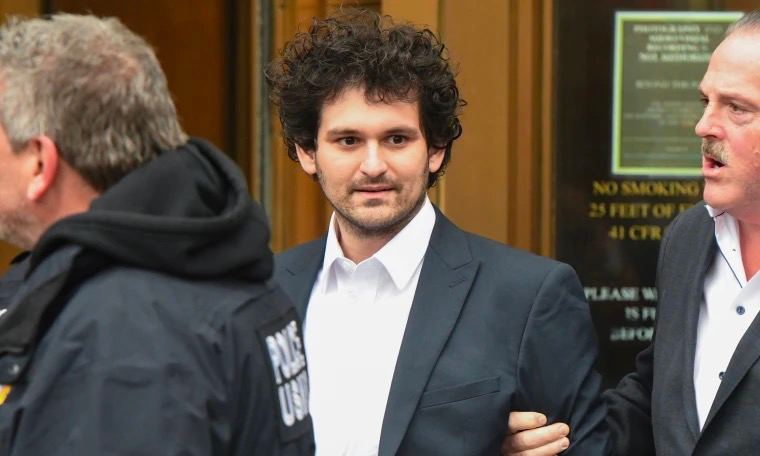
Sam Bankman-Fried to reportedly plead not guilty to criminal charges.
Following a court hearing on Dec. 22, SBF was released on bail and is slated to appear on court on Jan.3 before U.S. District Judge Lewis Kaplan in Manhattan.
Former FTX CEO Sam Bankman-Fried (SBF), currently free on a $250 million bail bond, will reportedly plead not guilty to the alleged FTX and Alameda-related financial frauds in court on Jan. 3.
SBF was arrested in the Bahamas at the request of the U.S. government under suspicion of defrauding investors and misappropriation of funds held on the FTX crypto exchange. Following a court hearing on Dec. 22, SBF was released on bail and is slated to appear on court on Jan.3 before U.S. District Judge Lewis Kaplan in Manhattan.
During the hearing, SBF is expected to enter a plea of not guilty to the criminal charges, according to a Reuters report. On Dec. 13, the SEC charged the former FTX CEO with violating the anti-fraud provisions of the Securities Act of 1933 and the Securities Exchange Act of 1934.
Defendants have the right to plead not guilty during initial court hearings and are allowed to change their plea in due time.
On Dec. 28, a movement of funds from Alameda wallets raised suspicions about SBF’s involvement in the anomaly. However, the entrepreneur was quick to distance himself from the alleged rumors.
SBF’s tweet was in response to a Cointelegraph report that a wallet address had received over 600 Ether from wallets that belonged to Alameda.
Hello Everyone 😀,
🏆Gear up for the MCL NEW YEAR BASH TOURNAMENT!🏆
Key Highlights:
🏏Total Prizepool: $10000.
🏏Grab 10000 Passes for FREE.
🏏No NFT Needed & No KYC Needed.
🏏100% of participants will be declared winners.
Grab your Passes to Participate in this exciting tournament! 🎉
Claim Yours Now:
https://www.jump.trade/drop/free-mcl-pass?fsz=CLTG
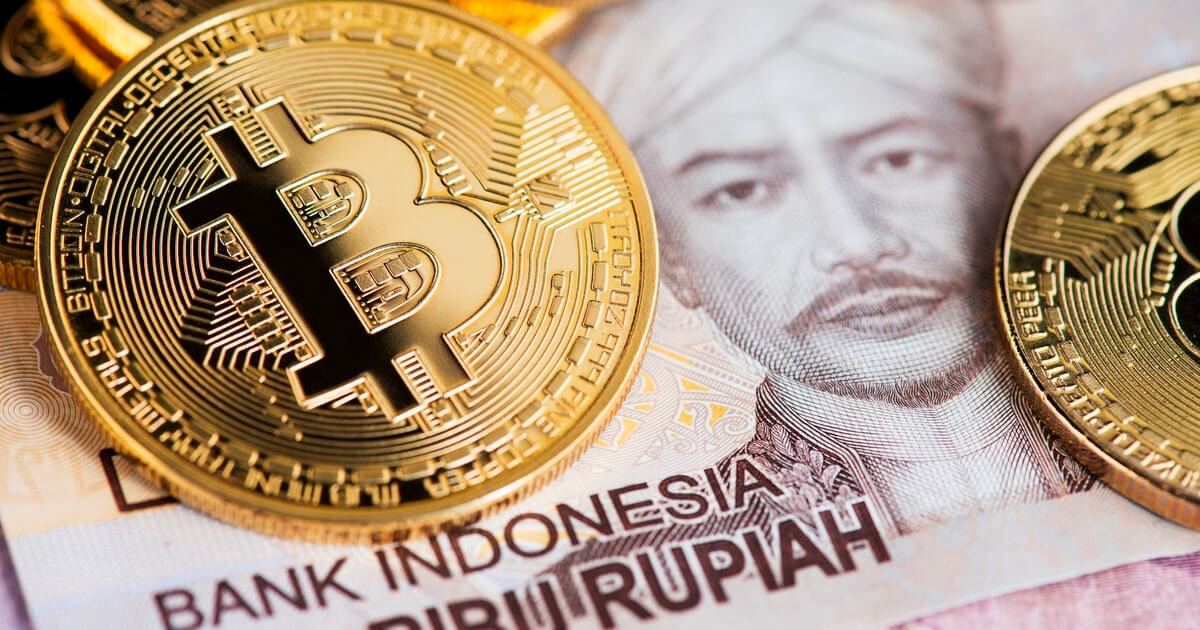
Indonesia to launch national crypto exchange in 2023.
The platform comes as a part of the plan to shift the regulatory oversight from the commodities agency to the securities authority.
As a part of its reform of crypto regulation, Indonesia will create a crypto exchange in 2023, according to reports. The platform is planned to be launched prior to a shift of regulatory power from commodities to securities authority.
On Jan. 4, the head of the Commodity Futures Trading Regulatory Agency of Indonesia (Bappebti), Didid Noordiatmoko, stated that a crypto exchange should be set up this year. The move comes as a part of broader financial reform launched in December 2022.
In accordance with the reform, in the next two years, the crypto oversight will be taken from Bappebti, a commodities-focused agency, by the Financial Services Authority (FSA).
The Financial Sector Development and Reinforcement bill (P2SK) was ratified by the House of Representatives of Indonesia on Dec. 15 to become the primary legal reference in the financial service sector. Explaining the shift of authority from Bappebti to the FSA, cemented by the bill, Suminto Sastrosuwito, a head of Financing and Risk Management of the national finance ministry, claimed that:
“In fact, crypto assets have become investment and financial instruments, so they need to be regulated on an equal basis with other financial and investment instruments.”
Indonesia imposed a blanket ban on crypto payments starting in 2017, while trading in digital assets has largely remained legal in the country. In the first days of January, Noordiatmoko revealed that the value of crypto transactions in the country fell by half in 2022 — from 859.4 trillion Indonesian rupiahs ($55 million) to 296.66 trillion ($19 million).
In December, Bank of Indonesia Governor Perry Warjiyo announced the release of the conceptual design of a digital rupiah — a currency the equivalent of the country’s fiat — which will be made available for public discussion.
Silvergate gets more bad news as Moody’s slashes its ratings.
The beleaguered bank was allegedly moving money between FTX and Alameda; then it sold debt at a discount and sacked employees after a bank run.
Things seem to be going from grim to grimmer at Silvergate Bank, with a hit to its Moody’s rating and a selloff by Ark Invest. The bank already experienced a run and has been tied to the FTX collapse.
Ark Invest, the investment vehicle of Cathy Wood, sold off more than 400,000 shares of parent company Silvergate Capital, worth $4.3 million on Jan. 6, leaving it with a mere 4,000 shares, according to various media reports. Those shares lost 43% of their value the previous day.
Moody’s Investors Service also reacted to the situation at the bank, downgrading its ratings of Silvergate Capital and the bank. The bank's long-term deposit rating was downgraded from Baa2 (“lower-medium grade”) to Ba1 (“junk”) and its long-term issuer rating from Ba2 to B1 (both “junk”), with a negative outlook for the both organizations.
Moody’s attributed its decision to falling deposits, losses from securities sales to meet liquidity needs and workforce layoffs. Moody’s vice president Sadia Nabi said in a statement:
“Almost all of the bank's deposits continue to be from crypto currency centric institutions, and while the bank currently has adequate liquidity and capital, continued large outf[l]ows of these deposits would further adversely impact the bank's financial condition.”
Silvergate Bank lost $718 million as it liquidated debt to cover $8.1 billion in withdrawals, according to reports on Jan. 5. It also laid off 40% of its workforce, about 200 people. In addition, crypto-related deposits were down 68% in the fourth quarter of 2022.
The bank had come under the scrutiny of legislators after allegations that it facilitated transfers between FTX and its sister-company Alameda Research. Three senators headed by Senator Elizabeth Warren sent a letter to Silvergate CEO Alan Lane Dec. 6 asking for an explanation of the allegations. On Dec 16, FTX investors filed a class action suit against Lane, the bank and Silvergate Capital over the same allegations.

Would you like to quickly and safely buy cryptocurrency at a favorable rate? Then join Alfacash Store!
On Alfacash Store, the users can buy and sell over 19 cryptocurrencies with EUR. This is the fastest and safest way to trade digital currencies in the European Union.
Alfacash Store values and features:
🔹A fully automatic, non-custodial exchange that includes automatic AML checks.
🔹Trading with its own reserves.
🔹User-friendly and fast platform online.
🔹Competitive exchange rates and low service fees.
🔹The most popular cryptocurrencies to be available, including Bitcoin.
🔹Strong protection of customer data under GDPR principles.
Alfacash Store also runs a news channel about trends in the crypto world!ё
Join Telegram channel: https://t.me/alfacashstore
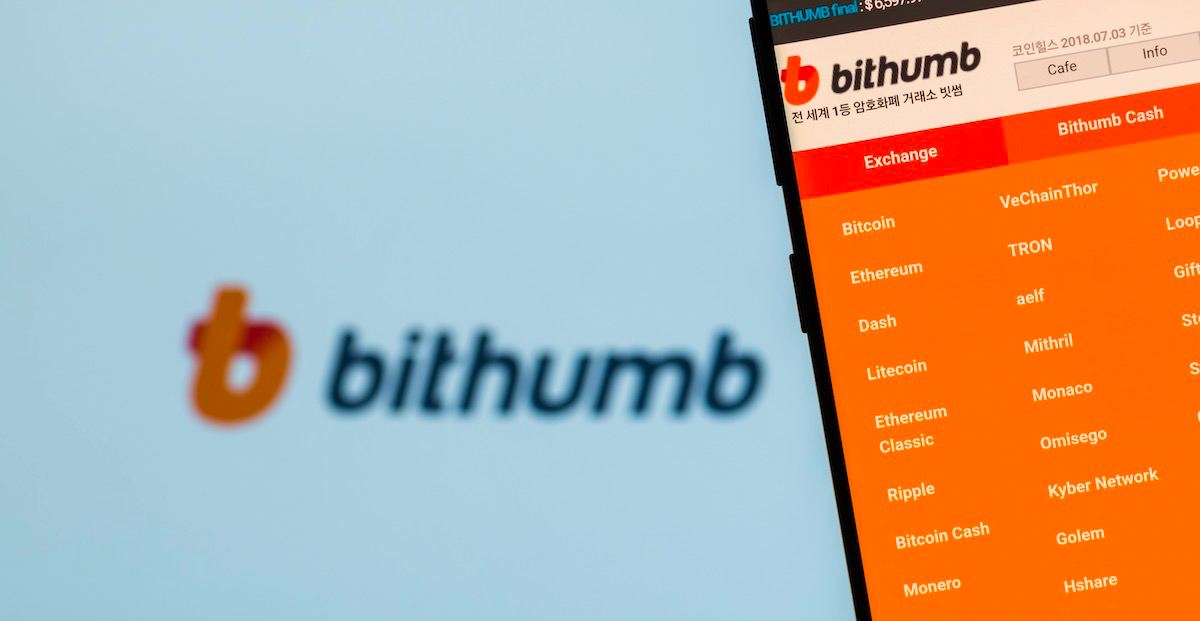
South Korean regulators target Bithumb in new probe.
The South Korean National Tax Service agency launches an investigation into Bithumb, according to local reports.
South Korea-based cryptocurrency exchange Bithumb is under a “special tax investigation” by the country’s National Tax Service (NTS), according to local reports.
On Jan. 10, tax agents reportedly raided the exchange’s headquarters in the country’s capital city, Seoul, as a part of a compliance investigation. Authorities are exploring the possibility of tax evasion by examining the domestic and international transactions of Bithumb Korea, Bithumb Holdings and its affiliates.
The agents are also exploring possible tax evasion related to the ownership of Bithumb.
The investigation was carried out by the 4th Bureau of Investigation of the Seoul Regional Tax Service, which specifically investigates “special tax investigations,” as opposed to standard ones.
Bithumb was previously under a special tax investigation in 2018 by the NTS, through which it won roughly $64 million in income tax.
This development comes after former Bitchumb chair Lee Jung-Hoon was acquitted on Jan. 3 of $70 million in fraud charges.
On Dec. 30, just prior to the acquittal, Park Mo — an executive at the largest shareholder of Bithumb — was found dead. He was under investigation by local authorities for embezzlement and stock price manipulation.
The executive’s death was the latest in a slew of crypto billionaires who died within a month of each other, including MakerDAO co-founder Nikolai Mushegian and Amber Group co-founder Tiantian Kullander, among others. Some in the community have pointed to the fact that they occurred around the same time a the fall of FTX.
Regulators around the world have been keeping a close watch on the crypto industry in light of the turmoil, which has since plagued the space.
🎁P2PBET is giving away 10.000 USDT🎁
💸 Only 10 winners will receive 1.000 USDT. Maybe it will be you😎
What do you need to do?
✨Subscribe to P2PBET socials and complete some really simple tasks on Givelab!
✨The team will announce the winners on January 28th!
👇Follow this link to participate👇
https://givelab.com/p2pbet/p2pbet-giveaway-prize-fund-10-000
Wall of worry’ led to digital wallets, blockchain tech ignored.
Market uncertainty calls for an opportunity to take advantage of disruptive innovation, which has historically “gained share during turbulent times,” said the ARK Invest CEO.
ARK Invest CEO Cathie Wood believes that digital wallets and blockchain tech were among the “game-changing innovations” that the equity markets largely ignored in 2022.
In a Jan. 12 blog post on the ARK Invest website, Wood suggested that the equity market faced a “wall of worry” in 2022, caused by fears of entrenched inflation and higher interest rates and largely ignored some innovative technologies.
Wood highlighted that digital wallets are “replacing cash and credit cards,” noting that they overtook cash as the top transaction method for offline commerce in 2020.
Further arguing that digital wallets should not be overlooked, Wood noted that they also accounted for approximately 50% of global online commerce in 2021.
Wood suggested that the recent collapse of crypto exchange FTX hasn’t affected the larger mission of what public blockchains were intended for. She noted:
“Public Blockchains like Bitcoin and Ethereum have not skipped a beat in processing transactions.”
Wood highlighted how the FTX collapse educated crypto investors to be more diligent with where they store their crypto assets, saying that the share of trading volume on decentralized exchanges, which allow for trading without a central intermediary, rose 37%, jumping from 8.35% to 11.4%.
Wood said she has never, in her “30 years working in portfolio management,” experienced such unstable market conditions, saying she has never seen “markets this dislocated.”
The CEO suggested that the economy is facing a challenging situation, with a decrease in money supply, a decline in commodity prices and the “unwinding” of bloated inventories, which indicate a slowdown in inflation and possibly even deflation.
Wood noted in the report that the fear is high in investors stating that investors are holding “high levels” of cash not seen since the 9/11 crisis in 2001.