
Microsoft Entra ID shifts to passkeys
Starting in September 2026, Microsoft will move all users of its Entra ID security system to passkeys. This means the traditional codes sent via text or phone calls will eventually stop working.
Passkeys are digital keys stored on your device that verify your identity using biometrics like a fingerprint or a face scan. They are safer than SMS codes because they cannot be stolen by hackers who intercept your messages.
📍 If you currently use SMS or voice for security, you must switch by February 2027.
This change ensures your digital identity is shielded by modern, high-level encryption protocols that are nearly impossible to fake. You might finally stop worrying about account hacks while you make your morning coffee.
#Microsoft #Security #TechNews
Starting in September 2026, Microsoft will move all users of its Entra ID security system to passkeys. This means the traditional codes sent via text or phone calls will eventually stop working.
Passkeys are digital keys stored on your device that verify your identity using biometrics like a fingerprint or a face scan. They are safer than SMS codes because they cannot be stolen by hackers who intercept your messages.
📍 If you currently use SMS or voice for security, you must switch by February 2027.
This change ensures your digital identity is shielded by modern, high-level encryption protocols that are nearly impossible to fake. You might finally stop worrying about account hacks while you make your morning coffee.
#Microsoft #Security #TechNews
👎1

The FCC has restricted imports of Chinese-made robots and energy gear
The Federal Communications Commission (FCC) in the United States is moving to block new imports of Chinese-made robots and power inverters to prevent cybersecurity hacks similar to the 2023 Volt Typhoon incident. This policy impacts everything from high-tech humanoids to common household vacuum cleaners. ⚠️
The agency is aiming to protect critical infrastructure from potential foreign interference. These devices could act as entry points for attackers, so any new product now requires a strict review by the Pentagon and the Department of Homeland Security.
This move creates a massive barrier for manufacturers like Sungrow Power Supply and Huawei, who currently dominate the energy market with aggressive pricing. It follows the same path as the earlier restrictions placed on Chinese drones, which effectively locked them out of the U.S. market.
It is a stark reminder of how geopolitical tension now dictates the gadgets you can buy at the store. Recall how the restrictions on Huawei networking gear completely reshaped the global telecom landscape—users ultimately paid the price for that isolation.
#tech #security #FCC
Ars Technica
Subscribe
The Federal Communications Commission (FCC) in the United States is moving to block new imports of Chinese-made robots and power inverters to prevent cybersecurity hacks similar to the 2023 Volt Typhoon incident. This policy impacts everything from high-tech humanoids to common household vacuum cleaners. ⚠️
The agency is aiming to protect critical infrastructure from potential foreign interference. These devices could act as entry points for attackers, so any new product now requires a strict review by the Pentagon and the Department of Homeland Security.
This policy specifically targets hardware that connects renewable energy sources to power grids and AI data centers, treating them as potential security vulnerabilities.
This move creates a massive barrier for manufacturers like Sungrow Power Supply and Huawei, who currently dominate the energy market with aggressive pricing. It follows the same path as the earlier restrictions placed on Chinese drones, which effectively locked them out of the U.S. market.
It is a stark reminder of how geopolitical tension now dictates the gadgets you can buy at the store. Recall how the restrictions on Huawei networking gear completely reshaped the global telecom landscape—users ultimately paid the price for that isolation.
The era of unrestricted foreign tech is coming to a close.
#tech #security #FCC
Ars Technica
Subscribe
👍1
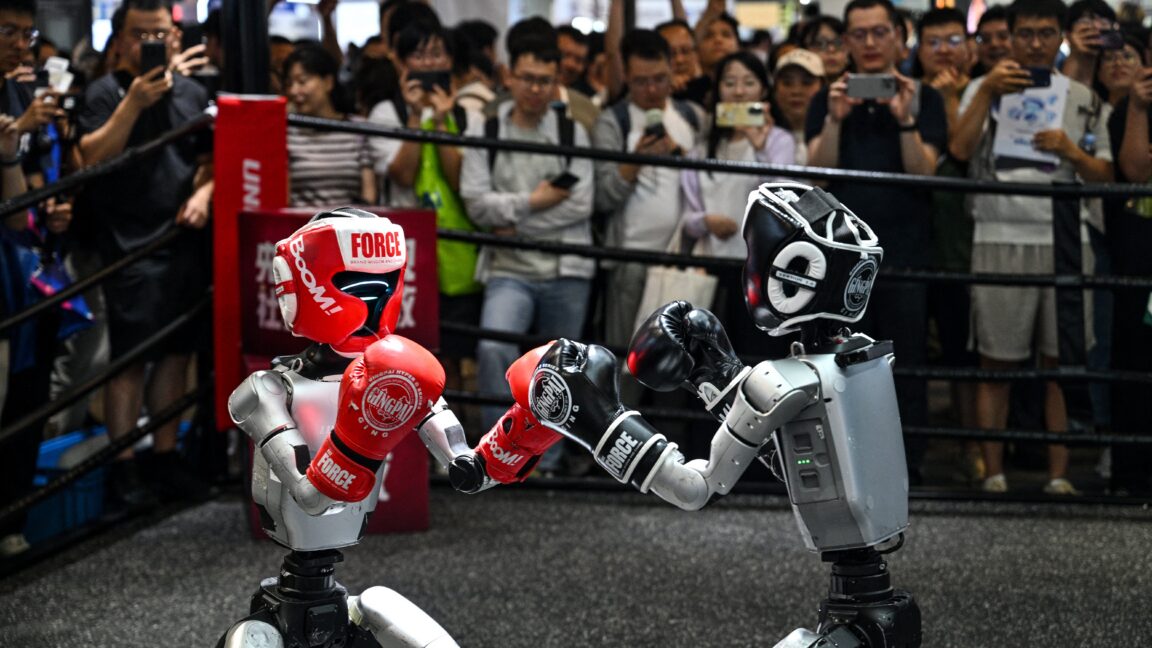
FCC bans Chinese robots and home devices ⚠️
The Federal Communications Commission (FCC) is placing new, strict limits on imported Chinese robotics, including vacuum cleaners and power inverters, as part of a strategy to help the United States exceed 100 GW of renewable capacity by 2027.
These machines, which map home interiors or connect to critical power grids, must now pass a rigorous review process overseen by the Pentagon and the Department of Homeland Security. The rule targets humanoid and quadrupedal robots, as well as common household brands like Roborock and Dreame, due to concerns over their ability to record and transmit data from inside your home. 🛡️
Currently, domestic U.S. companies only meet 40% of the demand for these specialized power inverters. This policy also puts a target on commercial drones using LiDAR, with DJI warning that military-grade classifications could block equipment used for everyday agriculture and safety inspections. This action follows a long line of restrictions against companies like Huawei and ZTE, further isolating the market. ⚠️
Security concerns are reshaping what hardware we can keep in our houses.
#TechNews #Robotics #Security
The Verge
Subscribe
The Federal Communications Commission (FCC) is placing new, strict limits on imported Chinese robotics, including vacuum cleaners and power inverters, as part of a strategy to help the United States exceed 100 GW of renewable capacity by 2027.
These machines, which map home interiors or connect to critical power grids, must now pass a rigorous review process overseen by the Pentagon and the Department of Homeland Security. The rule targets humanoid and quadrupedal robots, as well as common household brands like Roborock and Dreame, due to concerns over their ability to record and transmit data from inside your home. 🛡️
Currently, domestic U.S. companies only meet 40% of the demand for these specialized power inverters. This policy also puts a target on commercial drones using LiDAR, with DJI warning that military-grade classifications could block equipment used for everyday agriculture and safety inspections. This action follows a long line of restrictions against companies like Huawei and ZTE, further isolating the market. ⚠️
Security concerns are reshaping what hardware we can keep in our houses.
Your smart home just became a matter of national security.
#TechNews #Robotics #Security
The Verge
Subscribe

Boeing 737 flight systems vulnerable to 60-second physical hack
Researchers from UC San Diego and Oberlin College have proven that a tiny device, installed in under 60 seconds, can alter a plane's navigation. This vulnerability affects Boeing 737 Next Generation and 737 MAX variants, showing that modern avionics rely heavily on physical security at the airport.
The attack is surprisingly simple: a person with access to the outside of the plane opens a maintenance hatch, reaches a connector, and plugs in their gadget. The device then intercepts signals between the onboard computer and the pilot's controls.
While the Boeing 737 remains a staple of global travel, similar to how the Airbus A320 is used by countless airlines for short-to-medium range flights, this finding highlights a gap in how these systems are protected. It is a clear reminder that complex software security means very little if the physical port is left unguarded.
#Boeing #aviation #security
Interesting Engineering
Subscribe
Researchers from UC San Diego and Oberlin College have proven that a tiny device, installed in under 60 seconds, can alter a plane's navigation. This vulnerability affects Boeing 737 Next Generation and 737 MAX variants, showing that modern avionics rely heavily on physical security at the airport.
The attack is surprisingly simple: a person with access to the outside of the plane opens a maintenance hatch, reaches a connector, and plugs in their gadget. The device then intercepts signals between the onboard computer and the pilot's controls.
This equipment mimics legitimate signals to trick the flight management system, allowing the intruder to modify waypoints without alerting the crew.
While the Boeing 737 remains a staple of global travel, similar to how the Airbus A320 is used by countless airlines for short-to-medium range flights, this finding highlights a gap in how these systems are protected. It is a clear reminder that complex software security means very little if the physical port is left unguarded.
Physical access is the ultimate backdoor.
#Boeing #aviation #security
Interesting Engineering
Subscribe
👍1

Donald Trump bans foreign-made grid equipment
Donald Trump recently signed an executive order to protect the power grid in the United States. The mandate restricts the acquisition of transformers, inverters, and circuit breakers from abroad. This action seeks to protect the power infrastructure from potential digital and physical threats.
The order targets hardware like transformers, circuit breakers, and inverters—the essential devices that move electricity from power plants to your home. It also introduces new rules for complex software and digital systems, which are increasingly critical to energy management. Manufacturers are now looking for clarity on how to verify the country of origin for these digital components.
Previously, utility companies could source grid hardware globally with less attention on the digital supply chain. Unlike the earlier, strictly hardware-focused regulations, this new directive forces the industry to monitor the provenance of every software element embedded in its machines.
#energy #security #infrastructure
Utility Dive
Subscribe
Donald Trump recently signed an executive order to protect the power grid in the United States. The mandate restricts the acquisition of transformers, inverters, and circuit breakers from abroad. This action seeks to protect the power infrastructure from potential digital and physical threats.
The order targets hardware like transformers, circuit breakers, and inverters—the essential devices that move electricity from power plants to your home. It also introduces new rules for complex software and digital systems, which are increasingly critical to energy management. Manufacturers are now looking for clarity on how to verify the country of origin for these digital components.
Previously, utility companies could source grid hardware globally with less attention on the digital supply chain. Unlike the earlier, strictly hardware-focused regulations, this new directive forces the industry to monitor the provenance of every software element embedded in its machines.
Security now starts at the power plant.
#energy #security #infrastructure
Utility Dive
Subscribe
Telegram account theft bug
A security flaw in Telegram enables malicious links using the tg://msg_url prefix to trigger automated spam. These deceptive prompts, often disguised as gifts, force an immediate message send that results in account bans.
The bug bypasses manual confirmation, sending messages without consent in certain app versions and putting profiles at risk. ⚠️🚫📉
#telegram ⚡ #security ⚡ #tech
Subscribe
A security flaw in Telegram enables malicious links using the tg://msg_url prefix to trigger automated spam. These deceptive prompts, often disguised as gifts, force an immediate message send that results in account bans.
The bug bypasses manual confirmation, sending messages without consent in certain app versions and putting profiles at risk. ⚠️🚫📉
#telegram ⚡ #security ⚡ #tech
Subscribe