
This media is not supported in your browser
VIEW IN TELEGRAM
Israeli settlers entered Palestinian-owned olive groves in the Masafer Yatta area, south of Hebron in the occupied West Bank, and stole olives from the trees on Wednesday, according to local sources.
The olive harvest in the occupied West Bank officially begins on October 15. But escalating Israeli settler violence, military raids, access restrictions and settlement expansion — including the rapid establishment of dozens of outposts — are increasingly preventing Palestinians from reaching their farms and severing their ties to their land.
According to a survey of 29 Palestinian and international organisations operating in the occupied West Bank, 79 percent of NGOs report that their staff had recently been attacked, threatened or harassed.
The Palestinian Colonisation and Wall Resistance Commission said incidents typically include physical assaults, detentions, beatings, pepper-spray attacks, property theft, attacks on homes, tree felling and road blockages.
The Muslim World Telegram
https://t.me/tmw_media
This media is not supported in your browser
VIEW IN TELEGRAM
Sami Hamdi calls out Israel's historic crimes against humanity, as well as the recent genocidal atrocities they've committed, in a heated debate against a British Jewish Zionist extremist.
The Muslim World Telegram
https://t.me/tmw_media
The Muslim World Telegram
https://t.me/tmw_media
Two nights ago, Israel burned a mother alive after bombing them in Gaza City. Her four year old daughter, screaming in horror as her burned to death in the same room, survived.
There is no depth to Israel’s depravity and still the mendacious media regurgitates language of a ceasefire.
The Muslim World Telegram
https://t.me/tmw_media
There is no depth to Israel’s depravity and still the mendacious media regurgitates language of a ceasefire.
The Muslim World Telegram
https://t.me/tmw_media
💔5
THE LATEST: Gaza Genocide, Iran War, Yemen-Saudi War
1) Saudi-led coalition forces supporting Yemen’s internationally recognised government say they have intercepted and destroyed a drone launched towards Saudi Arabia’s Eastern Province. The coalition has not specified where the drone came from.
2) US President Donald Trump says he “would not use” nuclear weapons against Iran, adding he did not see “putting US troops on the ground” there.
3) Trump also said he is weighing fresh strikes on Iran without nuclear weapons or ground troops, while insisting negotiations with Tehran were under way.
4) Houthis have claimed responsibility for the attack on the government headquarters in Aden, with its spokesperson, Yahya Saree, describing the building as housing "Saudi war operations room".
5) At least five people were killed in Houthi missile strikes near the al-Maashiq presidential palace in Aden on Thursday. The prime minister and other officials were safe but two of his bodyguards were killed.
6) Oil prices have edged lower in early trading with Brent crude falling to $105.51 a barrel and West Texas intermediate to $97.43 as investors weigh regional tensions and possible US sanctions relief for some oil tankers.
7) The threat to merchant shipping in the Strait of Hormuz remains "severe", the UK Maritime Trade Operations (UKMTO) centre says, warning further attacks in the waterway were "highly likely" under current conditions.
8) Chinese Foreign Minister Wang Yi told Israeli President Isaac Herzog that Israel should stop and reverse its "forced establishment" of West Bank settlements, China's foreign ministry said in a statement on Friday.
9) Israeli settlers torched vehicles owned by Palestinians during an attack on olive harvesters on Friday morning near the town of Turmus Ayya, north of Ramallah in the occupied West Bank, Quds News Network reported.
10) An Israeli settlement group has said that it has established a new settlement facing Gaza City, and urged the Israeli government to immediately authorise its transfer into the northern part of the Strip.
11) Several displaced Gazans were injuries on Thursday evening following an Israeli strike west of Gaza City, Wafa reported.
12) Iraq’s parliament has approved Laith al-Khazali, a senior figure from the Iran-backed Asaib Ahl al-Haq movement, as a deputy prime minister.
The Muslim World Telegram
https://t.me/tmw_media

This media is not supported in your browser
VIEW IN TELEGRAM
A child in Azerbaijan in tears as she’s expelled from school for wearing the hijab.
The population of Azerbaijan is 90% Muslim.
The President of Azerbaijan Ilham Aliyev is a close ally of the Netanyahu regime in Israeli as economic cooperation between Israel and Azerbaijan has grown significantly since the genocide begun.
Azerbaijan is a tool for Israel.
The Muslim World Telegram
https://t.me/tmw_media
This media is not supported in your browser
VIEW IN TELEGRAM
This was once Rafah, Gaza. Israel is systematically removing any and every trace of Palestinian life, paving the way for an ethnic cleansing and Jewish resettlement plan.
Beneath these sands lie the bodies of thousands of women and children. Israel is quite literally building on the blood of the thousands of slaughtered Palestinian men women and children.
The Muslim World Telegram
https://t.me/tmw_media
Beneath these sands lie the bodies of thousands of women and children. Israel is quite literally building on the blood of the thousands of slaughtered Palestinian men women and children.
The Muslim World Telegram
https://t.me/tmw_media
This media is not supported in your browser
VIEW IN TELEGRAM
In Azerbaijan, a teacher tearfully bid farewell to her students after 21 years of service, forced to leave her job over her headscarf.
“21 years of dedication mean nothing. My headscarf covers my head, but some have theirs over their hearts and eyes"
The Muslim World Telegram
https://t.me/tmw_media
“21 years of dedication mean nothing. My headscarf covers my head, but some have theirs over their hearts and eyes"
The Muslim World Telegram
https://t.me/tmw_media
💔2
THE LATEST: Gaza Genocide, Iran War, Yemen-Saudi War
1) Two tankers were set ablaze after hitting mines in the Strait of Hormuz, Fars news agency is reporting citing the IRGC.
2) Qatar’s Foreign Ministry spokesperson Majed al-Ansari says negotiations between Iran and the US are continuing, with the sides engaging in diplomatic efforts despite growing tensions and fears of renewed fighting.
3) Houthi ballistic missile aimed at Riyadh intercepted and destroyed, says Saudi-led Coalition Spokesperson Colonel Turki al-Maliki.
4) Iranian Foreign Minister Abbas Araghchi emphasises that Iran and Russia are currently maintaining their closest strategic relationship in history following talks with his Russian counterpart Sergey Lavrov in Tehran.
5) Iran’s Islamic Revolutionary Guard Corps (IRGC) has said that it intercepted and destroyed a US MQ-9 drone over the Strait of Hormuz early on Tuesday.
6) Four Palestinians, including a child and a couple, killed in separate Israeli attacks on the Gaza Strip.
7) Brent crude oil surpasses $111 per barrel, its highest level in five months.
8) US President Donald Trump has slammed Nato allies, saying they "weren't there to help" Washington during its war on Iran. "We stand with Europe despite its flaws, its weaknesses…But if they don't soon find their way, and they have to find their way, we will have no choice but to leave," he said at a campaign rally.
9) The Hind Rajab Foundation said it filed an urgent request with the US Department of Justice to arrest and prosecute an Israeli commander over his alleged involvement in the killing of five-year-old Hind Rajab. It identified him as Sean Glass, adding that he commanded the Israeli unit implicated in Rajab's killing.
10) US Secretary of Defence Pete Hegseth met with Israeli Prime Minister Benjamin Netanyahu during an unannounced visit to Israel on Monday, Axios reported.
11) Israeli fighter jets were spotted over southern and eastern Syria, local sources reported. The jet fighters were also seen above Muthanna governorate in southern Iraq, according to the local sources.
The Muslim World Telegram
https://t.me/tmw_media

❤1
THE LATEST: Gaza Genocide, Iran War, Yemen-Saudi War
1) US Secretary of State Marco Rubio tells US media that reaching a peace deal with Iran is extremely difficult and economic pressure will continue until Tehran stops targeting commercial shipping in the Strait of Hormuz.
2) Iranian Foreign Minister Abbas Araghchi tells the media the Strait of Hormuz will remain closed until Washington accepts Tehran’s conditions, adding that indirect talks continue through Pakistan and Qatar.
3) US Defense Secretary Pete Hegseth says Washington is prepared to take further military action against Iran, saying “we want to make sure that Iran never gets a nuclear weapon.”
4) Saudi-led coalition forces say they have intercepted and destroyed four drones launched towards Saudi Arabia, with the interceptions taking place over the Medina and Eastern regions.
5) Houthi-affiliated media have reported that three coalition air attacks have destroyed a telecommunications network in the Maran district of Yemen’s Saada governorate.
6) The UN has warned that the humanitarian situation in Yemen’s Taiz is deteriorating, with road closures preventing essential supplies, including fuel, from reaching the city.
7) The Ministry of Health and Environment announced that Saudi strikes targeting boats off the coast of al-Kadha in the Taiz Governorate killed eight fishermen.
8) Oil prices have climbed amid concerns over Middle East supplies, with Brent crude reaching $110 a barrel and US West Texas Intermediate rising to $99.
9) The UK is set to deploy Royal Air Force Typhoon fighter jets to Saudi Arabia as a form of protection against Houthi attacks. According to the British government announcement, the aircraft will only be used to conduct defensive missions.
10) The Lebanese army on Tuesday accused Israel of spreading misinformation, after Tel Aviv claimed Beirut failed to disarm Hezbollah south of the Litani River as stipulated under a ceasefire agreement.
The Muslim World Telegram
https://t.me/tmw_media

❤1
THE LATEST: Gaza Genocide, Iran War, Yemen-Saudi War
1) Iran’s Islamic Revolutionary Guard Corps (IRGC) has threatened to “extend confrontation to US bases” in the region if Washington continues to urge “vessels to pass through mined waterways illegally”.
2) The IRGC says its navy has struck four ships involved in oil transfers in the Gulf, and that three other vessels caught fire after hitting mines near the Strait of Hormuz.
3) US President Donald Trump denies conducting negotiations with Tehran, saying an outcome will happen “fairly soon”. Meanwhile, Netanyahu has denied media reports that Trump halted a planned Israeli strike on Iran.
4) Death toll from attack on Saudi Arabia’s Dammam airport rises to two as Saudi-led coalition says it intercepted and destroyed a drone over Riyadh.
5) The official spokesperson for the Saudi-led coalition in Yemen, Turki Al-Maliki, wrote in a post on X on Wednesday that air defences had intercepted and destroyed four drones in Saudi Arabia’s Eastern Province.
6) Iran’s ambassador to the UN has written to the UN, calling the US naval blockade of Iran “a flagrant violation” of international law.
7) Brent crude futures have reached their highest level since May amid intense Houthi attacks on Saudi Arabia.
8) The IMF forecasts a sharp drop in economic output in the Middle East, North Africa and Pakistan this year, followed by a rebound to 6.6 percent growth in 2027.
9) Israeli forces killed a man with disabilities on Thursday during an incursion in a village in Syria's Daraa governorate, state media reported. The killing follows reports of Israeli forces storming into the village, where they searched several properties, deployed snipers on the rooftops of civilian homes and fired "indiscriminately" across residential neighbourhoods.
The Muslim World Telegram
https://t.me/tmw_media

❤4
Gulf exports more oil than it did before Iran war despite surge in Hormuz attacks
Middle Eastern oil exports have risen above prewar levels despite continued disruption in the Strait of Hormuz, weakening Iran’s ability to use the chokepoint as economic leverage. Gulf states exported 24.6 million barrels per day in the week ending 18 October, compared with 23.3 million before the war, even as attacks on shipping increased. The recovery has been driven by ship-to-ship transfers, greater use of state-owned tankers, and alternative routes such as Saudi exports through the Red Sea and onward through Egypt. Around 40 percent of non-Iranian Gulf crude now bypasses Hormuz, up from 17 percent before the war, while Iraq and Syria are also pursuing a revived pipeline to the Mediterranean.
The rebound does not mean conditions have normalised. Traffic through Hormuz remains well below prewar levels, shipping costs have risen sharply and Brent crude is still around $109 per barrel, with refined fuel prices especially high. Longer routes and greater vessel demand are pushing freight costs up, while Iran continues to attack shipping in and around the strait. Even so, the success of these workarounds reduces Tehran’s leverage at a sensitive moment, as the US and Israel again threaten military action and Netanyahu says Israel remains committed to confronting Iran.
The Muslim World Telegram
https://t.me/tmw_media

❤1
'Null and void:' Egypt condemns Turkey-Libya maritime deal, reaffirms pact with Greece
Egypt has rejected the newly ratified maritime agreement between Turkey and eastern Libya, declaring it legally invalid and reaffirming its own 2020 maritime deal with Greece. Eastern Libya’s parliament had unexpectedly approved the Turkish agreement years after opposing it, reflecting the growing relationship between Ankara and Saddam Haftar, the son of eastern Libyan commander Khalifa Haftar. Egypt’s stance is significant because Cairo has traditionally been close to eastern Libya, even as relations with Turkey have improved in recent years. The dispute therefore highlights the competing alliances and maritime claims shaping the Eastern Mediterranean.
At the centre of the disagreement is how Exclusive Economic Zones should be drawn. Greece argues that its islands, including Crete and Rhodes, generate their own maritime zones, while Turkey rejects that interpretation and argues for a different division of the sea. Greece’s agreement with Egypt directly conflicts with the Turkish-Libyan deal, while Turkey insists its agreement is legally valid. Greece has offered to take parts of the dispute to the International Court of Justice, but Turkey has rejected that route and is not a signatory to UNCLOS.
The issue has wider regional implications because control of maritime zones affects access to energy resources, shipping routes and strategic influence. Israel and the EU have also criticised the Turkish-Libyan agreement, while Ankara has dismissed the objections as politically motivated. Eastern Libya’s decision to ratify the deal therefore strengthens Turkey’s position in the Mediterranean but also risks intensifying tensions with Greece, Egypt and other regional actors.
The Muslim World Telegram
https://t.me/tmw_media

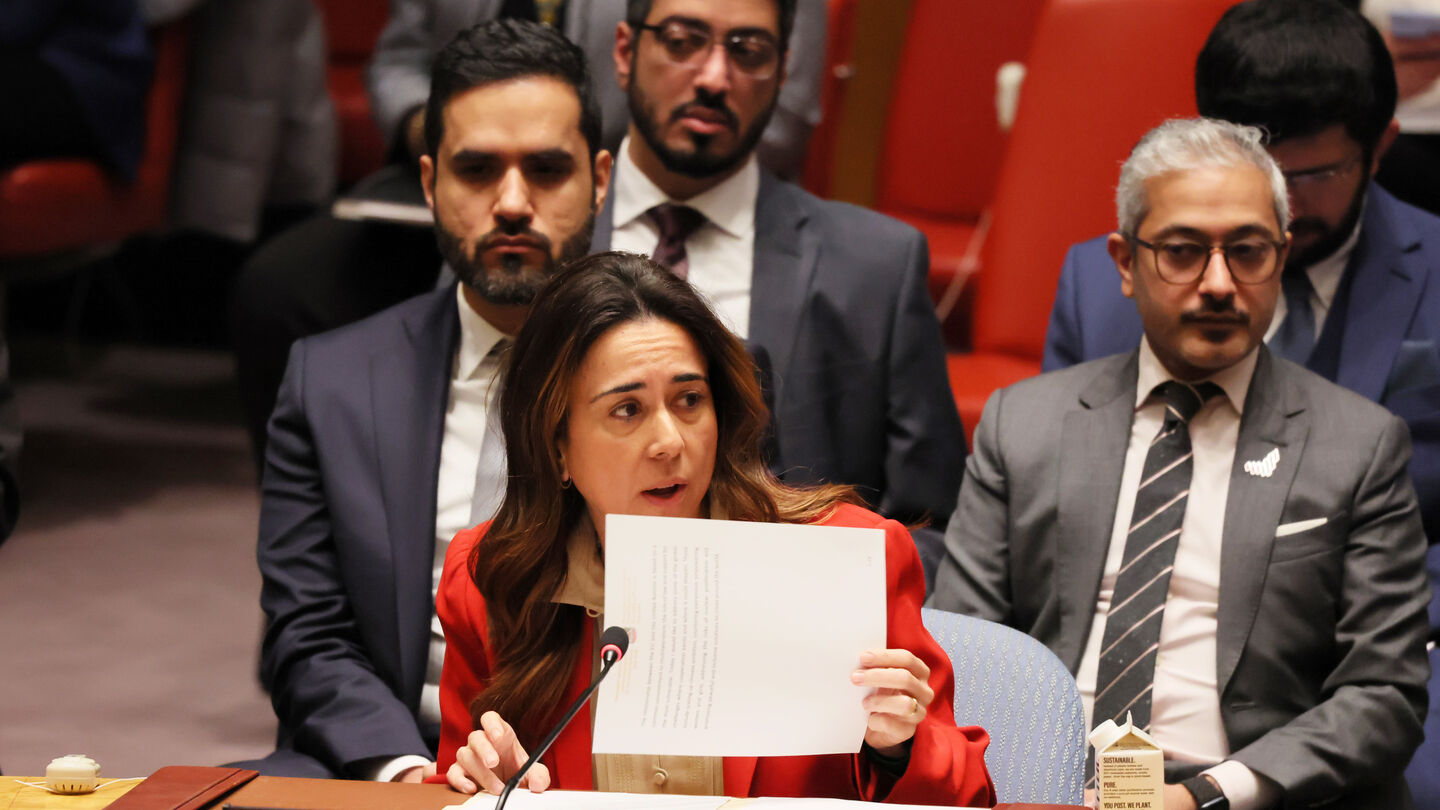
UAE nominates Lana Nusseibeh for UN secretary-general: What to know
The UAE has nominated senior diplomat Lana Nusseibeh to succeed Antonio Guterres as UN secretary-general when his term ends on 31 December 2026. Nusseibeh served as the UAE’s permanent representative to the UN from 2013 to 2024 and currently holds a ministerial role in the foreign ministry. Her career includes work at UNESCO, policy planning in the UAE foreign ministry, assignments on Afghanistan and Pakistan, and senior positions within UN bodies. During her time in New York, she helped advance a Security Council mechanism for humanitarian aid into Gaza while also defending Abu Dhabi’s ties with Israel.
Nusseibeh’s background also carries symbolic weight. Her family has deep roots in Jerusalem, with relatives who have played prominent roles in Palestinian, Jordanian and UAE public life. She has taken public positions on several major regional issues, including warning that Israeli annexation of the West Bank would be a red line for the UAE, criticising Hezbollah’s role in Lebanon, and rejecting allegations that the UAE has armed Sudan’s Rapid Support Forces. Her nomination therefore brings a candidate with extensive Middle East experience into a race increasingly shaped by questions of regional representation, gender and the future direction of the UN.
The contest remains highly competitive. There is strong expectation that the next secretary-general could come from Latin America or the Caribbean, while five of the eight candidates are women. Rebeca Grynspan of Costa Rica, Guyana’s Carolyn Rodrigues-Birkett and IAEA chief Rafael Grossi are among the leading contenders in early Security Council straw polls. Any successful candidate must ultimately secure the backing of the Security Council, where the five permanent members hold veto power, before being recommended to the General Assembly.
The Muslim World Telegram
https://t.me/tmw_media
❤1
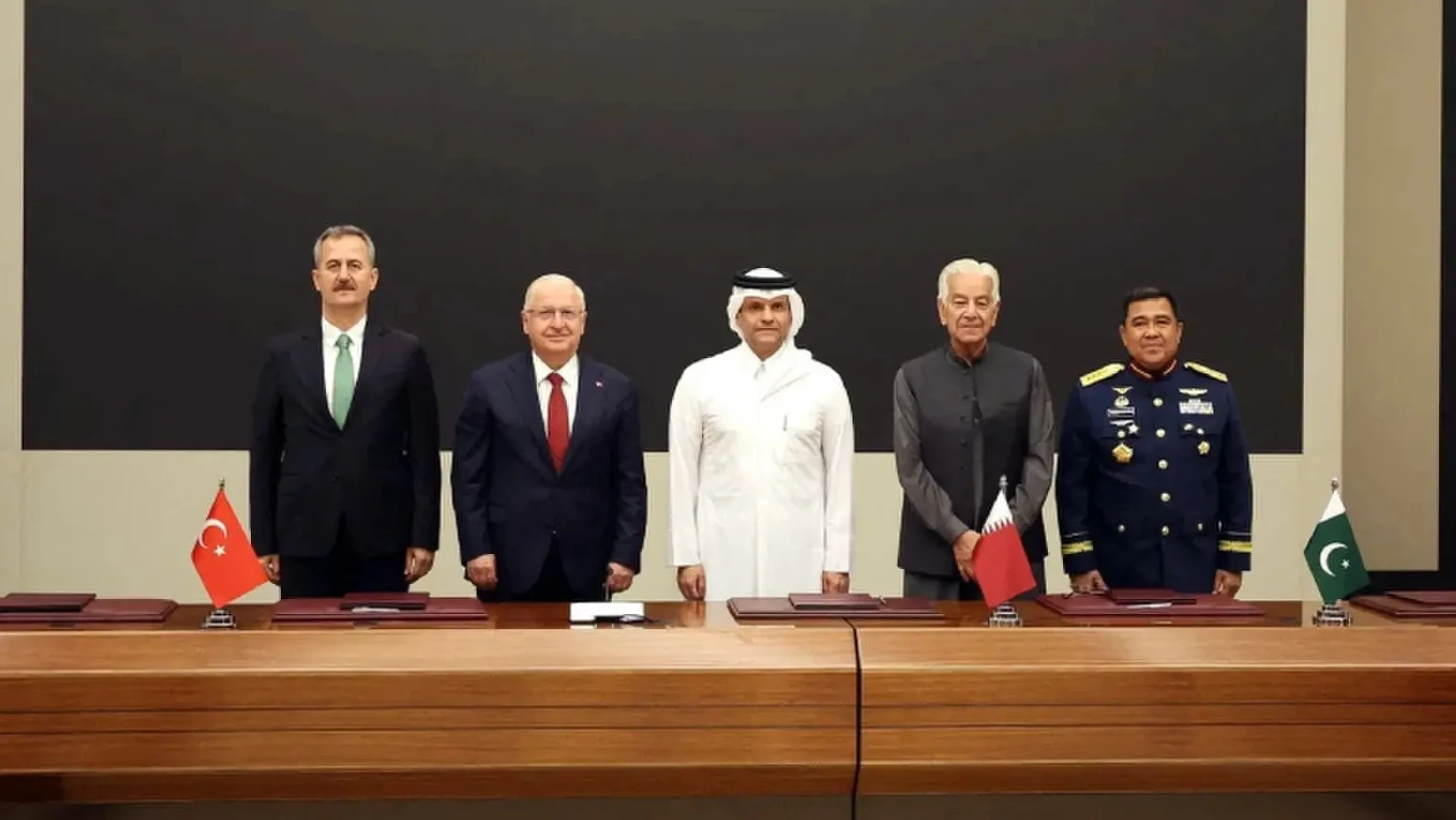
Turkiye, Qatar, Pakistan, Indonesia sign ‘Badr’ pact on military cooperation
Turkiye, Qatar, Pakistan and Indonesia have signed the Badr Memorandum of Understanding, establishing a framework for joint weapons development, defence production, military training, research and exercises. The agreement is intended to combine the four countries’ different industrial capabilities, with joint production lines expected to be established largely in Turkiye and Qatar reportedly providing funding and technology. Affordable air-defence systems are expected to be a major priority, reflecting concerns exposed by the Iran war and attacks that placed Gulf air-defence networks under heavy pressure.
The agreement forms part of a wider regional push to develop security arrangements less dependent on the United States. Turkiye has already joined Pakistan and Saudi Arabia in the Mecca Joint Defense Agreement, which includes collective defence, intelligence sharing, technology transfers and joint arms production. Together, the Mecca and Badr agreements point towards deeper military-industrial cooperation between Turkiye, Gulf states and major Muslim countries such as Pakistan and Indonesia, particularly in air defence, weapons manufacturing and military technology.
The Muslim World Telegram
https://t.me/tmw_media
❤1🤝1
The Iran War Has Changed the World Forever
The US-Israeli war with Iran may ultimately reshape the Middle East in ways that undermine several of Washington’s original objectives. Gulf states are losing confidence that US protection alone can guarantee their security, Iran has shown that missiles, drones and disruption of the Strait of Hormuz can impose disproportionate economic and political costs, Israel is moving towards a strategy of permanent frontier warfare, and China is being forced to confront the limits of economic influence without military power. The result could be a region that is more militarised, more autonomous from Washington and considerably less stable.
Advanced defensive systems have performed well, but not well enough to preserve the old regional order. Even when most Iranian missiles and drones are intercepted, the small number that get through can disrupt aviation, energy, investment, tourism and shipping because Gulf economies depend heavily on perceptions of stability. This is pushing Saudi Arabia, the UAE, Qatar and others to acquire offensive missile and drone capabilities of their own. At the same time, Washington’s failed attempt at regime change may have reduced one of Tehran’s main restraints, giving Iran greater confidence that it can threaten Gulf states and interfere with Hormuz without necessarily provoking an existential US response.
Israel’s emerging “Roman frontiers” strategy seeks security through buffer zones and constant military action beyond its borders, but could impose major social, economic and diplomatic costs on Israel itself. China, meanwhile, has discovered that its huge commercial presence gives it little influence during major wars, potentially encouraging Beijing to develop greater military power in the Gulf. Iran could also emerge more closely aligned with Russia and China, more convinced of the value of nuclear weapons and more willing to use asymmetric pressure. Even if Iran suffers substantial military damage, the wider outcome could therefore be a more heavily armed, fragmented and dangerous regional order in which Iran remains highly influential.
The Muslim World Telegram
https://t.me/tmw_media

This media is not supported in your browser
VIEW IN TELEGRAM
Palestinian farmers are still being blocked from accessing their olive groves by Israeli settlers and the military during this year’s harvest in the occupied West Bank.
The Muslim World Telegram
https://t.me/tmw_media
The Muslim World Telegram
https://t.me/tmw_media
This media is not supported in your browser
VIEW IN TELEGRAM
Three years of suffering, and displaced families’ tents in Gaza are still flooding with every wave of rain.
Tents that offer no protection from the summer heat or winter cold, as families exhausted by war face yet another hardship, with no shelter to protect them and nowhere safe to turn.
The Muslim World Telegram
https://t.me/tmw_media
Tents that offer no protection from the summer heat or winter cold, as families exhausted by war face yet another hardship, with no shelter to protect them and nowhere safe to turn.
The Muslim World Telegram
https://t.me/tmw_media
💔1
Israel has shut down the Gaza borders which carries an impending danger on millions of people starving to death in the occupied territory.
Also, due to funding shortages, WFP is forced to reduce food assistance in Gaza by around one-third, meaning half a million people will lose access to critical aid. The cuts come as winter approaches and the recent modest improvements in food security remain fragile.
There are many ways for Israel to impose famine on Gaza. The traditional method is a siege. This is complemented by a campaign to destroy the international aid network that keeps Palestinians alive. Israel has blocked vital groups from operating in Gaza, while its allies cut funding to those still allowed to be there.
The Muslim World Telegram
https://t.me/tmw_media
❤2💔1