<b>Looking back: An ode to Super Mario</b>
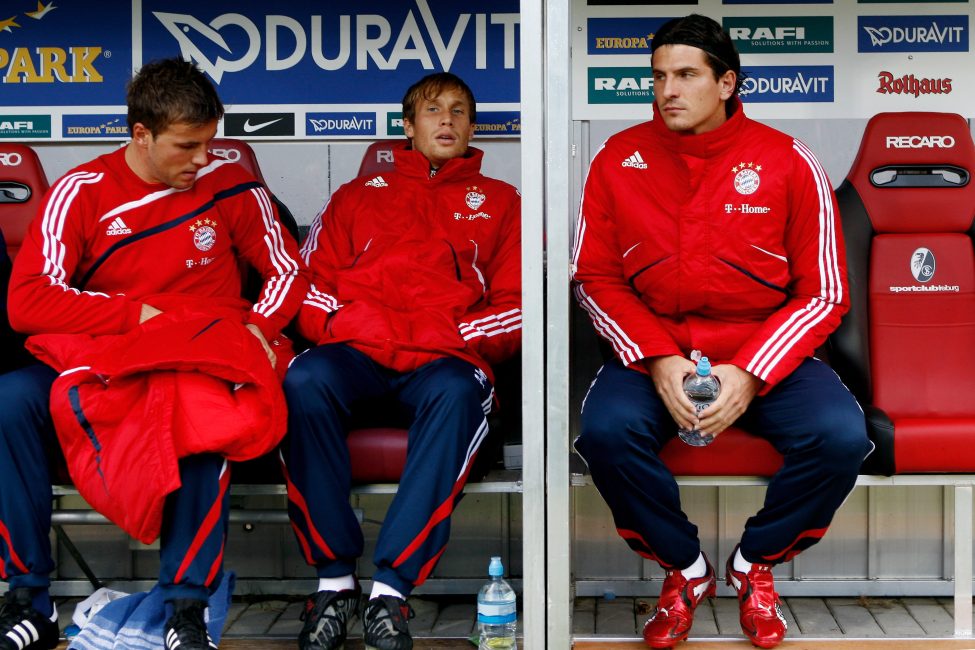
Within the last week two of Bayern’s finest strikers since the turn of the century announced their retirement: Mario Gómez and Claudio Pizarro. We wanted to pay these two greats one last tribute. In part one Daniel writes about one of Germany’s most underrated and falsely critiqued forwards.Everybody loves an underdog story and despite how well known his talents were, that’s exactly what Mario Gomez’ career had been.<a href="#problems-under-van-gaal"></a>Problems under van GaalAfter he burst on the scene with Stuttgart in 2003 he quickly attracted the interest of Bayern, and so they signed him in a rather strange transfer in 2009. Sure, the Klinsmann-disaster exposed many problems in the squad but the centre-forward position wasn’t really one of them. Obviously they had signed him just because of the good ol’ Uli Hoeneß strategy: If there was a quality German player, he was to play for Bayern. So despite Miroslav Klose and Luca Toni working well together, Bayern splashed the record-breaking fee of €30 million and signed Gómez in what the media would soon call the biggest transfer flop in Bayern’s history.<a href="https://miasanrot.com/wp-content/uploads/sites/2/2020/07/sc-freiburg-v-fc-bayern-muenchen-bundesliga-975x650.jpg">Media</a><strong>Mario Gómez in his main position in 2009: The bench.</strong>
(Photo by Alex Grimm/Bongarts/Getty Images)Louis van Gaal is a genius coach and Bayern must be eternally thankful for him changing their style of football, yet despite being a man of many talents, communication certainly wasn’t one of them. When things became dicey and questions arose why certain signings didn’t perform, he was quick to shift the blame: You see, they weren’t all <em>his</em> signings, the club signed Tymoshuck and Gómez <em>before</em> he came, so <em>he</em> had nothing to do with it.Such a public statement usually spells doom for any player and indeed the season was disastrous for Gómez. He started the campaign expecting to be Bayern’s first choice striker and ended it as their third. And whereas many of his teammates managed to turn the season around with a spectacular World Cup, that tournament was a disaster for him, too.<a href="#resurrection-against-hannover"></a>Resurrection against HannoverGómez was looking for a way out, for a fresh start. He wanted to join Liverpool and when everything seemed done and dusted, his time at Bayern appeared to come to a close before it had even started. Or so everybody thought, but Uli Hoeneß and Karl-Heinz Rummenigge firmly overrode his transfer request. Both being former strikers themselves, they knew something about forwards and still saw something in Gómez.So the 2010/11 season started right where the previous one had left off. With weeks going by and Gómez simply watching Olić from the comfort of the bench. Then fate intervened. With both Olić and Klose injured, van Gaal was forced to begrudgingly start his unwanted number three and, as the saying goes, the rest was history. To call his performances from this point on an explosion would still be an understatement. To this day I sometimes look up that fateful game against Hannover and remember how happy I was for him scoring that career-turning hattrick. Gómez didn’t score once in the first seven games of the season and ended up with the absurd goal tally of 28. Had he scored at that rate in all 34 games that season, Lewandowski might’ve been chasing Gómez, not Gerd Müller this season. All the talk of not fitting in with Bayern, only being a counter-attacking footballer, van Gaal hating him, all of that went quiet. Naturally, the bosses were beaming with contentment, reminding everybody what a great decision it was to veto that Liverpool move.<a href="#humility-amidst-constant-underappreciation"></a>Humility amidst constant underappreciationFor two seasons straight Gómez scored left and right. In the league, in the cup, in the Champions League. All the while just showing…