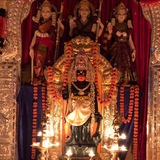
Bhadharachalam , srirama Parihar radhotsavam . Those who see srirama during radhotsavam in Bhadrachalam such devotees will attain mukthi .
Bhadrachalam kshetra Mahatyam as written by sage Vyasa
Bhadrachalam kshetra Mahatyam as written by sage Vyasa
శ్రీ రామ రక్షా స్తోత్రం
శ్రీరాముని ఎన్నో రకాలుగా స్తుతిస్తాము. ఈ స్తోత్రాలన్నింటిలో రామరక్షా స్తోత్రానికి ఒక ప్రత్యేక స్థానం కలదు. ఈ రామ రక్షా స్తోత్రాన్ని బుధ కౌశిక ముని రచించారు. ఈ స్తోత్రంలో 38 శ్లోకాలు ఉన్నాయి. శ్రీరాముని మనసారా భక్తి యుక్తులతో ధ్యానించి పూజించేవారు, తమకు రక్షణ నివ్వమని కోరుకునే ఈ స్తోత్రం మనస్ఫూర్తిగా నమ్మి పఠించినవారు, ఆ శ్రీరాముని కృపకు పాత్రులవుతారు.
రామరక్షా స్తోత్ర జపం భక్తి శ్రద్ధలతో చేసిన వారికి పాపాలు నశించడమే గాక, శరణాగతి వేడుకొన్న వారికి శ్రీరామ రక్ష ఎల్లవేళలా వెన్నంటి ఉంటుంది. ఈ స్తోత్రం చేసిన వారికి మానసిక ప్రశాంతత, జీవితంలో సుఖశాంతులు మరియు సంతోషము కలుగుననుటలో ఏమాత్రము సందేహము లేదు.
మానవ జీవితంలోని ఎన్నో సమస్యలను అధిగమించడానికి తగు ఆత్మస్థైర్యాన్ని ప్రసాదించే అత్యంత సులువైన భక్తి మార్గం రామరక్షా స్తోత్రం. ఎవరికైతే సమస్యలను అధిగమించాలనే సంకల్పం కలుగుతుందో, వారు నిత్యం అత్యంత భక్తి శ్రద్ధలతో పదకొండు సార్లు ఈ రామరక్షా స్తోత్ర పారాయణ చేయాలి.
నిరుద్యోగులు, శత్రుభయం కలిగినవారు, అనారోగ్య సమస్యలతో బాధ పడుతున్నవారు, కోర్టు వ్యాజ్యాలు నడుస్తున్నవారు, ఏదైనా ఉద్యోగ లేదా వ్యాపార పరమైన సమస్యలలో చిక్కుకుని సతమతమవుతున్నవారు, మానసిక ఒత్తిడులకు గురవుతున్నవారు ఇలా ఒకటేమిటి జీవితంలో ఇబ్బంది పడే ఎటువంటి సమస్యనుండైనా బయటపడాలంటే సంపూర్ణమైన భక్తి విశ్వాసాలతో ఈ రామరక్షా స్తోత్ర పారాయణ చేసి, రాముని శరణు వేడితే తప్పక బయట పడి జీవితము సాఫల్యత వెంపు నడుచుటకు తగు మార్గము కనపడుతుంది.
అస్య శ్రీరామరక్షాస్తోత్రమంత్రస్య | బుధకౌశిక ఋషిః | శ్రీసీతారామచంద్రో దేవతా | అనుష్టుప్ ఛందః | సీతా శక్తిః | శ్రీమద్ హనుమాన కీలకమ్ | శ్రీరామచంద్రప్రీత్యర్థే రామరక్షాస్తోత్రజపే వినియోగః ||
ధ్యానమ్-
ధ్యాయేదాజానుబాహుం ధృతశరధనుషం బద్ధపద్మాసనస్థమ్
పీతం వాసో వసానం నవకమలదళస్పర్ధినేత్రం ప్రసన్నమ్ |
వామాంకారూఢ సీతాముఖకమలమిలల్లోచనం నీరదాభమ్
నానాలంకారదీప్తం దధతమురుజటామండలం రామచంద్రమ్ ||
స్తోత్రం-
చరితం రఘునాథస్య శతకోటి ప్రవిస్తరమ్ |
ఏకైకమక్షరం పుంసాం మహాపాతకనాశనమ్ || ౧ ||
ధ్యాత్వా నీలోత్పలశ్యామం రామం రాజీవలోచనమ్ |
జానకీలక్ష్మణోపేతం జటామకుటమండితమ్ || ౨ ||
సాసితూణధనుర్బాణపాణిం నక్తంచరాంతకమ్ |
స్వలీలయా జగత్రాతుం ఆవిర్భూతం అజం విభుమ్ || ౩ ||
రామరక్షాం పఠేత్ప్రాజ్ఞః పాపఘ్నీం సర్వకామదామ్ |
శిరో మే రాఘవః పాతు ఫాలం దశరథాత్మజః || ౪ ||
కౌసల్యేయో దృశౌ పాతు విశ్వామిత్రప్రియః శ్రుతీ |
ఘ్రాణం పాతు మఖత్రాతా ముఖం సౌమిత్రివత్సలః || ౫ ||
జిహ్వాం విద్యానిధిః పాతు కంఠం భరతవందితః |
స్కంధౌ దివ్యాయుధః పాతు భుజౌ భగ్నేశకార్ముకః || ౬ ||
కరౌ సీతాపతిః పాతు హృదయం జామదగ్న్యజిత్ |
మధ్యం పాతు ఖరధ్వంసీ నాభిం జాంబవదాశ్రయః || ౭ ||
సుగ్రీవేశః కటీ పాతు సక్థినీ హనుమత్ప్రభుః |
ఊరూ రఘూత్తమః పాతు రక్షఃకులవినాశకృత్ || ౮ ||
జానునీ సేతుకృత్పాతు జంఘే దశముఖాంతకః |
పాదౌ విభీషణశ్రీదః పాతు రామోఖిలం వపుః || ౯ ||
ఏతాం రామబలోపేతాం రక్షాం యః సుకృతీ పఠేత్ |
స చిరాయుః సుఖీ పుత్రీ విజయీ వినయీ భవేత్ || ౧౦ ||
పాతాళభూతలవ్యోమచారిణశ్ఛద్మచారిణః |
న ద్రష్టుమపి శక్తాస్తే రక్షితం రామనామభిః || ౧౧ ||
రామేతి రామభద్రేతి రామచంద్రేతి వా స్మరన్ |
నరో న లిప్యతే పాపైః భుక్తిం ముక్తిం చ విందతి || ౧౨ ||
జగజ్జైత్రైకమంత్రేణ రామనామ్నాభిరక్షితమ్ |
యః కంఠే ధారయేత్తస్య కరస్థాః సర్వసిద్ధయః || ౧౩ ||
వజ్రపంజరనామేదం యో రామకవచం స్మరేత్ |
అవ్యాహతాజ్ఞః సర్వత్ర లభతే జయమంగళమ్ || ౧౪ ||
ఆదిష్టవాన్యథా స్వప్నే రామరక్షాంమిమాం హరః |
తథా లిఖితవాన్ప్రాతః ప్రభుద్ధో బుధకౌశికః || ౧౫ ||
ఆరామః కల్పవృక్షాణాం విరామః సకలాపదామ్ |
అభిరామస్త్రిలోకానాం రామః శ్రీమాన్ స నః ప్రభుః || ౧౬ ||
తరుణౌ రూపసంపన్నౌ సుకుమారౌ మహాబలౌ |
పుండరీక విశాలాక్షౌ చీరకృష్ణాజినాంబరౌ || ౧౭ ||
ఫలమూలాశినౌ దాంతౌ తాపసౌ బ్రహ్మచారిణౌ |
పుత్రౌ దశరథస్యైతౌ భ్రాతరౌ రామలక్ష్మణౌ || ౧౮ ||
శరణ్యౌ సర్వసత్త్వానాం శ్రేష్ఠౌ సర్వధనుష్మతామ్ |
రక్షః కులనిహంతారౌ త్రాయేతాం నో రఘూత్తమౌ || ౧౯ ||
ఆత్తసజ్యధనుషావిషుస్పృశావక్షయాశుగనిషంగసంగినౌ |
రక్షణాయ మమ రామలక్ష్మణావగ్రతః పథి సదైవ గచ్ఛతామ్ || ౨౦ ||
సన్నద్ధః కవచీ ఖడ్గీ చాపబాణధరో యువా |
గచ్ఛన్మనోరథోస్మాకం రామః పాతు సలక్ష్మణః || ౨౧ ||
రామో దాశరథిః శూరో లక్ష్మణానుచరో బలీ |
కాకుత్థ్సః పురుషః పూర్ణః కౌసల్యేయో రఘూత్తమః || ౨౨ ||
వేదాంతవేద్యో యజ్ఞేశః పురాణపురుషోత్తమః |
జానకీవల్లభః శ్రీమాన్ అప్రమేయ పరాక్రమః || ౨౩ ||
ఇత్యేతాని జపన్నిత్యం మద్భక్తః శ్రద్ధయాన్వితః |
అశ్వమేధాధికం పుణ్యం సంప్రాప్నోతి న సంశయః || ౨౪ ||
రామం దుర్వాదలశ్యామం పద్మాక్షం పీతవాససమ్ |
స్తువంతి నామభిర్దివ్యైః న తే సంసారిణో నరః || ౨౫ ||
రామం లక్ష్మణపూర్వజం రఘువరం సీతాపతిం సుందరమ్ |
కాకుత్థ్సం కరుణార్ణవం గుణనిధిం విప్రప్రియం ధార్మికమ్ |
రాజేంద్రం సత్యసంధం దశరథతనయం శ్యామలం శాంతమూర్తిమ్ |
వందే లోకాభిరామం రఘుకులతిలకం రాఘవం రావణారిమ్ || ౨౬ ||
రామాయ రామభద్రాయ రామచంద్రాయ వేధసే |
రఘునాథాయ నాథాయ సీతాయాః పతయే నమః || ౨౭ ||
శ్రీరామ రామ రఘునందన రామ రామ |
శ్రీరామ రామ భరతాగ్రజ రామ రామ |
శ్రీరామ రామ రణకర్కశ రామ రామ |
శ్రీరామ రామ శరణం భవ రామ రామ || ౨౮ ||
శ్రీరామచంద్రచరణౌ మనసా స్మరామి |
శ్రీరామచంద్రచరణౌ వచసా గృణామి |
శ్రీరామచంద్రచరణౌ శిరసా నమామి |
శ్రీరామచంద్రచరణౌ శరణం ప్రపద్యే || ౨౯ ||
మాతా రామో మత్పితా రామచంద్రః |
స్వామీ రామో మత్సఖా రామచంద్రః |
సర్వస్వం మే రామచంద్రో దయాళుః |
నాన్యం జానే నైవ జానే న జానే || ౩౦ ||
దక్షిణే లక్ష్మణో యస్య వామే తు జనకాత్మజా |
పురతో మారుతిర్యస్య తం వందే రఘునందనమ్ || ౩౧ ||
లోకాభిరామం రణరంగధీరం రాజీవనేత్రం రఘువంశనాథమ్ |
కారుణ్యరూపం కరుణాకరం తం శ్రీరామచంద్రం శరణం ప్రపద్యే || ౩౨ ||
మనోజవం మారుతతుల్యవేగం జితేంద్రియం బుద్ధిమతాం వరిష్ఠమ్ |
వాతాత్మజం వానరయూథముఖ్యం శ్రీరామదూతం శరణం ప్రపద్యే || ౩౩ ||
కూజంతం రామ రామేతి మధురం మధురాక్షరమ్ |
ఆరుహ్య కవితాశాఖాం వందే వాల్మీకికోకిలమ్ || ౩౪ ||
ఆపదామపహర్తారం దాతారం సర్వసంపదామ్ |
లోకాభిరామం శ్రీరామం భూయో భూయో నమామ్యహమ్ || ౩౫ ||
భర్జనం భవబీజానామర్జనం సుఖసంపదామ్ |
తర్జనం యమదూతానాం రామ రామేతి గర్జనమ్ || ౩౬ ||
రామో రాజమణిః సదా విజయతే రామం రమేశం భజే |
రామేణాభిహతా నిశాచరచమూ రామాయ తస్మై నమః |
రామాన్నాస్తి పరాయణం పరతరం రామస్య దాసోస్మ్యహమ్ |
రామే చిత్తలయః సదా భవతు మే భో రామ మాముద్ధర || ౩౭ ||
శ్రీ రామ రామేతి రామేతి రమే రామే మనోరమే |
సహస్రనామ తత్తుల్యం రామనామ వరాననే || ౩౮ ||
Jaisrirama
As a part of Hanuman Jayanthi celebration and Srirama Koti Chalisa Koti , we will be doing 108 times hanuman chalisa Parayana at Karya siddhi hanuman temple . All devotees are welcome to join from 10 am onwards on Sunday 21st April 2019 . The regular Parayana will coincide with this program . 10 am to 1830 pm .
Jai Hanuman
Śrī Rāma Karṇāmṛtam
Prathamāśvāsam
Ślōka 94
sakalabhuvana ratnam sarvaśāstrārtha ratnam
samaravijaya ratnam saccidānanda ratnam|
daśamukhahara ratnam dānavārāti ratnam
raghukula nṛparatnam pātu mām rāmaratnam||
Rough translation:
i pray to the precious gem ramachandra to protect me, who is the supreme gem of all the worlds, who is the gem like essence of all the scriptures, who is the gem that conquers any battle, who is the gem that is the embodiment of truth, wisdom and bliss, who is the gem that destroyed ravana and other demons, and is the superior gem amongst the raghu clan.
'ॐ శ్రీరామకర్ణామృతము
ప్రథమాశ్వాసము
శ్లోకము 94
సకలభువనరత్నం సర్వశాస్త్రార్థరత్నం
సమరవిజయరత్నం సచ్చిదానందరత్మమ్ I
దశముఖహరరత్నం దానవారాతిరత్నం
రఘుకులనృపరత్నం పాతు మాం రామరత్నమ్ ॥
తాత్పర్యం:
సమస్తలోకశ్రేష్ఠుడైనట్టి,
సమస్తశాస్త్రములలో శ్రేష్ఠుడైనట్టి,
యుద్ధజయముచేత శ్రేష్ఠుడైనట్టి,
సత్యజ్ఞానానందములచే శ్రేష్ఠుడైనట్టి,
రావణుని సంహరించుటచేత శ్రేష్ఠుడైనట్టి,
రాక్షసవిరోధిశ్రేష్ఠుడైనట్టి,
రఘువంశరాజులలో శ్రేష్ఠుడైనట్టి
శ్రీరామమూర్తి అనే రత్నము నన్ను రక్షించుగాక!
From sheetal shah :
Last night, I had the opportunity to attend an amazing talk by Swami Swaroopananda of the Chinmaya Mission. Swamiji has a lovely way of seamlessly integrating various stories into his talk as he makes his point. His talk was entitled “Success without Stress,” and he based it on specific parts of the Hanuman Chalisa. For those who are unfamiliar, Hanuman is one of the most popular figures in the Hindu epic Ramayana, and he is forever beloved by children and adults for his youthful antics and energy. The Hanuman Chalisa extols the glories of Hanuman in his selfless service to Lord Ram.
Ashta Siddhi Divine
BrahmandaSwamiji began his discussion by explaining to us the eight siddhis (ashta siddhi) that are mentioned in Patajanli’s Yoga Sutras and can be obtained by very few through countless years of practice and devotion to all eight limbs of Ashtanga Yoga. Siddhi can loosely be translated as accomplishment or a special power or unusual skill. The eight siddhis Swamiji described are:
Anima: Reducing one’s physical self to the size of an atom
Mahima: Growing one’s physical self to incredibly large size
Garima: Making one’s physical self so heavy as immovable by others
Laghima: Becoming almost weightless
Prapti: Being able to go/travel wherever one wants
Prakamya: Being able to obtain whatever one wants
Istva: Possessing lordship
Vastva: Being able to control the minds of others
Hanuman not only possessed all eight siddhis, but was also blessed by Sita as “Ashta Siddhi Nau Nidhi Ke Daata,” or one who can bestow astha siddhi upon others. When Hanuman first reaches to Lanka on his mission to find Sita, he makes use of anima so as to be discrete in enemy territory. He uses it again when he approaches Sita for the first time – reducing his size to that of a schoolboy, so as not to scare her. He uses mahima to outwit and overpower demons. He uses garima to show his power when Ravana, the demon king, temporarily captures him and brings him to the main court of palace. Not even the mighty Ravana could lift Hanuman’s tail.
The stories of Hanuman are many, and Swamiji could have continued on. But instead, he told us that these eight siddhis are the key to success without stress in our life. We just needed to extrapolate the meaning:
Anima: Reduce the ego and be humble in front of elders, parents, teachers, and gurus.
Mahima: Think big, and aim for large goals.
Garima: Be immovable and unshakeable in values and principles.
Laghima: Don’t take everything in life too seriously. Have some lightness and laughter in life. To that end, I should note that Swamiji provided us quite a bit of laughter with his amusing anecdotes.
Prapti: Focus mental energies on achieving the goal.
Prakamya: Always speak the truth, and don’t be afraid to express aims and goals. Swamiji gave a beautiful example to explain his point. Most people say what they want to achieve and immediately follow it with “touch wood,” because they fear by saying it out loud, it won’t come true. Yet, when those same people approach a Swami, their entire view shifts. They suddenly believe if the Swami says it will happen, then it actually will.
Ashta-SiddhiHinduism is replete with stories of great sages and rishis whose utterances – curses and blessings – would come true. Swamiji’s point was that while the same may not be true for us, we should still strive to be like these great rishis by always speaking the truth and having a “can do” attitude in life. Istva and Vastva: Swamiji combined the last two siddhis and focused on the power of leadership, respect, and love – all of which go hand in hand. A true leader inspires others. And that inspiration causes people to follow and be loyal to that leader (istva). And finally, with respect to vastva, Swamiji said that if a person truly loves you, there isn’t anything he won’t do for you.
In a short 90 minutes, Swamiji beautifully explained some key principles to being successful in life. He also made it a point to explain that success should not be measured in terms of wealth. Money is necessary for sustenance and “even for God’s work…temples just don’t build themselves!” But wealth that is obtained through dishonest means causes destruction of the person and those around him. And when one acquires wealth, he shouldn’t horde it. It should be used to benefit society.
Hindus pay homage to wealth in the form of Goddess Laxmi, the consort of Lord Vishnu. And Laxmi comes and goes as She pleases. The only place She always remains is at the side of Vishnu. In the Ramayana, Swamiji explained, Ravana captures Sita, the avatar of Laxmi, for himself only. His greed and lust for Sita leads to the destruction of his kingdom and family, and his ultimate demise. On the other hand, Hanuman comes to find Sita in the name of Lord Ram, the avatar of Vishnu. And he is rewarded with Sita’s blessings – not wealth, which is of no importance to him, but the promise that he will always be in service of and near to Ram.
~ Sheetal Shah
How Rāma is called by each one
1. Dasharatha calls RĀMA
2. Kausalya calls RĀMABHADRA
3. Kaikeyi calls RĀMACHANDRA
4. Vasishta calls VEDADE
5. Rishis call RAGHUNĀTHA
6. Sita calls NĀTHA
7. People of Ayodhya call SEETHAPATHI
This is how we got this shloka -
Rāmāya, Rāmabhadraya, Rāmachandrāya, Vēdase.
Raghunāthaya, Nāthāya, Seethāyah pathaye namaha.
Śrī Rāma Karṇāmṛtam
Prathamāśvāsam
Ślōka 95
mātuḥ pārśvē carantam maṇimayaśayanē manjubhūṣāncitāngam
mandam mandam pibantam mukuḷitanayanam stanya manyastanāgram|
anguḷyagraiḥ spṛśantam sukhaparavaśayā sasmitālingitāngam
gāḍham gāḍham jananyā kalayatu hṛdayam māmakam rāmabālam||
Rough translation:
i pray to the child rama, whose delicate tender body is adorned with beautiful ornaments, who is lying beside his mother on a jewel studded bed, with his eyes closed in happiness and suckling milk from his mother, with one hand embracing her and the other touching her bosom with the tips of his fingers;
i pray to such a form of lord rama who is hugging his mother in a tight embrace to remain in my heart always.
'ॐ శ్రీరామకర్ణామృతము
ప్రథమాశ్వాసము
శ్లోకము 95
మాతుః పార్శ్వే చరంతం మణిమయశయనే మంజుభూషాంచితాంగం
మందం మందం పిబంతం ముకుళితనయనం స్తన్య మన్యస్తనాగ్రమ్ I
అంగుళ్యగ్రైః స్పృశంతం సుఖపరవశయా సస్మితాలింగితాంగం
గాఢం గాఢం జనన్యా కలయతు హృదయం మామకం రామబాలమ్ ॥
తాత్పర్యం:
తల్లిప్రక్కన నుండి
రత్నఖచిత శయ్యయందు పరుండి,
సొగసైన నగలచేత అలంకరించబడిన దేహము కలిగినట్టి,
కన్నులు మూసుకొని మెల్లమెల్లగా పాలుత్రాగుచు,రెండవస్తనాగ్రము వ్రేళ్ళచే పట్టికొనుచు,
సుఖవశుడై,
చిఱునవ్వుతో గట్టిగాఁ తల్లిని కౌగిలించుకొనియున్నట్టి రాముని
నా హృదయము ధ్యానించుగాక!
Srirama Rahasya Upanishad
[This great Upanishad is in Atharvana Veda and is the authoritative source of Lord Rama’s worship methods.]
Om ! O Devas, may we hear with our ears what is auspicious;
May we see with our eyes what is auspicious, O ye worthy of worship !
May we enjoy the term of life allotted by the Devas,
Praising them with our body and limbs steady !
May the glorious Indra bless us !
May the all-knowing Sun bless us !
May Garuda, the thunderbolt for evil, bless us
May Brihaspati grant us well-being !
Om ! Let there be Peace in me !
Let there be Peace in my environment !
Let there be Peace in the forces that act on me !
I salute that Lord Rama, who is the personification of salvation, who is a great king, who is a great man and who destroys all his enemies.
1-2. Great sages like Mudgala, Sandilya, Paingala, Bikshu, Sanaka and Prahlada approached Lord Hanuman, who was a great devotee of Vishnu and asked him,
3-4. “Which is the greatest principle among the four Veda-s, 18 purana-s, 18 Smriti-s, Sastra-s, all knowledge and among the great powers ruled by the Sun and moon?”
5-6. He replied, “Hey, great sages and devotees of Lord Vishnu! Please hear my words which cut of all attachments, the greatest principle among these is the principle of Brahma Taraka (OM). Rama is Para-Brahma and supreme austerity, and Rama is the Supreme Essence and Brahma Taraka.”
Rama is Para-Brahma and supreme austerity, and Rama is the Supreme Essence and Brahma Taraka.”
7. They all again asked, Lord Hanuman,”Please tell us the angas (aspects) of Lord Rama.”
Lord Hanuman told, “Please understand that Lord Ganesha, Goddess Saraswati, Goddess Durga, all the Kshetra Palaka-s, Sun, Moon, Lord Narayana, Lord Narasimha, Lord Vasudeva, Lord Varaha, Lord Lakshmana, Shatrughna, Bharata,
Vibheeshana, Sugreeva, Angada, Jambavanta and Pranava are the angas of Lord Rama. Without these angas, Lord Rama will not remove all roadblocks.
They again asked, “How will Brahmins and householders get the capacity to recite Pranava?” He said, “All People (even if they are not eligible to chant “Om”,) who chant the six letter mantra would get the capacity to meditate on Pranava. Those who chant silently the mantra of Rama would get the same effect as repeating the letter “Om”. After the name of Rishi,
Devata , japa of the Rama mantra would give the same effect as repetition of Pranava and further he explained that Rama Himself has said that pranava is a part of Rama mantra.
On another occasion answering Vibheeshana’s question “How can your angas be made easy to worship? Please tell me an easy way.”
Rama replied, “The japa of my name “Rama” removes all sins. Suppose some one is meditating on my six lettered mantra or reads my Gita or thinks of me with devotional fervor, he would get the same effect. He would get rid of the five viz. killing of father, killing of mother, killing of brothers, killing of teachers, killing of husband or even other well-known great sins, if one repeats my six lettered mantra ten million times. He also would get the immortal and ever lasting bliss.
Vibheeshana again asked him, “What would be the way for people who are not capable of doing It.?”
Rama replied “they can either read my Gita, my thousand names or meditate on my Viswa Roopa or my 108 names, or repeat my name 100 times, or read the king of stotras written by sage Narada, or read the great prayer called mantra raja stavam written by Hanuman, or read the prayer to Sita or daily pray to me by reciting my name; they will doubtless attain Me.”
Śrī Rāma Karṇāmṛtam
Prathamāśvāsam
Ślōka 96
rāmābhirāmam nayanābhirāmam
vācābhirāmam vadanābhirāmam|
sarvābhirāmam ca sadābhirāmam
vandē sadā dāśarathim ca rāmam||
Rough translation:
i always pray to the son of dasaratha lord rama, whose beauty is delightful, who is a delight to the eyes, whose speech is delightful, whose face is delightful and who is a delight to all.
'ॐ శ్రీరామకర్ణామృతము
ప్రథమాశ్వాసము
శ్లోకము 96
రామాభిరామం నయనాభిరామం, వాచాభిరామం వదనాభిరామం I
సర్వాభిరామం చ సదాభిరామం,
వందే సదా దాశరథిం చ రామమ్ ॥
తాత్పర్యం:
సుందరులలో సుందరుడైనట్టి,
నేత్రములకు మనోహరుడైనట్టి,
వాక్యముచే నింపుగా ఉండునట్టి,
సుఖముచేత సుందరుడైనట్టి,
అందఱికి ఇంపైనట్టి,
ఎల్లప్పుడు ఇంపైనట్టి,
దశరథపుత్రుడైనట్టి
శ్రీరామునికి నమస్కరిస్తున్నాను.
Jai srirama
Please plan to join for 108 times Hanuman chalisa chanting tomorrow starting 10am in Karya Siddhi Hanuman temple, Frisco 🙏🙏🙏
Jai hanuman
Please plan to join for 108 times Hanuman chalisa chanting tomorrow starting 10am in Karya Siddhi Hanuman temple, Frisco 🙏🙏🙏
Jai hanuman
This media is not supported in your browser
VIEW IN TELEGRAM
Jai Hanuman ... hanuman chalisa 108 times @karya siddhi hanuman temple today ...
Jai Hanuman! There is no regular 5pm to 6:30pm Hanuman chalisa today as we just concluded 108 times parayana.
Śrī Rāma Karṇāmṛtam
Prathamāśvāsam
Ślōka 97
jayajaya raghurāma śrīmukhāmbhōjabhānō
jayajaya raghuvīra śrīmadambhōjanētra|
jayajaya raghunātha śrīkarābhyarcitānghrai
jayajaya raghuvarya śrīśa kāruṇyasindhō||
Rough translation :
praise to raghurama who is like the sun to the lotus face of lakshmi, praise to the supreme of raghu clan whose eyes are like precious lotuses, praise to raghunatha whose feet are worshipped by lakshmi, praise to the best of raghu clan who possess lakshmi and is an ocean of mercy.
'ॐ శ్రీరామకర్ణామృతము
ప్రథమాశ్వాసము
శ్లోకము 97
జయజయ రఘురామ శ్రీముఖాంభోజభానో
జయజయ రఘువీర శ్రీమదంభోజనేత్ర I
జయజయ రఘునాథ శ్రీకరాభ్యర్చితాంఘ్రే
జయజయ రఘువర్య శ్రీశ కారుణ్యసింధో ॥
తాత్పర్యం:
లక్ష్మియొక్క (సీతయొక్క) ముఖపద్మమునకు సూర్యుడవైన రఘురామా! సర్వోత్కృష్టుడవై యుండుము.
శోభగల పద్మములవంటి నేత్రములుగల ఓ రఘువీరా! సర్వోత్కృష్టుడ వగుము.
లక్ష్మి(సీత)యొక్క హస్తములచే పూజింపబడు పాదములుగల ఓ రఘునాథా! సర్వోత్కృష్టుడ వగుము.
లక్ష్మికి (సీతకు) అధిపతివైన దయాసముద్రుడవైన ఓ రఘువరా! సర్వోత్కృష్టుడ వగుము.
Srirama Rahasya Upanishad
Second Chapter
The great sages led by Sanaka asked Hanuman again, “Please tell us the mantra for meditating (or worshipping) the Taraka Brahma Rama.”
Hanuman replied:
1. That king of mantras is the Ekakshara (one-syllabled) which is the store house of fire, which is Lord Vishnu who is lying down and which is Lord Shiva who adorned with the crescent moon.
2. Its sage is Brahma, meter is Gayatri, Deity is Lord Rama, its anga is waxing half-Moon and its mind is the soul of fire,
3. Its root is the Beeja Shakti and it has to be chanted for fulfillment of desires.
The prayer (dhyana sloka) for the mantra is:-]
He who sits on the lotus flower on the shores of river Sarayu,