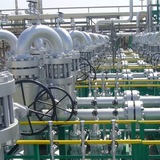
Control Valve 🔄
A control valve regulates fluid flow, pressure, or temperature in a system. #ControlValves #ProcessControl
Key features:
1. Precise control
2. Adjustable flow rates
3. Various types (globe, butterfly, ball)
Industries that use control valves:
1. Oil and gas ⛽️ #OilAndGas
2. Chemical processing ⚗️ #ChemicalProcessing
3. Power generation ⚡️ #PowerGeneration
4. Water treatment 💧 #WaterTreatment
5. HVAC systems ❄️ #HVAC
Benefits:
1. Improved process efficiency ⏱️ #ProcessEfficiency
2. Enhanced safety 🚨 #SafetyFirst
3. Reduced variability 📊 #QualityControl
Control valves play a crucial role in maintaining optimal process conditions. #ControlValves #IndustrialAutomation
Non-Destructive Testing (NDT) Method Applications🔥
Non-Destructive Testing (NDT) is a vital technique used to evaluate the properties and integrity of welds, materials, components, or systems without causing any damage. It plays a crucial role in maintaining safety, quality, and reliability across many industries.
🔍 NDT Types Based on Techniques:
-Ultrasonic Testing (UT)
-Radiographic Testing (RT)
-Magnetic Particle Testing (MT)
-Dye Penetrant Testing (PT)
-Visual Testing (VT)
🚀 NDT Applications:
-Oil & Gas pipelines inspection for leak detection
-Aerospace industry for aircraft structural integrity
-Automotive manufacturing quality control
-Construction evaluation of bridges and buildings
-Power generation plant equipment maintenance
-Shipbuilding and marine hull inspections
-Railway track and wheel defect detection
-Manufacturing weld and material testing
-Nuclear industry reactor safety monitoring
🌟 Benefits of NDT:
-Detects defects early to ensure safety
-Saves costs by avoiding unnecessary repairs
-Maintains material integrity without damage
-Prevents downtime through early fault detection
-Supports regulatory compliance
-Enhances product quality and reliability
-Extends equipment and structure lifespan
-Enables continuous service monitoring
-Reduces environmental impact by minimizing waste
⚠️ Disadvantages & Challenges:
-Requires skilled and certified inspectors
-Limited access to complex or confined areas
-Some techniques limited by material type or depth
-Interpretation of results can be complex
-Equipment is costly and needs maintenance
-Environmental factors may affect accuracy
-Small or hidden defects can be missed
-Time-consuming for large or intricate parts
-Radiation safety concerns with some methods
-Difficult to automate fully
💡 Key Takeaways:
-NDT is essential for safety and quality assurance across industries.
-Choosing the right NDT technique depends on application, material, and environment.
-Skilled professionals and advanced equipment ensure accurate and reliable inspections.
-Awareness of challenges helps in planning effective NDT strategies.
👉 If you found this overview useful, please like, share, and comment to help others learn about the importance of NDT.
===
🔔
#quality #qms #iso9001 #NDT #NonDestructiveTesting
#QualityControl #SafetyFirst #Engineering #Inspection #IndustrialSafety #MaterialTesting #GovindTiwariPhD #quality #qms #iso9001
🔍 🔍 A Quick Guide to Non-Term Testing Methods (NDT) and Admission Standards | Pipe Line dz
📊 A simple and colorful table that explains:
The different ways of NDT
Codes and criteria applied
Acceptance criteria for :
✔️Pressure Vessels
✔️ Piping Process
✔️ Valves
Pipelines ✔️
✅ This reference helps engineers, inspectors, and QA/QC teams ensure compliance with ASME, API standards and other global specifications in the oil and gas, energy, and transformational industries.
👷 ♂️🛠️ Practical reference for inspection teams, welders, and everyone related to manufacturing and quality assurance.
#NDT #فحص_غير_إتلافي #Inspection #Welding #ASME #API #QualityControl #OilAndGas #Pipelines
Mastering Welding Processes‼️✅
*Mastering Welding Processes*
*Overview*
Welding is a crucial process in various industries, including construction, manufacturing, and repair. Mastering welding processes requires understanding different techniques, safety protocols, and material properties.
*Types of Welding Processes*
1. *Shielded Metal Arc Welding (SMAW)*: Uses a consumable electrode and flux to protect the arc.
2. *Gas Metal Arc Welding (GMAW)*: Employs a continuous wire electrode and shielding gas.
3. *Gas Tungsten Arc Welding (GTAW)*: Utilizes a non-consumable tungsten electrode and shielding gas.
4. *Flux Cored Arc Welding (FCAW)*: Uses a special electrode with a flux core.
*Key Considerations*
- *Material Selection*: Understanding the properties and weldability of different materials.
- *Welding Technique*: Proper technique, including angle, speed, and heat control.
- *Safety Precautions*: Personal protective equipment (PPE), ventilation, and fire safety.
*Applications*
- *Construction*: Building structures, bridges, and pipelines.
- *Manufacturing*: Producing machinery, equipment, and consumer goods.
- *Repair and Maintenance*: Fixing damaged or worn-out parts.
*Importance*
- *Structural Integrity*: Ensures strong, reliable joints in various applications.
- *Quality Control*: Requires attention to detail and adherence to standards.
#WeldingProcesses #WeldingTechniques #MaterialSelection #SafetyPrecautions #QualityControl
Common Welding Defects and Their Standard References (AWS & ISO)
As a Welding Inspector, recognizing defects and interpreting them according to established standards is essential for ensuring weld quality and structural integrity. Below is a quick summary of key welding defects, along with their reference sources from AWS A3.0 / AWS D1.1 and ISO 6520-1:
• Burn-Through – Excessive heat causing a hole through the base metal.
- AWS A3.0 – Burn Through
- ISO 6520-1: Code 401
• Lack of Fusion – Weld metal not properly fused to base metal or previous pass.
- AWS A3.0 / AWS D1.1 Table 6.1
- ISO 6520-1: Code 4012
• Undercut A groove along the weld toe not filled with weld metal.
- AWS A3.0 / AWS D1.1 Clause 5 & Table 6.1
- ISO 6520-1: Code 501
• Porosity – Gas cavities trapped inside the weld.
- AWS A3.0 / AWS D1.1 Table 6.1
- ISO 6520-1: Code 100
• Crack – A fracture in the weld or HAZ; always unacceptable.
- AWS A3.0 / AWS D1.1
- ISO 6520-1: Code 1000
Understanding these defects and their standards ensures consistent, compliant, and safe weld quality across all fabrication environments.
#WeldingInspection #AWS #ISO6520 #QualityControl #NDT #WeldingDefects #EngineeringStandards #Fabrication #WeldingInspector