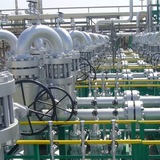
🔧 The difference between stainless steel and duplex steel:
1. Chemical installation :
Stainless steel typically contains 18% chrome and 8% nickel, as in the famous grade 304. Some grades like 316 also contain molypdenum to improve corrosion resistance.
Duplex Steel, it combines Austenitic and Varite bands, typically consists of 22–25% chromium, 4–7% nickel, with added molypdenum and nitrogen for increased strength and resistance to topical corrosion.
2. Microstructure :
The common stainless steel is either a fully Austenity (304, 316) or a fully Verity (430). The double-fitted steel features a dual structure of about 50% Austenite and 50% Verite, giving it a balance between lightness and high strength.
3. Mechanical Specifications:
The duel steel has a higher mechanical strength, where the resistance of subjugation can reach more than double those found in Austenite steel. This feature makes it ideal for pipes and cabinets that are exposed to high internal pressure.
4. Resisting the corrosion:
Stainless steel provides good performance in most environments, but double steel excels in resistance to topical corrosion, especially in chloride-rich environments such as saltwater and solubility plants.
5. Welding skill:
Austenian degrees like 304 and 316 are easy to weld and form. In contrast, double steel requires precise welding techniques to avoid the formation of harmful aspects such as excess freight or oacide.
6. The cost :
Stainless steel is less expensive, while double steel is considered more expensive due to its complex installation and advanced properties.
7. The apps:
Stainless steel is used in food industries, medical equipment and architectural decor work.
As for double steel, it is widely used in petrochemical industries, oil and gas pipelines, marine facilities, and water treatment plants.
---
📚 Relevant international standards:
ASTM A240 - Stainless Steel Sheets
ASTM A815 - Double Steel Links
ASTM A1084 - Evaluation of Volumes in Double Steel
EN 10088 - European standards for stainless steel
---
⚠️ NOTE:
Choosing the right material doesn't depend solely on corrosion resistance or strength, but also on multiple factors such as the operating environment, weldability, thermal treatment, and overall cost.
---
#DuplexSteel #StainlessSteel #ASTM #PipelineMaterials #PipeLineDZ #OilAndGasIndustry #WeldingStandards #CorrosionResistance #MaterialSelection
🚨 Choosing the RIGHT material can make or break your pressure vessel!
In EPC Oil & Gas projects, pressure vessels must survive:
🔥 High pressure & temperature
🌊 Corrosive environments
💣 Hydrogen sulfide (H₂S) and chlorides
❄️ Cryogenic conditions
So, material selection isn't just a spec — it's critical to performance, safety & lifecycle cost.
Here’s a snapshot from ASME Section II & real-world project experience:
🔧 Top Pressure Vessel Materials & Where They Fit in EPC Projects:
🔹 Carbon Steel (SA-516 Gr 70): Cost-effective; used in air receivers & utility tanks
🔹 Low Alloy Steel (SA-387 Gr 11/22): Handles high temps in reactors & flare drums
🔹 Stainless Steel 316L: Corrosion-resistant choice for chemical & water systems
🔹 Duplex SS (2205): Ideal for offshore separators in H₂S & chloride-rich environments
🔹 Inconel 625 / Monel 400: Sour gas service, amine units, and critical exchanger shells
🔹 Aluminum (5083): Cryogenic LNG storage tanks
🔹 FRP / GRP: Acid, wastewater & brine tanks — light, corrosion-proof
🔹 Titanium Gr 2: Premium option for desalination and subsea chemical injection
✅ Codes Cross-Checked:
ASME Sec II & VIII
NACE MR0175 for sour service
API 650 / 620
ISO 14692 for non-metallic
🔎 EPC Oil & Gas Project Insights
🔹 Onshore Projects (Refineries, Terminals):
Use carbon steel for budget-friendly bulk storage.
Stainless steel or FRP used for chemical treatment tanks.
Low alloy steel for high-pressure separators and reboilers.
🔹 Offshore Platforms (FPSOs, Wellheads, Subsea):
Rely on Duplex SS, Nickel alloys, or Titanium for saltwater and H₂S service.
Monel & Inconel are popular for MEG injection, flare KO drums, and H₂S absorption systems.
🔹 LNG & Cryogenic Plants:
Aluminum alloys and nickel steel are used for low-temperature storage and vaporizer vessels.
🔹 Hydrocarbon Processing Units:
Low alloy steels for catalytic reformers, towers, and pressure reactors.
Hastelloy and Stainless Steel 316L for acid services and high-purity chemical reactors.
📌 Your Turn:
What’s the most critical factor you consider when selecting material for pressure vessels?
Is it corrosion resistance? Cost? Temperature rating? Lead time?
Drop your thoughts below
💬 — let’s learn from each other’s experience!
✨ Found this valuable?
🔔 Credit to Krishna Nand Ojha, PMP®, PMI-RMP®, PMI-PMOCP™ and his quality guru & mentor Govind Tiwari,PhD on LinkedIn
#PressureVessels #ASME #MaterialSelection #EPCProjects #OilAndGas #MechanicalEngineering #QAQC #NACE #CorrosionEngineering #ProcessSafety #EngineeringExcellence #Construction #ProjectManagement #LearningMindset #QAQCExcellence #KrishnaNandOjha
Mastering Welding Processes‼️✅
*Mastering Welding Processes*
*Overview*
Welding is a crucial process in various industries, including construction, manufacturing, and repair. Mastering welding processes requires understanding different techniques, safety protocols, and material properties.
*Types of Welding Processes*
1. *Shielded Metal Arc Welding (SMAW)*: Uses a consumable electrode and flux to protect the arc.
2. *Gas Metal Arc Welding (GMAW)*: Employs a continuous wire electrode and shielding gas.
3. *Gas Tungsten Arc Welding (GTAW)*: Utilizes a non-consumable tungsten electrode and shielding gas.
4. *Flux Cored Arc Welding (FCAW)*: Uses a special electrode with a flux core.
*Key Considerations*
- *Material Selection*: Understanding the properties and weldability of different materials.
- *Welding Technique*: Proper technique, including angle, speed, and heat control.
- *Safety Precautions*: Personal protective equipment (PPE), ventilation, and fire safety.
*Applications*
- *Construction*: Building structures, bridges, and pipelines.
- *Manufacturing*: Producing machinery, equipment, and consumer goods.
- *Repair and Maintenance*: Fixing damaged or worn-out parts.
*Importance*
- *Structural Integrity*: Ensures strong, reliable joints in various applications.
- *Quality Control*: Requires attention to detail and adherence to standards.
#WeldingProcesses #WeldingTechniques #MaterialSelection #SafetyPrecautions #QualityControl
Welders Hand - Welders Hub
#weld #soldador #weldernation #highlights2025 #viralpost2025 #ketorecipes #pushupsChallenge #rafaelnadal #womenfitness #menssalon #makeupchallenge #piping #pipeline #utility #pipingskills #cleaninghacks #PipingSystem #indiansharemarket #sleevesdesign2025 #RiteishDeshmukh #leatherjacket #SafetyPrecautions #WeldingTechniques #WeldingProcesses #MaterialSelection #inspection #MechanicalEngineering #welderlife #OilAndGas #weldingsymbols
Mastering Welding Processes‼️✅
*Mastering Welding Processes*
*Overview*
Welding is a crucial process in various industries, including construction, manufacturing, and repair. Mastering welding processes requires understanding different techniques, safety protocols, and material properties.
*Types of Welding Processes*
1. *Shielded Metal Arc Welding (SMAW)*: Uses a consumable electrode and flux to protect the arc.
2. *Gas Metal Arc Welding (GMAW)*: Employs a continuous wire electrode and shielding gas.
3. *Gas Tungsten Arc Welding (GTAW)*: Utilizes a non-consumable tungsten electrode and shielding gas.
4. *Flux Cored Arc Welding (FCAW)*: Uses a special electrode with a flux core.
*Key Considerations*
- *Material Selection*: Understanding the properties and weldability of different materials.
- *Welding Technique*: Proper technique, including angle, speed, and heat control.
- *Safety Precautions*: Personal protective equipment (PPE), ventilation, and fire safety.
*Applications*
- *Construction*: Building structures, bridges, and pipelines.
- *Manufacturing*: Producing machinery, equipment, and consumer goods.
- *Repair and Maintenance*: Fixing damaged or worn-out parts.
*Importance*
- *Structural Integrity*: Ensures strong, reliable joints in various applications.
- *Quality Control*: Requires attention to detail and adherence to standards.
#WeldingProcesses #WeldingTechniques #MaterialSelection #SafetyPrecautions #QualityControl