https://www.pdfstall.online/2019/02/valves-piping-and-pipelines-handbook.html
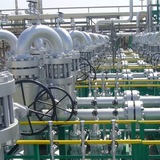
Over recent years, a number of significant developments in the application of valves have taken place: the increasing use of actuator devices, the introduction of more valve designs capable of reliable operation in difficult fluid handling situations; low noise technology and most importantly, the increasing attention being paid to product safety and reliability. Digital technology is making an impact on this market with manufacturers developing intelligent (smart) control valves incorporating control functions and interfaces. Computer Integrated Processing is now a fact of life.
New metallic materials and coatings available make it possible to improve application ranges and reliability. New and improved polymers, plastic composite materials and ceramics are all playing their part.
Fibre-reinforced plastic pipe systems, glass-reinforced epoxy pipe systems and the traditional low-cost polyester pipe systems have all undergone sophisticated design and manufacturing technology changes. The potential for growth and expansion of the industry is huge.
The 3rd Edition of the Valves, Pipirzo and Pipelines Handbook salutes these developments and provides the engineer with a timely first source of reference for the selection and application of valves and pipes.
#valves #piping #pipe #manufacturing #mechanical #instrumentation #industrial #engineer #engineering #electronics #design #digital #reference #safety #technology #automation #growth #automation
www.pdfstall.online
Valves, Piping and Pipelines Handbook (3rd Edition)
File Size: 69.09 Mb Description Over recent years, a number of significant developments in the application of valves have tak...
Pressure Drop Simplified - For Every Process Engineer.
Ever wondered why pressure drop behaves differently in pipelines for Newtonian vs. Non-Newtonian fluids?
Or why some pressure drop formulas include a factor of 4 and others don't?
This one-page infographic covers:
Flow behavior index (n) and its effect
Darcy-Weisbach vs. Fanning equation
Pressure drop formulas (US vs UK format)
All variables clearly defined
A must-have visual for process design, hydraulic calculations, and troubleshooting.
#FutureOfEngineering
#InnovationInTech
#EngineeringSolutions
#EngineeringLife
#MechanicalEngineering
#CivilEngineering
#ElectricalEngineering
#EngineeringWonders
#LikeForLike
#FollowMe
#ViralPhoto
#PhotoOfTheDay
#InstaGood
#PicOfTheDay
#Snapshot
#PhotographyLovers
#Firefightingandfirealarmsystem
#viralfacebook
#viralpost
#engineering
#technology
#tech
#innovation
#artificialintelligence
#machinelearning
#programming
#coding
#robotics
#electronics
Flanges are crucial components in piping systems, used to connect pipes, valves, and other equipment. Here are some common types of flanges:
1. Weld Neck Flange
- Has a long, tapered hub and is welded to a pipe.
- Provides excellent strength and stress distribution.
- Suitable for high-pressure and high-temperature applications.
2. Slip-On Flange
- Slides over the pipe and is then welded in place.
- Easier to install than weld neck flanges but not as strong.
- Suitable for low-pressure applications.
3. Socket Weld Flange
- The pipe is inserted into the flange and welded.
- Provides good strength and is suitable for high-pressure applications.
- Often used in small-diameter, high-pressure piping systems.
4. Threaded Flange
- Has threads in the flange bore that match the pipe threads.
- Does not require welding, making it suitable for applications where welding is not feasible.
- Often used in low-pressure, non-critical applications.
5. Blind Flange
- Used to seal off the end of a piping system.
- Does not have a center hole.
- Suitable for applications where sections of piping need to be closed off for maintenance or testing.
6. Lap Joint Flange
- Used with a lap joint stub end.
- Allows for easy alignment and assembly.
- Suitable for applications where frequent dismantling is required.
7. Orifice Flange
- Used for flow measurement.
- Has special features like taps for orifice plates.
- Suitable for applications where flow measurement is critical.
8. Reducing Flange
- Used to connect pipes of different sizes.
- Available in various configurations, such as weld neck, slip-on, and threaded.
9. Expander Flange
- Used to increase the pipe size.
- Similar to a reducing flange but used for expansion rather than reduction.
10. Specialty Flanges
- Includes custom or proprietary designs for specific applications.
- Examples include ANSI flanges, DIN flanges, and ASME flanges.
Each type of flange has its own specific applications and benefits, making it essential to choose the right type based on the requirements of the piping system.
#Flanges #PipingSystems #Engineering #PipeFittings #IndustrialApplications
#engineering
#technology
#tech
#innovation
#artificialintelligence
#machinelearning
#programming
#coding
#robotics
#electronics
Defects in Crystalline Materials and Their Impact on Welding’s Heat-Affected Zone (HAZ)
Crystalline materials inherently contain defects that affect mechanical properties, especially in welded joints. The Heat-Affected Zone (HAZ) – exposed to thermal cycles without melting – undergoes microstructural changes due to defect dynamics. Here’s how defects form and affect the HAZ:
1. Point Defects:
Vacancies: Form during solidification due to rapid cooling, trapping empty lattice sites. Quenching or irradiation increases their concentration. In HAZ, annealing effects allow vacancy migration, forming clusters that weaken cohesion.
Impurities: Introduced during alloying or solidification. They segregate at grain boundaries or form clusters during slow cooling, reducing ductility. In HAZ, thermal gradients may redistribute impurities, causing localized brittleness.
2. Line Defects (Dislocations):
Edge/Screw Dislocations: Edge dislocations arise from incomplete atomic planes during solidification or bending; screw dislocations form under shear (e.g., mechanical deformation). Cold working multiplies dislocations, hardening the material. In HAZ, residual stresses from welding introduce new dislocations, increasing strain hardening but raising the risk of cracks.
3. Planar/Volume Defects:
Grain Boundaries: Form during solidification when crystal grains collide. In HAZ, high temperatures coarsen the grains, reducing boundary density and strength.
Cracks: Result from thermal stress (rapid cooling), hydrogen embrittlement, or fatigue. In HAZ, residual stresses and brittle phases promote crack propagation.
Crowdions: Linear atom crowds form under high-strain rates (e.g., rapid thermal cycles in welding), affecting local plasticity.
4. Clusters:
Vacancy/Impurity Clusters: Annealing or slow cooling allows vacancies/impurities to migrate and cluster, acting as crack nuclei. In HAZ, rapid cooling may limit clustering, but post-weld heat treatments can exacerbate it.
Formation Conditions:
Solidification (welding/casting): Vacancies, dislocations, grain boundaries.
Mechanical Work: Dislocation multiplication.
Annealing: Vacancy migration, dislocation rearrangement (recovery/recrystallization).
Welding Thermal Cycles: Rapid heating/cooling induces thermal stress (dislocations, cracks), grain growth, and non-equilibrium defects.
HAZ Implications:
Defect accumulation in HAZ reduces toughness: dislocations increase hardness but decrease ductility; grain boundaries become susceptible to corrosion; clusters and cracks act as stress concentrators. Understanding these mechanisms helps optimize welding parameters (e.g., cooling rates, heat input) to minimize detrimental defects, enhancing joint reliability.
Defect formation is process-dependent, with welding’s HAZ being a critical zone where thermal and mechanical histories converge. Controlling defect dynamics through tailored treatments is key to mitigating failure risks.
#Welding #HAZ #CrystallineMaterials #WeldingDefects #ThermalEffects #Hardness #CoolingRates #Toughness #Technology #ThermalWelding
Valves and it's Symbols ‼️✅
.
.
#FutureOfEngineering
#InnovationInTech
#EngineeringSolutions
#EngineeringLife
#MechanicalEngineering
#CivilEngineering
#ElectricalEngineering
#EngineeringWonders
#LikeForLike
#FollowMe
#ViralPhoto
#PhotoOfTheDay
#InstaGood
#PicOfTheDay
#Snapshot
#PhotographyLovers
#Firefightingandfirealarmsystem
#viralfacebook
#viralpost
#engineering
#technology
#tech
#innovation
#artificialintelligence
#machinelearning
#programming
#coding
#robotics
#electronics