
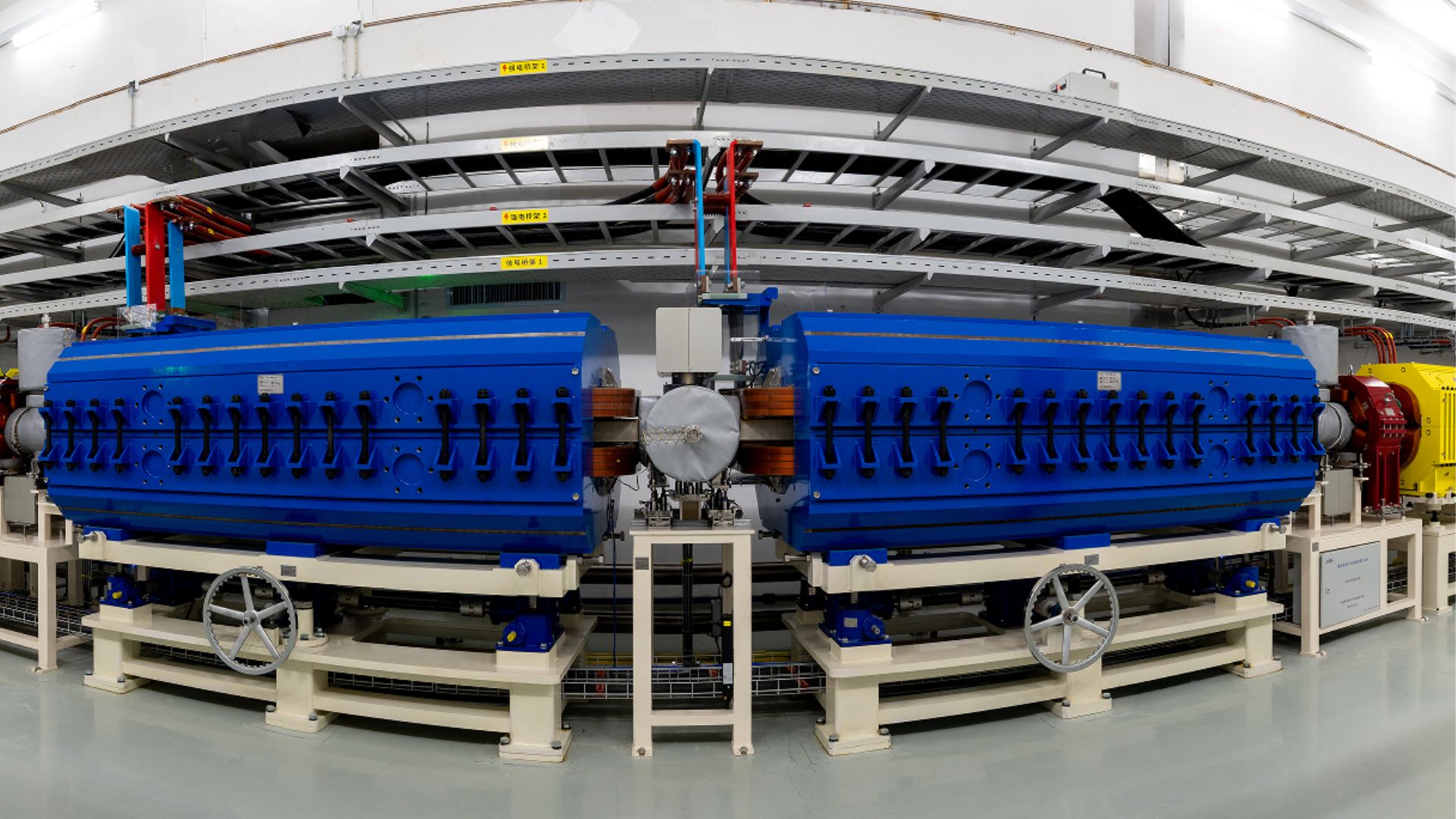
HIAF: China's massive new particle accelerator 🚀
China has launched the High Intensity Heavy-ion Accelerator Facility in Huizhou. This new research hub is designed to generate the world’s most intense atomic beams for advanced nuclear physics.
Atomic beams are essentially streams of particles smashed together at high speeds to reveal how matter is built. By pushing these beams to record intensities, researchers can create rare isotopes that do not exist naturally on our planet. This helps scientists study the deep structure of atomic nuclei and the origins of the heaviest elements in the universe.
This site competes directly with the Facility for Rare Isotope Beams at Michigan State University in the US. While that lab has long held the top spot for beam power, this new facility in China significantly raises the bar for global high-energy research capabilities.
This is a significant step that will likely change how we understand the basic building blocks of our world. Expect to see a surge of new physics papers coming from these experiments soon.
#science #physics #China
Interesting Engineering
Subscribe
China has launched the High Intensity Heavy-ion Accelerator Facility in Huizhou. This new research hub is designed to generate the world’s most intense atomic beams for advanced nuclear physics.
Atomic beams are essentially streams of particles smashed together at high speeds to reveal how matter is built. By pushing these beams to record intensities, researchers can create rare isotopes that do not exist naturally on our planet. This helps scientists study the deep structure of atomic nuclei and the origins of the heaviest elements in the universe.
This site competes directly with the Facility for Rare Isotope Beams at Michigan State University in the US. While that lab has long held the top spot for beam power, this new facility in China significantly raises the bar for global high-energy research capabilities.
This is a significant step that will likely change how we understand the basic building blocks of our world. Expect to see a surge of new physics papers coming from these experiments soon.
Physics just got a massive power boost.
#science #physics #China
Interesting Engineering
Subscribe
👍1
New proton discovery at the Relativistic Heavy Ion Collider
Data from the Relativistic Heavy Ion Collider reveals that protons rely on a hidden Y-shaped glue structure to stay stable. ⚛️
These glue particles, known as gluons, form tight junctions that carry the core identity of the particle. Instead of just three simple points of matter, tests show these internal connections do the heavy lifting to keep everything together.
For decades, science books painted a much simpler picture of protons as a basic trio of building blocks without this intricate scaffolding.
It turns out the foundation of our universe is far more complex than anyone imagined.
#physics #science #protons
ScienceDaily: Technology
Subscribe
Data from the Relativistic Heavy Ion Collider reveals that protons rely on a hidden Y-shaped glue structure to stay stable. ⚛️
These glue particles, known as gluons, form tight junctions that carry the core identity of the particle. Instead of just three simple points of matter, tests show these internal connections do the heavy lifting to keep everything together.
For decades, science books painted a much simpler picture of protons as a basic trio of building blocks without this intricate scaffolding.
It turns out the foundation of our universe is far more complex than anyone imagined.
Even the smallest pieces of matter hold unexpected depth.
#physics #science #protons
ScienceDaily: Technology
Subscribe
👍1
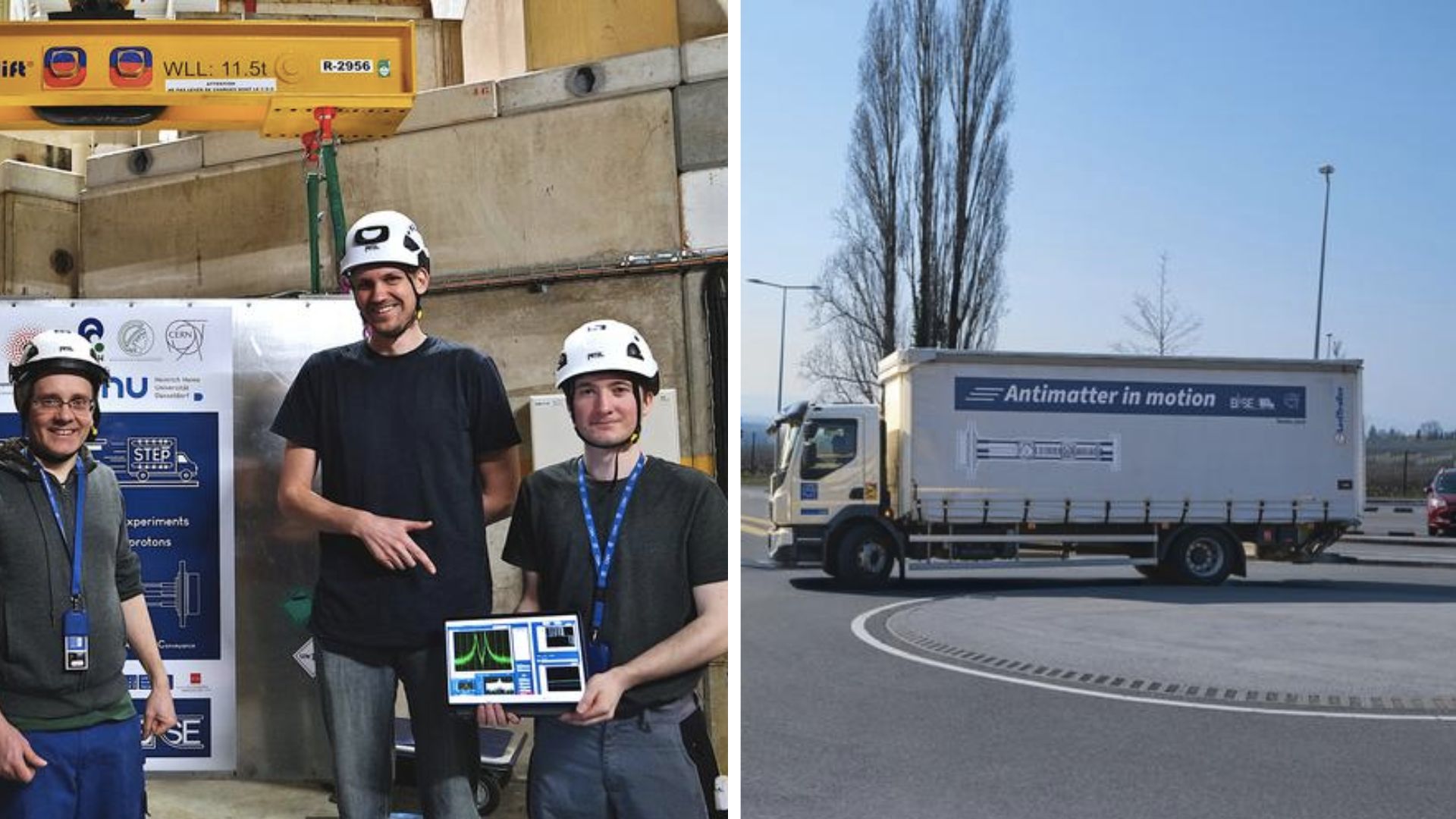
CERN transports 92 antiprotons by road
🚀
In March 2026, researchers at CERN in Geneva successfully transported 92 antiprotons by truck for the first time. This marks a new milestone in handling antimatter.
The team from the BASE experiment, led by Stefan Ulmer and Christian Smorra from Heinrich Heine University Düsseldorf, used a purpose-built portable trap. Antimatter is incredibly unstable and vanishes upon touching ordinary matter. To prevent this, the vessel acts like a high-tech vacuum-sealed container that suspends the particles in place. Moving the trap out of the main accelerator allows physicists to conduct ultra-precise experiments at different laboratories across Europe.
This success follows the team's earlier achievement in October 2024, when they first used the same mobile trap to transport regular protons. By proving the hardware works for both particle types, the BASE researchers have shown that antimatter no longer needs to be trapped inside a massive, stationary facility to be studied. The team successfully kept the antiprotons inside the mobile vessel for over a month.
#CERN #Antimatter #Physics
Interesting Engineering
Subscribe
🚨 #BREAKING Francis Halzen wins the 2026 Nobel Prize in Physics
🏆 Francis Halzen has been awarded the 2026 Nobel Prize in Physics for his work on the IceCube Neutrino Observatory and the discovery of high-energy neutrinos from deep space. The prestigious prize comes with a cash award of 12 million Swedish kronor, roughly equivalent to 1.1 million euros.
To catch these ghostly particles, Halzen proposed using a cubic kilometer of clear Antarctic ice buried deep at the South Pole as a massive particle detector. When a neutrino hits the ice, it creates a flash of blue light that sensors can track.
Unlike protons, which get scrambled by magnetic fields as they travel across the universe, neutrinos travel in a straight line. This lets scientists trace them back to their violent cosmic origins.
#physics #science #nobelprize
Subscribe