
<b>Game Of My Life #03: We are back!</b>
Having just managed a 2-2 draw in the first leg, Bayern traveled to Barcelona and secured their progress to the final by a 1-2 away win in the return leg.April 16, 1996, Barcelona. FC Barcelona welcomes FC Bayern in the second leg of the UEFA Cup semi-final. Bayern needed a high-scoring draw or an away win to push through to the final in front of a crowd of 115,000 fanatic supporters in the Camp Nou, where Barcelona had not lost a European competition home game since 1992. The game marked the first time the two giants had ever met in a competitive match.<a href="#why-the-game-was-special"></a>Why the game was special<a href="#fc-bayern-in-the-middle-of-the-1990s-almost-an-ordinary-club"></a>FC Bayern in the middle of the 1990s – almost an ordinary club.The 1990s. Football shoes were black. The players on the pitch were numbered 1 to 11. FC Bayern Munich was frequently dubbed “FC Hollywood”, but in sporting terms they were far away from shiny glamour.The glorious 1970s were but a distant memory, the bloodletting of many top German players to Italy’s greener pastures had left its mark on German football in general and Bayern in particular.<a href="#disappointing-years-by-bayern-standards"></a>Disappointing years by Bayern standardsOver the last five years, Bayern had won the Bundesliga title only once. The last triumph in the DFB-Pokal had been in 1986, their cup runs were spotted with embarrassing defeats to lower division clubs like Weinheim, Homburg, and Vestenbergsgreuth.They did not fare much better on the European stage. In 1991/92, they went out of the UEFA Cup after a 2-6 defeat against Copenhagen in the second round. In 1992/93, they were not even qualified, and 1993/94 they again suffered a second round elimination, this time at the hand of Norwich. In 1994/95, they participated in the still very young Champions League for the first time. They advanced from the group stage and two draws against Gothenburg in the quarter finals were enough to prevail. But in the semis, Louis van Gaal’s Ajax Amsterdam proved a bridge too far, inflicting a comprehensive 5-2 defeat on Bayern. Despite the fairly easy route to the semi-finals, having got there was a respectable achievement.<a href="#and-then-came-barcelona"></a>And then came BarcelonaAt the beginning of the 1995/96 season, Otto Rehagel was appointed as the fifth Bayern head coach in four years. After a defeat in the first match, seven consecutive wins under his reign saw Bayern march through to the semi-finals of the UEFA Cup. And now Barcelona waited. Johan Cruyff’s team was one of the top teams in Europe in the early 1990s: from 1991 to 94 they were Spanish champions four times in a row and reached the final of the European Champion Clubs’ Cup in 1992 and 94, which they also won in 1992. But in the spring of 1996, Cruyff’s era at Barcelona seemed to be beyond its peak. The squad was still top class, but the departures of stars like Laudrup, Stoichkow and Koeman could not be compensated. In La Liga, a fourth place in 1995 and a third place in 1996 were the result. Nevertheless, they firmly believed in their chance to reach the final against Bayern.<a href="https://miasanrot.com/wp-content/uploads/sites/2/2019/12/BarcaFCB1996en-650x650.png">Media</a><a href="#in-case-you-missed-it"></a>In case you missed it<a href="#the-starting-lineups"></a>The starting lineupsJohan Cruyff sent his team out in its usual 4-3-3 formation. He had to make do without injured Pep Guardiola. Ferrer, Nadal, Popescu and Sergi Barjuán defended in front of goalkeeper Busquets. Bakero played in the holding midfielder position and Amor and Roger García in the two number eight positions. Luís Figo as the right winger, Jordi Cruyff as a fluid center-forward and Kodro as the nominal left-winger completed the first eleven. Otto Rehhagel opted for a 3-5-2/3-6-1 formation. In front of Kahn, Babbel, Kreuzer, and Helmer formed the back three. Regular holding midfielder Matthäus…
Having just managed a 2-2 draw in the first leg, Bayern traveled to Barcelona and secured their progress to the final by a 1-2 away win in the return leg.April 16, 1996, Barcelona. FC Barcelona welcomes FC Bayern in the second leg of the UEFA Cup semi-final. Bayern needed a high-scoring draw or an away win to push through to the final in front of a crowd of 115,000 fanatic supporters in the Camp Nou, where Barcelona had not lost a European competition home game since 1992. The game marked the first time the two giants had ever met in a competitive match.<a href="#why-the-game-was-special"></a>Why the game was special<a href="#fc-bayern-in-the-middle-of-the-1990s-almost-an-ordinary-club"></a>FC Bayern in the middle of the 1990s – almost an ordinary club.The 1990s. Football shoes were black. The players on the pitch were numbered 1 to 11. FC Bayern Munich was frequently dubbed “FC Hollywood”, but in sporting terms they were far away from shiny glamour.The glorious 1970s were but a distant memory, the bloodletting of many top German players to Italy’s greener pastures had left its mark on German football in general and Bayern in particular.<a href="#disappointing-years-by-bayern-standards"></a>Disappointing years by Bayern standardsOver the last five years, Bayern had won the Bundesliga title only once. The last triumph in the DFB-Pokal had been in 1986, their cup runs were spotted with embarrassing defeats to lower division clubs like Weinheim, Homburg, and Vestenbergsgreuth.They did not fare much better on the European stage. In 1991/92, they went out of the UEFA Cup after a 2-6 defeat against Copenhagen in the second round. In 1992/93, they were not even qualified, and 1993/94 they again suffered a second round elimination, this time at the hand of Norwich. In 1994/95, they participated in the still very young Champions League for the first time. They advanced from the group stage and two draws against Gothenburg in the quarter finals were enough to prevail. But in the semis, Louis van Gaal’s Ajax Amsterdam proved a bridge too far, inflicting a comprehensive 5-2 defeat on Bayern. Despite the fairly easy route to the semi-finals, having got there was a respectable achievement.<a href="#and-then-came-barcelona"></a>And then came BarcelonaAt the beginning of the 1995/96 season, Otto Rehagel was appointed as the fifth Bayern head coach in four years. After a defeat in the first match, seven consecutive wins under his reign saw Bayern march through to the semi-finals of the UEFA Cup. And now Barcelona waited. Johan Cruyff’s team was one of the top teams in Europe in the early 1990s: from 1991 to 94 they were Spanish champions four times in a row and reached the final of the European Champion Clubs’ Cup in 1992 and 94, which they also won in 1992. But in the spring of 1996, Cruyff’s era at Barcelona seemed to be beyond its peak. The squad was still top class, but the departures of stars like Laudrup, Stoichkow and Koeman could not be compensated. In La Liga, a fourth place in 1995 and a third place in 1996 were the result. Nevertheless, they firmly believed in their chance to reach the final against Bayern.<a href="https://miasanrot.com/wp-content/uploads/sites/2/2019/12/BarcaFCB1996en-650x650.png">Media</a><a href="#in-case-you-missed-it"></a>In case you missed it<a href="#the-starting-lineups"></a>The starting lineupsJohan Cruyff sent his team out in its usual 4-3-3 formation. He had to make do without injured Pep Guardiola. Ferrer, Nadal, Popescu and Sergi Barjuán defended in front of goalkeeper Busquets. Bakero played in the holding midfielder position and Amor and Roger García in the two number eight positions. Luís Figo as the right winger, Jordi Cruyff as a fluid center-forward and Kodro as the nominal left-winger completed the first eleven. Otto Rehhagel opted for a 3-5-2/3-6-1 formation. In front of Kahn, Babbel, Kreuzer, and Helmer formed the back three. Regular holding midfielder Matthäus…
<b>Bundesliga MD 19 Preview – Bayern against Schalke</b>
Schalke 04 is one of the more positive surprises of the season. Against Bayern at the weekend, the “miners” seek to underline this impression. Our preview.“Which of you has ever won against Bayern München?”, David Wagner asked his players in training earlier this week. At the pre-match press conference, he did not let the journalists guess for long: “There were not many.”Omar Mascarell beat Bayern in the 2018 DFB-Pokal final with Eintracht Frankfurt and Daniel Caligiuri even has two wins against Bayern to his name: In 2015 he was in the starting eleven of the Wolfsburg team that beat Bayern 4-1 at home in the Bundesliga. Later that year, he also won the Supercup with Wolfsburg against Bayern on penalties.Then there is Suat Serdar, who even won 2-4 at Bayern in 2014. However, this was with the U19 of Mainz 05. There are two obvious reasons why there are not too many players at Schalke who have won against Bayern over the course of their careers. Number 1: The average Schalke player is 24.6 years old (3rd place in the league). So most players have not had much opportunity to win against Bayern so far. And if there are players who have played against Bayern before, they have not been very successful (reason number 2).Schalke themselves have been without a win against Bayern since 2011. Back then they won 1-0 in the semi-finals of the DFB-Pokal at the Allianz Arena, and since then Bayern has won 16 games and drawn three. To improve on this record, Wagner has a clear demand: “Our kind of football” is what he wants to see from his team.<a href="https://miasanrot.com/wp-content/uploads/sites/2/2020/01/2FCBS04.jpg">Media</a><a href="#fc-schalke-04-the-first-real-test-for-bayern-in-2020"></a>FC Schalke 04: The first real test for Bayern in 2020?But what does their kind of football look like? Anyone with an interest in Schalke’s new coach David Wagner before the season will have read many articles in which one information in particular kept being reiterated: Wagner was the best man of Jürgen Klopp at his wedding.The connection between Wagner and Liverpool’s head coach is indeed an interesting one, especially from a tactical perspective. Because if you look at Schalke’s development over the past half year, the “Royal Blues” have acquired a new playmaker: gegenpressing.Schalke have already scored five goals from gegenpressing breaks (2nd place behind RB Leipzig with 6). They have the seventh highest share of possession in the Bundesliga (50.4%), but they also have the ninth most interceptions (11.3) and the seventh most tackles per game (17.3) at the same time. In comparison: Gladbach as a team with similar possession stats and very aggressive pressing have 12.7 interceptions and 16.8 tackles per game.<a href="#aggression-speed-and-risk"></a>Aggression, speed and riskThese statistics foster the impression that Wagner attaches great importance to pressing. Schalke usually plays in a very flexible 4-4-2 formation. Against a back three, for example, the ball-side wide midfield player pushes up in attack, while the other three players close the gap. Wagner has already tried almost every variation of a 4-4-2 and 4-3-3 formation there is.On average, Schalke allow their opponents only 9.02 passes until they actively challenge them. This is a top value in the Bundesliga, bettered only by Bayern (7.15), Leverkusen (7.37), and Wolfsburg (8.71). Gladbach (9.36), RB Leipzig (10.07) and Dortmund (10.42) are somewhat less efficient here.Schalke’s game is very vertical. After winning the ball, their goal is not to keep it in possession as long as possible, but to pick up speed immediately. Their pass completion rate of 77.1% only ranks 9th in the league. In addition, they only play an average of 9.28 passes until they turn over the ball (rank 14).1Wagner demands an accurate and courageous positional play from his players to offer them a good starting position for gegenpressing in case of a turnover.…
Schalke 04 is one of the more positive surprises of the season. Against Bayern at the weekend, the “miners” seek to underline this impression. Our preview.“Which of you has ever won against Bayern München?”, David Wagner asked his players in training earlier this week. At the pre-match press conference, he did not let the journalists guess for long: “There were not many.”Omar Mascarell beat Bayern in the 2018 DFB-Pokal final with Eintracht Frankfurt and Daniel Caligiuri even has two wins against Bayern to his name: In 2015 he was in the starting eleven of the Wolfsburg team that beat Bayern 4-1 at home in the Bundesliga. Later that year, he also won the Supercup with Wolfsburg against Bayern on penalties.Then there is Suat Serdar, who even won 2-4 at Bayern in 2014. However, this was with the U19 of Mainz 05. There are two obvious reasons why there are not too many players at Schalke who have won against Bayern over the course of their careers. Number 1: The average Schalke player is 24.6 years old (3rd place in the league). So most players have not had much opportunity to win against Bayern so far. And if there are players who have played against Bayern before, they have not been very successful (reason number 2).Schalke themselves have been without a win against Bayern since 2011. Back then they won 1-0 in the semi-finals of the DFB-Pokal at the Allianz Arena, and since then Bayern has won 16 games and drawn three. To improve on this record, Wagner has a clear demand: “Our kind of football” is what he wants to see from his team.<a href="https://miasanrot.com/wp-content/uploads/sites/2/2020/01/2FCBS04.jpg">Media</a><a href="#fc-schalke-04-the-first-real-test-for-bayern-in-2020"></a>FC Schalke 04: The first real test for Bayern in 2020?But what does their kind of football look like? Anyone with an interest in Schalke’s new coach David Wagner before the season will have read many articles in which one information in particular kept being reiterated: Wagner was the best man of Jürgen Klopp at his wedding.The connection between Wagner and Liverpool’s head coach is indeed an interesting one, especially from a tactical perspective. Because if you look at Schalke’s development over the past half year, the “Royal Blues” have acquired a new playmaker: gegenpressing.Schalke have already scored five goals from gegenpressing breaks (2nd place behind RB Leipzig with 6). They have the seventh highest share of possession in the Bundesliga (50.4%), but they also have the ninth most interceptions (11.3) and the seventh most tackles per game (17.3) at the same time. In comparison: Gladbach as a team with similar possession stats and very aggressive pressing have 12.7 interceptions and 16.8 tackles per game.<a href="#aggression-speed-and-risk"></a>Aggression, speed and riskThese statistics foster the impression that Wagner attaches great importance to pressing. Schalke usually plays in a very flexible 4-4-2 formation. Against a back three, for example, the ball-side wide midfield player pushes up in attack, while the other three players close the gap. Wagner has already tried almost every variation of a 4-4-2 and 4-3-3 formation there is.On average, Schalke allow their opponents only 9.02 passes until they actively challenge them. This is a top value in the Bundesliga, bettered only by Bayern (7.15), Leverkusen (7.37), and Wolfsburg (8.71). Gladbach (9.36), RB Leipzig (10.07) and Dortmund (10.42) are somewhat less efficient here.Schalke’s game is very vertical. After winning the ball, their goal is not to keep it in possession as long as possible, but to pick up speed immediately. Their pass completion rate of 77.1% only ranks 9th in the league. In addition, they only play an average of 9.28 passes until they turn over the ball (rank 14).1Wagner demands an accurate and courageous positional play from his players to offer them a good starting position for gegenpressing in case of a turnover.…
<b>Bundesliga MD 21 Preview: Bayern against Leipzig</b>
For 45 minutes, FC Bayern bedazzled the Allianz Arena with a dominant display of football. Afterwards, they several times came close to throwing away what seemed like a certain win over Hoffenheim. Now the top match against RB Leipzig is just around the corner. Our preview.A whiff of Jupp Heynckes and Pep Guardiola blew through the Allianz Arena on Wednesday evening as FC Bayern Munich welcomed TSG Hoffenheim in the DFB-Pokal round of sixteen. Almost right out of the gate, Bayern was off to a great start. Only three minutes had passed when Philippe Coutinho first received the ball in a dangerous area on the edge of the visitors’ penalty area. Instead of a through ball in behind, he chose to have a shot himself. Goal kick.In the 5th minute of play, Bayern took the lead. Thomas Müller got the ball in a half-space, set up Robert Lewandowski, and the Pole comfortably converted for the 1-0 lead. But the referee called the goal back for offside. A decision hinging on millimeters. Nevertheless: A start made to measure for the record cup winners.But then suddenly the ball was in Bayern’s goal after a loss of possession by Coutinho in his own half. 0-1. This goal stood and for the first time in a long time, Bayern had suffered a setback. Hoffenheim had come with a clever game plan: Do not push up too highly, but do not get tied up close to your own penalty area as well – and it had paid off.But Bayern were not ruffled. Despite a well organized opponent and being a goal down, they kept playing with remarkable self-confidence and matter of factness. It followed the equalizer, the 2-1 lead, then the 3-1, all before the interval. In fact, the result at half-time should have been much clearer. But what was even more apparent: There was a clear plan. A first, almost complete display of how Hansi Flick intends his football to look. It was a demonstration of power reminiscent of the good old times.<a href="#fc-bayern-against-leipzig-the-contest-for-the-center"></a>FC Bayern against Leipzig: the contest for the centerOne of the decisive elements of Hansi Flick’s football continues to be the high press, which we have already discussed in the preview of the Hoffenheim match. Let us try to illustrate more clearly why Flick’s concept of pressing is working so well at the moment in a video:However, there are still some little issues left to address. In the first half against Hoffenheim, Bayern managed to prevent diagonal passes from the outside to the inside and were also able to quickly recover their defensive shape after a loss of possession, which made it difficult for Hoffenheim.In the second half, however, they were not close enough to their opponents, as David Alaba admitted after the game. The possible reasons for this are yet to be finally determined. A drop of energy and focus being 4-1 up seems a plausible explanation. On the other hand, there is also the possibility that the team may not be able to sustain their intensive pace of the first half for a full 90 minutes.Either way, it will be necessary for the team to be able to take breaks in possession in which they circulate the ball in their own ranks without giving the opponent the opportunity to counter-attack. Against Mainz this worked quite well over long phases, but against Hoffenheim this “stand-by mode” was missing and so the game finished with an unexpectedly exciting final act.<a href="#leipzig-the-little-runs-make-the-big-difference"></a>Leipzig: The little runs make the big differenceRB Leipzig is a team that immediately punishes lack of concentration and mistakes. 53 goals scored in the league alone speaks for itself. The key to Leipzig’s game is the center, which makes Bayern’s pressing quality such a decisive issue for the coming weekend. Julian Nagelsmann often tries to overload the center irrespective of the formation. Whether he chooses a 4-2-2-2, which has a certain tradition at Leipzig, a back three, or a 4-2-3-1 formation:…
For 45 minutes, FC Bayern bedazzled the Allianz Arena with a dominant display of football. Afterwards, they several times came close to throwing away what seemed like a certain win over Hoffenheim. Now the top match against RB Leipzig is just around the corner. Our preview.A whiff of Jupp Heynckes and Pep Guardiola blew through the Allianz Arena on Wednesday evening as FC Bayern Munich welcomed TSG Hoffenheim in the DFB-Pokal round of sixteen. Almost right out of the gate, Bayern was off to a great start. Only three minutes had passed when Philippe Coutinho first received the ball in a dangerous area on the edge of the visitors’ penalty area. Instead of a through ball in behind, he chose to have a shot himself. Goal kick.In the 5th minute of play, Bayern took the lead. Thomas Müller got the ball in a half-space, set up Robert Lewandowski, and the Pole comfortably converted for the 1-0 lead. But the referee called the goal back for offside. A decision hinging on millimeters. Nevertheless: A start made to measure for the record cup winners.But then suddenly the ball was in Bayern’s goal after a loss of possession by Coutinho in his own half. 0-1. This goal stood and for the first time in a long time, Bayern had suffered a setback. Hoffenheim had come with a clever game plan: Do not push up too highly, but do not get tied up close to your own penalty area as well – and it had paid off.But Bayern were not ruffled. Despite a well organized opponent and being a goal down, they kept playing with remarkable self-confidence and matter of factness. It followed the equalizer, the 2-1 lead, then the 3-1, all before the interval. In fact, the result at half-time should have been much clearer. But what was even more apparent: There was a clear plan. A first, almost complete display of how Hansi Flick intends his football to look. It was a demonstration of power reminiscent of the good old times.<a href="#fc-bayern-against-leipzig-the-contest-for-the-center"></a>FC Bayern against Leipzig: the contest for the centerOne of the decisive elements of Hansi Flick’s football continues to be the high press, which we have already discussed in the preview of the Hoffenheim match. Let us try to illustrate more clearly why Flick’s concept of pressing is working so well at the moment in a video:However, there are still some little issues left to address. In the first half against Hoffenheim, Bayern managed to prevent diagonal passes from the outside to the inside and were also able to quickly recover their defensive shape after a loss of possession, which made it difficult for Hoffenheim.In the second half, however, they were not close enough to their opponents, as David Alaba admitted after the game. The possible reasons for this are yet to be finally determined. A drop of energy and focus being 4-1 up seems a plausible explanation. On the other hand, there is also the possibility that the team may not be able to sustain their intensive pace of the first half for a full 90 minutes.Either way, it will be necessary for the team to be able to take breaks in possession in which they circulate the ball in their own ranks without giving the opponent the opportunity to counter-attack. Against Mainz this worked quite well over long phases, but against Hoffenheim this “stand-by mode” was missing and so the game finished with an unexpectedly exciting final act.<a href="#leipzig-the-little-runs-make-the-big-difference"></a>Leipzig: The little runs make the big differenceRB Leipzig is a team that immediately punishes lack of concentration and mistakes. 53 goals scored in the league alone speaks for itself. The key to Leipzig’s game is the center, which makes Bayern’s pressing quality such a decisive issue for the coming weekend. Julian Nagelsmann often tries to overload the center irrespective of the formation. Whether he chooses a 4-2-2-2, which has a certain tradition at Leipzig, a back three, or a 4-2-3-1 formation:…
<b>Bundesliga MD 22 Preview: Cologne against Bayern</b>
After last week’s highlight against Leipzig, Bayern had the opportunity to recoup in a week without a mid-week fixture. Now it is time to get back to business and use the upcoming matches against Cologne and Paderborn to pick up steam for the contest with Chelsea in the Champions League.13th place with six points above the relegation zone and in touching distance to a mid-table position – you would have been called mad predicting a development like this at Cologne just a few weeks ago. They were 17th after matchday 11 with three points adrift of safety. Two wins, one draw, and eight defeats was their devastating track record up to that point.Then came Markus Gisdol and Horst Heldt, two veterans very familiar with relegation battles. They both have seen their fair share of them over the long course of their careers. And indeed: A look at the Bundesliga table since Gisdol’s appointment sees Cologne in 5th place. So far, Gisdol has collected five wins, two draws, and only three defeats in 10 games. That adds up to 17 points, only five fewer than Bayern over the same period – with a game in hand (last weekend’s postponed fixture against Gladbach).So is Cologne against Bayern in truth a thriller in waiting? Not quite, because also under Gisdol Cologne have struggled against the top teams. Leipzig beat them 4-1 and Dortmund even managed to put five past them. However, especially at home Cologne has developed a certain degree of stability under Gisdol, which might prove the crucial difference in their quest to stay up. Since Gisdol has taken over, Cologne’s home record reads four wins, one draw, and no defeat, including a 2-0 win against Champions League hopefuls Leverkusen.<a href="https://miasanrot.com/wp-content/uploads/sites/2/2020/02/5KOEFCB.jpg">Media</a><a href="#fc-cologne-en-route-to-staying-up"></a>FC Cologne en route to staying up?But how has Gisdol managed this turnaround? A key factor is that he first shored up the defense. Under Beierlorzer, Cologne pressed very aggressively at times and only allowed the opponent to play an average of nine passes in their own half before they took a defensive action. With Gisdol on the bench, this figure has risen to about eleven passes on average. In the ten matches under his tutelage so far, Cologne has conceded 15 goals, with nine of them falling in the games against Leipzig and Dortmund alone.StatsBomb’s expected goals model has measured 13.1 expected goals against in this period, and 8.1 in 8 games if the two extreme cases Leipzig and Dortmund are excluded. In the home game against Leverkusen, however, the team proved that it can also effectively suffocate strong offensive lines. Leverkusen only achieved 0.2 expected goals against Cologne.Under Beierlorzer, Cologne conceded 23 goals in eleven games with 16 expected goals against. His football also thrived on pressing, but his side often failed to fall back into their defensive shape quickly enough once the opponent overcame their first pressing line. Now, starting from a more compact and deeper defense, the team is expected to force turnovers by keeping the spaces in central midfield very tight. If they manage to win the ball this way, they usually push up their players quickly. With Mark Uth and Jhon Córdoba, they have two players who are currently in very good form. While Uth is very important in creating Cologne’s attacking game, especially because of his many space-opening runs, Córdoba is a reliable goal scorer, especially at home (7 goals in his last 6 home games).<a href="#how-can-cologne-trouble-bayern"></a>How can Cologne trouble Bayern?Against Bayern, Gisdol will most likely start his team in his favored 4-2-3-1 formation. Without the ball, Cologne defends with two narrow lines of four, with the midfield line sometimes even augmented to five. We will probably not see Cologne venture an all out attacking style in transition. Usually, they use three or four players to…
After last week’s highlight against Leipzig, Bayern had the opportunity to recoup in a week without a mid-week fixture. Now it is time to get back to business and use the upcoming matches against Cologne and Paderborn to pick up steam for the contest with Chelsea in the Champions League.13th place with six points above the relegation zone and in touching distance to a mid-table position – you would have been called mad predicting a development like this at Cologne just a few weeks ago. They were 17th after matchday 11 with three points adrift of safety. Two wins, one draw, and eight defeats was their devastating track record up to that point.Then came Markus Gisdol and Horst Heldt, two veterans very familiar with relegation battles. They both have seen their fair share of them over the long course of their careers. And indeed: A look at the Bundesliga table since Gisdol’s appointment sees Cologne in 5th place. So far, Gisdol has collected five wins, two draws, and only three defeats in 10 games. That adds up to 17 points, only five fewer than Bayern over the same period – with a game in hand (last weekend’s postponed fixture against Gladbach).So is Cologne against Bayern in truth a thriller in waiting? Not quite, because also under Gisdol Cologne have struggled against the top teams. Leipzig beat them 4-1 and Dortmund even managed to put five past them. However, especially at home Cologne has developed a certain degree of stability under Gisdol, which might prove the crucial difference in their quest to stay up. Since Gisdol has taken over, Cologne’s home record reads four wins, one draw, and no defeat, including a 2-0 win against Champions League hopefuls Leverkusen.<a href="https://miasanrot.com/wp-content/uploads/sites/2/2020/02/5KOEFCB.jpg">Media</a><a href="#fc-cologne-en-route-to-staying-up"></a>FC Cologne en route to staying up?But how has Gisdol managed this turnaround? A key factor is that he first shored up the defense. Under Beierlorzer, Cologne pressed very aggressively at times and only allowed the opponent to play an average of nine passes in their own half before they took a defensive action. With Gisdol on the bench, this figure has risen to about eleven passes on average. In the ten matches under his tutelage so far, Cologne has conceded 15 goals, with nine of them falling in the games against Leipzig and Dortmund alone.StatsBomb’s expected goals model has measured 13.1 expected goals against in this period, and 8.1 in 8 games if the two extreme cases Leipzig and Dortmund are excluded. In the home game against Leverkusen, however, the team proved that it can also effectively suffocate strong offensive lines. Leverkusen only achieved 0.2 expected goals against Cologne.Under Beierlorzer, Cologne conceded 23 goals in eleven games with 16 expected goals against. His football also thrived on pressing, but his side often failed to fall back into their defensive shape quickly enough once the opponent overcame their first pressing line. Now, starting from a more compact and deeper defense, the team is expected to force turnovers by keeping the spaces in central midfield very tight. If they manage to win the ball this way, they usually push up their players quickly. With Mark Uth and Jhon Córdoba, they have two players who are currently in very good form. While Uth is very important in creating Cologne’s attacking game, especially because of his many space-opening runs, Córdoba is a reliable goal scorer, especially at home (7 goals in his last 6 home games).<a href="#how-can-cologne-trouble-bayern"></a>How can Cologne trouble Bayern?Against Bayern, Gisdol will most likely start his team in his favored 4-2-3-1 formation. Without the ball, Cologne defends with two narrow lines of four, with the midfield line sometimes even augmented to five. We will probably not see Cologne venture an all out attacking style in transition. Usually, they use three or four players to…

<b>Bundesliga MD 25 Preview: Bayern against Augsburg</b>
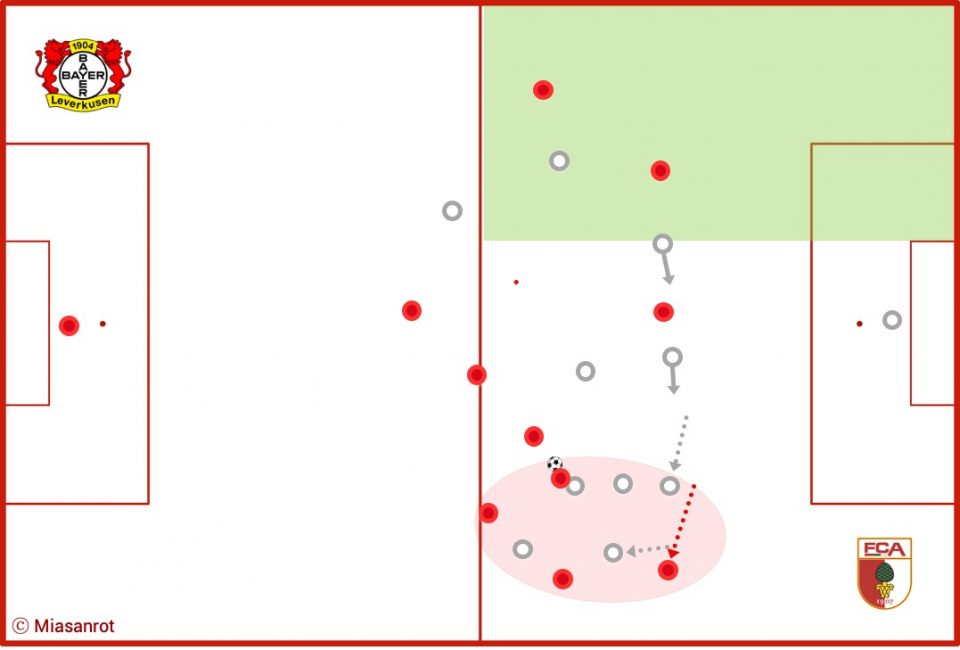
A narrow victory, a draw, and another draw – these are the results of FC Bayern’s last three games against FC Augsburg. Will the Swabians prove a nuisance to the record champions once more? Our preview.The year is 2020. All of Germany can only stand by and watch as Germany’s record champions’ unstoppable march towards the Bundesliga title continues apace. All of Germany? Not quite! One small Swabian town in the Bavarian South West stubbornly resists the advance of their mighty neighbors from the state capital. And they continue to make life hard for the Bavarian legions…For whenever the small Swabians from Augsburg faced the big FC Bayern from Munich lately, things did not always turn out as expected: A 1-1 draw in the Allianz Arena in September 2018, a narrow 3-2 victory for Bayern at Augsburg in the reverse fixture later that season, and a 2-2 at the same place on matchday 08 of the current season.For these last three games, Augsburg was actually something of a small and rebellious Gallic village that proved a constant thorn in the side of their imperious neighbors. Before that, however, Augsburg suffered heavy defeats, especially away to Bayern. In all, Bayern’s home record against Augsburg speaks for itself: 12 wins, one draw, two defeats.<a href="#fc-augsburg-bayern-a-springboard-once-more"></a>FC Augsburg: Bayern a springboard once more?This devastating record notwithstanding, coach Martin Schmidt will certainly do everything in his power to continue what is, from his point of view, a fairly good run against the serial champions – and to end their own bad one in the league. Augsburg has won only four points from their last eight Bundesliga games: Only Werder Bremen (3) fared worse over the same period.Those who hold with Augsburg can point out that their opponents with RB Leipzig, Borussia Dortmund, Union Berlin (away), Eintracht Frankfurt, SC Freiburg, Bayer Leverkusen, Gladbach, and Bremen were an exceptionally difficult group to face. Of these matches, they could only win the contest with table neighbors Bremen. To a certain extent, there is also an analogy to the first half of the season. Back then, Augsburg could only one win one game until matchday 11, but managed four draws – one of them against Bayern.Then Augsburg suddenly started a series of six undefeated games in a row. They beat Paderborn, Hertha, Mainz, Hoffenheim and Düsseldorf, and drew against Cologne. The question is: Can Augsburg do the same trick twice? Can they use the match against Bayern to make a comeback? And if so, how?<a href="#coordination-problems"></a>Coordination problemsIn terms of formation, Bayern should expect Augsburg to start in one of the following two ways: Either in a 4-1-4-1 or a system with a flexible back five. The latter would probably give Augsburg greater defensive stability, as evidenced most recently against Leverkusen. Either way, Augsburg is generally not known for pushing up high. Instead, they prefer to play with a compact and aggressive midfield pressing. However, their back five has not yet appeared to be perfectly balanced. The Swabians have had their problems especially in dealing with fast switches of the play across the pitch.Augsburg’s wide defensive positions have been a weak point of the team throughout the season. It has been far too easy for the opposition to draw Augsburg’s full-backs out of position and thus open the way for their own attackers. This also regularly gets their teammates into trouble, as this reconstructed situation from the second half against Leverkusen demonstrates:<a href="https://miasanrot.com/wp-content/uploads/sites/2/2020/03/B04FCA-960x650.jpg">Media</a><strong>Leverkusen overload on the right, Augsburg react poorly.</strong>Leverkusen overload the right side and thus provoke that Augsburg’s left-back, Philipp Max, moves out (bottom grey arrow). As a result, the left center-back feels compelled to shift outside along with Leverkusen’s…
A narrow victory, a draw, and another draw – these are the results of FC Bayern’s last three games against FC Augsburg. Will the Swabians prove a nuisance to the record champions once more? Our preview.The year is 2020. All of Germany can only stand by and watch as Germany’s record champions’ unstoppable march towards the Bundesliga title continues apace. All of Germany? Not quite! One small Swabian town in the Bavarian South West stubbornly resists the advance of their mighty neighbors from the state capital. And they continue to make life hard for the Bavarian legions…For whenever the small Swabians from Augsburg faced the big FC Bayern from Munich lately, things did not always turn out as expected: A 1-1 draw in the Allianz Arena in September 2018, a narrow 3-2 victory for Bayern at Augsburg in the reverse fixture later that season, and a 2-2 at the same place on matchday 08 of the current season.For these last three games, Augsburg was actually something of a small and rebellious Gallic village that proved a constant thorn in the side of their imperious neighbors. Before that, however, Augsburg suffered heavy defeats, especially away to Bayern. In all, Bayern’s home record against Augsburg speaks for itself: 12 wins, one draw, two defeats.<a href="#fc-augsburg-bayern-a-springboard-once-more"></a>FC Augsburg: Bayern a springboard once more?This devastating record notwithstanding, coach Martin Schmidt will certainly do everything in his power to continue what is, from his point of view, a fairly good run against the serial champions – and to end their own bad one in the league. Augsburg has won only four points from their last eight Bundesliga games: Only Werder Bremen (3) fared worse over the same period.Those who hold with Augsburg can point out that their opponents with RB Leipzig, Borussia Dortmund, Union Berlin (away), Eintracht Frankfurt, SC Freiburg, Bayer Leverkusen, Gladbach, and Bremen were an exceptionally difficult group to face. Of these matches, they could only win the contest with table neighbors Bremen. To a certain extent, there is also an analogy to the first half of the season. Back then, Augsburg could only one win one game until matchday 11, but managed four draws – one of them against Bayern.Then Augsburg suddenly started a series of six undefeated games in a row. They beat Paderborn, Hertha, Mainz, Hoffenheim and Düsseldorf, and drew against Cologne. The question is: Can Augsburg do the same trick twice? Can they use the match against Bayern to make a comeback? And if so, how?<a href="#coordination-problems"></a>Coordination problemsIn terms of formation, Bayern should expect Augsburg to start in one of the following two ways: Either in a 4-1-4-1 or a system with a flexible back five. The latter would probably give Augsburg greater defensive stability, as evidenced most recently against Leverkusen. Either way, Augsburg is generally not known for pushing up high. Instead, they prefer to play with a compact and aggressive midfield pressing. However, their back five has not yet appeared to be perfectly balanced. The Swabians have had their problems especially in dealing with fast switches of the play across the pitch.Augsburg’s wide defensive positions have been a weak point of the team throughout the season. It has been far too easy for the opposition to draw Augsburg’s full-backs out of position and thus open the way for their own attackers. This also regularly gets their teammates into trouble, as this reconstructed situation from the second half against Leverkusen demonstrates:<a href="https://miasanrot.com/wp-content/uploads/sites/2/2020/03/B04FCA-960x650.jpg">Media</a><strong>Leverkusen overload on the right, Augsburg react poorly.</strong>Leverkusen overload the right side and thus provoke that Augsburg’s left-back, Philipp Max, moves out (bottom grey arrow). As a result, the left center-back feels compelled to shift outside along with Leverkusen’s…
<b>UEFA Supercup Preview: Bayern vs. Sevilla</b>
After the 8:0 battering of Schalke 04 in the Bundesliga last weekend, most people in Germany seem to have made up their minds already: Unless something crazy happens, FC Bayern will win their 9th championship in a row this season. But what about their prospects on the international stage? This Thursday evening will provide a first indication of their early season form.A special evening will await the two teams of FC Bayern and Sevilla on Thursday, for several reasons. For one, the UEFA Supercup is not only about winning just another trophy, it is also about realizing what staging a mass event in a high-risk COVID-19 area like Budapest means. A maximum of 3,000 fans for both clubs, respectively, are allowed to enter the country to attend the game, and a total of 20,000 spectators are allowed into the stadium. Due to a recent surge in COVID-19 cases, Hungary has closed its borders for entry of foreign nationals since September 1 – the only exception being the Supercup final.It is more than questionable whether this has been the right decision. Ultimately, staging a mass event in a coronavirus hotspot does not come without risks. In Germany, if a region surpasses a threshold of 35 new infections per 100,000 inhabitants within the last seven days, no matches may be played with fans present in the stadium in the Bundesliga in that region. In Budapest, the figure is around 100 (as of September 20 2020) – about twice as high as in Munich.As is so often the case, only hindsight will show whether such concerns will have been valid. And yet, regardless of the outcome, the question must be asked whether football, having been given preferential treatment once again, is worth taking the risk in the first place.<a href="#fc-sevilla-the-europa-leagues-serial-champions"></a>FC Sevilla: The Europa League’s serial championsThen there is the issue of the value of the European Supercup as a sporting competition. If you look at the games of the recent past, they were always entertaining and usually closely contested affairs at a very high level. On top of this, both FC Bayern and Sevilla surely would like to win the cup and add another achievement to their outstanding year.For the Spanish side, the game effectively means the beginning of their season. It will be difficult for anyone to properly judge the European League winners’ form at present because their first two games against Atlético Madrid and FC Elche have been postponed. In terms of their squad, however, not much has changed. Éver Banega (32), a veteran of Spanish soccer, has left the club, but Sevilla was able to compensate for his departure with the signing of Ivan Rakitic (31), who returned to his old club for an initial sum of €1.5m plus additional potential bonuses after moving from Sevilla to Barcelona in 2014. The loss of Sergio Ruguilón (23) after the end of his loan could also be made up for, at least in theory, with the signing of Marcos Acuña (28). The Argentinean is fast, dynamic and versatile. He can be used in the left-back position and in midfield equally well.They also made the loan of Suso (26), who had joined from AC Milan last winter, permanent for €24m. He has yet to prove his value, having scored only two goals and one assist in his 23 matches for the club so far. Also worth mentioning is the signing of Óscar Rodriguez (22) from Real Madrid for €13.5m. During his loan spell at Leganés, the attacking midfielder was able to show his quality at times and is now taking the next step by joining an ambitious club that enjoys a great deal of recognition in Europe.<a href="#there-is-strength-in-calmness"></a>There is strength in calmnessAfter all, Sevilla are the record winners of the UEFA Europa League and former UEFA Cup. The Spanish team has reached the final six times (2006, 2007, 2014, 2015, 2016 and 2020), having won six of them. Their opponents of the most recent final, Inter Milan, come in third place on this list, having…
After the 8:0 battering of Schalke 04 in the Bundesliga last weekend, most people in Germany seem to have made up their minds already: Unless something crazy happens, FC Bayern will win their 9th championship in a row this season. But what about their prospects on the international stage? This Thursday evening will provide a first indication of their early season form.A special evening will await the two teams of FC Bayern and Sevilla on Thursday, for several reasons. For one, the UEFA Supercup is not only about winning just another trophy, it is also about realizing what staging a mass event in a high-risk COVID-19 area like Budapest means. A maximum of 3,000 fans for both clubs, respectively, are allowed to enter the country to attend the game, and a total of 20,000 spectators are allowed into the stadium. Due to a recent surge in COVID-19 cases, Hungary has closed its borders for entry of foreign nationals since September 1 – the only exception being the Supercup final.It is more than questionable whether this has been the right decision. Ultimately, staging a mass event in a coronavirus hotspot does not come without risks. In Germany, if a region surpasses a threshold of 35 new infections per 100,000 inhabitants within the last seven days, no matches may be played with fans present in the stadium in the Bundesliga in that region. In Budapest, the figure is around 100 (as of September 20 2020) – about twice as high as in Munich.As is so often the case, only hindsight will show whether such concerns will have been valid. And yet, regardless of the outcome, the question must be asked whether football, having been given preferential treatment once again, is worth taking the risk in the first place.<a href="#fc-sevilla-the-europa-leagues-serial-champions"></a>FC Sevilla: The Europa League’s serial championsThen there is the issue of the value of the European Supercup as a sporting competition. If you look at the games of the recent past, they were always entertaining and usually closely contested affairs at a very high level. On top of this, both FC Bayern and Sevilla surely would like to win the cup and add another achievement to their outstanding year.For the Spanish side, the game effectively means the beginning of their season. It will be difficult for anyone to properly judge the European League winners’ form at present because their first two games against Atlético Madrid and FC Elche have been postponed. In terms of their squad, however, not much has changed. Éver Banega (32), a veteran of Spanish soccer, has left the club, but Sevilla was able to compensate for his departure with the signing of Ivan Rakitic (31), who returned to his old club for an initial sum of €1.5m plus additional potential bonuses after moving from Sevilla to Barcelona in 2014. The loss of Sergio Ruguilón (23) after the end of his loan could also be made up for, at least in theory, with the signing of Marcos Acuña (28). The Argentinean is fast, dynamic and versatile. He can be used in the left-back position and in midfield equally well.They also made the loan of Suso (26), who had joined from AC Milan last winter, permanent for €24m. He has yet to prove his value, having scored only two goals and one assist in his 23 matches for the club so far. Also worth mentioning is the signing of Óscar Rodriguez (22) from Real Madrid for €13.5m. During his loan spell at Leganés, the attacking midfielder was able to show his quality at times and is now taking the next step by joining an ambitious club that enjoys a great deal of recognition in Europe.<a href="#there-is-strength-in-calmness"></a>There is strength in calmnessAfter all, Sevilla are the record winners of the UEFA Europa League and former UEFA Cup. The Spanish team has reached the final six times (2006, 2007, 2014, 2015, 2016 and 2020), having won six of them. Their opponents of the most recent final, Inter Milan, come in third place on this list, having…
<b>Bundesliga MD 05 Preview: Bayern vs. Frankfurt</b>
Before the game against Frankfurt on the weekend, it is worth taking another look at the Bayern performance against Atlético. In this game Bayern showed on almost every level why they are currently the best team in the world. Our preview is therefore partly also a look back.“We have changed our build-up play a little bit in order to play in certain spaces”, said Leon Goretzka after the 4-0 victory over Atlético Madrid. Insights into the tactical setup of a team are usually rare. Often this is due to journalists asking rather simple questions that elicit the usual off-the-shelf one word answers.But since Hansi Flick became coach at FC Bayern, players have been talking about tactics more regularly – sometimes even of their own accord. Above all, it is noticeable that the analysis of different players directly after the matches quite consistently raises identical issues.<a href="#fc-bayern-act-as-a-unit"></a>FC Bayern act as a unitLater, Flick echoed what Goretzka had said: “We tried to use the spaces we had identified as promising.” Now one may ask smugly if this should not be completely normal. After all, both coaches and players are top professionals who are supposed to know the ins and outs of their business.But there have been times when this common sound was not there, even in simple interviews. Where the analysis seemed to depend on the mood of the player. Not so under Flick. Same spaces, same movements, same orientation, same goals – FC Bayern is a unit on and off the pitch.And from the perspective of a blog whose bread and butter are the tactical aspects of the beautiful game, such statements are a feast for the ears. You can imagine it working like a well-oiled press: There is a trigger and a resulting response. In this case, the trigger is Goretzka’s statement that the build-up play has been adapted to a certain extent in order to be able to use certain spaces against a deep opponent. And the response? Well, a delighted analysis on the tactical board. Because let us see what Goretzka and Flick might have alluded to.<a href="#analysis-bayern-with-subtle-but-very-effective-adjustments-against-atletico"></a>Analysis: Bayern with subtle but very effective adjustments against AtléticoTypically, Bayern under Flick play with a tucked-in winger and very high overlapping full-backs. In the centre, the game is thus narrowed down based on a lot of movement and good organisation from which the team works out chances through the half spaces – to put it simply.<a href="https://miasanrot.de/wp-content/uploads/2020/10/FCBAufbau-958x650.jpg">Media</a>Against Atlético Bayern’s game focused predominantly on the right side. According to the app “SofaScore” the average positions looked something like this:<a href="https://miasanrot.de/wp-content/uploads/2020/10/DurchschnittlichePosFCBATM-959x650.jpg">Media</a><strong>Ungefähre Durchschnittspositionen des FC Bayern gegen Atlético.</strong>
(Nachgestellt, Quelle: SofaScore)The result: Goretzka, Kimmich and Tolisso rotated a lot, which is why in the graphic their average positions concentrate in the centre. However, their focus was more on the right side of the field. Alaba, Süle and Lewandowski also took up slightly right-shifted positions compared to their standard position. Müller, on the other hand, took, as expected, a strongly tucked in position, while Pavard was on average positioned higher than Hernández. Coman’s average position is considerably wider than Müller’s – and it would probably be even wider if he had not switched to the right side in some phases of the game.This may already serve to give a rough idea of what Bayern did differently than in the weeks before. After the side from Munich had managed to push Atléticos Pressing backwards through long periods of possession, their shape looked something like this:<a href="https://miasanrot.de/wp-content/uploads/2020/10/FCBATM1-963x650.jpg">Media</a>Pavard pushed up while Hernández…
