
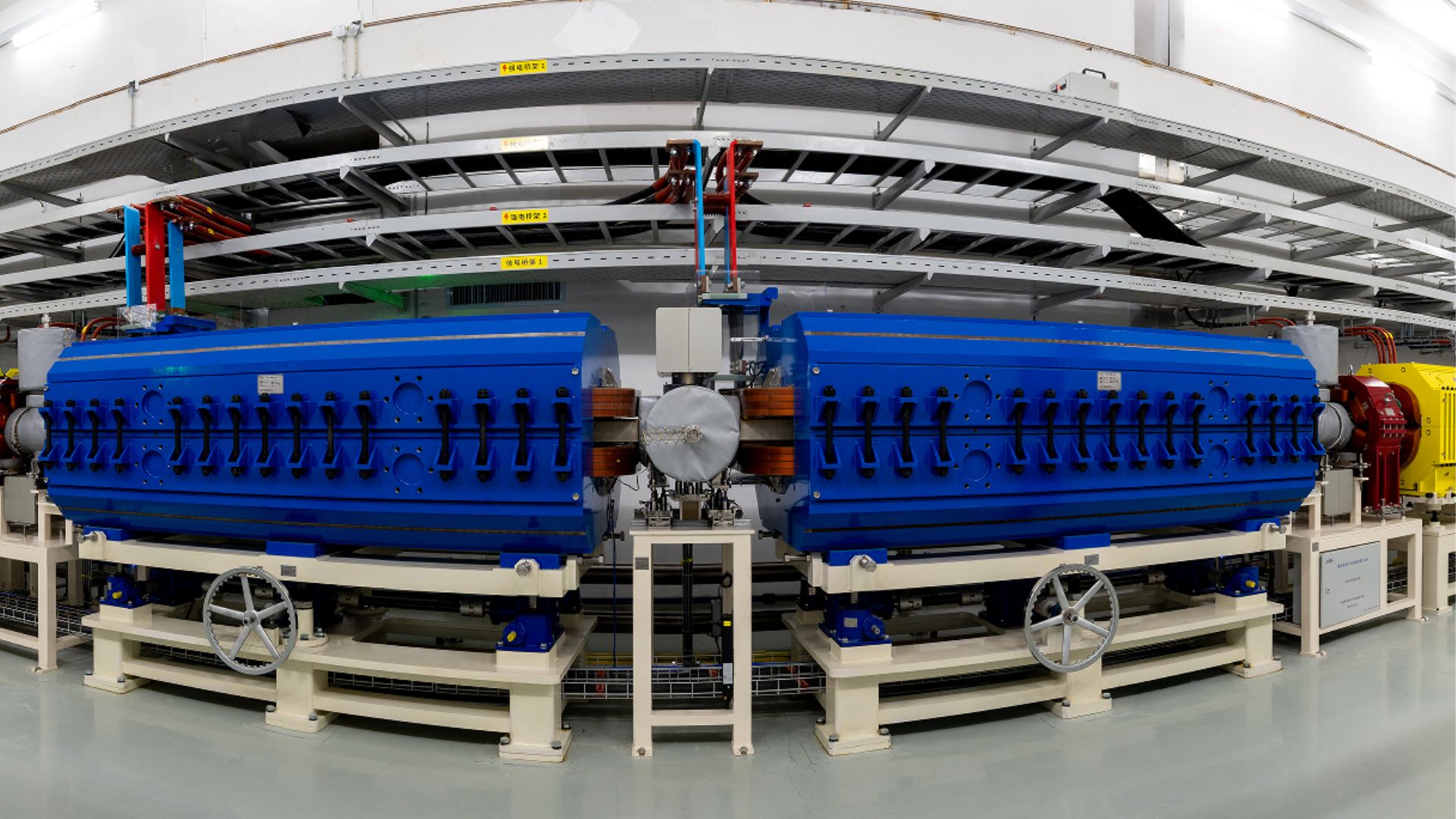
HIAF: China's massive new particle accelerator 🚀
China has launched the High Intensity Heavy-ion Accelerator Facility in Huizhou. This new research hub is designed to generate the world’s most intense atomic beams for advanced nuclear physics.
Atomic beams are essentially streams of particles smashed together at high speeds to reveal how matter is built. By pushing these beams to record intensities, researchers can create rare isotopes that do not exist naturally on our planet. This helps scientists study the deep structure of atomic nuclei and the origins of the heaviest elements in the universe.
This site competes directly with the Facility for Rare Isotope Beams at Michigan State University in the US. While that lab has long held the top spot for beam power, this new facility in China significantly raises the bar for global high-energy research capabilities.
This is a significant step that will likely change how we understand the basic building blocks of our world. Expect to see a surge of new physics papers coming from these experiments soon.
#science #physics #China
Interesting Engineering
Subscribe
China has launched the High Intensity Heavy-ion Accelerator Facility in Huizhou. This new research hub is designed to generate the world’s most intense atomic beams for advanced nuclear physics.
Atomic beams are essentially streams of particles smashed together at high speeds to reveal how matter is built. By pushing these beams to record intensities, researchers can create rare isotopes that do not exist naturally on our planet. This helps scientists study the deep structure of atomic nuclei and the origins of the heaviest elements in the universe.
This site competes directly with the Facility for Rare Isotope Beams at Michigan State University in the US. While that lab has long held the top spot for beam power, this new facility in China significantly raises the bar for global high-energy research capabilities.
This is a significant step that will likely change how we understand the basic building blocks of our world. Expect to see a surge of new physics papers coming from these experiments soon.
Physics just got a massive power boost.
#science #physics #China
Interesting Engineering
Subscribe
👍1

China's 15th Five-Year Plan to Add 370GW of Green Energy
China just finalized its energy roadmap for the years 2026–2030. The State Council, along with the National Development and Reform Commission and National Energy Administration, is set to add over 370GW of new wind and solar capacity by 2030. 🚀
This plan is about more than just installing gear. It focuses on building massive solar projects in deserts and upgrading how the power grid moves electricity. The State Council also released the 15th Five-Year Carbon Peaking Action Plan to help guide this shift. By 2030, the country expects total renewable energy consumption to reach about 1.8 billion tonnes of standard coal equivalent.
The targets are quite specific when compared to the recent past. The plan calls for a 17% reduction in CO2 emissions per unit of GDP compared to 2025 levels. It also aims to boost non-fossil energy use to 25% of the total energy mix.
Can the grid really handle such a rapid transformation?
#China #RenewableEnergy #Energy
Energy Storage News
Subscribe
China just finalized its energy roadmap for the years 2026–2030. The State Council, along with the National Development and Reform Commission and National Energy Administration, is set to add over 370GW of new wind and solar capacity by 2030. 🚀
This plan is about more than just installing gear. It focuses on building massive solar projects in deserts and upgrading how the power grid moves electricity. The State Council also released the 15th Five-Year Carbon Peaking Action Plan to help guide this shift. By 2030, the country expects total renewable energy consumption to reach about 1.8 billion tonnes of standard coal equivalent.
The targets are quite specific when compared to the recent past. The plan calls for a 17% reduction in CO2 emissions per unit of GDP compared to 2025 levels. It also aims to boost non-fossil energy use to 25% of the total energy mix.
A massive pivot to green energy infrastructure.
Can the grid really handle such a rapid transformation?
#China #RenewableEnergy #Energy
Energy Storage News
Subscribe
❤1👍1

China targets 2.8 TW of green energy capacity 🔋
China is shifting its national energy strategy to prioritize battery storage to keep its power grid stable. The new five-year plan explicitly targets 2.8 terawatts of wind and solar capacity by 2030.
Integrating batteries is essential for reliability. Solar panels and wind turbines are inconsistent—the sun doesn't always shine and the wind doesn't always blow. "Grid-forming technology" works like a shock absorber for the power supply, keeping electricity flowing smoothly so the system remains stable. This update introduces new market-based revenue mechanisms, allowing producers to earn money more flexibly instead of just relying on rigid state contracts. ⚡
This approach marks a major departure from earlier strategies that focused almost entirely on raw installation counts. While older plans treated storage as an optional add-on, this new policy treats batteries as a core component, much like how modern electric vehicle manufacturers now integrate advanced software directly into the powertrain for better efficiency. 📈
Upgrading the infrastructure of an entire nation is a monumental feat of engineering. It’s a massive logistical undertaking, but at the end of the day, it's just about making sure your devices stay charged.
#China #Energy #Technology
PV Magazine
Subscribe
China is shifting its national energy strategy to prioritize battery storage to keep its power grid stable. The new five-year plan explicitly targets 2.8 terawatts of wind and solar capacity by 2030.
Integrating batteries is essential for reliability. Solar panels and wind turbines are inconsistent—the sun doesn't always shine and the wind doesn't always blow. "Grid-forming technology" works like a shock absorber for the power supply, keeping electricity flowing smoothly so the system remains stable. This update introduces new market-based revenue mechanisms, allowing producers to earn money more flexibly instead of just relying on rigid state contracts. ⚡
This approach marks a major departure from earlier strategies that focused almost entirely on raw installation counts. While older plans treated storage as an optional add-on, this new policy treats batteries as a core component, much like how modern electric vehicle manufacturers now integrate advanced software directly into the powertrain for better efficiency. 📈
Upgrading the infrastructure of an entire nation is a monumental feat of engineering. It’s a massive logistical undertaking, but at the end of the day, it's just about making sure your devices stay charged.
Reliability is the ultimate goal.
#China #Energy #Technology
PV Magazine
Subscribe
❤1
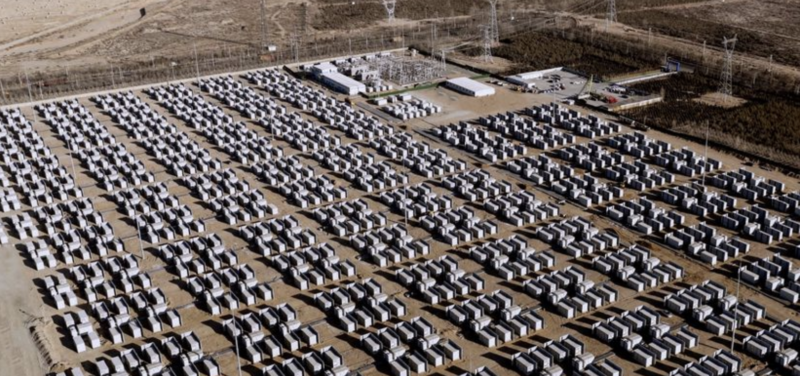
Envision Group Powers Up 12.8 GWh Battery Cluster
Envision Group has completed the final integration of its AI-driven management system into a massive battery storage network in Inner Mongolia, hitting a total capacity of 12.8 GWh.
This project acts like a giant, intelligent battery pack for the local power grid. It balances electricity supply and demand in real-time, ensuring that power remains stable even when using unpredictable energy sources like wind or solar. The AI system handles complex tasks that would be impossible for humans to manage manually at this scale.
Key features of this deployment include:
▫️ It utilizes "grid-forming" technology to instantly stabilize the electricity flow across the network.
▫️ The station passed all grid verification tests by executing three full charge-and-discharge cycles flawlessly.
▫️ The AI constantly learns and adjusts dispatch schedules to optimize electricity trading in the local spot market.
▫️ The system architecture coordinates three distinct levels: the physical equipment, the system software, and the entire site management.
This cluster functions on a much larger scale than the standalone 4 GWh flagship plant that serves as its core unit. By automating the grid connection and management processes, it significantly shortens the time required to bring such massive storage assets online compared to traditional, less automated power facilities.
#Tech #Energy #China
CleanTechnica
Subscribe
Envision Group has completed the final integration of its AI-driven management system into a massive battery storage network in Inner Mongolia, hitting a total capacity of 12.8 GWh.
This project acts like a giant, intelligent battery pack for the local power grid. It balances electricity supply and demand in real-time, ensuring that power remains stable even when using unpredictable energy sources like wind or solar. The AI system handles complex tasks that would be impossible for humans to manage manually at this scale.
Key features of this deployment include:
▫️ It utilizes "grid-forming" technology to instantly stabilize the electricity flow across the network.
▫️ The station passed all grid verification tests by executing three full charge-and-discharge cycles flawlessly.
▫️ The AI constantly learns and adjusts dispatch schedules to optimize electricity trading in the local spot market.
▫️ The system architecture coordinates three distinct levels: the physical equipment, the system software, and the entire site management.
This cluster functions on a much larger scale than the standalone 4 GWh flagship plant that serves as its core unit. By automating the grid connection and management processes, it significantly shortens the time required to bring such massive storage assets online compared to traditional, less automated power facilities.
Building a more reliable energy grid has never been this smart.
#Tech #Energy #China
CleanTechnica
Subscribe
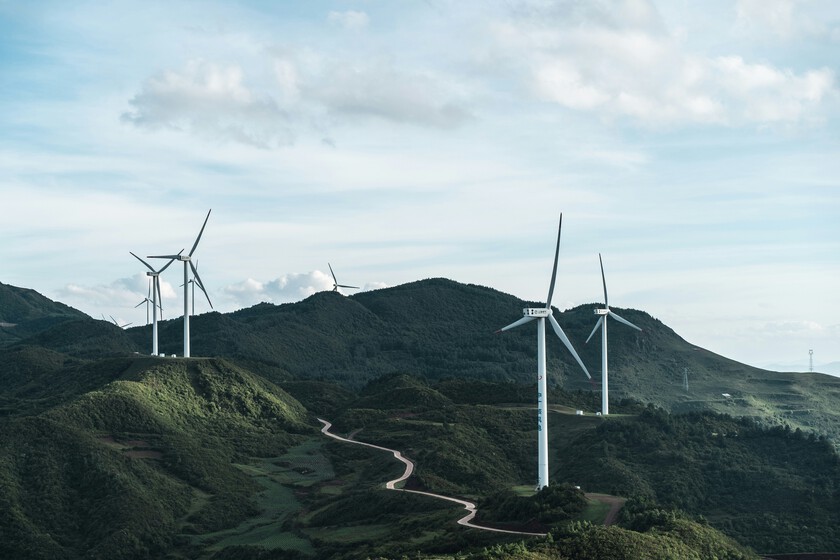
China's 15th Five-Year Plan targets massive renewable energy growth
China is planning a major shift for its power grid. Under the 15th Five-Year Plan covering 2026 to 2030, the country aims to hit a total installed renewable capacity of 3,500 GW by 2030. This initiative ensures that more than 50% of total power consumption comes from non-fossil sources. 🚀
Wind and solar will provide about 2,800 GW of that capacity, generating over 4,000 TWh of power annually. To keep things stable, China is mandating that energy storage systems hold 20% of their electricity for peak usage times. For context, GW measures power capacity, while TWh measures total energy produced over a year. This storage mandate is a significant jump from the current 10% reserve requirement. The country is also building massive power grids to move electricity from sunny, windy regions to large industrial centers.
This shift is a massive step up. By 2025, the country expects to use 1,180 million tons of standard coal equivalent for renewables. The 2030 target aims for 1,800 million tons, representing a 53% increase in just 5 years.
#RenewableEnergy #China #Tech
Xataka
Subscribe
China is planning a major shift for its power grid. Under the 15th Five-Year Plan covering 2026 to 2030, the country aims to hit a total installed renewable capacity of 3,500 GW by 2030. This initiative ensures that more than 50% of total power consumption comes from non-fossil sources. 🚀
Wind and solar will provide about 2,800 GW of that capacity, generating over 4,000 TWh of power annually. To keep things stable, China is mandating that energy storage systems hold 20% of their electricity for peak usage times. For context, GW measures power capacity, while TWh measures total energy produced over a year. This storage mandate is a significant jump from the current 10% reserve requirement. The country is also building massive power grids to move electricity from sunny, windy regions to large industrial centers.
This shift is a massive step up. By 2025, the country expects to use 1,180 million tons of standard coal equivalent for renewables. The 2030 target aims for 1,800 million tons, representing a 53% increase in just 5 years.
A global shift in power starts with national scale.
#RenewableEnergy #China #Tech
Xataka
Subscribe
👍1

Tesla recalls 2,740,642 vehicles in China
Tesla is initiating a massive recall of 2,740,642 vehicles across China to address critical safety concerns mandated by local regulators. ⚠️
This decision follows an investigation by Chinese authorities into the reliability of key vehicle safety systems. The company must now deploy a software update that changes how their cars manage safety protocols during daily use.
▪️ The update modifies electronic door handle operations to ensure they remain accessible for rescue workers during emergency situations.
▪️ Software will now strictly enforce driver attention by utilizing the internal cabin camera to track eye movement and road focus.
▪️ This replaces the previous reliance on steering-wheel touch sensors, which regulators found insufficient and easy to bypass.
This shift moves Tesla away from older sensor technology that allowed drivers to use cheap workarounds, like plastic props, to trick the system into thinking their hands were on the wheel. While steering-wheel sensors were once the industry standard for assisted driving, this update demonstrates that camera-based analysis is rapidly becoming the new baseline for safety in the world's largest automotive market.
#Tesla #China #EVsafety
Engadget
Subscribe
Tesla is initiating a massive recall of 2,740,642 vehicles across China to address critical safety concerns mandated by local regulators. ⚠️
This decision follows an investigation by Chinese authorities into the reliability of key vehicle safety systems. The company must now deploy a software update that changes how their cars manage safety protocols during daily use.
▪️ The update modifies electronic door handle operations to ensure they remain accessible for rescue workers during emergency situations.
▪️ Software will now strictly enforce driver attention by utilizing the internal cabin camera to track eye movement and road focus.
▪️ This replaces the previous reliance on steering-wheel touch sensors, which regulators found insufficient and easy to bypass.
This shift moves Tesla away from older sensor technology that allowed drivers to use cheap workarounds, like plastic props, to trick the system into thinking their hands were on the wheel. While steering-wheel sensors were once the industry standard for assisted driving, this update demonstrates that camera-based analysis is rapidly becoming the new baseline for safety in the world's largest automotive market.
Technology is only as reliable as its monitoring system.
#Tesla #China #EVsafety
Engadget
Subscribe
👍2👏1
China unveils a humanoid robot running entirely on local tech 🤖
A new humanoid robot has been revealed in China that runs entirely on local technology, including its own operating system, software, and AI computing chips. The machine passed safety checks by the National Industrial Information Security Development Center, where experts tested it against joint damage and network attacks.
If you look at older models, standard parts often caused sudden power cuts and total loss of control during extreme tests. This new domestic system stays safe, reducing risks for anyone working nearby.
#robotics #china #tech
Subscribe
☀️ PowerChina connects a 1 GW hybrid solar plant to the grid
On Oct. 1, PowerChina switched on a massive 1 GW hybrid solar facility in Gonghe county, Qinghai province, bringing clean energy straight to the power grid.
The site brings together a 900 MW solar panel field and a 100 MW solar thermal tower. Instead of just sending electricity away immediately, it uses 10,310 moving mirrors to heat molten salt, storing extra sun power like a giant thermal battery.
That stored heat lets the plant keep running a turbine for up to eight hours after dark. When you turn on your appliances at night, part of that electricity can come from the sun stored earlier in the day, helping keep power steady when the sun goes down.
#SolarEnergy #TechNews #China
Subscribe
👍1
Chinese factories build most humanoid robots
📈
Chinese manufacturers shipped 97 percent of all humanoid robots globally during the first half of 2026.
Local supply chains for precision parts keep production costs low, helping companies like Agibot scale up fast.
#robots ⚡ #technology ⚡ #china
Subscribe
📈
Chinese manufacturers shipped 97 percent of all humanoid robots globally during the first half of 2026.
Local supply chains for precision parts keep production costs low, helping companies like Agibot scale up fast.
#robots ⚡ #technology ⚡ #china
Subscribe
❤2
BYD SUV drives with a clamped wheel lifted in the air
A driver in China used a vehicle's hydraulic suspension to drive down a street with a clamped front wheel lifted entirely off the ground. The viral incident was recorded over the weekend in Jinshan, featuring a BYD Bao 8 SUV utilizing up to 300 mm of wheel elevation to escape the parking boot.
The feature relies on the DiSus-P Ultra system, which the company introduced back in May during a demonstration at a test track.
The setup provides up to 200 mm of total suspension travel and a maximum lifting capacity of 9 metric tons, while the manufacturer limits three-wheel driving to 15 km/h.
The plug-in hybrid went on sale in May starting at 419,800 yuan, equipped with a 46.7 kWh battery and a 2.0-liter engine.
#BYD ⚡ #SUVs ⚡ #China
Subscribe
👏5❤1
Humanoid robot dance record set in China
In the city of Jinan, 110 humanoid robots performed a synchronized routine on October 24, setting a Guinness World Records mark.
Built by AgiBot, the machines used special positioning tech to coordinate complex jumps and flips together.
#robots ⚡ #china ⚡ #tech
Subscribe
In the city of Jinan, 110 humanoid robots performed a synchronized routine on October 24, setting a Guinness World Records mark.
Built by AgiBot, the machines used special positioning tech to coordinate complex jumps and flips together.
#robots ⚡ #china ⚡ #tech
Subscribe
❤1
Electric heavy truck sales pass half
In September, electric big rigs hit 50.3% of all heavy truck sales in China, reaching 33,100 units sold in a single month.
Lower operating costs and rapid battery swapping are driving the shift, helping lower national diesel demand.
#ElectricTrucks ⚡ #China ⚡ #DieselDemand
Subscribe
In September, electric big rigs hit 50.3% of all heavy truck sales in China, reaching 33,100 units sold in a single month.
Lower operating costs and rapid battery swapping are driving the shift, helping lower national diesel demand.
#ElectricTrucks ⚡ #China ⚡ #DieselDemand
Subscribe
BYD electric car sales break records 📈
In October, Chinese automaker BYD sold 300,000 pure electric vehicles in a single month for the first time. Total monthly deliveries reached nearly 490,000 vehicles worldwide.
This milestone allowed the company to outpace total US electric vehicle sales for the entire third quarter.
#ElectricVehicles ⚡ #CarSales ⚡ #China
Subscribe