

CATL aims for the sky with 350 Wh/kg batteries
CATL is moving toward mass production of a battery with an energy density of 350 Wh/kg designed specifically for electric aircraft.
When you are in the air, there is zero room for error. The company recently passed a rigorous safety test by intentionally triggering two adjacent battery cells. This checks for "thermal runaway"—a situation where one cell overheats and sets off a chain reaction of fires. Because the heat stayed contained, the system meets the tough safety standards required for passenger flying cars, or eVTOLs.
🔹 This energy density is roughly 50% higher than what you find in standard electric car batteries.
🔹 It is the world’s first aviation battery system using prismatic cells to pass this thermal runaway test.
🔹 All testing and cell production were verified by officials from the Civil Aviation Administration of China.
In an electric vehicle on the ground, extra battery weight is annoying, but in the air, it is a dealbreaker. By packing more energy into the same space compared to standard automotive packs, these batteries allow aircraft to travel further without becoming too heavy to lift off.
#CATL #aviation #tech
Interesting Engineering
Subscribe
CATL is moving toward mass production of a battery with an energy density of 350 Wh/kg designed specifically for electric aircraft.
When you are in the air, there is zero room for error. The company recently passed a rigorous safety test by intentionally triggering two adjacent battery cells. This checks for "thermal runaway"—a situation where one cell overheats and sets off a chain reaction of fires. Because the heat stayed contained, the system meets the tough safety standards required for passenger flying cars, or eVTOLs.
🔹 This energy density is roughly 50% higher than what you find in standard electric car batteries.
🔹 It is the world’s first aviation battery system using prismatic cells to pass this thermal runaway test.
🔹 All testing and cell production were verified by officials from the Civil Aviation Administration of China.
In an electric vehicle on the ground, extra battery weight is annoying, but in the air, it is a dealbreaker. By packing more energy into the same space compared to standard automotive packs, these batteries allow aircraft to travel further without becoming too heavy to lift off.
Safety in the sky is finally catching up to power.
#CATL #aviation #tech
Interesting Engineering
Subscribe
Artificial sweeteners face growing scrutiny over long-term health risks
A new review by Tufts University researchers presents comprehensive and convincing research linking common sugar substitutes with metabolic disturbances that begin in the gut and then flow throughout the body. It also highlights issues of food-label transpare…
Read Full Story 🔹 Subscribe
#News ⚡️ #AI ⚡️ #Tech

Solid-state batteries race: CATL and BYD target 2027
🔋
The world’s two largest battery manufacturers are aligning their development timelines for a major technology shift. Both CATL and BYD have officially confirmed they will begin small-scale pilot production of solid-state batteries by 2027. 🚗
Solid-state batteries swap the liquid electrolyte found in today's power packs for a solid material. Think of it like replacing a standard, messy fuel tank with a stable, high-capacity brick. This change makes batteries safer, less likely to catch fire, and able to hold more energy while charging significantly faster than current models.
CATL states its development is currently leading the industry, marking their first official commitment to a specific timeline. Meanwhile, BYD is pushing ahead, recently securing six new patents. Their research focuses on keeping the battery components in constant contact over thousands of charge cycles, utilizing a dual-electrolyte setup to boost stability.
This move aims to overcome the physical limits of the liquid-electrolyte batteries that power every electric vehicle on the road today. While existing technology is reaching its ceiling for energy density and charging speed, this solid-state approach is designed to clear those hurdles.
This sets the stage for a direct showdown between the two giants as they fight to make electric cars more practical for everyday use. 🚀
#batteries #technology #EV
Xataka
Subscribe
🔋
The world’s two largest battery manufacturers are aligning their development timelines for a major technology shift. Both CATL and BYD have officially confirmed they will begin small-scale pilot production of solid-state batteries by 2027. 🚗
Solid-state batteries swap the liquid electrolyte found in today's power packs for a solid material. Think of it like replacing a standard, messy fuel tank with a stable, high-capacity brick. This change makes batteries safer, less likely to catch fire, and able to hold more energy while charging significantly faster than current models.
CATL states its development is currently leading the industry, marking their first official commitment to a specific timeline. Meanwhile, BYD is pushing ahead, recently securing six new patents. Their research focuses on keeping the battery components in constant contact over thousands of charge cycles, utilizing a dual-electrolyte setup to boost stability.
This move aims to overcome the physical limits of the liquid-electrolyte batteries that power every electric vehicle on the road today. While existing technology is reaching its ceiling for energy density and charging speed, this solid-state approach is designed to clear those hurdles.
This sets the stage for a direct showdown between the two giants as they fight to make electric cars more practical for everyday use. 🚀
2027 is the new finish line for the next generation of power.
#batteries #technology #EV
Xataka
Subscribe

Tesla Files for $10.1 Billion Solar Factory in Texas
Tesla just filed official plans to build a massive solar cell manufacturing facility in Fort Bend County, Texas, backed by a staggering $10.1 billion investment.
The massive site is known internally by the codename "Project Crystal Sun." Commercial production is scheduled to kick off in the first quarter of 2029, bringing over 9,700 permanent jobs to the region.
The layout and scale of the project involve some impressive figures:
🔹 The facility will stretch across roughly 3,050 acres near Richmond.
🔹 The budget breaks down into $1.5 billion for real estate and $8.6 billion for heavy manufacturing equipment.
🔹 The timeline targets completing construction throughout 2028 before firing up operations.
This dwarfs every previous factory project from the company, standing as the single largest US manufacturing investment Tesla has ever put on paper.
#Tesla #SolarPower #Texas
Electrek
Subscribe
Tesla just filed official plans to build a massive solar cell manufacturing facility in Fort Bend County, Texas, backed by a staggering $10.1 billion investment.
The massive site is known internally by the codename "Project Crystal Sun." Commercial production is scheduled to kick off in the first quarter of 2029, bringing over 9,700 permanent jobs to the region.
The layout and scale of the project involve some impressive figures:
🔹 The facility will stretch across roughly 3,050 acres near Richmond.
🔹 The budget breaks down into $1.5 billion for real estate and $8.6 billion for heavy manufacturing equipment.
🔹 The timeline targets completing construction throughout 2028 before firing up operations.
This dwarfs every previous factory project from the company, standing as the single largest US manufacturing investment Tesla has ever put on paper.
A massive push for domestic green energy is finally taking shape.
#Tesla #SolarPower #Texas
Electrek
Subscribe
❤1
Jensen Huang’s iconic signed leather jacket expected to fetch up to $60,000 in charity auction — Sotheby’s says item was worn at a Foxconn Tech Day in 2023 and the signature has been professionally authenticated
One of Jensen Huang’s used leather jackets is up for auction, with an estimate of $40,000 to $60,000. The money will go to charity.
Read Full Story 🔹 Subscribe
#News ⚡️ #AI ⚡️ #Tech
One of Jensen Huang’s used leather jackets is up for auction, with an estimate of $40,000 to $60,000. The money will go to charity.
Read Full Story 🔹 Subscribe
#News ⚡️ #AI ⚡️ #Tech
❤1
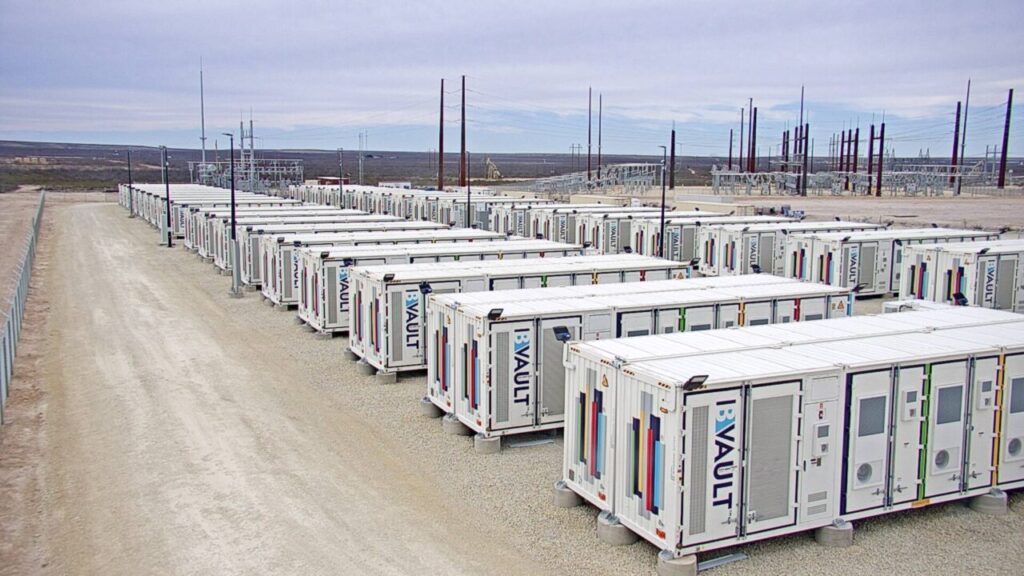
Energy Vault signs 1.25GW power deal for Texas data center
On 7 August, Energy Vault signed a major agreement to deliver 1.25 GW of power infrastructure for an artificial intelligence data center in Texas, US 🚀
If you follow tech news, you know that running modern AI models requires staggering amounts of electricity. This project bypasses traditional power lines to deliver energy straight to the servers.
📍 The agreement will generate between $500 and $600 million in revenue during late 2026 and 2027.
📍 The setup includes battery storage systems, power conversion units, and dedicated control software.
📍 First deployments will launch within four to twelve months.
📍 Chief executive Robert Piconi called it the company's largest single contract to date.
By comparison, utility provider Evergy manages 3 GW of signed large-scale loads with a 5-GW generation pipeline, showing just how fast the entire energy market is expanding to keep up.
#EnergyVault #DataCenter #AI
Utility Dive
Subscribe
On 7 August, Energy Vault signed a major agreement to deliver 1.25 GW of power infrastructure for an artificial intelligence data center in Texas, US 🚀
If you follow tech news, you know that running modern AI models requires staggering amounts of electricity. This project bypasses traditional power lines to deliver energy straight to the servers.
📍 The agreement will generate between $500 and $600 million in revenue during late 2026 and 2027.
📍 The setup includes battery storage systems, power conversion units, and dedicated control software.
📍 First deployments will launch within four to twelve months.
📍 Chief executive Robert Piconi called it the company's largest single contract to date.
By comparison, utility provider Evergy manages 3 GW of signed large-scale loads with a 5-GW generation pipeline, showing just how fast the entire energy market is expanding to keep up.
Power is the true bottleneck of the AI boom.
#EnergyVault #DataCenter #AI
Utility Dive
Subscribe
⚡1

FCC bans Chinese robots and home devices ⚠️
The Federal Communications Commission (FCC) is placing new, strict limits on imported Chinese robotics, including vacuum cleaners and power inverters, as part of a strategy to help the United States exceed 100 GW of renewable capacity by 2027.
These machines, which map home interiors or connect to critical power grids, must now pass a rigorous review process overseen by the Pentagon and the Department of Homeland Security. The rule targets humanoid and quadrupedal robots, as well as common household brands like Roborock and Dreame, due to concerns over their ability to record and transmit data from inside your home. 🛡️
Currently, domestic U.S. companies only meet 40% of the demand for these specialized power inverters. This policy also puts a target on commercial drones using LiDAR, with DJI warning that military-grade classifications could block equipment used for everyday agriculture and safety inspections. This action follows a long line of restrictions against companies like Huawei and ZTE, further isolating the market. ⚠️
Security concerns are reshaping what hardware we can keep in our houses.
#TechNews #Robotics #Security
The Verge
Subscribe
The Federal Communications Commission (FCC) is placing new, strict limits on imported Chinese robotics, including vacuum cleaners and power inverters, as part of a strategy to help the United States exceed 100 GW of renewable capacity by 2027.
These machines, which map home interiors or connect to critical power grids, must now pass a rigorous review process overseen by the Pentagon and the Department of Homeland Security. The rule targets humanoid and quadrupedal robots, as well as common household brands like Roborock and Dreame, due to concerns over their ability to record and transmit data from inside your home. 🛡️
Currently, domestic U.S. companies only meet 40% of the demand for these specialized power inverters. This policy also puts a target on commercial drones using LiDAR, with DJI warning that military-grade classifications could block equipment used for everyday agriculture and safety inspections. This action follows a long line of restrictions against companies like Huawei and ZTE, further isolating the market. ⚠️
Security concerns are reshaping what hardware we can keep in our houses.
Your smart home just became a matter of national security.
#TechNews #Robotics #Security
The Verge
Subscribe
The robotaxi law that could ban Tesla
For more than a decade, one question has loomed over the race to build autonomous vehicles: Are cameras alone enough to safely replace human drivers, or do truly driverless cars need additional, overlapping sensors like lidar and radar to navigate the world r…
Read Full Story 🔹 Subscribe
#News ⚡️ #AI ⚡️ #Tech

Ukraine authorizes the MUL.E electric combat motorcycle
On July 23, 2026, the Ministry of Defence of Ukraine officially codified the MUL.E for combat service. This is the country's first all-wheel-drive electric motorcycle built specifically for military logistics.
It treads as lightly as an infantryman’s boot and glides past acoustic sensors without a sound. The bike is designed to handle harsh environments that stop heavier machines in their tracks.
🔹 It features a 62-mile range, which soldiers can extend further by using a small onboard gasoline generator.
🔹 The 2x2 drivetrain allows the bike to traverse rugged terrain where traditional heavy military vehicles often get stuck.
🔹 The design keeps ground pressure low enough to match a soldier’s footfall, making it safer in areas with landmines.
🔹 It serves as a mobile power station capable of charging equipment like FPV drones directly on the frontlines.
Motorcycles have been military staples since World War I, but those were always noisy and thirsty for fuel. While consumer electric vehicles are often limited by the lack of charging stations, the MUL.E sidesteps this by carrying its own power source. It is built to disappear into the environment, letting operators navigate hazardous zones undetected.
A practical upgrade for mobile, silent logistics.
#Ukraine #MUL.E #Innovation
Interesting Engineering
Subscribe
On July 23, 2026, the Ministry of Defence of Ukraine officially codified the MUL.E for combat service. This is the country's first all-wheel-drive electric motorcycle built specifically for military logistics.
It treads as lightly as an infantryman’s boot and glides past acoustic sensors without a sound. The bike is designed to handle harsh environments that stop heavier machines in their tracks.
🔹 It features a 62-mile range, which soldiers can extend further by using a small onboard gasoline generator.
🔹 The 2x2 drivetrain allows the bike to traverse rugged terrain where traditional heavy military vehicles often get stuck.
🔹 The design keeps ground pressure low enough to match a soldier’s footfall, making it safer in areas with landmines.
🔹 It serves as a mobile power station capable of charging equipment like FPV drones directly on the frontlines.
Motorcycles have been military staples since World War I, but those were always noisy and thirsty for fuel. While consumer electric vehicles are often limited by the lack of charging stations, the MUL.E sidesteps this by carrying its own power source. It is built to disappear into the environment, letting operators navigate hazardous zones undetected.
A practical upgrade for mobile, silent logistics.
Rugged engineering where silence equals survival.
#Ukraine #MUL.E #Innovation
Interesting Engineering
Subscribe
❤1
Ørsted launches 500MWh battery plant in Texas
Denmark-based energy company Ørsted has officially flipped the switch on its new energy storage project in Needville, Texas, which features a massive 500MWh battery capacity. This facility now helps stabilize the local power grid by pairing large-scale battery storage with existing solar power.
The project, named Old 300, uses Tesla battery systems to hold onto electricity produced during the day. Because the facility sits next to a 430 MW solar farm that opened earlier in 2024, it can catch energy when the sun is shining and release it when the demand spikes or the sun goes down.
This storage capacity is a major upgrade for the ERCOT grid, which manages power for most of Texas. Compared to the 430 MW of solar capacity already at the site, this 250 MW battery setup ensures the energy collected isn't wasted when the grid doesn't need it at that exact moment.
#energy #technology #Texas
Energy Storage News
Subscribe
Denmark-based energy company Ørsted has officially flipped the switch on its new energy storage project in Needville, Texas, which features a massive 500MWh battery capacity. This facility now helps stabilize the local power grid by pairing large-scale battery storage with existing solar power.
The project, named Old 300, uses Tesla battery systems to hold onto electricity produced during the day. Because the facility sits next to a 430 MW solar farm that opened earlier in 2024, it can catch energy when the sun is shining and release it when the demand spikes or the sun goes down.
This storage capacity is a major upgrade for the ERCOT grid, which manages power for most of Texas. Compared to the 430 MW of solar capacity already at the site, this 250 MW battery setup ensures the energy collected isn't wasted when the grid doesn't need it at that exact moment.
The grid is becoming more reliable.
#energy #technology #Texas
Energy Storage News
Subscribe
Heart Aerospace Flies 106-Foot Electric Plane in New York
On August 12, 2026, Heart Aerospace tested its massive X1 aircraft at Plattsburgh International Airport.
The plane has a 106-foot wingspan and weighs over 25,000 pounds at takeoff. During the 27-minute test flight, its engines delivered more than 1 megawatt of power. 🔋
The entire trip used only about $5 worth of electricity. This full-scale prototype paves the way for the planned ES-30 model, a 30-seat regional airliner aiming for commercial service by 2031. 🚀
Unlike earlier experimental electric trainers that could barely carry a single person, this machine matches the physical scale of real commercial commuter planes.
#ElectricAviation #AviationNews #Technology
Engadget
Subscribe
On August 12, 2026, Heart Aerospace tested its massive X1 aircraft at Plattsburgh International Airport.
The plane has a 106-foot wingspan and weighs over 25,000 pounds at takeoff. During the 27-minute test flight, its engines delivered more than 1 megawatt of power. 🔋
The entire trip used only about $5 worth of electricity. This full-scale prototype paves the way for the planned ES-30 model, a 30-seat regional airliner aiming for commercial service by 2031. 🚀
Unlike earlier experimental electric trainers that could barely carry a single person, this machine matches the physical scale of real commercial commuter planes.
Quiet flights are finally stepping out of the lab and into the real world.
#ElectricAviation #AviationNews #Technology
Engadget
Subscribe
Trump promised to cut electric bills in half. His energy policy is doing the opposite, new analysis finds
American’s are paying more for power as the Trump administration’s attacks on renewable energy collide with increased energy demand.
Read Full Story 🔹 Subscribe
#News ⚡️ #AI ⚡️ #Tech
American’s are paying more for power as the Trump administration’s attacks on renewable energy collide with increased energy demand.
Read Full Story 🔹 Subscribe
#News ⚡️ #AI ⚡️ #Tech
🖕1
X-ray system at Fraunhofer EMI looks inside working batteries
Researchers at Fraunhofer EMI have created an advanced X-ray system that shows what happens inside large-format prismatic battery cells while they run in real time. 🔥
You no longer have to guess how energy flows and alters the internal structure of the cell during heavy daily use. The technology lets you watch physical changes as they happen instead of inspecting damaged parts after the fact.
Volkswagen's battery subsidiary PowerCo is now taking this tech out of the lab and bringing it straight to the factory floor. Engineers will use these live images to spot design flaws early, fix weak spots, and build much more reliable power units for everyday electric cars. 🚀
#batteries #tech #volkswagen
Electrive
Subscribe
Researchers at Fraunhofer EMI have created an advanced X-ray system that shows what happens inside large-format prismatic battery cells while they run in real time. 🔥
You no longer have to guess how energy flows and alters the internal structure of the cell during heavy daily use. The technology lets you watch physical changes as they happen instead of inspecting damaged parts after the fact.
This system catches tiny structural shifts during high-stress operational cycles that standard testing methods completely miss.
Volkswagen's battery subsidiary PowerCo is now taking this tech out of the lab and bringing it straight to the factory floor. Engineers will use these live images to spot design flaws early, fix weak spots, and build much more reliable power units for everyday electric cars. 🚀
Clear views inside a working battery reshape how we build cars.
#batteries #tech #volkswagen
Electrive
Subscribe
❤2
How math helped the Allies win World War II
During World War II, statistics helped the Allies estimate the number of enemy tanks, which proved essential in the decisive move against Nazi Germany
Read Full Story 🔹 Subscribe
#News ⚡️ #AI ⚡️ #Tech
During World War II, statistics helped the Allies estimate the number of enemy tanks, which proved essential in the decisive move against Nazi Germany
Read Full Story 🔹 Subscribe
#News ⚡️ #AI ⚡️ #Tech
👍1

Switching to an electric car beats gas models in 92% of cases 🚀
A study in the United States confirms that moving to an electric vehicle is almost always the better environmental choice. In 92% of all analyzed scenarios, the electric car creates a lower carbon footprint over its life than continuing to drive a functional combustion-engine model.
Many drivers hold onto their old cars to avoid the environmental cost of manufacturing a new one. This research shows that the emissions saved by driving electric usually far outweigh the impact of building the new car.
In the past, the debate often focused on the high carbon cost of producing large batteries. This data demonstrates that even with that cost included, the combustion-engine car remains the heavier polluter for nearly every driving habit. Making the switch is a practical move for lowering total pollution. 🔥
#EV #Environment #Sustainability
Electrive
Subscribe
A study in the United States confirms that moving to an electric vehicle is almost always the better environmental choice. In 92% of all analyzed scenarios, the electric car creates a lower carbon footprint over its life than continuing to drive a functional combustion-engine model.
Many drivers hold onto their old cars to avoid the environmental cost of manufacturing a new one. This research shows that the emissions saved by driving electric usually far outweigh the impact of building the new car.
The climate benefit comes from the fact that an electric motor turns energy into movement far more efficiently than an engine burning gasoline.
In the past, the debate often focused on the high carbon cost of producing large batteries. This data demonstrates that even with that cost included, the combustion-engine car remains the heavier polluter for nearly every driving habit. Making the switch is a practical move for lowering total pollution. 🔥
Cleaner air starts with your next car choice.
#EV #Environment #Sustainability
Electrive
Subscribe
❤1👍1

Amazon builds a massive 7.65-gigawatt gas plant in Texas to power its AI
⚠️
To keep up with huge AI demands, Amazon is building a dedicated power plant in Pecos County, Texas, running entirely off the public grid. 🏭
The new GW Ranch project relies on 35 gas turbines to feed electricity straight to AWS data centers without touching local power lines. Running those turbines around the clock comes with a massive environmental toll. The facility will pump out an estimated 33 million tons of greenhouse gases every single year. That makes it the single largest individual source of pollution in the entire country.
To see how extreme this is, look at the previous American record holder. The coal-burning James H. Miller Jr. power plant in Alabama held the top pollution spot for nine years, but it emitted only about half that amount. Other tech giants are doing the same thing to feed their massive servers. Meta expanded its gas plant orders in Louisiana to 5.2 gigawatts, and xAI deployed dozens of turbines near Memphis without waiting for proper permits. 📉
Building private power stations shows how desperate tech companies are for electricity. When progress requires burning millions of tons of gas just for server racks, the energy crisis stops being abstract.
#Amazon #DataCenters #TechNews
The Verge
Subscribe
⚠️
To keep up with huge AI demands, Amazon is building a dedicated power plant in Pecos County, Texas, running entirely off the public grid. 🏭
The new GW Ranch project relies on 35 gas turbines to feed electricity straight to AWS data centers without touching local power lines. Running those turbines around the clock comes with a massive environmental toll. The facility will pump out an estimated 33 million tons of greenhouse gases every single year. That makes it the single largest individual source of pollution in the entire country.
To see how extreme this is, look at the previous American record holder. The coal-burning James H. Miller Jr. power plant in Alabama held the top pollution spot for nine years, but it emitted only about half that amount. Other tech giants are doing the same thing to feed their massive servers. Meta expanded its gas plant orders in Louisiana to 5.2 gigawatts, and xAI deployed dozens of turbines near Memphis without waiting for proper permits. 📉
Building private power stations shows how desperate tech companies are for electricity. When progress requires burning millions of tons of gas just for server racks, the energy crisis stops being abstract.
A private grid means nobody shares the power, but everyone shares the smoke.
#Amazon #DataCenters #TechNews
The Verge
Subscribe
👎2
Get Ready for the Color E Ink Monitor That Finally Runs at 60fps
Get Ready for the Color E Ink Monitor That Finally Runs at 60fpsE Ink displays have earned a devoted following among people who spend long hours reading or writing. The technology produces virtually no flicker, doesn’t use...
Read Full Story 🔹 Subscribe
#News ⚡️ #AI ⚡️ #Tech
Get Ready for the Color E Ink Monitor That Finally Runs at 60fpsE Ink displays have earned a devoted following among people who spend long hours reading or writing. The technology produces virtually no flicker, doesn’t use...
Read Full Story 🔹 Subscribe
#News ⚡️ #AI ⚡️ #Tech

New Graz University of Technology design rules aim to fix electric car batteries
🔋
Researchers at Graz University of Technology have published new design standards to make electric vehicle batteries easier to fix and recycle. Their analysis shows that repairing these batteries is worthwhile if you can recover and reuse just 8 percent of the cells.
Many modern electric car batteries are currently sealed with glue. This forces owners to replace the entire pack if a small component fails. The E-Track project wants to stop this by making modular batteries the standard.
📍 Battery cells make up about 75 percent of a pack's total mass.
📍 Cells are the single largest cost factor in electric vehicle production.
📍 Standardized designs allow emergency teams to handle damaged or burning batteries with much less risk. 🛠️
Unlike today's common practice of "sealed for life" designs that prioritize compact, rigid packaging at the expense of serviceability, this approach puts long-term maintenance first.
#EV #engineering #sustainability
Interesting Engineering
Subscribe
🔋
Researchers at Graz University of Technology have published new design standards to make electric vehicle batteries easier to fix and recycle. Their analysis shows that repairing these batteries is worthwhile if you can recover and reuse just 8 percent of the cells.
Many modern electric car batteries are currently sealed with glue. This forces owners to replace the entire pack if a small component fails. The E-Track project wants to stop this by making modular batteries the standard.
📍 Battery cells make up about 75 percent of a pack's total mass.
📍 Cells are the single largest cost factor in electric vehicle production.
📍 Standardized designs allow emergency teams to handle damaged or burning batteries with much less risk. 🛠️
Unlike today's common practice of "sealed for life" designs that prioritize compact, rigid packaging at the expense of serviceability, this approach puts long-term maintenance first.
Repairing the parts instead of discarding the whole is finally becoming a priority.♻️
#EV #engineering #sustainability
Interesting Engineering
Subscribe
🔥1
‘Humanizer’ tool can erase signs of AI-written text — alarming scientists
Tool directs text-generation systems to remove constructions associated with artificial intelligence in research papers and grant proposals.
Read Full Story 🔹 Subscribe
#News ⚡️ #AI ⚡️ #Tech
Tool directs text-generation systems to remove constructions associated with artificial intelligence in research papers and grant proposals.
Read Full Story 🔹 Subscribe
#News ⚡️ #AI ⚡️ #Tech

Boeing 737 flight systems vulnerable to 60-second physical hack
Researchers from UC San Diego and Oberlin College have proven that a tiny device, installed in under 60 seconds, can alter a plane's navigation. This vulnerability affects Boeing 737 Next Generation and 737 MAX variants, showing that modern avionics rely heavily on physical security at the airport.
The attack is surprisingly simple: a person with access to the outside of the plane opens a maintenance hatch, reaches a connector, and plugs in their gadget. The device then intercepts signals between the onboard computer and the pilot's controls.
While the Boeing 737 remains a staple of global travel, similar to how the Airbus A320 is used by countless airlines for short-to-medium range flights, this finding highlights a gap in how these systems are protected. It is a clear reminder that complex software security means very little if the physical port is left unguarded.
#Boeing #aviation #security
Interesting Engineering
Subscribe
Researchers from UC San Diego and Oberlin College have proven that a tiny device, installed in under 60 seconds, can alter a plane's navigation. This vulnerability affects Boeing 737 Next Generation and 737 MAX variants, showing that modern avionics rely heavily on physical security at the airport.
The attack is surprisingly simple: a person with access to the outside of the plane opens a maintenance hatch, reaches a connector, and plugs in their gadget. The device then intercepts signals between the onboard computer and the pilot's controls.
This equipment mimics legitimate signals to trick the flight management system, allowing the intruder to modify waypoints without alerting the crew.
While the Boeing 737 remains a staple of global travel, similar to how the Airbus A320 is used by countless airlines for short-to-medium range flights, this finding highlights a gap in how these systems are protected. It is a clear reminder that complex software security means very little if the physical port is left unguarded.
Physical access is the ultimate backdoor.
#Boeing #aviation #security
Interesting Engineering
Subscribe
👍1